/pre-wedding-photoshoot
Elopement photos at Ti Top Island: what to expect and book
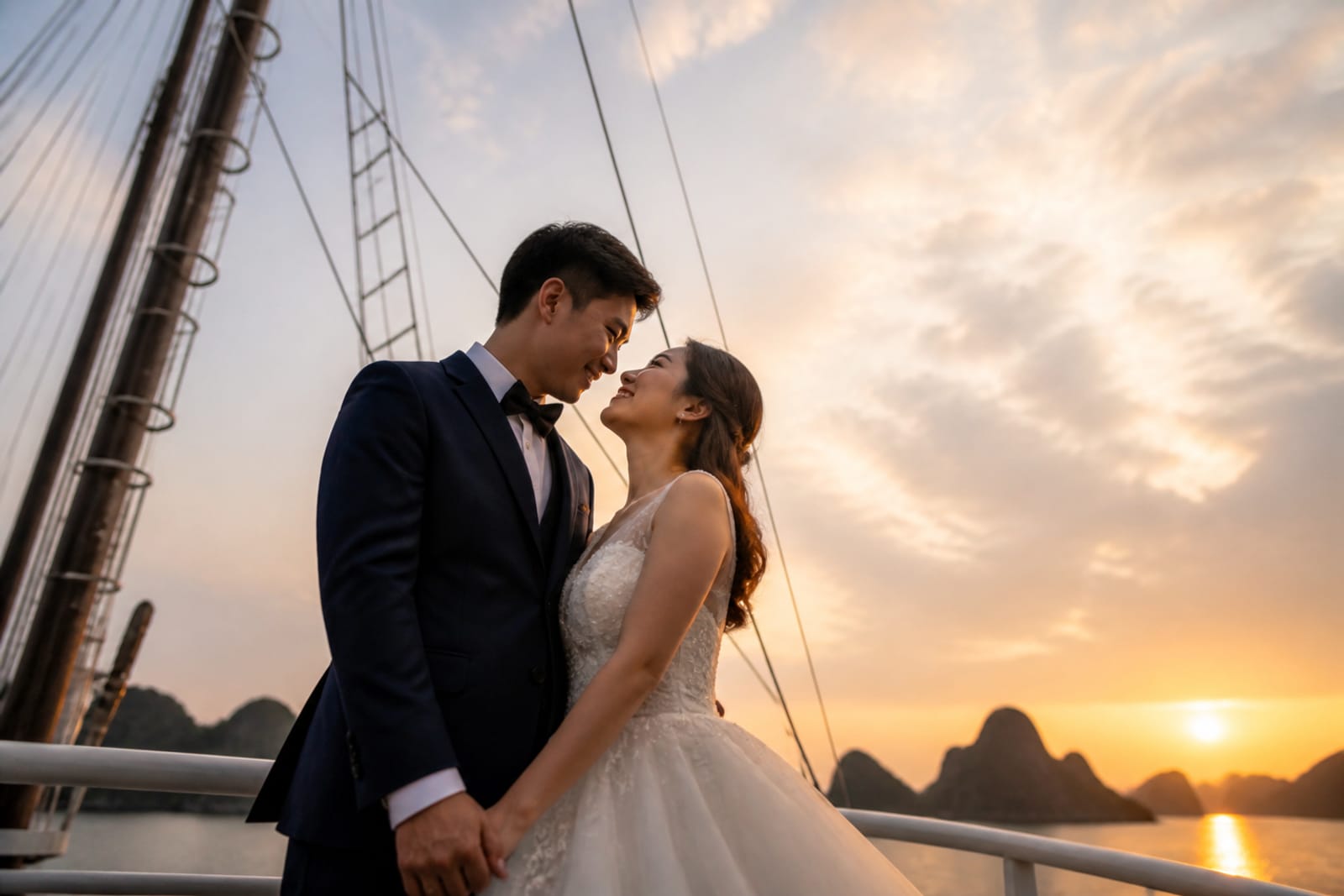
Ti Top Island elopements suit couples seeking intimate, cinematic shots without large crews or crowds. The island's steep terrain (80 steps to the viewpoint) and tidal access mean sessions run 2–3 hours max, best Mar–May or Sep–Nov when seas are calmer and skies clearer. Cáo Studio – Makeup & Photoshoot does not operate in Ha Long Bay; you'll need a Hanoi-based photographer who travels to the port, coordinates with your cruise operator (drones and commercial shoots require their permission), and understands how water conditions, boat schedules and midday haze affect timing. Choose a photographer who scouts on the day before or has shot there repeatedly; bring minimal outfits to avoid wet sand delays, and confirm all permits and insurance with your cruise line before booking. ---
What makes Ti Top Island different from studio or beach elopements?
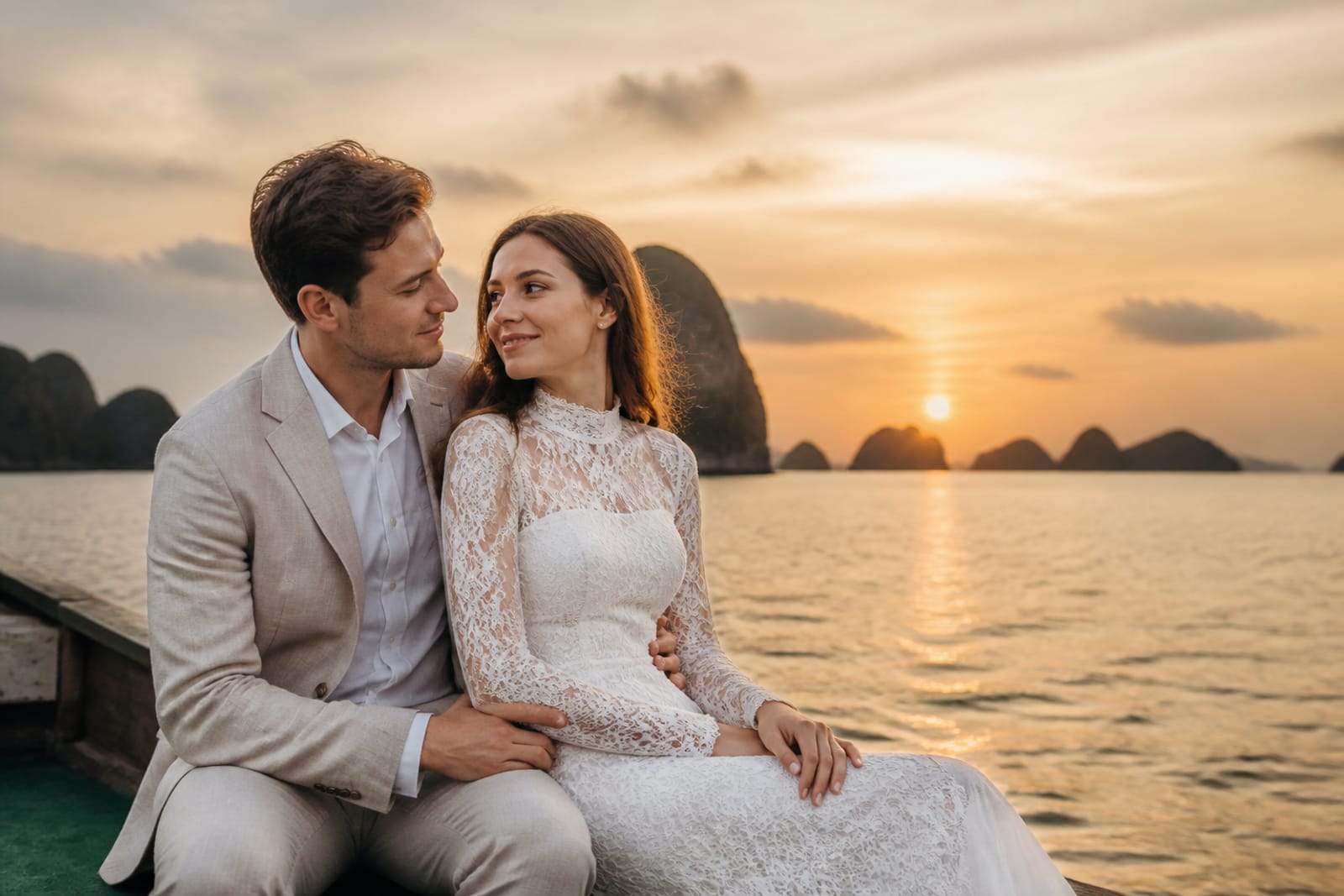
Ti Top Island combines isolation with geology: limestone peaks frame turquoise water, and the steep viewpoint keeps crowds away if you shoot before 10 a.m. Studio shoots offer perfect light control; beach shoots (Bai Chay, Tuan Chau) give longer, flatter shooting windows. Island shoots trade light consistency and walking ease for drama and privacy. The trade-off: tides, boat schedules and weather windows are narrow. A island elopement suits couples who prioritize storytelling and landscape depth over comfort and flexibility.
📸 Book on WhatsApp — pre-wedding & elopement
---
Why does tide timing matter more on an island than on the mainland?
Tides control both boat access and sand stability. Slack tide (the window when currents pause, roughly 1–1.5 hours mid-tide) is safest for small boats; low tide exposes rocky foreshores and limits landing zones, while high tide can make tender docking difficult. If your shoot hits a poor tide window, the boat may wait or relocate to a sheltered beach nearby, eating into your allotted time. A photographer familiar with Ha Long's tidal calendar knows which hours suit which outfits: avoid heavy fabrics or trailing skirts during incoming tides when sand gets wet and cling. Book your shoot around your cruise operator's tidal schedule, not the other way around—this typically means morning slots (6:30–11 a.m.) are more reliable.
---
Season and weather: when is the light best for island elopement shots?
| Season | Light quality | Sea state | Crowds | Best for |
|---|---|---|---|---|
| Mar–May | Clear, low-angle at sunrise/9 a.m. | Calm | Moderate | Elopement, veil and fabric shots |
| Jun–Sep | Bright, overhead by 10 a.m.; haze common | Variable; typhoon risk | Low | Quick turnarounds, simple outfits |
| Sep–Nov | Golden late afternoon, misty mornings | Calming after typhoons | Moderate | Dusk or sunrise sessions |
| Dec–Feb | Cool, diffused, grey-blue skies | Choppy; cold | Peak | Moody tones; waterproofs essential |
Early March to May delivers consistent dawn light, low humidity and predictable seas. June–September afternoons heat quickly and create overhead shadows; haze blocks distant limestone views. October–November brings dramatic skies but unpredictable squalls. December–February is cool and grey, which suits muted, cinematic tones but demands cold-proof outfits. Avoid October–November typhoon season if you need guaranteed shooting days; if you're flexible, post-typhoon seas (late November onward) often produce the clearest water.
---
How do photographers handle logistics and insurance on an island shoot?
Island shoots require coordination across three parties: you, the cruise operator and the photographer. The cruise operator sets boat schedules, landing permissions and weather calloff policies—confirm whether your package allows custom boat timing or requires joining a scheduled excursion. A reputable photographer will ask for your cruise details weeks ahead, liaise with the boat captain on docking and safety, and carry insurance that covers maritime liability (many don't, and decline the job rather than risk it). Drones are common on Ha Long but banned without explicit operator approval—get that in writing from your cruise line before hiring a drone operator.
Weather calloffs vary: some photographers offer one free reschedule date; others are non-refundable if the operator cancels due to rough seas (check your contract). A photographer who shoots Ha Long regularly has learned which backup beaches (Tuan Chau, Bai Chay) offer similar light if Ti Top is inaccessible, and will have pre-scouted those. Assign one point person (you or the photographer) to text the boat captain the morning-of to confirm weather, sea state and timing.
---
What should you wear for an island elopement shoot, and what goes wrong?
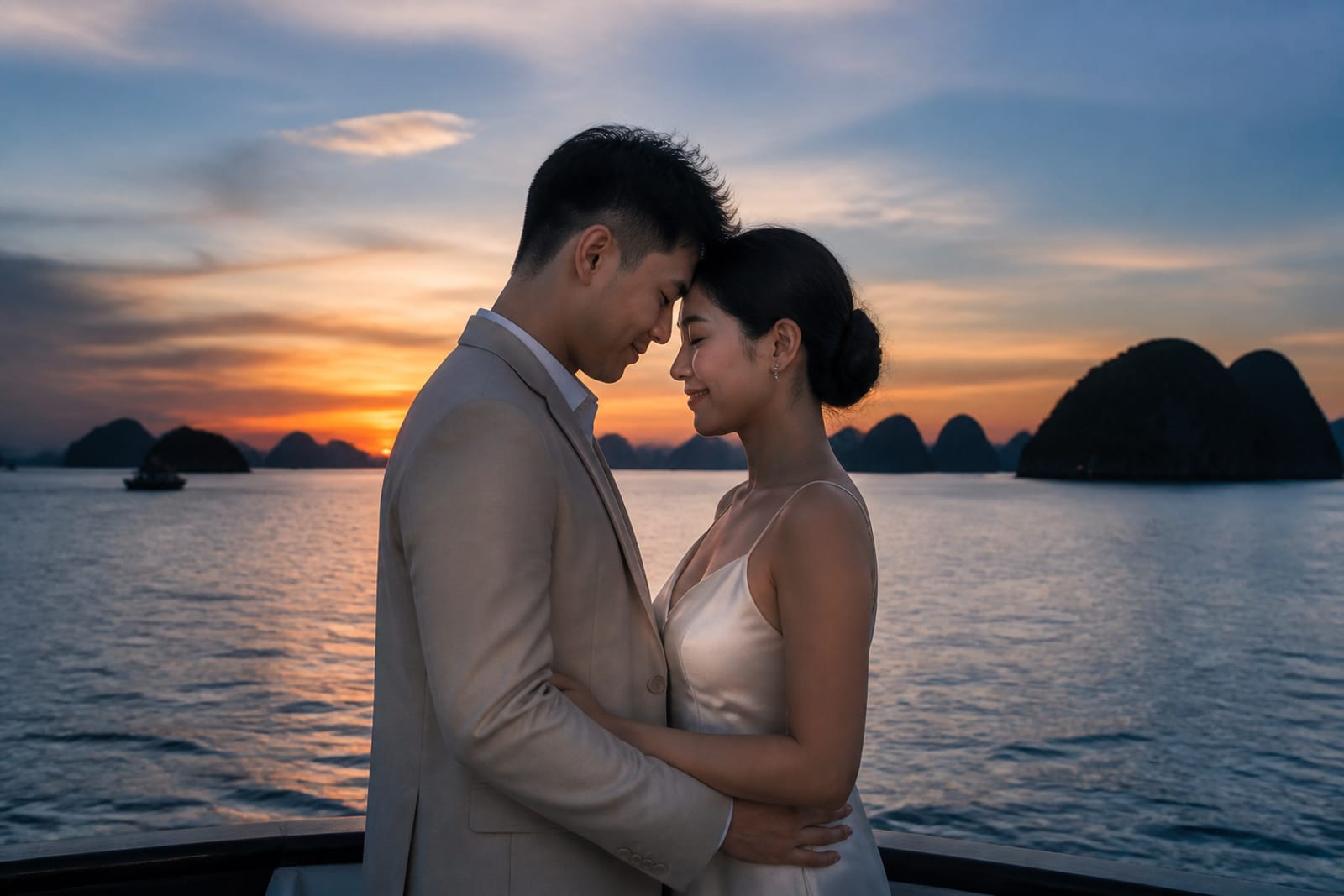
Island outfits face salt spray, sand, humidity and unpredictable damp. Heavy fabrics (velvet, silk charmeuse) absorb seawater and salt stains; lightweight linen, cotton or performance blends dry faster and resist creasing. Avoid trailing skirts unless the photographer can manage water shots (they'll need to gather and steady fabric during tidal sections). Footwear: the 80 steps are rocky and slick; flat sandals, climbing shoes or going barefoot are safe; heels will sink or slip. Layers work: a light wrap or cover-up lets you shed pieces if salt-spray wind picks up.
Common failures: couples arrive with dry-clean-only gowns and realize too late they can't kneel on damp rocks; outfits shift during boat rides, requiring 10-minute touch-ups at the summit; makeup runs in 95% humidity and salt air—waterproof brow and mascara, lightweight foundation and setting spray are non-negotiable. Bring a dry microfiber cloth and a change of undergarments; sand gets everywhere. A photographer who's shot island elopements before will remind you of this in your pre-shoot call and may offer makeup and hair at your hotel the morning of, using climate-controlled conditions to set makeup properly before the boat.
---
How do you choose between Cáo Studio's Hanoi team or a local Ha Long photographer?
Cáo Studio – Makeup & Photoshoot operates in Hanoi, Ho Chi Minh City and Hoi An; it does not shoot in Ha Long Bay. For an island elopement there, you'll hire a local photographer. Here's how to vet them:
- Portfolio specificity: ask to see 3+ full elopement shoots on Ti Top or nearby islands, not generic Ha Long cruise photos. Check light quality, outfit handling and how they frame the limestone backdrop.
- Crew and insurance: confirm they carry maritime liability insurance and won't hire unlicensed drones without your cruise operator's written consent.
- Backup plan: ask what happens if weather closes Ti Top that day—do they offer a free alternate date, or is it non-refundable? Will they shoot a backup beach instead?
- Timing flexibility: can they start before 7 a.m. to catch golden light? Do they work with your cruise operator's schedule or demand a private boat (cost factor you'll negotiate directly with them)?
- Communication: they should check weather 48 hours and 24 hours before your shoot and message you proactively with a green/yellow/red status.
If you want makeup, hair and outfit coordination in addition to shooting, a Hanoi-based studio like Cáo Studio can prepare you the morning of (at your hotel, or theirs), then you take a separate vehicle to the Ha Long port and meet your island photographer there. This splits roles but ensures professional makeup and a seamless morning.
---
What to check before you book an island elopement shoot
- Cruise operator approval: confirm they allow commercial photography and drones (if you want them) in writing. Check their weather and cancellation policy—does your photographer's reschedule align with their calendar?
- Photographer's experience: ask for references from ≥2 island elopement shoots they've shot in the last 12 months. Request a location scout report or pre-shoot call where they outline light windows and backup plans.
- Outfit and makeup logistics: if using a Hanoi studio for prep, confirm the hotel's checkout time doesn't clash with your boat departure. Allow 30–40 minutes travel from hotel to port.
- Insurance and permits: confirm the photographer carries maritime liability. Verify permit needs with your cruise operator (some require a permit fee or advance notice for commercial shoots).
- Backup date or reschedule terms: weather in Ha Long is unpredictable—Oct–Nov especially. Get the photographer's reschedule policy and any fees in writing.
- Timeline: ask for an hour-by-hour schedule: boat departure, landing, shoot window, locations visited (Ti Top, other islands), return time. Build in 15-minute buffers for weather or tidal delays.
- Deliverables and timeline: clarify how many edited images you'll receive, how long turnaround takes and what format (digital files, prints, album). Never assume these are included without asking.
---
Can Cáo Studio help with an island elopement outside Ha Long?
No—Cáo Studio – Makeup & Photoshoot operates only in Hanoi, Ho Chi Minh City and Hoi An. For an island shoot in Ha Long Bay, Nha Trang, Phu Quoc or any other destination, hire a local photographer in that region. If you're planning a multi-destination elopement—for example, a pre-wedding shoot in Hoi An or Hanoi, then an island shoot elsewhere—Cáo Studio can coordinate your Hanoi or Hoi An portion and recommend trusted local partners for the island leg. Reach out on WhatsApp to discuss a split itinerary.
📸 Book on WhatsApp — pre-wedding & elopement
---
Related reads
- Pre-wedding photoshoot guide: full overview of elopement, couple and group session styles
- Ao dai photoshoot: if you're blending traditional Vietnamese dress into your elopement story
- Couple photoshoot: same-day session types, location prep and seasonal tips
- FAQ: common questions about booking, reschedules and deliverables
- Lookbook: visual style reference and seasonal mood boards
FAQ
Do I need a local Ha Long photographer or can a Hanoi photographer travel to Ti Top Island?
A Hanoi-based photographer can travel to Ha Long (1.5–2 hours from the city), but they must have prior island shoot experience and maritime insurance. Confirm this in your initial chat on WhatsApp; Cáo Studio does not operate in Ha Long, but can recommend vetting criteria for a local partner. A local Ha Long photographer will have tidal and weather calendars built in.
What time of day has the best light for an island elopement shoot?
6:30–9 a.m. golden hour offers the clearest light and fewest shadows on limestone; avoid 11 a.m.–3 p.m. when overhead sun and haze flatten contrast. Late afternoon (4–6 p.m.) works if seas are calm, but tide timing may prevent boat access. Mar–May and Sep–Nov have the most consistent early light.
What happens if the weather is bad on my elopement day—am I refunded or can I reschedule?
Terms vary by photographer. Always ask in advance whether bad weather means a free reschedule, a rescheduled date at a different location (e.g., a mainland beach), or a non-refundable session. Get the policy in writing before paying. Your cruise operator's cancellation policy may also affect whether you can reach the island at all.
Can I bring a wedding dress to an island shoot, or will it get ruined?
Traditional wedding dresses with heavy fabrics, long trains and delicate embroidery will absorb salt water and sand and are difficult to manage on rocks. Lightweight linen, cotton or specialized moisture-wicking fabrics work better. An experienced island photographer will advise you on outfit choices before the shoot—ask during your pre-shoot consultation.
Do I need to hire a drone photographer for an island elopement shoot?
Drones are optional but popular for aerial framing of the limestone and water. However, they require explicit written permission from your cruise operator and the Ha Long operator—not all allow them. Confirm this months ahead. A skilled ground photographer without a drone can create equally dramatic shots using landscape depth and positioning; drones add budget and complexity but not always essential storytelling.
How far in advance should I book an island elopement photographer?
2–3 months is standard, especially if you're traveling in peak season (Mar–May, Sep–Nov). This gives the photographer time to review your cruise schedule, coordinate with the operator and scout conditions or plan backups. Last-minute bookings are possible but limit flexibility on reschedule dates or backup location swaps.
FAQ
Do I need a local Ha Long photographer or can a Hanoi photographer travel to Ti Top Island?
A Hanoi-based photographer can travel to Ha Long (1.5–2 hours from the city), but they must have prior island shoot experience and maritime insurance. Confirm this in your initial chat on WhatsApp; Cáo Studio does not operate in Ha Long, but can recommend vetting criteria for a local partner. A local Ha Long photographer will have tidal and weather calendars built in.
What time of day has the best light for an island elopement shoot?
6:30–9 a.m. golden hour offers the clearest light and fewest shadows on limestone; avoid 11 a.m.–3 p.m. when overhead sun and haze flatten contrast. Late afternoon (4–6 p.m.) works if seas are calm, but tide timing may prevent boat access. Mar–May and Sep–Nov have the most consistent early light.
What happens if the weather is bad on my elopement day—am I refunded or can I reschedule?
Terms vary by photographer. Always ask in advance whether bad weather means a free reschedule, a rescheduled date at a different location (e.g., a mainland beach), or a non-refundable session. Get the policy in writing before paying. Your cruise operator's cancellation policy may also affect whether you can reach the island at all.
Can I bring a wedding dress to an island shoot, or will it get ruined?
Traditional wedding dresses with heavy fabrics, long trains and delicate embroidery will absorb salt water and sand and are difficult to manage on rocks. Lightweight linen, cotton or specialized moisture-wicking fabrics work better. An experienced island photographer will advise you on outfit choices before the shoot—ask during your pre-shoot consultation.
Do I need to hire a drone photographer for an island elopement shoot?
Drones are optional but popular for aerial framing of the limestone and water. However, they require explicit written permission from your cruise operator and the Ha Long operator—not all allow them. Confirm this months ahead. A skilled ground photographer without a drone can create equally dramatic shots using landscape depth and positioning; drones add budget and complexity but not always essential storytelling.
How far in advance should I book an island elopement photographer?
2–3 months is standard, especially if you're traveling in peak season (Mar–May, Sep–Nov). This gives the photographer time to review your cruise schedule, coordinate with the operator and scout conditions or plan backups. Last-minute bookings are possible but limit flexibility on reschedule dates or backup location swaps.
Ao dai, makeup, hair and a local photographer in Hanoi or Saigon — one WhatsApp message.