/pre-wedding-photoshoot
Elopement Photos at Tran Quoc Pagoda: Hanoi Shoot Planning
Elopement photos at Tran Quoc Pagoda mean an intimate couple shoot at Hanoi's 6th-century lakeside shrine, famous for its layered roofs and tree-framed water views. The pagoda sits on a quiet peninsula with limited foot traffic outside peak hours, making it ideal for a focused session. Shoots typically run 90–120 minutes on-site; early morning (before 07:00) or late afternoon (16:30 onwards) offer the softest light and fewest tourists. Local authorities restrict certain areas at busy times, and respectful temple dress (shoulders covered, knees down) is required. Cáo Studio – Makeup & Photoshoot books elopement sessions in Hanoi, handling timing and location logistics, with makeup and styling included; confirm exact inclusions and shoot duration on WhatsApp before committing.
Tran Quoc Pagoda is one of Hanoi's most photographed landmarks, yet most elopement sessions there feel rushed or cluttered with tourists. The secret is timing, respect for the space, and working with a team that knows the pagoda's light patterns and access rules. This guide covers what makes it work, what doesn't, and how to plan a session that feels intimate despite the location's fame.
What makes Tran Quoc Pagoda special for elopement photography?
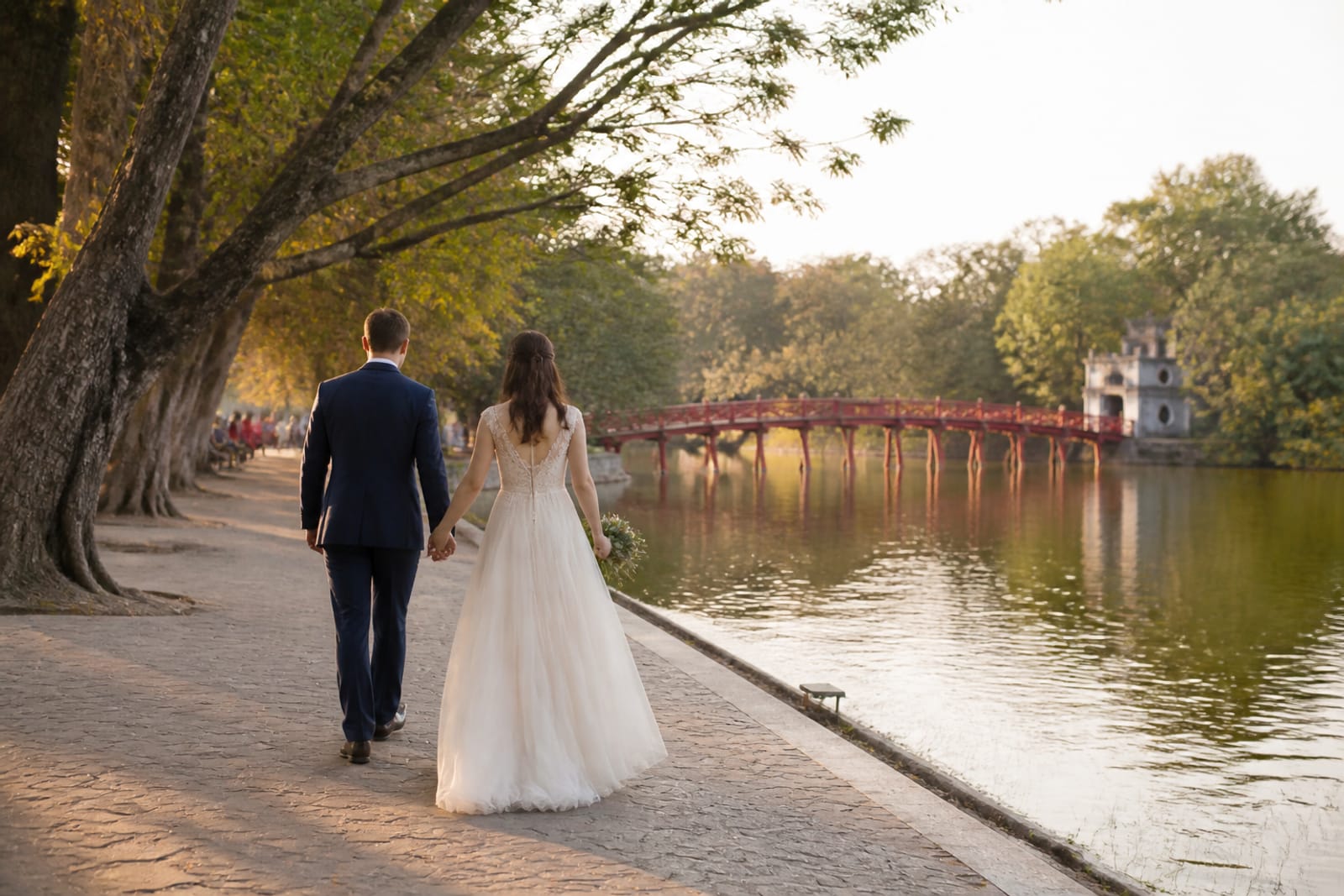
The pagoda's multi-tiered red-brick roofs, the water reflections, and the surrounding banyan trees create a layered visual depth few other Hanoi venues offer. The peninsula location means the water frames most angles, adding isolation even when the site is moderately busy. Early or late light hits the roofs at a low angle, casting warm tones and deep shadows that read well in photos. The main challenge: the pagoda is free and accessible, so midday draws school groups and tour parties. Timing is not optional—it is the entire shoot.
When is the best season and time of day to shoot here?
Autumn (October–November) is Hanoi's golden window: dry weather, cool air, soft light, and mild crowds compared to February–April. Winter (December–February) brings grey skies and chilly drizzle most days, requiring flexibility on backup dates. Spring (March–April) is humid and hazy, with unpredictable light and the pagoda's crowds thickening toward Tet and Easter. Summer (May–September) is extremely hot, humid, and rainy, with afternoon downpours and hard midday light that flattens the stonework. Within any season, shoot before 07:00 or after 16:30 to avoid foot traffic. Photographers must arrive 15–20 minutes early to scout light and brief the couple on movement and temple etiquette.
Do you need a permit or permission to shoot at Tran Quoc Pagoda?
Commercial photoshoots—including elopement sessions with a hired team—technically require approval from the pagoda's management. In practice, many couples and smaller teams shoot informally and leave quietly. A professional studio like Cáo Studio should verify access status before booking; ask directly on WhatsApp whether a shoot date allows commercial photography. If permits are required, the turnaround is usually a few days, and it costs a modest fee (confirm locally). Arriving early and dressing respectfully (no loud music, no tripod setup that blocks walkways) keeps interactions smooth. Always carry ID and be prepared to reschedule if officials ask you to leave.
| Timing | Best for | Light & crowds | Why it works |
|---|---|---|---|
| Before 07:00 | Intimate, reflective | Soft warm glow; almost empty | Minimal tourists; golden hour starts; quiet water |
| 07:00–11:00 | Natural, soft | Bright but diffused by trees | Crowds building slowly; still manageable |
| 11:00–16:00 | Avoid | Hard shadows, glare, packed | Peak tourists; flat light; difficult poses |
| After 16:30 | Dramatic, moody | Low golden/amber light; emptying | Second golden hour; pagoda roofs glow; few onlookers |
| Autumn (Oct–Nov) | Best season | Dry, cool, consistent | Clearest skies; soft shadows; mild daily crowds |
| Winter (Dec–Feb) | Needs flexibility | Grey, drizzle risk | Fewer tourists but weather unpredictable |
How does outfit choice affect the shoot at this location?
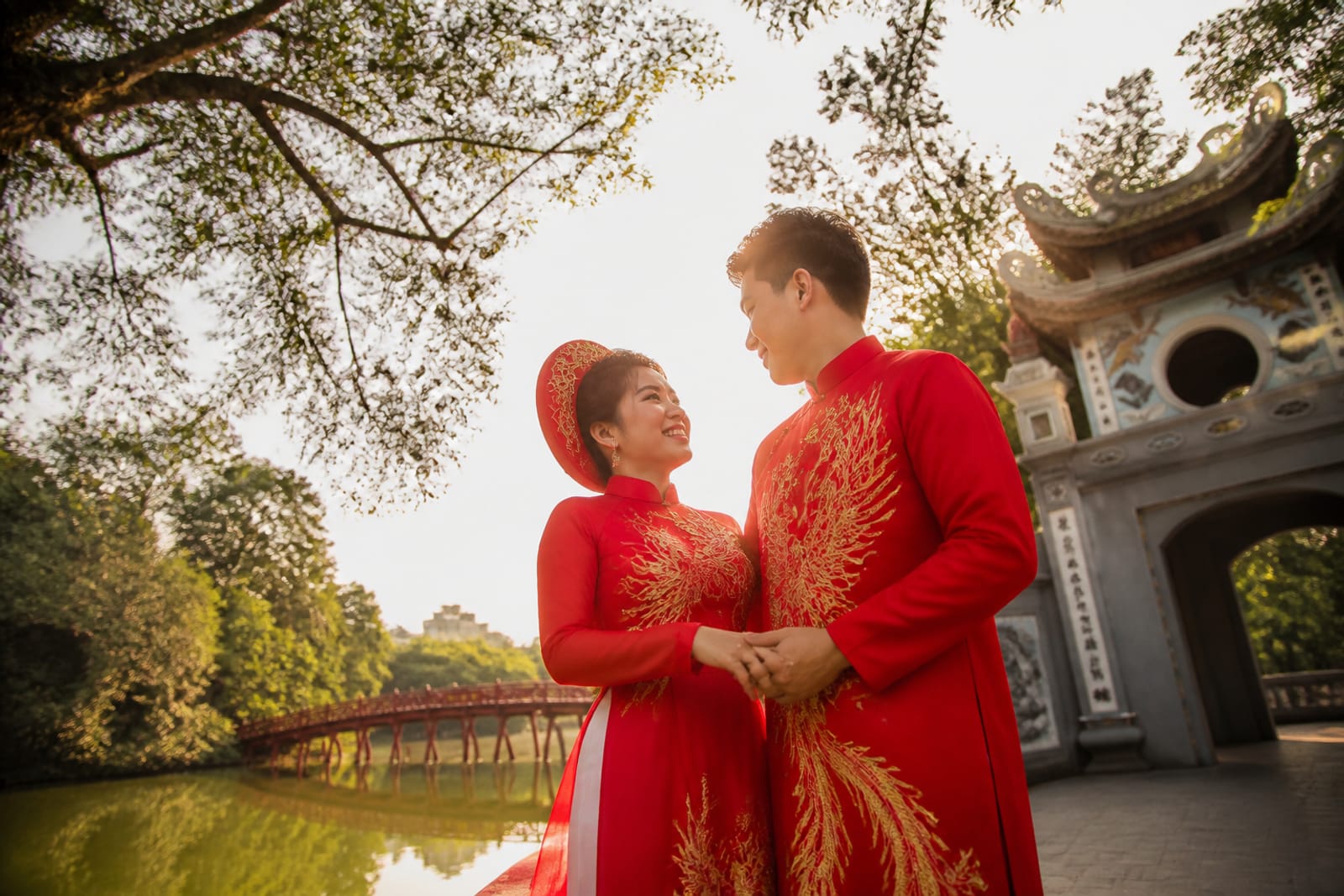
Traditional ao dai is the obvious choice—the pagoda's heritage architecture mirrors the garment's elegance, and red or jewel-tone fabric reads beautifully against the brick and water. A Western wedding dress or suit works if the couple prefers it, but the pagoda's tight staircases and narrow walkways demand practical footwear; high heels are risky on wet stone steps. If wearing an ao dai, confirm the tailor has added an inner slip and that the hem sits 2–3 cm above the ground to avoid dragging on damp paths. A lightweight shawl or stole helps with temperature swings and provides a prop for dynamic poses. Avoid logos, bright neon, or busy patterns; the pagoda's geometry and stonework are the backdrop, and solid or subtle fabrics let the location and your presence dominate the frame. Cáo Studio offers ao dai photoshoots with styling guidance; discuss outfit options before booking.
📸 Book on WhatsApp — pre-wedding & elopement
What is the typical flow of an elopement shoot at Tran Quoc Pagoda?
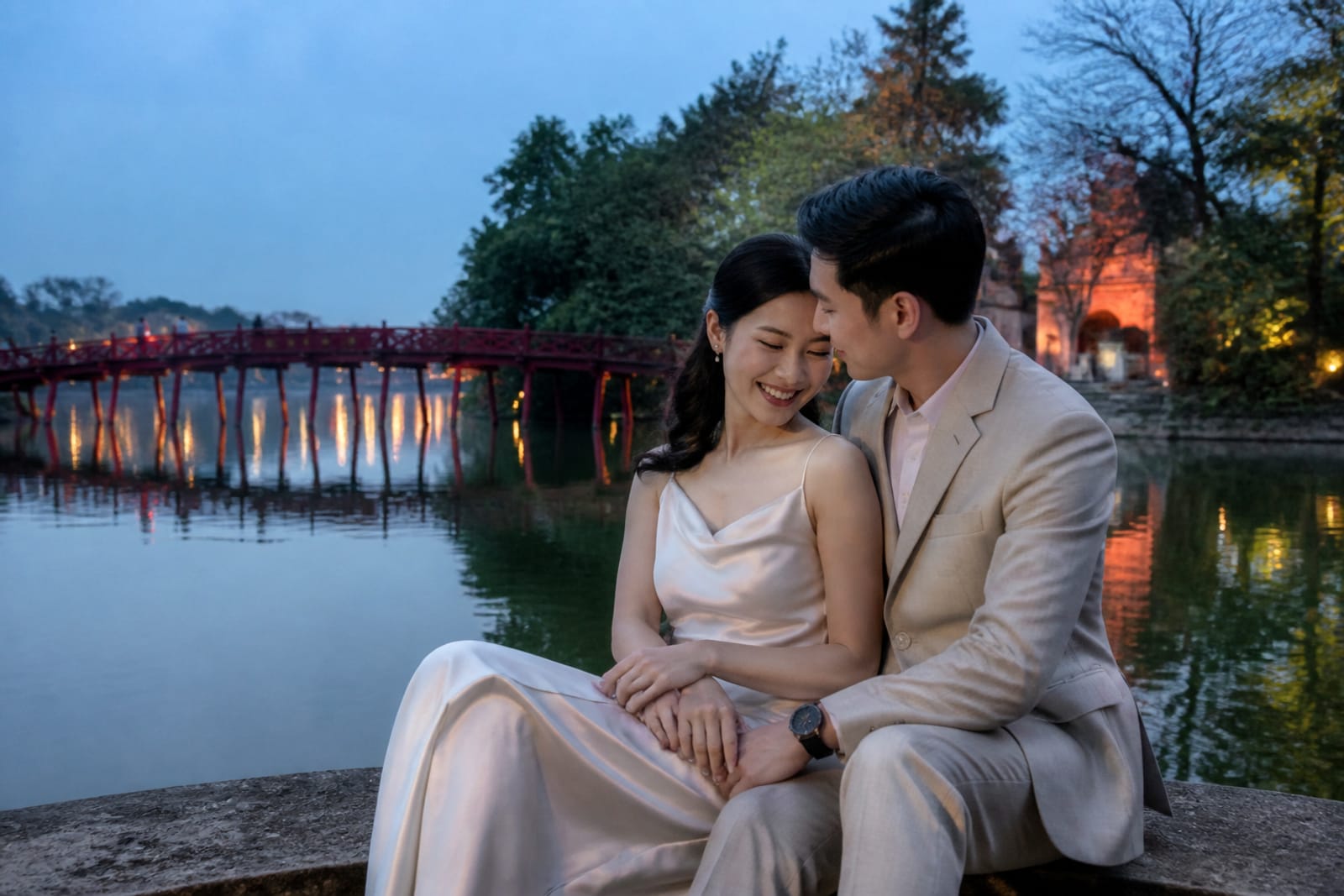
A professional session usually starts with the team meeting the couple 15 minutes early at a nearby café or the pagoda's entrance. The photographer scouts light and poses while makeup is freshened if needed. The couple then walks the main courtyard and staircase areas, taking posed and candid shots; this phase lasts 30–45 minutes. A second phase moves to quieter perimeter paths and the water's edge if access permits, capturing more intimate moments and reflections. The session wraps before the site becomes crowded, typically by 07:30 for a dawn shoot or by 18:00 for an evening one. A full session (with makeup included) usually takes 2–2.5 hours total, accounting for travel to the site, setup, and shoot time. File delivery and editing schedules vary—confirm exact timings and deliverable counts on WhatsApp when booking.
How do you compare Tran Quoc Pagoda to other Hanoi elopement locations?
Tran Quoc Pagoda offers iconic architecture and water framing but demands tight timing to avoid crowds. Ninh Binh's Trang An or Hang Mua provide more dramatic landscape scale and fewer tourists, but require a 1–2 hour drive from Hanoi, adding cost and logistics. Hoan Kiem Lake's pedestrian areas (especially west bank paths and island temples) are more accessible and require no permits, but feel less distinctive photographically. The Old Quarter's narrow streets and colonial facades work for intimate storytelling but lack the natural water and light of the pagoda. An ao dai shoot that combines the pagoda with a second location (temple grounds, lake path, street alley) maximizes variety without reshooting the same backdrop twice. Discuss multi-location options when booking; Cáo Studio's pre-wedding shoots can adapt to couples' priorities.
What weather and clothing backup plan should you prepare?
Hanoi's autumn and winter carry a drizzle risk; a light rain jacket or an umbrella becomes part of your prop styling. If rain is forecast, confirm with the photographer 24 hours before whether to reschedule or adapt (some couples embrace wet stonework's reflective drama). Winter temperatures (10–15°C) demand layering under the ao dai or suit; a hidden thermal layer or a tailored cardigan over the dress works well and can be removed for final shots. In summer, heat exhaustion is real—the pagoda offers minimal shade on the peninsula, so start early and bring water. Summer monsoon rains (May–September) can arrive suddenly; check the forecast the morning of the shoot and have a Plan B nearby, such as a covered temple area or a café interior. Cáo Studio's team will advise based on weather the day before; proactive communication with WhatsApp updates is standard.
What should you check before booking an elopement shoot here?
Before committing, clarify the following with the studio:
- Exact shoot duration: Does it include travel time to the pagoda, setup, and retouching delivery, or only on-site hours?
- Makeup and styling: Is a makeup artist included, or do you arrange your own?
- Outfit requirements: Can you wear an ao dai you own, or does the package include rental? (See ao dai rental for details.)
- Permission status: Has the studio confirmed Tran Quoc Pagoda permits for your chosen date, or is it your responsibility?
- Backup date: What happens if weather forces a reschedule? Is there a free rebooking window?
- Deliverables: How many edited photos, what format, when do you receive them?
- Second location: Is the session fixed to the pagoda only, or can it extend to nearby spots like Hoan Kiem Lake paths or Old Quarter streets?
Ask these on WhatsApp before paying any deposit. A transparent studio will answer in detail; vague responses are a red flag.
---
📸 Book on WhatsApp — couple photoshoots
FAQ
Do I need a Vietnamese ID to book an elopement shoot at Tran Quoc Pagoda?
No. International couples and visitors book regularly. Bring your passport when you arrive at the pagoda for the shoot. The studio's team will brief you on etiquette. Confirm arrival time and backup meeting spot on WhatsApp the day before.
Can I wear a Western wedding dress instead of an ao dai?
Yes. The pagoda's stairs and narrow paths suit practical footwear; avoid long trains or delicate fabrics that risk damage. An ao dai complements the heritage setting better and reads beautifully in photos, but your choice is yours. Cáo Studio handles both; discuss your outfit plan when booking.
What happens if it rains on my shoot date?
Confirm your studio's weather policy before booking. Light drizzle often creates moody, reflective images; many couples proceed. Heavy rain usually triggers a free reschedule within a set window (often 2 weeks). Check forecast 24 hours before and communicate with WhatsApp; the team advises on viability.
Is Tran Quoc Pagoda more expensive to shoot than other Hanoi locations?
Not inherently. Costs depend on shoot duration, makeup inclusion, outfit rental, and whether permits are required—not the location itself. Ask the studio for a quote on WhatsApp; they compare options (pagoda-only vs. multi-location, with/without makeup, ao dai rental) to fit your budget and vision.
How early do I need to arrive on the morning of my elopement shoot?
The photographer typically arrives 10–15 minutes early to scout and set up. You should arrive on time or slightly early for makeup (if the artist is meeting you there) and final outfit checks. Confirm exact meeting location and time on WhatsApp 24 hours prior.
Can I hire Cáo Studio for an elopement shoot at Tran Quoc Pagoda if I'm based in Ho Chi Minh City?
Yes. Cáo Studio operates in Hanoi and Ho Chi Minh City. For a Hanoi-based shoot, the Hanoi team handles it. Confirm booking timeline and any travel coordination on WhatsApp. For Saigon couples visiting Hanoi, allow travel and timing coordination when booking.
FAQ
Do I need a Vietnamese ID to book an elopement shoot at Tran Quoc Pagoda?
No. International couples and visitors book regularly. Bring your passport when you arrive at the pagoda for the shoot. The studio's team will brief you on etiquette. Confirm arrival time and backup meeting spot on WhatsApp the day before.
Can I wear a Western wedding dress instead of an ao dai?
Yes. The pagoda's stairs and narrow paths suit practical footwear; avoid long trains or delicate fabrics that risk damage. An ao dai complements the heritage setting better and reads beautifully in photos, but your choice is yours. Cáo Studio handles both; discuss your outfit plan when booking.
What happens if it rains on my shoot date?
Confirm your studio's weather policy before booking. Light drizzle often creates moody, reflective images; many couples proceed. Heavy rain usually triggers a free reschedule within a set window (often 2 weeks). Check forecast 24 hours before and communicate with WhatsApp; the team advises on viability.
Is Tran Quoc Pagoda more expensive to shoot than other Hanoi locations?
Not inherently. Costs depend on shoot duration, makeup inclusion, outfit rental, and whether permits are required—not the location itself. Ask the studio for a quote on WhatsApp; they compare options (pagoda-only vs. multi-location, with/without makeup, ao dai rental) to fit your budget and vision.
How early do I need to arrive on the morning of my elopement shoot?
The photographer typically arrives 10–15 minutes early to scout and set up. You should arrive on time or slightly early for makeup (if the artist is meeting you there) and final outfit checks. Confirm exact meeting location and time on WhatsApp 24 hours prior.
Can I hire Cáo Studio for an elopement shoot at Tran Quoc Pagoda if I'm based in Ho Chi Minh City?
Yes. Cáo Studio operates in [Hanoi](/hanoi) and [Ho Chi Minh City](/saigon). For a Hanoi-based shoot, the Hanoi team handles it. Confirm booking timeline and any travel coordination on WhatsApp. For Saigon couples visiting Hanoi, allow travel and timing coordination when booking.
Ao dai, makeup, hair and a local photographer in Hanoi or Saigon — one WhatsApp message.