/pre-wedding-photoshoot
Elopement photos at Vung Tau lighthouse: guide to planning a session
Vung Tau lighthouse elopement photos work best during the dry season (December to April), when morning or late-afternoon light hits the rocky shore without haze or sudden rain. The site requires a permit and draws day-trippers, so arrival before 6 a.m. or after 5 p.m. reduces crowds; bring a change of outfit (casual and formal, or ao dai and dress) to shift mood between scenes. You'll need a photographer comfortable on uneven terrain and aware of tide times and local rules. Cáo Studio operates in Hanoi, Ho Chi Minh City and Hoi An—for Vung Tau, you'll hire a local-based shooter. Plan 2–3 hours on-site, confirm permit access with your photographer, and scout the rocks in daylight if possible to avoid slips during the session.
Is the Vung Tau lighthouse the right elopement spot for your shoot?
The lighthouse sits on a headland 20 km southeast of downtown Vung Tau, accessible by motorbike or taxi from the city center. The rocks are dramatic, the water is visible, and isolation is possible in early morning—but the site has foot traffic, uneven stone, and tide considerations. It suits couples wanting colour and texture without paying for a studio or traveling inland. If you prefer manicured gardens or urban backdrops, Vung Tau's temple gardens or beachfront promenade may work better. The real advantage here is raw geography: dramatic light on water, authentic weathered stone, minimal wedding-industry polish.
When do light and weather align for Vung Tau lighthouse elopement photos?
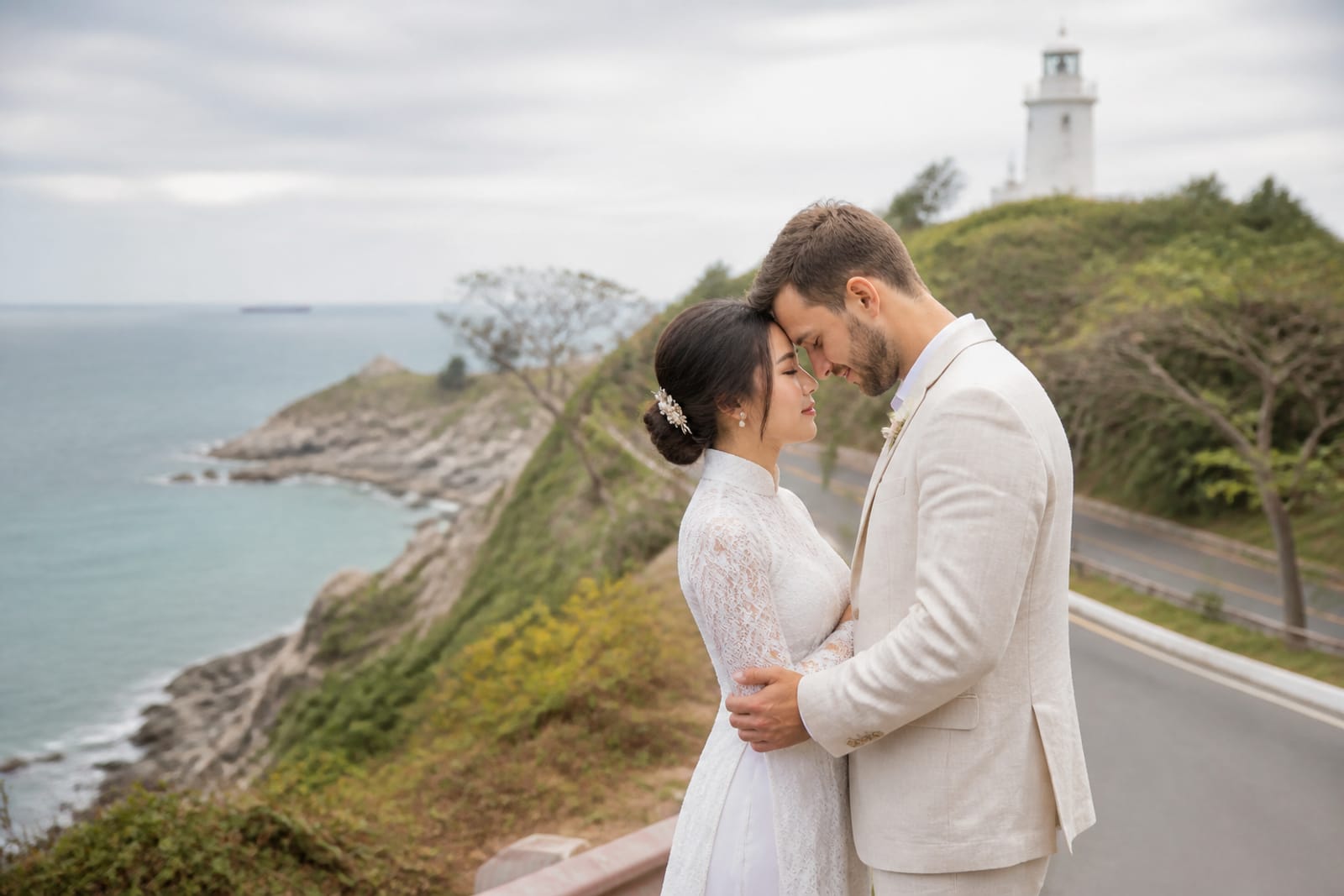
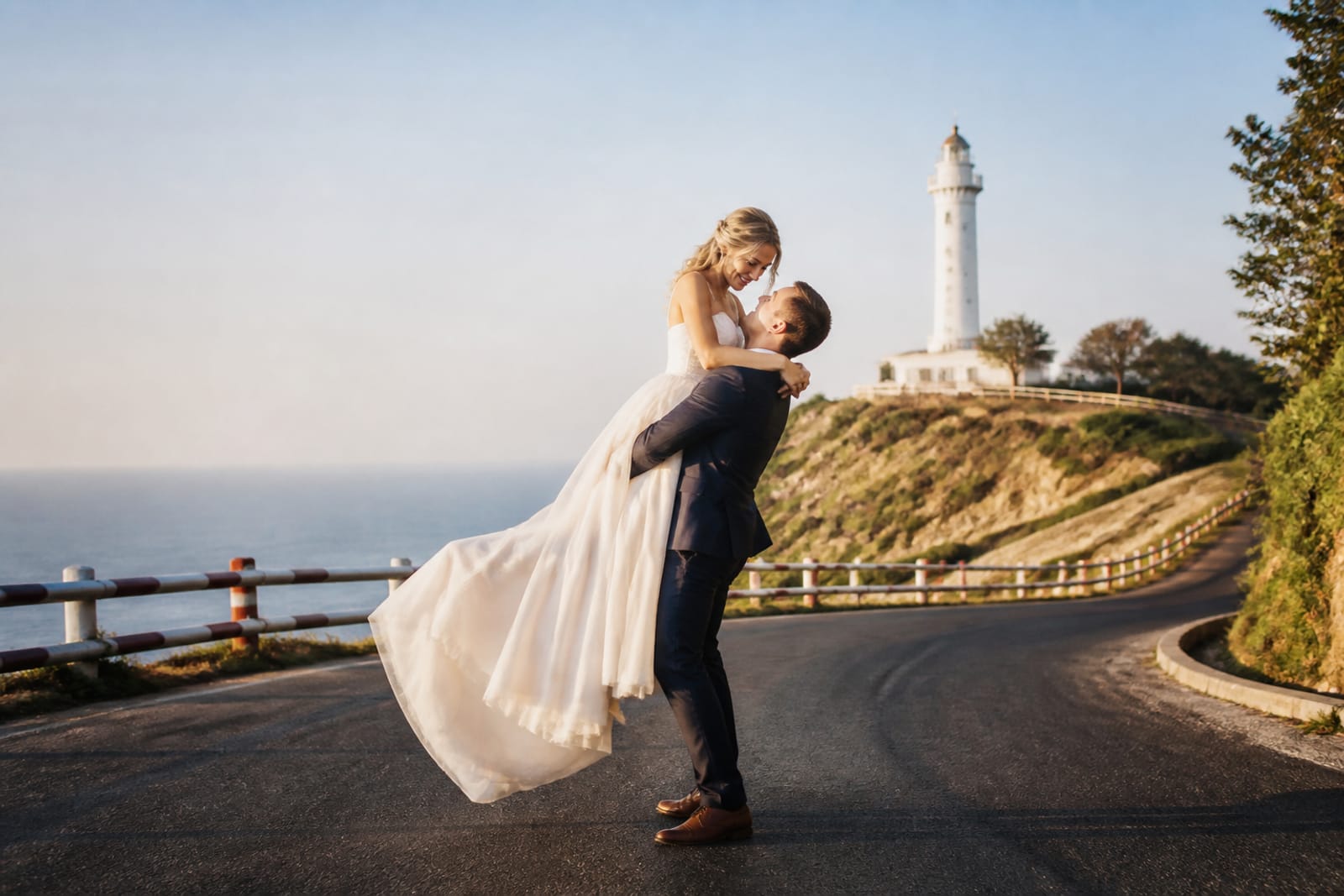
Vung Tau has a dry season from December to April and a wet season from May to November. During dry months, morning light (6–8 a.m.) rakes across the rocks from the east, while evening (5–7 p.m.) bathes the tower and sea in warm amber. Midday (10 a.m.–3 p.m.) is hard and flat—avoid it. Rain is rare in dry season but brief afternoon showers can occur; a photographer experienced with contingency is essential. If you travel May–November, plan for overcast skies and sudden downpours; some days are still shootable, but timing becomes fragile. Pack layers and waterproof gear regardless, and confirm weather with your photographer the morning of the shoot.
What outfit and styling choices work on rocky, exposed terrain?
Elopement at a lighthouse demands footwear and fabric that withstand salt air and uneven stone. An ao dai is striking in photos but impractical on wet rocks—reserve it for a calmer second location or a quick shot near a safer ledge. A knee-length rehearsal dress, slip dress, or structured gown works if you're willing to hike; bring waterproof heels or flats, and ask your photographer to carry gear up the rocks while you focus on footing. For comfort and safety, wear a second outfit: casual jeans and a linen shirt for arrival, then change into formal wear for the main shoot. Hair and makeup should be weather-resistant (mist, salt spray, humidity); a stylist familiar with coastal shoots knows to use setting spray and clips that hold in wind. Consider dyed or printed fabric that photographs richly in golden light.
| Outfit Option | Best Light Time | Why It Works | What to Watch |
|---|---|---|---|
| Ao dai + formal dress change | Early morning or sunset | Two moods in one shoot; ao dai glows in warm light; change breaks up the sequence | Dress is hard on uneven rocks; bring a helper for hem management |
| Rehearsal or slip dress + casual layer | Flexible (6–8 a.m. or 5–7 p.m.) | Easier movement on terrain; looks modern and intimate; weather-resistant | Less cultural colour; risks looking underdressed if not balanced with jewelry and hair |
| Gown + waterproof heels or flats | Sunset (5–7 p.m.) | Romantic, dramatic; long skirt photographs wide against the sea | Hems drag on wet stone; heels slip; require a spotter or strong photographer's hand |
| Structured dress + denim jacket + boots | Any dry-season hour | Practicality meets editorial; works in wind; protects from spray | Reads less formal; needs sharp styling (leather, metals) to avoid looking casual |
How do you find and vet a photographer for a Vung Tau lighthouse elopement?
Cáo Studio operates in Hanoi, Ho Chi Minh City and Hoi An (by appointment)—we do not shoot Vung Tau. For an elopement at the lighthouse, hire a local Vung Tau or Ho Chi Minh City–based photographer. Start by asking your accommodation or a local fixer for referrals; check their portfolio for rocky, coastal, or overcast-weather work (not just sunny beach snaps). Ask specifically: Have they shot at Vung Tau lighthouse before? Do they know permit rules? Can they reach the site early and stay late? Request a phone call (not email) to discuss light timing and backup plans if weather turns. Red flags include vague replies, no prior coastal or elopement work, or unwillingness to scout in advance. A good fit is someone who asks questions about your aesthetic, proposes locations beyond the lighthouse, and has a backup plan for rain. Confirm all deliverables in writing: number of edited images, editing style, delivery timeline, and payment terms before signing.
What logistical checks matter before booking a Vung Tau lighthouse elopement session?
Visit or contact the Vung Tau tourism board to confirm current permit requirements for photography at the lighthouse. Tides affect both the look of the rocks and safe footing—your photographer should provide tide times for your chosen date. Book transportation in advance: a private taxi or motorbike with a driver who can wait 2–3 hours is essential, as rideshare apps are unreliable outside downtown. Plan a backup indoor or sheltered location in case of sudden rain (a temple, café, or promenade pavilion). Confirm makeup and hair: if you want professional styling, either book a makeup artist in Vung Tau or travel with one from Hanoi or Saigon. Dress transport is critical—carry formal wear in a sealed garment bag, never in a humid motorbike trunk. Arrive the evening before or very early morning, not on the day of travel. Brief your photographer on any jewelry, accessories, or props you're bringing; agree in advance which is essential and which is optional if conditions are tight.
What should you check before booking a local Vung Tau photographer?
Before committing, ask to see a full edited gallery (10+ images) from a recent elopement or couple shoot, preferably at an outdoor or coastal location. Check whether their editing style matches your vision: some photographers oversaturate colour, while others keep a natural, moody tone. Confirm the session fee, number of edits, delivery format (digital files, albums, prints), and timeline—don't assume "48 hours" like Cáo Studio's standard turnaround. Ask if they include location scouting, second-shooter backup, or equipment insurance. Check their cancellation and rescheduling policy if weather is bad. Request a written contract that specifies what you'll receive: total number of edited photos, whether raw files are included, copyright terms, and payment milestones. Call previous couples directly if the photographer provides references. Verify they have backup gear (hard drives, batteries, lenses) in case of failure on the day. A serious photographer will answer all questions without hesitation; if they're evasive, keep looking.
---
Comparison: solo photographer vs. team approach for Vung Tau elopement
If you prioritize simplicity and a quiet, intimate vibe, a single local photographer works. You pay one fee, receive straightforward deliverables, and have minimal fuss. But a solo shooter cannot oversee hair and makeup styling if they're focused on light and framing—you manage appearance separately.
A team (photographer + makeup artist + stylist) is rare in Vung Tau for elopement shoots. If you travel from Hanoi or Ho Chi Minh City, consider hiring from there: Cáo Studio coordinates makeup and hair at your hotel and runs pre-wedding shoots in Hanoi and Saigon, then you hire a local Vung Tau photographer separately. This splits responsibility but ensures professional styling. Weigh convenience (one contact) against control (choosing specialists you trust).
---
📸 Pre-wedding shoots in Hanoi or Ho Chi Minh City | 💄 Makeup & hair at your hotel | 🌸 See the lookbook
---
Key decisions before you commit
Timing: Book a dry-season date (December–April) and confirm exact arrival and light times with your photographer 48 hours in advance.
Outfit and practicality: Choose footwear and fabric that work on wet, uneven stone; bring two outfits to vary mood without fighting the terrain.
Photographer vetting: Require a phone conversation, portfolio proof of coastal or elopement work, and a written contract with all deliverables listed.
Logistics: Confirm permit, tides, transport, backup location, and makeup artist before the shoot date—do not improvise on the day.
Backup plan: If weather is poor, your photographer should have a second location scouted; agree in advance whether you reschedule or accept overcast shots.
---
FAQ
Does Cáo Studio shoot at Vung Tau lighthouse?
No, Cáo Studio operates in Hanoi, Ho Chi Minh City and Hoi An only. For a Vung Tau session, hire a local photographer familiar with the lighthouse site, permits, and coastal weather. We recommend asking your hotel or a fixer for referrals.
What's the best time of day to shoot at Vung Tau lighthouse?
Early morning (6–8 a.m.) for soft, directional light on the rocks, or late afternoon (5–7 p.m.) for warm amber on the tower and sea. Midday is hard and flat; avoid 10 a.m.–3 p.m.
Do I need a permit to photograph at Vung Tau lighthouse?
Yes. Contact the Vung Tau tourism board or lighthouse authority to confirm current requirements. Your photographer should be familiar with local rules and help with paperwork if needed.
Can I wear an ao dai for an elopement at the lighthouse?
Ao dai photographs beautifully in golden light, but the rocky, uneven terrain makes walking risky in a long skirt. Reserve it for a calmer second location or a quick shot near a safe ledge; wear a practical dress on the rocks.
How long does a typical lighthouse elopement session take?
Plan 2–3 hours on-site, including arrival, outfit changes, multiple positions, and movement between safe areas. Early-morning sessions risk being rushed; late afternoon allows more unhurried shooting.
Should I hire makeup and hair if I'm shooting at Vung Tau?
Yes. Either book a local makeup artist in Vung Tau or travel with one from Hanoi or Ho Chi Minh City. Professional styling ensures your appearance holds in salt air, wind, and humidity. Confirm in advance that your artist has coastal wedding experience.
What happens if it rains on my elopement shoot date?
The dry season (December–April) sees rare rain, but brief showers can occur. Your photographer should agree in advance on a backup indoor or sheltered location (temple, café, pavilion). Confirm whether you reschedule, accept overcast shots, or move to the backup spot.
FAQ
Does Cáo Studio shoot at Vung Tau lighthouse?
No, Cáo Studio operates in Hanoi, Ho Chi Minh City and Hoi An only. For a Vung Tau session, hire a local photographer familiar with the lighthouse site, permits, and coastal weather. We recommend asking your hotel or a fixer for referrals.
What's the best time of day to shoot at Vung Tau lighthouse?
Early morning (6–8 a.m.) for soft, directional light on the rocks, or late afternoon (5–7 p.m.) for warm amber on the tower and sea. Midday is hard and flat; avoid 10 a.m.–3 p.m.
Do I need a permit to photograph at Vung Tau lighthouse?
Yes. Contact the Vung Tau tourism board or lighthouse authority to confirm current requirements. Your photographer should be familiar with local rules and help with paperwork if needed.
Can I wear an ao dai for an elopement at the lighthouse?
Ao dai photographs beautifully in golden light, but the rocky, uneven terrain makes walking risky in a long skirt. Reserve it for a calmer second location or a quick shot near a safe ledge; wear a practical dress on the rocks.
How long does a typical lighthouse elopement session take?
Plan 2–3 hours on-site, including arrival, outfit changes, multiple positions, and movement between safe areas. Early-morning sessions risk being rushed; late afternoon allows more unhurried shooting.
Should I hire makeup and hair if I'm shooting at Vung Tau?
Yes. Either book a local makeup artist in Vung Tau or travel with one from Hanoi or Ho Chi Minh City. Professional styling ensures your appearance holds in salt air, wind, and humidity. Confirm in advance that your artist has coastal wedding experience.
What happens if it rains on my elopement shoot date?
The dry season (December–April) sees rare rain, but brief showers can occur. Your photographer should agree in advance on a backup indoor or sheltered location (temple, café, pavilion). Confirm whether you reschedule, accept overcast shots, or move to the backup spot.
Ao dai, makeup, hair and a local photographer in Hanoi or Saigon — one WhatsApp message.