/family-photoshoot
Family Wedding Photos in Mu Cang Chai: Planning Guide & Local Photogra
Mu Cang Chai, a remote valley in northern Vietnam's Yen Bai province, is prized for family wedding photos because its terraced landscape provides scale and natural framing that monument-based shots cannot match. Sessions work best during May–June (water-filled terraces, green reflection) or mid-September to early October (golden harvest). The terrain is steep and muddy; families with young children or elderly parents need a photographer experienced in mountain logistics. Cáo Studio does not operate there—the studio shoots in Hanoi, Ho Chi Minh City and Hoi An only—but this guide will help you find and vet a local Mu Cang Chai photographer who understands how to direct movement through uneven terrain, dress choices for mud and wind, and the brief golden hours that make the light work. ---
Where exactly do family photos happen in Mu Cang Chai?
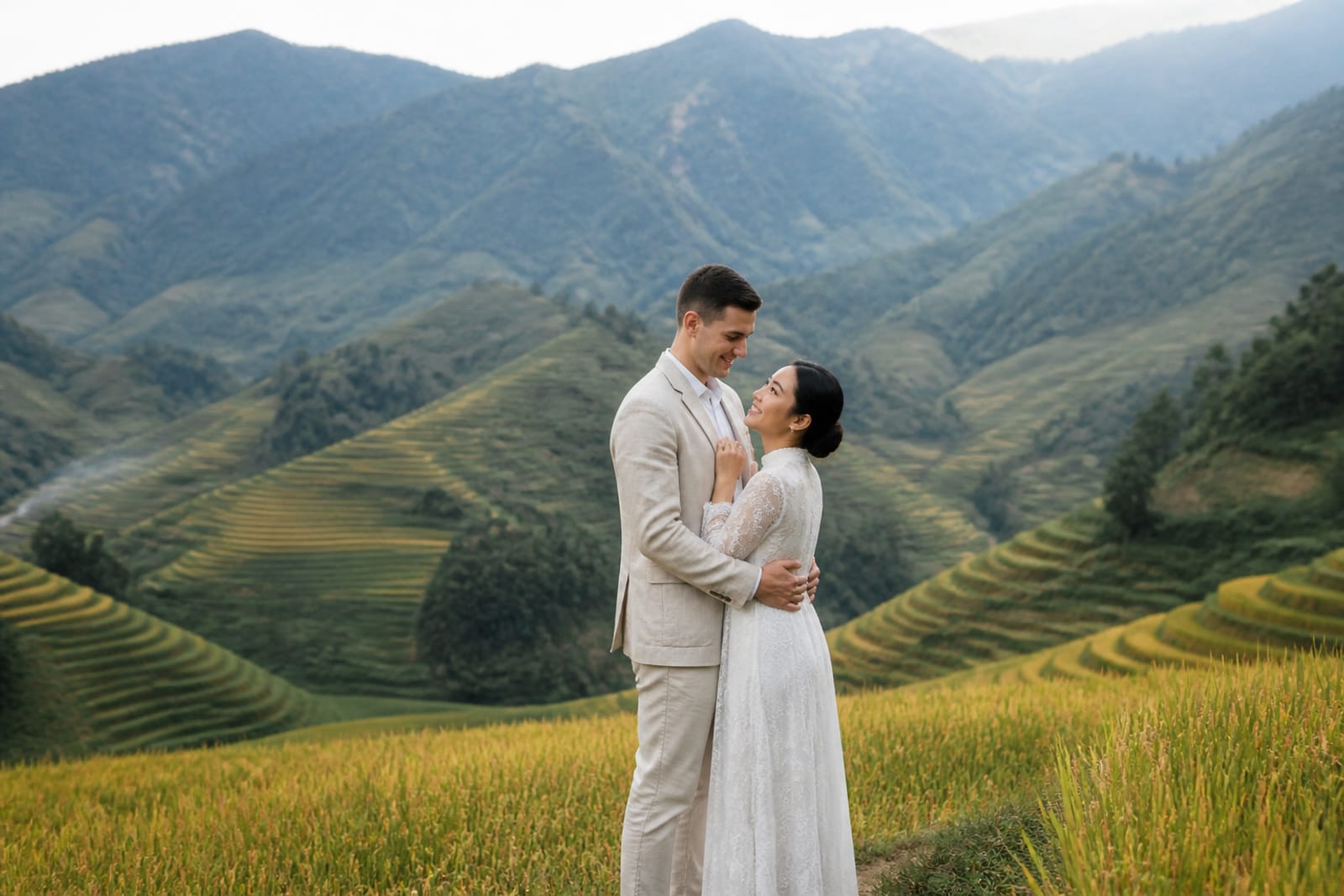
The valley has three main photo zones: the upper terraces around Tham Tu hamlet (steeper, fewer tourists, harder walking), the midfield rice fields near Hang Kia–Pa Co National Park access roads (more accessible, midday glare), and the lower terraces approaching La Pan Tan village (gentler slopes, better for children and elders). Most family shoots use the upper or lower zones because midfield light is flat between 10 am and 3 pm. Ask your local photographer which zone suits your family's fitness level and your chosen month's water/harvest stage—this is not negotiable. The walk from the road to good framing typically takes 15–30 minutes over uneven, sometimes wet ground.
---
What's the best time of year for family shots here—and why does it matter?
| Season | Terraces | Light quality | Best for | Walking difficulty | Rain risk |
|---|---|---|---|---|---|
| May–Jun | Water-filled, green | Soft morning; strong midday glare | Reflections, lush backdrops, large families | Moderate; muddy | Low–moderate |
| Jul–Aug | Green, grown | Bright but hazy; afternoon clouds | Green contrast, but harsh noon | Moderate | High (afternoon storms) |
| Sep–early Oct | Golden harvest | Golden hour (6–8 am, 4–5:30 pm); soft all day | Best light; aerial golden tones; smaller crowds | Moderate–high (steep, uneven) | Low |
| Oct–Nov | Post-harvest, brown | Clear but cool; morning mist | Moody, intimate; mist adds mystery | Moderate | Moderate (early-month typhoon tail) |
| Dec–Feb | Fallow, misty | Gray, soft, diffused; limited golden hour | Moody, intimate; fewer tourists; cold | Easier (less water/mud) | Low |
The golden-hour window (mid-September to early October) is shortest but most cinematic—sunrise at 6:10 am, sunset by 5:15 pm—meaning a 2-hour morning or 1.5-hour evening shoot to catch real light. May–June offers easier full-day timing but requires sun management (families with young children need shade and hydration breaks). Winter (Dec–Feb) is misty and moody but coldest; elderly parents may struggle. Ask your photographer which season fits your family's patience and stamina, not just Instagram aesthetics.
---
How do you dress a multigenerational group in a mountain terrain that destroys clothes?
The terraces are wet, muddy and steep. Ao dai (the traditional Vietnamese tunic) is beautiful but impractical for families with kids unless you're shooting at the vehicle edge or stationary poses—the fabric trails through mud and becomes a liability when holding a toddler or steadying a parent. Smart choices: lightweight, long linen or cotton separates in neutral or earthy tones (cream, sage, soft gray, rust); children in simple, washable layers (avoid whites); elderly parents in comfortable, non-slip shoes and long-sleeved lightweight layers (sun and insect protection). If you want ao dai in the shoot, plan two outfits—change into it for 15 minutes of shots in the safest, flattest framing area, then revert to hiking clothes for movement-based frames. Bring a lightweight rain jacket or scarf; mountain wind is constant and unpredictable. Cáo Studio's ao dai rental works for studio or valley-edge shots, but if you're walking the terraces themselves, hire locally and choose practical base layers first.
---
What's the difference between hiring a Hanoi studio (day trip) vs. a local Mu Cang Chai photographer?
| Approach | Travel time | Local terrain knowledge | Cost factors | Best for |
|---|---|---|---|---|
| Hanoi studio day trip (e.g., Cáo Studio if they offered Mu Cang Chai—they don't) | 3–4 hours each way, reduced shooting time | Minimal; team unfamiliar with village paths, seasonal water levels, local guides | Higher (studio markup, travel, accommodation for crew) | Couples wanting city-based convenience; cannot realistically shoot full-day mountain work |
| Local Mu Cang Chai photographer (freelance or small studio in Yen Bai) | <1 hour from your hotel or start point | Knows exact terrace access, timing, village safety, which areas are safe for kids/elders in each month | Lower direct cost; factor in guide fee (if separate), vehicle rental if needed | Families wanting authentic, efficient local direction and real mountain expertise |
A local photographer in or near Mu Cang Chai saves travel time and knows the terrain intimately—they'll know which upper terrace is passable after rain, where the safest descent is for a 70-year-old, and which hamlet's farmers allow morning shoots. They also speak village dialect and can coordinate with local guides if required. Hanoi studios (including Cáo Studio, which operates in Hanoi, Ho Chi Minh City and Hoi An only) work best for shorter trips where mountain half-days are a side activity, not the main event. If Mu Cang Chai is your family's primary photo goal, hire locally.
---
How do you actually find and vet a mountain photographer you've never met?
Start with photography communities and expat forums in Hanoi and Yen Bai province; ask for references from recent family shoots (not just couples). Red flags: no examples of multigenerational work, no mention of seasonal timing, vague descriptions of "adventure" or "candid" (real experience shows specific light, outfit, terrain management). Good signs: a photographer who asks about family ages, mobility, outfit preferences and season choice before quoting; who discusses how they'll handle kids' energy or parents' fatigue during a shoot; who offers a local guide contact if needed; who shows before/after frames proving they've shot on actual terraces (not edited fantasies). Request 2–3 references from families with children and elderly members shot in the same month you're planning. Ask your local hotel concierge—they often know trusted photographers or can recommend one who's worked with Western families. On WhatsApp (Vietnam's primary messenger), send a message with your family composition (parents, kids, ages), chosen month, and a link to 2–3 images you admire (style reference); a serious photographer will respond with specific questions and honest logistics, not hype.
---
What happens during the shoot itself—and what goes wrong?
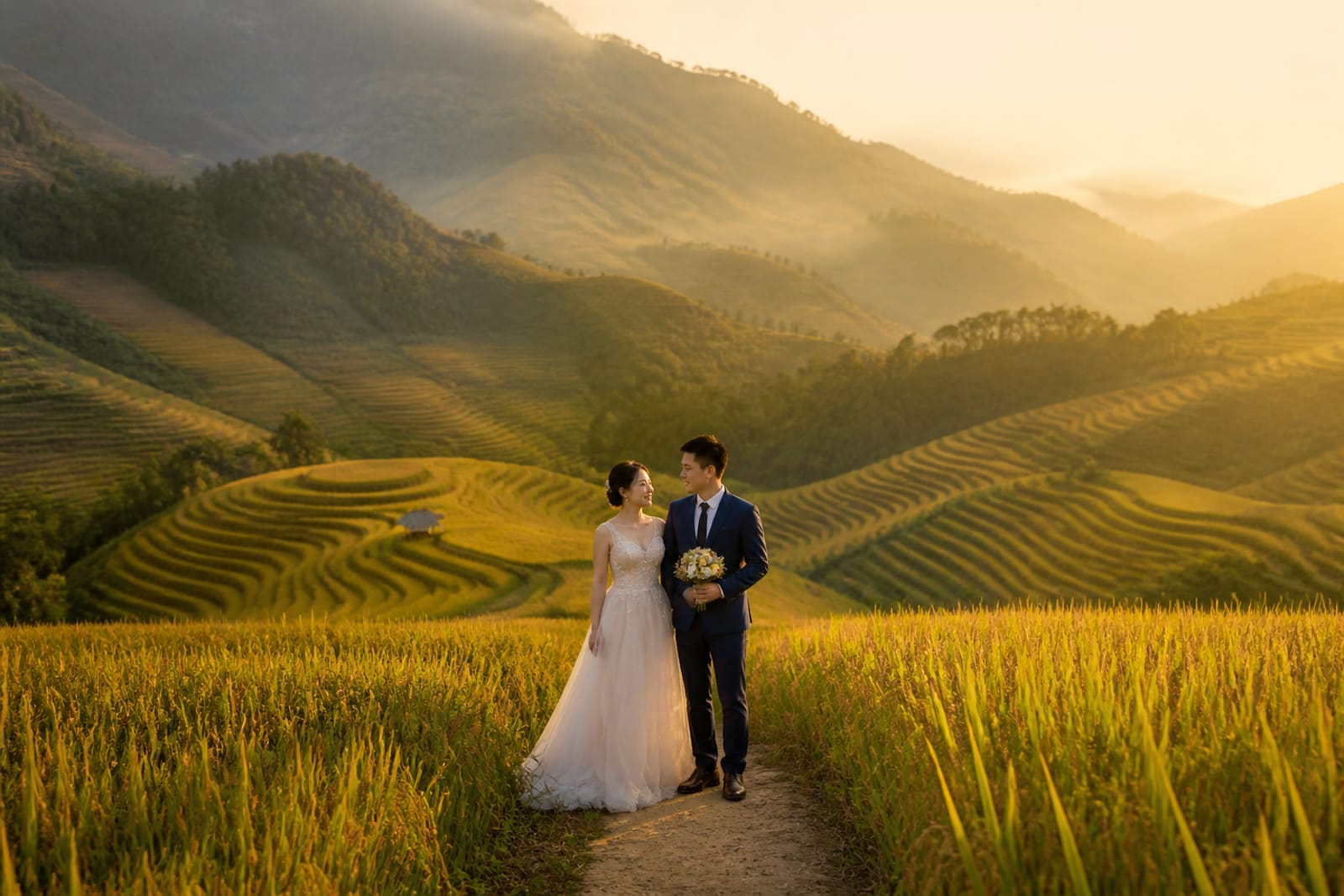
A well-organized family shoot in Mu Cang Chai follows this rhythm: you arrive at the trailhead at 5:30 am (for 6:10 am sunrise light); the photographer directs the family to walk through the upper terrace field toward the sun, stopping only when light and framing align (this takes 30–45 minutes for 3–4 strong frames). Children are guided to hold a parent's hand, look at siblings, sit on a terrace ridge—never stand stiffly in front of monuments. By 7:30 am, the light hardens; you either break for a village breakfast or (in September–October) continue to mid-field locations for detail and group shots. Afternoon light rarely works unless you're mid-mountain or in deep shadow. Common failures: starting too late (tourists arrive by 7:30 am; light fades fast); not accounting for a child's energy crash (plan 2-hour max morning shoot, 90-minute evening shoot); overdressing (families overheat and fatigue quickly); choosing a photographer who poses rather than directs (stiff frames, missed light). The best sessions move constantly, stay cool, adapt if a child needs rest, and prioritize 3–4 real frames over 20 mediocre ones.
---
What to check before you book
- Season choice: confirm the photographer has shot in your chosen month (May vs. September produce entirely different terraces and light).
- Family fitness & accessibility: ask directly how they accommodate children under 5 or parents over 70—vague answers mean they haven't done this work.
- Outfit guidance: they should offer specific dress recommendations, not generic Pinterest ideas; mention mud, wind and washing practicality.
- Backup plan: what happens if sunrise is fogged out or afternoon rain hits? Real photographers have a second location or rescheduled option.
- Delivery timeline: confirm how many edited photos you'll receive, when, and in what format (full resolution, web-ready, album-ready); this varies hugely.
- Guide & permit costs: ask if guide or village access fees are separate or included; Mu Cang Chai is a national park approach, so permits may apply.
For families returning to Hanoi or other bases after mountain shoots, consider booking makeup & hair at your hotel the evening before to save morning stress. If you're already in Vietnam and want a second family shoot in a more accessible location, Cáo Studio offers family photoshoot services in Hanoi, Ho Chi Minh City and Hoi An, with full coordination of styling, hair, makeup and photography in one team.
📸 Book on WhatsApp — family photoshoot | 💄 Makeup & hair at your hotel | 🌸 See the lookbook
---
Does your family need engagement or pre-wedding shots first?
If this is a multi-event trip, some families shoot pre-wedding & elopement frames in Mu Cang Chai (couple-focused) and family photoshoot frames in Hanoi or Ho Chi Minh City (multigenerational, more manageable location). This splits logistics and allows each shoot to be directed with the right team and timing. Cáo Studio can handle the accessible-location shoots; hire locally for the mountain work. Check pricing and FAQ for how individual shoots differ in scope and timeline.
---
Why local expertise beats convenience
The terraces are unforgiving to outsiders. A Hanoi-based team will deliver polished frames but may miss the specific light window, the safest path for your 8-year-old, or the cultural timing that lets you shoot during a quieter hour. A local Mu Cang Chai photographer who's been shooting those terraces for years understands how May's water reflects 6:15 am light differently than June's, where to position a family so the steep drop is hidden but the scale reads in the frame, and when to call the shoot short because a child is tired. This is not about cost—it's about results. Spend time vetting references. Ask direct questions about their work with kids and elderly family members. Request to see full edits (not just Instagram clips). The best frame you'll get is the one shot at the right hour by someone who knows exactly when that hour hits.
📸 Book on WhatsApp — family photoshoot | 💄 Makeup & hair at your hotel | 🌸 See the lookbook
---
FAQ
Does Cáo Studio shoot family photos in Mu Cang Chai?
No. Cáo Studio operates in Hanoi, Ho Chi Minh City and Hoi An only. For Mu Cang Chai, hire a local photographer experienced with multigenerational family work on terrains. This guide helps you vet and book them effectively.
What's the best month to bring kids and elderly parents to Mu Cang Chai for photos?
May–June or mid-September to early October. May–June offers water-filled terraces and full-day shooting; September–October has the best light but shortest windows (sunrise 6:10 am, sunset 5:15 pm). Avoid peak mud and typhoon risk October–November. Ask your photographer which month matches your family's age range and patience.
Can we wear ao dai on the terraces, or will it get ruined?
Ao dai trails through mud on steep slopes and becomes a liability when holding children or helping elderly parents. Plan two outfits: practical hiking clothes for movement-based frames, ao dai for 15 minutes of stationary shots at a safe, flat edge. Cáo Studio's ao dai rental works for valley-edge shoots; confirm with your local photographer if on-terrace ao dai is safe for your family.
How do we know if a local photographer is experienced with families, not just couples?
Ask for references from 2–3 recent family shoots (mentioning kids and parents). Request before/after frames proving they've shot actual terraces—not staged or edited fantasies. A good photographer will ask about family ages, mobility and outfit preferences upfront, and explain how they'll manage energy and fatigue during the shoot.
How many hours should we plan for a family shoot in Mu Cang Chai, and when can we see the photos?
Morning shoots are 1.5–2 hours (catching sunrise light and the quiet window before tourists). Evening shoots are 1–1.5 hours (tight golden-hour window). Delivery timeline varies by photographer—confirm before booking. Many local photographers deliver edited JPEGs within 5–7 days; ask if full resolution and album-ready formats are included or cost extra.
FAQ
Does Cáo Studio shoot family photos in Mu Cang Chai?
No. Cáo Studio operates in Hanoi, Ho Chi Minh City and Hoi An only. For Mu Cang Chai, hire a local photographer experienced with multigenerational family work on terrains. This guide helps you vet and book them effectively.
What's the best month to bring kids and elderly parents to Mu Cang Chai for photos?
May–June or mid-September to early October. May–June offers water-filled terraces and full-day shooting; September–October has the best light but shortest windows (sunrise 6:10 am, sunset 5:15 pm). Avoid peak mud and typhoon risk October–November. Ask your photographer which month matches your family's age range and patience.
Can we wear ao dai on the terraces, or will it get ruined?
Ao dai trails through mud on steep slopes and becomes a liability when holding children or helping elderly parents. Plan two outfits: practical hiking clothes for movement-based frames, ao dai for 15 minutes of stationary shots at a safe, flat edge. Cáo Studio's [ao dai rental](/ao-dai-rental) works for valley-edge shoots; confirm with your local photographer if on-terrace ao dai is safe for your family.
How do we know if a local photographer is experienced with families, not just couples?
Ask for references from 2–3 recent family shoots (mentioning kids and parents). Request before/after frames proving they've shot actual terraces—not staged or edited fantasies. A good photographer will ask about family ages, mobility and outfit preferences upfront, and explain how they'll manage energy and fatigue during the shoot.
How many hours should we plan for a family shoot in Mu Cang Chai, and when can we see the photos?
Morning shoots are 1.5–2 hours (catching sunrise light and the quiet window before tourists). Evening shoots are 1–1.5 hours (tight golden-hour window). Delivery timeline varies by photographer—confirm before booking. Many local photographers deliver edited JPEGs within 5–7 days; ask if full resolution and album-ready formats are included or cost extra.
Ao dai, makeup, hair and a local photographer in Hanoi or Saigon — one WhatsApp message.