/pre-wedding-photoshoot
Fansipan Summit Wedding Photos: Best Light and Timing
Fansipan summit (3,143 m) in Sapa delivers high-altitude wedding frames best shot between 6–8 a.m. when side light hits the clouds and visibility is clearest. March–May and September–November offer the most stable weather; December–February brings cold (near 0°C, occasional frost) and fog that blocks views. The cable car runs year-round but conditions change fast—fog can roll in within minutes. Cáo Studio, based in Hanoi, coordinates Sapa shoots including Fansipan logistics, though the cable car and summit permits must be arranged locally. A full wedding shoot here runs longer than valley sessions because of travel time and weather unpredictability; plan contingencies (secondary indoor venues in Sapa town, backup dates). Cost factors include cable car fees, guide permits and extended crew time. Check cable car status and summit weather forecasts the morning of your shoot before committing. ---
Why does Fansipan's light matter more than other locations?
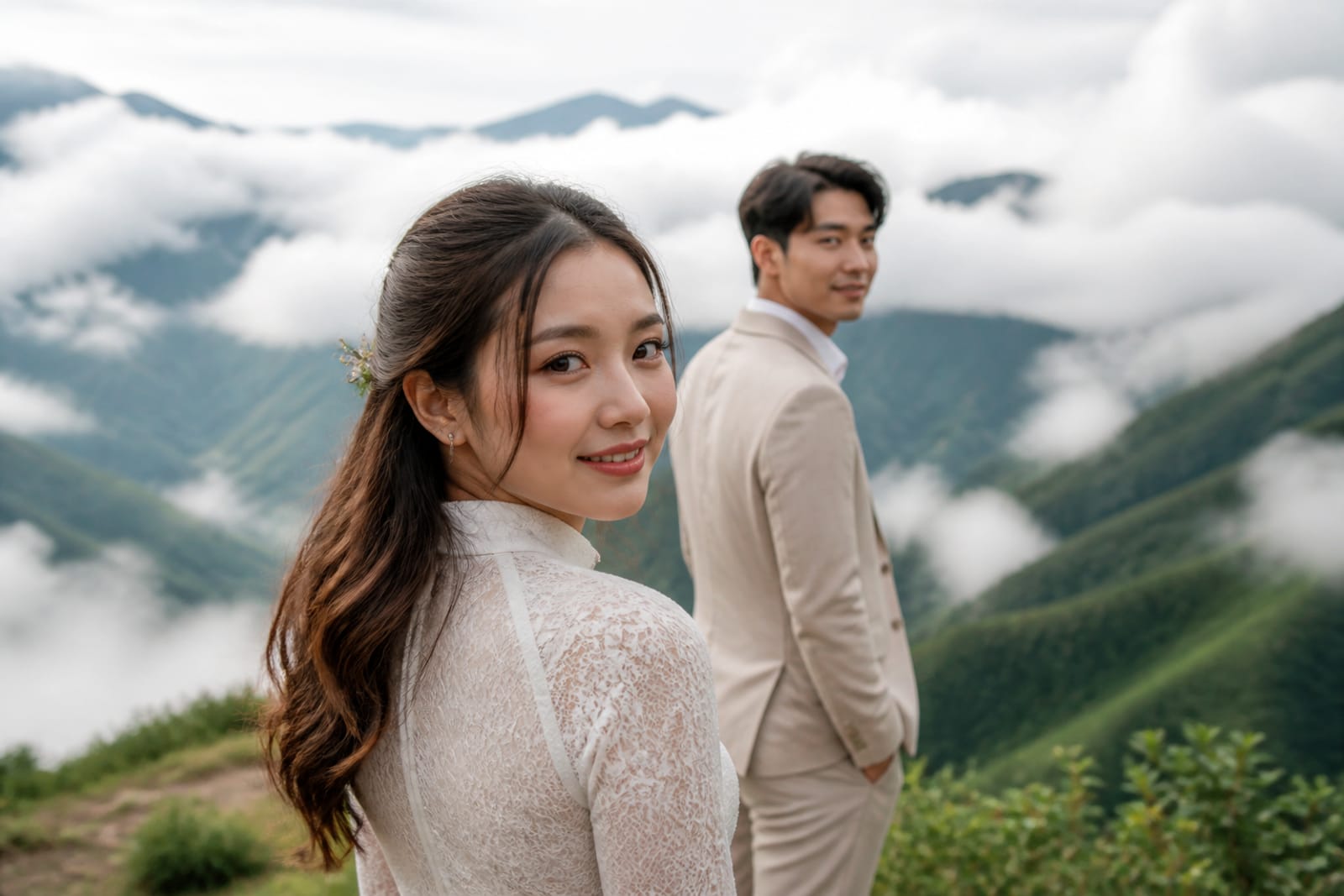
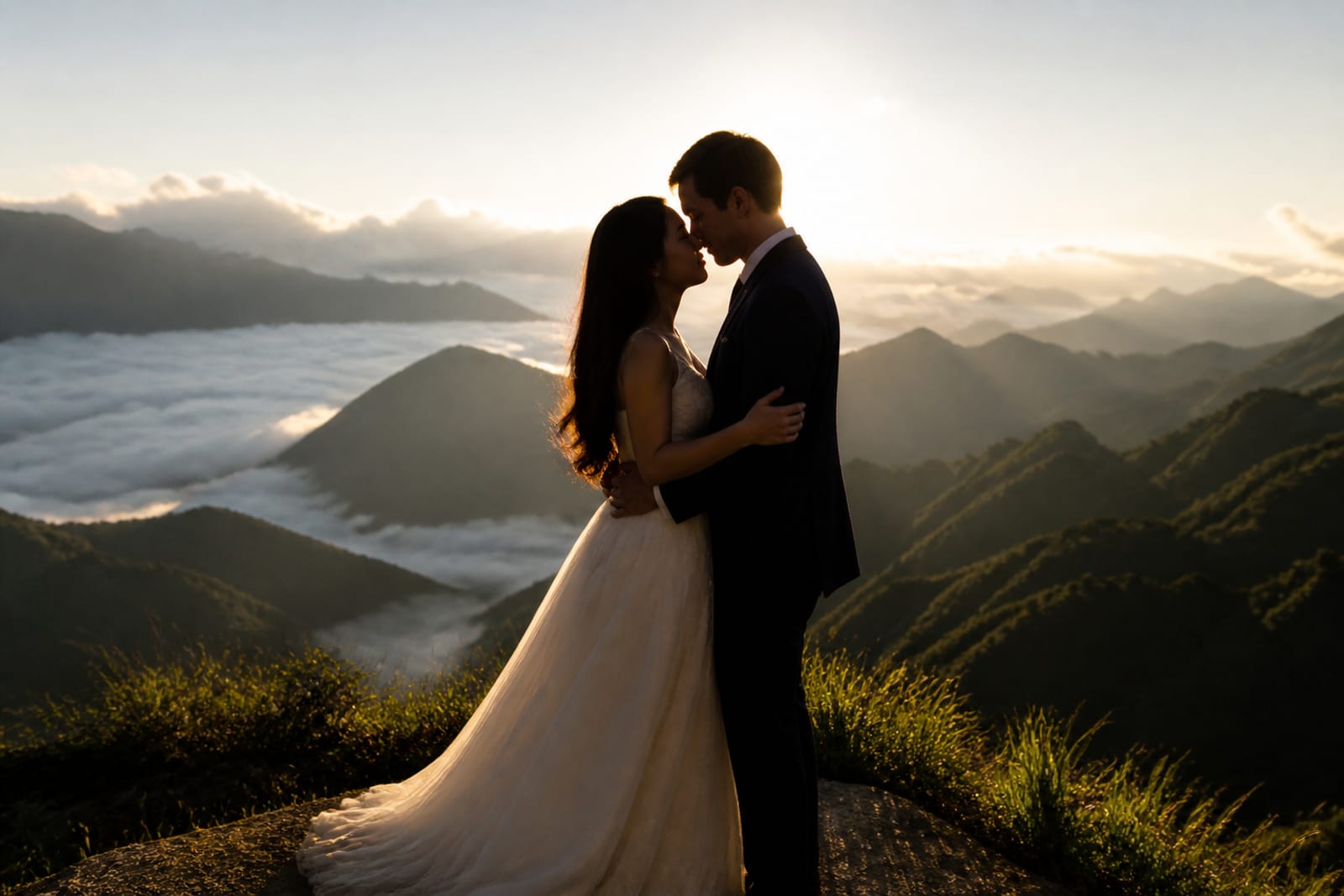
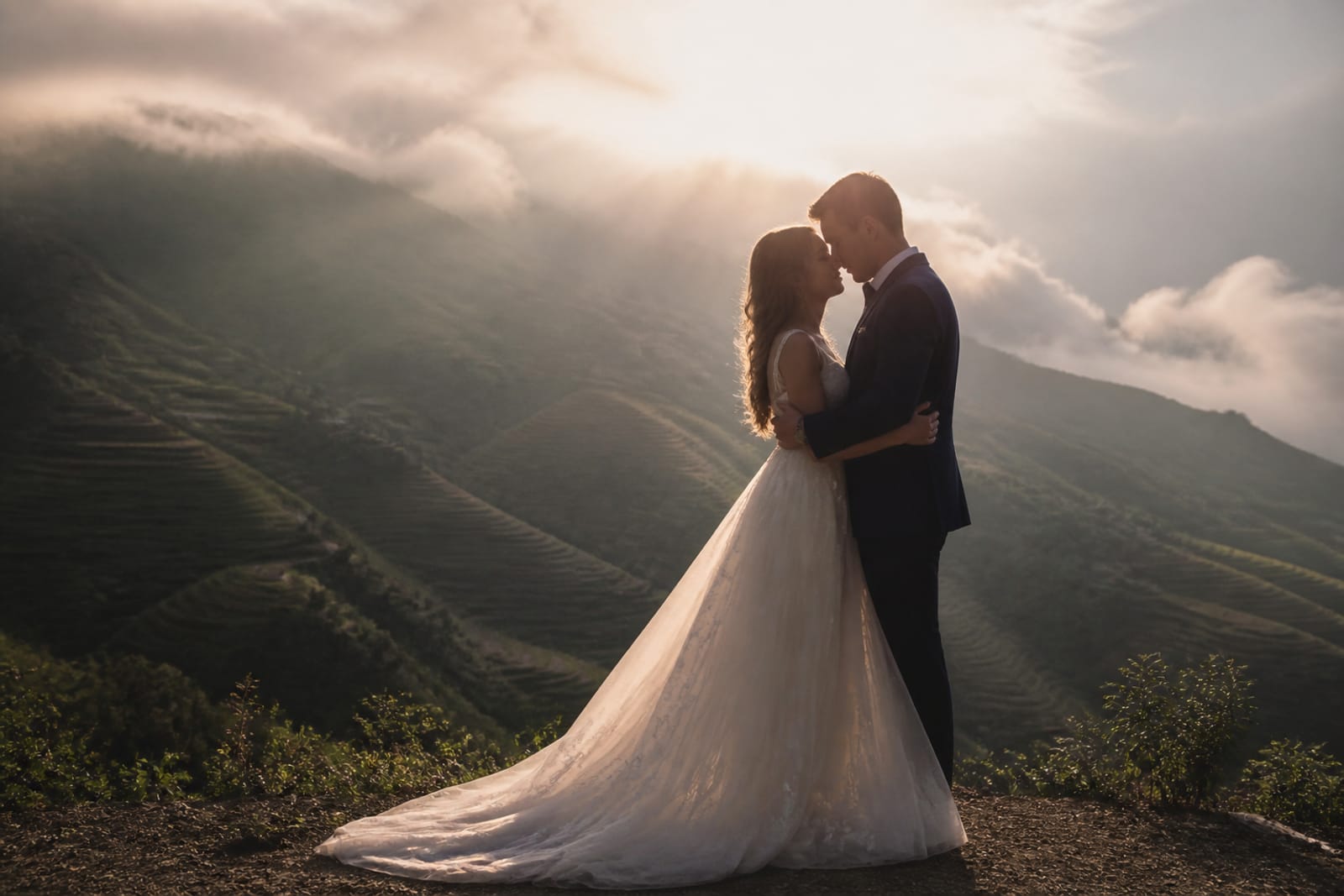
Fansipan sits at 3,143 metres where the atmosphere is thinner and light behaves differently than at sea level. Direct sun at the summit is harsh and flat by 9 a.m.; at 6–8 a.m., low-angle light grazes clouds and creates separation between you and the background. Fog banks below act as diffusers, softening shadows. By midday, ultraviolet intensity and glare make skin tones chalky in raw files. Cloud cover is your friend—it's not "bad weather," it's directional softness. Sunrise shoots (departing Sapa by 5 a.m.) catch the cleanest window before tour groups and unpredictable afternoon weather. The higher you climb, the narrower your usable light window becomes.
---
Which season gives you the clearest summit views?
Season | Light & Visibility | Temperature | Crowds | Best for Wedding Frames ---|---|---|---|--- Mar–May | Clear, warm side light; occasional haze | 10–15°C | Low–moderate | Soft but defined sky, green ridges Jun–Aug | Frequent afternoon rain; patchy visibility | 15–18°C warm, humid | High | Moody cloud layers, risky for timing Sep–Nov | Clearest, cool morning light; stable | 8–14°C | Moderate | Sharp detail, defined clouds, golden hour glow Dec–Feb | Fog, frost, occasional snow; cold | 0–5°C, can freeze | Very low | Rare clear frames; plan backup date
September–November delivers the most reliable combination of clear morning visibility, stable light and tolerable cold. March–May is secondary—warmth is pleasant, but seasonal haze reduces sharpness. Summer crowds and afternoon downpours make timing unpredictable. Winter offers solitude but requires heavy layers, and fog cancels 60% of shoots; only choose if you have a flexible second date.
---
How do you prepare an ao dai or wedding dress for 3,143 metres?
At Fansipan's altitude, wind is constant and temperature swings fast—your outfit must work for both. An ao dai is lighter than a Western dress but flows unpredictably in gusts; layers underneath matter. Wear thermal leggings or wool tights under your áo dài to stay warm and prevent wind from exposing you. If you're wearing a wedding dress, choose one without excessive train or tulle that catches wind; a fitted bodice and A-line or sheath skirt are more stable than ball gowns. Bring a shawl or lightweight wrap that photographs well and provides warmth between shots. Grooms in suits need a windproof jacket or vest layered underneath that can be removed for key frames. Shoes must grip wet or icy stone—no heels; work with your photographer on footwear that doesn't show in frame. Hair needs strong hold (lacquer, not just pins) because wind will dismantle loose styles within minutes. Brief your stylist on mountain conditions; makeup & hair at your hotel teams coordinate this detail.
---
What's the real logistical difference between a Fansipan shoot and a valley photoshoot?
A Sapa valley shoot (rice terraces, villages) starts when you step out of your hotel; Fansipan adds 3–4 hours of cable car queues, ascent, weather waiting and descent. Your photographer travels with you, meaning the crew's cost and timing stretch. Cable car operates daily, but early departures (5–5:30 a.m.) are less crowded—most tour groups start at 7–8 a.m. You'll share the summit with tourists during peak hours (7–10 a.m., 1–3 p.m.); early shooting narrows that window. Weather can flip: clear at 6:30 a.m., foggy by 8 a.m. Your team needs contingency frames—secondary shots in Sapa town or at a lower, clearer vantage point. A pre-wedding photoshoot here typically spans a full day (valley + summit) or a dedicated summit-only session if you prioritize altitude drama. Expect longer turnaround for edits because of the distance from the studio's Hanoi base; brief your photographer on delivery timeline before booking.
---
Should you shoot Fansipan for pre-wedding or save it for the wedding day itself?
Pre-Wedding Summit Shoot | Wedding Day Summit Shoot ---|--- Best for: Creative, time-rich couples who want one dramatic, planned session | Elopements or couples replacing traditional ceremony with mountain vows Light control: Full day to chase best light; no schedule pressure | Locked to ceremony time, light may be suboptimal Outfit freedom: Ao dai, dress, informal wear—no formality required | Wedding dress/suit—wind risk, restricted movement Logistics: Flexible date; can reschedule if weather fails | Weather is non-negotiable; must have backup venue Crew readiness: Photographer and stylist fully prepared for mountain conditions | Wedding team juggling ceremony, guests, timing—harder to react to light changes Photo style: Directed, narrative frames over several hours | Ceremonial + candid, faster-paced, less cinematic
Pre-wedding shoots suit couples seeking creative control and light chasing. Wedding-day summit shoots work for intimate elopements where the mountain itself replaces the ceremony venue. Cáo Studio's pre-wedding packages are built for planned shoots; if you're considering a wedding-day summit ceremony, discuss logistics and backup plans on WhatsApp before booking.
---
What technical details should you confirm with your photographer before booking?
- Cable car status & permits: Ask if your photographer has coordinated cable car timing and whether guides/permits are included. Summit entry is free, but cable car queues are first-come, first-served.
- Weather contingency: Does the package include a second shoot date if morning fog blocks visibility? What's the rescheduling process?
- Crew composition: Will the full team (photographer, stylist, makeup artist) ascend, or only the photographer? Coordination matters for outfit and touch-ups at altitude.
- Delivery timeline: Mountain logistics take longer; confirm edited-photo delivery date (typically 48 hours from valley shoots, potentially 72+ for Fansipan due to distance).
- Outfit & styling for cold: Does your stylist brief you on layers, wind-resistant garments and footwear before the shoot? Ask for a pre-shoot call.
- Sunrise vs. mid-morning: Which light window does the package prioritize? Sunrise (5–7 a.m.) is shorter but clearest; mid-morning (8–9 a.m.) is easier logistically but less dramatic.
- Backup venue in Sapa: If the summit is fogged out, is a secondary shoot location (village, terraces, town) included or charged separately?
📸 Book on WhatsApp — pre-wedding photoshoot
---
What to check before you book
- Your fitness: Fansipan's cable car does the heavy work, but you'll walk 10–15 minutes on the summit in wind and thin air. Not strenuous, but pace yourself.
- Outfit weight & wind-resistance: Try your ao dai or dress in wind before the shoot. Bring safety pins or clips for flying fabric.
- Forecast & flexibility: Book for a season (not a fixed date) if possible. March–May and September–November offer the best odds of clear summits.
- Crew experience: Ask your photographer if they've shot Fansipan before. Altitude light and crowd management are different from valley work.
- Secondary location: Confirm a backup shoot venue in Sapa if the summit closes due to weather or visibility.
---
💄 Makeup & hair at your hotel — our team can brief you on altitude styling.
🌸 See the lookbook — mountain shoots, altitude light, and wedding frames from Sapa.
---
FAQ
Can Cáo Studio shoot on Fansipan summit itself?
Cáo Studio coordinates Sapa shoots including Fansipan logistics from the Hanoi base. The photographer and crew travel to Sapa; cable car and summit access are arranged locally. Confirm availability and timing on WhatsApp before booking.
What's the best month to shoot Fansipan for a wedding?
September–November offers the clearest summits and most stable morning light. March–May is secondary (warmer, occasional haze). December–February is cold and foggy; plan a backup date. June–August brings crowds and afternoon rain.
Do we need warm clothes, or can we wear a wedding dress on the summit?
A wedding dress is possible but risky—wind is constant and temperature drops 6–10°C above 2,500 metres. Wear thermal layers underneath, bring a shawl, and choose a fitted silhouette over trailing trains. An ao dai with warm tights and a wrap is more practical.
How early do we need to wake up for a summit shoot?
Depart your Sapa hotel by 5–5:30 a.m. to reach the cable car station before crowds and catch the 6–8 a.m. light window. Ascending takes 15 minutes; shooting typically runs 1–2 hours depending on light and conditions.
What happens if the summit is foggy on our shoot day?
Fog at Fansipan is common, especially June–August. Ask your photographer if the package includes a reschedule date or a secondary shoot location in Sapa (rice terraces, villages, town). Confirm the contingency plan before booking.
Is the cable car included in a pre-wedding package, or do we pay separately?
Cáo Studio's coordination covers logistics planning; cable car fees and permits are arranged locally. Ask on WhatsApp for exact inclusions and cost factors so there are no surprises.
FAQ
Can Cáo Studio shoot on Fansipan summit itself?
Cáo Studio coordinates Sapa shoots including Fansipan logistics from the Hanoi base. The photographer and crew travel to Sapa; cable car and summit access are arranged locally. Confirm availability and timing on WhatsApp before booking.
What's the best month to shoot Fansipan for a wedding?
September–November offers the clearest summits and most stable morning light. March–May is secondary (warmer, occasional haze). December–February is cold and foggy; plan a backup date. June–August brings crowds and afternoon rain.
Do we need warm clothes, or can we wear a wedding dress on the summit?
A wedding dress is possible but risky—wind is constant and temperature drops 6–10°C above 2,500 metres. Wear thermal layers underneath, bring a shawl, and choose a fitted silhouette over trailing trains. An ao dai with warm tights and a wrap is more practical.
How early do we need to wake up for a summit shoot?
Depart your Sapa hotel by 5–5:30 a.m. to reach the cable car station before crowds and catch the 6–8 a.m. light window. Ascending takes 15 minutes; shooting typically runs 1–2 hours depending on light and conditions.
What happens if the summit is foggy on our shoot day?
Fog at Fansipan is common, especially June–August. Ask your photographer if the package includes a reschedule date or a secondary shoot location in Sapa (rice terraces, villages, town). Confirm the contingency plan before booking.
Is the cable car included in a pre-wedding package, or do we pay separately?
Cáo Studio's coordination covers logistics planning; cable car fees and permits are arranged locally. Ask on WhatsApp for exact inclusions and cost factors so there are no surprises.
Ao dai, makeup, hair and a local photographer in Hanoi or Saigon — one WhatsApp message.