services/special-concept
Film Camera Photoshoot Hoi An: Gear, Spots & How to Book
Film photography in Hoi An captures the town's lantern-lit streets and ancient charm with timeless grain and color rendition that digital cannot replicate. The combination of analog aesthetic and Southeast Asian light creates images that feel both intimate and timeless—a deliberate choice many travelers make for engagement shoots, travel diaries, and personal archives.
This guide walks you through camera selection, shooting locations, light windows, and how to book a film session with or without studio support. Whether you're bringing your own gear or renting locally, these specifics will help you plan a session that delivers both beautiful film stock and usable digital scans.
What Film Camera Type Works Best in Hoi An?
35mm SLRs (Canon AE-1, Pentax K1000, Olympus OM-1) excel in Hoi An because they're portable, forgiving of variable light, and produce grain that complements Vietnamese architecture. Medium format (Hasselblad 500CM, Mamiya RB67, Pentax 67) renders richer color and detail but requires steadier hands and faster film speeds (400 ISO+) to handle lantern light indoors.
Why each matters:
- 35mm SLR: lightweight, fast lenses available (f/1.4–f/2), forgiving metering—ideal for walking photoshoots through markets and temples.
- Medium format: larger negatives = finer detail, richer tones—better for staged couple or family portraits in specific locations.
- Point-and-shoot (Contax T2, Yashica T4): smallest footprint, excellent lenses—best if you want to travel light but still need reliable color and contrast.
What to check before you buy or rent:
- Does the camera have working light meter? (Test with a phone light meter app beforehand.)
- Is the shutter speed dial smooth and accurate? (Sticky shutters blur film at slow speeds.)
- Do seals around the film back feel intact? (Light leaks ruin entire rolls.)
- Is a lens cleaning kit included in rental? (Dust on glass shows in every frame.)
📸 Book on WhatsApp — ao dai photoshoot | 🌸 See the lookbook
Which Film Stock Produces the Best Color in Tropical Light?
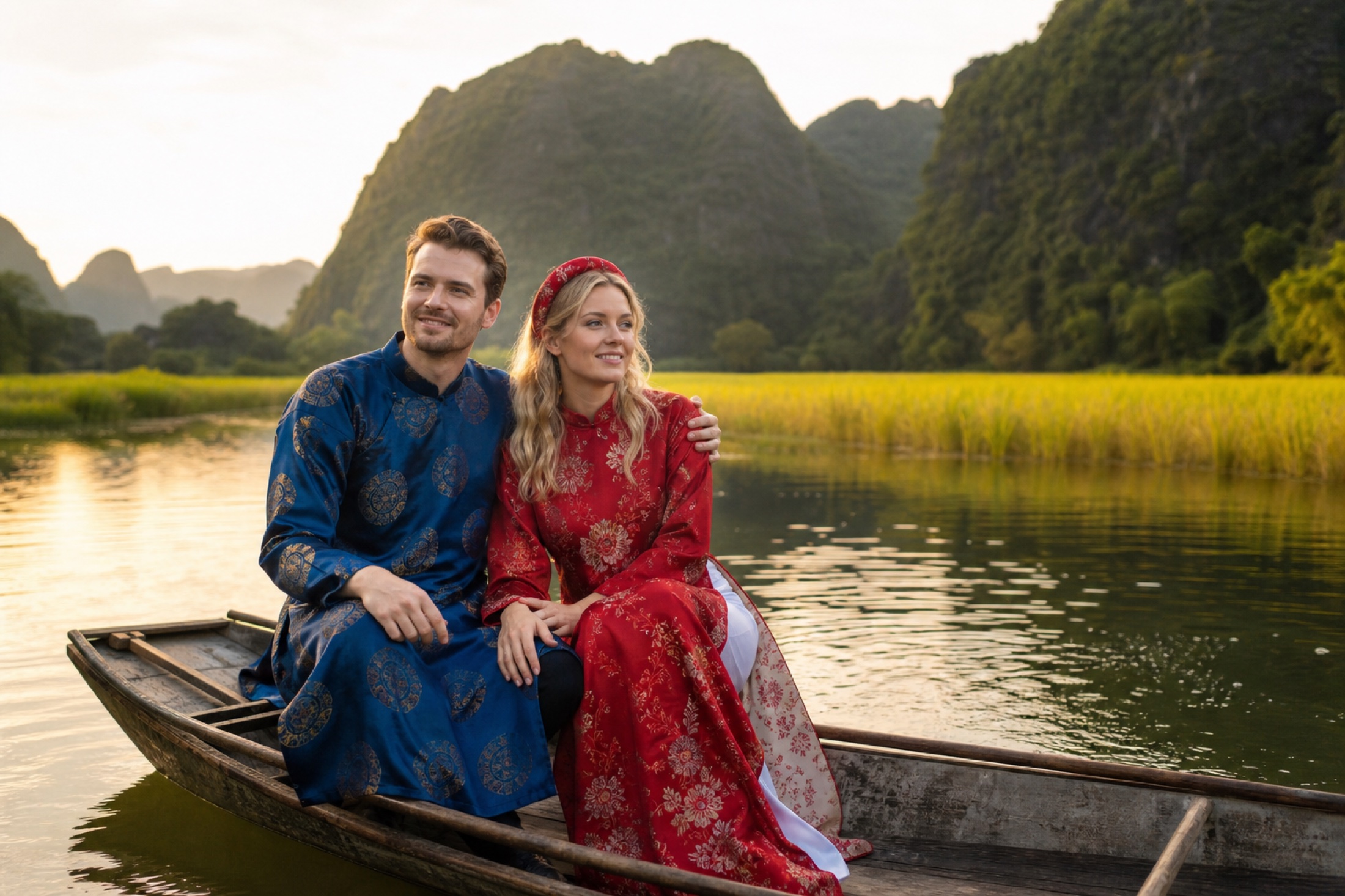
Kodak Portra 400 and Fujifilm Superia 400 are the gold standards for Hoi An's warm, high-contrast daylight. Both handle overexposure gracefully and render skin tones and architectural ochre and rust tones with natural saturation—critical in a town where temple doors and silk lanterns set the color palette.
| Film Stock | ISO | Best For | Light Handling | Where to Buy in Hoi An |
|---|---|---|---|---|
| Kodak Portra 400 | 400 | Couple/family, skin tone accuracy | Overexposure-forgiving; shadows stay detailed | Rental shops near river; bring from Hanoi |
| Fujifilm Superia 400 | 400 | Street, architecture, vibrant saturation | Punchy color; slight highlight clipping | Limited in Hoi An; order ahead online |
| Kodak Gold 200 | 200 | Daylight-heavy shoots, warm cast | Warm but fine grain; needs good light | Rare; rental + purchase in Hanoi better |
| Ilford HP5 (B&W) | 400 | Timeless, texture-focused aesthetic | Excellent shadow detail; classic mood | Specialty shops; plan a week ahead |
Pro tip: Buy film in Hanoi before traveling to Hoi An. Local availability is inconsistent; shipping during your visit wastes time. A 10-roll assortment (8× Portra 400, 2× Superia 400) covers 2–3 days of shooting without resupply stress.
Where Are the Best Film Photography Locations in Hoi An?
Golden-hour spots (5:00–6:30 pm) deliver warm, low-angle light that makes film grain and color pop:
- Thu Bon riverfront (near Japanese Bridge): silk lanterns reflecting in water, cool shadows under eaves; use a ND filter if shooting fast film in full sun.
- French colonial buildings (Tan Ky House, Phung Hung House): ochre walls, green shutters, dramatic window frames—medium format shines here.
- Quan Cong Temple interior: low light demands 400 ISO film and wide aperture (f/2.8–f/4); respect photo etiquette—ask permission before shooting inside.
- Early-morning market (6:30–8:00 am): soft, diffused light; fewer tourists; local vendors often welcoming to calm, respectful photographers.
- Hoi An Beach Road (paved, 15 min from old town): sand, tropical vegetation, less crowded for golden-hour couple or solo shoots.
What to avoid: direct midday sun (11 am–3 pm) washes out film color and creates harsh shadows. Cloudy mornings are fine for B&W but weak for color saturation.
How Does Cáo Studio Handle Film Photoshoots in Hoi An?
Cáo Studio – Makeup & Photoshoot coordinates film sessions by appointment in Hoi An. The team travels to Hoi An for bookings; there is no permanent studio address. Sessions follow the same booking flow as Hanoi or Saigon branches—you consult via WhatsApp on dates, locations, and film preferences.
Studio support includes:
- Professional makeup and hair (optional, highly recommended for couple/family shoots; see makeup & hair at your hotel).
- Location scouting: the team knows light windows, temple etiquette, and crowd patterns.
- Film stock advice: they recommend ISO and color/B&W based on your concept.
- Digital scans: film is developed and scanned to high-res TIFF; you receive both film negatives and digitals for archival and sharing.
Booking process: Message Cáo Studio on WhatsApp with:
- Preferred shoot date(s) in Hoi An.
- Camera type (bring your own or rent locally?).
- Session concept (solo travel diary, couple, family, ao dai shoot—see ao dai photoshoot or couple & family photoshoot).
- Makeup preference (yes/no).
Why book studio support: they handle timezone logistics, confirm Hoi An availability 2+ weeks ahead, arrange makeup artist if needed, and ensure locations are accessible and respectful of local customs. Solo film photography is rewarding, but studio coordination removes friction—especially for travelers unfamiliar with town dynamics.
💄 Makeup & hair at your hotel | 🌸 See the lookbook
Should You Rent a Film Camera in Hoi An or Bring Your Own?
Bring your own if:
- You own a camera in working condition (tested at home before travel).
- You're comfortable troubleshooting mechanical issues (minor repairs are hard to find in Hoi An).
- You prefer to control film choice and shooting philosophy.
Rent locally if:
- You want to try medium format without owning ($30–50 USD/day typical rental rate; confirm in Hanoi camera rental shops before traveling).
- You'd rather not risk damage to personal gear during travel.
- You're undecided on film type and want to experiment.
Reality check: Hoi An camera rental shops are limited and inconsistent. Hanoi (40 min flight, 2 hours drive south) has 4–6 dedicated rental shops with full inventories. If renting is your plan, book through a Hanoi shop 1–2 weeks before travel; they can reserve gear and arrange Hoi An delivery or allow you to rent in Hanoi and return there.
Bringing your own camera reduces friction. Test it thoroughly at home: load a test roll, shoot in similar light, process it, and review scans. This confirms functionality and gives you confidence before committing a full roll to Hoi An's light.
How to Process Film and Preserve Your Hoi An Negatives
After shooting, film must be developed within a few days if kept at room temperature (Hoi An heat accelerates color shift). Do not leave exposed film in a hot hotel room for a week.
Options:
- Develop in Hanoi (best quality): Mail film to a Hanoi lab (Hoa Sen Photo, Saigon Photo) on your return; costs $5–12 per roll for C-41 (color) or B&W development + contact sheet. Scans (high-res TIFF, archival-quality) add $3–5 per roll.
- Develop in Saigon: If traveling to Ho Chi Minh City after Hoi An, drop film at a lab there for faster turnaround (1–2 days vs. 3–5 days shipping from Hoi An).
- Dry-box storage: Keep exposed, undeveloped film in an airtight container with silica gel during travel; develop after returning home if your home lab is more affordable or familiar.
Archival care: Once scanned, store negatives in acid-free sleeves in a cool, dark place (temperature ≤70°F / 21°C, humidity 30–40%). Digital scans are your working files; negatives are the forever archive. Label sleeves clearly with date and location.
This two-tier backup (negatives + scans) ensures your Hoi An film shoot survives technology shifts and digital migration over decades.
📸 Book on WhatsApp — ao dai photoshoot
Styling & Outfit Ideas for Film Photoshoots in Hoi An
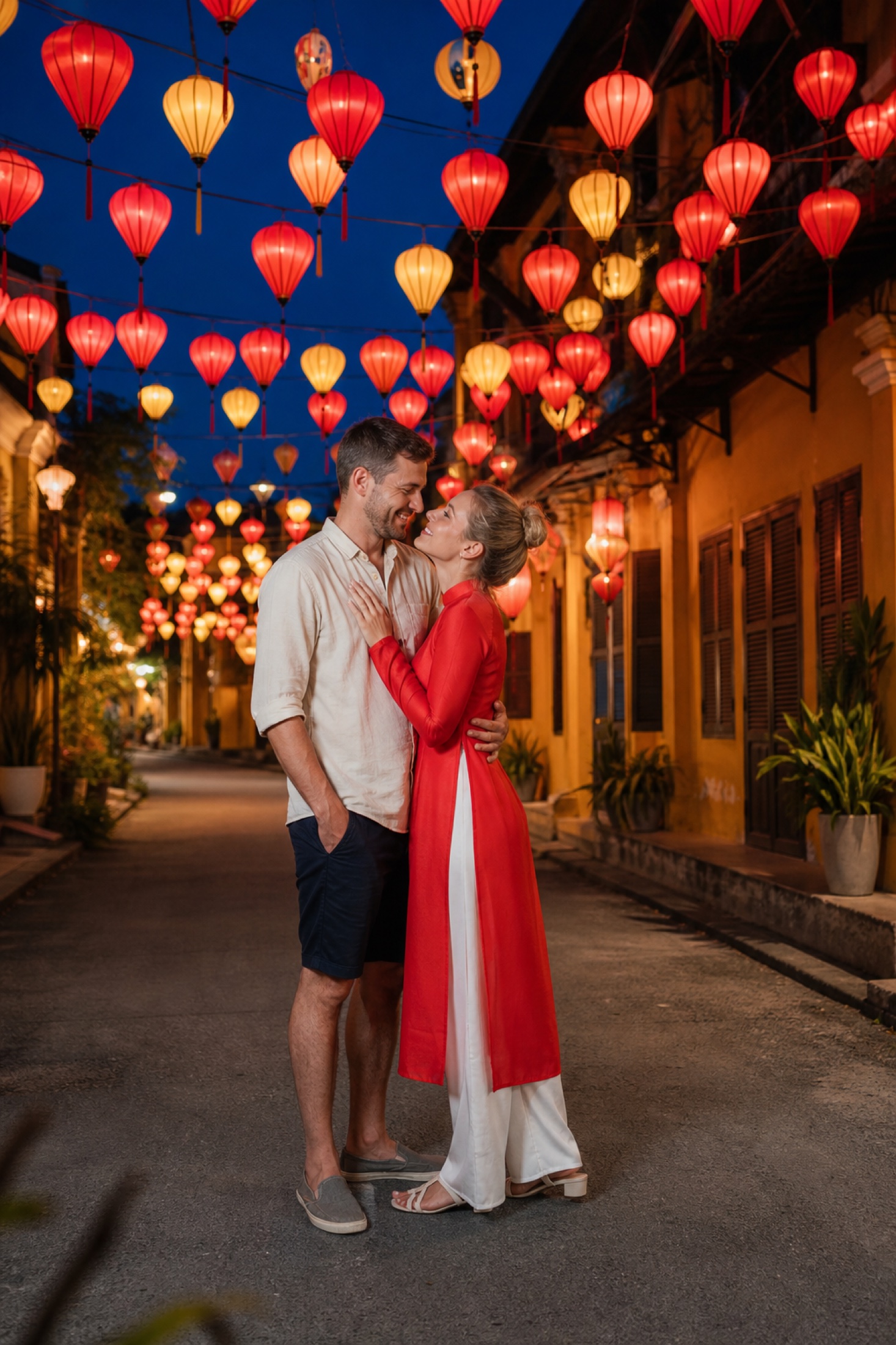
Film's grain and color rendering flatter earthy, muted tones and textures. Avoid bright neons; they look garish on film. Linen, cotton, and silk in cream, rust, olive, and indigo complement the town's palette.
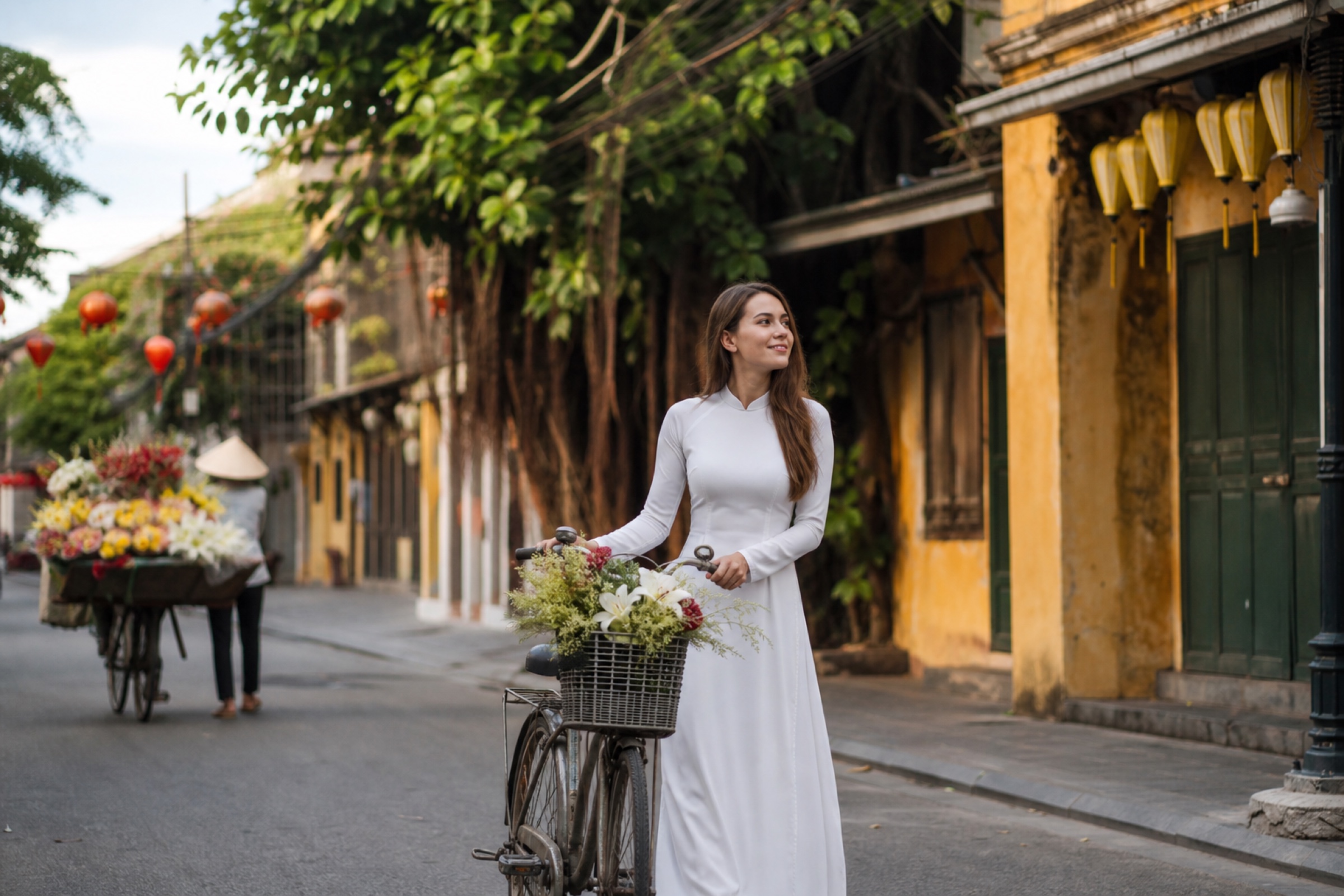
- Solo travel: Linen shirt, vintage-inspired trousers, comfortable walking shoes. Consider renting an ao dai for 1–2 setup shots (studio can arrange locally).
- Couple: Matching neutral linens or complementary earth tones; avoid white on white (film struggles with blown highlights). Sneakers or sandals photograph more naturally than heels on cobblestones.
- Family: Coordinated but not matchy—let kids wear favorite colors; film renders childhood authenticity better than forced formality.
Cáo Studio's lookbook shows real film and digital shots from Hoi An; use it as mood reference.
---
What to Check Before You Book a Film Photoshoot
- Confirm Hoi An availability 2+ weeks ahead (studio travels; dates are appointment-only).
- Decide: studio coordination vs. solo shooting. Studio adds cost but removes logistics stress; confirm pricing via WhatsApp—no fixed rates published online.
- Source film stock before arrival (Hanoi or online; Hoi An supply is unpredictable).
- Test your camera at home (if bringing your own) or book a rental 1–2 weeks before travel.
- Plan development: Will you process in Vietnam or ship film home? Confirm lab turnaround times.
- Check weather: Monsoon season (May–September) brings humidity and afternoon rain; plan morning shoots and carry a small lens cloth. See seasonal light guide at special-concept services.
---
Related Reading & Booking
For other photoshoot styles in Hoi An and Vietnam:
- Ao dai photoshoot: styled, cultural sessions with traditional dress.
- Couple & family photoshoot: lifestyle and portrait sessions (film or digital).
- Pre-wedding & elopement: multi-day coverage, destination weddings.
- Special concept shoots: custom themes, film, vintage aesthetics.
💄 Makeup & hair at your hotel | 🌸 See the lookbook
---
FAQ
Can I bring film into Vietnam without it being damaged at airport X-ray?
Lead-lined film bags protect up to 5–10 rolls per trip. X-rays at Noi Bai (Hanoi) and Tan Son Nhat (Saigon) are generally low-dose, but ask security to hand-check film (say "Tôi muốn hand-check film"). Many photographers hand-carry film in a small pouch without issue; modern scanners are designed to avoid fogging.
How much does it cost to develop film in Vietnam?
C-41 (color) development + contact sheet is $5–10 per roll at Hanoi labs. High-res TIFF scans add $3–5 per roll. B&W development costs $8–12 per roll. Prices are lower in Hanoi than tourist areas; avoid Hoi An labs (limited inventory, slower turnaround, markup pricing).
Will Cáo Studio provide film or do I need to bring my own?
You source and provide film. Cáo Studio – Makeup & Photoshoot advises on film type during booking and arranges development/scanning if needed. Film cost is your expense; discuss preferences via WhatsApp before booking.
What ISO film is best for Hoi An's lantern-lit temple interiors?
400 ISO (Kodak Portra 400, Fujifilm Superia 400) is the practical standard. It balances grain, color, and low-light performance. 800 ISO exists (Portra 800) but introduces visible grain; 200 ISO requires additional light or slower shutter speeds, risking blur. Bring a tripod if shooting 200 ISO indoors.
Can I get an ao dai photoshoot with film film photography?
Yes. Ao dai photoshoots can be shot on film. Cáo Studio will capture both film and digital or film-only sessions. Discuss film preference when booking via WhatsApp; pricing and scheduling may differ slightly from standard digital sessions.
How long does Cáo Studio take to deliver digital scans after a film shoot?
Typical turnaround is 2–4 weeks (film is developed, scanned, and files are color-corrected before delivery). Confirm exact timeline via WhatsApp during booking; rush processing may be available at additional cost (specifics via quote).
FAQ
Can I bring film into Vietnam without it being damaged at airport X-ray?
Lead-lined film bags protect up to 5–10 rolls per trip. X-rays at Noi Bai (Hanoi) and Tan Son Nhat (Saigon) are generally low-dose, but ask security to hand-check film (say "Tôi muốn hand-check film"). Many photographers hand-carry film in a small pouch without issue; modern scanners are designed to avoid fogging.
How much does it cost to develop film in Vietnam?
C-41 (color) development + contact sheet is $5–10 per roll at Hanoi labs. High-res TIFF scans add $3–5 per roll. B&W development costs $8–12 per roll. Prices are lower in Hanoi than tourist areas; avoid Hoi An labs (limited inventory, slower turnaround, markup pricing).
Will Cáo Studio provide film or do I need to bring my own?
You source and provide film. Cáo Studio – Makeup & Photoshoot advises on film type during booking and arranges development/scanning if needed. Film cost is your expense; discuss preferences via WhatsApp before booking.
What ISO film is best for Hoi An's lantern-lit temple interiors?
400 ISO (Kodak Portra 400, Fujifilm Superia 400) is the practical standard. It balances grain, color, and low-light performance. 800 ISO exists (Portra 800) but introduces visible grain; 200 ISO requires additional light or slower shutter speeds, risking blur. Bring a tripod if shooting 200 ISO indoors.
Can I get an ao dai photoshoot with film film photography?
Yes. [Ao dai photoshoots](/services/ao-dai-photoshoot) can be shot on film. Cáo Studio will capture both film and digital or film-only sessions. Discuss film preference when booking via WhatsApp; pricing and scheduling may differ slightly from standard digital sessions.
How long does Cáo Studio take to deliver digital scans after a film shoot?
Typical turnaround is 2–4 weeks (film is developed, scanned, and files are color-corrected before delivery). Confirm exact timeline via WhatsApp during booking; rush processing may be available at additional cost (specifics via quote).
Ao dai, makeup, hair and a local photographer in Hanoi or Saigon — one WhatsApp message.