/pre-wedding-photoshoot
Getting to Cau Dat Tea Hills on Photoshoot Day: Transport, Timing & Lo
Cau Dat tea hills sit at 1,500 m elevation, 15 km north of Da Lat, reachable by private car (45–60 minutes from town center), motorbike (45 min, skill required), or hired driver (most reliable for photo teams). Photoshoots require departure by 5–6 a.m. to catch sunrise mist and soft directional light before it burns off by 9 a.m.; midday (10 a.m.–3 p.m.) produces harsh shadows across the terraces. The dry season (December–April) gives consistent morning mist and clear skies; rainy season (May–November) risks fog so thick that you lose composition, or sudden afternoon showers that strand crews. Cáo Studio – Makeup & Photoshoot does not operate a Da Lat branch, but this guide helps you book a local photographer and plan logistics; we coordinate makeup and hair, outfit changes, and safety for pre-wedding shoots in Hanoi, Ho Chi Minh City, and Hoi An. Transport choice affects crew timing, gear safety, and makeup durability—choose based on group size, terrain comfort, and driver reliability. ---
Which transport option suits your crew and budget?
Private car hire (driver included) is the standard choice for photo teams: the driver waits during the shoot, ferries gear safely, and handles the mountain road without fatigue. Motorbike rental works for couples traveling light and familiar with Vietnamese traffic and highland curves, but helmets and wind damage makeup and hair. Public minibus or shared tour services impose fixed schedules (usually return by 10 a.m.), cutting shoot time; book only if you're scouting locations, not capturing final images. Solo travelers or pairs often hire a local motorbike taxi (grab or a guide's contact) for flexibility but sacrifice makeup stability and weather protection. A comparison table shows each option's fit:
| Transport | Best for | Light & timing | Logistics fit |
|---|---|---|---|
| Private car + driver | Couples, makeup crews | Flexible 5 a.m.–noon starts | Gear secure; driver waits; reliable return |
| Motorbike (rented or taxi) | Solo, light-travel couples | Early departure needed; wind risk | Makeup fragile; no gear redundancy; road skill required |
| Tour minibus | Budget travelers | Fixed 6–9 a.m. slots only | Preset route; makeup touch-ups rushed; limited framing time |
| Local guide + motorbike | Exploratory scouts | Guided sunrise arrival | Informal; makeup not prepared; backup uncertain |
Cost factors (never fixed amounts—request quotes locally): private car hire depends on driver hourly rate, fuel, and return trip; motorbike rental includes damage waiver; tours charge per head. Ask your hotel or photographer for current rates.
📸 Book on WhatsApp — pre-wedding photoshoot | 💄 Makeup & hair at your hotel
Why does a 5–6 a.m. start matter for tea hill light?
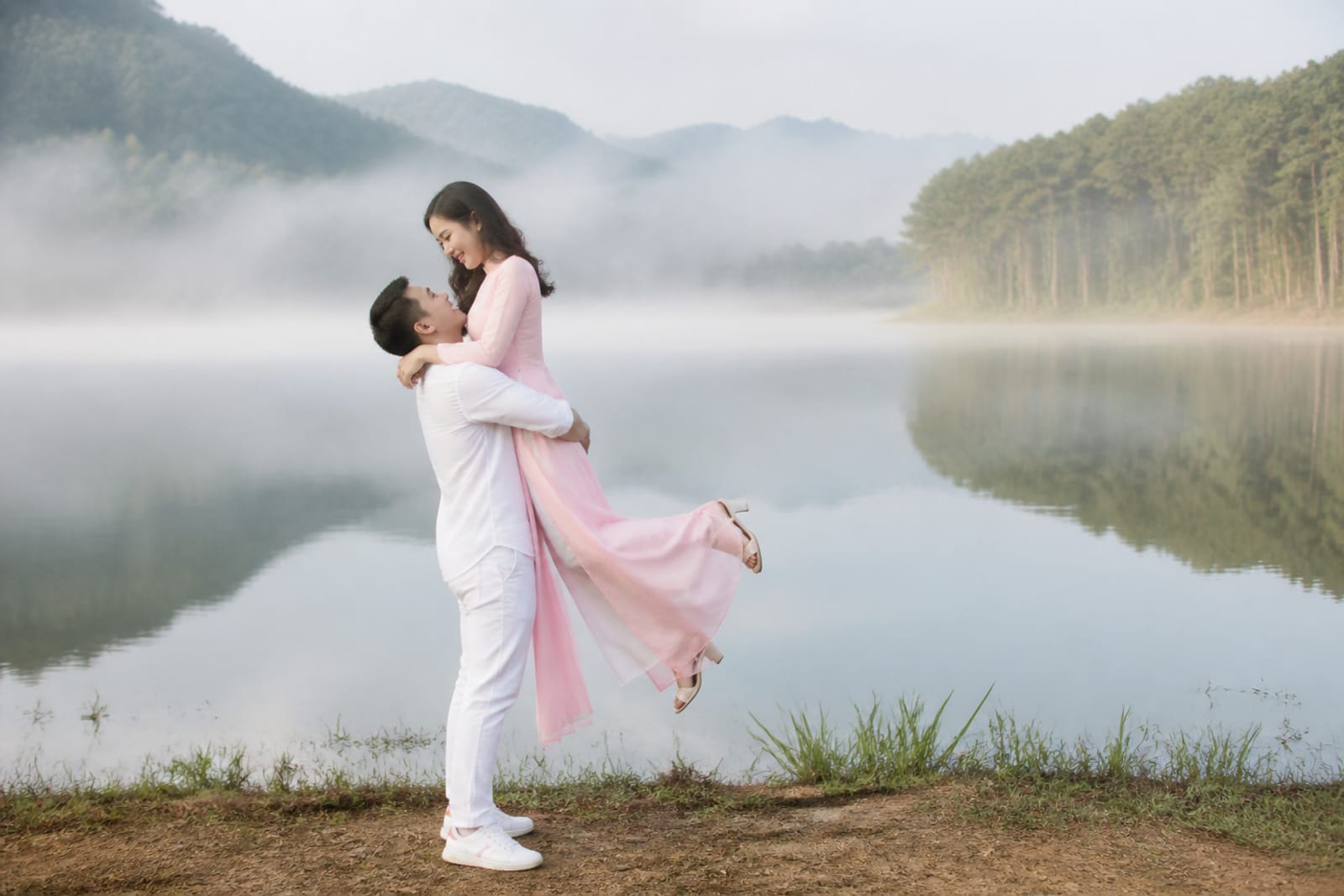
Cau Dat's morning mist forms in the valley as ground temperature drops overnight. By 5–6 a.m., mist clings to the terraces, creating layers of soft, diffuse light that flatters skin and adds depth to landscape frames. The sun, low on the eastern horizon, skims the tea rows, separating each plant and ridge. This effect lasts 1.5–2 hours; by 8 a.m. the mist starts lifting, light becomes more direct, and shadows deepen. By 10 a.m., you're shooting in nearly flat, harsh overhead sun—unflattering for portraits and featureless for the landscape. A late start (7–8 a.m.) gives you only 45 minutes of prime light, forcing rushed outfit changes and limited location variety. Early arrival also lets you scout framing before the crew arrives, adjust for seasonal mist density, and capture movement (wind through tea leaves, birds, early workers). This timing discipline is non-negotiable for gallery-quality results. Plan a 4:30 a.m. hotel pickup to reach the hills by 5:30 a.m., giving 30 minutes for location setup before light peaks.
What season delivers the best mist, weather, and comfort?
Da Lat's highland climate stays cool (roughly 15–25°C year-round) compared to lowland Vietnam, but seasonal moisture and light vary sharply. The dry season (December–April) is optimal: morning mist is reliable (formed overnight, thick by 5–6 a.m., clears by 9 a.m.), skies are clear after mist burns, and afternoon rain is rare. Crews can shoot full-day itineraries without weather pivots. January–February brings bonus cherry blossoms on nearby trees and mist so consistent photographers return daily for gallery refreshes.
The rainy season (May–November) is risky. May–August occasionally offers clear mornings and afternoon showers (predictable, escapable), but September–November (typhoon months, worst October–November) brings relentless fog or downpours that cancel shoots outright. Morning mist is over-saturated—fog so thick you lose foreground detail and color contrast. Humidity corrodes camera seals and makeup (powder cakes, lipstick melts, hair frizz worsens). If booking outside dry season, confirm with your photographer that the forecast allows a reshoot date.
November also means the da quy (wild sunflower) bloom on hillsides near Da Lat—a photographic bonus, but the rainy season humidity dims their color. December onward, the season shifts toward clarity and mist precision. Book dry-season shoots 2–3 months ahead; last-minute rainy-season bookings risk cancellation.
How do makeup, outfit changes, and crew logistics work on-site?
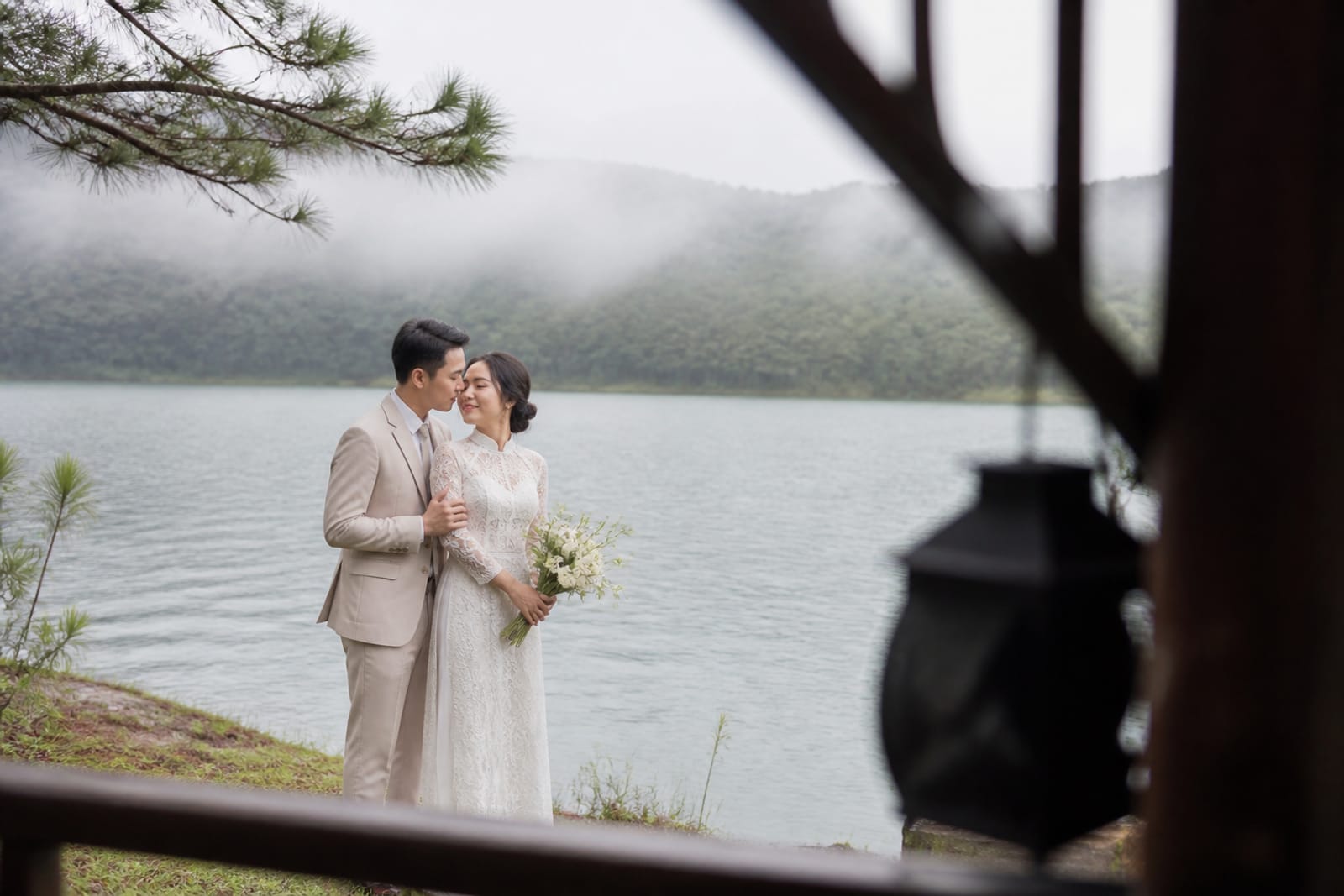
Cau Dat has no facilities: no bathrooms, no shelter, no electricity. Makeup artists and crews must arrive fully prepped, carry all touch-up supplies, and manage changes in a van or private space. If using Cáo Studio – Makeup & Photoshoot for makeup & hair at your hotel before travel to Da Lat, arrange transport that keeps styling intact (direct car, minimal time in transit). Bring mirror, powder, brush, lip balm, and moisture spray in a carry bag; highlands sun and wind degrade makeup faster than in-studio conditions.
Outfit changes (dresses, áo dài, suits) require a portable rack or hanging space in the vehicle. Bring extra clips, safety pins, and a steamer if hiring makeup; wrinkles show in morning light. Photograph outfit details on arrival (shoes, jewelry, áo dài hem) while light is soft—detail shots later in harsh midday sun lose dimension.
Crew size affects timing: a couple plus photographer (3 people, 1–2 outfits) moves quickly; a bridal party (6+) with multiple áo dài requires outfit-change stations, backup hair crew, and 30-minute buffers between locations. Plan one location per 45 minutes (shoot setup, 2–3 outfit changes, pose variety, transition). Wind is common on exposed terraces—secure loose fabrics, expect hair re-styling every 2–3 shots, and shoot sequences fast (rapid-fire poses reduce post-hoc hair touch-ups).
🌸 See the lookbook | 💄 Makeup & hair at your hotel
What weather, road, and safety hazards should you prepare for?
Cau Dat lies at 1,500 m elevation. The road is paved but narrow, with hairpin turns and a steep gradient (roughly 800 m ascent over 15 km). Drivers unfamiliar with the route risk overshooting bends or braking hard; hire a driver who knows Da Lat roads or travel with a booked photographer who includes transport coordination.
Morning temperatures at 5–6 a.m. are 12–15°C, well below Da Lat's midday warmth. Couples and crews often underdress, arriving cold; pack a cardigan or jacket to shed once light and motion warm you. Mist soaks clothes; bring a change if shooting multiple locations or consider moisture-wicking layers under áo dài.
Terrain is steep, muddy after rain, and uneven where tractors work tea rows. Footwear must grip (hiking boots or trail shoes, not heels); photographer and crew may move 200+ m across hillside to frame landscape depth. Slips endanger cameras, outfits, and ankles. The terraces attract local workers early (5–7 a.m.); communicate respectfully, seek permission to shoot, and be ready to shift locations if work disrupts framing.
Wind gusts between 5–15 km/h are typical at that elevation, especially October–April. Wind tangles hair, billows skirts unpredictably, and tests makeup adhesion. Plan poses that use wind (flowing fabric, movement) rather than fight it; fix makeup in the car between locations, not on-site.
Afternoon (after 11 a.m.), mist burns fast and light hardens. If running behind schedule, prioritize prime-light shots (sunrise mist, soft portraits) over landscape variations. Reshoots are cheaper than extended crew time in poor light.
What to check before you book a local Da Lat photographer.
Verify transport inclusion: Confirm whether the photographer arranges transport or you hire separately. If they provide it, ask if the driver waits on-site, how many trips they plan, and their backup if the vehicle breaks down.
Confirm light expertise: Ask for portfolio examples shot at Cau Dat in December–February (your target season). If their work looks flat or harshly lit, they may not prioritize early starts or mist timing.
Check weather policies: What happens if mist is too thick, a road closes, or rain forces abandonment? Do they offer a reshoot at no extra cost, or is it a rescheduling fee? Verbal commitments mean nothing in highlands; get this in writing.
Ensure crew coordination: If hiring separately from makeup (e.g., Cáo Studio makeup & hair at your hotel before you travel) and a Da Lat photographer, confirm the photographer knows you arrive pre-styled and can handle touch-ups without a full makeup artist on-site. Share contact info, arrival time, and departure plan in advance.
Test the driver or vehicle ahead: If booking transport separately, take a short ride to confirm safety, punctuality, and weather protection (working windows, clean seats to protect outfit). A good driver is non-negotiable on mountain roads.
---
FAQ
Can we shoot Cau Dat in the afternoon, avoiding early wake-up?
Afternoon light at Cau Dat (1–4 p.m.) is direct and harsh, flattening skin tone and landscape detail. Mist has burned off, and shadows are deep, making portraits unflattering. Your photographer may refuse afternoon bookings or charge extra for heavy editing to recover color. Early morning is standard precisely because it is the only time light works; late starts waste the location's advantage.
Is motorbike transport safe for a wedding dress?
No. Wind, dust, and road spray damage fabric, lace, and embroidery before you shoot. Helmets crush veils and hair. Use a private car or hired van with interior hanging space. If your dress is heirloom or delicate, transport it separately in a garment bag in a car's back seat.
What if mist is too thick on arrival?
Fog-saturated mornings occur in rainy season and after heavy overnight rain. Light will not improve for 2–4 hours (if at all that day). Contact your photographer immediately; they should offer a reshoot date within a week or refund the session. This is why booking December–April and having a backup date in your contract matters.
Do we need a permit to shoot at Cau Dat tea hills?
No permit is typically required for personal photo shoots or small crews. However, if hiring a commercial photography team with studio equipment, lighting rigs, or a large crew, some tea farms may request permission or a small courtesy fee. Ask your photographer to arrange this; they know local landowners and etiquette.
Can Cáo Studio – Makeup & Photoshoot coordinate a Cau Dat shoot?
Cáo Studio operates in Hanoi, Ho Chi Minh City, and Hoi An only. We do not have a Da Lat branch or team. However, we can arrange makeup & hair at your hotel before you travel to Da Lat, ensuring your styling lasts the journey. We also offer pre-wedding photoshoots in Hoi An (by appointment; ask on WhatsApp for Hoi An dates), which also features misty highland mornings and tea terraces nearby. Contact us on WhatsApp +84 338 762 340 to explore options.
FAQ
Can we shoot Cau Dat in the afternoon, avoiding early wake-up?
Afternoon light at Cau Dat (1–4 p.m.) is direct and harsh, flattening skin tone and landscape detail. Mist has burned off, and shadows are deep, making portraits unflattering. Your photographer may refuse afternoon bookings or charge extra for heavy editing to recover color. Early morning is standard precisely because it is the only time light works; late starts waste the location's advantage.
Is motorbike transport safe for a wedding dress?
No. Wind, dust, and road spray damage fabric, lace, and embroidery before you shoot. Helmets crush veils and hair. Use a private car or hired van with interior hanging space. If your dress is heirloom or delicate, transport it separately in a garment bag in a car's back seat.
What if mist is too thick on arrival?
Fog-saturated mornings occur in rainy season and after heavy overnight rain. Light will not improve for 2–4 hours (if at all that day). Contact your photographer immediately; they should offer a reshoot date within a week or refund the session. This is why booking December–April and having a backup date in your contract matters.
Do we need a permit to shoot at Cau Dat tea hills?
No permit is typically required for personal photo shoots or small crews. However, if hiring a commercial photography team with studio equipment, lighting rigs, or a large crew, some tea farms may request permission or a small courtesy fee. Ask your photographer to arrange this; they know local landowners and etiquette.
Can Cáo Studio – Makeup & Photoshoot coordinate a Cau Dat shoot?
Cáo Studio operates in Hanoi, Ho Chi Minh City, and Hoi An only. We do not have a Da Lat branch or team. However, we can arrange [makeup & hair at your hotel](/makeup-and-hair) before you travel to Da Lat, ensuring your styling lasts the journey. We also offer [pre-wedding photoshoots in Hoi An](/hoi-an) (by appointment; ask on WhatsApp for Hoi An dates), which also features misty highland mornings and tea terraces nearby. Contact us on WhatsApp +84 338 762 340 to explore options.
Ao dai, makeup, hair and a local photographer in Hanoi or Saigon — one WhatsApp message.