/pre-wedding-photoshoot
Getting to Hoang Su Phi rice terraces on photoshoot day: transport, ti
Hoang Su Phi lies 140 km northeast of Hanoi across mountain passes that take 4–5 hours by van with a local driver. The terraces are golden and walkable September through October; winter (December–February) brings grey light and mud, summer rains cause landslides closing roads for days. A pre-wedding photoshoot here is a multi-day commitment: you arrive the afternoon before, scout light at dusk, shoot at dawn, and return mid-morning. Cáo Studio does not operate in Ha Giang province—you'll need a local photographer on location and a separate driver; the studio can advise on WhatsApp how to structure a shoot here and what to expect from mountain logistics, but the final coordination happens with on-ground partners. Road closures, weather delays and vehicle breakdowns are common; build a 1–2 day buffer into your schedule and confirm road status 48 hours before departure.
Why Hoang Su Phi works for pre-wedding shoots (and why it's not a day trip)
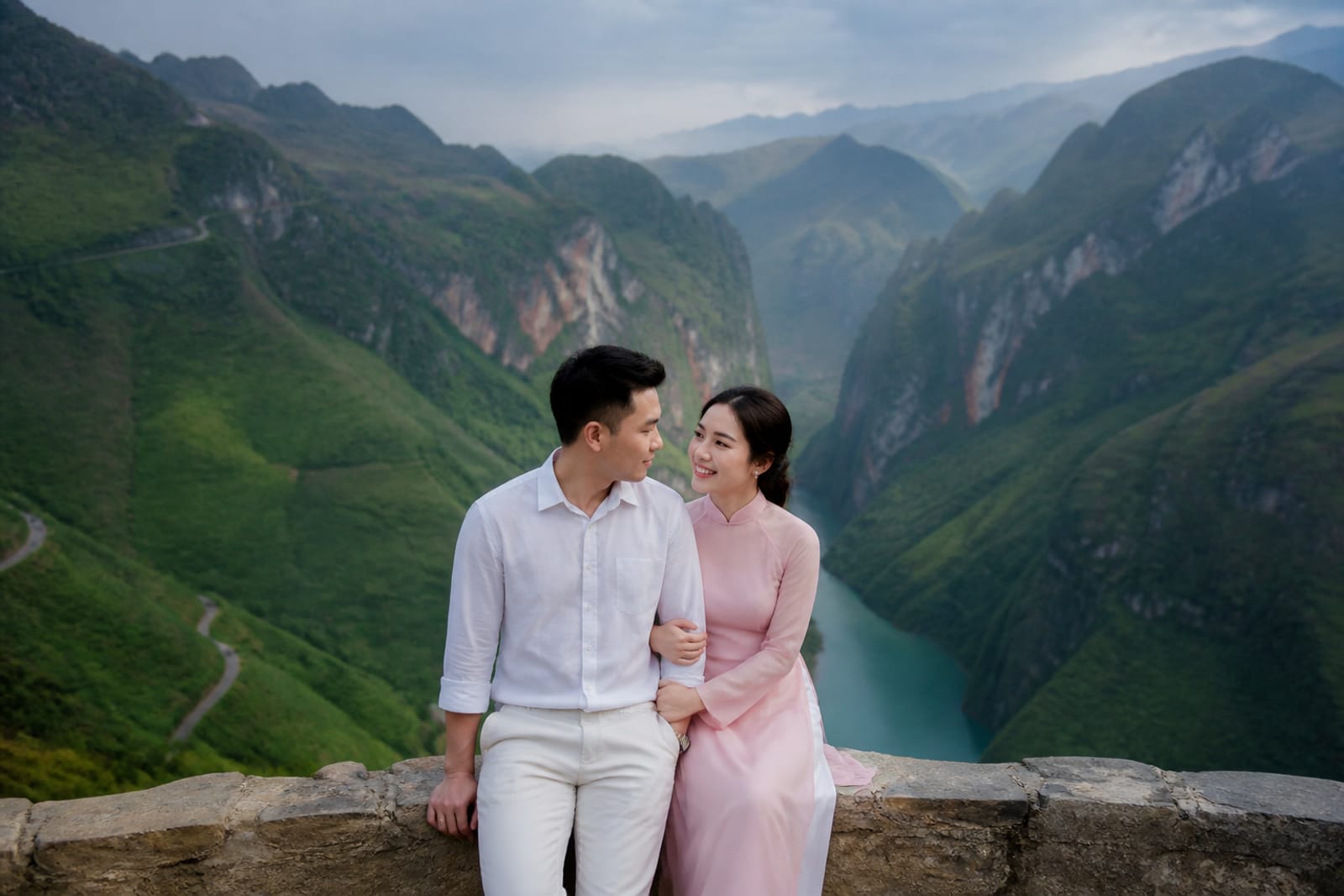
Hoang Su Phi's terraces are cinematic at specific hours—soft side light at 6–7 am when mist clings to the valleys, and warm front light around 4–5 pm on clear days. The scale is human: you walk between narrow paths, wade through shallow water at harvest time, and frame the couple against gold and shadow without visible crowds. The trade-off is distance. Hanoi to Hoang Su Phi is not a morning drive-and-shoot: roads wind through three mountain passes, phone signal drops for hours, and a vehicle breakdown strands you. Any pre-wedding photoshoot here anchors to a 2–3 day trip, not a half-day session. Winter rain and summer landslides can close routes without warning. Budget realistic time, confirm road conditions before committing outfits or travel, and accept that some planned shots may shift due to weather or access.
📸 Book on WhatsApp — pre-wedding photoshoot
How to structure a Hoang Su Phi shoot: the two-day rhythm
Most couples shoot Hoang Su Phi as a morning session the day after arrival. You drive from Hanoi late afternoon (depart 2–3 pm, arrive 6–7 pm), scout light and location at dusk, sleep in a guesthouse in Yen Minh or Dong Van, then shoot 5:30–9 am, and drive back by noon. This rhythm works because: (1) you see the light window before committing outfits; (2) early light is softest and mist is present; (3) you're off the mountain before afternoon heat and fatigue build; (4) the return drive avoids evening darkness on winding roads. The first afternoon also allows the photographer and your team (hair, makeup, groom) to acclimatize and identify actual shooting spots—what looks good on a map often requires footwork to frame correctly. If buckwheat flowers bloom (roughly October–November), add an extra location scout that afternoon: buckwheat is delicate and wind can scatter petals by morning. Winter shoots (December–February) sacrifice mist and colour for clarity but require cold-weather outfits and longer warm-up time in the vehicle; summer is too hot and wet. Autumn (September–October) is the proven window.
Transport options: van hire, guides and what each demands
| Option | Best for | Light & season | Why it works / what to watch |
|---|---|---|---|
| Private van + local driver (8–10 hrs total) | couples with 1–2 outfits, flexible timing | Sep–Oct golden light; avoid Dec–Feb rain/mud, Jun–Aug landslides | Driver knows road status, can adjust for light. Costs scale with vehicle size and fuel. Confirm driver experience on Ha Giang passes—inexperience costs time. |
| Guided tour operator + photographer embed | couples wanting on-ground logistics managed | Sep–Oct; guides cancel Jun–Aug/Dec–Feb proactively | Operator manages road permits (if required), guesthouse, meals. Photographer may not know Ha Giang light—request a mountain portfolio first. |
| Self-drive rental car + app maps | NOT recommended for first-time visitors | n/a | Roads are poorly signposted, landslide closures aren't on Google Maps in real time, night driving is hazardous. Saves money, loses hours and safety. |
Key demand for all options: Confirm road status with the driver or operator 48 hours before departure. Ha Giang closes sections without advance warning during summer rains (June–August) and winter landslides (December–February); your WhatsApp message to check conditions is not a guarantee, but it's the only honest check available.
Timing the shoot window: light, mist and walking pace
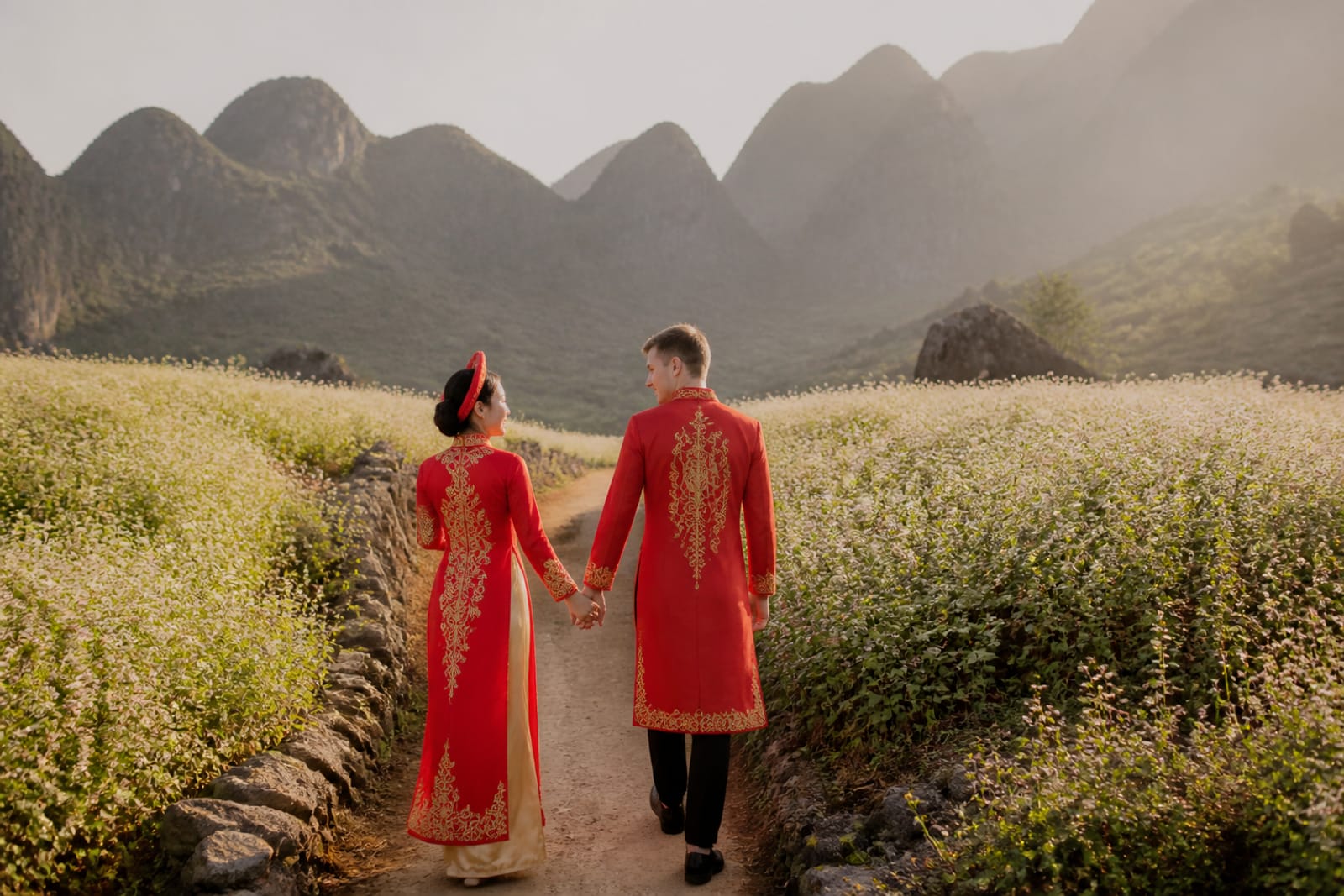
Hoang Su Phi's best light begins 5:45 am and fades by 8:30 am—a narrow window. Mist rises from valleys until 7 am; by 8:30 it burns off and light hardens. This timing demands:
- 5:15 am vehicle departure from guesthouse (you're already dressed, hair and makeup complete)
- First frame by 5:50 am at the overlook or path; wide shots first (terraces, couple walking, horizon), then medium (couple framing the landscape), then detail (texture, hands, water)
- Final location by 7:30 am; light is still soft but sun angle is steeper
- Off the hill by 8:45 am to avoid mid-morning hardness and growing foot traffic from day-trippers
Walking pace is slow. Terraces are steep, paths are narrow, and outfits (ao dai, dress, suit) restrict movement. Budget 10–15 minutes to walk 100 meters uphill. Your photographer and hair/makeup artist climb with you—a three-person team moves slower than a solo camera. Shoes matter: proper hiking boots with ankle support prevent twisted ankles on wet stone; heels are unsafe and slow. Water crossings are real in September–October (harvest season); wade through 5–20 cm of water is normal. Plan outfit changes for the guesthouse, not on the hill—changing ao dai mid-shoot costs 20 minutes and exposes clothes to mud.
Afternoon light (4–5 pm) is warm and directional but brings foot-traffic crowds and longer shadows. Use it for secondary locations closer to the road, not the main terraces.
Weather and road-closure reality: what Cáo Studio sees on the ground
Cáo Studio does not operate in Ha Giang—the studio is based in Hanoi and Saigon and travels to Hoi An by appointment. However, couples asking about mountain shoots often receive honest feedback from the team: road closures in Ha Giang are sudden and non-negotiable. Summer rain (June–August) causes landslides that close passes for 2–5 days; winter (December–February) brings fog, icy surfaces and loose rock. A shoot scheduled for mid-June might be postponed a week; a couple planning a July elopement should consider lower-altitude alternatives like Trang An (Ninh Binh) or Mu Cang Chai (also north, but more accessible). September and October see occasional rain (check forecasts 10 days out), but roads are usually passable.
Winter light is harsh and grey—mist is thick, but it blocks directional light entirely. Spring (March–April) is between extremes: roads are clear, light is warm, but rice is seedling-stage (green, not golden). Buckwheat flowers are rough-timed to October–November; they're weather-dependent and not guaranteed.
Realistic contingency: Build a 1–2 day buffer into your trip. If the primary Hoang Su Phi date is blocked by a road closure or weather, have a backup shoot location in Hanoi or a lower-altitude site booked. Cancellation and rescheduling clauses matter—confirm with your photographer (local or coordinated via WhatsApp) what happens if the road closes 24 hours before the shoot.
What to check before you book a Hoang Su Phi photoshoot
- Road status within 48 hours of departure. Ask your driver or tour operator directly; don't rely on online forecasts alone. Ha Giang authorities post closures on local Vietnamese pages—your driver will know them.
- Photographer's mountain portfolio. Has the person shot at Hoang Su Phi, Mu Cang Chai or similar terrain before? Ask for 10–20 images from a previous shoot. Mountain light, mist and steep angles require specific skills.
- Outfit fit for walking. Test your ao dai, dress or suit on stairs and wet ground. Long skirts snag on terrace stones; ao dai fabric soaks water and weighs twice as much wet. Coordinate with your hair and makeup artist (via Cáo Studio's makeup & hair service if you're travelling from abroad) on waterproofing and weight management.
- Guesthouse and meal logistics. Where are you sleeping, eating breakfast, and changing clothes? A guesthouse close to the main terraces saves 30 minutes in the pre-dawn rush.
- Vehicle insurance and breakdown protocol. If the van breaks down on a mountain pass at 6:30 am, what's the plan? Confirm this with your driver in advance.
- Local photographer licensing and insurance. Is the photographer registered, insured for location work, and able to handle a multi-hour mountain shoot without fatigue affecting light reading? Cáo Studio team can advise you on vetting via WhatsApp, but the final hire is on you.
---
FAQ
How long is the drive from Hanoi to Hoang Su Phi, and is it negotiable?
140 km takes 4–5 hours via winding mountain passes (Roads 2 and 34); no faster route exists. Landslides, vehicle speed and road condition vary the time. Plan 4.5 hours as the realistic centre estimate. Early departures (2–3 pm) reach Yen Minh by dusk.
Can I do Hoang Su Phi as a day trip from Hanoi?
Technically yes if you leave at 1 am and return by 10 pm; you'll lose the dusk scout and dawn light magic. A 2–3 day trip (arrive afternoon, shoot dawn, return mid-morning) is the professional standard because it allows light reconnaissance and safer mountain driving.
What month has the best light and fewest road closures?
September–October: terraces are golden at harvest, mist is present, and roads are open. October is peak. Avoid June–August (landslides) and December–February (cold, grey, icy risk).
What happens if the road closes the day before my shoot?
You reschedule or pivot to a backup location (e.g. Hanoi ao dai shoot, Trang An). Confirm cancellation terms with your photographer in writing. Build a 1–2 day schedule buffer into your trip.
Does Cáo Studio shoot in Hoang Su Phi?
No; Cáo Studio operates from Hanoi, Saigon and Hoi An. For a Hoang Su Phi shoot, you'll need a local Ha Giang photographer and a driver. Contact us on WhatsApp to discuss logistics and who to vet.
What should I wear under an ao dai for a mountain shoot?
Lightweight, quick-dry undergarments that don't show through; avoid cotton (absorbs water). Bring a second top/slip in case the first soaks. Confirm water depth with your photographer before the shoot. Test walking in your ao dai on stairs first.
FAQ
How long is the drive from Hanoi to Hoang Su Phi, and is it negotiable?
140 km takes 4–5 hours via winding mountain passes (Roads 2 and 34); no faster route exists. Landslides, vehicle speed and road condition vary the time. Plan 4.5 hours as the realistic centre estimate. Early departures (2–3 pm) reach Yen Minh by dusk.
Can I do Hoang Su Phi as a day trip from Hanoi?
Technically yes if you leave at 1 am and return by 10 pm; you'll lose the dusk scout and dawn light magic. A 2–3 day trip (arrive afternoon, shoot dawn, return mid-morning) is the professional standard because it allows light reconnaissance and safer mountain driving.
What month has the best light and fewest road closures?
September–October: terraces are golden at harvest, mist is present, and roads are open. October is peak. Avoid June–August (landslides) and December–February (cold, grey, icy risk).
What happens if the road closes the day before my shoot?
You reschedule or pivot to a backup location (e.g. Hanoi ao dai shoot, Trang An). Confirm cancellation terms with your photographer in writing. Build a 1–2 day schedule buffer into your trip.
Does Cáo Studio shoot in Hoang Su Phi?
No; Cáo Studio operates from Hanoi, Saigon and Hoi An. For a Hoang Su Phi shoot, you'll need a local Ha Giang photographer and a driver. Contact us on WhatsApp to discuss logistics and who to vet.
What should I wear under an ao dai for a mountain shoot?
Lightweight, quick-dry undergarments that don't show through; avoid cotton (absorbs water). Bring a second top/slip in case the first soaks. Confirm water depth with your photographer before the shoot. Test walking in your ao dai on stairs first.
Ao dai, makeup, hair and a local photographer in Hanoi or Saigon — one WhatsApp message.