/pre-wedding-photoshoot
Getting to Hoi An rice paddies on photoshoot day: transport, timing an
Hoi An's rice paddies lie 5–15 km from the Ancient Town, reachable by hired car, motorbike or local taxi in 15–30 minutes depending on your destination field and traffic. The best shooting window is sunrise (roughly 5:30–6:30 am in summer, 6:00–7:00 am in winter), when light is soft, fields are quiet, and morning mist often clings to water. For a pre-wedding photoshoot, Cáo Studio – Makeup & Photoshoot arranges transport as part of the session; your team meets early, travels together, and shoots during the golden hour before crowds and heat build. Avoid October–November (rainy season and flooding risk) and May–August peak heat (35°C+). Confirm field access, water levels, and crop cycles with your photographer before booking—permission from landowners and local guides is essential, and fees may apply.
Most travelers assume they can drive straight to iconic paddy shots near Hoi An. In reality, the paddies are scattered across rural hamlets with unmarked lanes, seasonal water levels, and shifting crop patterns. Timing and route planning determine whether you get a serene sunrise or a muddy, crowded scramble. Here's how to navigate it.
Which transport mode fits your shoot style and budget?
Hiring a private car or van is safest for a photoshoot day. Your driver knows the route, can wait while you shoot, and handles luggage—critical when you're carrying an ao dai, makeup kit, or a second outfit. A motorbike taxi (Grab motorbike or local driver) is fastest in traffic but limits what you carry and creates fatigue before shooting. Renting your own motorbike or electric scooter gives freedom but requires confidence navigating rural roads at dawn and managing a vehicle while wearing shooting clothes. Most couple photoshoot groups choose a car because it keeps energy high, clothes clean, and timing flexible.
| Option | Best for | Light quality | Practical notes |
|---|---|---|---|
| Private car/van | Full sessions, groups, multiple outfits | Sunrise + golden hour; driver can reposition | Costs more; prebook with studio or rental company |
| Motorbike taxi (Grab) | Solo travelers, light luggage | Dependent on drop-off point | Fast in traffic; limited carrying capacity |
| Rented scooter | Independent travelers, locals | Same as motorbike; more control | Risk of traffic stress; dawn navigation tricky |
| Walking from homestay | Budget travelers, short distance | Variable; depends on field proximity | Only viable if you stay within 2 km; slow with full outfit |
What time should you arrive at the paddies to catch the best light?
Golden hour at Hoi An's rice paddies begins around 5:30–6:00 am (summer) and extends for about 45 minutes to an hour. If you're shooting in winter (December–January), sunrise shifts to 6:20–6:50 am and light is often softer but slightly greyish due to moisture. You must leave your accommodation by 5:00–5:15 am to reach a field 15–20 km away, account for parking, and walk to your chosen spot. Arriving after 7:00 am means harsh overhead light, early-morning farm traffic, and tourists clustering at popular paddies. Pro teams shoot the first session during golden hour, break for ao dai or outfit changes, then return for a softer mid-morning light around 9:00–10:00 am (acceptable in winter; avoid May–August at this time). If you're booking a pre-wedding photoshoot with Cáo Studio, your photographer coordinates the entire timeline—meet time, transport, and light windows are confirmed on WhatsApp before the session date.
Does seasonal weather and crop cycles affect paddy photography?
Yes, dramatically. February–April is ideal: paddies are flooded and vivid green, weather is mild, and skies are often clear. May–August brings intense heat (often 35°C+), but water levels drop and fields are sometimes harvested or dry—composition suffers, and you risk dehydration and poor makeup hold. September–December is the rainy and typhoon season, with the worst conditions in October–November: frequent downpours cause flooding in low-lying areas, water is muddy, and the Ancient Town itself floods, complicating access. December–January sees cooler, drier weather but frequent morning mist and drizzle that can obscure light or dampen clothes and ao dai. Crop cycles vary by field—some are planted in July, harvested in November; others are flooded rice in winter and dry or fallow in summer. Before booking, ask your photographer which specific fields they use and confirm current water levels and crop status. Cáo Studio – Makeup & Photoshoot knows which paddies suit each season and adjusts locations accordingly.
What are the main logistical headaches and how do you avoid them?
Traffic and timing slip: A 15-minute journey can stretch to 45 minutes during Tet (late January–mid-February) or if your driver takes a wrong turn on rural roads. Leave 15–20 minutes earlier than you think you need.
Water and mud damage to shoes and ao dai hem: Paddies flood; walking to fields means wading or muddy paths. Wear flip-flops or sandals during transport, bring a plastic bag, and change into proper footwear at the shoot location. If wearing an ao dai, tuck the hem or ask your photographer how to manage it safely.
Landowner disputes or sudden restrictions: Not all paddies allow photography; some farmers charge a fee or request payment on the day. Never assume access. Your photographer must scout and negotiate in advance.
Makeup and sweat in heat: If shooting in May–August or even early morning with exercise, humidity breaks makeup quickly. Ask about makeup & hair at your hotel touch-up kits or plan a second makeup session mid-shoot if the day is hot.
Getting lost or running out of light: Rural roads lack signage. Use a driver who knows the area or book with a photographer who has scouted the exact location. Always have a backup field if the first is flooded or inaccessible.
How does Cáo Studio coordinate Hoi An shoots differently from other locations?
Cáo Studio operates branches in Hanoi and Ho Chi Minh City and travels to Hoi An by appointment—the team is not stationed there. This means your pre-wedding photoshoot, ao dai photoshoot, or couple photoshoot is fully coordinated: transport is arranged, fields are pre-scouted, landowner permissions are secured, and your makeup and styling are prepped in advance. You confirm session details and timing on WhatsApp, and the studio handles the rest. Since the team travels, dates and availability are flexible but must be confirmed early. This approach guarantees a cohesive experience—no scrambling for a driver, no "we didn't know access was blocked" moments on the day. Check the Hoi An page for more details and ask on WhatsApp about available dates for your preferred month.
📸 Book on WhatsApp — ao dai photoshoot
What to check before you book
- Confirm the exact paddy location with your photographer. Ask if it's walkable, if water levels are current, and how far from the car park.
- Clarify the start time and pickup point. Is transport included? Who handles it? What if you're staying outside central Hoi An?
- Discuss the season you're visiting. Is it ideal for paddies, or should you consider other locations like the Ancient Town at sunrise?
- Ask about backup plans. What if your chosen field is flooded or inaccessible?
- Confirm what's included in your session—makeup, outfit changes, transport—by asking on WhatsApp, not by assuming.
- Arrange footwear in advance. Know whether you'll wade, walk, or need special shoes.
FAQ
Is it safer to hire a car through Cáo Studio or book a Grab driver on the day?
Cáo Studio arranges transport as part of the session, eliminating confusion and delays. The driver understands the schedule and location. If booking independently, confirm the driver knows the rural approach roads and can wait during the shoot without extra charges.
Can I shoot rice paddies in December or January, or is it too cold and grey?
Yes, December–January is cool and dry, though mornings are often misty or drizzly. Light is soft and diffuse, which suits some aesthetics. Water levels are high and fields are green. Plan for cooler conditions and potential dampness on clothes. Ask your photographer which paddies are best for winter light.
What should I wear under my ao dai for a paddy shoot to avoid mud and water damage?
Wear simple slip-on shoes or sandals during transport; change to proper footwear (or stay barefoot if the terrain allows) at the shoot location. Bring a waterproof bag for valuables and wet items. If paddies are very muddy, ask your photographer to help you manage the ao dai hem—some team members know tricks to keep it safe while you move.
If I'm visiting Hoi An and staying in the Ancient Town, how early do I need to wake for a sunrise paddy shoot?
Plan to wake and be ready by 4:30–4:45 am. Transport takes 15–30 minutes depending on which paddy field. Arriving by 5:15–5:30 am gives you time to settle, do final makeup touch-ups, and be in position when light peaks at 5:45–6:15 am.
What if the paddies are flooded or inaccessible when I arrive?
This happens occasionally in rainy season (Sep–Dec). Ask your photographer what backup locations they use—typically another field, the river embankment, or the Ancient Town at a different time of day. Confirm backup plans when you book on WhatsApp.
Does Cáo Studio shoot in other locations near Hoi An, like the river or market areas?
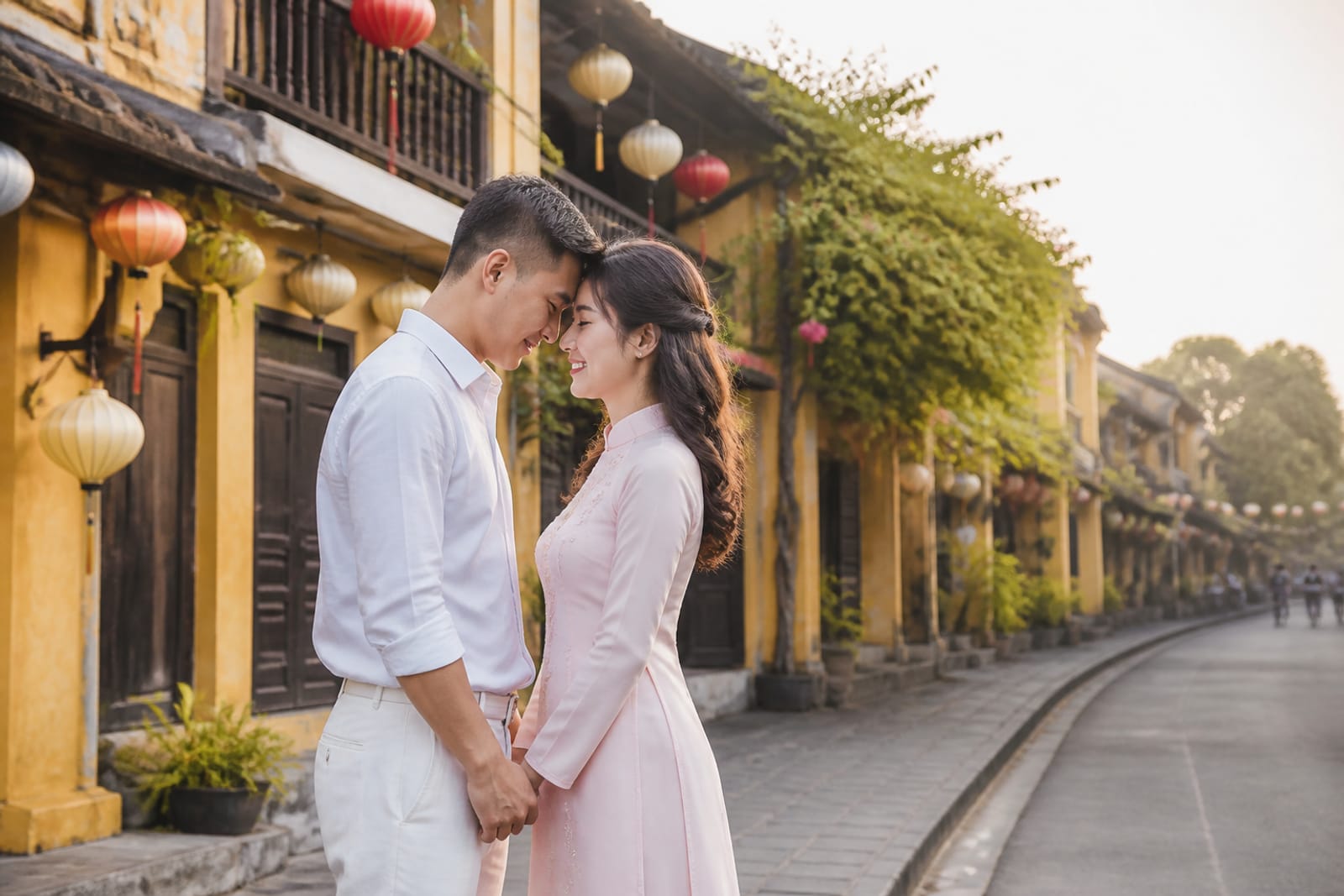
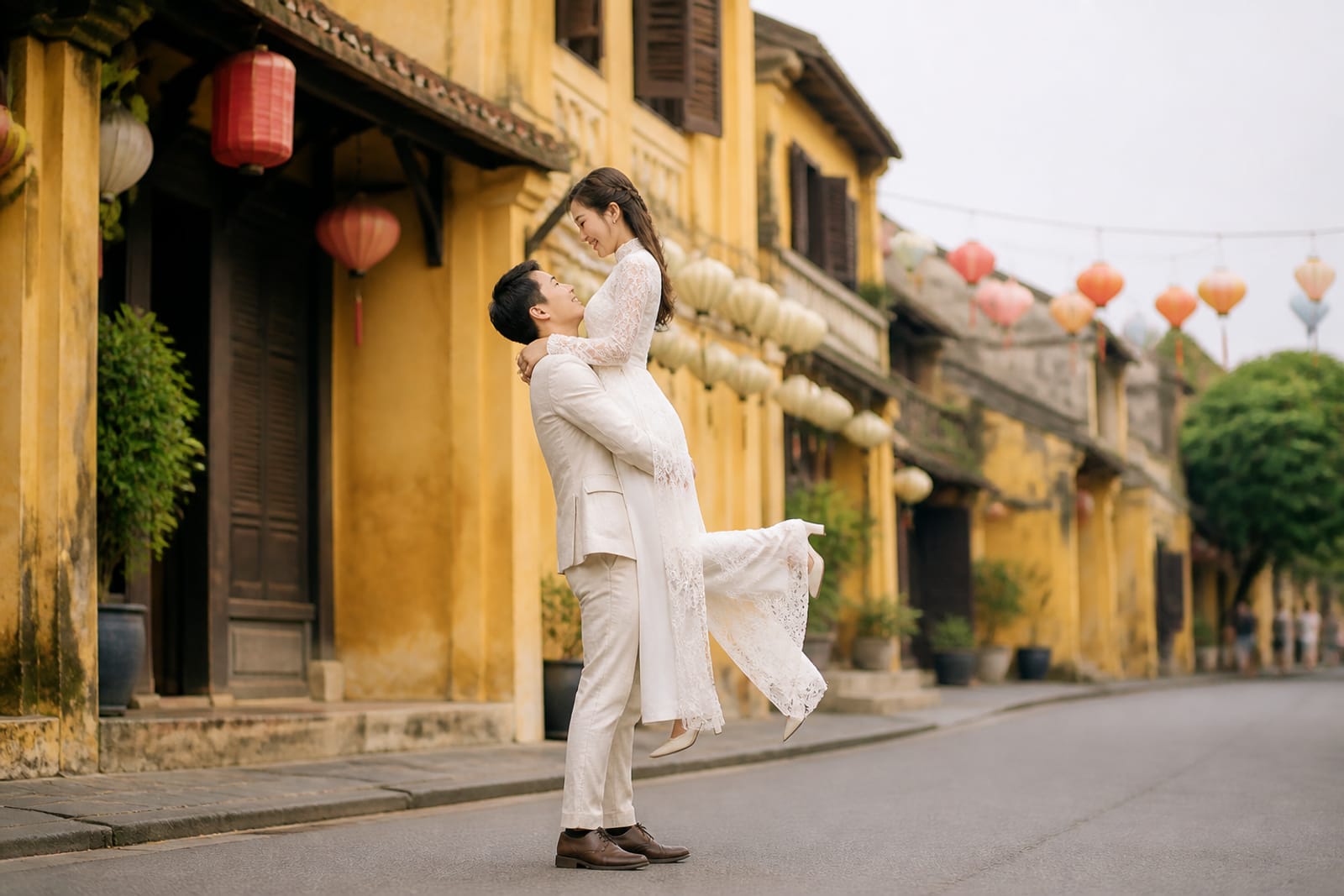
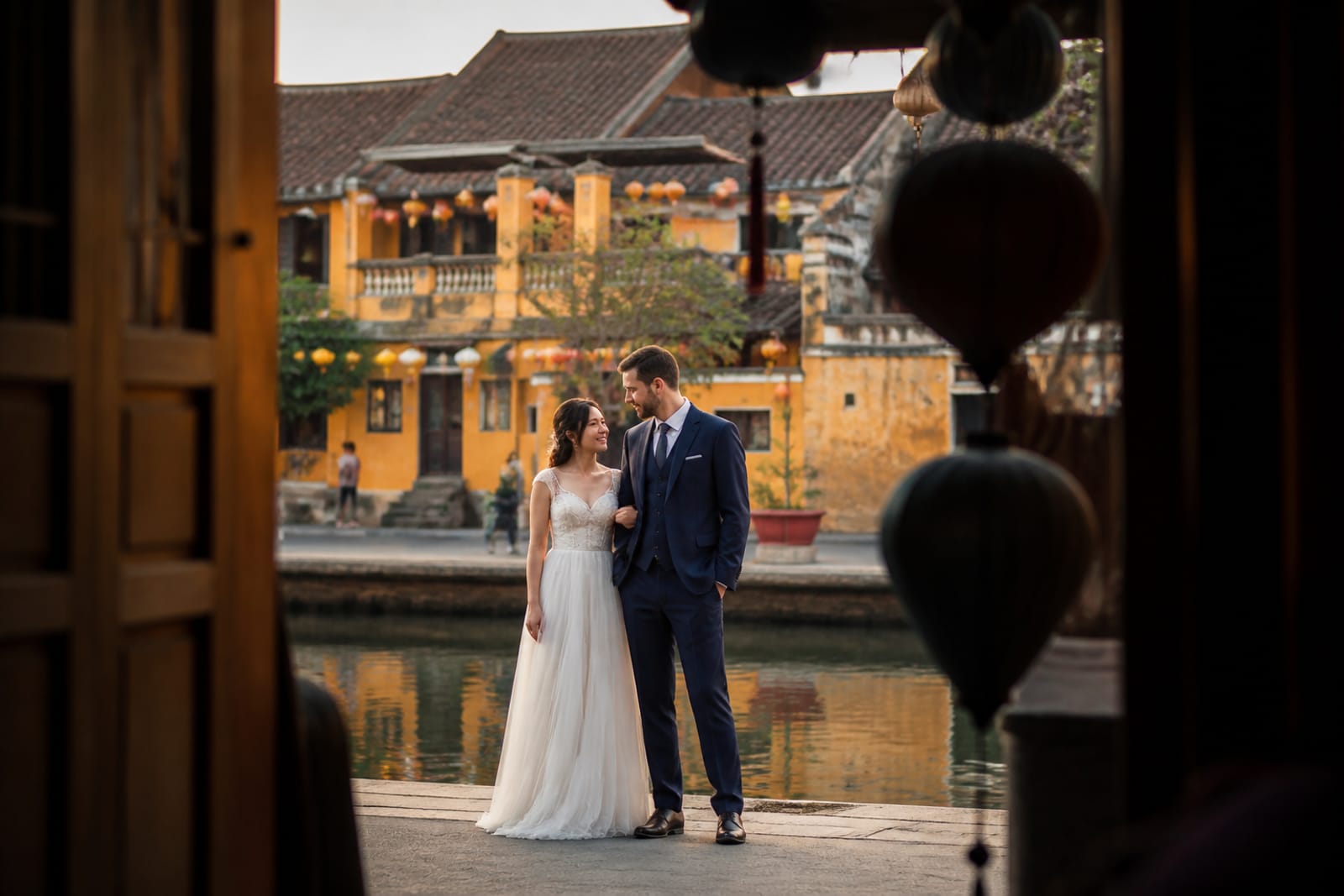
Yes. Cáo Studio also shoots the Ancient Town, lantern-lit streets at dusk, and other rural spots around Hoi An. Check the lookbook and ask on WhatsApp about locations available for your dates. Each location has different light windows and seasonal suitability.
How much does transport to the paddies cost if I book a Cáo Studio session?
Transport details and inclusions are confirmed on WhatsApp when you quote your session. Ask about whether transport is included, and clarify any additional costs for locations outside the Ancient Town. Internal links used: 1. pre-wedding photoshoot — pillar link (≥3 uses) 2. couple photoshoot — service page 3. ao dai photoshoot — service page 4. Hoi An page — geo page 5. makeup & hair at your hotel — service page 6. lookbook — reference page
FAQ
Is it safer to hire a car through Cáo Studio or book a Grab driver on the day?
Cáo Studio arranges transport as part of the session, eliminating confusion and delays. The driver understands the schedule and location. If booking independently, confirm the driver knows the rural approach roads and can wait during the shoot without extra charges.
Can I shoot rice paddies in December or January, or is it too cold and grey?
Yes, December–January is cool and dry, though mornings are often misty or drizzly. Light is soft and diffuse, which suits some aesthetics. Water levels are high and fields are green. Plan for cooler conditions and potential dampness on clothes. Ask your photographer which paddies are best for winter light.
What should I wear under my ao dai for a paddy shoot to avoid mud and water damage?
Wear simple slip-on shoes or sandals during transport; change to proper footwear (or stay barefoot if the terrain allows) at the shoot location. Bring a waterproof bag for valuables and wet items. If paddies are very muddy, ask your photographer to help you manage the ao dai hem—some team members know tricks to keep it safe while you move.
If I'm visiting Hoi An and staying in the Ancient Town, how early do I need to wake for a sunrise paddy shoot?
Plan to wake and be ready by 4:30–4:45 am. Transport takes 15–30 minutes depending on which paddy field. Arriving by 5:15–5:30 am gives you time to settle, do final makeup touch-ups, and be in position when light peaks at 5:45–6:15 am.
What if the paddies are flooded or inaccessible when I arrive?
This happens occasionally in rainy season (Sep–Dec). Ask your photographer what backup locations they use—typically another field, the river embankment, or the Ancient Town at a different time of day. Confirm backup plans when you book on WhatsApp.
Does Cáo Studio shoot in other locations near Hoi An, like the river or market areas?
Yes. Cáo Studio also shoots the Ancient Town, lantern-lit streets at dusk, and other rural spots around Hoi An. Check the [lookbook](/lookbook) and ask on WhatsApp about locations available for your dates. Each location has different light windows and seasonal suitability.
How much does transport to the paddies cost if I book a Cáo Studio session?
Transport details and inclusions are confirmed on WhatsApp when you quote your session. Ask about whether transport is included, and clarify any additional costs for locations outside the Ancient Town. Internal links used: 1. [pre-wedding photoshoot](/pre-wedding-photoshoot) — pillar link (≥3 uses) 2. [couple photoshoot](/couple-photoshoot) — service page 3. [ao dai photoshoot](/ao-dai-photoshoot) — service page 4. [Hoi An page](/hoi-an) — geo page 5. [makeup & hair at your hotel](/makeup-and-hair) — service page 6. [lookbook](/lookbook) — reference page
Ao dai, makeup, hair and a local photographer in Hanoi or Saigon — one WhatsApp message.