/pre-wedding-photoshoot
Getting to Japanese Covered Bridge: transport, timing, photoshoot logi
The Japanese Covered Bridge (Chùa Cầu) stands on the west bank of the Thu Bồn River in central Hoi An, accessible only on foot through the Ancient Town. Shoot days require entry tickets (check current price on the official Hoi An site), arrival by 5:30–6:00 AM to avoid crowds, and coordination with your Cáo Studio – Makeup & Photoshoot team on transport from your hotel and equipment placement. Most couples hire a private driver (book through your hotel or WhatsApp us for a referral); public buses are slower and less reliable for early calls. Light is soft and directional from sunrise until 7:30 AM; after that, hard shadows dominate. Plan 45–90 minutes at the bridge depending on outfit changes and lantern use (lit after dusk only—plan evening sessions separately).
The Japanese Covered Bridge requires deliberate logistics. It's a postcard-famous spot, which means early arrival, clear communication with your photographer, and a transport plan locked in before shoot day. We run pre-wedding photoshoots here year-round by appointment; this guide covers what matters when you're booking.
Why is the Japanese Covered Bridge so crowded during normal hours?
The bridge is a single, narrow covered structure on the main tourist route through Hoi An Ancient Town. By 8:00 AM, tour groups pile in; by 10:00 AM, it's often shoulder-to-shoulder. Between mid-morning and early evening, clean shots are rare unless you book an official photoshoot (which lets your team move freely). Sunrise—roughly 5:30–6:30 AM depending on the month—clears the space for 1–2 hours. The bridge closes at night, so lantern shots (the lit-up evening aesthetic) are no longer possible in-studio shots; the Ancient Town lights lanterns from dusk, but the bridge itself isn't accessible after official hours.
📸 Book on WhatsApp — pre-wedding photoshoot | 🌸 See the lookbook
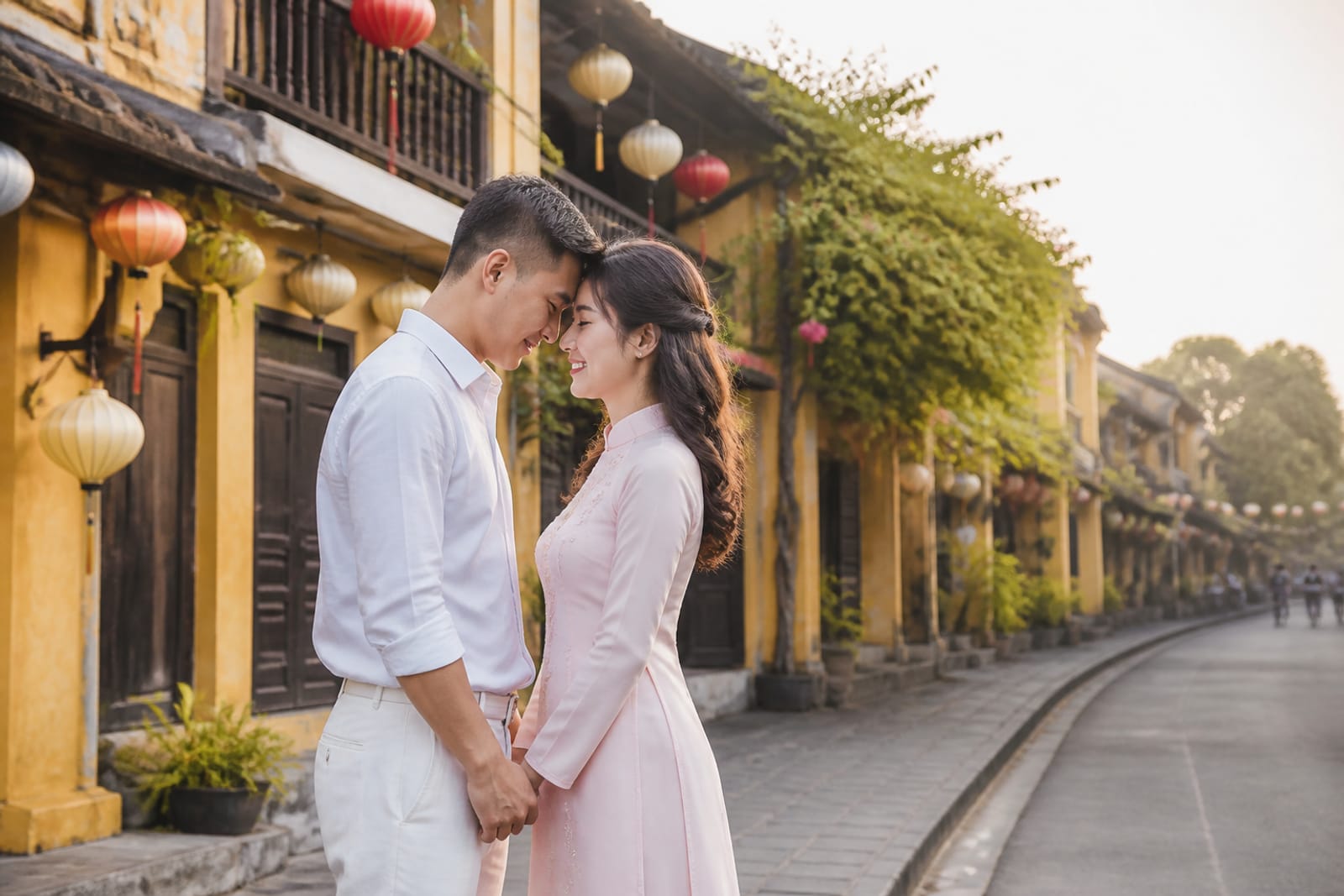
What transport option suits your arrival time and hotel location?
| Transport | Best for | Arrival time | Why it works |
|---|---|---|---|
| Private driver (hotel or pre-booked) | All shoot times; luggage/outfit changes | 5:15–5:45 AM flexibly | Door-to-door, wait time included, no schedule pressure |
| Taxi or Grab app (ride-hail) | Budget-conscious; daytime shoots | 5:30–6:30 AM if booked night before | Cheaper than driver; may surge at dawn; confirm pickup location |
| Hotel shuttle/walking | Hotel within Old Town | 5:00 AM (on foot) | Fast; no wait; but heavy bags difficult |
| Tour group transport | Never (crowds, fixed itinerary) | No photoshoot window | Incompatible with private shoot timing |
Private drivers are most reliable for pre-dawn calls. Ask your hotel to book one the day before, or WhatsApp us for a referral. Ride-hail apps (Grab) work but surge pricing may apply before 6:00 AM—confirm rates the night before. If your hotel is within the Ancient Town, walking is fastest, but carrying multiple outfits is awkward; we often pick up clients from their hotel and transit to the bridge together.
How should you coordinate with your photographer on pickup and entry?
Confirm three things on WhatsApp at least two days before: (1) your hotel address and your photographer's pickup time, (2) whether the team brings tickets or you buy them on arrival (saves time if pre-purchased), (3) where to meet inside the Ancient Town if you're entering separately. Most Cáo Studio shoots coordinate pickups—we know Hoi An's early-morning access routes and which gates to use. If you hire a photographer independently, brief them on your hotel location, exact departure time, and whether you'll meet at the bridge entrance or coordinate inside the Ancient Town. Miscommunication here costs 10–15 minutes, which cuts into your light window; rising sun moves fast.
Arrive at the bridge entrance at least 20 minutes before your session start time. This cushion covers minor delays and lets your team scout angles before clients arrive. Tickets are required; if you're unfamiliar with the Ancient Town, WhatsApp Cáo Studio and we'll walk you through entry logistics.
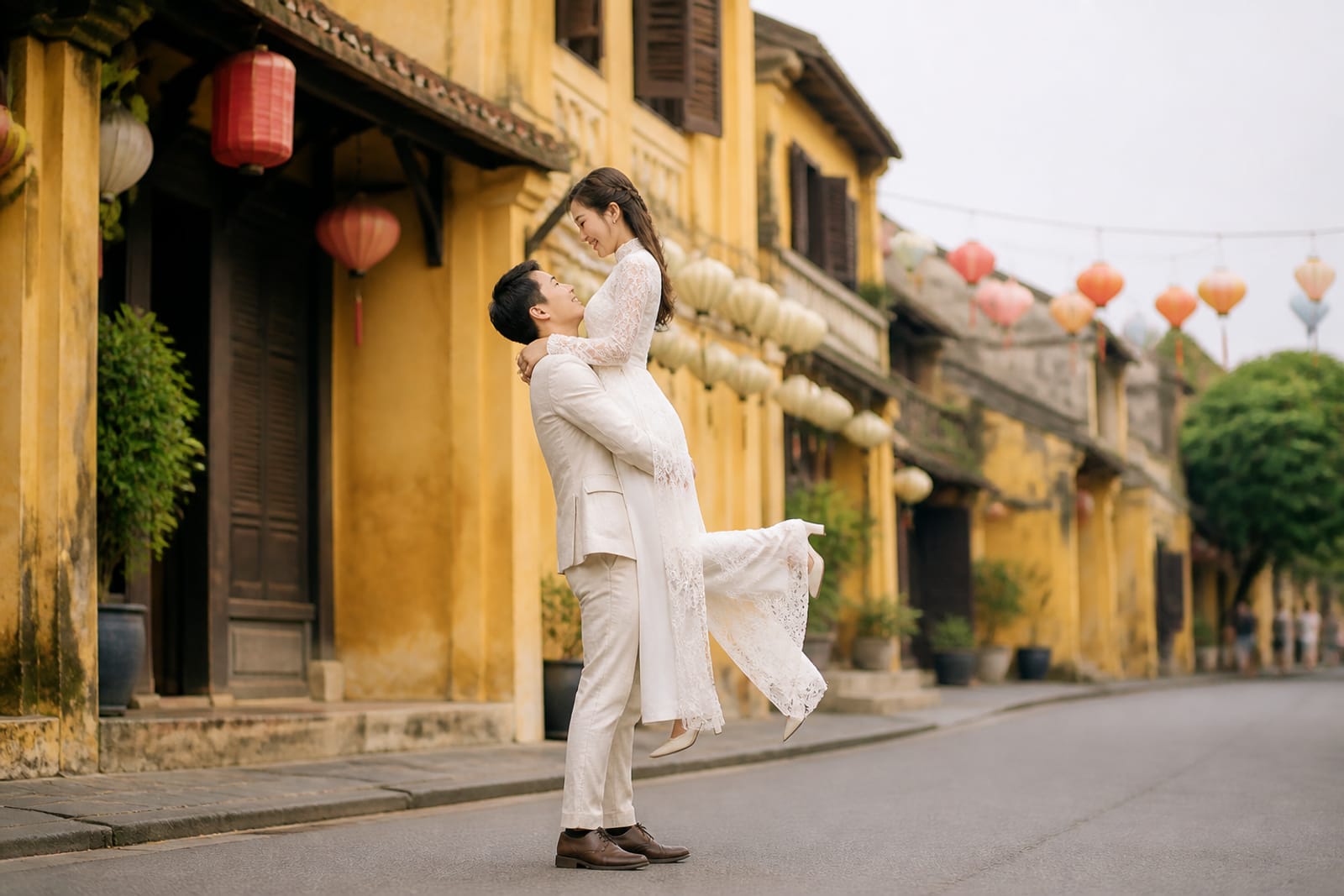
Which months offer the best light and fewest weather surprises?
Hoi An's dry season runs February through August; within this window, February–April offers mild heat, fewer afternoon clouds, and green rice fields visible from elevated angles nearby. May–August is very hot (often 35°C+), so sunrise sessions finish before intense heat sets in—wear breathable undergarments under your áo dài. September–December is the rainy season; October–November brings typhoons and flooding in the Ancient Town itself—avoid booking shoots those months. The bridge itself rarely floods, but access paths and lighting conditions become unreliable.
Best months for Japanese Covered Bridge shoots: February, March, April, and July (early morning only). Worst months: October, November. December–January are cooler but often drizzly; dawn light is muted, and shutter speeds slow—check current forecast before confirming.
What clothing and logistics should you arrange before arriving at the bridge?
Most pre-wedding photoshoots at the bridge include an áo dài in one outfit and Western wedding attire in another. Áo dài fits over layers; wear slip shorts and a thin, light undershirt (no bra straps visible). Bring a change of shoes if you're mixing traditional and modern looks—flip-flops or soft sandals for between-shot comfort. Hair and makeup should be locked in before arrival; Cáo Studio offers makeup & hair at your hotel in Hoi An, which means you arrive camera-ready without rushing through the Ancient Town.
Pack water, a parasol for midday breaks (even in winter, sun reflects off the river), and a small bag for jewelry or change items. Notify your photographer if you want certain angles—silhouettes at sunrise, details of embroidery, close-ups on the bridge railing—so they're prepared. The bridge is about 18 meters long; space is tight for large parties; if you're adding a family or friend as an extra subject, brief your photographer in advance so they can compose efficiently.
What should you check before booking a Japanese Covered Bridge photoshoot?
Ask your photographer or studio:
- Sunrise arrival and light window. Confirm their exact pickup time and whether they've shot here in your season. Request their backup plan if sunrise is cloudy.
- Entry ticket inclusion. Do they buy tickets in advance, or do you? Who pays (include this in your quote request on WhatsApp)?
- Outfit and equipment logistics. How many outfit changes fit into the session? Where do they store bags while you're on the bridge? Is a makeup & hair service included, or do you arrange it separately?
- Crowd management. Ask to see their portfolio from this location. Can they frame shots that exclude tourists, or do they embrace the bustle?
- Weather backup. What happens if dawn is heavily clouded or rainy? Is there a rescheduling option?
- Ancient Town access timing. How much buffer time do they build in? Will you feel rushed?
When you're ready to book a pre-wedding shoot at the Japanese Covered Bridge, WhatsApp Cáo Studio with your dates, hotel location, and outfit preferences. Sessions are coordinated by appointment; we handle Hanoi, Ho Chi Minh City, and Hoi An travel. (For other Hoi An shoots, see our photoshoots in Hoi An guide.)
🌸 See the lookbook | 📸 Book on WhatsApp — pre-wedding photoshoot
---
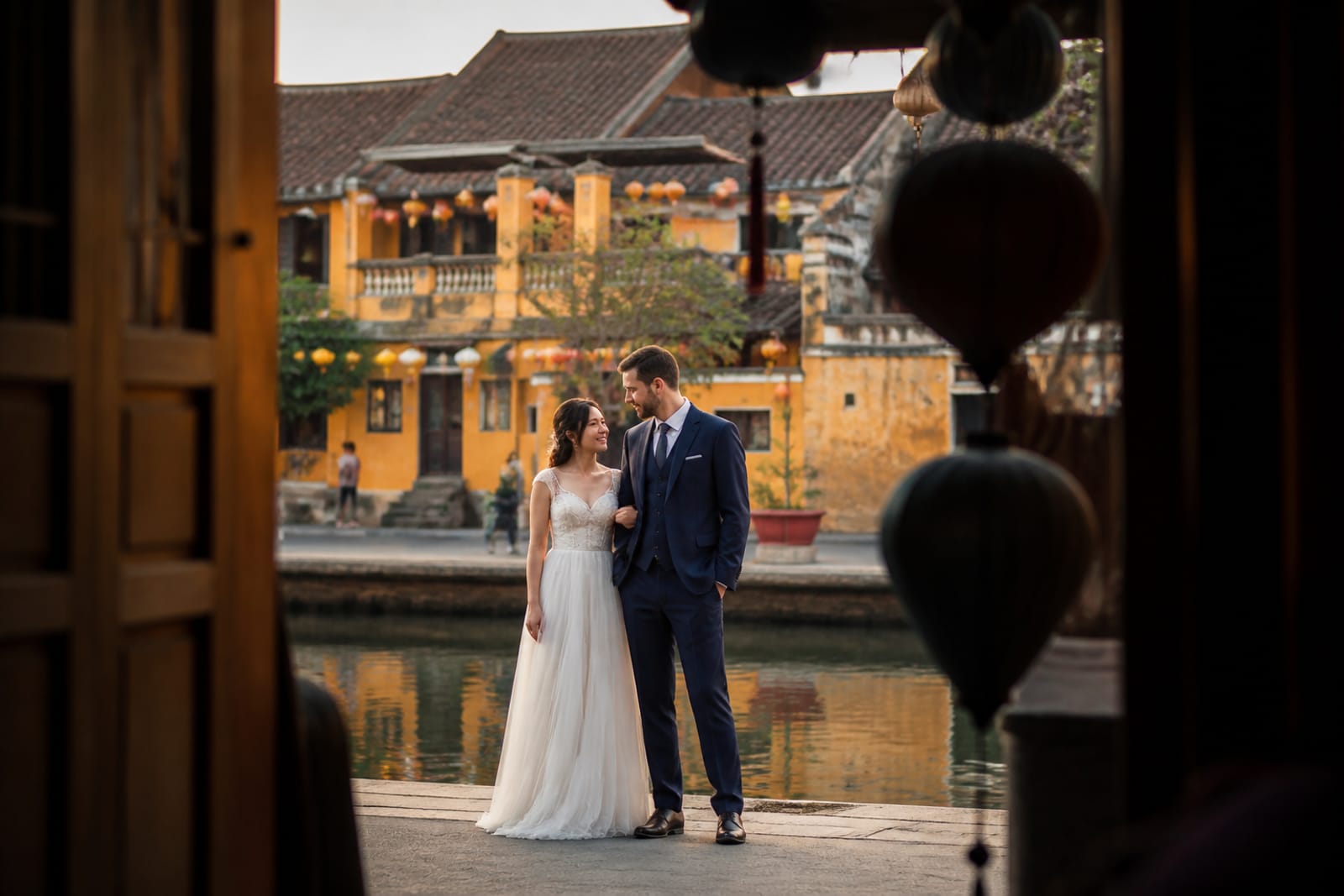
FAQ
Do I need an entrance ticket to the Japanese Covered Bridge for a photoshoot?
Yes. Entry tickets are required to access Hoi An Ancient Town and the bridge. Check the current price on the official Hoi An Ancient Town website. Confirm with your photographer whether the ticket cost is included in your session quote when you WhatsApp to book.
What time should I arrive at my hotel in Hoi An on photoshoot day?
Arrive the night before. Shoot day departure is typically 5:15–5:30 AM to reach the bridge by 5:45–6:00 AM, when light is optimal and crowds are minimal. This gives your team time to scout angles and settle before you arrive on set.
Can I shoot at the bridge in the afternoon or evening?
The bridge is open during the day but is extremely crowded. Evening shoots at the bridge aren't possible—it's not accessible after official hours. However, Hoi An Ancient Town is beautifully lit from dusk onward. Discuss alternative locations (like the riverfront or lantern-lit streets) with your photographer when you book.
What if it rains or is cloudy at sunrise?
Ask your photographer's weather policy before confirming the date. Most studios offer a rescheduling option for poor conditions. Cloudy dawns still yield soft light, but hard shadows are reduced—it's workable for close-ups and details. Discuss this on WhatsApp when you book your pre-wedding photoshoot.
Can I bring a large wedding dress to the bridge, or is space too tight?
Space is tight. A fitted or slim-cut wedding dress works; very full skirts require careful positioning on the bridge. Brief your photographer on your dress style when booking so they can plan angles and movement. Changing rooms are not available at the bridge—use your hotel or arrange a private space in the Old Town beforehand.
Should I hire a private driver or use a taxi to reach the Ancient Town?
Private drivers are more reliable for pre-dawn departures and include wait time. Taxis (Grab) are cheaper but may surge in price before 6:00 AM. Ask your hotel to book a driver the night before, or WhatsApp Cáo Studio for a referral if you're unsure of local contacts.
FAQ
Do I need an entrance ticket to the Japanese Covered Bridge for a photoshoot?
Yes. Entry tickets are required to access Hoi An Ancient Town and the bridge. Check the current price on the official Hoi An Ancient Town website. Confirm with your photographer whether the ticket cost is included in your session quote when you WhatsApp to book.
What time should I arrive at my hotel in Hoi An on photoshoot day?
Arrive the night before. Shoot day departure is typically 5:15–5:30 AM to reach the bridge by 5:45–6:00 AM, when light is optimal and crowds are minimal. This gives your team time to scout angles and settle before you arrive on set.
Can I shoot at the bridge in the afternoon or evening?
The bridge is open during the day but is extremely crowded. Evening shoots at the bridge aren't possible—it's not accessible after official hours. However, Hoi An Ancient Town is beautifully lit from dusk onward. Discuss alternative locations (like the riverfront or lantern-lit streets) with your photographer when you book.
What if it rains or is cloudy at sunrise?
Ask your photographer's weather policy before confirming the date. Most studios offer a rescheduling option for poor conditions. Cloudy dawns still yield soft light, but hard shadows are reduced—it's workable for close-ups and details. Discuss this on WhatsApp when you book your pre-wedding photoshoot.
Can I bring a large wedding dress to the bridge, or is space too tight?
Space is tight. A fitted or slim-cut wedding dress works; very full skirts require careful positioning on the bridge. Brief your photographer on your dress style when booking so they can plan angles and movement. Changing rooms are not available at the bridge—use your hotel or arrange a private space in the Old Town beforehand.
Should I hire a private driver or use a taxi to reach the Ancient Town?
Private drivers are more reliable for pre-dawn departures and include wait time. Taxis (Grab) are cheaper but may surge in price before 6:00 AM. Ask your hotel to book a driver the night before, or WhatsApp Cáo Studio for a referral if you're unsure of local contacts.
Ao dai, makeup, hair and a local photographer in Hanoi or Saigon — one WhatsApp message.