/pre-wedding-photoshoot
Getting to Muong Hoa Valley rice terraces on photoshoot day: transport
Muong Hoa Valley lies about 10–14 km from Sapa town via winding mountain road; the drive takes 30–50 minutes by motorbike or car, depending on road condition and traffic. Best light falls in early morning (6:00–8:30 am) or late afternoon (4:00–6:00 pm), but you must leave Sapa town by 5:15 am for sunrise shoot or 2:30 pm for sunset. Transport options include renting a motorbike with driver (most flexible), booking a car through your hotel, or hiring a local guide who arranges it. Cáo Studio does not shoot in Sapa, but we recommend arriving with a local photographer already booked, confirmed location scouted, and a backup plan if weather or road delays occur. Always check the road condition before dawn or after rain.
Which transport option works best for a morning or sunset shoot in the valley?
Muong Hoa Valley has no public bus service, so you choose between a hired motorbike with driver, a private car, or trekking guides who lead you to shoot-worthy spots. A motorbike or car with driver offers speed and flexibility—you can position yourself before golden hour fades or sunrise breaks. The motorbike costs less but exposes you to wind, dust and noise; a car isolates you and gives more control if your photographer needs to scout ahead. Trekking guides take longer (1–1.5 hours on foot into the valley) but deliver you to lesser-crowded terraces where light is often softer. Pick based on your shot list: if you want wide, elevated valley frames, motorbike or car straight to a viewpoint works fastest; if you want immersive walking shots through terraces, trek with a guide.
| Transport Type | Best For | Time to Valley | Flexibility | Physical Demand | Light Control |
|---|---|---|---|---|---|
| Motorbike + driver | Early light, fast repositioning | 30–45 min | High — stop anytime | Low — wind, dust | Quick pivots |
| Private car | Comfort, multiple spots, sunsets | 35–50 min | Medium — highway constraints | Very low | Good — car waits |
| Trek with local guide | Immersive frames, softer light | 60–90 min | Low — set route | High — steep paths | Best among crowds |
📸 Book on WhatsApp — pre-wedding photoshoot
What time of day gives you the best light, and when do crowds peak?
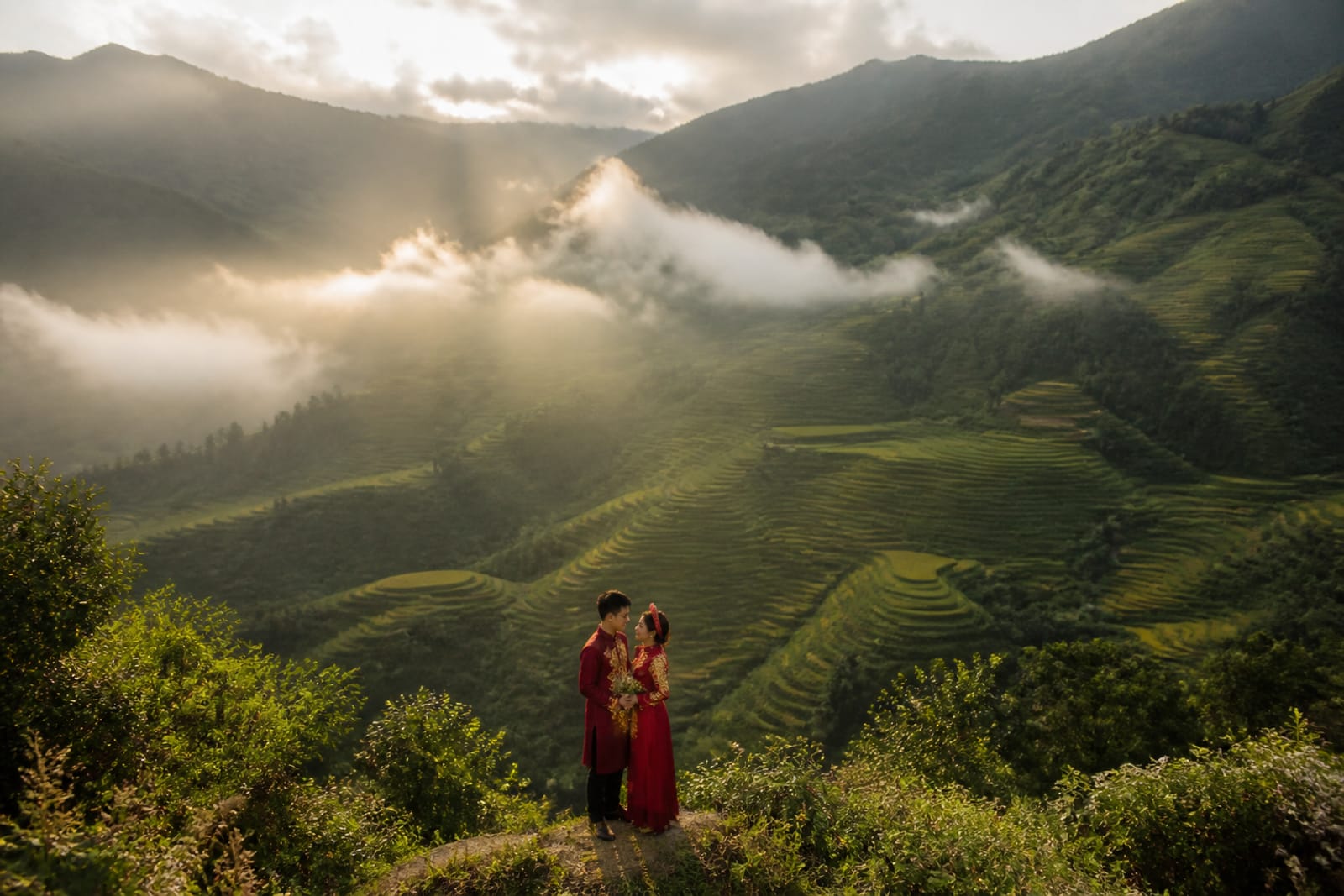
Sunrise (6:00–8:30 am) produces the cleanest light: soft, directional, free of haze that often builds by 10:00 am. The valley is quietest until 8:00 am; tour groups and trekkers arrive 8:30 am onward. Late afternoon (4:30–6:30 pm) offers warm, raking light but attracts sunset photographers and second-wave tourists. Mid-day (10:00 am–4:00 pm) is hottest, haziest and most crowded—avoid it unless you're shooting in heavy cloud cover, which diffuses light evenly. Early morning requires leaving your Sapa accommodation by 5:15 am at latest to reach a good shooting spot before sunrise; this means your photographer must meet you 4:45–5:00 am or be positioned there overnight. Sunset shoots demand departure by 2:30 pm to scout and frame before the light shifts fast. Plan transport confirmation the night before and build in 15–20 minutes for road delays or wrong turns.
How does season affect your transport timing and photo conditions?
The north of Vietnam (including Sapa and Muong Hoa Valley) has three seasons: cool winter (Dec–Feb), hot rainy summer (May–Sep), and shoulder months (Mar–May, Sep–Nov). Winter (Dec–Feb): roads are passable but foggy 7:00–10:00 am, clearing mid-morning—shoot early if you want clear valley views, or embrace fog for moody frames. Cold wind on motorbike; car is warmer. Spring/autumn (Mar–May, Sep–Nov): clearest weather, best light, most tourists; book your photographer weeks ahead, depart even earlier (4:45 am) to beat crowds. Summer (May–Sep): afternoon downpours close roads or turn them to mud; morning shoots are safer but misty. Rice terraces turn green mid-May to early Sep (freshest frames), then golden mid-Sep to early Oct during harvest. Water fills terraces May–Jul, making reflections possible. Plan your shoot date around this calendar: green = May–early Sep, water reflections = May–Jul, golden/harvest = mid-Sep to early Oct. Check the road status locally 12 hours before departure; rainy seasons (especially Jun, Jul, Sep–Oct) can delay you 1–2 hours.
What do you need to confirm with your photographer before booking a valley shoot?
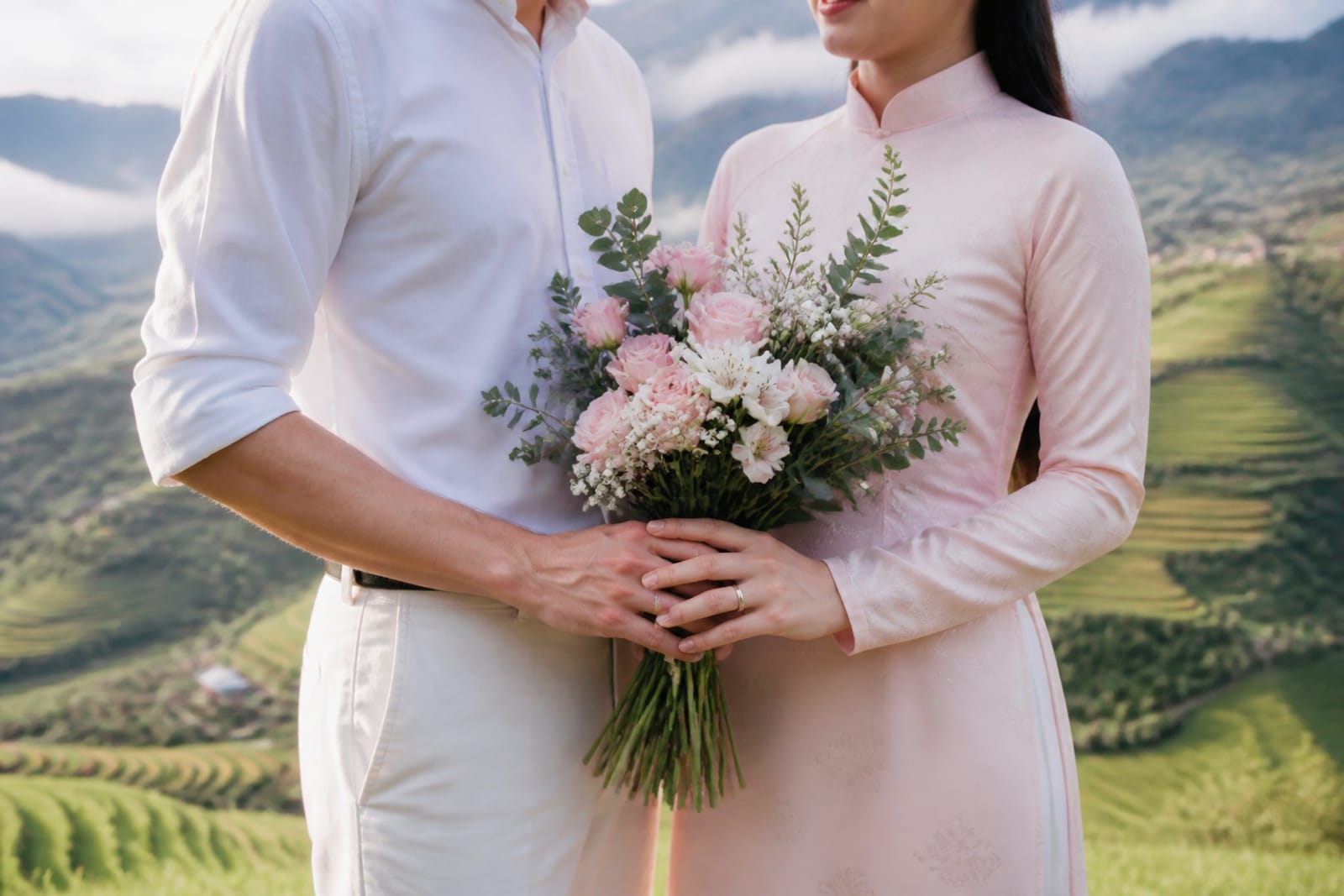
Hire your photographer 2–3 weeks in advance and confirm in writing (WhatsApp, email) the exact pickup location, departure time, and fallback plan if weather deteriorates. Ask whether they'll scout the location in advance, how many outfit changes they can support (terraces are steep; carrying multiple dresses or suits limits mobility), and whether transport is included in their fee or separate. Confirm the shot list: wide valley frames from elevated viewpoints, walking shots through terraces, or detail frames of your face and dress in soft light. Discuss backup locations if crowds are heavy or fog blocks the main valley. Supply your photographer with your hotel address and phone number; arrange transport from your hotel to the photographer's meeting point or have the driver pick both of you up. Ask about their backup plan for technical failure (a memory card issue, a dropped lens, poor weather) and whether they deliver edited photos by when. Muong Hoa Valley has no cell signal in spots; confirm how they'll contact you if delayed. Most local Sapa photographers charge per shoot, not by package; clarify the total cost and what's included before the morning of the shoot.
How far in advance do you need to book, and what's the backup plan if weather kills the shoot?
Book your Sapa photographer at least 2–3 weeks out, earlier if you're shooting in Mar–May or Sep–Nov (peak light seasons). Weather in Sapa is unpredictable: fog can lift or persist, rain can trap you, wind can gust hard on exposed ridges. Discuss your backup date with your photographer before booking—do they offer a re-shoot for free if light is too poor on your original date? Some photographers offer a rain date included in the fee; others charge a rescheduling fee. If you're in Sapa for only a few days, confirm with your photographer whether they can flex to an alternative time on your second-choice day (morning instead of sunset, or vice versa). Have a secondary location in mind: a terrace closer to town (10 min transport), a sheltered valley corner, or even an indoor tea plantation or colonial-era villa in Sapa town for cover if the valley floods or fog refuses to lift. If your original shoot date is irredeemable, book your photographer for a next morning or evening slot and adjust travel plans if necessary. Sapa weather is not predictable weeks ahead; plan a 1–2 day buffer into your trip if a valley shoot is your priority.
What does the day look like: preparing the day before and navigating morning-of logistics?
The day before your shoot, confirm transport with your hotel or driver by 6:00 pm. Lay out your outfit: check that under-garments fit the look (light layers under áo dài, minimal underwear visible in fitted suits), iron if needed, and pack a shawl or jacket for dawn cold (Sapa can be 8–12°C at sunrise). Charge your phone, camera batteries and any wireless microphones if your photographer uses them. Set your alarm for 4:30 am and eat a light breakfast (you'll be moving fast and may feel queasy from twisting mountain roads). Meet your transport at 5:00–5:15 am; expect the ride to take 30–50 minutes with possible stops for the photographer to scout or adjust framing. Bring water, pain relief and a small towel—mountain air is dry, and you'll perspire under lights or dark fabrics. Once at the valley, your photographer will likely shoot handheld at first (wide frames of the landscape and you walking into it), then guide you to specific rocks, terraces or paths for medium and detail shots. The shoot usually runs 60–90 minutes depending on outfit changes and location moves. You'll return to Sapa by 8:00–9:00 am and can rest before the next activity. Sunset shoots reverse this: depart 2:30 pm, scout 3:00–4:00 pm, shoot 4:30–6:30 pm, return 7:00–7:30 pm. Wear comfortable walking shoes—you'll cover uneven, muddy or grassy terrain.
---
What to check before you book a local Sapa photographer
- Photographer credentials: ask to see a portfolio of at least 5 prior shoots in Muong Hoa Valley or similar terrain; check Instagram or their website for editing style and consistency.
- Transport clarity: confirm whether the photographer arranges transport or you do; if they arrange it, how many of you fit in the vehicle, and whether a makeup artist or styling assistant can ride along.
- Outfit logistics: discuss how many outfit changes are realistic (steep terrain limits costume complexity); ask if they provide hair and makeup or if you hire separately.
- Backup protocol: ensure they offer a written rain date or reschedule guarantee, and clarify what "poor weather" means to them (some shoot in light rain, others cancel).
- Delivery timeline: ask when edited photos arrive—same day, 3 days, 2 weeks—and in what format (digital files, prints, video edits).
- Communication: confirm a WhatsApp or direct phone contact for the day-of coordination and what to do if they're running late.
- Cost and inclusions: get a quote in writing that lists transport, time on location, number of edited photos, and any add-ons (prints, albums, same-day video); clarify cancellation terms.
---
If you are based in Hanoi and want a pre-wedding photoshoot that spans multiple locations (Hanoi + a day trip to Sapa valley, for instance), Cáo Studio's Hanoi team can coordinate with local Sapa photographers or help plan your Sapa logistics if you combine it with a couple photoshoot in Hanoi. For makeup and styling before early-morning shoots, consider booking makeup & hair at your hotel in Sapa town the night before, ensuring you're camera-ready by 5:30 am. Learn more about pre-wedding packages and how we coordinate multi-city shoots in our FAQ.
FAQ
Can Cáo Studio shoot my pre-wedding session in Muong Hoa Valley or Sapa?
Cáo Studio operates in Hanoi, Ho Chi Minh City and Hoi An. We do not have a Sapa team. We recommend hiring a local Sapa photographer and can advise on logistics. If you'd like a pre-wedding shoot in Hanoi before or after a Sapa trip, we're happy to help—ask on WhatsApp.
What's the best season to shoot in Muong Hoa Valley?
Mar–May and Sep–Nov offer the clearest weather and best light. Rice terraces are green May–early Sep, golden mid-Sep to early Oct during harvest. Winter (Dec–Feb) is foggy but atmospheric; summer (May–Sep) brings afternoon rain. Check the road 12 hours before your shoot date.
Do I need a professional photographer, or can I shoot myself in Muong Hoa Valley?
You can shoot solo, but hiring a local guide or photographer helps you find the best light angles, navigate terrain safely, and avoid mid-shoot crowds. They'll position you for frames you'd miss handheld. Worth the investment if this is a once-in-a-lifetime shoot.
How early do I need to wake up to catch sunrise light in the valley?
Leave your Sapa accommodation by 5:15 am to reach a good shooting spot by sunrise (6:00–6:30 am). This means waking at 4:30 am, dressing, eating lightly, and confirming transport the night before. Sunrise light lasts until 8:00–8:30 am before haze builds.
Can my makeup artist and stylist come with me to the valley for morning touch-ups?
Yes, but terrain is steep and muddy—limiting crew size helps speed. If you hire makeup and hair, book them for early morning at your hotel or arrange a vehicle that fits photographer, makeup artist, stylist and you. Ask your photographer how many passengers they can transport and whether they prefer a separate car for crew.
What happens if I arrive at the valley and it's too foggy to shoot?
Fog in Sapa often lifts by 9:00–10:00 am, or you can shoot moody, atmospheric frames through it. Discuss backup locations with your photographer (sheltered tea plantations, villa interiors) before the day of. Some photographers offer a free re-shoot date if fog is too thick; confirm this when booking.
Do I need to bring any permits or permissions to shoot in Muong Hoa Valley?
No official shoot permit is required for personal or pre-wedding photography in Muong Hoa Valley. Dress respectfully, avoid temples and local homes without asking, and tip your guide or local porters if they help. Check locally with your photographer or hotel for any recent regulations.
FAQ
Can Cáo Studio shoot my pre-wedding session in Muong Hoa Valley or Sapa?
Cáo Studio operates in Hanoi, Ho Chi Minh City and Hoi An. We do not have a Sapa team. We recommend hiring a local Sapa photographer and can advise on logistics. If you'd like a [pre-wedding shoot](/pre-wedding-photoshoot) in Hanoi before or after a Sapa trip, we're happy to help—ask on WhatsApp.
What's the best season to shoot in Muong Hoa Valley?
Mar–May and Sep–Nov offer the clearest weather and best light. Rice terraces are green May–early Sep, golden mid-Sep to early Oct during harvest. Winter (Dec–Feb) is foggy but atmospheric; summer (May–Sep) brings afternoon rain. Check the road 12 hours before your shoot date.
Do I need a professional photographer, or can I shoot myself in Muong Hoa Valley?
You can shoot solo, but hiring a local guide or photographer helps you find the best light angles, navigate terrain safely, and avoid mid-shoot crowds. They'll position you for frames you'd miss handheld. Worth the investment if this is a once-in-a-lifetime shoot.
How early do I need to wake up to catch sunrise light in the valley?
Leave your Sapa accommodation by 5:15 am to reach a good shooting spot by sunrise (6:00–6:30 am). This means waking at 4:30 am, dressing, eating lightly, and confirming transport the night before. Sunrise light lasts until 8:00–8:30 am before haze builds.
Can my makeup artist and stylist come with me to the valley for morning touch-ups?
Yes, but terrain is steep and muddy—limiting crew size helps speed. If you hire makeup and hair, book them for early morning at your hotel or arrange a vehicle that fits photographer, makeup artist, stylist and you. Ask your photographer how many passengers they can transport and whether they prefer a separate car for crew.
What happens if I arrive at the valley and it's too foggy to shoot?
Fog in Sapa often lifts by 9:00–10:00 am, or you can shoot moody, atmospheric frames through it. Discuss backup locations with your photographer (sheltered tea plantations, villa interiors) before the day of. Some photographers offer a free re-shoot date if fog is too thick; confirm this when booking.
Do I need to bring any permits or permissions to shoot in Muong Hoa Valley?
No official shoot permit is required for personal or pre-wedding photography in Muong Hoa Valley. Dress respectfully, avoid temples and local homes without asking, and tip your guide or local porters if they help. Check locally with your photographer or hotel for any recent regulations.
Ao dai, makeup, hair and a local photographer in Hanoi or Saigon — one WhatsApp message.