/pre-wedding-photoshoot
Getting to O Quy Ho pass on photoshoot day: transport, timing and logi
O Quy Ho pass sits 180 km north of Hanoi, requiring a 4–5 hour drive on tight mountain roads; most pre-wedding photoshoot teams leave Hanoi at 2–3 am to shoot at sunrise (5:30–6:30 am), arriving rested. A reliable driver who knows the route prevents delays; minivan or SUV with shock absorbers handles potholes better than sedans. Cáo Studio arranges transport coordination with our Hanoi base — confirm vehicle type, fuel costs and driver experience on WhatsApp before booking. Solo travelers or couples often hire private drivers separately; confirm they've driven O Quy Ho before. Return by late morning or early afternoon to avoid evening fog and fatigue.
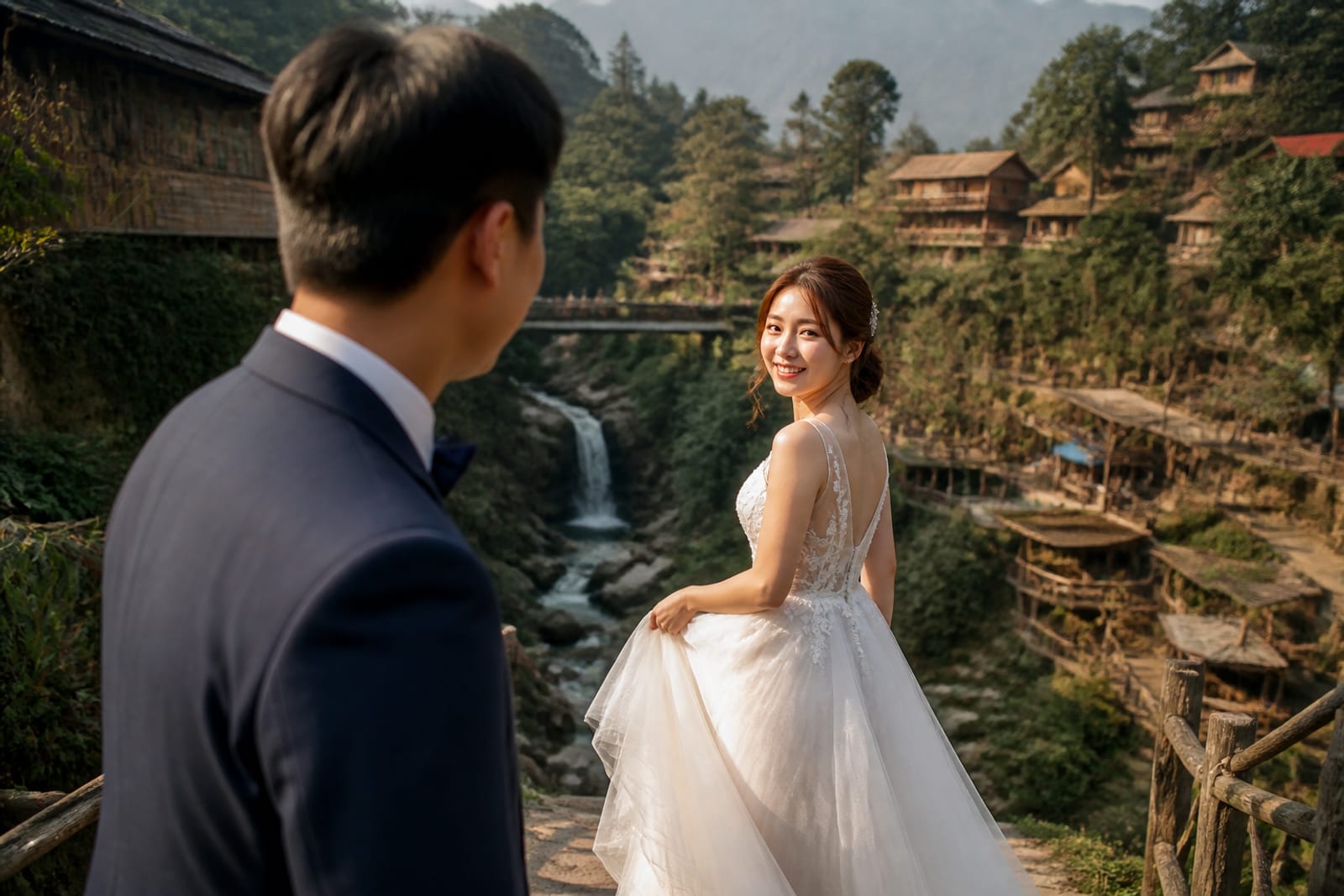
Getting to O Quy Ho pass on photoshoot day requires more than a GPS pin—light windows, road conditions, and driver skill all determine whether you arrive calm or exhausted. Here's what a practitioner learns after dozens of pre-wedding sessions there.
Why does timing matter more than distance on this route?
O Quy Ho's best light window is 5:30–6:30 am: soft side light hits the valley, the fog lifts gradually, and crowds are absent. To hit that window, you leave Hanoi between 2–3 am. The road is safest in darkness (fewer trucks, fewer motorbikes); sunrise finds you already positioned. Leaving later (4–5 am) risks arriving in harsh midday light (10 am–2 pm) or afternoon fog rolling in by 7 am on humid days. One hour late costs you the entire session's visual intent.
📸 Book on WhatsApp — ao dai photoshoot

What vehicle type actually performs on this road?
| Vehicle type | Best for | Road handling | Pace & comfort |
|---|---|---|---|
| Private minivan (Toyota Innova, Ford Transit) | Couples + stylists, ao dai & makeup on board | Shocks absorb potholes; higher clearance | 4–5 hours; calm arrival |
| SUV (Honda CR-V, Mitsubishi Pajero) | Smaller crews; couples with light luggage | Solid suspension; nimble on curves | 4–5 hours; steadier on switchbacks |
| Sedan (Toyota Vios, Kia Cerato) | Budget option; couples only, no stylists | Poor shock absorption; low clearance risks belly-scraping | 5+ hours; arrives jostled & stressed |
Minivans let hair and makeup artists work while driving (ao dai fitting, touch-ups); sedans don't. Mountain roads have sudden potholes and washboard sections; poor suspension means bruising and arrival fatigue. Cáo Studio coordinates minivans for ao dai photoshoot sessions that include makeup & hair at your hotel—the crew needs workspace and shock absorption.
How do you vet a driver for a 4-hour night drive?
Ask: Has the driver completed O Quy Ho runs at night? How many times? Ask your hotel or rental company for references. A driver unfamiliar with the route will take 5.5–6 hours, arrive flustered, miss the light window. Request a driver who knows the safe passing zones (narrow sections where oncoming trucks block both lanes); these aren't marked on maps. Confirm fuel stops and bathroom breaks are planned; unscheduled stops at 3 am add 20–30 minutes.
Cáo Studio's Hanoi base has vetted drivers for pre-wedding crews; we confirm experience and vehicle condition when you book on WhatsApp. If you hire independently, ask the driver to share their phone number and a recent photo of their vehicle and license before payment.
What can actually go wrong and how do you prevent it?
Road blockages: Trucks break down or accidents close sections. Leave 30 minutes earlier than calculated. Ask your driver to confirm road status via local driver groups (Zalo, FB groups) the evening before.
Fog arrival: O Quy Ho's fog peaks 6–7 am in wet season (May–Sep) and can block light for 30–60 minutes. Shoot the wide establishing shots first; fog clears by 7:30 am most days, then reframe medium and detail shots.
Crew fatigue: Stylists and photographer tire on night drives; mood flattens light direction. Build in 15 minutes of coffee and stretching at arrival (5:15 am), before the session starts.
Outfit damage: Ao dai wrinkles and makeup smudges during a 4-hour ride. Transport the ao dai unworn on a hanger; change into it on-site 10 minutes before shooting. Ao dai rental and styling coordination is Cáo Studio's core service—ask us to oversee transport and refresh on WhatsApp.
Vehicle breakdown: Rare, but old minivans overheat on mountain ascents. Request a 2015-or-newer vehicle; confirm the driver has a phone, a tire pump, and a flashlight.
When is O Quy Ho actually shootable for pre-wedding work?
Best season: September–November (early autumn). Fog clears by 7–7:30 am; light is clean; no rain blocks roads.
Workable: March–May (spring). Occasional early-morning fog (clears by 7 am); light is soft; pollen and heat rise by 9 am.
Difficult: December–February (winter). Fog lingers until 8–9 am or all day; cold makes crew work slower; road ice is rare but possible after frost. June–August (summer) has afternoon downpours and afternoon fog; morning sessions are possible but humidity is extreme.
Not shootable: October is peak typhoon month—mountain roads flood and visibility drops to zero. Check weather forecasts 3 days before; if rain is forecast, reschedule.
For a pre-wedding photoshoot at O Quy Ho, book in Sep–Nov or Mar–May. Cáo Studio confirms shootable dates on WhatsApp based on your preferred month.
How does transport cost factor into your session budget?
Vehicle rental (minivan + driver for 12 hours) is a separate cost from the photoshoot itself; never bundled into the session quote. Fuel cost rises with group size (larger vehicle, longer drive in first gear up the pass). Toll gates appear on modern expressway sections heading north. Accommodation for early departures (staying in a hotel 1 hour closer to O Quy Ho) is optional but reduces morning stress.
Cáo Studio's pre-wedding photoshoot fee covers the director, photographer, stylists and all on-site work. Transport is your responsibility unless you ask us to coordinate on WhatsApp—then we confirm vehicle type, driver vetting, and timing with you, and you book separately. This separation keeps services transparent: you control transport quality and can upgrade if needed.
What to check before you book your O Quy Ho session
- Road condition: Ask your driver or local guides if the main road to O Quy Ho is open (rare closures after landslides; check 1 week before).
- Vehicle age & condition: Request a photo of the minivan/SUV; confirm it's been serviced in the last 3 months.
- Light window alignment: Confirm with Cáo Studio that your departure time aligns with sunrise at O Quy Ho (5:30–6:30 am on your chosen date).
- Crew size vs. vehicle fit: If you have 6+ people, a standard minivan seats only 7 comfortably; confirm seating and workspace for stylists.
- Ao dai transport: Plan how the ao dai will hang unwrinkled during the drive (hook it to the interior roof or lay it flat on a back seat, not folded).
- Backup date: Have a second date in mind in case weather or road conditions force a reschedule (book flexibility in your driver contract).
---
FAQ
Can I reach O Quy Ho pass if I leave Hanoi at 4 am?
Technically yes—you'd arrive by 8–9 am. But harsh midday light (10 am–2 pm) ruins pre-wedding framing; morning fog often lingers until 8 am. Leaving 2–3 am ensures soft sunrise light (5:30–6:30 am) and calm arrival. The 1–2 hour difference shapes your entire session's mood and frames.
Is O Quy Ho passable during the rainy season (May–September)?
Yes, but morning fog lingers until 7–8 am (costing 30–60 min of prime light), and afternoon downpours close sections by 11 am. Pre-wedding shoots in May–Sep work if you start at 5 am and finish by 9 am. Confirm road status with your driver the evening before; have a backup indoor location (Hanoi studio) in your contract.
Should I hire a driver separately or ask Cáo Studio to coordinate transport?
Both work. Hiring independently (via rental company or hotel) saves coordination time if you find a vetted driver. Asking Cáo Studio to oversee it (on WhatsApp) means we confirm vehicle type, driver experience, and departure timing with you—useful if this is your first time. Either way, transport cost is separate from the photoshoot fee.
What happens if we're stuck in traffic and miss the sunrise light?
Night-drive delays are rare on the main N2 expressway, but unpredictable. Leaving 30 min earlier than calculated builds a buffer. If you do arrive late (7+ am), the photographer pivots: shoots wide landscape shots first, waits for fog to clear (usually 7:30–8 am), then frames medium and detail shots. The session adjusts; quality doesn't vanish, but light is less flattering.
Can we hire a sedan instead of a minivan to save money?
Sedans are cheaper to rent, but poor suspension means a jostled, exhausted arrival. If you're just a couple (no stylists, no ao dai transport), a sedan works. If you need makeup & hair on-site or you're wearing an ao dai, a minivan's space and shock absorption are worth the cost—you arrive calm, not bruised. Cáo Studio recommends minivans for any multi-person crew.
What if the driver gets lost or the road is partially closed?
Establish communication: confirm the driver has a charged phone and knows how to contact you. Share your location live on WhatsApp with Cáo Studio's crew (who stay in contact during shoots). If a section is closed, major routes have well-marked detours; most drivers know them. Leaving early gives you 30–45 min of buffer before your light window closes.
FAQ
Can I reach O Quy Ho pass if I leave Hanoi at 4 am?
Technically yes—you'd arrive by 8–9 am. But harsh midday light (10 am–2 pm) ruins pre-wedding framing; morning fog often lingers until 8 am. Leaving 2–3 am ensures soft sunrise light (5:30–6:30 am) and calm arrival. The 1–2 hour difference shapes your entire session's mood and frames.
Is O Quy Ho passable during the rainy season (May–September)?
Yes, but morning fog lingers until 7–8 am (costing 30–60 min of prime light), and afternoon downpours close sections by 11 am. Pre-wedding shoots in May–Sep work if you start at 5 am and finish by 9 am. Confirm road status with your driver the evening before; have a backup indoor location (Hanoi studio) in your contract.
Should I hire a driver separately or ask Cáo Studio to coordinate transport?
Both work. Hiring independently (via rental company or hotel) saves coordination time if you find a vetted driver. Asking Cáo Studio to oversee it (on WhatsApp) means we confirm vehicle type, driver experience, and departure timing with you—useful if this is your first time. Either way, transport cost is separate from the photoshoot fee.
What happens if we're stuck in traffic and miss the sunrise light?
Night-drive delays are rare on the main N2 expressway, but unpredictable. Leaving 30 min earlier than calculated builds a buffer. If you do arrive late (7+ am), the photographer pivots: shoots wide landscape shots first, waits for fog to clear (usually 7:30–8 am), then frames medium and detail shots. The session adjusts; quality doesn't vanish, but light is less flattering.
Can we hire a sedan instead of a minivan to save money?
Sedans are cheaper to rent, but poor suspension means a jostled, exhausted arrival. If you're just a couple (no stylists, no ao dai transport), a sedan works. If you need [makeup & hair](/makeup-and-hair) on-site or you're wearing an ao dai, a minivan's space and shock absorption are worth the cost—you arrive calm, not bruised. Cáo Studio recommends minivans for any multi-person crew.
What if the driver gets lost or the road is partially closed?
Establish communication: confirm the driver has a charged phone and knows how to contact you. Share your location live on WhatsApp with Cáo Studio's crew (who stay in contact during shoots). If a section is closed, major routes have well-marked detours; most drivers know them. Leaving early gives you 30–45 min of buffer before your light window closes.
Ao dai, makeup, hair and a local photographer in Hanoi or Saigon — one WhatsApp message.