/pre-wedding-photoshoot
Getting to Son Tra Peninsula and Linh Ung Pagoda on photoshoot day
Son Tra Peninsula lies 20–30 km northeast of Da Nang city center; Linh Ung Pagoda sits at the peninsula's tip, accessible by motorbike or taxi. Best light falls between 6:00–7:30 a.m. or 5:00–6:30 p.m., before crowds peak. Allow 45–60 minutes from the city to reach the pagoda; factor in setup time (makeup, outfit changes). Avoid midday (11 a.m.–3 p.m.) when haze builds and crowds fill the steps. If you're booking a pre-wedding photoshoot in Da Nang, confirm transport and timing with your photographer in advance—local teams know traffic patterns and can coordinate early pickups. Do not assume the pagoda opens early for photographers; check entry hours locally before booking.
Why does timing matter more than the location itself?
Light, not landmarks, shapes the final frame. Sunrise at Linh Ung Pagoda casts soft, directional light across the white marble Buddha and the coastline below—exactly what a skilled director scouts. By 9 a.m., the sun is high and harsh, and the pagoda's stone steps fill with tour groups. A 6:30 a.m. arrival means you shoot in near-silence with clean side light; a 10 a.m. arrival means waiting for golden hour (5 p.m.) or accepting flat, crowded midday frames. Book your shoot knowing the light window, not just the name.
📸 Book on WhatsApp — pre-wedding photoshoot
What transport option fits your style and timeline?
Three ways reach Son Tra Peninsula from Da Nang city; each has trade-offs. Compare by your flexibility, group size and comfort with Vietnamese roads.
| Transport | Best for | Light window | Logistics |
|---|---|---|---|
| Private taxi/driver pickup | Couples wanting door-to-door, no navigation stress | Early dawn (6:00–6:45 a.m.) or sunset (5:00–6:15 p.m.) | Book night before; confirm 5 a.m. pickup; allow 1 hour travel + setup |
| Motorbike taxi (Grab/local) | Solo travellers, light packing, local feel | Flexible; arrive 6:30 a.m. or later | Fast booking; no luggage space for styling kit; driver may not know exact pagoda entrance |
| Rented motorbike (with local guide) | Adventurous pairs; want control over route | Sunrise or sunset only (safer with daylight return) | Requires license + insurance; 45 min ride on winding coastal road; not recommended for first-time riders |
Choice frame: a couple photoshoot with a hired taxi pickup (booked the night before) lets you pack styling gear, arrive calm, and shoot the full golden hour without rush. Solo travellers find Grab fast but should confirm the driver knows Linh Ung's main pagoda entrance (not a lower temple). Motorbike rentals suit only confident riders—the coastal road has hairpins and no shoulder.
How early do you need to leave, and what's the realistic schedule?
Reverse-engineer from light. If golden light peaks at 6:30 a.m., you need to be framed and ready by 6:15 a.m. That means:
- 5:15 a.m. – pickup from hotel (if using taxi); or 5:45 a.m. if self-transporting
- 6:00 a.m. – arrive at pagoda parking
- 6:05–6:10 a.m. – final outfit check, hair and makeup touch-up (any hair/makeup was done at your hotel before departure via makeup & hair at your hotel)
- 6:15–7:30 a.m. – shoot wide frames on the pagoda steps and coastline
- 7:30–8:00 a.m. – medium and detail shots; crowds begin arriving
- 8:00 a.m. onward – pagoda fills; light hardens
If you book a full pre-wedding photoshoot in Da Nang with a local team, they will coordinate this schedule. If you are self-directing, set a phone alarm for 5:00 a.m. and commit to arrival by 6:10 a.m., or defer to sunset (5:00–6:30 p.m., less crowded, softer light but cooler temperature—bring a light wrap).
What do you pack and wear to avoid logistics disasters?
Linh Ung's stone steps are steep, uneven and often wet from sea spray. Footwear, layers and backup plans matter.
Outfit & fit:
- Wear comfortable walking shoes in the taxi/bike; change into photo shoes (heels, sandals) at the pagoda if they're impractical for the climb.
- Layers: Da Nang's February–August heat can surprise—6 a.m. is cool (around 22–24°C), but 7:30 a.m. climbs fast. Bring a shawl or light overshirt to shed.
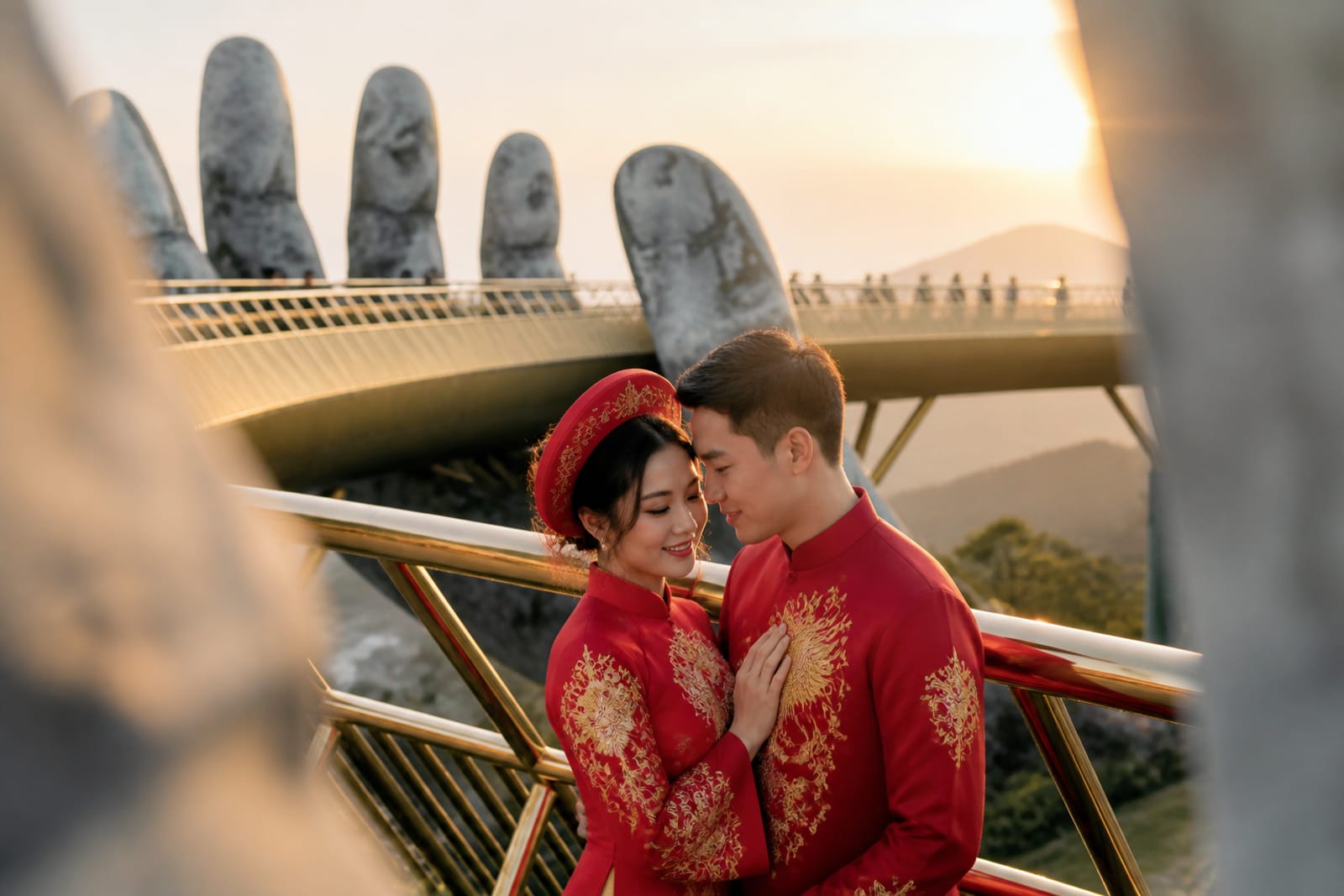
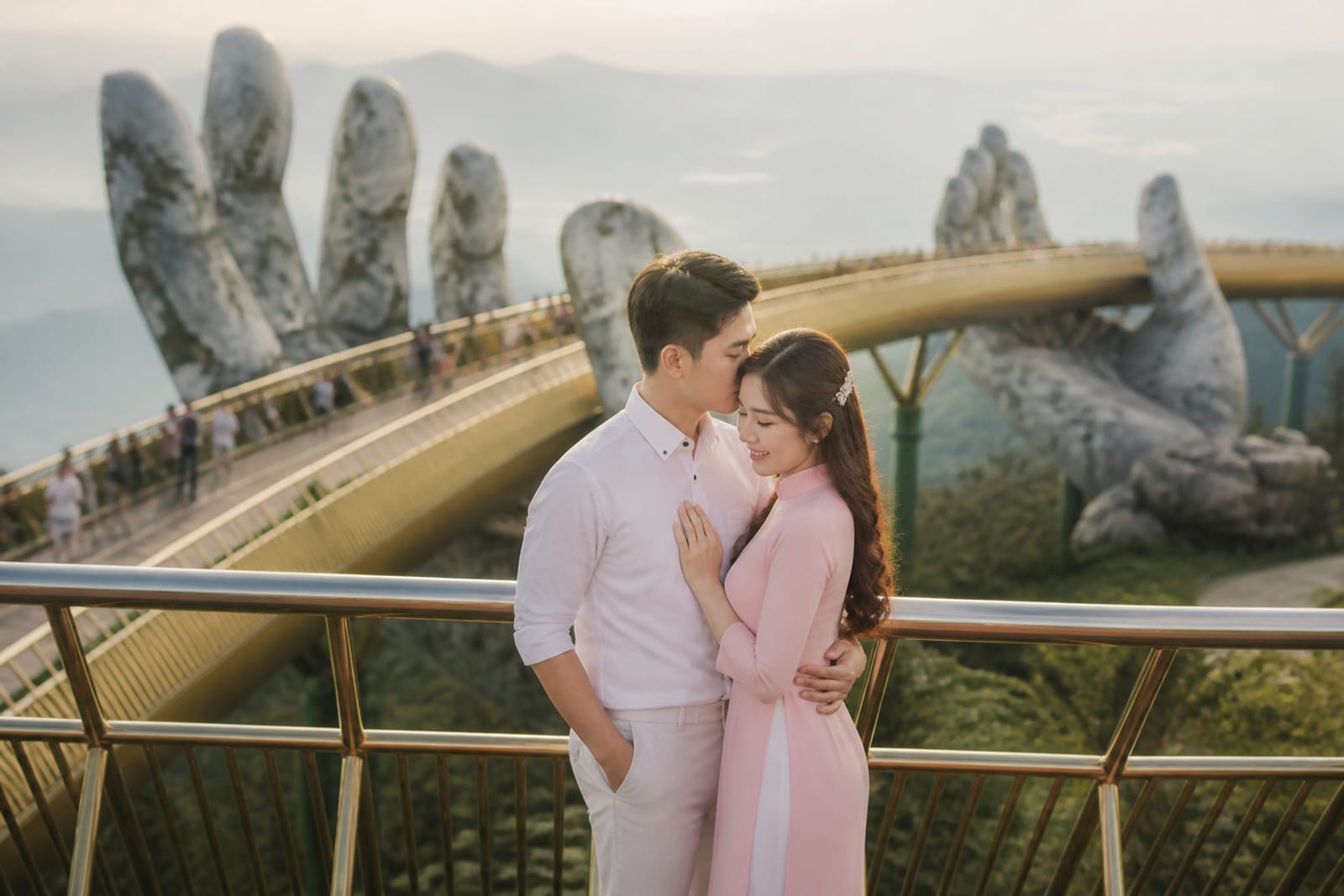
- If shooting in an ao dai, ensure it's tailored for movement (not tight around the shoulders); clip the back hem with a safety pin on the steps to avoid tripping.
Hair & makeup:
- Pre-shoot hair and makeup at your hotel (2–3 hours before transport) so touch-ups take 5 minutes at the pagoda.
- Bring a small mirror, powder compact and lip balm in a crossbody bag you can leave with a caretaker.
- Humidity and sea spray mess styles quickly—use a light hairspray and accept that windblown frames often look better than rigid ones.
Backup plan:
- Bring a second outfit (lightweight, easy to change into) in case the first absorbs sea spray or you want variety.
- Pack a portable phone charger; Wi-Fi is spotty at the pagoda.
What's the honest catch about shooting at Linh Ung in February–August?
The dry season (Feb–Aug) gives the most consistent light, but it comes with trade-offs.
February–April: cool mornings, minimal wind, clearest skies. Trade-off: fewer locals, so frames feel staged if you're not careful—direct your movements (walk, look toward the coast, pause between the white Buddha's hands) rather than pose.
May–August: hot by 7:30 a.m., occasional haze from humidity or distant rain inland. Trade-off: stronger directional light, fewer European tourists (quieter), but you'll sweat through layers—arrive hydrated and have a cold towel in your bag.
September–December (avoid unless you love moody light): typhoon season peaks in October–November; rain is common, sea spray heavier, and pagoda access sometimes closes. If you must shoot Sep–Nov, book a photographer who knows how to use grey skies and wet stone (it reads beautifully, but only if framed for it).
What to check before you book your Da Nang shoot
- Transport coordination: Confirm your photographer or driver collects you at a specific time (not "around 6 a.m."). Set the hotel name, room pickup point and a backup phone number.
- Pagoda entry & timing: Call the pagoda directly (ask your hotel for the number) to confirm it opens for visitors at the time you plan to shoot. Some days it may be closed for ceremonies.
- Light window: Ask your photographer which season and time of day they recommend for the mood you want (romantic dawn, dynamic golden hour, moody evening). Do not assume all times are equal.
- Outfit fit & transport: If wearing an ao dai, rent locally or bring it pressed two days early. Test the fit and stairs in your hotel room.
- Backup plan: Confirm what happens if weather closes the pagoda (alternate indoor location in Da Nang? Reschedule?) before you pay.
- Crew on the day: If hiring a local team or a visiting photographer, confirm who handles makeup, hair and styling. If you're doing your own, start makeup 2.5 hours before the taxi arrives.
Final note on Cáo Studio: We operate in Hanoi, Ho Chi Minh City and Hoi An, not Da Nang. If you're planning a photoshoot in Da Nang, this guide helps you evaluate a local photographer's logistics plan. If you're flexible on destination, our pre-wedding photoshoot in Hanoi or Ho Chi Minh City includes coordinated transport, makeup & hair, outfit styling and 48-hour delivery. Ask us on WhatsApp for availability and how we handle similar location logistics in our cities.
---
FAQ
Do I need a special permit to photograph at Linh Ung Pagoda?
No commercial permit is required for personal photoshoots. However, if you hire a professional photographer, confirm with the pagoda that their gear and setup are allowed. Some temples restrict tripods or commercial use—ask your photographer or the temple office before the day.
What's the cheapest way to get to Son Tra Peninsula?
A shared tour bus or Grab motorbike is cheapest, but neither optimizes your light window or crew coordination. A private taxi costs more (factors: early-morning surcharge, distance, car type) but lets you control timing and pack styling equipment. Ask your photographer what transport they recommend for your specific shoot time.
Can I shoot Linh Ung at sunset instead of sunrise?
Yes. Sunset (5:00–6:30 p.m.) is quieter, softer light, and less crowded than midday. Trade-offs: fewer tourists means fewer "active" background moments; the return drive is in darkness; and you'll need a hired car with headlights. Sunrise is cleaner for strangers-as-extras.
What if it rains on the morning of my shoot?
Confirm your reschedule or indoor-location plan with your photographer before booking. Da Nang's Feb–Aug rain is rare but possible (short afternoon showers). Sep–Dec rain is frequent—book a photographer who offers a rain-date guarantee or an alternate, covered pagoda interior shoot.
Do I need to wear shoes I can hike in, or can I wear heels?
Heels are risky on steep, wet stone—bring them for framing shots at the top, then change into flat shoes for walking the stairs. Better: pack two shoe options (flats for stairs, photo shoes for posed frames) and swap mid-shoot. Your photographer will guide you on which frames work best with which shoes.
How long should I budget for a full Linh Ung photoshoot?
Typically 2–3 hours on-site (6:15–8:30 a.m., or 5:00–7:00 p.m.), plus 1.5 hours for travel and setup. Book a photographer who offers an exact timeline in advance, not a vague "morning" or "afternoon" block. Cáo Studio confirms exact timings on WhatsApp before any booking.
FAQ
Do I need a special permit to photograph at Linh Ung Pagoda?
No commercial permit is required for personal photoshoots. However, if you hire a professional photographer, confirm with the pagoda that their gear and setup are allowed. Some temples restrict tripods or commercial use—ask your photographer or the temple office before the day.
What's the cheapest way to get to Son Tra Peninsula?
A shared tour bus or Grab motorbike is cheapest, but neither optimizes your light window or crew coordination. A private taxi costs more (factors: early-morning surcharge, distance, car type) but lets you control timing and pack styling equipment. Ask your photographer what transport they recommend for your specific shoot time.
Can I shoot Linh Ung at sunset instead of sunrise?
Yes. Sunset (5:00–6:30 p.m.) is quieter, softer light, and less crowded than midday. Trade-offs: fewer tourists means fewer "active" background moments; the return drive is in darkness; and you'll need a hired car with headlights. Sunrise is cleaner for strangers-as-extras.
What if it rains on the morning of my shoot?
Confirm your reschedule or indoor-location plan with your photographer before booking. Da Nang's Feb–Aug rain is rare but possible (short afternoon showers). Sep–Dec rain is frequent—book a photographer who offers a rain-date guarantee or an alternate, covered pagoda interior shoot.
Do I need to wear shoes I can hike in, or can I wear heels?
Heels are risky on steep, wet stone—bring them for framing shots at the top, then change into flat shoes for walking the stairs. Better: pack two shoe options (flats for stairs, photo shoes for posed frames) and swap mid-shoot. Your photographer will guide you on which frames work best with which shoes.
How long should I budget for a full Linh Ung photoshoot?
Typically 2–3 hours on-site (6:15–8:30 a.m., or 5:00–7:00 p.m.), plus 1.5 hours for travel and setup. Book a photographer who offers an exact timeline in advance, not a vague "morning" or "afternoon" block. Cáo Studio confirms exact timings on WhatsApp before any booking.
Ao dai, makeup, hair and a local photographer in Hanoi or Saigon — one WhatsApp message.