/pre-wedding-photoshoot
Getting to Thien Mu Pagoda on photoshoot day: transport, timing and lo
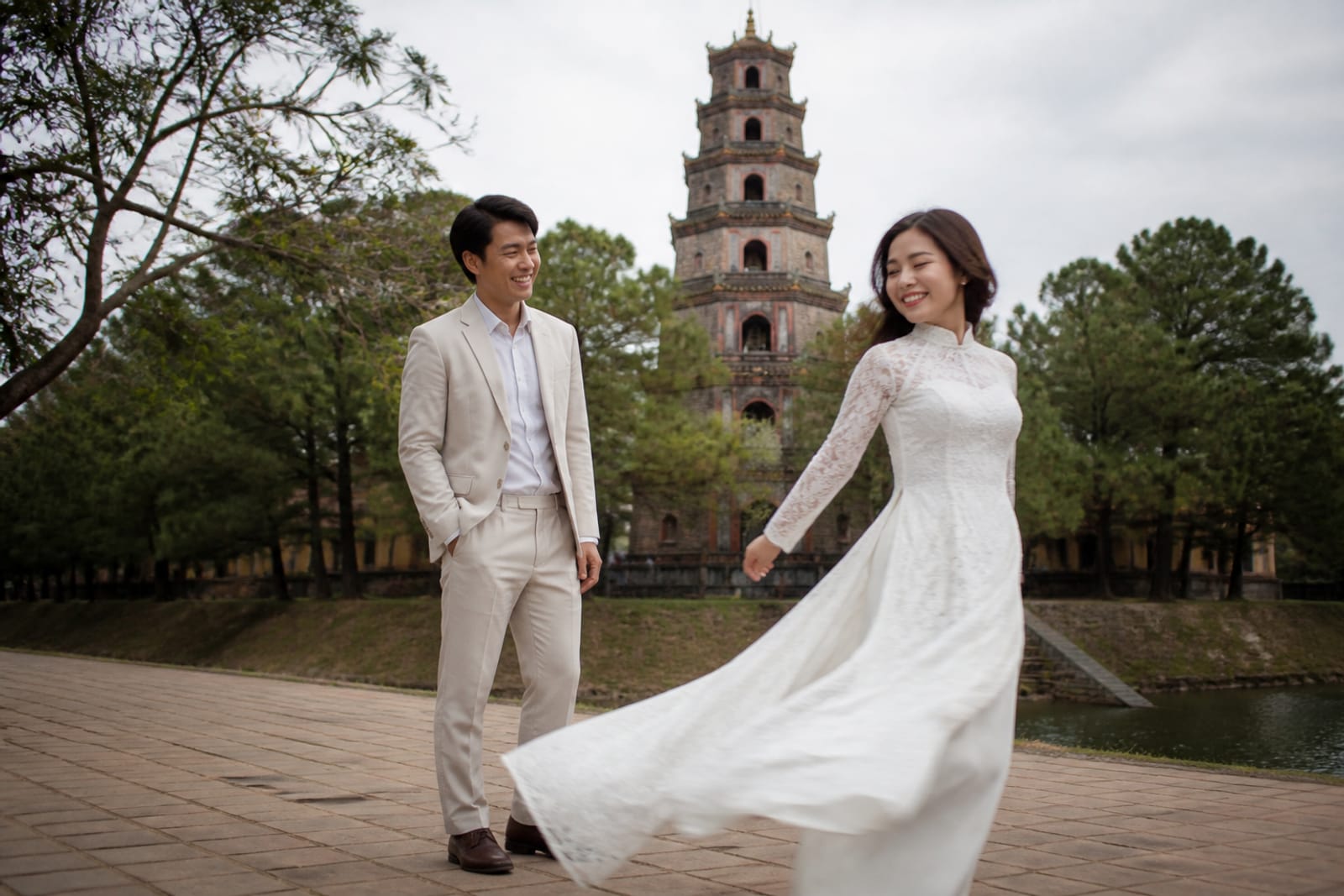
Thien Mu Pagoda sits on the Perfume River's north bank, a 20-minute drive west from Hue's city center. You'll need private transport (motorbike taxi, car hire, or hotel shuttle); no public bus serves photoshoots reliably. Optimal shooting windows are 06:00–08:30 (soft, cool light, fewer tourists) or 16:30–18:30 (golden hour, but crowds persist). The site has no entry fee but tripods require informal permission—local crews secure this routinely. Cáo Studio – Makeup & Photoshoot does not operate a Hue branch but can recommend vetted local photographers who handle transport negotiation, timing and river-side access. Confirm transport cost, driver wait time, and tripod clearance with your photographer before the session. ---
Where exactly is Thien Mu Pagoda, and how do you reach it from Hue city?
Thien Mu Pagoda (Chùa Thiên Mụ) occupies a hilltop peninsula on the Perfume River's north bank, roughly five kilometers northwest of Hue's Imperial City. The main road to it winds through residential areas and a small village; no single central "town entrance" exists. Most travelers start from the Imperial City or their hotel, then hire a car or motorbike taxi for the one-way trip. The last kilometer is a steep, narrow lane—motorbikes and compact cars navigate it; large tour buses cannot. A driver familiar with Hue knows shortcuts through back lanes to avoid congestion near the royal tombs (tourists often confuse the two sites). Always confirm your transport arrives 30 minutes early: river light changes fast, and the crew needs time to scout angles before tourists arrive.
📸 Book on WhatsApp — pre-wedding photoshoot
Why does time of day matter so much at this location?
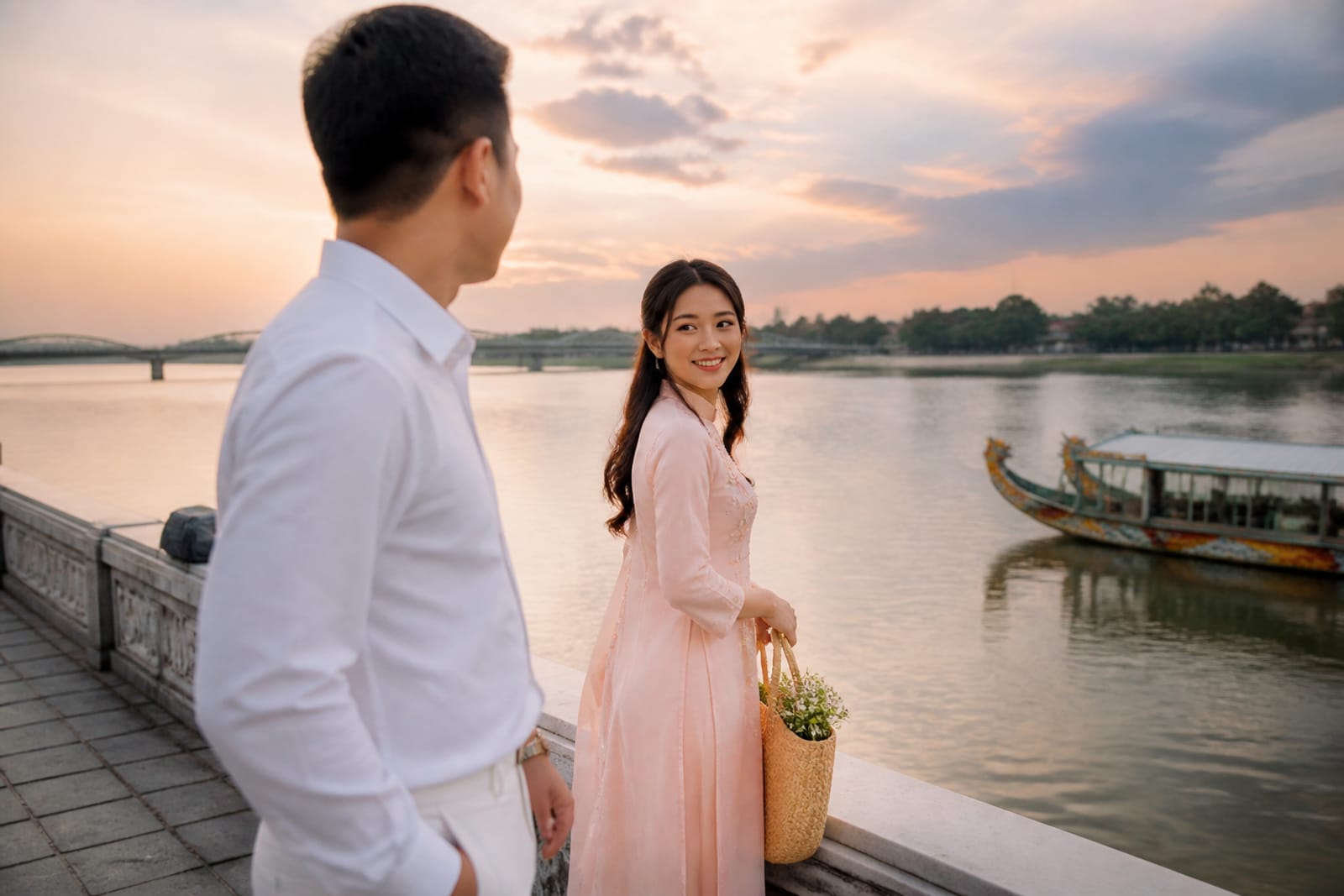
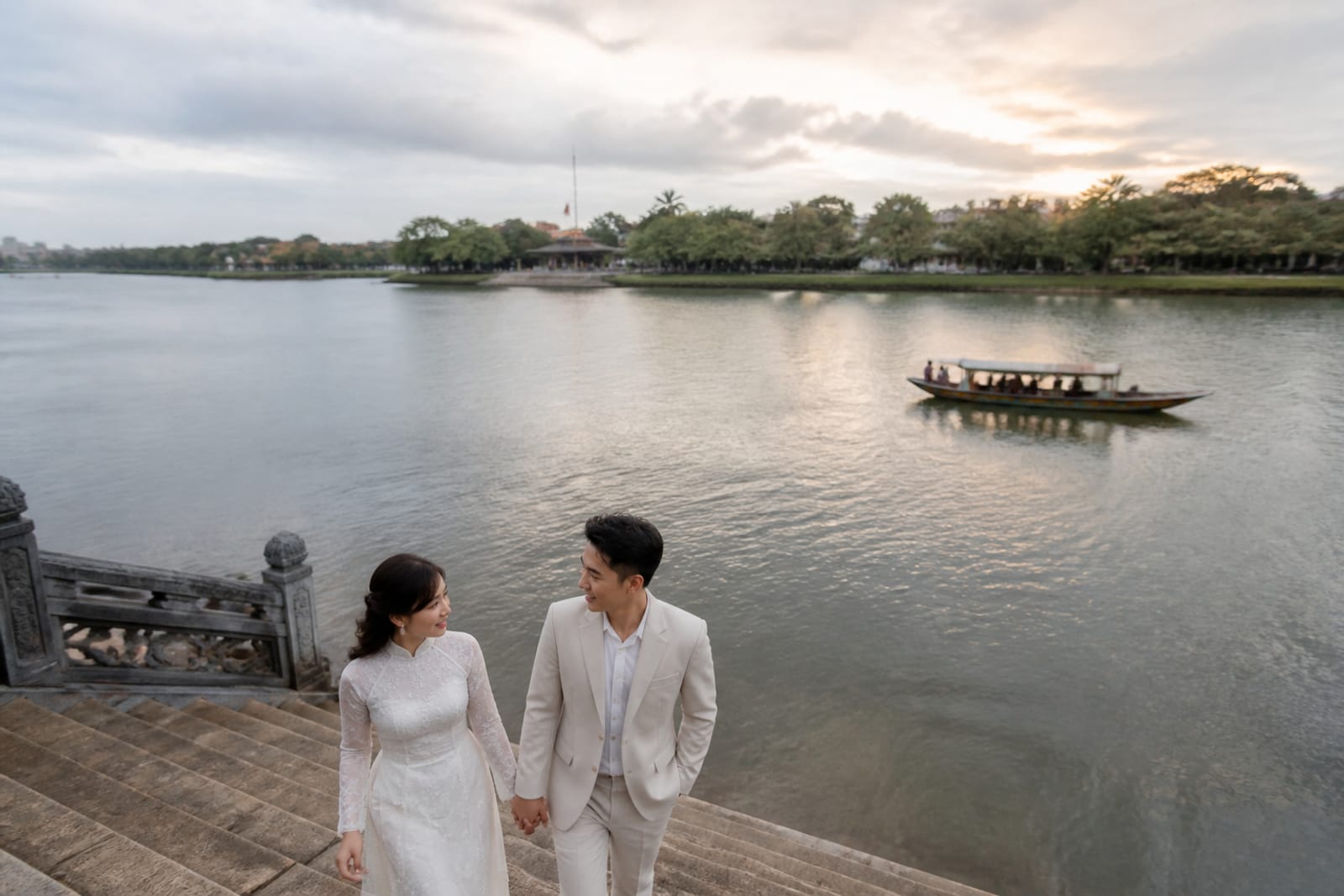
Light at a riverside hilltop pagoda is never flat. The river reflects early sun, creating rim-lit silhouettes from 06:00–07:30 when the pagoda's tower and steps sit in soft shadow—ideal for intimate couple shots. By 09:00, direct overhead sun bleaches the stone and tourists fill every angle. Late afternoon (16:30–18:30) brings golden backlight and longer shadows, but by then 40–60 day-trippers occupy the main viewing platforms. Most photographers reserve 06:00–08:30 to control the crew size; one morning session beats two afternoon sessions for light quality and exclusivity. Hue's central-coast climate means February–April offers the most stable light (dry, low humidity); May–August brings haze from heat shimmer; September–December is rainy and unpredictable. Weather affects not just light but river mist—thick fog on cool mornings can be moody or unusable depending on your aesthetic.
Which transport method fits your crew size and budget?
| Option | Best for | Logistics | Why it works |
|---|---|---|---|
| Motorbike taxi (driver + you on bike) | Solo or couple (2 people max) | Driver waits; 1–2 hour rental | Nimble on narrow lane; lowest logistics cost; rider familiar with back routes |
| Car hire + driver | Couples, small family (up to 5) | Driver waits; car parks near gate | Private, flexible timing, driver helps coordinate with site staff for tripod access |
| Hotel shuttle | Any crew; pre-arranged | Shared schedule; set drop-off time | Bundled transport; less control over light window; driver may not know photography needs |
| Self-drive rental car | Experienced local drivers only | Parking risk on steep lane; no local liaison | Cheapest per-person; high risk of delays, access refusal, parking damage |
Motorbike taxis are fastest for light-chasing (no parking delays) and cheapest for couples; drivers know the lane intimately. Car hire is safest if your photographer brings large equipment (tripods, reflectors, backup batteries) because a driver acts as a gear handler and liaison with site guardians. Hotels offer shuttles as a convenience, but they follow a rigid schedule—you cannot chase that 06:30 window if the shuttle departs at 07:00. Self-driving is risky: the lane is steep, narrow, and unmapped on most apps; a wrong turn costs 15 minutes and breaks the golden hour.
How far in advance should you book your photographer and transport?
Reliable photographers in Hue book 4–6 weeks ahead, especially February–April (dry season peak). When you inquire, ask three things immediately: (1) Does your quoted rate include transport to Thien Mu? (2) Can the driver start before 06:00 if you want sunrise light? (3) Will the photographer negotiate tripod access with the on-site caretaker, or is that your crew's responsibility? Many freelancers assume the couple arranges transport separately, which delays your start and wastes light. A photographer who owns or contracts a dedicated driver can guarantee a 05:30 arrival; one who relies on day-labor transport cannot. Confirm in writing (WhatsApp preferred) the arrival time, driver's phone number, and a backup meeting point near the pagoda's base if comms fail. Bad weather (September–November rains) can flood access lanes—ask if your photographer checks weather 24 hours ahead and reschedules if needed.
What permits, fees or access restrictions apply on shoot day?
Thien Mu Pagoda has no formal entry fee, but site etiquette matters. The pagoda is an active Buddhist temple; monks live on the grounds and conduct prayer at dawn. Respectful dress is required—both you and crew should cover shoulders and knees. Loud music, flash photography in prayer halls, and running between stupas are prohibited. Tripods are technically not permitted, but experienced local photographers know the on-site caretaker and request informal verbal consent; this is rarely denied if the crew is respectful and works quickly (06:00–08:00 window preferred). Professional drone use requires a permit from Vietnam's Civil Aviation Authority—almost no leisure photographer pursues this due to cost and processing time. If your photographer insists drones are "no problem," verify their permit or walk away. No parking permit exists, but drivers familiar with the site know where to park without blocking access lanes or temple traffic. Ask your photographer if they've shot there before and how many times—a first-timer cannot navigate access politics smoothly.
How should you plan your outfit and makeup timing around Thien Mu logistics?
An early start (05:30–06:00 arrival) means makeup and hair must be finished by 05:15, which requires your artist to arrive at your hotel by 04:00–04:30. Cáo Studio – Makeup & Photoshoot's makeup and hair service operates in Hanoi, Ho Chi Minh City and Hoi An; for Hue, you'll need a local freelancer. Book your makeup artist and photographer through the same source if possible—if your photographer recommends a makeup artist, that person understands the early timeline and Thien Mu's outdoor climate (cool, misty, then warm by 08:00). Bring a lightweight shawl or robe: you'll change into your áo dài or dress near the pagoda's outer courtyard, and changing indoors wastes time. For a riverside stone backdrop, áo dài in jewel tones (deep blue, burgundy, emerald) photographs richer than pastels in golden light; pastels work better in soft morning overcast. Makeup should be long-wearing—morning mist and river spray can smudge; a makeup artist experienced with outdoor Hue shoots builds in waterproof powder and sets spray. Never assume your Hanoi or Ho Chi Minh makeup artist has done outdoor riverside shoots; ask for examples from similar conditions.
What should you check before booking any Thien Mu photoshoot?
Before you pay a deposit, confirm these in writing:
- Transport: Included in the package, or booked separately? If separate, does the photographer recommend a driver, or do you hire blind?
- Start time: Can the crew meet you before 06:00? (If the photographer says "07:00 minimum," they are not optimizing for light.)
- Duration: How many hours? Early-morning light only lasts 90–120 minutes; pushing into 09:00–12:00 forces a style pivot or adds a second location.
- Tripod and permits: Does the photographer handle access negotiation, or is it your crew's job?
- Weather backup: If September–November rains flood the lane, does the photographer reschedule, move to an indoor temple (Tay Phuong or Tu Duc tomb), or refund?
- Outfit changes: How many outfits can you realistically change into in a 2-hour window? (Typically 2–3; any more is rushed.)
- Parking and waiting: Will the driver stay on-site the whole time, or does the crew need to find a separate meeting point?
- Edit turnaround: How many weeks until you get the edited images?
A photographer who answers all seven items clearly has shot Thien Mu many times. One who says "I'll sort it out on the day" has not, and your light window will be sacrificed to figuring out logistics.
---
Cáo Studio – Makeup & Photoshoot: Why not available in Hue?
Cáo Studio operates three branches in Hanoi and one in Ho Chi Minh City. Hue is a four-hour drive from both hubs, making daily crew logistics impractical. However, if you're shooting an ao dai photoshoot in Hanoi or Ho Chi Minh City before or after a Hue trip, we can coordinate seamlessly—book via WhatsApp to discuss multi-city shoots. For Hue, we recommend consulting local photographers through your hotel concierge or Hue tourism boards; ask specifically for teams with Thien Mu Pagoda experience and early-morning availability.
---
FAQ
Can I shoot at Thien Mu Pagoda any time of year?
February–April is driest and has the most stable light. September–December is rainy and flood-prone; the access lane can become impassable. May–August is hot and humid, with haze obscuring river reflections. Book your shoot February–April for best results.
Do I need a permit or permission to photograph at Thien Mu Pagoda?
No entry fee applies. Tripods require informal consent from the on-site caretaker—experienced local photographers secure this routine. Drones require a Civil Aviation Authority permit (rarely pursued). Dress respectfully and avoid prayer areas during morning chanting.
How early should my transport arrive for sunrise light?
Aim for a 05:30–06:00 arrival to capture soft light on the pagoda's tower and steps. Golden hour at this latitude lasts roughly 60–90 minutes. An earlier arrival (05:00) adds buffer time for makeup touch-ups and crew positioning.
What's the difference between a motorbike taxi and a car hire for this shoot?
Motorbike taxis are nimble, cheap, and fast for couples; drivers know back lanes. Car hire is safer for large crews and gear, gives a driver to help manage site access, and is less flexible on timing. Car hire costs more per hour but includes an on-site liaison.
Should I book my makeup artist and photographer through the same vendor?
Ideally yes. If the photographer recommends a makeup artist, that person understands the early timeline and outdoor riverside conditions. A makeup artist unfamiliar with outdoor Hue shoots may not use waterproof products or anticipate river mist and heat.
FAQ
Can I shoot at Thien Mu Pagoda any time of year?
February–April is driest and has the most stable light. September–December is rainy and flood-prone; the access lane can become impassable. May–August is hot and humid, with haze obscuring river reflections. Book your shoot February–April for best results.
Do I need a permit or permission to photograph at Thien Mu Pagoda?
No entry fee applies. Tripods require informal consent from the on-site caretaker—experienced local photographers secure this routine. Drones require a Civil Aviation Authority permit (rarely pursued). Dress respectfully and avoid prayer areas during morning chanting.
How early should my transport arrive for sunrise light?
Aim for a 05:30–06:00 arrival to capture soft light on the pagoda's tower and steps. Golden hour at this latitude lasts roughly 60–90 minutes. An earlier arrival (05:00) adds buffer time for makeup touch-ups and crew positioning.
What's the difference between a motorbike taxi and a car hire for this shoot?
Motorbike taxis are nimble, cheap, and fast for couples; drivers know back lanes. Car hire is safer for large crews and gear, gives a driver to help manage site access, and is less flexible on timing. Car hire costs more per hour but includes an on-site liaison.
Should I book my makeup artist and photographer through the same vendor?
Ideally yes. If the photographer recommends a makeup artist, that person understands the early timeline and outdoor riverside conditions. A makeup artist unfamiliar with outdoor Hue shoots may not use waterproof products or anticipate river mist and heat.
Ao dai, makeup, hair and a local photographer in Hanoi or Saigon — one WhatsApp message.