/pre-wedding-photoshoot
Getting to Tra Que village photoshoot: timing, transport, logistics
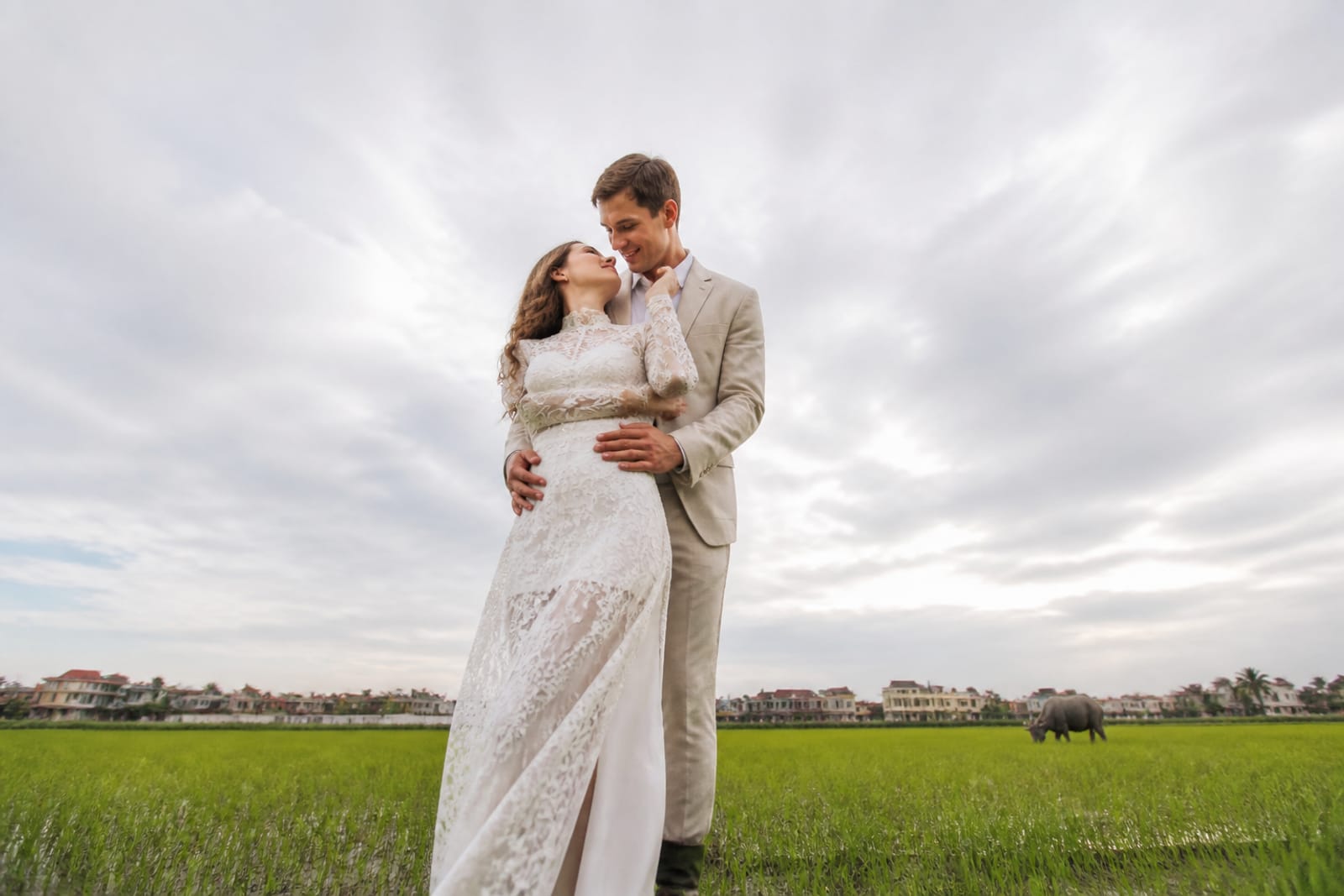
Tra Que vegetable village sits 4 km northeast of Hoi An Ancient Town and is best reached by hired car, motorbike taxi, or shuttle arranged by your photography team. The drive takes 20–30 minutes depending on traffic and route. Photographers recommend arriving by sunrise (around 5:30–6:00 am in summer) to avoid crowds and shoot in soft, directional light before the midday heat peaks. The village is active year-round, but February to April offers mild weather and lush, green rice fields; May to August is dry but extremely hot (often 35°C+), so early starts are essential. Cáo Studio – Makeup & Photoshoot coordinates transport logistics as part of pre-wedding bookings in Hoi An—confirm timing, vehicle type, and pickup location on WhatsApp when you reserve. --- Getting to a photoshoot location is often overlooked in the excitement of choosing outfits and poses. At Tra Que, the journey itself is part of the shoot experience: you'll pass through rice fields, water buffalo, and fishing ponds on winding rural roads. The difference between arriving at 7 am and 9 am is not just light—it's crowd volume, temperature, and whether your makeup holds through the heat. This guide walks you through every transport decision, timing trade-off, and logistical detail you need to book your Hoi An pre-wedding shoot with confidence.
Why early morning matters more than you think
Most couples assume any time before midday is fine. It isn't. By 8:30 am, the village is busy with local farmers, tour groups, and other photographers. The light becomes flat and harsh by 9:30 am, and temperatures climb rapidly—foundation and makeup begin to separate after 30–45 minutes in 30°C+ heat. Shooting at 6:00–7:30 am gives you clear roads, soft golden-hour light raking across the fields, and a full two hours before the sun peaks overhead. The village opens to visitors from dawn, and early morning is when the farmers work—authentic moments happen when the light is young. If you're doing an ao dai shoot, the fabric drapes better in cooler air and photographs more crisply in directional light. Plan for a 5:00–5:30 am pickup to arrive by 6:00 am.
📸 Book on WhatsApp — pre-wedding photoshoot
Transport options and who each suits
| Option | Best for | Why it works | Confirm before booking |
|---|---|---|---|
| Studio-arranged car + driver | couples, groups, full glam | Door pickup, early start, driver waits, makeup held | Vehicle type, exact pickup time, fuel/parking cost factor |
| Private hired car (online) | flexible schedules, multiple stops | Set your own time, explore en route, driver flexible | Early morning availability, cancellation policy, driver phone number |
| Motorbike taxi | couples, light luggage, budget-conscious | Fast, nimble in traffic, affordable | Driver speaks English, knows village, safety helmet included |
| Hoi An hotel shuttle | hotel guests only | Coordinated with your stay, simple booking | Whether it stops at Tra Que, return time, advance notice required |
| Walk + local bus | adventurous, very budget-conscious | Authentic, cheapest option | Not reliable for early morning, not recommended for full makeup/outfit |
Each option has a cost factor—studio-arranged feels expensive upfront but includes driver wait time and route knowledge; private hired cars are flexible but may charge for early-morning premium; motorbike taxis are nimble but involve more coordination and require you to travel light. Check which transport type is included in your pre-wedding package on WhatsApp when you book.
Timing checklist: work backward from sunrise
5:00–5:15 am: Final hair and makeup check; grab water and sun protection. 5:30 am: Vehicle pickup from your hotel or the studio's Hoi An base (ask on WhatsApp for the exact location). 5:45–6:00 am: Arrive at Tra Que, brief with your photographer about outfit order and field positions. 6:00–7:30 am: Shoot in soft, low-angle light with green rice fields as backdrop. 7:30–8:30 am: Change outfits, move to secondary location or pose near water features (ponds, channels). 8:30–9:00 am: Wrap before heat and crowds peak.
Hoi An's weather is warmest and driest February to August, but temperatures climb fastest in May to August—sunrise shoots are essential during these months, not optional. If you're shooting in the December to January cool season, you can start slightly later (6:30–7:00 am), but light quality still peaks in the first 90 minutes after sunrise. Rain is rare February to April; it's common September to December (worst October to November). If your shoot is booked for a rainy-season month, confirm whether Tra Que is accessible and whether an indoor backup location is included.
What goes wrong and how to avoid it
Underestimating traffic on the drive. Tourist season (February to March, December) can clog the main road. Your transport coordinator should know alternate routes. Confirm with your driver the night before.
Late hotel checkout conflicts. If you're staying in Hoi An Ancient Town and need a 5:30 am pickup, arrange early checkout the evening before. Hotel receptionists can prepare your bill so you leave without delay.
Makeup melting or transferring to clothes. Full glam (foundation, eyeliner, lipstick) applied indoors will run or smudge during the car ride in warm weather, especially if the vehicle's air-con isn't strong. Ask your makeup artist to use heat-resistant and waterproof products, and carry blotting tissues and a makeup touch-up kit in the car. Some couples choose to apply makeup after arriving at Tra Que, with a makeup artist meeting you on-site—ask on WhatsApp if this is available.
Outfit changes in an open village. Tra Que has no private changing room. Bring a lightweight robe or sarong, and plan to change behind your car or a screened area (your photographer will help). Practice stepping out of your ao dai or dress before the shoot day—it's trickier in motion than it looks.
Footwear sinking into wet soil. After rain or early morning dew, the vegetable fields and footpaths are soft. Wear flat shoes or sandals with good grip for the drive and initial walk; change into heels or chosen footwear only when you reach the photo location. Bring socks or shoe covers to keep feet clean.
Underestimating the heat (May–August). By 9:00 am in high summer, standing still in direct sun while wearing heavy fabric (ao dai, wedding dress) causes dizziness and heat exhaustion. Bring 2+ liters of water per person, electrolyte powder, a wide-brimmed hat for between shots, and sunscreen. Plan shorter shoots (1.5–2 hours) during May to August. If heat is a concern, ask on WhatsApp about evening golden-hour sessions (around 5:00–6:30 pm), though these are less common.
Season and light: which month suits your vision
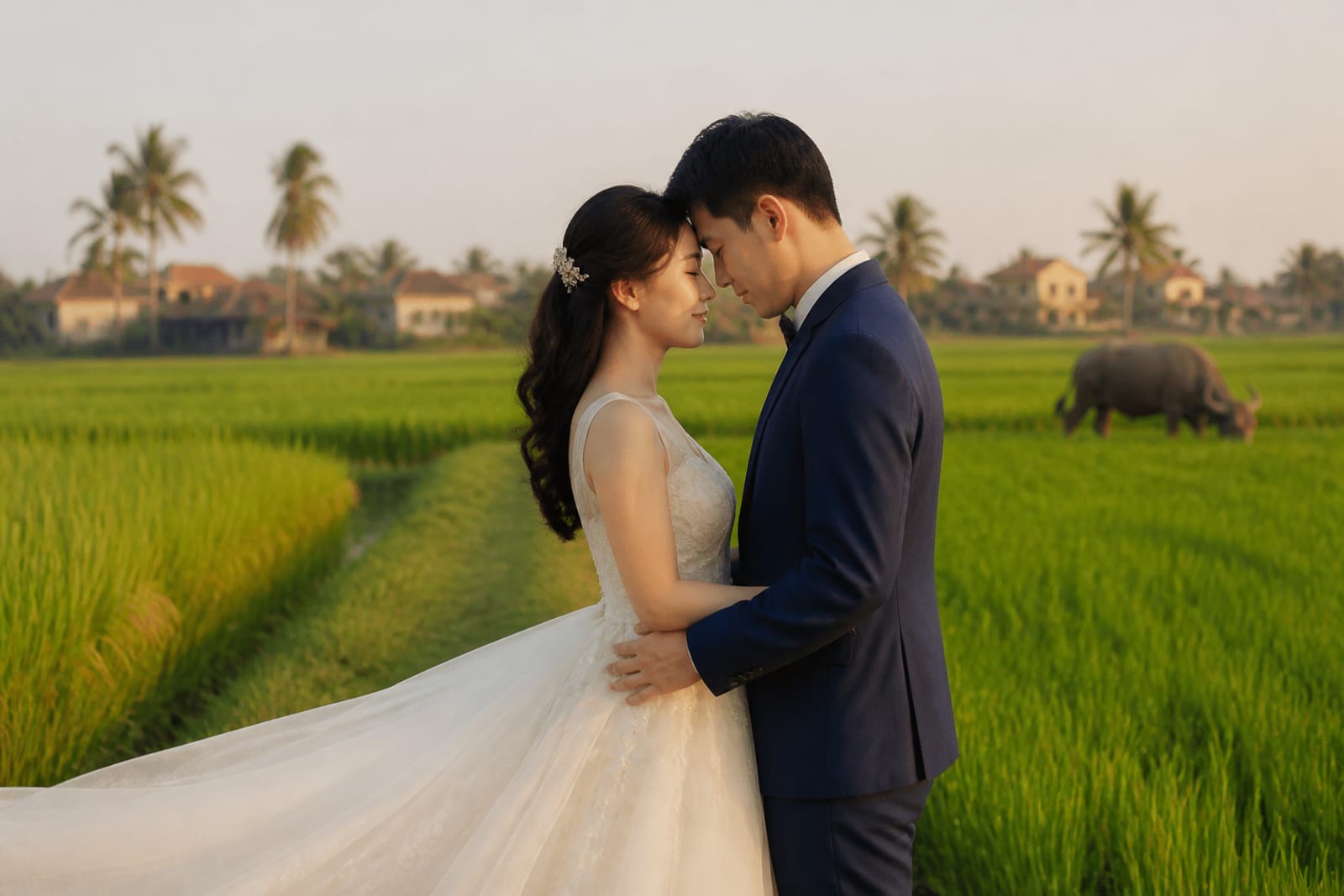
February to April is the textbook choice: mild air (20–25°C), green rice fields in growth stage, clear skies, and soft morning light. You can shoot 6:00–8:30 am comfortably. This is also Hoi An's peak season, so Tra Que will be busier—arrive early.
May to August is dry but scorching (often 35°C+). Light is harsh by 7:00 am, and heat exhaustion is real. Only book if you're committed to a very early start (5:30–6:30 am shoot, then return by 8:00 am). The rice fields are often in harvesting or fallow state, so greenery is less lush.
September to November brings occasional rain and typhoon risk (worst in October–November). Tra Que can flood in heavy downpours; check local weather 3 days before your shoot and confirm with your coordinator whether the location is still accessible. Morning light is still usable if it doesn't rain, but clouds reduce that directional glow.
December to January is cool (15–20°C) and often drizzly. Morning shoots are pleasant if dry, but grey skies flatten color. This season suits couples who want moody, atmospheric images over bright sun-drenched fields.
Cáo Studio coordinates shoots across these seasons—ask on WhatsApp about the best dates for your vision and current weather patterns.
Coordinating with your photographer on arrival
Once your transport is booked, your photographer needs to know your exact arrival time so they can be on-site ready, scout lighting, and identify the best field patches for your outfits. Confirm:
- Exact pickup time and hotel/meeting point from your transport provider (night before).
- Your arrival time at Tra Que (usually 6:00–6:30 am).
- Outfit order and accessories you're bringing (so your photographer plans pose sequences).
- Backup location if weather is poor (ask on WhatsApp what's included).
- Makeup artist on-site or pre-applied (affects timing if changes are needed mid-shoot).
If you're booking a couple photoshoot or pre-wedding session with Cáo Studio that includes Tra Que, your coordinator will handle all of this. If you're hiring an independent photographer, communicate this checklist yourself to avoid confusion at dawn.
What to check before you book
- Is transport included in the package, or do you arrange it yourself? Studio-arranged is simpler but confirm vehicle type and cost factor.
- What time does the shoot start, and who confirms pickup? Make sure the time aligns with sunrise and your hotel's early checkout.
- Are makeup and hair included, or do you bring an artist? On-site makeup application costs more but avoids pre-travel smudging.
- What's the backup plan if it rains or access is blocked? Confirm whether an alternate location is included in your booking.
- How many outfits and how long is the shoot? More outfits = longer time; plan for heat and crowd buildup.
- Do you need to bring your own accessories, shoes, and change of clothes? Confirm so you pack right.
- Who transports luggage and makeup during the shoot? Your photographer or transport driver can usually hold bags.
Contact Cáo Studio – Makeup & Photoshoot on WhatsApp to discuss timing, transport options, and logistics for your Hoi An pre-wedding or ao dai photoshoot.
---
FAQ
What time should we arrive at Tra Que to avoid crowds and get the best light?
Arrive by 6:00–6:30 am. Sunrise light is sharpest and most flattering 6:00–7:30 am, and crowds don't peak until 8:30 am. Early arrival also gives you 30–45 minutes to settle before shooting begins.
Is Tra Que accessible year-round, or are there seasons when it floods?
Tra Que is open year-round, but September to November brings rain and typhoon risk, especially October–November, when flooding can block access. Confirm accessibility 2–3 days before your shoot if booked in the rainy season.
Can we book a car with a driver through Cáo Studio, or do we arrange transport ourselves?
Ask on WhatsApp about transport options when you book your session. Cáo Studio can coordinate pickup, or you can hire privately. Confirm timing and cost factors before committing.
How hot is it at Tra Que in summer, and do you recommend early morning shoots?
May to August often reach 35°C+. Morning shoots (5:30–7:00 am) are essential during summer to avoid heat exhaustion and harsh light. Afternoon shoots are not recommended.
What should we wear under the ao dai to the shoot, and when do we change?
Wear comfortable, light layers for the car ride (change clothes at Tra Que if needed). Under the ao dai, wear fitted undergarments or a thin slip so the silk drapes cleanly. Bring a robe for between outfit changes in the open village.
Is there a private changing area at Tra Que, or do we change in the car?
There's no dedicated changing room. Most couples change behind their car or a screened area marked out by the photographer. Bring a lightweight sarong or robe for modesty between shots.
What happens if it rains on our shoot day?
Light rain is manageable; heavy rain closes access. Confirm your backup location (indoor or alternative outdoor spot) when you book. Ask on WhatsApp what's included if weather forces a reschedule or move.
Do we need to pay a village entrance fee at Tra Que?
There's no formal entrance fee, but it's courteous to respect the farmers' workspace. Some shoots include a small local donation or fee—ask on WhatsApp for current practices.
FAQ
What time should we arrive at Tra Que to avoid crowds and get the best light?
Arrive by 6:00–6:30 am. Sunrise light is sharpest and most flattering 6:00–7:30 am, and crowds don't peak until 8:30 am. Early arrival also gives you 30–45 minutes to settle before shooting begins.
Is Tra Que accessible year-round, or are there seasons when it floods?
Tra Que is open year-round, but September to November brings rain and typhoon risk, especially October–November, when flooding can block access. Confirm accessibility 2–3 days before your shoot if booked in the rainy season.
Can we book a car with a driver through Cáo Studio, or do we arrange transport ourselves?
Ask on WhatsApp about transport options when you book your session. Cáo Studio can coordinate pickup, or you can hire privately. Confirm timing and cost factors before committing.
How hot is it at Tra Que in summer, and do you recommend early morning shoots?
May to August often reach 35°C+. Morning shoots (5:30–7:00 am) are essential during summer to avoid heat exhaustion and harsh light. Afternoon shoots are not recommended.
What should we wear under the ao dai to the shoot, and when do we change?
Wear comfortable, light layers for the car ride (change clothes at Tra Que if needed). Under the ao dai, wear fitted undergarments or a thin slip so the silk drapes cleanly. Bring a robe for between outfit changes in the open village.
Is there a private changing area at Tra Que, or do we change in the car?
There's no dedicated changing room. Most couples change behind their car or a screened area marked out by the photographer. Bring a lightweight sarong or robe for modesty between shots.
What happens if it rains on our shoot day?
Light rain is manageable; heavy rain closes access. Confirm your backup location (indoor or alternative outdoor spot) when you book. Ask on WhatsApp what's included if weather forces a reschedule or move.
Do we need to pay a village entrance fee at Tra Que?
There's no formal entrance fee, but it's courteous to respect the farmers' workspace. Some shoots include a small local donation or fee—ask on WhatsApp for current practices.
Ao dai, makeup, hair and a local photographer in Hanoi or Saigon — one WhatsApp message.