services/ao-dai-photoshoot
Ha Giang Ao Dai Photoshoot Guide: Best Spots, Light & What to Wear
Ha Giang ao dai photography isn't like studio work or Hanoi's old-quarter shoots. The province's towering karst ridges, winding Ha Giang Loop roads, and Hmong/Dao village markets demand a different approach: fewer convenient shelters, unpredictable weather, longer travel between spots, and local guides essential for temple and village access. This guide walks you through the realities—where light actually lands, what weather hits when, how to layer under an ao dai at altitude, and how to hire a photographer who knows the terrain.
Why Is Morning Light the Only Reliable Window in Ha Giang?
Sunrise (5:30–6:30 a.m.) and the hour after offer soft, directional light across Ha Giang's ridges without the blown-out sky or dark shadows of midday. By 9 a.m., sun angle is steep; by noon, contrast is harsh and unflattering on skin. Late afternoon (4–6 p.m.) works if clouds roll in—common in May–September—but dry season (October–March) gives you clearer skies and harder light. Early morning is non-negotiable; plan hotel pickup by 5 a.m.
📸 Book on WhatsApp — ao dai photoshoot
Which Ha Giang Spots Photograph Best in Ao Dai?
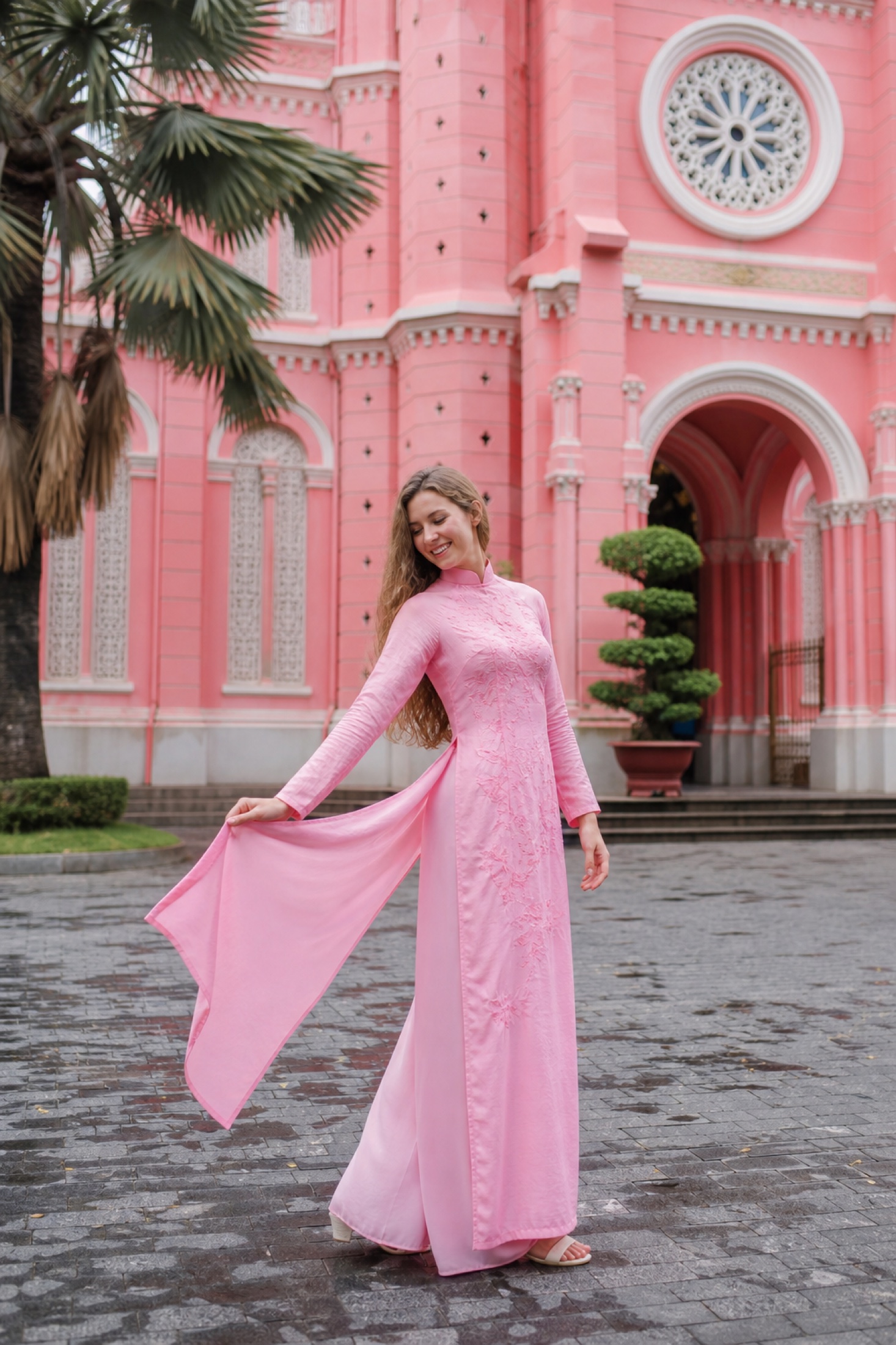
Three locations consistently deliver strong backdrops:
- Quan Ba Twin Peaks viewpoint: Limestone ridges frame the subject; arrive 6:30–7:30 a.m. before tour groups. Flat stone platform is stable for ao dai movement. Southeast-facing, so morning sun rakes across the peaks. Best October–November when air is clear.
- Yen Minh market (Hmong markets, Thursdays/Sundays): Crowded, colorful, authentic. Wear an ao dai over practical layers (see below). Shoot between 6–8 a.m. before peak foot traffic. Respect vendor permission; never photograph faces without asking.
- Dong Van old citadel & town: Stone-paved streets, French-era architecture, Hmong cultural museum backdrop. Light bounces off pale stone buildings; late afternoon (4–5:30 p.m.) can be flattering if you position subject to avoid direct sun in eyes. Less traveled than Quan Ba.
Avoid: main Ha Giang town midday streets. Concrete, traffic, boring light. Scenic detours cost 20–40 minutes by scooter; plan accordingly.
What Should You Wear Under an Ao Dai at Mountain Altitude?
An ao dai's flowing fabric looks ethereal but leaves you exposed to wind, sun, and temperature swings. Ha Giang sits 600–1,200m elevation; mornings hover around 10–15°C even in summer.
| Layer | What to wear | Why | Mistake to avoid |
|---|---|---|---|
| Base | Thin long-sleeve thermal or lightweight cotton turtleneck (black/white) | Blocks UV, keeps warm, looks clean under sheer silk | Cotton t-shirt shows sweat and wrinkles under ao dai |
| Pants | Black or white fitted leggings or slim trousers | Seamless, doesn't bulk under the slit; neutral colour recedes | Jeans create visible panty lines; loose fabric bunches |
| Undergarment | Seamless bra or sports bra + slip shorts | Prevents visible lines; slip shorts stop thigh chafe in wind | Underwear lines ruin close shots |
| Footwear | Flat sandal, ballet flat, or embroidered slipper (change per shot) | Easy to swap; minimal shadow; ao dai frames feet | Chunky sneakers destroy the silhouette |
| Jacket | Lightweight cardigan or shawl (matches ao dai trim colour) | Warmth without bulk; adds elegance for windy ridgetop shots | Thick fleece shows under the fabric |
Pack a small drybag with change of leggings (mountain humidity) and a towel for sweat. Wear sunscreen on exposed chest and shoulders 30 minutes before shoot.
How Does Weather Affect Ao Dai Shoots Month by Month?
| Month | Temperature | Risk | Ao dai fit notes |
|---|---|---|---|
| Jan–Feb | 8–15°C, clear | Morning fog until 8 a.m.; need thick base layer | Long sleeves essential; wrap the ao dai tightly |
| Mar–Apr | 15–22°C, variable | Afternoon rain possible; light fast-moving clouds | Cotton base layer; silk wrinkles in humidity |
| May–Aug | 22–28°C, humid | Frequent afternoon rain (often 2–4 p.m.); mist on peaks | Moisture clings to silk; bring absorbent undershirt; shoot 6–9 a.m. only |
| Sep–Oct | 18–24°C, transition | Early morning chill; clear by 8 a.m.; best month | Sweet spot—mild, low humidity, good light until noon |
| Nov–Dec | 10–18°C, dry | Clearest light; cold mornings; high UV on peaks | Thermal base layer; sunscreen critical |
Action: Book for October–November or late February–early March. Avoid May–July for mountain shoots (afternoon flooding common). If you shoot in summer, 6–9 a.m. is your entire window.
Where to Find and Hire a Local Ha Giang Photographer
Cáo Studio – Makeup & Photoshoot operates in Hanoi, Ho Chi Minh City, and Hoi An. For Ha Giang, a 5–8 hour drive from Hanoi, you'll need a local photographer or a Hanoi-based shooter willing to travel.
Vetting checklist before you hire:
- Portfolio: Request 5+ ao dai shoots from Ha Giang or similar mountain terrain (not just studio work). Look for sharp detail, natural skin tone, good handling of backlighting.
- Scooter/transport: Confirm they own or can rent a reliable bike and navigate Ha Giang roads. Bad driver = bad timing; you'll miss light.
- Local network: Ask if they know market vendors, temple guardians, and viewpoint access rules. Permits or permissions matter in ethnic areas.
- Backup light/reflector: Ask what gear they carry. A 5-in-1 reflector bounces morning sun onto the face and costs $15–30.
- Turnaround time: Clarify edit delivery (raw files, edited gallery, prints). Mountain areas have spotty WiFi; expect 5–7 day delivery.
- Insurance/liability: Ha Giang roads are winding. Confirm they have accident insurance and a clear cancellation policy for rain.
Typical cost (local photographer): 3–5 million VND ($120–200 USD) for a 4-hour morning session, including edited gallery. Cáo Studio quotes on WhatsApp for Hanoi-based or custom travel rates.
What to Check Before You Book Your Ha Giang Ao Dai Session
- Ao dai fit: Try on your ao dai at home 2 weeks prior. Sleeves should not pull when you raise your arms. Slit should sit at mid-thigh (not too high for temple shots). Get it tailored if needed.
- Shoes: Break in flats or sandals before the shoot. Blisters on a ridgetop are miserable.
- Sunscreen & bug spray: Ha Giang mountain areas see dengue. Reapply sunscreen every 2 hours; use unscented bug spray so it doesn't show on skin.
- Permit for minority villages: If shooting in Hmong villages, ask your photographer about permissions. Some markets restrict commercial photography; respect local wishes.
- Backup dates: Mountain weather can close roads. Book flexible dates or discuss rain-date swaps with your photographer.
- Phone/power: Bring a power bank (no charging at viewpoints). Photographer needs to communicate with guide or hotel if running late.
If you're based in Hanoi and want professional makeup and hair before driving to Ha Giang, Cáo Studio offers hotel makeup & hair services across Hanoi—book the night before your shoot.
FAQ
Can I wear a modern/ designer ao dai to Ha Giang, or should I rent a traditional one?
Wear what makes you feel confident. Designer ao dai photograph beautifully and move well for action shots. Traditional silk wrinkles faster in humidity and requires more careful handling. If renting, do it in Hanoi (tailor shops on Hang Gai Street) 3–4 days ahead, not in Ha Giang.
Is it disrespectful to wear an ao dai in Hmong villages if I'm not Vietnamese?
No. Hmong communities see ao dai as a respectful gesture toward Vietnamese culture. Do ask vendors and temple guardians before photographing them. Avoid market areas during religious ceremonies (ask your guide).
What if it rains the morning of my shoot?
Light rain (mist) at sunrise can look romantic in photos. Heavy rain makes roads unsafe. Confirm your photographer's cancellation policy in writing beforehand. Most will reschedule within 3–5 days at no extra cost if you're flexible.
Should I hire a makeup artist for Ha Giang, or do it myself?
If shooting at altitude in morning light, a professional makeup artist familiar with outdoor work is worth the cost (stays on during wind, photographs correctly). Cáo Studio's makeup team is Hanoi-based; ask if they offer Ha Giang travel makeup on WhatsApp. Otherwise, use long-wear foundation, waterproof eyeliner, and matte setting powder.
How many outfit changes are realistic in a 4-hour Ha Giang session?
Usually 2–3 locations, same ao dai or one alternate. Changing ao dai outdoors is complicated (dust, wrinkles, no bathroom). Pick one special ao dai and one casual/vintage style if you want variety. Cáo Studio's lookbook shows realistic session flow.
What's the best season for Ha Giang ao dai shoots overall?
October–November: clear skies, mild cold (easy to layer), no afternoon rain, and soft light persists until 9–10 a.m. February–March is second-best. Avoid May–September for mountain work.
FAQ
Can I wear a modern/ designer ao dai to Ha Giang, or should I rent a traditional one?
Wear what makes you feel confident. Designer ao dai photograph beautifully and move well for action shots. Traditional silk wrinkles faster in humidity and requires more careful handling. If renting, do it in Hanoi (tailor shops on Hang Gai Street) 3–4 days ahead, not in Ha Giang.
Is it disrespectful to wear an ao dai in Hmong villages if I'm not Vietnamese?
No. Hmong communities see ao dai as a respectful gesture toward Vietnamese culture. Do ask vendors and temple guardians before photographing them. Avoid market areas during religious ceremonies (ask your guide).
What if it rains the morning of my shoot?
Light rain (mist) at sunrise can look romantic in photos. Heavy rain makes roads unsafe. Confirm your photographer's cancellation policy in writing beforehand. Most will reschedule within 3–5 days at no extra cost if you're flexible.
Should I hire a makeup artist for Ha Giang, or do it myself?
If shooting at altitude in morning light, a professional makeup artist familiar with outdoor work is worth the cost (stays on during wind, photographs correctly). Cáo Studio's makeup team is Hanoi-based; ask if they offer Ha Giang travel makeup on WhatsApp. Otherwise, use long-wear foundation, waterproof eyeliner, and matte setting powder.
How many outfit changes are realistic in a 4-hour Ha Giang session?
Usually 2–3 locations, same ao dai or one alternate. Changing ao dai outdoors is complicated (dust, wrinkles, no bathroom). Pick one special ao dai and one casual/vintage style if you want variety. Cáo Studio's [lookbook](/lookbook) shows realistic session flow.
What's the best season for Ha Giang ao dai shoots overall?
October–November: clear skies, mild cold (easy to layer), no afternoon rain, and soft light persists until 9–10 a.m. February–March is second-best. Avoid May–September for mountain work.
Ao dai, makeup, hair and a local photographer in Hanoi or Saigon — one WhatsApp message.