/pre-wedding-photoshoot
Hai Van Pass wedding photos: best time of day and light
Hai Van Pass sits at roughly 500 metres above Da Nang, making it cooler and often cloudier than the city below. The best shooting window is sunrise (06:00–07:30, Feb–Aug) when mist clings to peaks and soft light flatters skin; golden hour at dusk (17:00–18:30) works too, but roads are busier. Avoid midday (11:00–15:00) when sunlight is hard and contrast blown-out. The central-coast climate is driest Feb–Aug; Sep–Dec brings typhoons, rain, and poor visibility, especially Oct–Nov. Cáo Studio – Makeup & Photoshoot does not operate here, but we coordinate pre-wedding shoots in Hanoi, Ho Chi Minh City, and Hoi An. For a Hai Van Pass session, hire a local Da Nang photographer who knows the road access, early-morning gates, and permit requirements. Check the forecast 48 hours ahead, brief your photographer on outfit weight (wind gusts happen), and arrive 45 minutes before your target light window.
The Hai Van Pass bridge and mountain backdrop draw hundreds of wedding photographers and couples each week during peak season. Yet light, weather, and access logistics trip up travellers who shoot without a local guide. This guide compares timing options, explains why the pass challenges standard photoshoot planning, and lays out what to verify before you book.
Why is sunrise the golden standard for Hai Van Pass photos?
Sunrise (06:00–07:30) produces soft, even light across the bridge and mountain ridges because the sun rises from the east and hasn't yet climbed high enough to cast hard shadows. At this hour, mist or low cloud often shrouds the upper peaks, creating a moody, layered backdrop that reads beautifully in photos. The pass itself is near-empty—only a handful of motorbikes and no tour buses yet—so you have space to move freely and avoid photobombing. The air is cool, reducing sweat and makeup melt, and wind often arrives later. The trade-off: you must wake at 05:00, coordinate transport in the dark, and pray for clear skies (cloud cover is common in winter). This window works Feb–Aug; outside that season, mist can obscure the entire view.
📸 Book on WhatsApp — pre-wedding & elopement
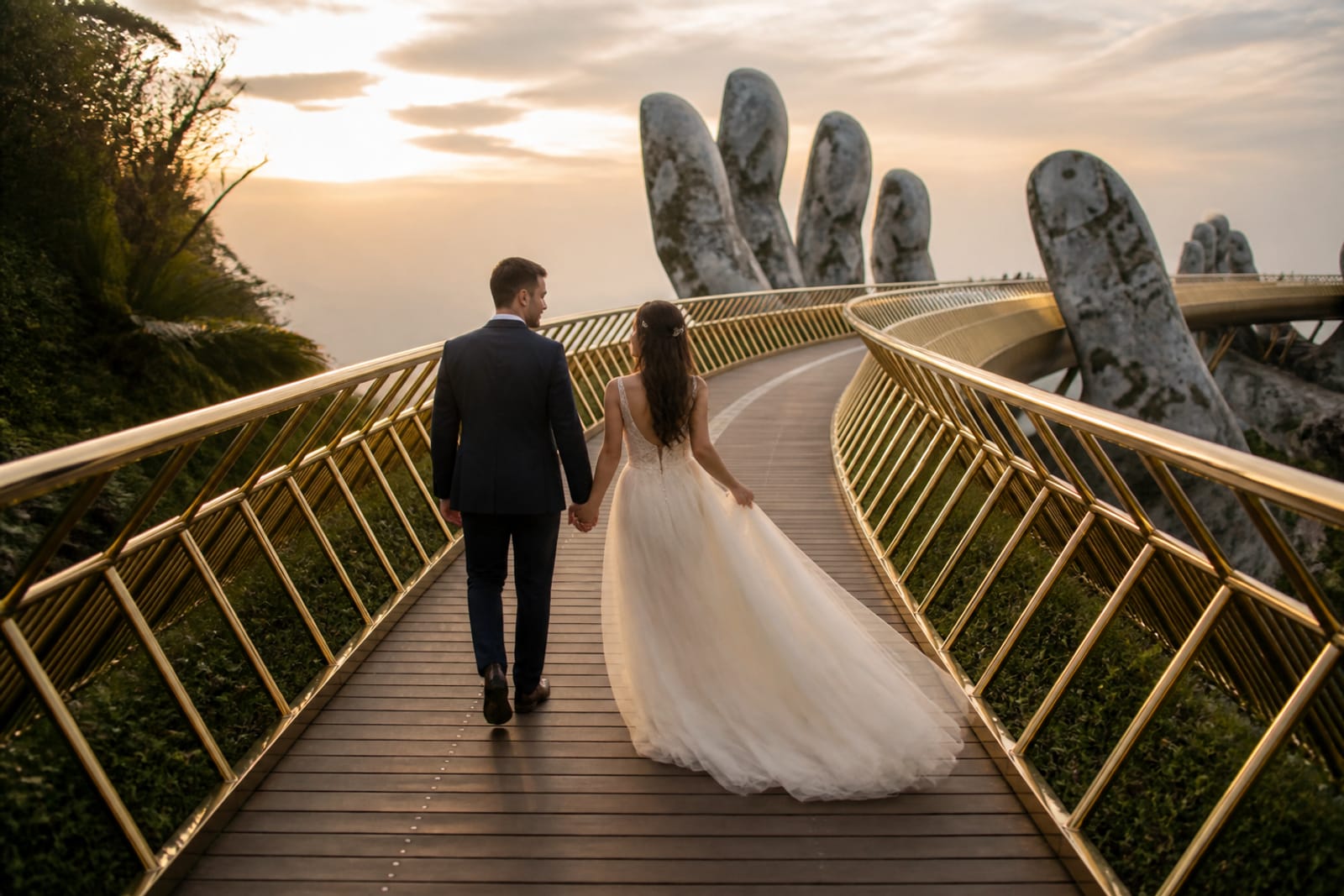
Golden hour (sunset) vs. sunrise: which suits your shoot?
| Timing | Best for | Light & crowds | Why it works |
|---|---|---|---|
| Sunrise (06:00–07:30) | Mist, soft backlight, alone time | Cool, even, misty; few vehicles | Peak light quality; low interference |
| Golden hour (17:00–18:30) | Warm skin tone, dramatic sky | Warm, slanting; tour buses leaving | Fast-changing colour; still busy |
| Mid-morning (08:00–10:00) | Backup if sunrise fails | Clearer, harder; traffic rising | Only if dawn is fully clouded |
| Midday (11:00–15:00) | Not recommended | Harsh, blown-out, crowded | Unflattering shadows; peak visitors |
Sunrise wins if light quality and solitude matter most. Golden hour suits couples who want warmth and drama without a pre-dawn wake. Mid-morning is a fallback only if the sunrise forecast is ≤20% clear-sky odds. Midday ruins skin tone and wastes the pass's key asset—isolation.
How does the central-coast climate affect Hai Van Pass photos year-round?
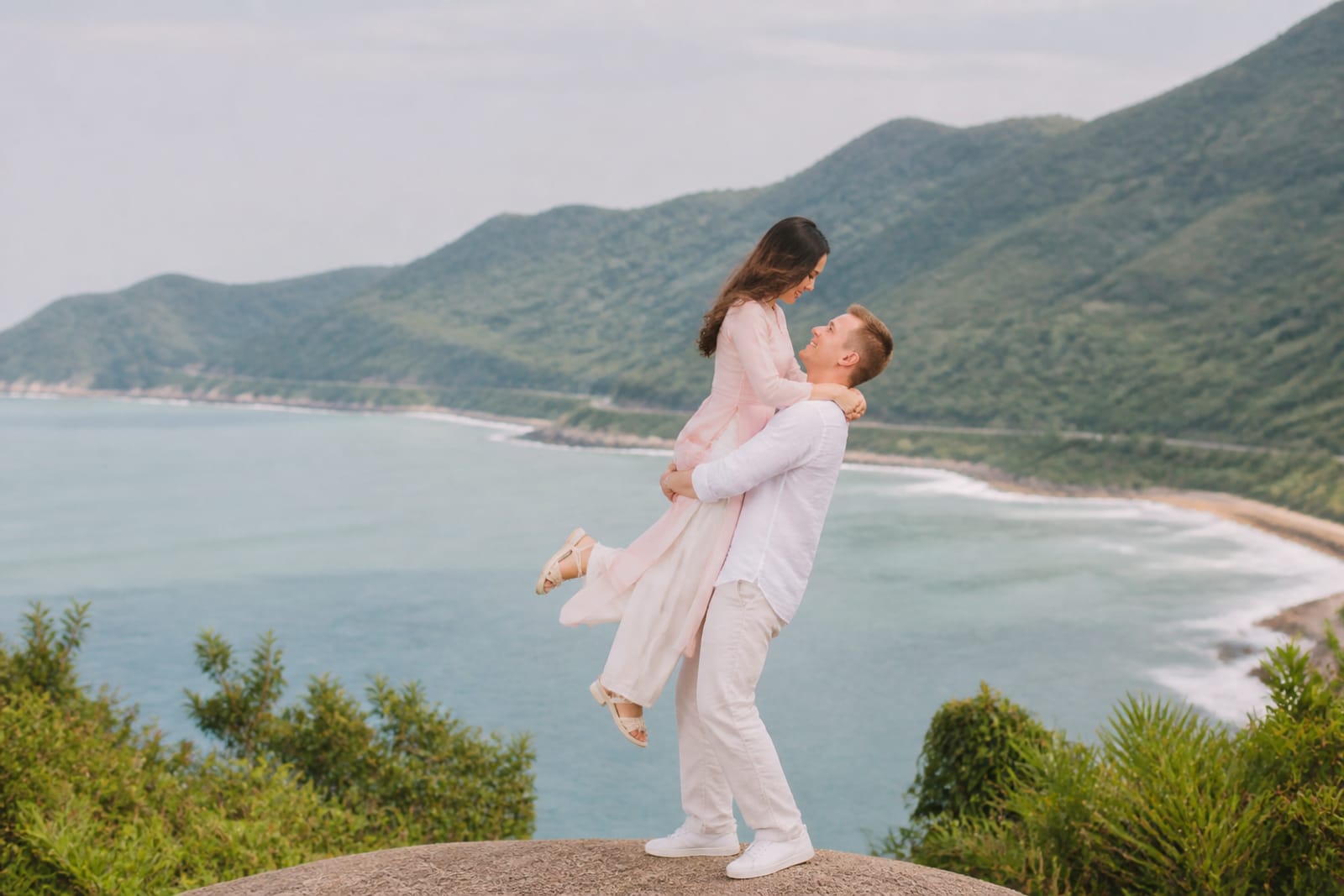
Hai Van Pass sits on the boundary between Da Nang and Hue, both on Vietnam's central coast. The climate pattern: Feb–Aug is dry and sunny (best for shoots), with May–Aug becoming hot and occasionally misty; Sep–Dec is the typhoon and rainy season, worst in Oct–Nov. Rain on the pass doesn't just cloud the shot—it closes the road temporarily and makes outfit continuity impossible (soaked fabric clings, makeup runs, wind-blown hair becomes unworkable). Mist in winter (Dec–Feb) can linger until 09:00 or later, shrouding the bridge entirely. Ask a local photographer about the 48-hour forecast before confirming the date; if rainfall is forecast, propose a reschedule. The season also dictates outfit weight: lightweight silk ao dai and summer fabrics work Feb–Aug; heavier layers (if shooting in Dec–Jan) risk bunching and moving awkwardly in wind.
What logistics and permits should you check before booking?
Hai Van Pass is a public road (Highway 1A), not a private venue, so technically no permit is required for personal photography. However, tour buses and vehicle traffic peak at certain hours, and some guides advise checking with local authorities (Da Nang Tourism Department) if you're hiring a professional crew with multiple cars. Road gates sometimes close for maintenance or weather; a local photographer will know current access. Hair and makeup should happen in your hotel or a Da Nang salon (30–40 minutes' drive down the mountain) because there are no facilities on the pass—wind and weather make touch-ups there difficult. Bring reflectors or a small light modifier if shooting in shade or heavy overcast; the pass's exposed ridges mean you can't rely on bounced ambient light alone. Transport timing is critical: allow 50 minutes from central Da Nang to the pass, plus 15 minutes to scout and set up. Dress changes should happen in a vehicle (parked off-road) because public areas lack privacy.
How do outfits and styling survive Hai Van Pass conditions?
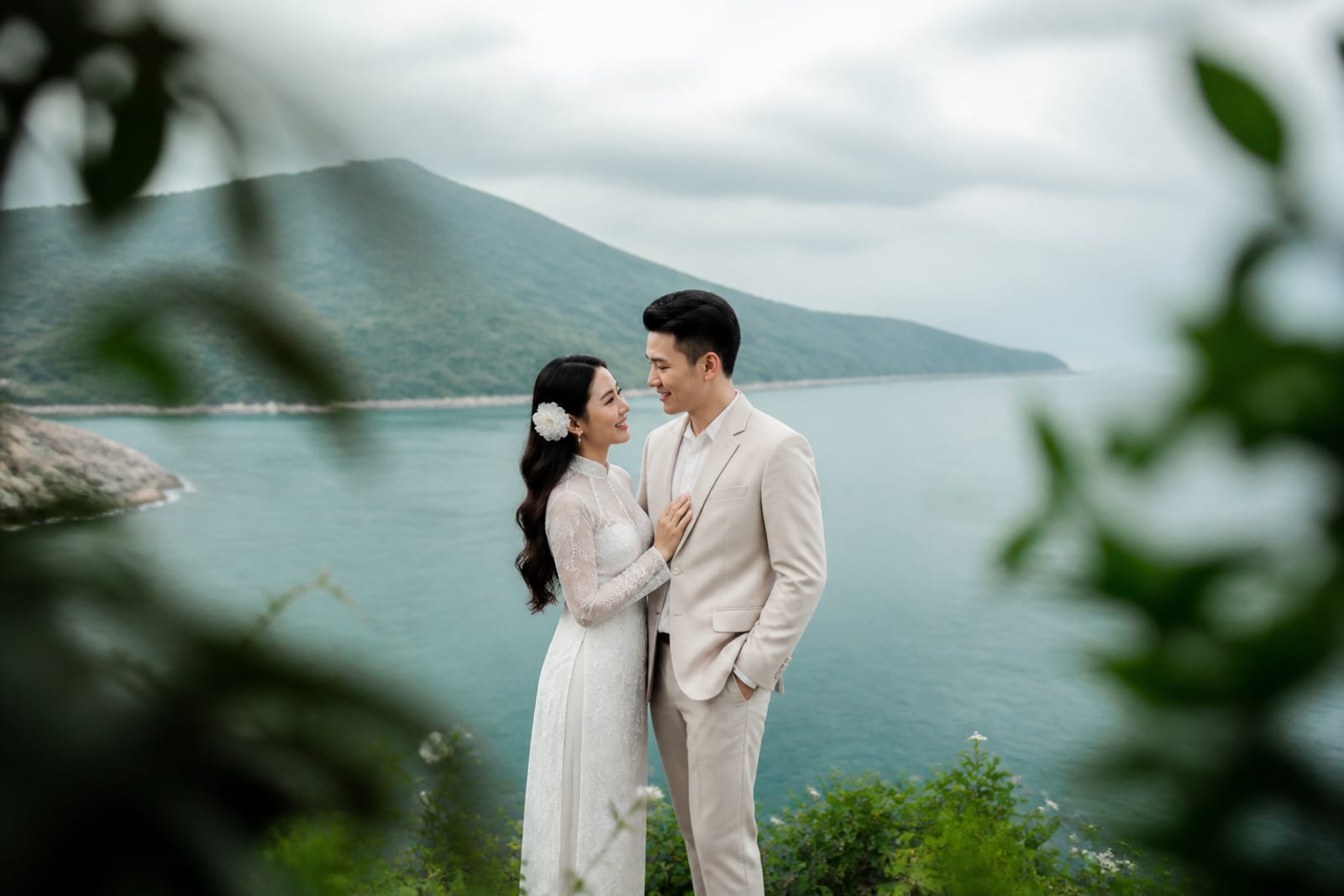
Wind is the defining challenge. At 500 metres, gusts are common, especially Mar–May and Sep–Nov, causing lightweight fabrics to flap, hair to tangle, and makeup to dry unevenly. Ao dai photoshoots are popular here because the tunic's lines photograph cleanly even when wind-caught, but the inner áo tím (undershirt) must fit snugly so it doesn't ride up. Heavy, layered outfits look formal in photos but restrict movement and collect sweat in heat. Cáo Studio – Makeup & Photoshoot's makeup & hair service is available in Da Nang hotels; request a long-wear, sweat-resistant base and a hairstyle (braids, buns, or pinned waves) that won't unravel in wind. Bring clips, bobby pins, and a compact touch-up kit (matte powder, blotting paper, lip balm) because reapplying anything on the pass is near-impossible. Light fabrics (cotton-silk blend, chiffon) move beautifully but need careful pinning. Ask your photographer about the dress code: some couples wear traditional ao dai, others western wedding attire or casual outfits. Each photographs differently under morning mist vs. harsh sun, so agree on the look before the day.
What to check before you book a Hai Van Pass photographer
- Local expertise: Does the photographer know current road access and permit needs? Have they shot the pass in the season you're targeting?
- Timing flexibility: Will they offer a backup window (mid-morning or alternate date) if dawn weather fails?
- Weather contingency: What's their refund or reschedule policy if the road closes or visibility drops below usable?
- Transport & logistics: Do they arrange early-morning pickup? Do they know which carpark allows crew vehicles?
- Outfit coordination: Have they advised on wind-resistant fabrics and styling? Do they work with hair/makeup artists familiar with high-altitude conditions?
- Editing timeline: How many photos, when delivered, and in what formats? (Never assume; confirm in writing.)
- Backup location: If the pass is inaccessible, do they have an alternative (e.g. nearby coastal or mountain spot)?
Cáo Studio – Makeup & Photoshoot coordinates pre-wedding photoshoots in Hanoi, Ho Chi Minh City, and Hoi An (by appointment). For a Hai Van Pass shoot, we recommend booking a Da Nang photographer directly and using our makeup & hair service if you're staying in the city. Check the FAQ or message us on WhatsApp +84 338 762 340 for referrals.
FAQ
What is the best month for Hai Van Pass wedding photos?
Feb–Aug offers dry, predictable weather and clear skies. Feb–Apr are cooler; May–Aug are hot with occasional mist. Oct–Nov are worst due to typhoons and rain. Choose Feb–Apr or Jul–Aug for the highest success rate.
Can we shoot Hai Van Pass at midday if we hire a professional?
No. Midday sun is harsh, shadows are unflattering, and crowds peak. Even professional editing can't salvage blown-out sky or dark eye sockets. Sunrise or golden hour are non-negotiable.
Do we need a permit to photograph at Hai Van Pass?
It's a public road, so personal photography is free. Professional crews may need to check with Da Nang authorities depending on vehicle numbers and photo shoot scale. Ask your local photographer to confirm current rules.
How do we manage wind and outfit damage on the day?
Wear fitted layers, pin lightweight fabrics, and bring a compact touch-up kit. Hairstyles should be braided or pinned, not loose. Plan outfit changes in a parked vehicle, not on-site.
Should we hire a makeup artist at Hai Van Pass or get ready in the hotel?
Always get ready in your hotel or a Da Nang salon. There are no facilities on the pass, and wind makes touch-ups impossible. Cáo Studio offers hotel makeup & hair service in Da Nang—ask on WhatsApp.
What happens if the weather forecast is bad the day before?
Confirm with your photographer if a reschedule or refund is possible. Most professionals offer a backup date (within 7–14 days) or move to an alternative location. Never shoot in heavy rain—roads close and visibility collapses.
How early must we arrive at Hai Van Pass?
Arrive 30–40 minutes before your target shooting window to scout, set up, and adjust. For sunrise (06:00 start), leave your hotel by 05:00 and aim to be on-site by 05:45.
FAQ
What is the best month for Hai Van Pass wedding photos?
Feb–Aug offers dry, predictable weather and clear skies. Feb–Apr are cooler; May–Aug are hot with occasional mist. Oct–Nov are worst due to typhoons and rain. Choose Feb–Apr or Jul–Aug for the highest success rate.
Can we shoot Hai Van Pass at midday if we hire a professional?
No. Midday sun is harsh, shadows are unflattering, and crowds peak. Even professional editing can't salvage blown-out sky or dark eye sockets. Sunrise or golden hour are non-negotiable.
Do we need a permit to photograph at Hai Van Pass?
It's a public road, so personal photography is free. Professional crews may need to check with Da Nang authorities depending on vehicle numbers and photo shoot scale. Ask your local photographer to confirm current rules.
How do we manage wind and outfit damage on the day?
Wear fitted layers, pin lightweight fabrics, and bring a compact touch-up kit. Hairstyles should be braided or pinned, not loose. Plan outfit changes in a parked vehicle, not on-site.
Should we hire a makeup artist at Hai Van Pass or get ready in the hotel?
Always get ready in your hotel or a Da Nang salon. There are no facilities on the pass, and wind makes touch-ups impossible. Cáo Studio offers hotel makeup & hair service in Da Nang—ask on WhatsApp.
What happens if the weather forecast is bad the day before?
Confirm with your photographer if a reschedule or refund is possible. Most professionals offer a backup date (within 7–14 days) or move to an alternative location. Never shoot in heavy rain—roads close and visibility collapses.
How early must we arrive at Hai Van Pass?
Arrive 30–40 minutes before your target shooting window to scout, set up, and adjust. For sunrise (06:00 start), leave your hotel by 05:00 and aim to be on-site by 05:45.
Ao dai, makeup, hair and a local photographer in Hanoi or Saigon — one WhatsApp message.