/pre-wedding-photoshoot
Hanoi Old Quarter wedding photos: best time of day and light
The Hanoi Old Quarter photographs best during early morning (6:30–8:30 a.m.) and late afternoon (4:00–6:00 p.m.), when soft directional light wraps stone facades and eliminates harsh shadows on your skin. Streets are quietest at dawn; afternoon brings romantic golden tones but more foot traffic. Midday (10 a.m.–3 p.m.) produces flat, unflattering light and crowds. Autumn (October–November) offers consistent dry weather and mild temperatures ideal for an ao dai session. Winter (December–February) is cool and often overcast—soft but dim, so longer exposure times help. Rain and humidity peak May–September, making midday shoots harder. Cáo Studio – Makeup & Photoshoot runs pre-wedding and elopement sessions across Hanoi with location scouting and timing expertise; the team arrives early to secure quiet corners and manage natural light as the sun moves, adapting the itinerary if clouds roll in. ---
What time of day produces the best wedding light in Old Quarter streets?
Early morning (6:30–8:30 a.m.) delivers clean, directional light that sculpts cheekbones and makes stone buildings glow without blown-out skies. Streets are nearly empty—no motorbikes, no tour groups, no unwanted reflections in shop windows. Late afternoon (4:00–6:00 p.m.) brings warm golden tones that feel romantic and timeless, especially on wooden shutters and weathered walls. The trade-off: foot traffic increases and you may need to pause for pedestrians or motorbike carriers. Midday hardens shadows under your eyes and chin, flattens skin tone, and forces squinting. If you shoot midday, cover narrow alleys where diffused light works best—but morning and late afternoon remain the pro choice.
📸 Book on WhatsApp — pre-wedding photoshoot
Does season matter for Old Quarter pre-wedding shoots?
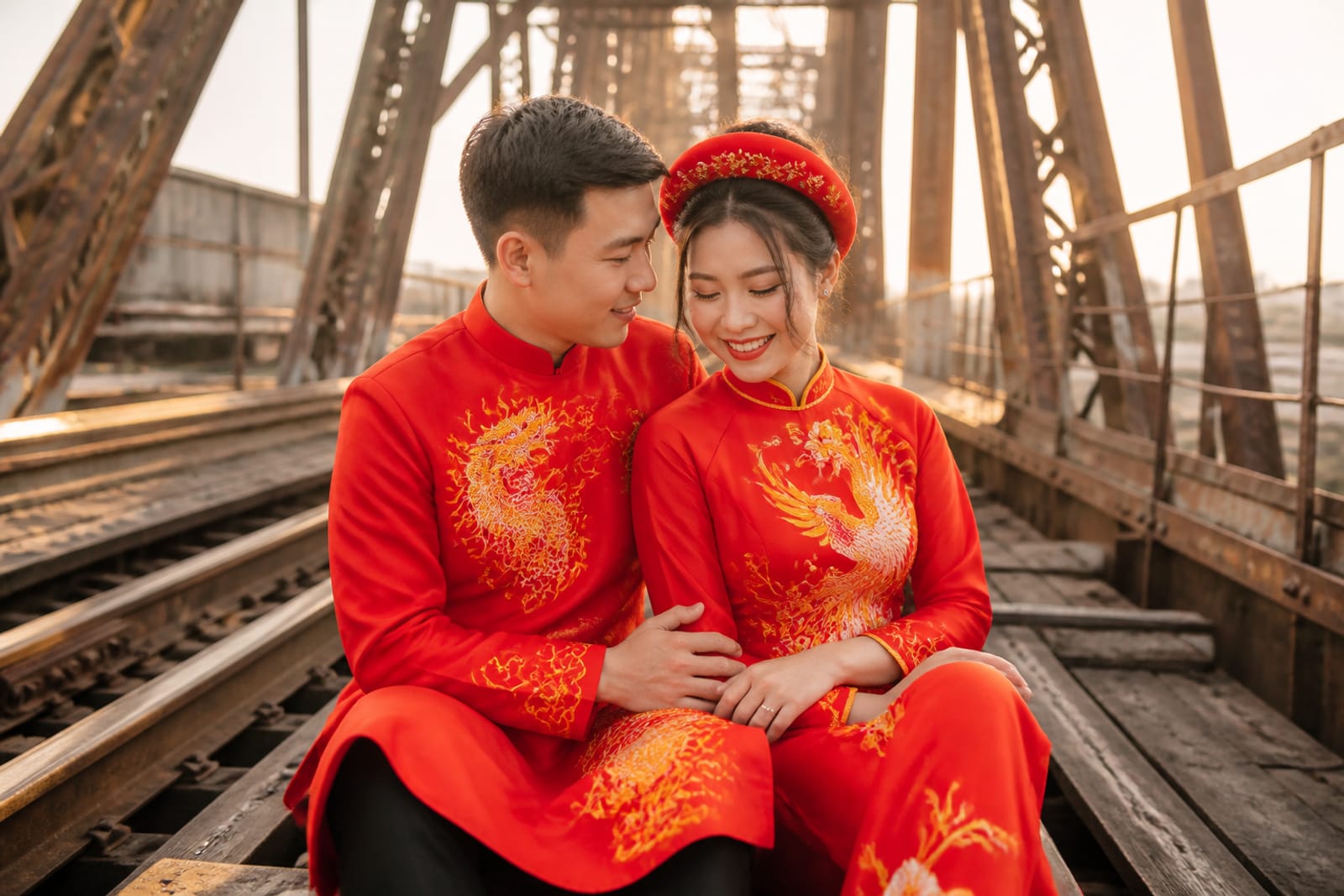
Autumn (October–November) is peak season: dry, mild (20–25°C), and the trees along Phan Dinh Phung Street show golden foliage. Light is consistent and soft. Spring (March–April) is humid with frequent drizzle and haze; colors feel muted. Winter (December–February) stays cool (10–15°C) and often overcast—soft for skin but dim, requiring slower shutter speeds and longer sessions to gather enough light. Summer (May–September) is hot, sticky, and prone to sudden downpours; your ao dai's silk clings, makeup fades, and street puddles appear unpredictably. Tet (late January–mid-February) closes many shops, narrows streets with decorations, and crowds landmarks—avoid if you want solitude. Winter's overcast skies are gentle on makeup and eyes; autumn's dry, mild conditions let you move freely without sweating through layers.
| Season | Light & Temperature | Crowds | Outfit Comfort | Why It Works |
|---|---|---|---|---|
| Oct–Nov (Autumn) | Soft, golden, 20–25°C | Light to moderate | Easy; dry air | Consistent light, mild temps, foliage color |
| Dec–Feb (Winter) | Diffused, dim, 10–15°C | Light | Good; cool, dry | Soft on skin; often overcast; longer shoot needed |
| Mar–Apr (Spring) | Humid haze, 20–25°C | Moderate | Fair; humid | Muted tones; drizzle risk; timing tight |
| May–Sep (Summer) | Harsh, hot, 30–35°C+ | Heavy midday | Difficult; sweat, silk cling | Avoid; sudden rain, heat stress |
How do narrow streets and French shutters affect your shoot strategy?
Hanoi Old Quarter's alleyways (many under 3 meters wide) create natural light tunnels: direct sun never reaches ground level, so you get even, shadow-free light all day—but exposure stays low and colors muted. Stone walls and wooden facades act as reflectors, bouncing fill light onto faces and reducing contrast. French colonial shutters, peeling plaster, and lanterns make compelling backdrops but appear flat in harsh midday sun; morning and golden hour angle light across texture, revealing depth and age-worn character. Tight spaces limit where a photographer can stand (no wide-angle perspective from across the street) and where you can position yourself—expect some awkward corners, props to avoid, and tourist flow. The payoff: intimate, framed compositions with zero sky visible and intimate scale. Plan for 15-minute walk-throughs to scout blocked angles and identify quiet side-streets before the formal session.
What should you wear under an ao dai to photograph in Old Quarter heat and humidity?
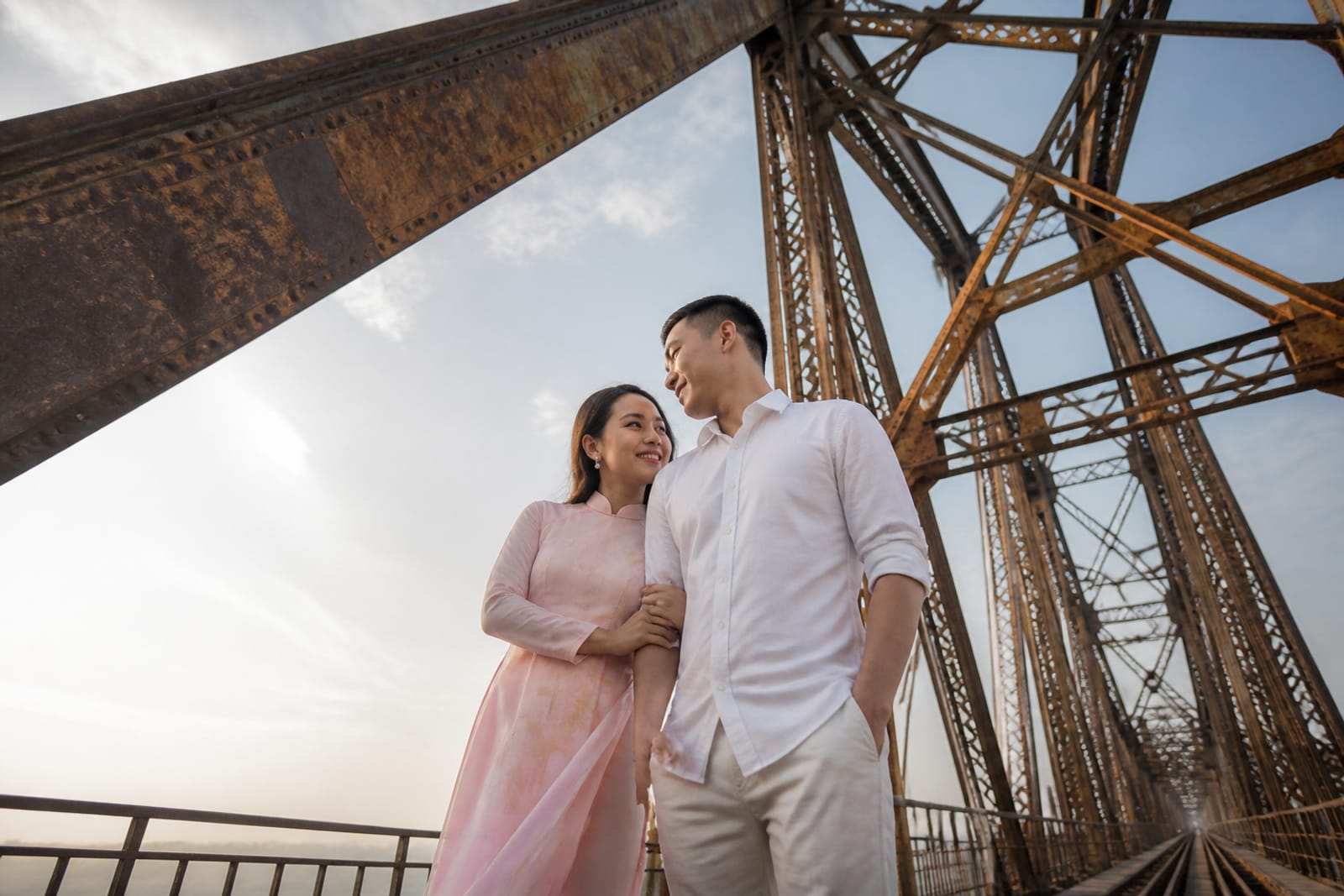
Wear a thin, white or neutral-colored slip (knee-length or longer) under your ao dai to prevent transparency in bright light and reduce sticking in humidity. Cotton or silk-blend is cooler than pure silk. Shorts or bike shorts under the slip prevent chafing on long walks through cobblestone streets. Avoid heavy foundation or powder on your chest and neck—sweat breaks through fast, and stone alley humidity (especially late morning) makes makeup cake. Ask Cáo Studio's makeup & hair team about heat-resistant formulas and setting sprays beforehand. Loose, breathable undergarments (avoid tight elastic) stay comfortable during multi-location sessions. If shooting in summer, schedule early morning (before heat peaks) and plan a 30-minute break in a café or shaded courtyard so your ao dai dries and makeup resets. Winter demands a thin outer layer—a silk shawl or lightweight cardigan—for warmth between shots and while standing still for posing.
How do crowds and motorbike traffic affect timing and repositioning?
Peak tourism hours (9:00 a.m.–5:00 p.m.) pack the Old Quarter; tour groups congregate at Hoan Kiem Lake edges and narrow Hang Gai Street. Early morning (before 7:00 a.m.) and early evening (after 6:00 p.m.) cut foot traffic by 70–80% but reduce available daylight. Motorbike carriers deliver goods 6:00–7:30 a.m. and 4:00–5:00 p.m., so expect brief, loud activity—coordinate with your photographer to pause and reposition. During your session, your photographer will walk a route beforehand to identify quiet side-alleys (Hang Buom, Ta Hien's quieter north end, interior courtyard near Hang Ngang) where tourists rarely venture. Midday sun forces everyone into shaded alleys, bunching crowds; late afternoon spreads them toward Hoan Kiem. If you're flexible, a Tuesday–Thursday morning session avoids weekend crush. Always brief your photographer on noise tolerance and willingness to pause for traffic—they'll time poses around motorbike gaps.
What to check before booking an Old Quarter pre-wedding session
Before committing, confirm with Cáo Studio (via WhatsApp) your preferred season and time-of-day window—early morning, golden hour, or flexible. Ask how long the session runs and how many locations the itinerary covers; Old Quarter shoots typically visit 2–4 distinct corners (a lantern alley, a façade, a quiet passage, maybe a café courtyard). Clarify what happens if weather turns: do you reschedule, shoot anyway, or shift to a sheltered backup location? Request a pre-shoot site visit if you have specific shutters, lanterns, or architectural details in mind—your photographer can assess light angle and crowd patterns weeks ahead. Confirm whether makeup & hair are included or booked separately, and if the studio provides an ao dai or you're renting elsewhere. Ask for a sample itinerary showing start point, expected positions, and how transitions work on foot. Finally, discuss final delivery: how many edited images, and when they arrive—so you know the timeline and can plan album or print orders afterward.
Hanoi Old Quarter pre-wedding shoots thrive on precise timing and intimate knowledge of light and flow. Autumn mornings and golden-hour afternoons offer the best light; winter and spring require flexibility. Narrow lanes, stone texture, and colonial charm demand a photographer who scouts in advance and adapts to crowds and motorbike traffic on the day. Cáo Studio's Hanoi team has shot the Old Quarter countless times and knows which alleys catch light when, how to frame your ao dai against peeling shutters, and where to pause for a passing carrier. If you're considering other Hanoi locations—lakes, gardens, pagodas—or an ao dai photoshoot with rented costume, the studio covers all. For couples planning a full pre-wedding series across Hanoi or ready to book a session, contact the team on WhatsApp to discuss your vision, preferred dates, and final details.
---
FAQ
Why is early morning better than golden hour for Old Quarter shoots?
Early morning (6:30–8:30 a.m.) has fewer tourists and motorbikes, letting you pose freely without pausing. Golden hour (4:00–6:00 p.m.) is warmer and more romantic but busier, so you may lose 10–15 minutes per location waiting for crowds to clear.
Can I shoot Old Quarter pre-wedding photos in summer?
Yes, but challenge yourself. May–September brings heat (30–35°C+), sudden rain, and humidity that wilts makeup and makes silk cling. Stick to early morning (6:00–8:30 a.m.) to avoid peak heat and afternoon downpours. Winter is gentler on comfort.
What if it rains the day of my shoot?
Confirm your studio's rain policy beforehand. Cáo Studio typically offers a covered backup location (café interior, sheltered courtyard) or reschedule if you prefer outdoor light. Drizzle can look moody and romantic in Old Quarter's narrow streets—some couples choose to shoot anyway.
Should I hire a guide in addition to my photographer?
No. Your photographer already knows the best quiet spots, light angles, and timing tricks. A separate guide adds cost and creates competing directions. Let the photographer lead and enjoy the walk.
Do I need permits to photograph in Hanoi Old Quarter?
Personal pre-wedding shoots don't require permits. Large commercial crews (multiple assistants, rented lighting, drones) may need local permission—ask your studio if this applies to your session.
FAQ
Why is early morning better than golden hour for Old Quarter shoots?
Early morning (6:30–8:30 a.m.) has fewer tourists and motorbikes, letting you pose freely without pausing. Golden hour (4:00–6:00 p.m.) is warmer and more romantic but busier, so you may lose 10–15 minutes per location waiting for crowds to clear.
Can I shoot Old Quarter pre-wedding photos in summer?
Yes, but challenge yourself. May–September brings heat (30–35°C+), sudden rain, and humidity that wilts makeup and makes silk cling. Stick to early morning (6:00–8:30 a.m.) to avoid peak heat and afternoon downpours. Winter is gentler on comfort.
What if it rains the day of my shoot?
Confirm your studio's rain policy beforehand. Cáo Studio typically offers a covered backup location (café interior, sheltered courtyard) or reschedule if you prefer outdoor light. Drizzle can look moody and romantic in Old Quarter's narrow streets—some couples choose to shoot anyway.
Should I hire a guide in addition to my photographer?
No. Your photographer already knows the best quiet spots, light angles, and timing tricks. A separate guide adds cost and creates competing directions. Let the photographer lead and enjoy the walk.
Do I need permits to photograph in Hanoi Old Quarter?
Personal pre-wedding shoots don't require permits. Large commercial crews (multiple assistants, rented lighting, drones) may need local permission—ask your studio if this applies to your session.
Ao dai, makeup, hair and a local photographer in Hanoi or Saigon — one WhatsApp message.