/pre-wedding-photoshoot
Hanoi Opera House for pre-wedding photos: pros, cons & where else to s
Hanoi Opera House is a colonial landmark on Trang Tien Street—photogenic from the front, but indoor shooting is prohibited and outdoor access is limited to the facade during daylight hours. Sessions there work best as a 15–20 minute stop within a larger pre-wedding photoshoot that includes multiple locations; you cannot build a full shoot around it alone. Light is harsh midday, softer in early morning (6–8 a.m.) or late afternoon (4–6 p.m.). Autumn (October–November) offers the most reliable dry, mild weather. Crowds peak 10 a.m.–4 p.m., especially weekends. An ao dai works well on the steps; Western wedding dress is difficult to move in and photograph on the narrow, steep entrance. For exclusive indoor vintage halls or more creative freedom, Cáo Studio – Makeup & Photoshoot and other studios use private venues in central Hanoi instead, avoiding the landmark's restrictions and crowds. Always confirm access with your photographer before booking—Opera House rules change seasonally. ---
Is the Opera House facade actually worth a pre-wedding stop?
Yes, but only as one location in a multi-spot session. The pale-yellow French colonial exterior photographs beautifully in soft light, and the symmetrical steps frame ao dai and suits well. It's instantly recognizable in wedding albums. The catch: you have roughly 20 minutes before crowds or security move you along, and the facade alone doesn't tell a story—it's a single shot type. Pair it with 2–3 other locations in a single session for narrative flow.
📸 Book on WhatsApp — pre-wedding photoshoot
Why does outdoor access feel so restrictive?
The Opera House is a working historic building and tourist landmark—not a wedding venue. Security guards enforce no-sitting, no-lying-down rules on the steps, and you cannot block traffic or use professional equipment (tripods, reflectors) without written permission. Indoor shooting has been off-limits for years. This means posing options are limited to standing on the steps or walking the short entrance path. If your vision involves lying in a dress, sitting on heritage stone, or a long intimate sequence, you'll hit a wall within minutes. Many couples plan 30 minutes here and leave frustrated.
What time of day gives the best light?
Sunrise (6–7 a.m.) casts soft, warm light across the facade from the east, with long shadows that add depth. By 9 a.m., the light becomes neutral and flat. Midday (11 a.m.–3 p.m.) is harsh and creates unflattering shadows on faces. Late afternoon (4–5 p.m.) brings warm, directional light from the west, but the entrance faces east, so the building is in shadow—you'll need a reflector to light faces. October–November (Hanoi's autumn) has the clearest skies and softest light all day. December–February is often overcast and drizzly; spring (March–April) brings haze. May–September is too hot, humid and risky for rain.
| Option | Best for | Light quality | Why it works |
|---|---|---|---|
| Opera House facade | Single iconic shot, ao dai | Sunrise or late afternoon | Historic framing, symmetrical steps |
| Train Street (when open) | Intimate couple shots, vintage feel | Early morning before crowds | Soft urban light, dramatic lines |
| Hoan Kiem Lake loop | Longer narrative, outfit changes | Golden hour (5–6 p.m.) | Varied backgrounds, parks, temples nearby |
| Private studio + outdoor combo | Full creative control, no restrictions | Controlled indoor + natural light | Exclusive venue + freedom to pose |
| Trang Tien Street walk | Urban casual, street-style feel | Midday (bright, even) | Less formal, more movement, fewer rules |
Which nearby locations pair well with Opera House?
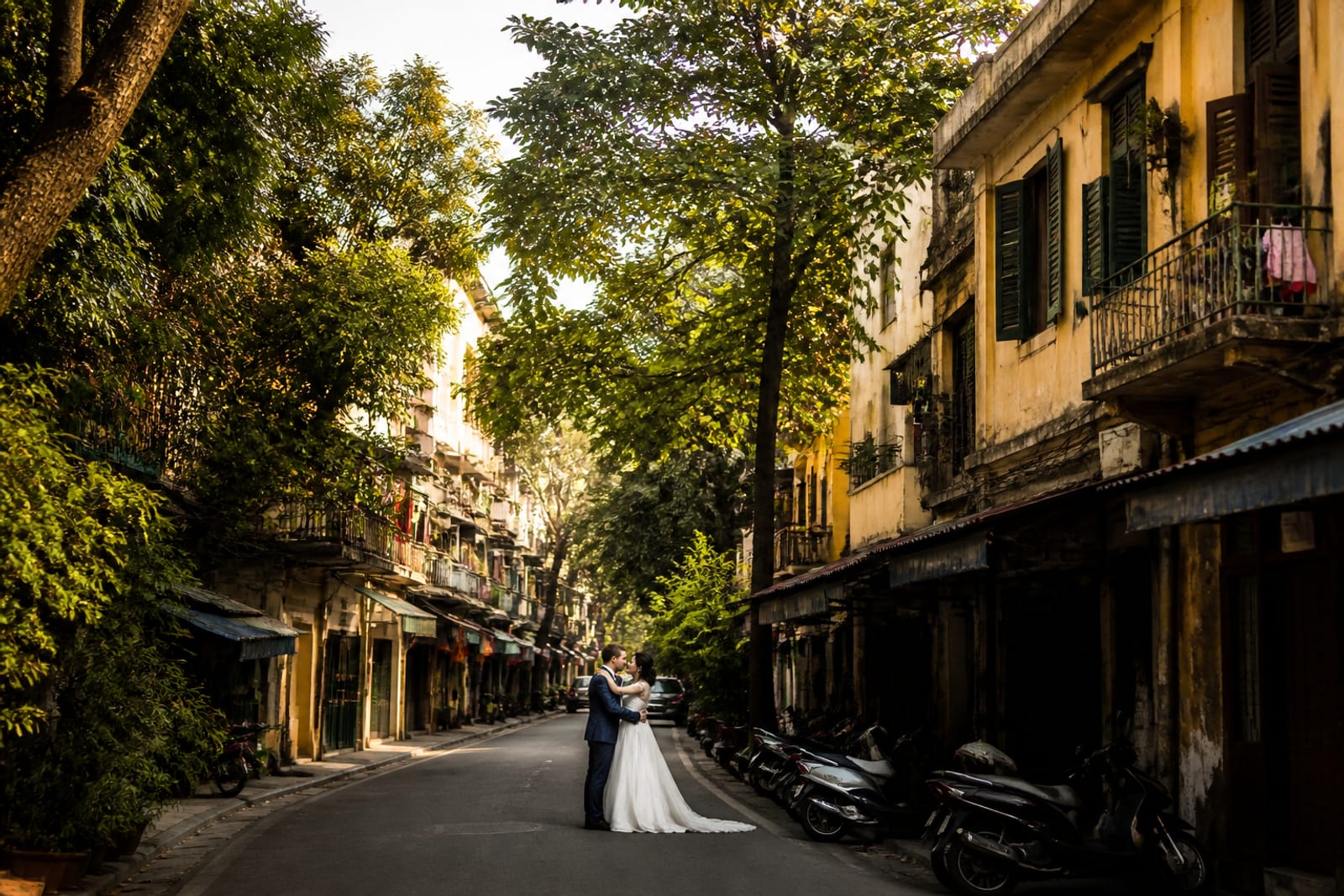
Walk west along Trang Tien Street (5–10 minutes) to St. Joseph Cathedral—a smaller, quieter colonial building with a front courtyard where you can move more freely and sit on benches without restriction. Then loop north toward Hoan Kiem Lake's western shore, where autumn foliage (October–November) frames soft golden-hour shots. If Train Street access is open (check locally—rules change), a short drive east adds an edgy, industrial mood. Combining Opera House (15 min), Cathedral (15 min), lake walk (15 min) and a café stop gives you a 90-minute session with varied lighting and backdrops. Avoid weekend evenings when Hoan Kiem's pedestrian-only zone floods with families.
Should you hire a photographer who specializes in the Opera House?
Choose a photographer who has shot there before and knows security, timing and light windows—not because it's their specialty (it shouldn't be), but because they'll maximize your 20 minutes and have backup locations ready if weather or crowds close you out. Cáo Studio – Makeup & Photoshoot builds sessions around multiple Hanoi venues, positioning Opera House as one stop within a larger narrative. Ask your photographer:
- How many minutes do you typically spend at Opera House?
- What's your backup plan if security restricts access that day?
- Which 2–3 nearby locations do you pair it with?
- Do you handle outfit changes, or do I need a private space?
If their answer is "we do a full shoot there," walk away—they're either inexperienced or overselling a landmark's limitations.
What outfit actually works at Opera House?
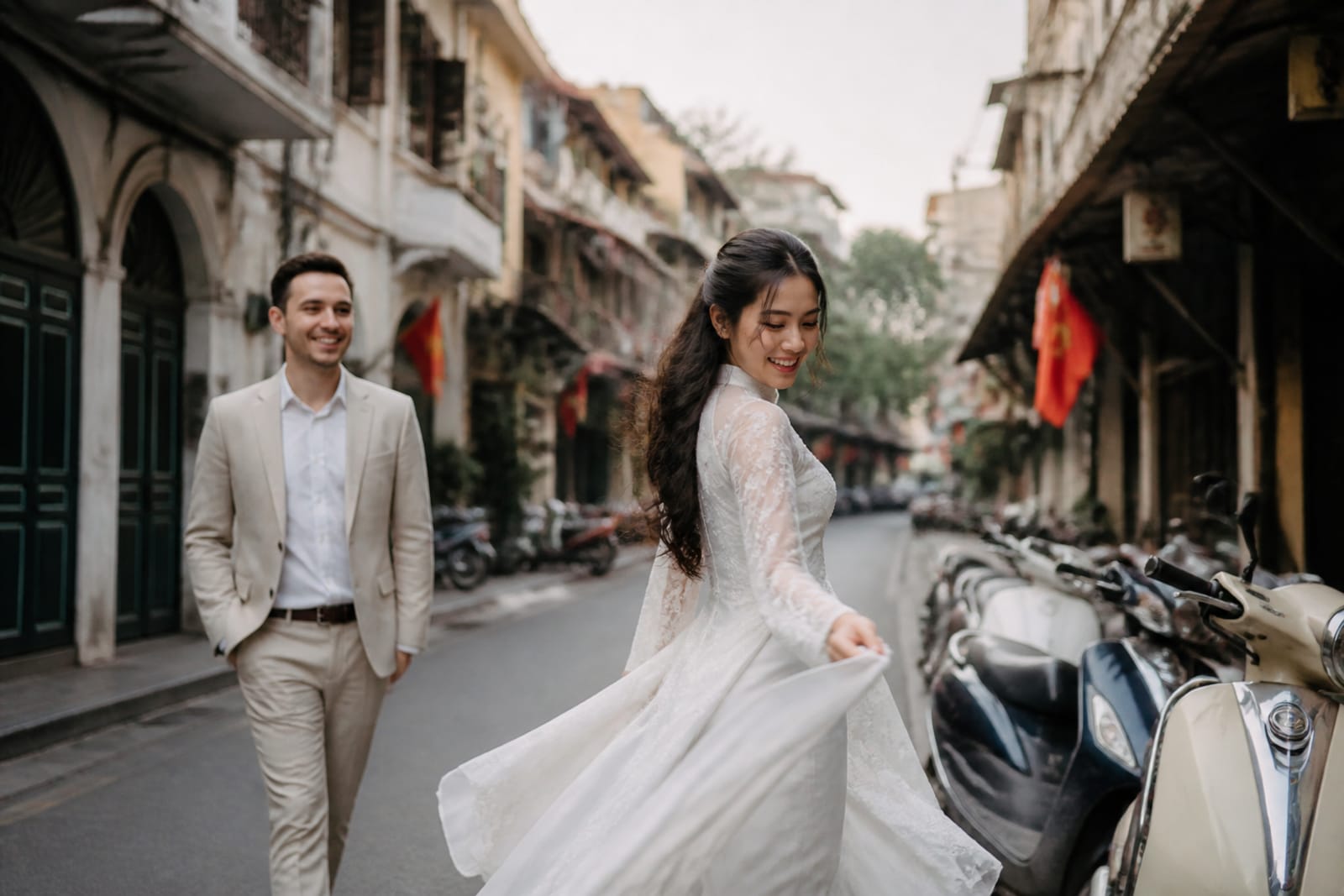
An ao dai is ideal: it moves gracefully on the steps, the fabric photographs well in soft light, and it's formal enough for a wedding album without being as unwieldy as a Western wedding dress. If you're wearing a wedding dress, choose a A-line or tea-length style with minimal train—ballgowns jam on narrow steps and look cramped in photos. Grooms in suits work well. Avoid strapless or backless dresses (exposed shoulders catch harsh midday shadows); long sleeves or structured backs photograph better. Bring a light shawl or jacket for early morning (December–February can be 10–15°C) and to cover up if security is strict about formal dress codes.
What to check before you book
- Confirm access with your photographer. Call or WhatsApp to ask if Opera House access is currently open for pre-wedding shoots and whether any permits are needed.
- Book during soft-light windows. Request a 6–8 a.m. or 4–6 p.m. session in October–November; avoid midday and May–September.
- Plan a multi-location session. Expect 15–20 minutes at Opera House + 60–90 minutes at 2–3 other spots (Cathedral, lake, street).
- Choose an outfit that moves freely. Ao dai, A-line dress, or suit—nothing with a long train or tight bodice.
- Bring weather backup. Even in autumn, carry a small umbrella; Hanoi's light rain and drizzle are common.
- Ask about edited timelines. Confirm how long you'll wait for edited photos and the number of final images included (details vary by package).
If Opera House restrictions feel too tight, consider a private studio venue or a mix of less-crowded Hanoi temples and lakeside parks for the same romantic, formal feel without the crowds or rules.
---
FAQ
Can we shoot inside Hanoi Opera House for pre-wedding photos?
No. Indoor photography at Opera House is prohibited. You may only use the front facade and entrance steps during daylight hours, with no tripods, reflectors or professional setup without advance written permission from management. Outdoor access is restricted to 15–20 minutes before security moves you on.
What's the best time of year to shoot at Opera House?
October–November (Hanoi's autumn) offers dry, mild weather and soft, consistent light all day. December–February is cool but often overcast and drizzly. March–April is mild but humid and hazy. May–September is too hot, humid and risky for heavy rain. Avoid Tet (late January–mid February) when many services close and crowds peak.
How long does a pre-wedding shoot at Opera House actually take?
Plan 15–20 minutes for Opera House alone. It's most effective as one stop within a 90-minute multi-location session that includes nearby spots like St. Joseph Cathedral, Hoan Kiem Lake or Train Street. You cannot build a full session around Opera House due to access and movement restrictions.
Do I need a wedding dress, or should I wear an ao dai?
Ao dai is strongly recommended—it moves freely on the steps and photographs beautifully. If you wear a wedding dress, choose A-line or tea-length with minimal train; ballgowns are impractical on steep, narrow steps. Long sleeves and structured backs photograph better than strapless styles in harsh midday light.
Should we skip Opera House and shoot elsewhere instead?
Not necessarily. Opera House is iconic and works well as one 15–20 minute stop in a longer session, especially in soft light. If you want a longer, more intimate shoot with fewer restrictions, private venues or multiple Hanoi temples and parks offer more creative freedom. Discuss your vision with your photographer—they'll advise whether Opera House fits your style and time.
How does Opera House compare to other Hanoi pre-wedding spots?
Opera House is formal and recognizable but restrictive. Hoan Kiem Lake offers longer narrative and seasonal foliage. Train Street (when open) is edgy and intimate. Temples (Tran Quoc, One Pillar) are spiritual and quieter. St. Joseph Cathedral is quieter and colonial. Each works best for different moods; multi-location sessions combine them for a full story. Ask your Cáo Studio photographer which mix suits your vision.
FAQ
Can we shoot inside Hanoi Opera House for pre-wedding photos?
No. Indoor photography at Opera House is prohibited. You may only use the front facade and entrance steps during daylight hours, with no tripods, reflectors or professional setup without advance written permission from management. Outdoor access is restricted to 15–20 minutes before security moves you on.
What's the best time of year to shoot at Opera House?
October–November (Hanoi's autumn) offers dry, mild weather and soft, consistent light all day. December–February is cool but often overcast and drizzly. March–April is mild but humid and hazy. May–September is too hot, humid and risky for heavy rain. Avoid Tet (late January–mid February) when many services close and crowds peak.
How long does a pre-wedding shoot at Opera House actually take?
Plan 15–20 minutes for Opera House alone. It's most effective as one stop within a 90-minute multi-location session that includes nearby spots like St. Joseph Cathedral, Hoan Kiem Lake or Train Street. You cannot build a full session around Opera House due to access and movement restrictions.
Do I need a wedding dress, or should I wear an ao dai?
Ao dai is strongly recommended—it moves freely on the steps and photographs beautifully. If you wear a wedding dress, choose A-line or tea-length with minimal train; ballgowns are impractical on steep, narrow steps. Long sleeves and structured backs photograph better than strapless styles in harsh midday light.
Should we skip Opera House and shoot elsewhere instead?
Not necessarily. Opera House is iconic and works well as one 15–20 minute stop in a longer session, especially in soft light. If you want a longer, more intimate shoot with fewer restrictions, private venues or multiple Hanoi temples and parks offer more creative freedom. Discuss your vision with your photographer—they'll advise whether Opera House fits your style and time.
How does Opera House compare to other Hanoi pre-wedding spots?
Opera House is formal and recognizable but restrictive. Hoan Kiem Lake offers longer narrative and seasonal foliage. Train Street (when open) is edgy and intimate. Temples (Tran Quoc, One Pillar) are spiritual and quieter. St. Joseph Cathedral is quieter and colonial. Each works best for different moods; multi-location sessions combine them for a full story. Ask your [Cáo Studio photographer](/hanoi) which mix suits your vision.
Ao dai, makeup, hair and a local photographer in Hanoi or Saigon — one WhatsApp message.