/pre-wedding-photoshoot
Hanoi Opera House wedding photos: best time of day and light
The Hanoi Opera House shoots best during golden hour (30–45 minutes before sunset), when warm, side-angled light wraps the cream limestone façade and softens shadows across the neoclassical columns. Autumn (October–November) and early spring (March–April) offer the clearest, coolest conditions; winter (December–February) brings overcast skies that flatten detail, while late spring and summer (May–September) generate harsh midday contrast and intense heat. A pre-wedding session at the Opera House typically runs 60–90 minutes and includes multiple angles: the front steps (for couple poses), the side archways (for intimate framing), and the surrounding plaza (for full-length motion shots). Cáo Studio – Makeup & Photoshoot positions you in advance, scouts light angles, and coordinates with your outfit (silk ao dai or Western dress) to maximize texture and color pop. What kills Opera House shoots: midday harsh light, crowds (especially weekends), restrictive security zones, and wearing dark colors that blend into shadows—avoid these by booking early morning (7–8 a.m.) or golden hour, choosing autumn, dressing in jewel tones or white, and confirming exact access zones on WhatsApp before the session.
The Hanoi Opera House is a colonial masterpiece that demands more than just showing up with a camera. Its symmetrical design, ornate details, and pale stone require light that flatters rather than flattens. Getting it right means understanding how sunlight moves across its surfaces and which seasons make that possible—without which, even a beautiful couple looks ordinary in the photos.
What makes golden hour the non-negotiable choice for Opera House light?
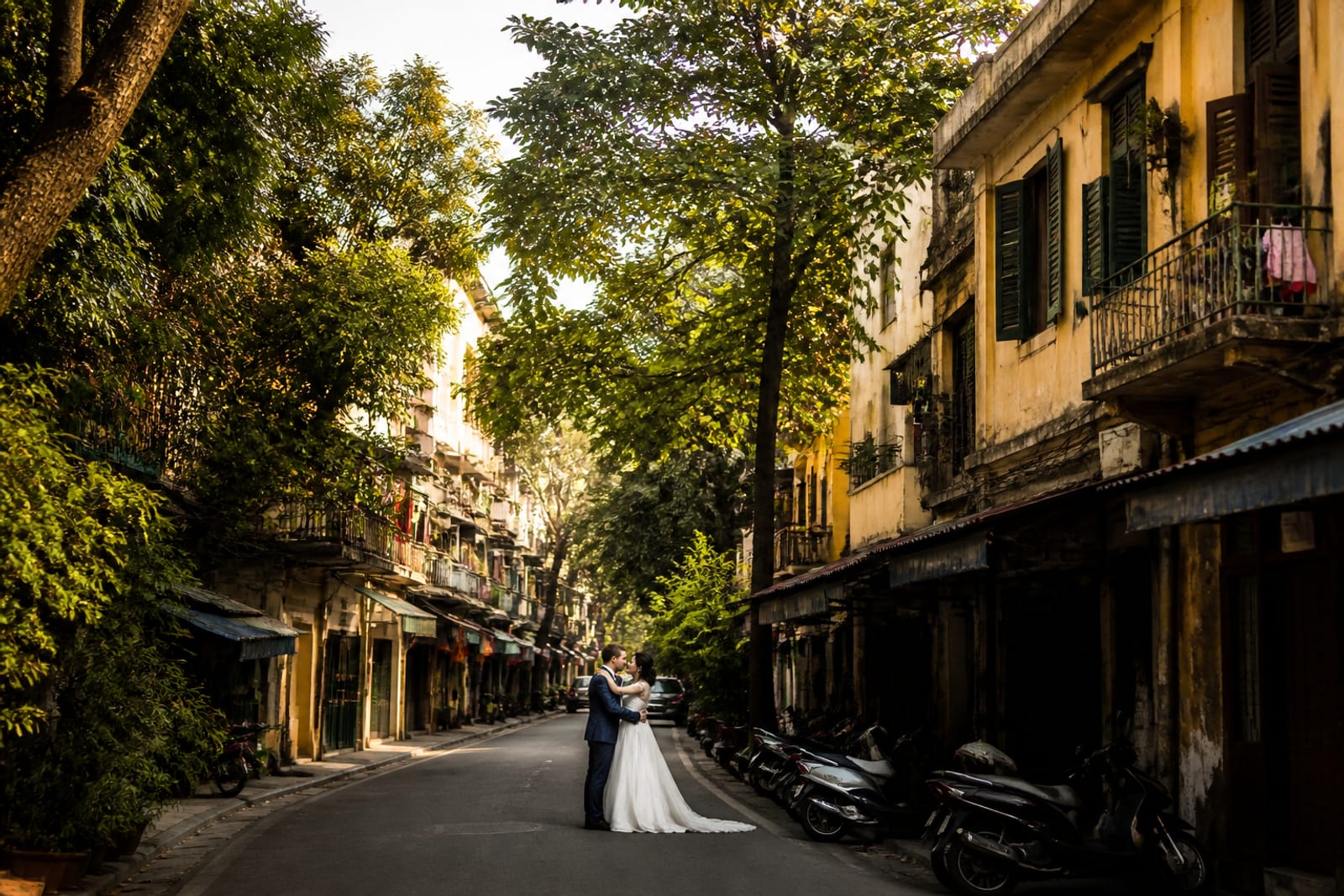
Golden hour—roughly 30–45 minutes before sunset—throws angled, warm light across the façade at a shallow angle that sculpts dimension into every architectural feature. The limestone glows cream-to-amber rather than white-washed flat. Shadows behind columns and in archways become rich definition, not black voids. Your skin tones (especially in an ao dai) catch warm undertones that feel romantic rather than clinical. Side-lit light wraps around your partner, separating you from the background and creating depth even in wide shots. At midday, direct overhead sun flattens the building into a two-dimensional card, casts harsh shadows under your eyes, and forces you to squint or tilt your face away—none of which suits editorial pre-wedding work. Early morning (7–8 a.m.) is a secondary option if you prefer softer, lower-angle light and empty streets; it works similarly to golden hour but feels cooler and less saturated.
📸 Book on WhatsApp — pre-wedding photoshoot
Which months and seasons actually deliver the light and conditions you need?
| Season | Light quality | Temperature & humidity | Crowds | Outfit fit | Best for |
|---|---|---|---|---|---|
| Oct–Nov (autumn) | Clear, soft, golden | 15–25°C, low humidity | Moderate weekdays, peak weekends | Silk, layers, ao dai drape | First choice: dry, mild, no haze |
| Mar–Apr (spring) | Soft but hazy; drizzle risk | 20–28°C, rising humidity | Light weekdays, busy weekends | Layers risky; silk breathes | Second choice: warm, occasional drizzle |
| Dec–Feb (winter) | Often overcast, grey | 10–20°C, cool | Low on weekdays | Heavy fabrics safe; color flattens | Avoid: flat light, chilly hands/lips |
| May–Sep (summer) | Harsh, hot, humidity sweat | 30–38°C, very high | Variable | Silk wrinkles fast; makeup melts | Avoid: heat exhaustion, makeup failure |
Autumn (October–November) is booked first because it offers the triple advantage of clear skies, gentle warmth, and zero haze—light sits exactly where you frame it. Spring (March–April) is livable but introduces drizzle risk and humidity that curls ao dai silk and deflates makeup within an hour. Winter delivers cool conditions but trades light quality for overcast grey that drains color from both building and outfit; it's viable only if you commit to rich jewel-tone dress or pure white to fight the flat backdrop. Summer is honestly hostile to pre-wedding shoots at the Opera House: the heat forces you to rush (makeup and ao dai fabric both suffer), midday light is at its worst, and the afternoon downpours in May–September can cancel outdoor sessions entirely.
Why does outfit color and fabric choice make or break Opera House photos?
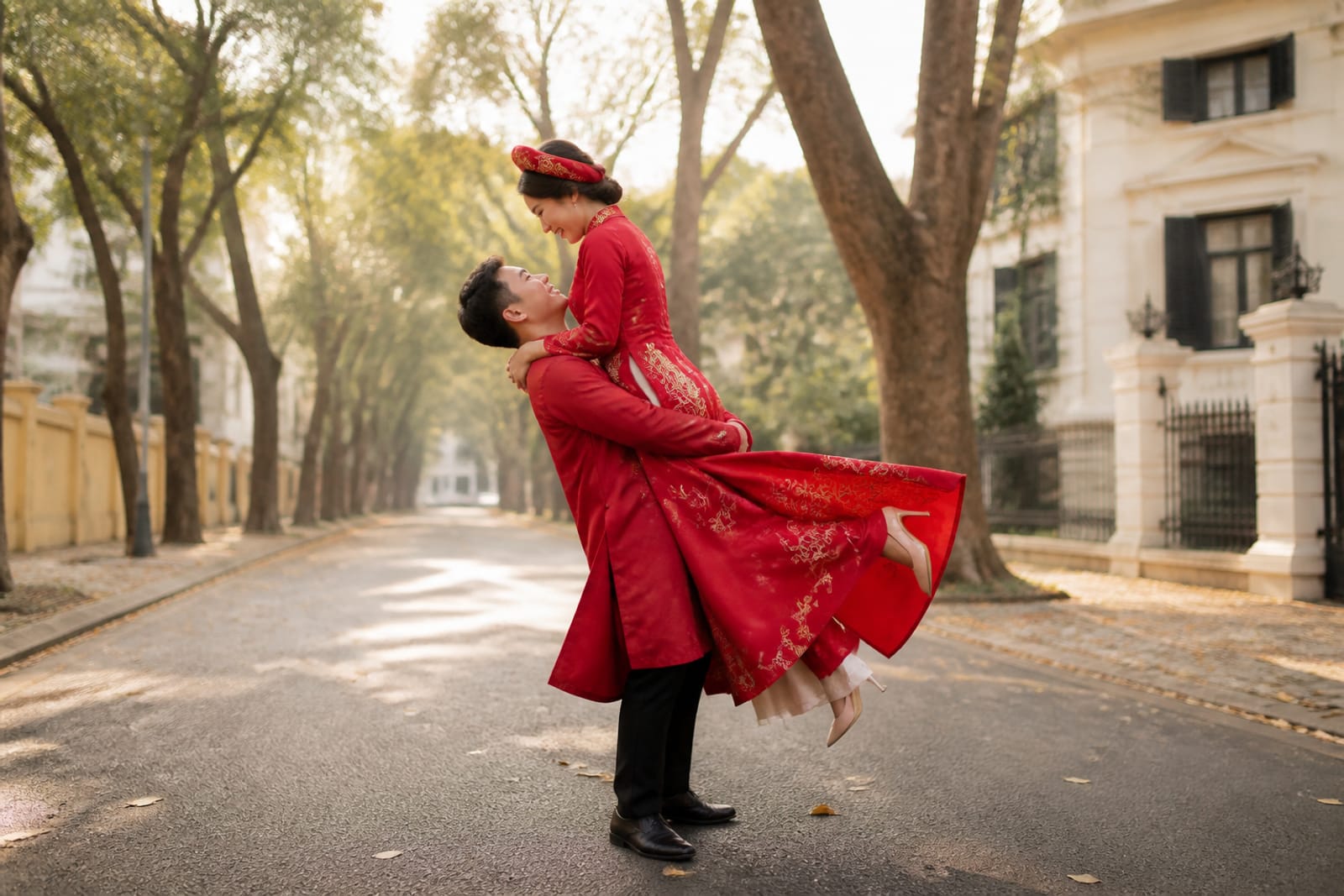
The Opera House's cream and grey stone is neutral; it neither enhances nor clashes with most colors, but light absorption matters more than hue. Dark reds, navy, and black blend into shadow zones and disappear in wide shots—your partner becomes a silhouette against the building. White and soft pastels can wash out under flat winter light, leaving them colorless and blending with the stone. Jewel tones (deep emerald, sapphire, ruby, burgundy, gold) pop against cream limestone under golden-hour warmth and hold color depth even in shadow. Silk ao dai fabric matters because humidity and heat cause wrinkles; autumn and early spring allow silk to stay smooth and catch light across its weave. Heavy brocade or structured cotton holds shape better in heat but reads as stiff and formal—correct for some couples, not for romantic pre-wedding mood. If you rent an ao dai, confirm the fabric and color with the studio when you book; if you wear a Western wedding dress, ensure it's structured enough to photograph crisply (flowing chiffon can blur in motion, tulle catches and holds moisture) and doesn't disappear into the stone (ivory or cream risks merging with the façade—opt for bright white or champagne).
How does security and crowd access shape your actual shooting experience?
The Opera House sits in central Hanoi's Hoan Kiem district, surrounded by pedestrian zones, government buildings, and tourism traffic. Access rules shift: sometimes the front steps are open for tourists; sometimes security restricts shooting to the plaza perimeter; occasionally (during state events or routine security updates) even external photography gets flagged. A session that seemed perfect at planning can hit a wall when you arrive. Weekends see 10–15 times the foot traffic of weekday mornings—if your shots include uncluttered backgrounds or couple-only framings, a weekday early morning (7–8 a.m., before office workers arrive) or golden hour (when tourists are seated at nearby cafés, not clustered on the steps) cuts crowd interference by 70%. The team at Cáo Studio – Makeup & Photoshoot books sessions after confirming current access via WhatsApp—never assume the access policy from last month still holds. If your date is within two weeks of a national holiday or major event, message the studio to check for restrictions.
What does a typical Opera House pre-wedding session actually include, step by step?
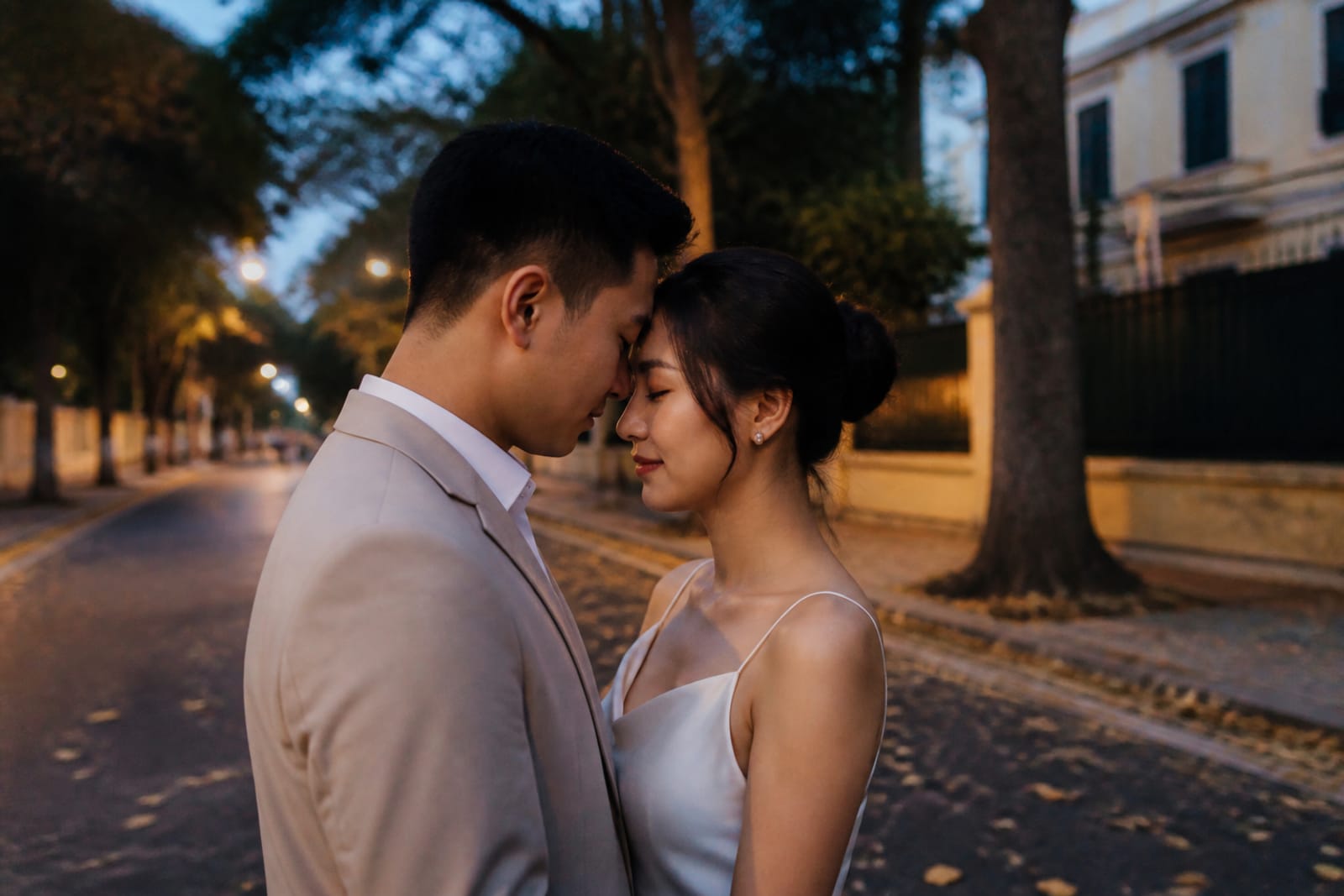
A pre-wedding photoshoot at the Opera House typically runs 60–90 minutes and cycles through at least three location zones: the front façade (wide couple poses, architectural framing, motion walks), the side archways and columns (intimate two-shot framing, close details of ao dai or dress), and the surrounding plaza (full-body movement, connection shots, detail work on jewelry or shoes). Your makeup and hair should arrive camera-ready 15–30 minutes before the light window opens—if you're booking the studio's makeup service, confirm the exact timing on WhatsApp because it determines whether the artist works on-site, at your hotel, or meets you at the Opera House. Poses shift from traditional (standing facing the building, formal hand placement) to editorial (walking toward camera, candid laughter, profile shots catching side-lit detail). The photographer scouts light angles and background clutter as you arrive, then directs you through 4–5 pose variations per zone. What doesn't typically happen: long waits for light (if the season and time are right, the shoot proceeds on schedule), outfit changes mid-session (most couples bring one outfit per zone; swaps burn 10–15 minutes and risk missing the optimal light window), or extended retakes (the photographer's job is to coach poses that work on the first or second attempt, not to shoot dozens of frames and pick one).
What are the most common mistakes couples make—and how do you dodge them?
Booking midday or winter and hoping for the best. The light doesn't change because you hope; it changes because the sun moves and the season progresses. If golden hour or autumn aren't available, either shift your date or accept flatter, less dramatic results. Ask the studio upfront: "What light quality should I expect on this date and time?" If the answer is vague, reschedule.
Wearing dark or shapeless outfits. A black suit and dark ao dai merge into a silhouette; light can't sculpt form or texture. If you're set on dark colors, ensure the fabric has visible sheen or pattern (embroidery, beading) so light registers it. Lightweight fabrics that move (silk, chiffon) read better than stiff or opaque ones.
Showing up without breakfast or hydration. You'll spend 60–90 minutes under natural light (not always shaded) in October–April (cool but clear) or March–April (warm and humid). Dehydration makes you pale and stiff; hunger makes you irritable and less present in poses. Eat and drink water at least 30 minutes before the session; avoid caffeine (jitters) and large meals (sluggishness).
Ignoring the crowd or access-zone situation. Weekends at the Opera House can mean 50+ tourists in your wide shots. Early morning (7–8 a.m.) or weekdays solve this; if your schedule forces a weekend golden-hour session, book it and ask the team to scout clear angles in advance, not hoping the crowd clears.
Not coordinating outfit details with the photographer. Jewelry, shoes, ao dai undershirt color, and accessories should be flagged in your WhatsApp conversation before the session. The photographer positions light based partly on what they expect to see; surprises (like a metallic belt that catches light unexpectedly or white undergarments visible through silk) can shift the framing last-minute.
---
Before you book: a pre-shoot checklist
- Date and time locked: Golden hour or early morning; autumn (Oct–Nov) or spring (Mar–Apr) if possible. Ask the studio on WhatsApp: "What is the exact sunset time on [date], and when should we plan to start?"
- Outfit and fabric confirmed: Jewel tones or white/ivory; silk or brocade ao dai that's been steamed; Western dress that's structured and bright enough to stand out from the stone. Send photos of your ao dai or dress to the studio for feedback.
- Makeup and hair timing settled: Confirm whether you're using the studio's on-site makeup service or arriving camera-ready. If on-site, agree on the meeting point and time.
- Access zones verified: Message the studio within one week of your shoot date: "Can you confirm the current security access for the Opera House front and side archways?" This avoids surprises.
- Backup plan discussed: If weather or access issues arise on the day, what's the contingency? (Alternative time, alternative location like Hoan Kiem Lake, rescheduled date?) Clarify this on WhatsApp before you commit.
- Number of outfit changes and locations confirmed: Clarify with the studio whether your session includes one outfit in one zone, multiple zones with one outfit, or outfit swaps. This shapes how time is spent.
---
Book on WhatsApp — pre-wedding & elopement | Explore the full lookbook | Check FAQ
FAQ
Can we shoot at the Opera House in summer, or is it completely ruled out?
Summer (May–September) is technically possible but comes with serious tradeoffs: heat causes makeup melt and ao dai wrinkles within 30–45 minutes, midday light is harsh and unflattering (early morning or golden hour helps but humidity still lingers), and afternoon downpours are common. If summer is your only option, book early morning (6:30–8 a.m.) to beat heat and humidity, wear breathable fabrics, and have the makeup artist bring powder and touch-up supplies. Ask the studio on WhatsApp if your summer date aligns with their experience.
What if we want traditional formal poses, not editorial movement shots?
Formal poses (standing, arranged hand placement, facing the camera) absolutely work at the Opera House and often look timeless against the neoclassical architecture. The light and season matter just as much; golden hour and autumn still make formal poses glow. Mention your preference when booking so the photographer prioritizes stillness over motion. Traditional poses typically take fewer frames to nail, so you might finish the session in 60 minutes rather than 90.
Do we need a permit to shoot at the Hanoi Opera House?
The Opera House is a public-facing historical landmark, and casual photography is generally permitted on the exterior plaza and steps. However, commercial photography (posed couples, professional equipment, longer sessions) sometimes requires coordination or unofficial clearance. Cáo Studio – Makeup & Photoshoot handles this via WhatsApp—they know current local practices and won't book you into a session that violates access. Always confirm access status with the studio one week before your shoot date.
Can we do a combination shoot—Opera House plus another Hanoi location?
Yes, many pre-wedding sessions pair the Opera House with a second spot like Hoan Kiem Lake (10-minute walk), the Old Quarter's narrow streets, or a nearby café. A combined session typically runs 120–150 minutes to cover two zones properly. Message the studio on WhatsApp with both locations and your time availability; they'll plan the route and light windows to suit both spots.
What if the weather forecast shows drizzle or clouds on our shoot date?
Light drizzle in March–April or October–November is often manageable—it softens harsh shadows and can actually look romantic in close shots. Heavy rain cancels outdoor work. If drizzle is forecast, confirm on WhatsApp a few days before: the team can evaluate whether the session proceeds as planned or shifts to an alternative date/location. Overcast skies (common in winter) won't ruin the session but will produce flatter light; if that's a concern, reschedule for autumn or spring when clouds are less persistent.
FAQ
Can we shoot at the Opera House in summer, or is it completely ruled out?
Summer (May–September) is technically possible but comes with serious tradeoffs: heat causes makeup melt and ao dai wrinkles within 30–45 minutes, midday light is harsh and unflattering (early morning or golden hour helps but humidity still lingers), and afternoon downpours are common. If summer is your only option, book early morning (6:30–8 a.m.) to beat heat and humidity, wear breathable fabrics, and have the makeup artist bring powder and touch-up supplies. Ask the studio on WhatsApp if your summer date aligns with their experience.
What if we want traditional formal poses, not editorial movement shots?
Formal poses (standing, arranged hand placement, facing the camera) absolutely work at the Opera House and often look timeless against the neoclassical architecture. The light and season matter just as much; golden hour and autumn still make formal poses glow. Mention your preference when booking so the photographer prioritizes stillness over motion. Traditional poses typically take fewer frames to nail, so you might finish the session in 60 minutes rather than 90.
Do we need a permit to shoot at the Hanoi Opera House?
The Opera House is a public-facing historical landmark, and casual photography is generally permitted on the exterior plaza and steps. However, commercial photography (posed couples, professional equipment, longer sessions) sometimes requires coordination or unofficial clearance. Cáo Studio – Makeup & Photoshoot handles this via WhatsApp—they know current local practices and won't book you into a session that violates access. Always confirm access status with the studio one week before your shoot date.
Can we do a combination shoot—Opera House plus another Hanoi location?
Yes, many [pre-wedding sessions](/pre-wedding-photoshoot) pair the Opera House with a second spot like Hoan Kiem Lake (10-minute walk), the Old Quarter's narrow streets, or a nearby café. A combined session typically runs 120–150 minutes to cover two zones properly. Message the studio on WhatsApp with both locations and your time availability; they'll plan the route and light windows to suit both spots.
What if the weather forecast shows drizzle or clouds on our shoot date?
Light drizzle in March–April or October–November is often manageable—it softens harsh shadows and can actually look romantic in close shots. Heavy rain cancels outdoor work. If drizzle is forecast, confirm on WhatsApp a few days before: the team can evaluate whether the session proceeds as planned or shifts to an alternative date/location. Overcast skies (common in winter) won't ruin the session but will produce flatter light; if that's a concern, reschedule for autumn or spring when clouds are less persistent.
Ao dai, makeup, hair and a local photographer in Hanoi or Saigon — one WhatsApp message.