lookbook
Hanoi Winter Photoshoot Outfits: Layers, Fabrics & Local Styling
Hanoi's winter photoshoot season is stunning: low humidity, soft golden-hour light, and fewer tourists clogging temple grounds. But the cold—typically 10–20°C (50–68°F) from November through February—catches unprepared travelers off-guard. You'll be standing still for 1–3 hours while a photographer positions you, adjusts angles, and waits for the light. Layering isn't just comfort; it's the difference between crisp, natural photos and shivering hunches that read on camera.
This guide walks you through every decision: what to wear under your ao dai, which outer layers work without stealing the shot, fabric picks that don't bulk up, and how to move between indoor and outdoor locations without looking disheveled. We've worked with hundreds of international clients through Hanoi winters at Cáo Studio, and these specifics come from what actually works.
🌸 See the lookbook | 📸 Book on WhatsApp — ao dai photoshoot
What should I wear under a winter ao dai for a photoshoot?
Ao dai sits loose and flowing; anything bulky underneath ruins the silhouette. Wear thermal leggings (140–180 gsm weight) in black or neutral grey—they compress against skin without visible panty lines or seams under silk. Pair them with a fitted long-sleeve base layer (merino wool or poly-blend) in a color matching your ao dai lining or skin tone, so any gap is invisible.
Skip regular jeans, cotton sweatpants, or thick winter tights. A visible waistband or seam will show through—especially in backlit or profile shots. One client wore regular thermal tights and a hoodie; the bulge around the hips showed in every frame.
Materials that work:
- Merino wool blends (warm, breathable, odor-resistant; ideal for 1–3 hour sessions)
- Nylon–spandex blends (compress well, smooth surface)
- Bamboo viscose (soft, temperature-regulating)
Avoid:
- Thick cable-knit sweaters (visible lumps under silk)
- Cotton + polyester loose knits (wrinkle easily, show texture)
- Overly stretchy materials (slip around during movement)
Test your base layers at home before the shoot. Squat, twist, and lean forward—if you see seams or bunching in a mirror, change it. The photographer won't pause for wardrobe fixes when the light is golden.
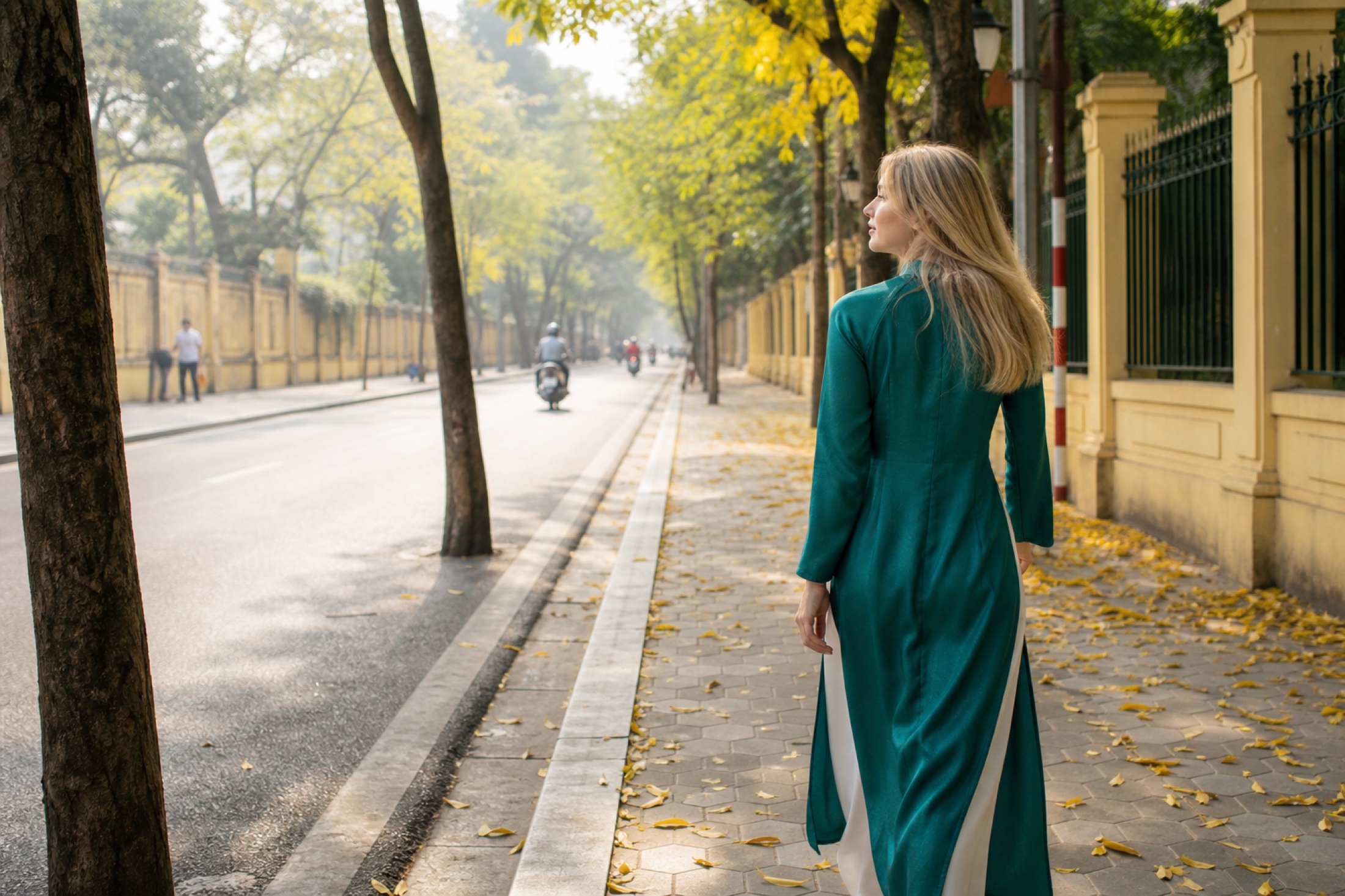
Which outer layers photograph well in Hanoi cold?
Outer layers can stay in photos—use them as design elements, not just warmth. The trick is choosing pieces that look intentional, not like you grabbed a coat on your way out.
Cardigans and kimonos (linen, silk, or cotton blends): Wear them open over the ao dai, sleeves loose or rolled. They add visual texture and break up the plain ao dai silhouette. In 15°C weather, a lightweight cardigan keeps you comfortable between takes without creasing your ao dai underneath.
Tailored blazers (cotton or wool blends): A structured blazer—cream, grey, or camel—photographs as an intentional styling choice. Wear it open; button it only in close-ups. Fits well in temple and architectural backgrounds.
Scarves and wraps: A lightweight silk scarf draped over shoulders or loosely tied adds movement and color without adding bulk. It's practical (tuck it around your neck if you get cold) and reads beautifully in wide shots.
What doesn't work:
- Puffy jackets (swallow the ao dai visually, hard to pose in)
- Dark hoodies under bright ao dai (harsh contrast, sloppy look)
- Oversized shawls (obscure the outfit's lines, wrinkle easily)
The rule: If you'd wear it with formal Western clothes to a dinner, it photographs. If you'd wear it to run errands, it doesn't.
How do fabric weight and texture affect winter photoshoot results?
Fabric choice directly impacts how you look on camera—weight, drape, and light-reflection all matter.
| Fabric Type | Weight (gsm) | What It Does | Best For | What to Watch |
|---|---|---|---|---|
| Silk ao dai | 150–200 | Drapes smoothly, catches light, reads luxe | Primary outfit | Wrinkles easily in wind; keep wrinkle spray handy |
| Linen cardigan | 130–180 | Loose weave, breathes, looks casual-chic | Layering | Wrinkles visibly; part of the aesthetic but plan for it |
| Merino wool base | 140–200 | Insulates without bulk, minimal pilling | Under-layer | Can itch if not blended with synthetic; test first |
| Cotton-blend pants | 180–250 | Smooth finish, doesn't cling, durable | Backup pants | Needs ironing before shoot; wrinkles show in close-ups |
| Silk scarf | 100–120 | Moves in wind, catches color, frames face | Accessory | Slips easily; use fashion pins if needed |
Weight matters because heavier fabrics hold folds and wrinkles longer. At 10°C with static from dry indoor-heated studios, a thin cotton blouse will cling to your thermal layer; merino wool prevents this. Lighter fabrics move better in breeze shots—a 120 gsm linen cardigan will billow naturally, while a 250 gsm cotton cardigan will hang stiff.
Texture affects light: Matte finishes (linen, cotton) absorb light and read sophisticated. Shiny finishes (silk, satin) reflect light and can blow out in bright sun. If your ao dai is shiny silk (most are), balance it with matte accessories—a linen wrap, cotton belt, or wool shawl.
Test this at home: photograph yourself in the same ao dai with different base layers and outer pieces. You'll see immediately which combinations flatter your frame on camera.
📸 Book on WhatsApp — ao dai photoshoot
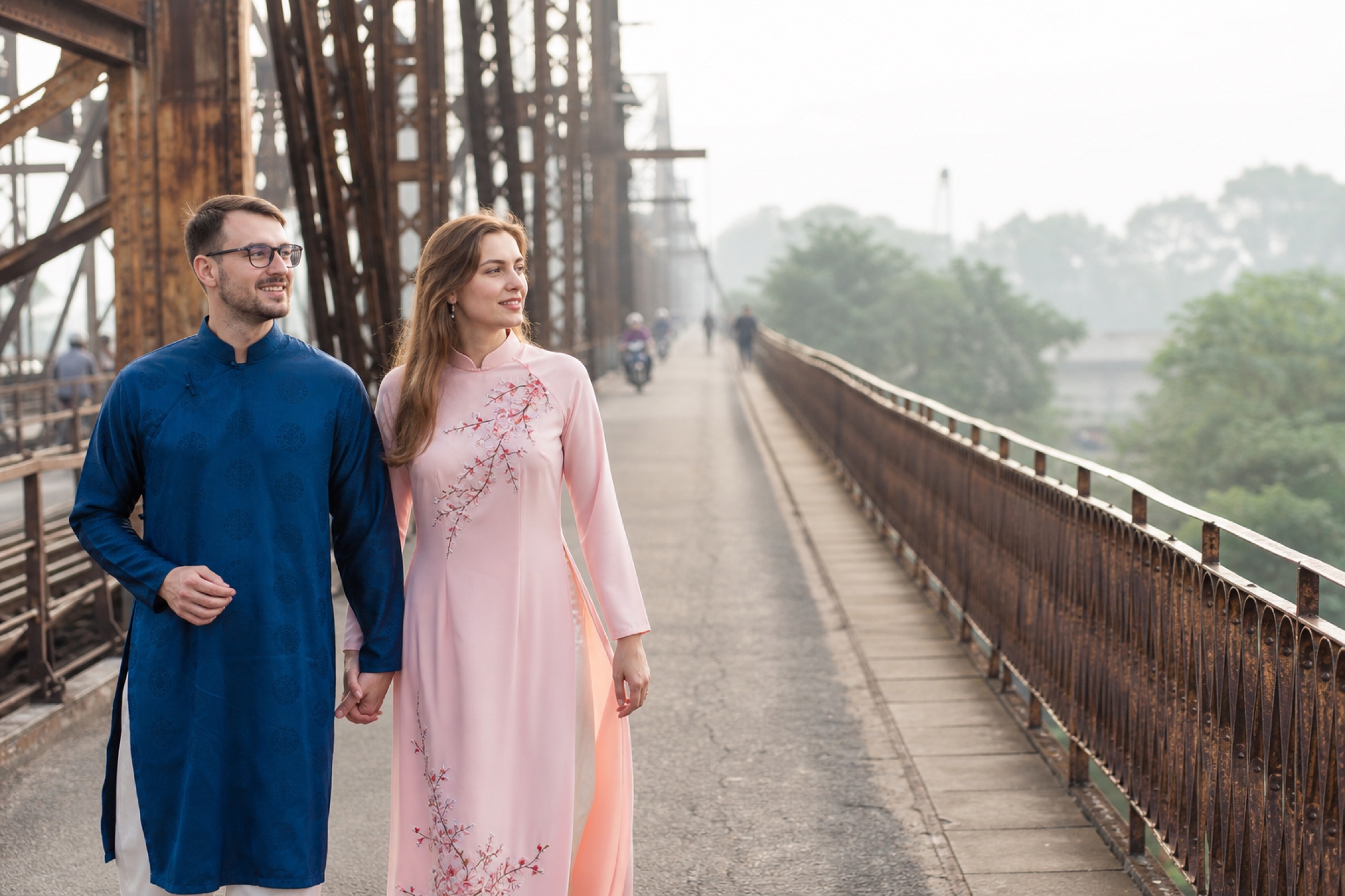
What's the step-by-step checklist for packing and fitting your winter photoshoot outfit?
1 week before:
- Lay out your primary outfit (ao dai + base layers + outer piece).
- Try it on indoors at room temperature; move around for 5 minutes.
- Check for visible seams, wrinkles, or bulk under the ao dai.
- Take a self-portrait photo. Does it look the way you imagined?
3 days before:
- Wash and dry base layers (they may shrink slightly; confirm fit).
- Steam or press your ao dai gently; avoid creasing the hem.
- If wearing a cardigan or wrap, press it lightly.
- Try the full outfit again. This time, sit, squat, and lean forward—movements you'll do during the shoot.
Day before:
- Pack in a dedicated bag: ao dai (folded or hung in a garment bag), base layers (rolled or folded), outer pieces, undergarments, backup socks, and a wrinkle spray.
- Include a portable steamer or wrinkle pen (compact, effective).
- Bring a shawl or lightweight sweater for between-location waits.
Morning of the shoot:
- Eat something before makeup; low blood sugar makes cold feel worse.
- Wear slip-on shoes you can remove easily (you'll change into photo shoes at the studio).
- Bring the backup outfit in your bag (you have time for a wardrobe change if the light or vibe calls for it).
- Confirm your shoot start time and weather forecast. If it's dropped below 8°C, ask your photographer if a second cardigan or scarf makes sense.
At the studio (arrival):
- Hang your ao dai where it's not touching walls (avoid creases).
- Put on your base layers first, then outer pieces, then ao dai.
- Walk around for 2 minutes in the studio to adjust.
- If anything feels tight, bulky, or uncomfortable, tell the photographer now—there's time to swap pieces.
Between locations:
- Keep your outer layer on during transitions, even if indoors. You'll warm up again when you stop moving.
- If wind messes your hair or outfit, the makeup and hair artist (or a studio assistant) will reset it.
How do Hanoi's seasonal weather conditions shape your outfit choices month by month?
Knowing what Hanoi delivers in each winter month helps you pick the right fabrics and layers—and tells you when to book.
October–November (20–25°C, still warm): Lighter layers work. Thin cotton base layer, no heavy cardigan needed. Silk ao dai without insulation underneath. Wind picks up mid-November; bring a lightweight scarf.
December–January (10–18°C, coldest period): Full layering season. Merino wool or thermal base layer mandatory. Silk ao dai + cardigan or blazer every shoot. Wind is moderate; scarves help but aren't essential. Light rain possible (10–15% chance); have a waterproof outer layer on standby.
February (15–22°C, warming): Transition month. Still cool in early morning; warms by midday. Light base layer + ao dai + optional cardigan. Peak light for photography (less haze than November–December).
Why timing matters: A December photoshoot might need full thermal insulation; a February shoot needs less. Some clients book February specifically for the warm-but-not-humid conditions. Visit our Hanoi studio page to check availability and confirm weather patterns for your dates.
Pro tip: If you're traveling to Hanoi and haven't booked yet, aim for late February or early November—the sweet spot for comfort and light.
---
What to check before you buy or pack winter photoshoot pieces
Fit check:
- Try base layers in a size smaller than usual; compression is the goal, but you should still move freely.
- Cardigans and blazers: button them to test the fit over your ao dai. Can you still raise your arms to shoulder height? You need that range.
- Scarves: tie them loosely; they'll shift during shooting.
Fabric check:
- Read care labels. If something needs dry cleaning, plan to wash it after the shoot, not before (wrinkles may set).
- Merino wool and silk blends can pill if you have sensitive skin or pack them tightly. Test on your arm first.
- Linen wrinkles are intentional and look good on camera, but know this going in.
Weather check:
- Look up Hanoi's forecast 3 days before the shoot. If it drops below 12°C, bring an additional thin sweater or thermal undershirt.
- If rain is predicted (>50% chance), swap your cardigan for a water-resistant linen or cotton-poly blend jacket.
Movement check:
- Practice your poses at home in full outfit: standing, sitting on a stool, leaning against a wall, walking slowly.
- If anything rides up, pinches, or makes you hunch, it's wrong. Change it.
---
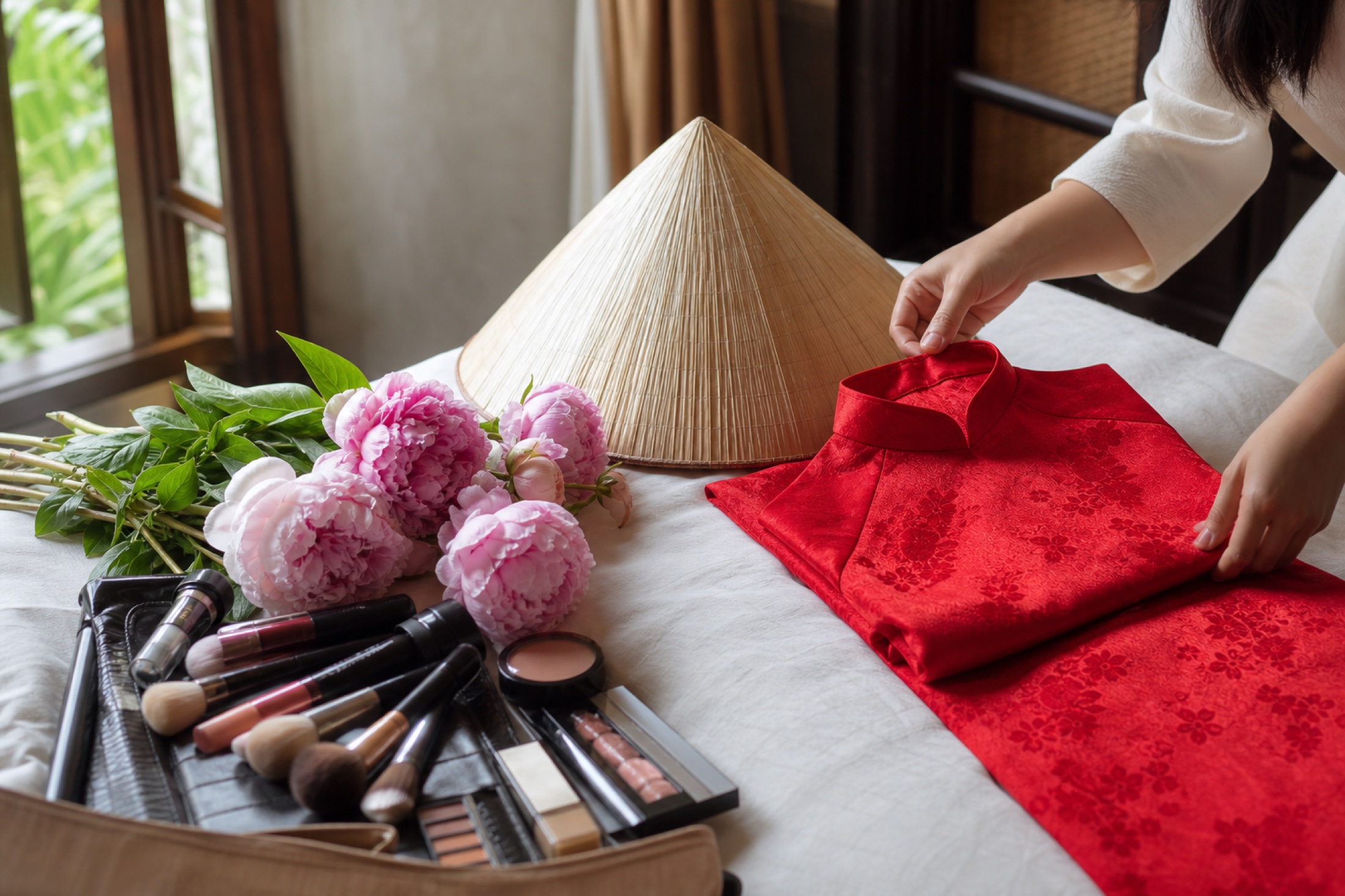
If you're planning a winter photoshoot in Hanoi, Cáo Studio offers ao dai photoshoots, couple and family sessions, and makeup and hair services at your hotel. We also work with clients on pre-wedding and elopement shoots and proposal packages. For styling advice specific to your session, message us on WhatsApp—we'll send recommendations based on your ao dai color, body type, and location choice.
For shoots outside Hanoi, we travel to Hoi An by appointment and operate a Saigon studio. Browse our full pricing and frequently asked questions to plan your session.
FAQ
Can I wear regular winter clothes instead of an ao dai for a Hanoi winter photoshoot?
Yes. Wear a fitted sweater, tailored pants or skirt, and a scarf or blazer. Avoid oversized pieces (they read sloppy) and very dark colors (less flattering in winter light). The same layering principles apply—no bulky jackets over your main outfit.
Will I look like I'm freezing in winter photoshoot images?
No, if you dress right. Shivering shows as tension in your shoulders and jaw. Proper insulation under your outer outfit keeps your core warm; you'll look relaxed, not rigid. Test your outfit at room temperature before the shoot so you feel confident.
What if my ao dai is sleeveless? Can I wear long sleeves under it?
Absolutely. A fitted long-sleeve base layer (merino wool or cotton-poly blend) in a color matching your ao dai's lining (usually white, cream, or a complementary tone) will be invisible in photos. Make sure it's snug—loose long sleeves will bunch at the wrists and show in close-ups.
Should I buy special winter photoshoot clothes, or use what I already own?
Use what you own if it fits the guidelines (smooth, fitted base layers; intentional outer pieces; wrinkle-free). If you need a new ao dai, consider ordering from a collection designed for cool-weather wear (lighter colors can look sharp against winter haze). Budget-conscious clients often borrow a cardigan or scarf from a hotel concierge or local shop.
How do I keep my base layers from showing wrinkles under the ao dai?
Choose smooth fabrics (nylon-spandex blends compress better than ribbed knits) and ensure a snug fit—wrinkles form when fabric is loose. Hang your ao dai immediately after the shoot and steam it gently to remove any creases transferred from your layers. A wrinkle spray during the session helps too.
FAQ
Can I wear regular winter clothes instead of an ao dai for a Hanoi winter photoshoot?
Yes. Wear a fitted sweater, tailored pants or skirt, and a scarf or blazer. Avoid oversized pieces (they read sloppy) and very dark colors (less flattering in winter light). The same layering principles apply—no bulky jackets over your main outfit.
Will I look like I'm freezing in winter photoshoot images?
No, if you dress right. Shivering shows as tension in your shoulders and jaw. Proper insulation under your outer outfit keeps your core warm; you'll look relaxed, not rigid. Test your outfit at room temperature before the shoot so you feel confident.
What if my ao dai is sleeveless? Can I wear long sleeves under it?
Absolutely. A fitted long-sleeve base layer (merino wool or cotton-poly blend) in a color matching your ao dai's lining (usually white, cream, or a complementary tone) will be invisible in photos. Make sure it's snug—loose long sleeves will bunch at the wrists and show in close-ups.
Should I buy special winter photoshoot clothes, or use what I already own?
Use what you own if it fits the guidelines (smooth, fitted base layers; intentional outer pieces; wrinkle-free). If you need a new ao dai, consider ordering from a collection designed for cool-weather wear (lighter colors can look sharp against winter haze). Budget-conscious clients often borrow a cardigan or scarf from a hotel concierge or local shop.
How do I keep my base layers from showing wrinkles under the ao dai?
Choose smooth fabrics (nylon-spandex blends compress better than ribbed knits) and ensure a snug fit—wrinkles form when fabric is loose. Hang your ao dai immediately after the shoot and steam it gently to remove any creases transferred from your layers. A wrinkle spray during the session helps too.
Ao dai, makeup, hair and a local photographer in Hanoi or Saigon — one WhatsApp message.