/pre-wedding-photoshoot
Hidden photo corners near Ba Son Bridge for couples
Ba Son Bridge's hidden photo corners—beneath the arch, along the east embankment, and at the quiet water's edge near Tran Hung Dao Street—work best for couples seeking intimate, moody frames without tourist congestion. Early light (6–8am) delivers soft, directional glow; evening (5–6pm) brings golden tones but crowds. Each spot suits different ao dai drape and movement; the arch demands tailored fits, while the embankment flatters flowing fabrics. Sessions run 60–90 minutes on-site; Cáo Studio – Makeup & Photoshoot books couple shoots across Hanoi, including this area, with full makeup and hair coordination. Avoid midday (11am–3pm) harsh shadows and weekend mornings when joggers peak. Check water levels in rainy season (May–Sep); access paths become slippery.
Ba Son Bridge—spanning the Red River in central Hanoi—sits on a photographer's shortlist because its industrial limestone arches, weathered stone, and stillness create frames that feel personal, not staged. Unlike the postcard chaos of Hoan Kiem Lake or the manicured paths of Tao Đàn Park, this area keeps its magic because most couples book studio backdrops or travel to Hoi An instead. The trade-off: you'll hunt quiet windows, manage variable light, and handle logistics alone—or partner with a team familiar with the microgeography.
Where exactly are the hidden corners, and which suits your style?
Ba Son Bridge divides into five workable zones, each with distinct character and light behaviour. The eastern arch underside—accessed from a maintenance gate near the Tran Hung Dao intersection—offers moody, framed compositions; limestone pillars close the frame and scatter diffused light, ideal for ao dai in jewel tones or pastels that read clearly against shadow. The west embankment path, running parallel to the river, stays quieter in early morning and catches warm, directional light by 7–8am; best for couples in lighter fabrics who want movement and drape. The water's edge platform (south side, near the old ferry slip) floods during heavy rain but delivers reflective, mirror-like frames during dry season (Dec–Feb, mid-Aug) when the river runs low and calm. The north stairs and upper path (leading to Tran Hung Dao) remain in harsh, direct sun until 4pm but work for high-contrast, architectural shots framing the city beyond. The defunct railway spur—a narrow stone track jutting into a quiet cove east of the main arch—stays shadowed and offers the most intimate, hidden aesthetic but demands careful footing and a photographer who can manage uneven terrain.
| Spot | Best for | Ideal light window | Outfit fit & drape | Access & safety |
|---|---|---|---|---|
| Arch underside | Moody, framed portrait frames | 6–8am, 5–6pm | Structured ao dai (jewel tones read clear) | Gate access; watch for maintenance workers |
| West embankment | Movement, flowing ao dai | 7–9am golden hour | Light, airy fabrics (drape catches backlight) | Open path; firm underfoot year-round |
| Water's edge platform | Reflective, calm frames | Dec–Feb, Jun–Aug (low water) | Any weight; reflection doubles the silhouette | Slippery Dec–Jan; avoid May–Sep |
| Upper stairs & path | Architecture, city backdrop | 2–6pm side-light | Contrasting colors (darker pop against urban grain) | Fully open; crowds peak 4–6pm weekends |
| Railway spur cove | Intimate, secluded aesthetic | 7–9am (shadows recede gradually) | Flowing, ethereal fabrics (shadows hide weight) | Uneven stone; narrow footing; quiet always |
Each zone demands different energy and pacing. The arch asks you to hold still and trust framing; the embankment invites walking and turning. The water's edge is meditative; the stairs are bold. The railway spur is a commitment—if you choose it, budget an extra 30 minutes for safe navigation and your photographer to scout angles.
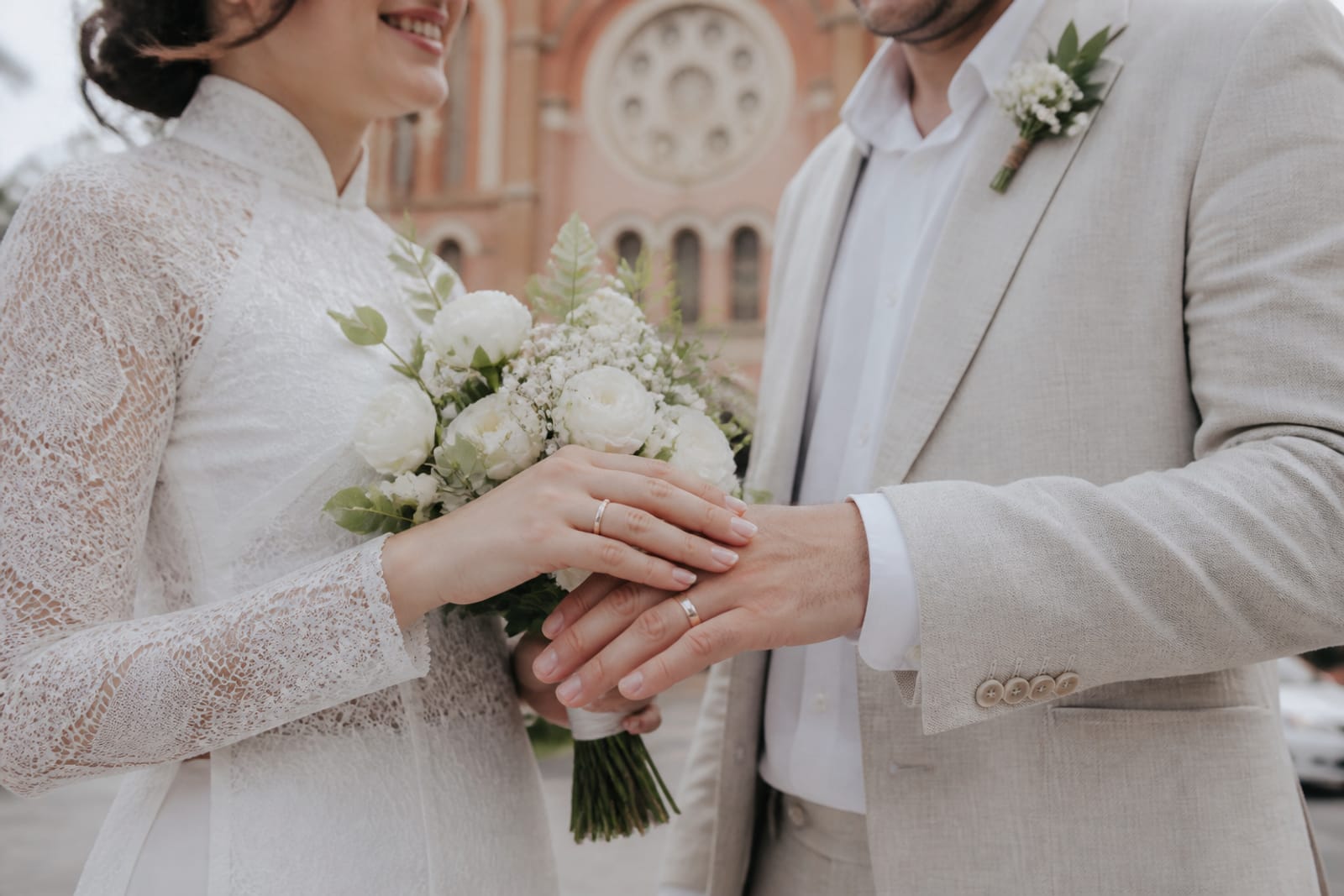
What time of year and time of day delivers the best light?
Light at Ba Son Bridge follows Hanoi's seasonal swing sharply. Winter (Dec–Feb) brings cool, grey, diffused light that softens edges and flattens harsh shadows—ideal for the arch and embankment, where you can shoot 8am–5pm without rescue missions into brutality. Spring (Mar–Apr) ushers haze and occasional rain; light becomes clearer mid-morning (8–11am) and late afternoon (4–6pm), but midday turns aggressive. Summer (May–Sep) brings humidity, afternoon thunderstorms (usually 2–5pm), and intense sun; only 6–8am and 5–7pm yield usable frames. Autumn (Sep–Nov) regains clarity; Sept–early Oct is hot but dry, with 7–9am and 5–7pm windows.
Time of day compounds the choice. Early morning (6–8am) delivers the most consistent, directional light across all seasons; shadows point long and gentle, skin tones warm, and you'll meet almost no other couples or joggers. The trade-off: early waking and cool air mean your makeup artist must arrive pre-dawn, and your ao dai's moisture-management layer (camisole or slip) becomes critical—sweat shows on silk by 8:30am in warmer months. Golden hour (30 minutes before sunset, 5–6:30pm depending on season) glows warm and flatters every skin tone, but crowds spike, wind picks up (ao dai drape becomes harder to manage), and you lose light fast—a 90-minute shoot compresses into 60 usable minutes. Midday (11am–3pm) almost never works; shadows under eyes, noses, and chins turn unflattering, and the arch's interior becomes a dark, contrasty mess.
Rainy season logistics: May–Sep sees afternoon storms (most common 2–5pm, sharpest Oct–Nov). Water levels rise, the embankment floods in places, and light turns flat and grey—workable, not beautiful. If you're set on this season, book an early morning shoot (6–8am) and accept that the water's edge platform will be off-limits. Hanoi's humidity peaks Jun–Aug; makeup requires frequent touch-ups and sweat-resistant powder, which Cáo Studio factors into makeup & hair coordination on-site.
Should you hire a local photographer or book a studio team?
This decision hinges on three factors: logistical comfort, outcome certainty, and total cost.
Hiring a local photographer solo works if you're confident navigating access (asking maintenance workers permission, reading tide/water levels, handling uneven stone), managing your own styling (hair, makeup touch-ups, outfit logistics), and directing the shoot's pacing. Advantages: you pay only for photography hours, and a Hanoi-based photographer knows Ba Son's microseasons and permit quirks. Disadvantages: you own all production—makeup wilts by hour two without a pro, ao dai hems drag and crease without someone stewarding them, and light windows close fast if your photographer isn't positioned pre-dawn. Most independent photographers quote by the hour; confirm what's included (edited files, retouches, delivery timeline) before committing.
Booking a full studio team (like Cáo Studio's couple photoshoot package) trades autonomy for reliability. The team arrives with makeup artist, hair specialist, a photographer who knows the bridge's quirks, and a stylist managing your ao dai. You don't drive, don't schedule, don't troubleshoot access. The photographer has shot this location dozens of times and knows which 5-minute window catches the arch's best reflection. Makeup refreshes between location changes. Outfit changes happen smoothly because someone's stewardship keeps folds and hems pristine. The cost factors include session length, number of outfits (each adds 15–20 minutes), and editing complexity (black-and-white moody frames take longer to grade than bright, saturated portraits). For exact inclusions and quote, ask on WhatsApp.
Hybrid approach: Book a makeup artist separately and hire a photographer. This splits cost but requires you to manage transitions and pacing. It works if you're detail-oriented and know the bridge already.
📸 Book on WhatsApp — couple photoshoot
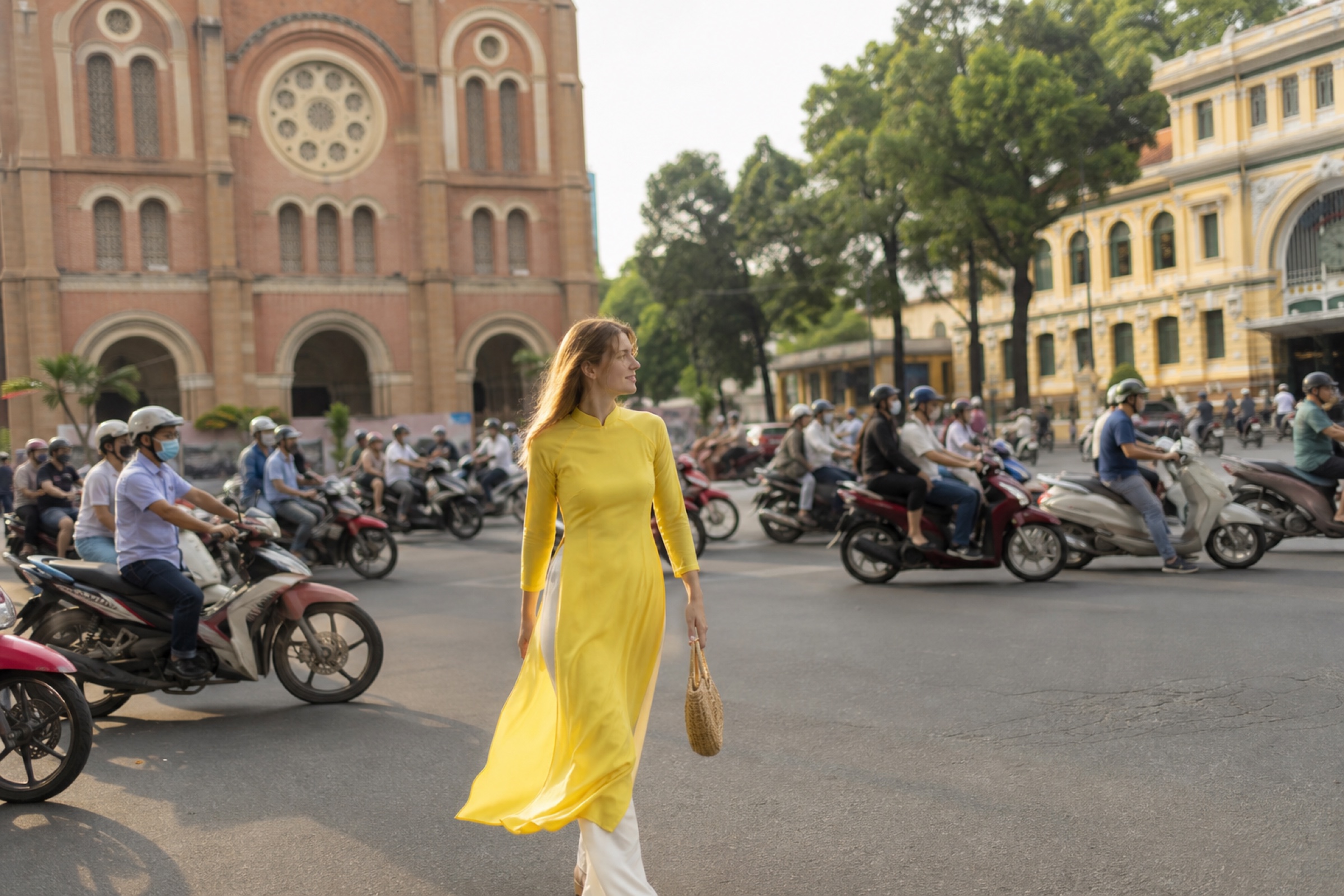
How does ao dai drape, fit, and fabric choice change by location and season?
Ao dai worn at Ba Son Bridge demands respect for two forces: water spray (mist from the river, especially Dec–Feb) and movement (walking narrow paths, posing against stone).
Fabric choice by season: Heavy silk (brocade, damask) looks regal in winter's cool light and resists moisture-wilt, but becomes unbearably hot and clings by May. Light, flowing silk or cotton-linen blends suit summer and autumn; they drape beautifully when walking the embankment, but show sweat and water marks by hour two unless your camisole (the underdress) is fitted and moisture-wicking. Synthetic fabrics (satin-like polyester) offer low-maintenance durability but photograph less richly than natural fibers in soft, early-morning light.
Fit by location:
- Arch underside (tight, framed shots): A tailored, snug ao dai reads better in shadow—loose, flowing fabric gets lost in darkness. Jewel tones (deep emerald, sapphire, burgundy) pop against limestone and shadow.
- Embankment (walking, moving frames): Looser ao dai with a longer train (or one worn with a detachable train) catches air and backlight beautifully. Pastels and whites photograph ethereal.
- Water's edge (reflection frames): Any silhouette works; focus on color saturation instead, because reflections mute and cool tones. A deep red or black ao dai creates a graphic double-image. Lighter colors lose definition in the mirror.
- Upper stairs & path (architectural backdrop): Contrast matters—pair a dark ao dai with the urban stone, or a bright one with muted surroundings. Fitted ao dai reads stronger against geometric lines.
- Railway spur (intimate, shadowed): A flowing, ethereal ao dai hides the uneven ground beneath, and the drape becomes the subject as much as your face.
Undergarments matter: a moisture-wicking, fitted camisole (not cotton; merino or synthetic blend) prevents show-through sweat and keeps you cool. If you're wearing a lighter-colored ao dai, a matching slip prevents shadow-through. Bring a small steamer or spray bottle if booking through a studio—most teams carry these for hour-two touch-ups.
Color choice by light: Early morning (cool, diffused light) flatters jewel tones and pastels equally. Golden hour (warm, directional) suits warm palettes (coral, peach, gold-embroidered ao dai); cool tones can look washed. Winter grey light is forgiving—almost every color works. Rainy-season flat light requires saturated colors to avoid a dull, grey-on-grey frame.
What logistical barriers exist, and how do you sidestep them?
Access and permissions: Ba Son Bridge sits on a public riverside promenade, but the arch underside and railway spur are semi-restricted. Maintenance workers and security occasionally patrol; a studio team with Hanoi roots has standing relationships and can work discreetly. If you're hiring independently, expect to ask permission politely and move quickly if asked. The upper path and embankment are fully open.
Water level and flooding: The Red River's level swings 2–4 meters annually. Dec–Feb is lowest; May–Sep climbs and occasionally floods. Check the water level the day before—if it's high, the embankment platform floods and the water's edge platform becomes inaccessible. A studio team monitors this; independent photographers should ask locals.
Weather unpredictability: Hanoi's humidity (May–Sep) and sudden afternoon storms (peak Jun–Aug and Oct–Nov) interrupt shoots. Early morning shoots sidestep afternoon storms, but you'll contend with cooler temps, foggier air, and slower makeup application in cold. Rainy-season shoots require a backup date built into your booking—most studios offer 48-hour reschedule windows.
Crowd and jogger traffic: Weekday early mornings (6–8am) are nearly empty. Weekends swell with joggers and couples after 7am. If solitude matters, book Tuesday–Thursday, 6:30–8am.
Uneven stone and safety: The railway spur and some embankment patches have crumbling edges and slippery surfaces, especially Dec–Feb (algae, mist). Wear stable, flat shoes during the shoot until the final frames. A photographer worth their fee will scout the exact footing and compose around hazards.
Makeup and hair durability: Early morning shoots demand a makeup artist on-site before dawn. Waterproof makeup, setting spray, and humidity-resistant hair products are non-negotiable May–Sep. Studio teams carry these; solo photographers rarely do.
💄 Makeup & hair at your hotel | 🌸 See the lookbook
What to check before you book—a real decision checklist
- Season & dates: Confirm the month and check Hanoi's forecast 5 days prior. If rainy season (May–Sep), agree on a reschedule window. Ask your photographer or studio if they shoot in heavy rain.
- Time window: Commit to early morning (6–8am) or golden hour (5–6:30pm). Avoid 11am–3pm. Agree on the exact arrival time for makeup setup (typically 30–60 min before shoot start).
- Location confirmation: Ask which of the five Ba Son zones your photographer typically uses. Request a walkthrough photo or video if unfamiliar. Check current water level on the official Hanoi city water station forecast.
- Styling & outfit count: Confirm how many outfit changes you want (each adds 15–30 min to the session). Agree on whether ao dai is rented, owned, or provided. Specify underdress and any alterations needed.
- Makeup & hair scope: If booking independently, hire a makeup artist separately—don't rely on a photographer to handle touch-ups. Ask about waterproof foundation, setting spray, and sweat management.
- Edited files & delivery: Request clarity on final image count, color grading style (moody and dark for arch shots, warm and golden for embankment), retouching scope, and delivery date. Black-and-white moody frames take longer than saturated color grading.
- Insurance & weather policy: Confirm the studio or photographer's reschedule policy if weather turns dangerous. Ask if your deposit is refundable or applies to a rebooked date.
- Communication & access: Confirm contact method (WhatsApp is best in Hanoi) and how the team will reach you on shoot day. Agree on a meeting point—most studios send a GPS pin the morning of.
- Solo photographer credentials: Ask for a portfolio of Ba Son Bridge frames specifically (not generic couple shoots). Request references or reviews mentioning this location.
For Cáo Studio – Makeup & Photoshoot's couple photoshoot or pre-wedding package, confirmed details come via WhatsApp after booking inquiry. Ask about session length, ao dai rental, number of edited frames, and delivery timeline to compare against your own hires.
📸 Book on WhatsApp — pre-wedding photoshoot
FAQ
Can we shoot at Ba Son Bridge in the rainy season (June–September)?
Yes, but expect flat light, higher water levels (embankment platform floods), and a shorter window (6–8am before afternoon storms peak). Waterproof makeup and a 48-hour reschedule agreement are essential. Early morning is safer than golden hour in this season.
How long does a couple photoshoot at Ba Son Bridge typically take?
Most couples plan 60–90 minutes on-site, plus 30–60 minutes for makeup and outfit changes before the shoot. If you're changing outfits twice (e.g., ao dai + Western dress), budget 2–2.5 hours total. Confirm exact session length when booking.
Do we need a permit to photograph at Ba Son Bridge?
The public embankment and upper path don't require permits. The arch underside and railway spur are semi-restricted; a local photographer or studio team typically works discreetly and briefly. For a full film crew or commercial shoot, check with Hanoi's culture and tourism authority.
What should we wear under the ao dai to stay cool and avoid sweat marks?
Wear a fitted, moisture-wicking camisole (merino blend or synthetic, not cotton). Choose a matching slip if wearing a light-colored ao dai to prevent shadow-through. Bring a small spray bottle and blotting papers for makeup refreshes. Studio teams carry these; independent photographers rarely do.
Can Cáo Studio shoot at Ba Son Bridge, and what's included?
Yes, Cáo Studio books couple and pre-wedding shoots across Hanoi, including Ba Son Bridge. For exact session inclusions (hours, outfit count, edited frames, makeup scope), message on WhatsApp. Confirm location-specific details like early arrival time and makeup setup logistics.
Should we hire a solo local photographer or book a full studio team?
Choose solo if you're comfortable with logistics and styling. Book a studio if you want hands-free coordination, on-site makeup and hair touch-ups, and a photographer familiar with Ba Son's exact angles. A studio costs more but removes production stress; a solo hire costs less but requires your active management.
FAQ
Can we shoot at Ba Son Bridge in the rainy season (June–September)?
Yes, but expect flat light, higher water levels (embankment platform floods), and a shorter window (6–8am before afternoon storms peak). Waterproof makeup and a 48-hour reschedule agreement are essential. Early morning is safer than golden hour in this season.
How long does a couple photoshoot at Ba Son Bridge typically take?
Most couples plan 60–90 minutes on-site, plus 30–60 minutes for makeup and outfit changes before the shoot. If you're changing outfits twice (e.g., ao dai + Western dress), budget 2–2.5 hours total. Confirm exact session length when booking.
Do we need a permit to photograph at Ba Son Bridge?
The public embankment and upper path don't require permits. The arch underside and railway spur are semi-restricted; a local photographer or studio team typically works discreetly and briefly. For a full film crew or commercial shoot, check with Hanoi's culture and tourism authority.
What should we wear under the ao dai to stay cool and avoid sweat marks?
Wear a fitted, moisture-wicking camisole (merino blend or synthetic, not cotton). Choose a matching slip if wearing a light-colored ao dai to prevent shadow-through. Bring a small spray bottle and blotting papers for makeup refreshes. Studio teams carry these; independent photographers rarely do.
Can Cáo Studio shoot at Ba Son Bridge, and what's included?
Yes, Cáo Studio books couple and pre-wedding shoots across Hanoi, including Ba Son Bridge. For exact session inclusions (hours, outfit count, edited frames, makeup scope), message on WhatsApp. Confirm location-specific details like early arrival time and makeup setup logistics.
Should we hire a solo local photographer or book a full studio team?
Choose solo if you're comfortable with logistics and styling. Book a studio if you want hands-free coordination, on-site makeup and hair touch-ups, and a photographer familiar with Ba Son's exact angles. A studio costs more but removes production stress; a solo hire costs less but requires your active management.
Ao dai, makeup, hair and a local photographer in Hanoi or Saigon — one WhatsApp message.