/pre-wedding-photoshoot
Hidden photo corners near Bai Dinh Pagoda for couples
Bai Dinh Pagoda sits in Ninh Binh's karst landscape and holds multiple photo zones: the main temple compound, the staircase to the upper shrine, garden pathways, and the surrounding limestone ridge. Light works best in early morning (6–8 a.m.) when mist softens shadows and the stone glows warm, or late afternoon (4–6 p.m.) for golden backlighting on the cliffs. Plan a 2–3 hour session to explore zones without rushing; wear comfortable shoes and layers because temple rules require covered shoulders and knees, and the stone steps are steep. Ninh Binh photographers specializing in couples' shoots know site logistics, local seasons, and can coordinate with temple staff. Cáo Studio – Makeup & Photoshoot operates in Hanoi, Ho Chi Minh City and Hoi An; for a Bai Dinh session, we recommend finding and vetting a local photographer familiar with the pagoda's best light and access times.
Bai Dinh Pagoda is one of Vietnam's largest temples and sits on a dramatic limestone hillside near Ninh Binh town. Its scale—carved chambers, vast courtyards, sweeping staircases and surrounding karst peaks—creates natural zones for couple photography without feeling staged. Unlike urban studios, every corner has depth: foreground (temple detail or garden plant), subject (you and your partner), and background (rock face or sky). Shooting here means working with the landscape, not against it. The trade-off is access: it's a working temple with visitor crowds, seasonal weather shifts, and strict dress codes. This guide walks you through location choices, when to go, what to wear under an áo dài, and how to hire a photographer who knows the site.
Which Bai Dinh zones work best for couple portraits?
The pagoda has four main photo areas. The outer garden (entry to main temple) features manicured paths, stone walls, and flowering plants—best in spring (Mar–May) when blossoms are full. Light is even in mid-morning; crowds are lighter before 10 a.m. The main temple courtyard has grand architecture and symmetry; shoot here in late afternoon when side-light rakes across stone and pillars cast dramatic shadows. The upper staircase (about 200 steps to the cliff shrine) offers height, perspective and isolation—fewer tourists climb this far, and the views back down the valley work as blurred backgrounds. Go early (before 8 a.m.) to avoid crowds and heat. The limestone ridge path behind the main temple gives unobstructed sky and rock formations; best Sep–Nov and Mar–May when the light is soft and the air is clear.
Each zone demands different outfit planning. The outer garden suits flowing áo dài; staircases suit simpler, fitted versions (wide sleeves catch on railings). The ridge is exposed—full sun mid-day burns skin; early morning or late afternoon is safer.
When is the light cleanest for couple shots at Bai Dinh?
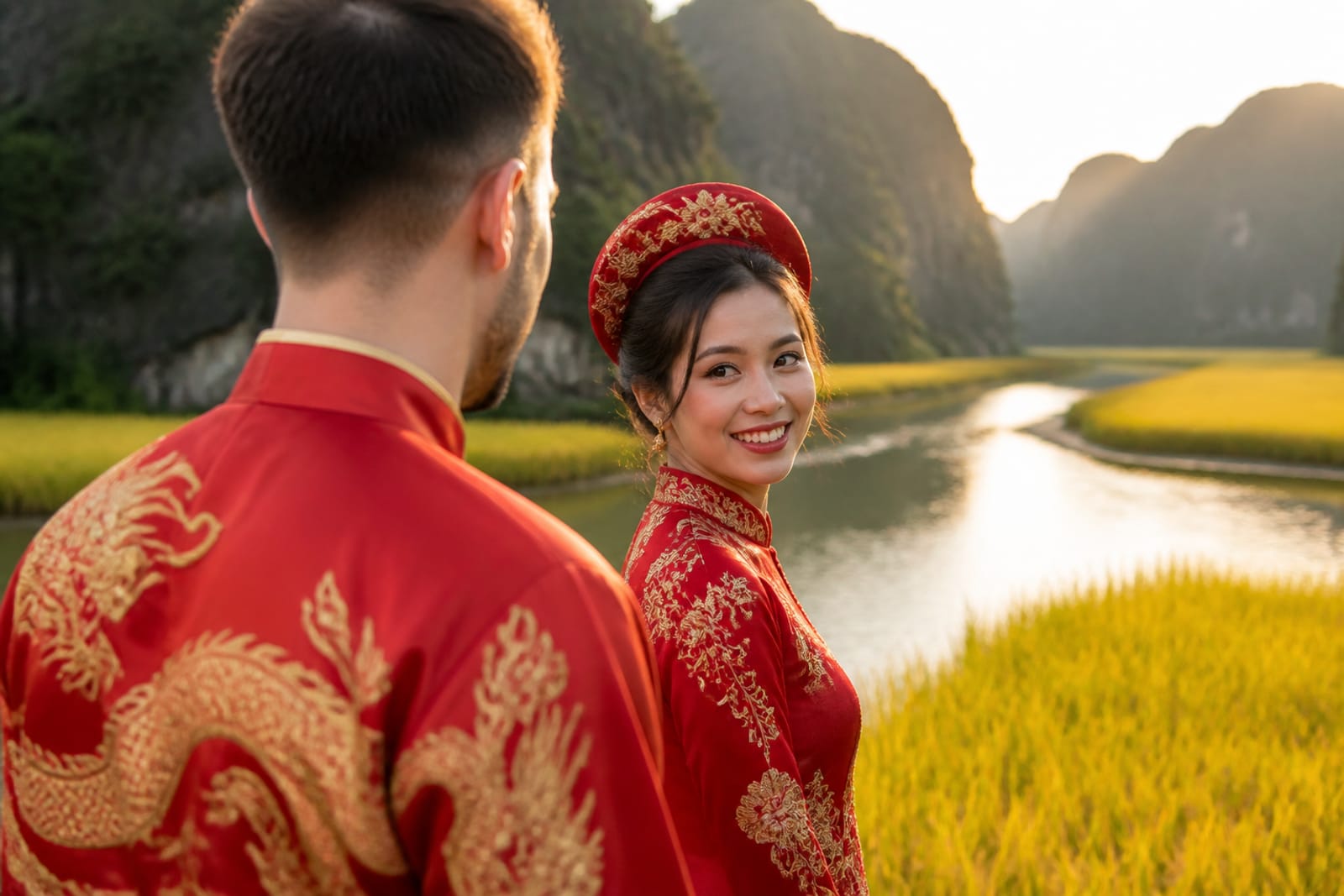
Early morning (6–8 a.m.) produces the cleanest light. Mist from the limestone and surrounding rice fields softens harsh shadows; skin tones are even; the stone glows pale and warm. Sessions here are quiet—temples open early for prayers, but international tourists arrive after 9 a.m. The downside: you'll need to start your day early and likely hire a photographer who opens early (not all do).
Late afternoon (4–6 p.m.) offers golden backlighting on cliffs and temple roofs. Stone turns amber; your silhouettes frame the landscape. This suits romanticized couple shots. The temple is busier, but the light lasts only 1.5–2 hours before the sun dips below the western ridge and creates dark, flat tones.
Midday (10 a.m.–3 p.m.) is worst: hard shadows under eaves, squinting eyes, blown-out sky. Avoid it unless you plan to shoot in shaded temple halls (which require faster lenses and cost in image clarity).
Season matters. Dec–Feb is cool and grey; mist lingers all morning, but the sky stays pale—good for moody, subtle tones but less dramatic color. Mar–May is warm, clear and crowded; light is sharp and the sky is vivid blue. Jun–Aug is hot with afternoon storms; morning is humid and misty, afternoon light is harsh. Sep–Nov is warm, dry and comfortable; light is clean; crowds thin after mid-October. Shoot Sep–Nov or Mar–May if you want comfortable conditions and good light.
What should you wear under an áo dài for stair climbing at temples?
Áo dài consists of a fitted tunic (áo) worn over wide-legged trousers (dài). At a temple, covered shoulders and knees are required—so the áo dài itself meets the code. Underneath, wear:
- Shorts or capris instead of full-length dài bottoms if you're climbing the 200+ steps to the upper shrine. The dài is voluminous and beautiful for standing or sitting shots, but the fabric bunches around ankles and catches on stone steps. Swap to shorter bottoms for stair zones, then return the dài for flat-ground portraits.
- A lightweight underslip (often included with rental áo dài) prevents the tunic from clinging in humidity and adds flow in photos.
- Soft, flat shoes with grip (ballet flats, canvas slip-ons, soft leather soles). Avoid heels—the steps are uneven and worn smooth. Shoes are removed indoors at shrine entrances; choose shoes you can slip off quickly.
- A thin long-sleeve undershirt if you're uncomfortable with bare arms or if you shoot in Dec–Feb when early mornings are cool.
Most Ninh Binh photographers and áo dài rental shops know these logistics. Ask your photographer or rental vendor to advise before you arrive.
How do you compare hiring a local Ninh Binh photographer vs. traveling from Hanoi?
| Option | Best for | Light & season factor | Why it works |
|---|---|---|---|
| Local Ninh Binh photographer | Couples on a tighter timeline; budget-conscious shoots | Knows Bai Dinh's seasonal mist, staircase shadows, crowd patterns year-round | No travel time lost; shoots sunrise/sunset reliably; knows temple staff & permits; can suggest backup indoor zones if weather turns |
| Photographer from Hanoi (1.5 hour drive) | Couples wanting a recognized studio aesthetic; makeup & hair coordination | Larger portfolio; may bring studio lighting for fill-in; flexible with weather reschedules | Travel cost & time; good if you want a specific visual style; can coordinate with nearby Hanoi vendors |
| Cáo Studio team from Hanoi or Hoi An | Couples wanting full-service: makeup, áo dài rental, album design, styled props | Studio has tested Ninh Binh light in all seasons; can advise on weather windows | NOT available at Bai Dinh; book Cáo Studio in Hanoi for pre-wedding prep, then hire local Ninh Binh photographer for the temple shoot |
Finding a local photographer:
- Search "Ninh Binh couple photographer" or "Chụp ảnh cặp đôi Ninh Bình" on Google or Facebook.
- Ask your hotel for referrals (they know photographers used by guests).
- Check portfolios for Bai Dinh shoots—how does the photographer use the temple's light and layers?
- Ask about their early-morning and late-afternoon availability.
- Confirm they know dress codes, temple access times, and can work with áo dài rental shops.
- Discuss weather backup dates and editing timeline.
Costs vary by photographer and season; ask for a quote via their contact channel.
What weather and outfit changes should you plan for?
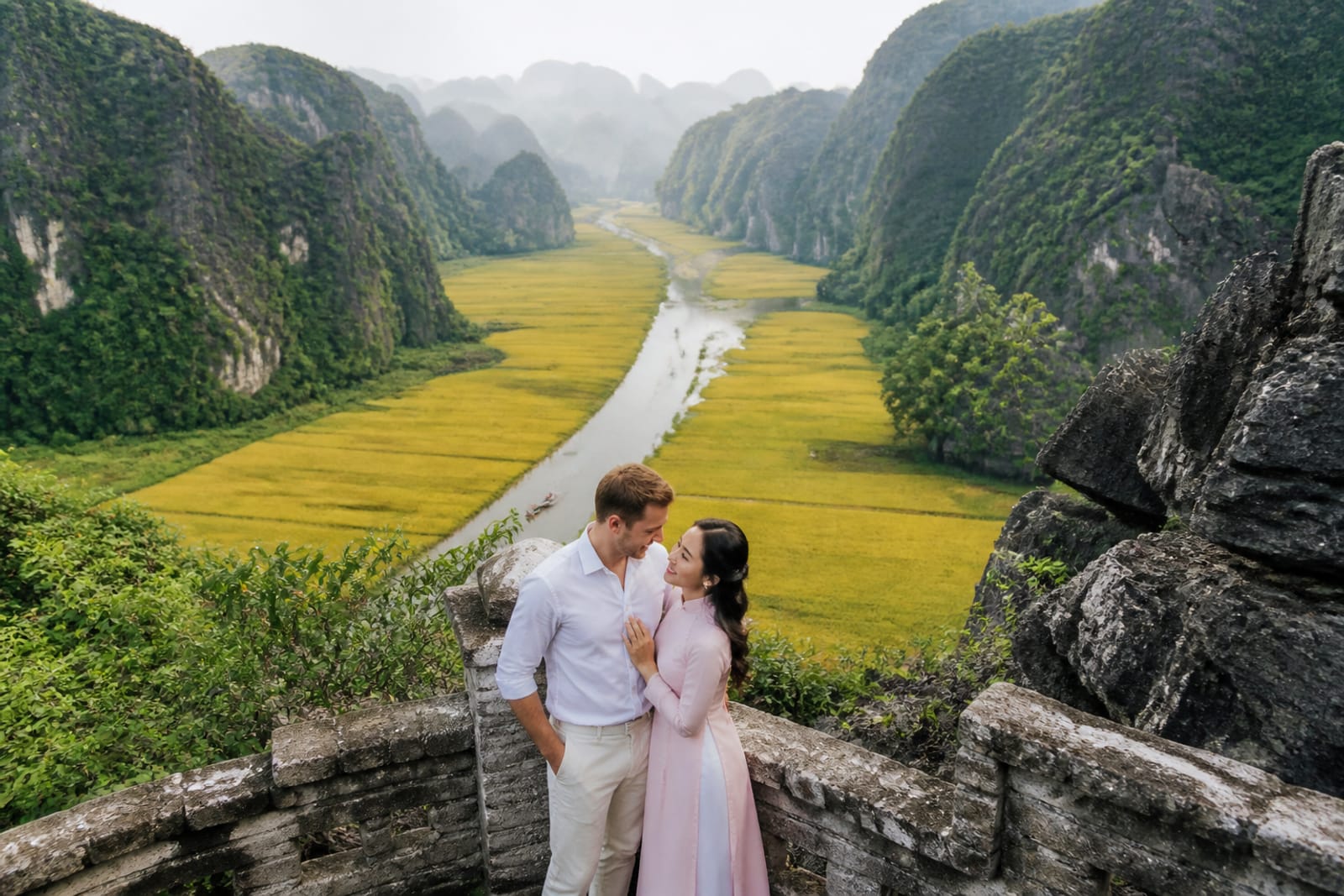
Ninh Binh's climate shifts dramatically. Sep–Nov (dry, warm) is ideal: áo dài in silk or cotton blend is comfortable; the light is even; rain risk is low. Dec–Feb (cool, grey, misty) requires layers: wear a thin undershirt under the áo dài or bring a shawl for non-temple shots; mist is beautiful but delays morning light by 30–60 minutes. Mar–May (warm, clear, crowded) suits light silk áo dài and early-morning shoots; by 10 a.m., heat and tourists dominate. Jun–Aug (hot, humid, stormy) is risky—afternoon clouds and rain can end shoots suddenly; if you shoot, start at 6 a.m. and finish by 10 a.m.
Plan outfit changes around zones. Bring a second áo dài or change bottoms for staircases. Rent locally (Ninh Binh has áo dài rental shops near the pagoda) rather than transporting a pristine version from Hanoi—local rentals are hardy and the rental vendor can advise on stair-safe alternatives. If you're shooting in Dec–Feb and the morning is grey, consider shooting the staircase and ridge (light is soft) and saving the sunny courtyard shots for an afternoon sun break—or reschedule one day if mist doesn't lift.
📸 Book on WhatsApp — ao dai photoshoot
What should you check before booking a Ninh Binh photographer?
Before committing:
- Portfolio specificity: Do they have Bai Dinh shoots? How do their images use temple light and stone texture? Generic "couple portrait" galleries don't guarantee temple experience.
- Timing flexibility: Can they shoot sunrise (5:30–8 a.m.) or golden hour (4:30–6 p.m.)? Some photographers prefer mid-morning; ask.
- Áo dài knowledge: Have they worked with rental áo dài? Do they know how fabric moves on stairs? Can they coach you on poses without tripping?
- Weather backup: What's their policy if it rains? Do they offer a reschedule date or partial refund?
- Editing & delivery: How many edited images? How long to receive digital files? Do they print or frame?
- Cost factors (never ask for price as a lump sum; ask about factors): Does the rate change for early-morning shoots? Do multiple outfits or zones cost more? Do they charge for travel time from town?
- Communication: Can they respond quickly to questions? Do they use WhatsApp, email or phone?
- Language: Do they speak English, or should you hire a translator for the shoot day?
For a full-service pre-wedding experience—makeup, áo dài rental, professional styling, album design—book Cáo Studio – Makeup & Photoshoot in Hanoi to prepare your look and curate outfits, then hire a local Ninh Binh photographer for the temple shoot. Cáo Studio can advise on áo dài styles that work for Bai Dinh's terrain and can create a wedding photo album or prints and frames from your local photographer's files afterward.
Bai Dinh Pagoda is worth the planning effort. Its scale, light and isolation (in off-peak hours) create images couples treasure for years. Start by vetting 2–3 local photographers, check their Bai Dinh portfolio work, confirm early-morning availability, and plan your season around Sep–Nov or Mar–May light. With the right photographer and outfit prep, you'll walk away with images that feel both romantic and genuinely you.
---
Related services
Explore couple and family photoshoots at Cáo Studio's Hanoi and Ho Chi Minh City locations for pre-wedding prep and couple portraits in urban settings. Read our pre-wedding photoshoot guide for timing, outfit choices and planning across Vietnam. Consider ao dai photoshoots for a second day of styled áo dài portraits. For makeup and hair on the day of your Ninh Binh shoot, book hotel makeup & hair services in Ninh Binh town before you travel to the pagoda.
FAQ
Can Cáo Studio – Makeup & Photoshoot shoot at Bai Dinh Pagoda?
Cáo Studio operates in Hanoi, Ho Chi Minh City and Hoi An. Bai Dinh is in Ninh Binh—outside our service area. We recommend hiring a local Ninh Binh photographer familiar with the temple's light and layout. We can help you prepare with makeup, áo dài styling and pre-wedding portraits in Hanoi before your Ninh Binh trip.
What's the best time of year to shoot at Bai Dinh for couples?
September–November and March–May offer the cleanest light, comfortable warmth and lower humidity. December–February is cool and misty (beautiful but grey); June–August is hot, humid and prone to afternoon storms. Avoid peak tourist season (Lunar New Year, late January–mid-February).
Do I need a permit to photograph at Bai Dinh Pagoda?
Bai Dinh is open to visitors; personal photography is allowed. Commercial or professional photo shoots may require advance permission from temple management. Ask your photographer to confirm; many local photographers have existing relationships with the temple staff.
How many hours should a Bai Dinh couple shoot take?
Plan 2–3 hours to explore the main zones (outer garden, courtyard, staircase, ridge) without rushing. Sunrise shoots (6–8 a.m.) are faster because fewer tourists are around; golden-hour shoots (4–6 p.m.) overlap with crowds and may require more patience.
Should I rent an áo dài in Ninh Binh or bring one from Hanoi?
Rent locally near Bai Dinh. Local rental shops know temple dress codes, fit áo dài to your proportions, and can advise on stair-safe styles. Transporting a pristine áo dài from Hanoi risks damage and limits backup options if you want a quick change for different zones.
How do I vet a Ninh Binh photographer's experience with temple shoots?
Ask to see their Bai Dinh portfolio (not generic couple shots). Check if they've worked with áo dài, rowed boat trips at Tam Coc or other karst sites. Ask about their sunrise and golden-hour availability, and confirm they know the temple's light patterns and access routes.
FAQ
Can Cáo Studio – Makeup & Photoshoot shoot at Bai Dinh Pagoda?
Cáo Studio operates in Hanoi, Ho Chi Minh City and Hoi An. Bai Dinh is in Ninh Binh—outside our service area. We recommend hiring a local Ninh Binh photographer familiar with the temple's light and layout. We can help you prepare with makeup, áo dài styling and pre-wedding portraits in Hanoi before your Ninh Binh trip.
What's the best time of year to shoot at Bai Dinh for couples?
September–November and March–May offer the cleanest light, comfortable warmth and lower humidity. December–February is cool and misty (beautiful but grey); June–August is hot, humid and prone to afternoon storms. Avoid peak tourist season (Lunar New Year, late January–mid-February).
Do I need a permit to photograph at Bai Dinh Pagoda?
Bai Dinh is open to visitors; personal photography is allowed. Commercial or professional photo shoots may require advance permission from temple management. Ask your photographer to confirm; many local photographers have existing relationships with the temple staff.
How many hours should a Bai Dinh couple shoot take?
Plan 2–3 hours to explore the main zones (outer garden, courtyard, staircase, ridge) without rushing. Sunrise shoots (6–8 a.m.) are faster because fewer tourists are around; golden-hour shoots (4–6 p.m.) overlap with crowds and may require more patience.
Should I rent an áo dài in Ninh Binh or bring one from Hanoi?
Rent locally near Bai Dinh. Local rental shops know temple dress codes, fit áo dài to your proportions, and can advise on stair-safe styles. Transporting a pristine áo dài from Hanoi risks damage and limits backup options if you want a quick change for different zones.
How do I vet a Ninh Binh photographer's experience with temple shoots?
Ask to see their Bai Dinh portfolio (not generic couple shots). Check if they've worked with áo dài, rowed boat trips at Tam Coc or other karst sites. Ask about their sunrise and golden-hour availability, and confirm they know the temple's light patterns and access routes.
Ao dai, makeup, hair and a local photographer in Hanoi or Saigon — one WhatsApp message.