/pre-wedding-photoshoot
Hidden photo corners near Bat Trang ceramic village for couples
Bat Trang ceramic village, 15 km southeast of central Hanoi, hosts working pottery studios, kiln-side lanes, and riverfront paths ideal for couple shoots. Hidden corners—old kiln structures, artisan courtyards, narrow brick alleys—remain quiet outside mid-morning (10–11 am) and late afternoon (4–5 pm) when tourist buses cluster near the main market. Sessions typically run 1.5–2 hours; autumn (Oct–Nov) offers soft light and dry paths, while winter (Dec–Feb) brings overcast skies and occasional drizzle. Cáo Studio – Makeup & Photoshoot scouts each location beforehand, plans entry timing with kiln owners (permissions required), and prepares backup spots if crowds arrive. Most couples pair Bat Trang with urban Hanoi shots in one day; avoid mid-summer heat (May–Sep, often 35°C+) and the rainy season (Sep–Oct typhoon risk). Book early to confirm kiln access and secure hair/makeup timing. ---
Why is Bat Trang better than standard Hanoi couple photoshoot spots?
Bat Trang trades the crowds of Hoan Kiem Lake and Train Street for artisan authenticity. Working potters, clay-dusted courtyards, and 500+ year-old kiln traditions create a narrative—not just a backdrop. Light here is softer than urban concrete: pottery dust diffuses harsh sun, and water reflections from the Red River add natural fill. The trade-off is logistical—you need pre-arranged access to private kiln sites, and wet clay can stain light fabrics. Bat Trang suits couples seeking a story in their images, not just a pretty corner.
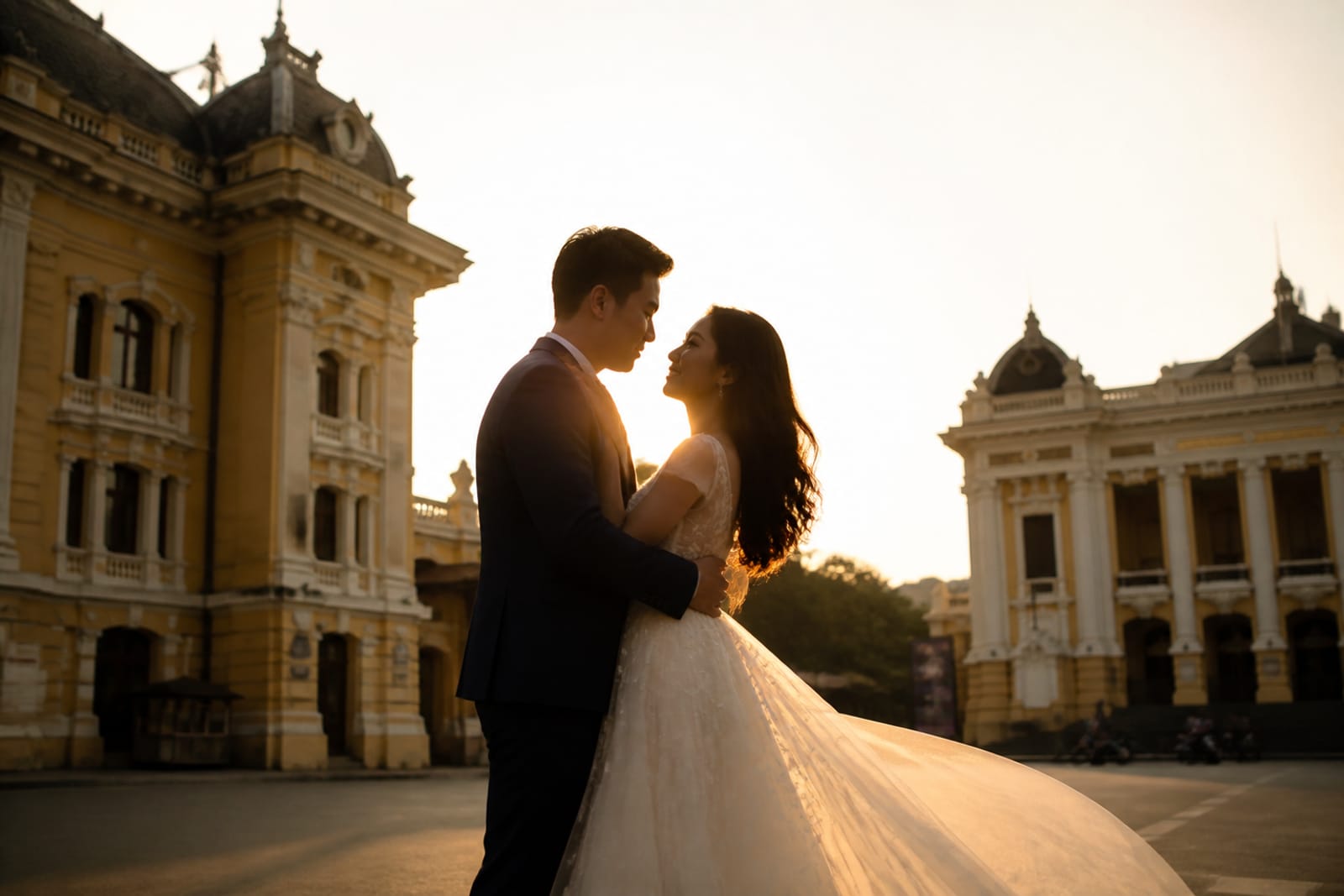
Which hidden corner matches your couple's style?
| Spot | Best for | Light quality | Access & time | Outfit fit |
|---|---|---|---|---|
| Old kiln interiors | Moody, intimate frames | Diffused, warm amber (late afternoon) | Permission needed; 4–5 pm slot; 20 min walk from parking | Dark ao dai; close-fitting áo dài avoids clay dust |
| Artisan courtyard gates | Bright, candid moments | Golden-hour side-light (5–6 pm) | Often open; ask potter on arrival; less crowded after 4 pm | Colorful ao dai; ao dài sleeves safe from kiln edges |
| Riverside brick lanes | Textured, layered depth | Soft diffuse light, even at noon (overhanging trees) | Public paths; busy 10 am–2 pm, quiet 3–6 pm | Modern ao dai or Western dress; flat shoes for uneven brick |
| Pottery studio workshops | Documentary, hands-on | Bright window light (9–11 am) | Shop owner permission; quietest weekday mornings (Tue–Thu) | Neutral, matte ao dai; sleeves rolled or fitted |
| Red River embankment | Wide, scenic frames | Soft backlight (6–7 pm, before dusk) | Public access; crowded weekend evenings; weekday mornings empty | Ao dai with long sleeves; strong wind, so secure hair |
Key insight: Autumn light (Oct–Nov) flatters all five spots equally; winter overcast suits moody interiors; summer heat and crowds make afternoon-only bookings necessary and risky.
🌸 Book a couple photoshoot in Hanoi
What season and time of day will give us the best light?
Autumn (October–November) is non-negotiable for Bat Trang couple shoots. Daytime temperatures hover around 20–25°C, paths stay dry, and light is diffuse without harsh shadows—kilns and courtyards look warm, not washed-out. Book a 4–5 pm slot: golden hour reflects off kiln windows and river, and artisan activity winds down, leaving you clear frames. Winter (December–February) works if you accept overcast skies and drizzle—moody, intimate light, but prepare waterproof makeup and pack a light rain cover for your ao dai. Spring (March–April) brings haze and humidity; midday haze dulls colors, though early morning (6–7 am) before it settles offers crisp light. Summer (May–September) is hostile: heat warps makeup in 30 minutes, afternoon downpours flood lanes, and crowds peak during school holidays. Plan at least 4 weeks ahead if you need a specific season; Cáo Studio can confirm kiln owner availability and light conditions before you commit.
How do you book Bat Trang access without arriving to a closed kiln or angry potter?
Permission is not automatic. Bat Trang potters are working producers, not performers. Contact Cáo Studio at least 3 weeks before your shoot date; the team has standing relationships with 6+ kiln owners and courtyard managers. They'll confirm which kilns allow photography that day, arrange a time slot (usually 1–2 hour windows), brief you on clay-stain risks (wear dark, close-fitting ao dai; avoid white or silk), and scout light conditions 48 hours prior. On the day, arrive 15 minutes early; bring a small thank-you gift for the kiln owner (tea, snacks—nothing lavish). If a kiln unexpectedly closes (seasonal kiln maintenance, family events), Cáo Studio shifts you to a pre-scouted riverside or courtyard backup spot, same session fee. Never arrive solo hoping access is "open"—Bat Trang's active workshops turn away walk-ups. Booking through the studio removes guesswork and protects your timeline.
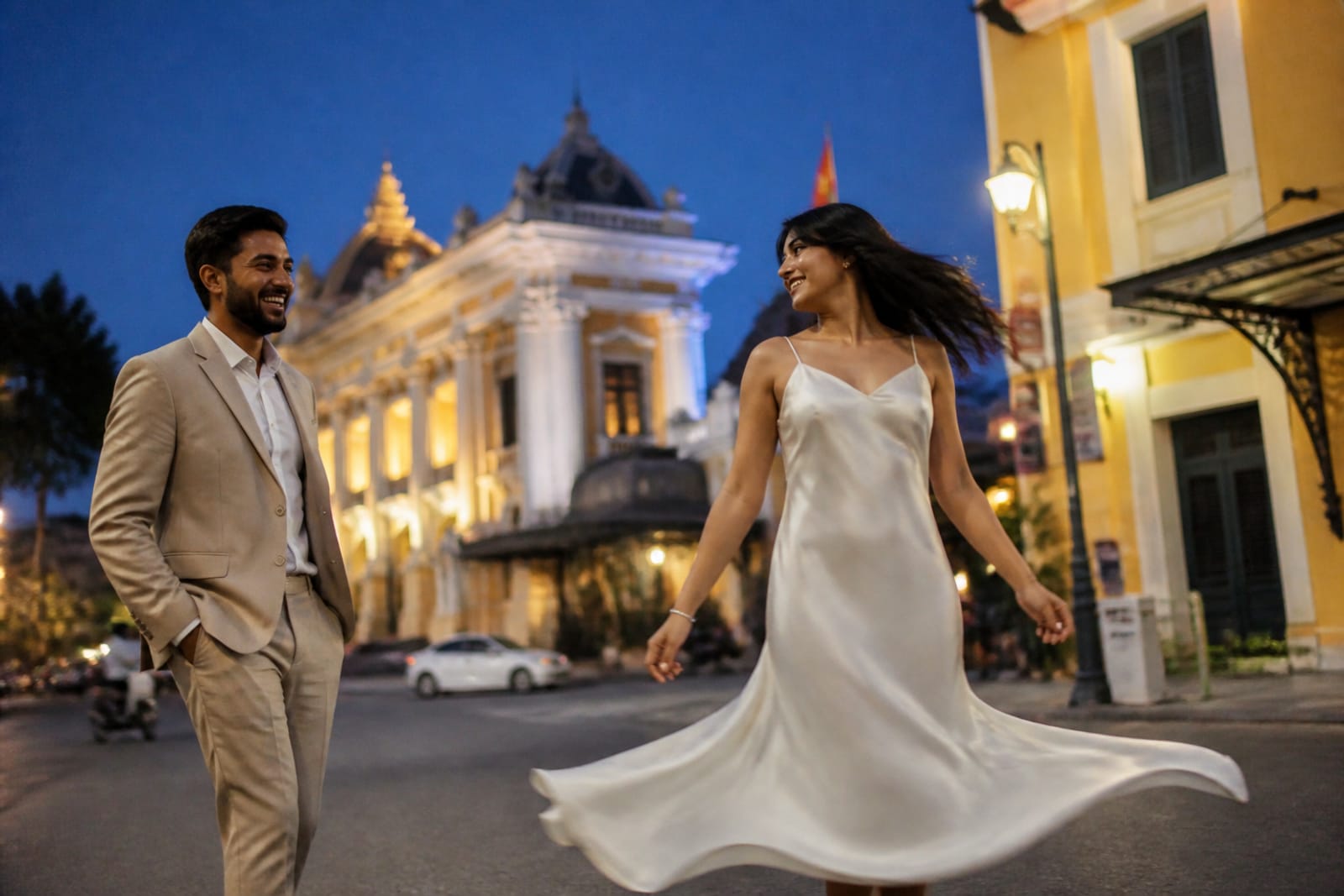
Can we combine Bat Trang with other Hanoi locations in one session?
Yes, and it's the smart move. A typical full-day couple shoot runs Bat Trang (2–3 hours, afternoon light) plus an urban Hanoi location (1–2 hours, evening light)—say, Train Street or Phan Dinh Phung street's autumn foliage. The 15 km drive between Bat Trang and central Hanoi takes 30–45 minutes depending on traffic; plan a mid-session break for touch-up makeup and outfit change. Cáo Studio – Makeup & Photoshoot builds transitions into the timeline: a makeup artist can refresh makeup en route or at a quiet café near Bat Trang, saving time. Combining locations deepens the narrative (artisan heritage + urban modernity) and maximizes your investment. Winter and spring are ideal for two-location sessions—cooler temps mean makeup stays fresh longer. Summer is risky; heat and humidity fatigue you and degrade makeup, making a single-location focus wiser.
What should we pack and wear to avoid Bat Trang's real hazards?
Ao dai choice: A close-fitting, dark or jewel-tone ao dai works best. Loose sleeves snag on kiln edges and kiln dust clings to pale silk. If wearing Western formal wear (suit, dress), choose dark, matte fabrics; glossy synthetic reflects kiln glare unflattering. Avoid white, cream, or light pastels unless you're staying in artisan courtyards under shade.
Footwear: Bat Trang's brick lanes are uneven, wet after rain, and clay-slick. Wear flat, closed-toe shoes (ballet flats, loafers, or smooth-soled traditional embroidered slippers). Heels sink into soft clay and mark prints that age-date your shot. Bring a shoe bag to swap mud-spattered shoes during the break.
Accessories: Secure long hair—kiln-side wind gusts and studio activity dislodge pins. Bring bobby pins and a silk tie. Skip dangling jewelry; it catches on pottery edges. A light scarf (silk or cotton) works as a backup for wind-swept hair frames and as a kiln-dust shield if you step near an active wheel.
Backup clothing: Pack a shawl or jacket. Kilns run warm (clay ovens radiate heat), but courtyards at 4 pm are cool; temperature shifts happen fast. Keep a damp cloth and dry towel in your bag for clay-dust cleanup between locations.
Makeup: Clay dust and kiln moisture challenge makeup durability. Use a long-wear, waterproof base and setting spray. Matte lip color outlasts glossy. Plan a 5-minute touch-up after the kiln portion; Cáo Studio's makeup artist travels with you and does this on-site.
---
What to check before you book your Bat Trang couple photoshoot
- Season: Confirm autumn (Oct–Nov) availability; winter and spring are slower, so flexible dates unlock better light.
- Kiln access: Ask Cáo Studio which kilns are open that week; some close 1–2 weeks monthly for maintenance or family events.
- Time slot: Request 4–5 pm; golden hour light is non-negotiable, and artisan traffic is minimal.
- Outfit & makeup: Discuss ao dai color and fit with the team before booking; they'll advise on dust-resistant choices and durability.
- Travel time: If adding a second Hanoi location, confirm drive time and makeup refresh logistics; the team paces this into your timeline.
- Rain plan: Wet paths are slippery. Check the forecast 48 hours prior; Cáo Studio has indoor artisan studio backups and can pivot quickly.
- Permissions: Confirm kiln owner names and arrival instructions; the studio handles this, but knowing who's expecting you reduces anxiety on the day.
📸 Book a pre-wedding photoshoot with Cáo Studio
---
For a full picture of Cáo Studio's couple & family photoshoot options in Hanoi, see the lookbook and pricing page. If you're planning an ao dai photoshoot specifically, we also arrange styled sessions in Bat Trang with rental ao dai. The Hanoi studio can answer real-time questions about current access and kiln owner schedules.

FAQ
Do we need to hire a makeup artist for a Bat Trang shoot, or can we do our own?
Professional makeup helps—kiln dust and moisture challenge DIY touch-ups. Cáo Studio's artists use long-wear, waterproof formulas and refresh during the session. If you prefer DIY, bring waterproof cosmetics, setting spray, and a powder compact for mid-shoot touch-ups.
Is Bat Trang accessible in the rainy season (September–October)?
Risky. Heavy rain floods brick lanes and blocks kiln access; typhoon remnants arrive late September–October. Late October through November is safer. Check the forecast 48 hours prior; if rain is forecast, Cáo Studio shifts your date or moves you indoors to artisan workshops.
Can we photograph inside working kilns, or is that too dangerous?
Yes, interiors are safe during cool-down (afternoon hours). Active firing (morning) is off-limits. Kilns at 4–5 pm are warm but not hazardous; just avoid touching clay wheels or wooden supports. Cáo Studio guides you and the photographer on kiln safety.
How much time should we spend in Bat Trang to get enough variety for an album?
2–3 hours captures 3–4 distinct locations (kiln interior, courtyard, lane, riverbank) with candid and posed frames. Morning or afternoon alone often yields 100–150 edited photos; combining with a second Hanoi location doubles variety without exhaustion.
Will our ao dai get stained from clay dust, and is that a problem for renting?
Light-colored ao dai risks dust stains; dark jewel tones are safer. If renting from Cáo Studio's ao dai collection, confirm dust-resistant or dark options beforehand. Most rentals clean easily, but disclose Bat Trang on booking so they prepare protective measures or suggest durable styles.
FAQ
Do we need to hire a makeup artist for a Bat Trang shoot, or can we do our own?
Professional makeup helps—kiln dust and moisture challenge DIY touch-ups. Cáo Studio's artists use long-wear, waterproof formulas and refresh during the session. If you prefer DIY, bring waterproof cosmetics, setting spray, and a powder compact for mid-shoot touch-ups.
Is Bat Trang accessible in the rainy season (September–October)?
Risky. Heavy rain floods brick lanes and blocks kiln access; typhoon remnants arrive late September–October. Late October through November is safer. Check the forecast 48 hours prior; if rain is forecast, Cáo Studio shifts your date or moves you indoors to artisan workshops.
Can we photograph inside working kilns, or is that too dangerous?
Yes, interiors are safe during cool-down (afternoon hours). Active firing (morning) is off-limits. Kilns at 4–5 pm are warm but not hazardous; just avoid touching clay wheels or wooden supports. Cáo Studio guides you and the photographer on kiln safety.
How much time should we spend in Bat Trang to get enough variety for an album?
2–3 hours captures 3–4 distinct locations (kiln interior, courtyard, lane, riverbank) with candid and posed frames. Morning or afternoon alone often yields 100–150 edited photos; combining with a second Hanoi location doubles variety without exhaustion.
Will our ao dai get stained from clay dust, and is that a problem for renting?
Light-colored ao dai risks dust stains; dark jewel tones are safer. If renting from [Cáo Studio's ao dai collection](/ao-dai-rental), confirm dust-resistant or dark options beforehand. Most rentals clean easily, but disclose Bat Trang on booking so they prepare protective measures or suggest durable styles.
Ao dai, makeup, hair and a local photographer in Hanoi or Saigon — one WhatsApp message.