/pre-wedding-photoshoot
Hidden photo corners near Ben Tre coconut groves for couples
Ben Tre's hidden photo corners—riverside paths under palm canopies, wooden boat landings, and narrow waterways—suit couples seeking intimate, narrative-driven frames rather than landmark shots. The best light runs 5:30–6:30 am and 4:30–5:30 pm; avoid midday overhead glare on water. Travel by motorbike or hired car; motorboat access requires a local guide. Wear lightweight layers (humidity is high year-round); an áo dài works best in the dry season (Nov–Jan). If you choose directed photography, hire a team that brings a stylist and makeup artist—three vendors stitched together lose the light and cohesion. Cáo Studio's pre-wedding photoshoot in Ho Chi Minh City can coordinate Ben Tre sessions; ask on WhatsApp for logistics, travel time, and a custom quote.
Why are coconut groves near Ben Tre so good for couple frames?
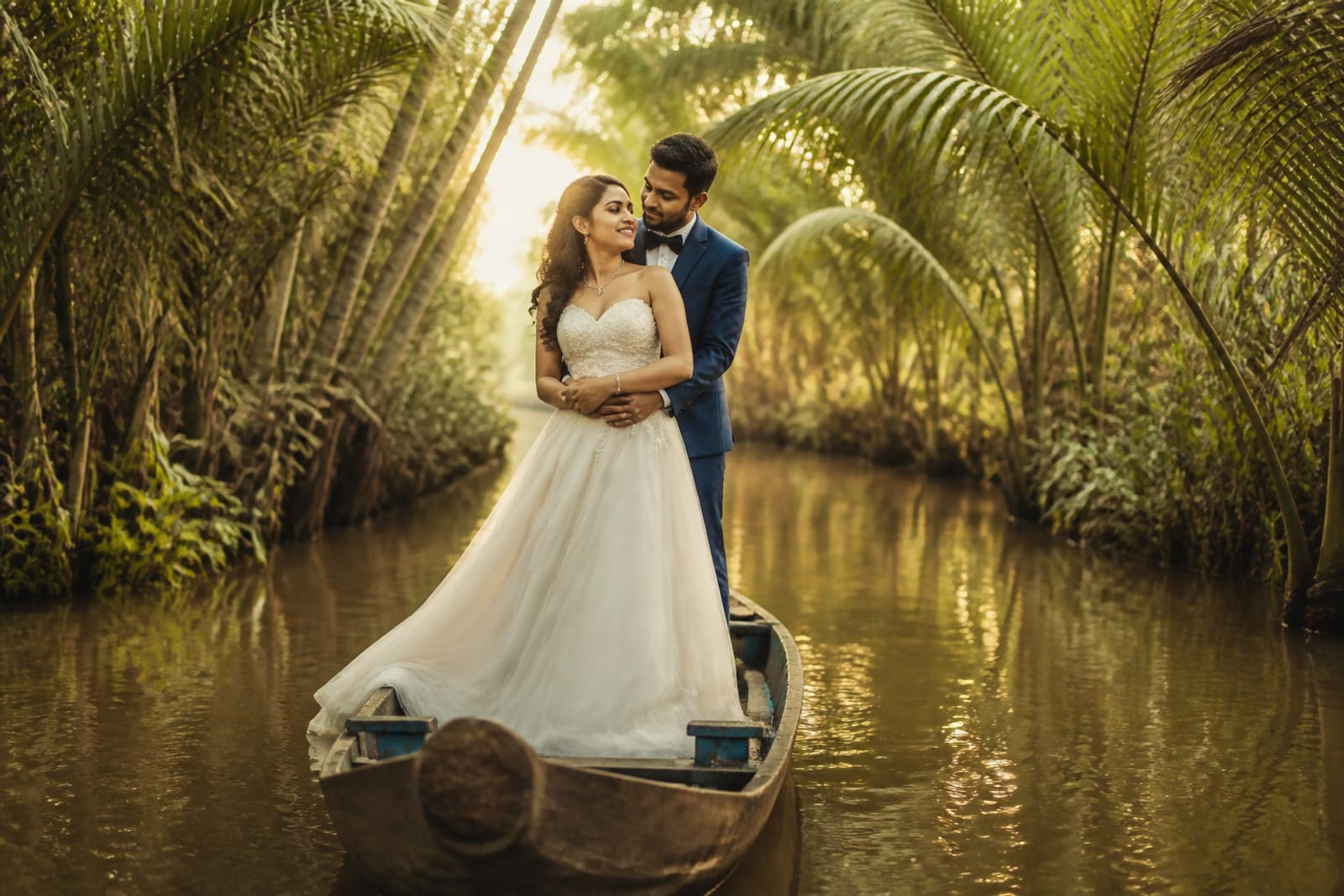
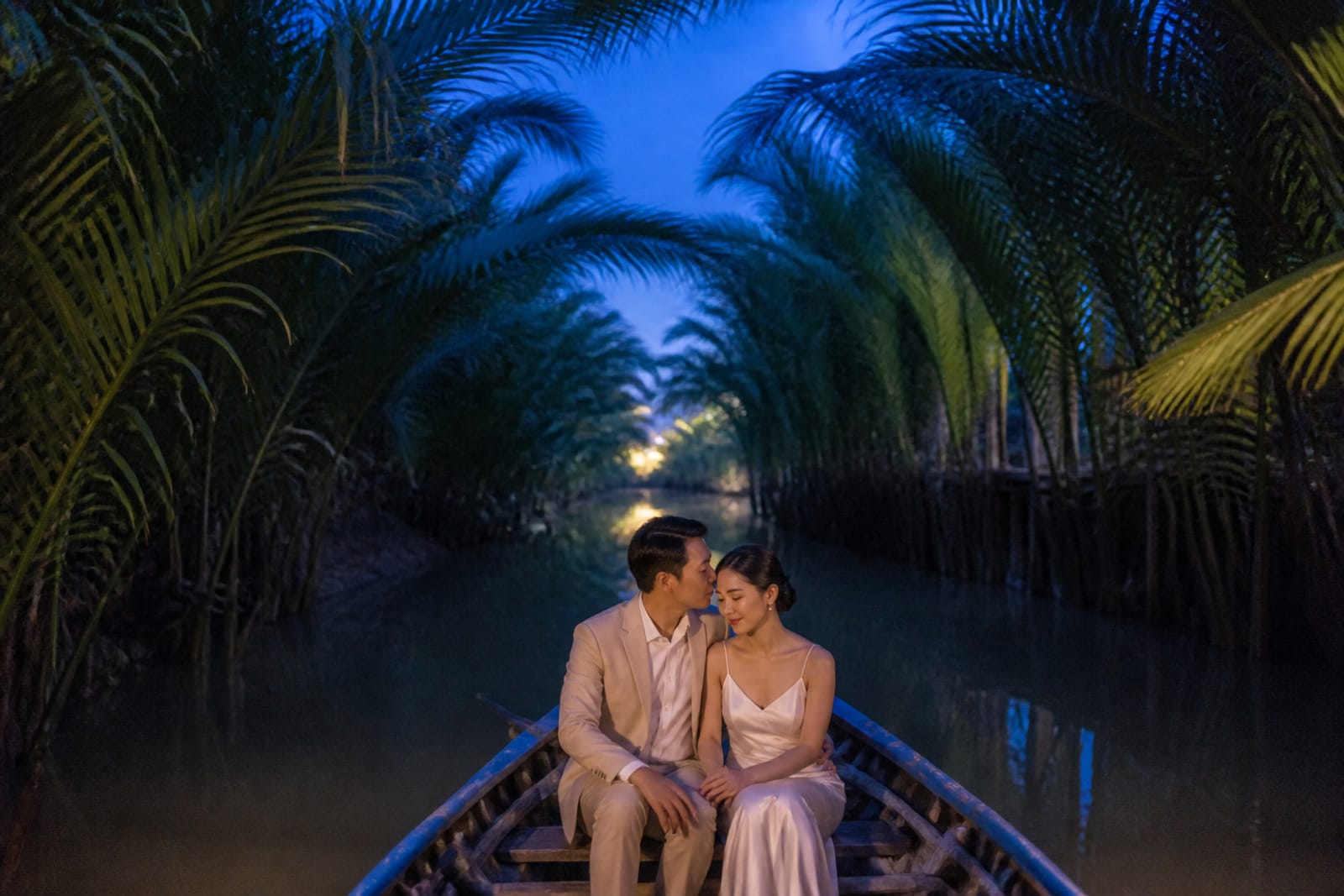
The canopy creates soft, layered light without harsh shadows—a directional quality that frames tell stories rather than look posed. Narrow waterways reflect the sky, adding depth; wooden-post landings and winding paths give your walking shots natural framing. The landscape feels private, not crowded with tourists, so you and your partner move naturally through the space. Coconut groves near Ben Tre suit couples who want frames that look lived-in, not staged.
Which three spots deliver the strongest light and privacy?
Spot 1: Mekong riverside at Khu Du Lich Cai Be (sunrise, 5:30–6:30 am). Soft side light hits the water from the east; wooden boats and palm shadows frame the bank. Quietest before 7 am. Walk east along the water, look back at each other—the sun sits low, the water glows, and your silhouettes are readable.
Spot 2: Narrow palm-lined canal near Cho Lach (late afternoon, 4:30–5:30 pm). A single-lane waterway with palms on both sides creates a green tunnel; golden light filters through at 5 pm. Accessible by motorbike and foot. The path is narrow, so you'll walk close; light is warm and soft. Few tourists; locals know the route but it's not a marked destination.
Spot 3: Floating gardens and vegetable plots near My Tho junction (early morning or late afternoon). Flat, open water with low palm vegetation; light reflects off the water surface, softening your features. Bring a motorboat from My Tho town (15 minutes away). The space feels expansive, good for walking shots and couple profiles.
All three work best Nov–Feb (dry, cooler, clearer air); May–Sep humidity and afternoon clouds reduce shadow clarity. Oct–Nov is typhoon season—water levels rise, some paths flood. Spot 2 is walkable year-round; Spot 1 and 3 depend on water level and motorboat access.
| Spot | Best for | Light window | Why it works | Season |
|---|---|---|---|---|
| Mekong riverside, Cai Be | Silhouettes, water reflections | 5:30–6:30 am | Side-lit water, readable shadows | Nov–Feb |
| Cho Lach palm canal | Intimate walking shots, green frames | 4:30–5:30 pm | Tunnel canopy, diffused golden light | Nov–Feb |
| Floating gardens, My Tho | Expansive profiles, flat reflections | 5:30–6:30 am or 4:30–5:30 pm | Open water, mirror-like reflections | Nov–Feb |
---
Should you hire a local Ben Tre photographer or book a directed team from Ho Chi Minh City?
A local Ben Tre photographer knows the waterways and access; they work fast and charge less per hour. But logistics matter: if you need makeup and hair on arrival, outfit changes, or a consistent visual style, a solo photographer splits focus between framing and coordination. Three vendors (makeup artist, stylist, photographer) working separately lose light continuity—one person takes 10 minutes for hair, light shifts, framing direction goes vague.
Cáo Studio's pre-wedding photoshoot team travels from Ho Chi Minh City (a 1.5–2 hour drive). One booking covers a stylist, makeup artist, and photographer on the same brief—one message, one light strategy. You avoid vendor coordination; the team arrives with a clear creative direction. The trade-off: travel time adds a cost factor (ask on WhatsApp for logistics). If you prefer a local, verify their portfolio for night/water light (not all local photographers frame water well) and confirm they've shot Ben Tre before—familiarity with motorboat access and permit requirements saves you day-of stress.
📸 Book on WhatsApp — pre-wedding photoshoot
---
What should couples wear under an áo dài for a coconut-grove shoot?
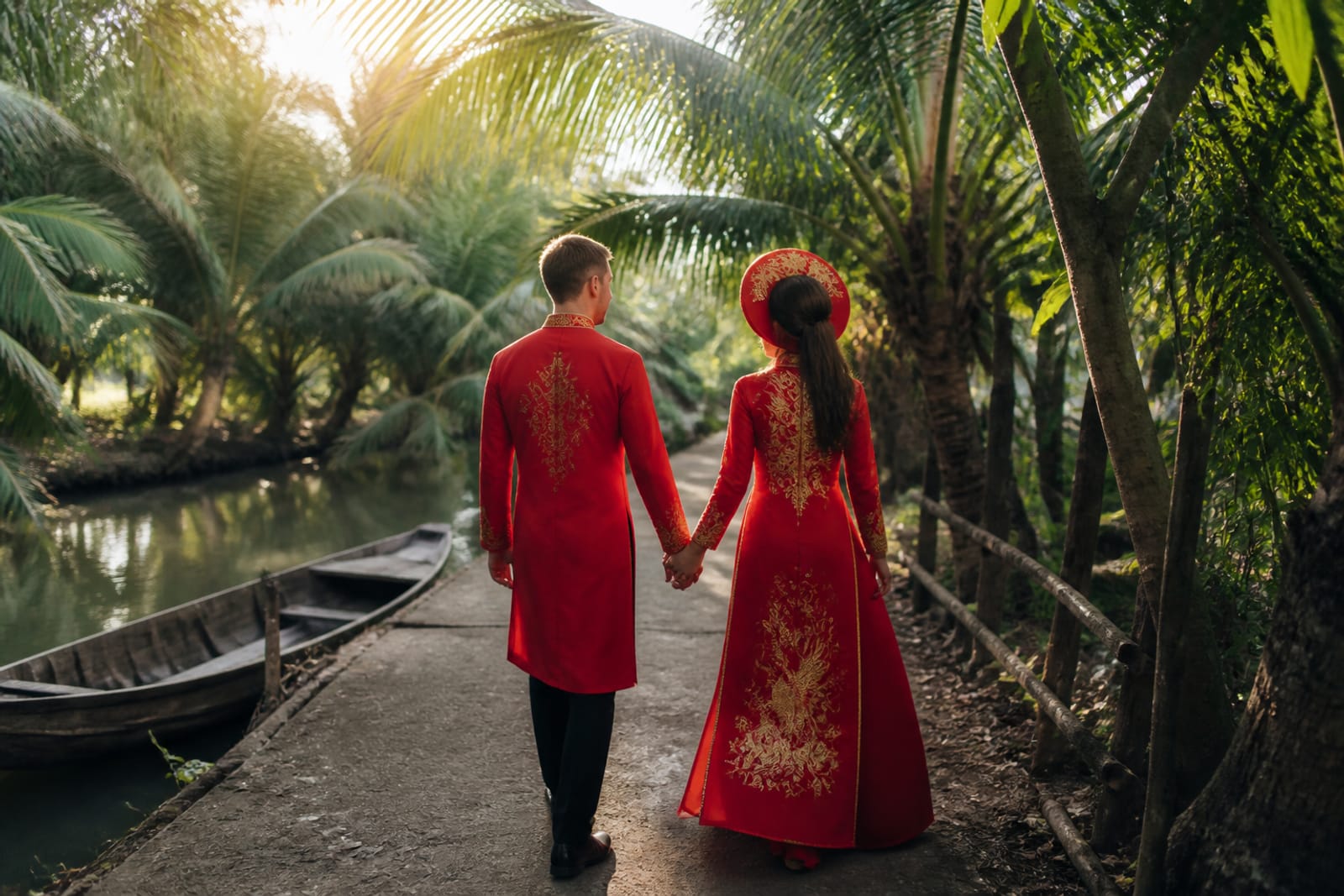
An áo dài suits Ben Tre's intimate aesthetic if you're celebrating Vietnamese heritage or a formal session. Wear a plain white long-sleeve silk undershirt (not cotton—it shows sweat and clings) and wide-leg trousers underneath; the undershirt breathes better in humidity. Avoid black trousers if you're shooting near water—reflections are visible and read as heavy. Neutral tones (cream, pale grey, soft tan) work better in morning light; darker áo dài (navy, forest green) read well in late afternoon when light is warm.
If you're not committed to an áo dài, wear layers: a lightweight linen or cotton shirt you can roll to the elbow (humidity is 70–85% year-round), and tailored neutral trousers. Avoid white pants near water—splash and mud are inevitable on narrow paths. Shoes matter: wear flat leather sandals or walking shoes you can slip on easily for motorboat transfers; hiking boots look out of place. Bring a small pouch with a makeup-touch-up kit—Ben Tre's humidity means foundation and lips fade by 6:30 am unless you use a setting spray.
If your team includes makeup and hair at your hotel, confirm they're briefed on Ben Tre's humidity and morning light. Ask for waterproof mascara and a setting spray designed for tropical shoots.
---
How do you plan a Ben Tre session if you're traveling from Hanoi or abroad?
Ben Tre is 160 km southwest of Ho Chi Minh City (a 2.5–3 hour drive). If you're arriving from Hanoi, fly to Ho Chi Minh City first (2 hours), rest overnight, then travel to Ben Tre the next morning. Motorboat access and narrow waterway navigation require a local guide or a team experienced with the delta—don't attempt it alone.
Book your shoot 1–2 weeks ahead. Confirm with your photographer or Cáo Studio: water level (May–Nov can mean high water and flooded paths), motorboat availability, permit requirements for the specific spot, and travel logistics. If you're hiring Cáo Studio, they'll coordinate with a Ben Tre local guide on WhatsApp; you'll receive a meeting point, start time, and a packing checklist. If you hire a local photographer, ask them directly about motorboat booking—they often have a contact; plan for an extra hour of setup time if you're unfamiliar with the delta.
Travel by car or hired motorbike from My Tho town (the nearest transport hub). Motorboats are booked through your guide or hotel the day before; confirm the guide speaks enough English or your photographer can translate. Light windows are tight (sunrise 5:30–6:30 am, sunset 4:30–5:30 pm), so arrive the evening before or be on the water 15 minutes before your shoot time.
🌸 See the lookbook | 💄 Makeup & hair at your hotel
---
What can go wrong, and how do you avoid it?
Motorboat delays. Guides sometimes arrive late; confirm the pickup time and phone number the day before. Arrive 20 minutes early.
Light loss to clouds. Nov–Feb is driest, but morning clouds still happen. Have a backup spot or time slot (ask your photographer if 6:15 am works if 5:45 am is cloudy).
Humidity and sweat. Waterproof makeup and a cotton sweat towel in your stylist's bag save retouches. If your team doesn't mention humidity prep, flag it.
Flooded paths. May–Nov waterways rise unpredictably. Book Nov–Feb, or confirm with your guide 1 week ahead that paths are passable—some years, Cho Lach canal floods by late Oct.
Overcrowded at peak times. Late morning (8 am–11 am) attracts tour buses to Cai Be. Sunrise (5:30–6:30 am) is quiet. Book early.
Inconsistent framing across the day. If you hire three separate vendors, each works to their own standard—makeup artist focuses on face, stylist on outfit, photographer on composition. One team with one brief produces cohesive frames.
---
What to check before you book a Ben Tre photoshoot
- Season. Nov–Feb (dry, clear, cooler). May–Sep humidity rises; light becomes flat. Oct–Nov: high water and typhoon risk.
- Motorboat access. Confirm your guide or photographer has a motorboat contact. Water level varies; book ahead.
- Outfit fit. Try on an áo dài before the shoot if wearing one. Ben Tre's humidity means synthetics cling; silk undershirts breathe better.
- Light window. Sunrise (5:30–6:30 am) or sunset (4:30–5:30 pm). No other time delivers the soft, directional light these spots need.
- Travel logistics. Are you hiring a local or a Ho Chi Minh City team? Local = faster, cheaper; team = coordinated styling and vision. Ask about travel time and who arranges motorboat access.
- Permit or fee. Check with your guide if entry fees apply to Cai Be or Cho Lach. Some spots are informal; others require a small local fee. Not required in most cases, but verify.
- Backup plan. If water levels are too high, ask your photographer for an alternative spot within Ben Tre (a covered market, a wooden bridge, a shaded village path). Don't assume you can pivot day-of without a pre-scouted alternative.
For a full-service experience—styling, makeup, photography, and creative direction all in one booking—contact Cáo Studio on WhatsApp with your dates, outfit preferences, and Ben Tre spot interests.
📸 Book on WhatsApp — couple photoshoot
---
Why does Cáo Studio's approach work for destination shoots like Ben Tre?
One team (stylist, makeup artist, photographer) means one message, one light strategy. The makeup artist knows the photographer's frame height and lens, so makeup reads in-frame; the stylist sees the background light and chooses colors that read well in warm or cool light; the photographer has a brief on outfit and makeup detail, so they frame to show it. Three vendors who've never worked together lose this coherence—one person re-does makeup while light shifts, another chose outfit colors without seeing the morning light.
Cáo Studio coordinates Ben Tre sessions from Ho Chi Minh City; travel logistics are handled, and you get one point of contact, one creative vision, and frames delivered in 48 hours. Ask on WhatsApp for a quote and travel-time details; the Mekong delta isn't Cáo Studio's home base, but they've directed pre-wedding shoots in similar delta light before.
FAQ
Can I shoot Ben Tre's coconut groves solo with my phone or a rented camera?
Yes, but light timing is critical. Shoot 5:30–6:30 am or 4:30–5:30 pm for soft, directional light. Midday (10 am–3 pm) flattens depth. Motorboat access and path navigation are easier with a local guide—don't navigate waterways solo.
What's the best month to shoot in Ben Tre?
November to February. Dry weather, clearer air, cooler temperature, and stable water levels. Avoid May–September (high humidity, flat light, afternoon clouds) and October–November (typhoon and flood risk).
Do I need a permit or pay fees to shoot in Cai Be or Cho Lach?
Informal spots usually don't require permits, but some local guides or boat operators may charge a small fee. Confirm with your photographer or guide 1 week ahead. Check locally with your guide for current rules.
Can a solo local photographer handle Ben Tre, or do I need a full team?
A skilled local photographer knows the waterways and light. But if you want coordinated styling, makeup, and photography on one vision, a team works better. Solo photographers excel at speed and local knowledge; teams excel at consistency.
How long does a Ben Tre photoshoot typically take?
Ask your photographer directly on WhatsApp. A sunrise-only session (5:30–6:30 am, one or two spots) usually runs 1–1.5 hours. Full-day sessions or multiple spot changes take longer. Motorboat travel and guide coordination add time.
What happens if the weather is bad on my shoot day?
Reschedule or pivot to a backup spot. Rain and clouds are common May–September; November–February is more stable. Confirm a backup date and location with your photographer before the shoot.
FAQ
Can I shoot Ben Tre's coconut groves solo with my phone or a rented camera?
Yes, but light timing is critical. Shoot 5:30–6:30 am or 4:30–5:30 pm for soft, directional light. Midday (10 am–3 pm) flattens depth. Motorboat access and path navigation are easier with a local guide—don't navigate waterways solo.
What's the best month to shoot in Ben Tre?
November to February. Dry weather, clearer air, cooler temperature, and stable water levels. Avoid May–September (high humidity, flat light, afternoon clouds) and October–November (typhoon and flood risk).
Do I need a permit or pay fees to shoot in Cai Be or Cho Lach?
Informal spots usually don't require permits, but some local guides or boat operators may charge a small fee. Confirm with your photographer or guide 1 week ahead. Check locally with your guide for current rules.
Can a solo local photographer handle Ben Tre, or do I need a full team?
A skilled local photographer knows the waterways and light. But if you want coordinated styling, makeup, and photography on one vision, a team works better. Solo photographers excel at speed and local knowledge; teams excel at consistency.
How long does a Ben Tre photoshoot typically take?
Ask your photographer directly on WhatsApp. A sunrise-only session (5:30–6:30 am, one or two spots) usually runs 1–1.5 hours. Full-day sessions or multiple spot changes take longer. Motorboat travel and guide coordination add time.
What happens if the weather is bad on my shoot day?
Reschedule or pivot to a backup spot. Rain and clouds are common May–September; November–February is more stable. Confirm a backup date and location with your photographer before the shoot.
Ao dai, makeup, hair and a local photographer in Hanoi or Saigon — one WhatsApp message.