/pre-wedding-photoshoot
Hidden photo corners near Cao Bang countryside for couples
Cao Bang countryside hides intimate corners in three zones: Ban Gioc waterfall area (rainy season Jul–Sep for full water, golden rice Sep–Oct), Ngo Dong River bends near Trang An (year-round, best Feb–Apr for dry light), and the Cao Bang limestone plateau trails (Oct–Apr, before midday heat). A directed photoshoot with Cáo Studio means one team handles outfit, hair, makeup and camera—no stitching vendors. Self-guided shoots work if you scout light beforehand and carry backup outfits; a local photographer vet matters more than landmarks alone. Sessions run 3–5 hours depending on outfit changes and walking distance. Best window: early morning (6–8 am) or late afternoon (4–6 pm) when side light hits water and rice fields. Avoid Tet (late Jan–mid Feb) when services close and crowds peak. 📸 Book on WhatsApp — pre-wedding photoshoot ---
What makes Cao Bang countryside different from Hanoi for couples?
Cao Bang's light is cleaner than Hanoi's—no city haze, no crowded Old Quarter corners. The landscape reads: water (rivers, pools, waterfalls), terraced rice, and stone. You shoot for 3–5 hours and walk between locations rather than change venues. Hanoi couples shoot urban architecture and Old Quarter lanterns in tighter timescales (1–2 hours); Cao Bang demands patience with weather and transport but rewards you with isolation and scale. Choose Cao Bang if you want genuine scale and solitude; choose Hanoi if you prefer cultural layers and quick turnarounds.
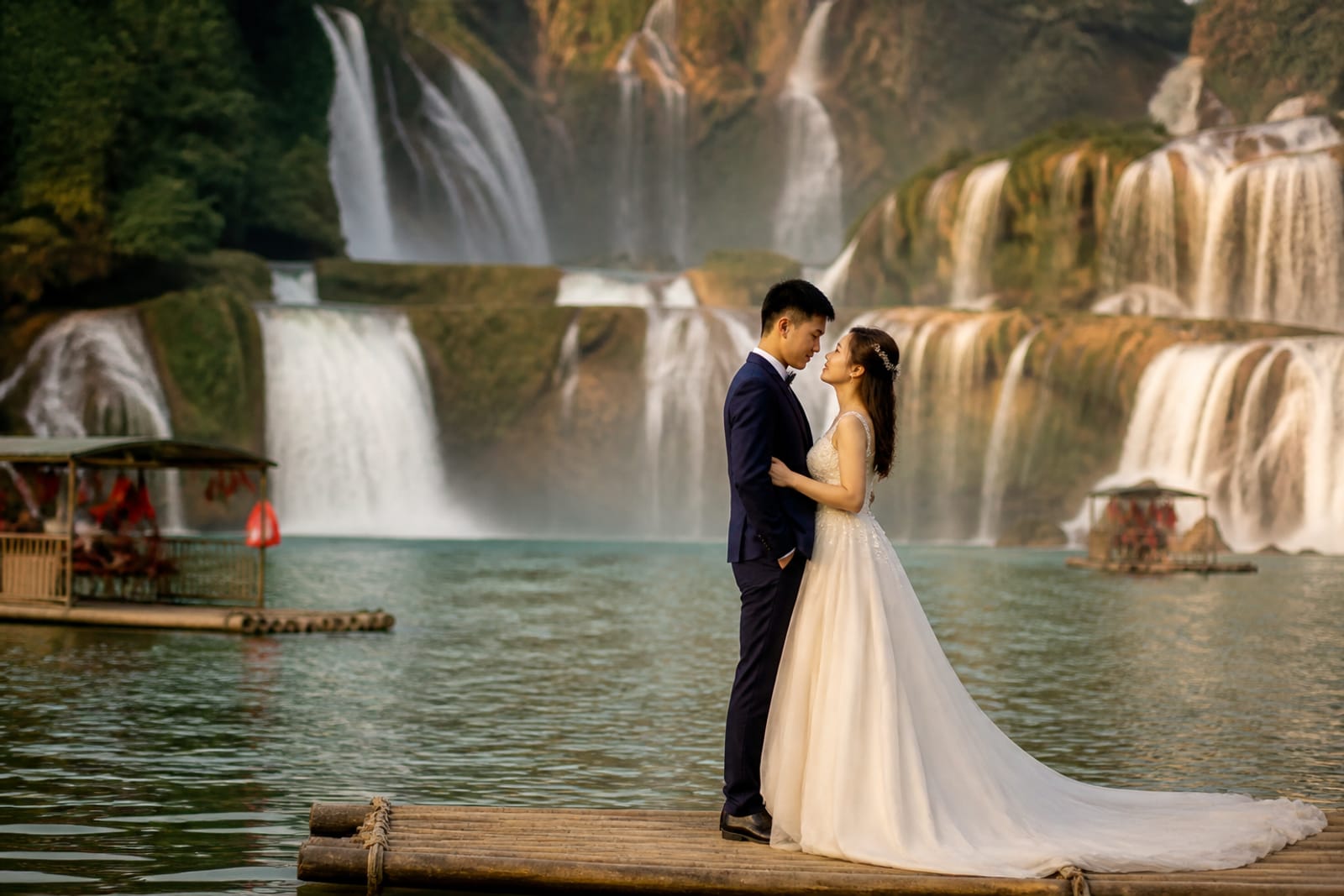
Which Cao Bang corners actually work for pre-wedding frames?
Ban Gioc waterfall itself draws tour crowds by 9 am, but the upstream bends (30–40 minutes' walk on local trails) stay empty. Ngo Dong River's eastern bends near Trang An (the limestone area, not the cruise dock) have pools, karst reflections, and narrow paths—light is soft 6–8 am and 4–6 pm. The Pa Ly Valley rice terraces (inland, Oct–Apr) sit high and open—wind matters, but the angle avoids tourist roads. Each favors different outfits: Ban Gioc's mist suits flowing fabric; rice terraces suit structured ao dai; river pools work best with lighter, mobile silhouettes. All three require a guide (local or photographer who knows paths) and hiking boots under your outfit.
| Corner | Best for | Ideal season | Why it works |
|---|---|---|---|
| Ban Gioc upstream pools | Water reflections, mist | Jul–Sep (full water), Oct–Apr (clear air) | Scale, isolation, soft early light |
| Ngo Dong River bends | Limestone framing, detail shots | Feb–Apr (dry, bright), Oct–Dec (stable light) | Enclosed frames, fewer walkers, pool geometry |
| Pa Ly terraces | Wide landscapes, texture | Oct–Apr (cool, dry, golden rice Oct) | Height, open light, minimal crowds by 7 am |
Should you hire Cáo Studio or scout locations yourself?
Self-guided works if you: carry a second outfit, hire a local photographer (vet portfolios for outdoor couples work—not just portrait stiffness), and arrive with a detailed light-hour plan. You lose makeup continuity across outfit changes and you carry logistics yourself. Cáo Studio's one-team model means hair and makeup adjust between locations (no reapplication pause), outfit changes happen on-site, and the photographer directs real moments—walking, looking at each other, reacting to light—not posed angles. Cost factors: Cao Bang self-guided = travel + local photographer day rate + permits (ask locally); Cáo Studio teams travel from Hanoi or Saigon, quoting on WhatsApp. Cao Bang sessions run longer than Hanoi (more walking, fewer outfit swaps) so time investment differs. Choose self-guided for budget control; choose Cáo Studio for continuity and a directed narrative.
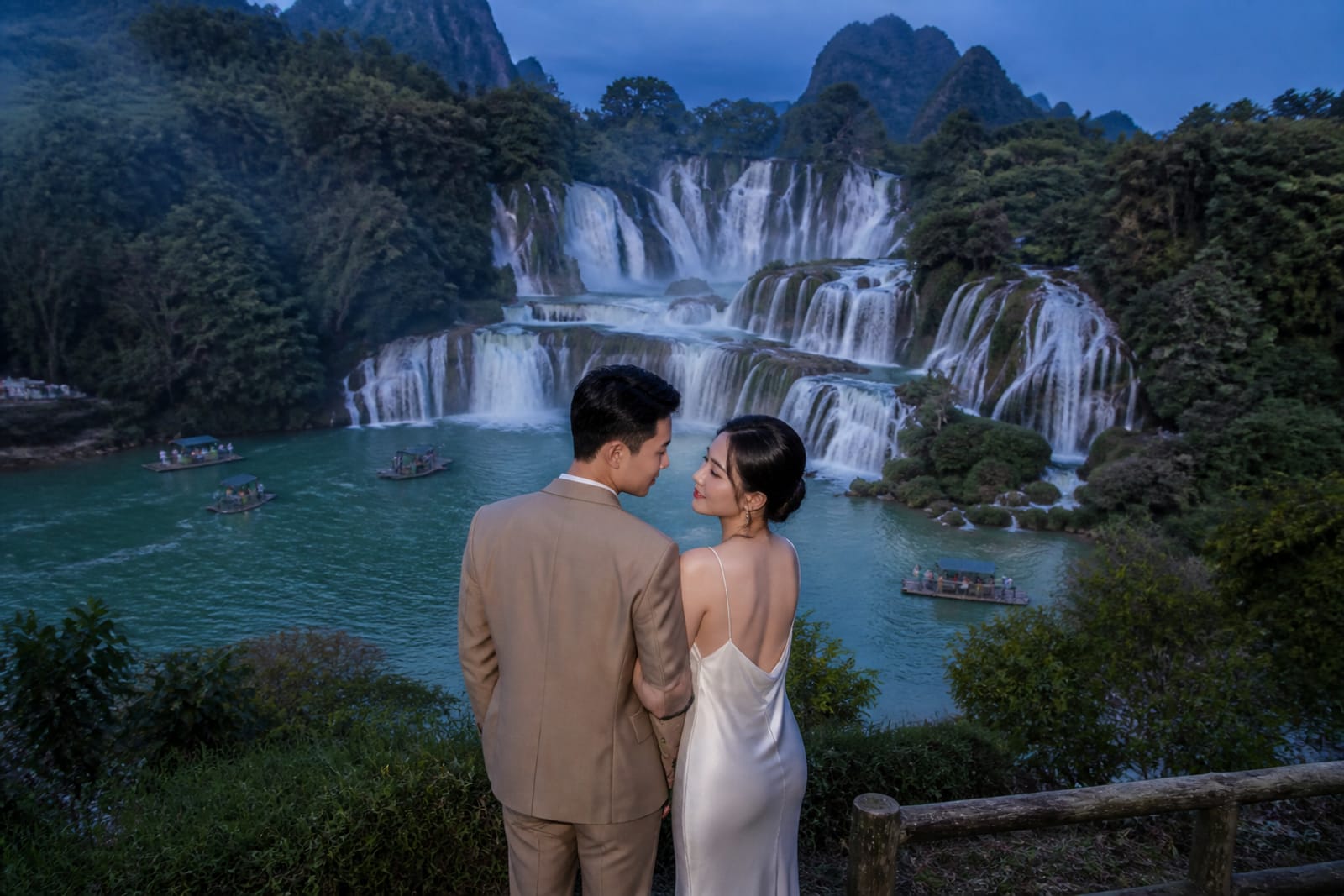
What outfit rules apply to Cao Bang's terrain and weather?
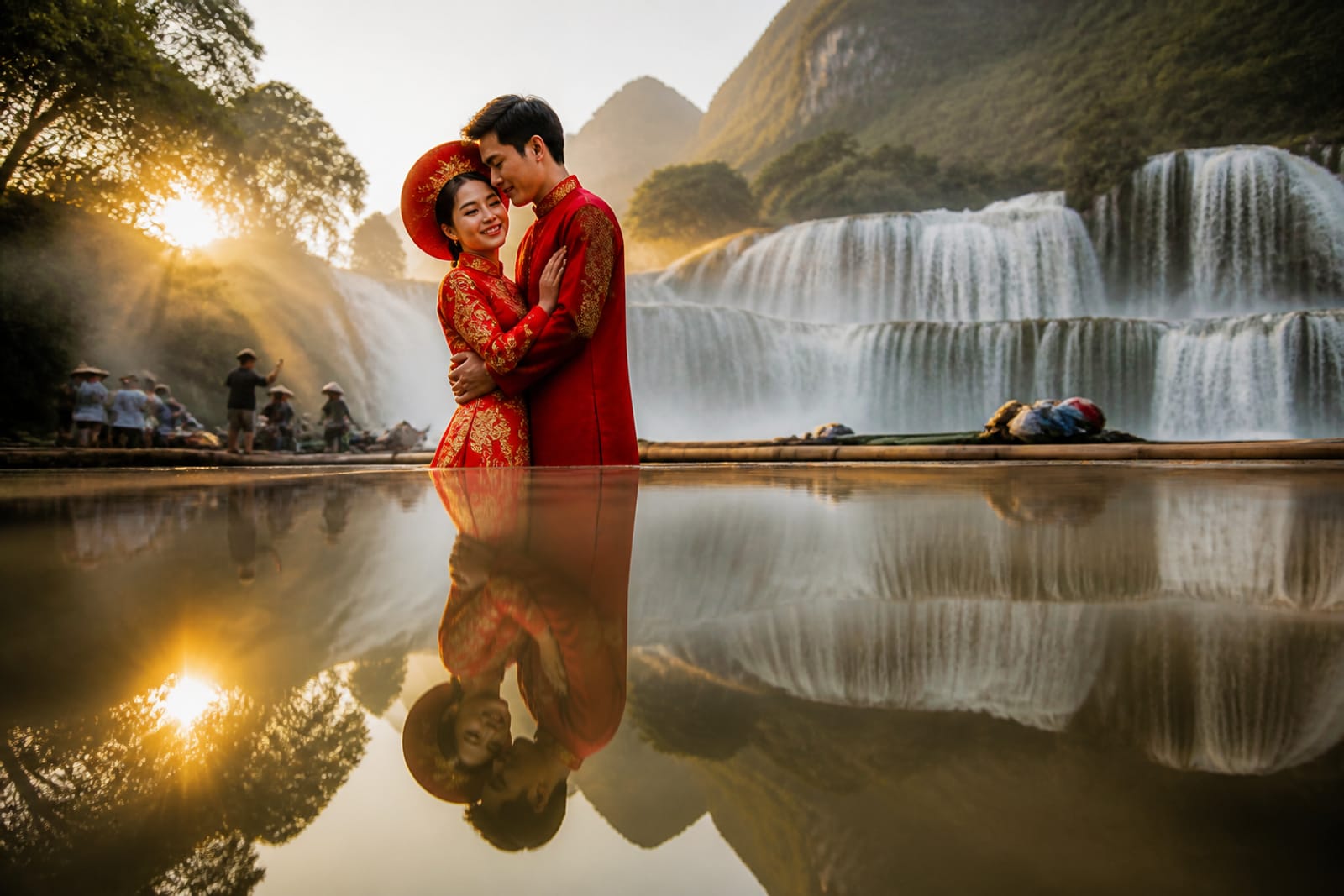
Cao Bang's wet rocks, muddy bends, and limestone dust demand shoes that grip and outfits that survive water splashes. Ao dai works on cleared paths and rice terraces but not waterfall scrambles (wet edges, slippery). Lightweight dresses or tailored suits move better on narrow trails. Bring a second outfit (one for elevated, dry rice terraces; one for riverside). Avoid heavy jewelry and long trains that snag or drag. Test your footwear: river spots need water-friendly shoes, not heels. Weather shifts fast Oct–Apr (cool mornings, afternoon sun); May–Sep brings afternoon downpours (aim for 6–8 am shoots). Pack a waterproof garment bag in your vehicle. Ask your photographer or guide about trail conditions before booking—some bends close after heavy rain.
How do you plan light and timing for the best frames?
Ban Gioc's mist rises 6–8 am, creating soft side light through spray—arrive early and shoot as crowds form (9 am onward). By noon, sun is overhead and water glare washes detail. Afternoon (4–6 pm) brings warmer tone but fading spray. Ngo Dong bends work all day but 6–9 am and 4–5:30 pm avoid harsh shadows in the limestone channel—midday light reflects off pale rock, flattening frames. Rice terraces need clear sky and low angle: 6–7:30 am or 4–6 pm (Oct–Apr). Wear a light meter app or ask your photographer to check on arrival. If you're self-guiding, scout 2–3 days before your shoot—time the hour, note where shadows fall, and confirm paths are passable. Weather changes light instantly: overcast is diffuse (good for portraits, bad for water detail); clear sky suits landscape but demands reflector work for faces.
🌸 Book on WhatsApp — couple photoshoot
What to check before you book a Cao Bang session
Logistics & timing:
- Confirm travel time from your Hanoi/Saigon hotel (Cao Bang is 3–4 hours from Hanoi, 8+ from Saigon).
- Ask whether the photographer or you arrange transport to trailheads.
- Lock the exact date; weather windows (Feb–Apr, Oct–Nov) close fast.
- Request a 48-hour weather forecast update before shoot day.
Outfit & weather readiness:
- Confirm what you'll wear under and over your ao dai; ask about water-resistant packing.
- Bring backup shoes (river-safe grip + dress shoes for clear paths).
- Check if permits are needed for private locations (ask locally, confirm with your photographer).
Photo continuity:
- If hiring a local photographer, ask for a portfolio of outdoor couples work (not just headshots or studio frames).
- If booking Cáo Studio, confirm makeup and hair travel with the team (they do).
- Ask how many outfit changes are included and how transitions work (Cáo Studio handles on-site; self-guided = your logistics).
Delivery & access:
- Ask for editing timeline (Cáo Studio delivers in 48 hours; local photographers vary).
- Confirm file formats and whether you get raw files, edits, or both.
- Request sample edits if the photographer is new to you.
---
For more on pre-wedding photoshoots, see our lookbook and Hanoi base. Cao Bang works best as a day trip from Hanoi with a team that handles everything—ask us on WhatsApp.
FAQ
Can we do a Cao Bang shoot in the rainy season (May–Sep)?
Yes, but light is harder—afternoons often grey or wet. Ban Gioc waterfall is fullest (Jul–Sep), so water frames work. Avoid heavy rain days; shoot early (6–8 am) before afternoon downpours. Cost factors shift (longer travel, weather delays possible).
Do we need hiking experience for these locations?
No, but the terrain is uneven—river rocks, mud, narrow paths. Wear proper footwear and allow 4–5 hours. Cao Bang's best corners aren't highway-side; walking is part of the experience. Ask your photographer about trail difficulty.
Is Cao Bang better than Hoi An for pre-wedding frames?
Different strengths. Cao Bang offers scale, water, and isolation; Hoi An offers architecture, lanterns, and Old Town culture. Cao Bang favors landscape and nature frames; Hoi An suits cultural and heritage aesthetics.
What's the cost difference between self-guided and booking Cáo Studio?
Self-guided = local photographer day rate + travel + permits. Cáo Studio quotes on WhatsApp based on travel, outfits, and session length. Compare by what's included (makeup, styling continuity, editing) not just photographer fee.
When should we visit Cao Bang to avoid crowds and get the best light?
Oct–Apr is ideal—cool mornings, stable light, and dry trails. Oct–Nov has golden rice texture. Tet (late Jan–mid Feb) closes services and brings crowds; avoid. Early morning (6–8 am) always beats afternoon at popular spots like Ban Gioc.
FAQ
Can we do a Cao Bang shoot in the rainy season (May–Sep)?
Yes, but light is harder—afternoons often grey or wet. Ban Gioc waterfall is fullest (Jul–Sep), so water frames work. Avoid heavy rain days; shoot early (6–8 am) before afternoon downpours. Cost factors shift (longer travel, weather delays possible).
Do we need hiking experience for these locations?
No, but the terrain is uneven—river rocks, mud, narrow paths. Wear proper footwear and allow 4–5 hours. Cao Bang's best corners aren't highway-side; walking is part of the experience. Ask your photographer about trail difficulty.
Is Cao Bang better than Hoi An for pre-wedding frames?
Different strengths. Cao Bang offers scale, water, and isolation; [Hoi An](/hoi-an) offers architecture, lanterns, and Old Town culture. Cao Bang favors landscape and nature frames; Hoi An suits cultural and heritage aesthetics.
What's the cost difference between self-guided and booking Cáo Studio?
Self-guided = local photographer day rate + travel + permits. Cáo Studio quotes on WhatsApp based on travel, outfits, and session length. Compare by what's included (makeup, styling continuity, editing) not just photographer fee.
When should we visit Cao Bang to avoid crowds and get the best light?
Oct–Apr is ideal—cool mornings, stable light, and dry trails. Oct–Nov has golden rice texture. Tet (late Jan–mid Feb) closes services and brings crowds; avoid. Early morning (6–8 am) always beats afternoon at popular spots like Ban Gioc.
Ao dai, makeup, hair and a local photographer in Hanoi or Saigon — one WhatsApp message.