/pre-wedding-photoshoot
Hidden photo corners near Diep Son sandbar for couples
Diep Son lies in Phu Yen province on Vietnam's south-central coast. The sandbar itself is best photographed before 8 am, when soft light hits the sand curves and crowds haven't arrived; after 9 am, tour groups and domestic visitors fill the frame. Hidden corners within a 5–15 minute walk from the main sandbar—a low rocky ridge to the north, mangrove channels to the west, and a sheltered beach cove to the south—offer directional light, natural framing, and space to move. A full couples session with outfit changes, hair and makeup, and directed frames (wide landscape first, then intimate medium shots, then details like rings or shoes against the sand) runs 3–4 hours on location plus 2 days' turnaround for edited photos and a short film. Cáo Studio operates in Hanoi, Ho Chi Minh City and Hoi An; for a Diep Son session, book a local Phu Yen photographer or consult us on WhatsApp to discuss coordination options. The key is booking early light (sunrise or very early morning), choosing a corner that faces east or north for soft side light, and avoiding the peak tour-group window (8 am–12 pm). ---
Which Diep Son corner suits your couple story best?
The sandbar ecosystem has four distinct photo zones, each with different light behavior, isolation, and narrative tone. Choosing the right corner shapes whether your frames feel intimate or expansive, and whether you'll share the space with tour groups or shoot alone.
The main sandbar (central curve) is widest and most recognizable—perfect for expansive landscape frames of two figures walking toward the horizon. Light is flattest midday but epic at sunrise (east-facing, soft apricot light across sand ripples). Crowds peak 8 am–11 am; book a 6 am start to own it alone for 90 minutes. Walking effort is minimal (shoes off, sand walk ~10 min). Best for: couples wanting iconic, wide-angle storytelling. Avoid: expecting privacy after 8:30 am.
North rocky ridge (low reef outcrop, ~8 min walk from main) faces east and traps soft morning light in tide pools and between stones. Frames feel intimate and textured—hands on wet rock, silhouettes against sky, reflections in shallow pools. The ridge narrows crowd flow naturally; most tour groups don't venture here. Light quality drops after 9:30 am as the sun climbs overhead. Walking effort: moderate (uneven terrain, ankle-height water). Best for: couples who like moody, detail-rich frames and don't mind wet feet. Avoid: if you're in formal wedding dress (sand and salt damage fabric).
West mangrove channel (narrow waterway between dense trees, ~12 min walk) offers dappled, diffused light and a cathedral-like framing—perfect for quiet, romantic medium shots. No direct sun (trees filter it), so light is consistent all morning and flatters skin tone evenly. Drone noise and tourist boats occasionally pass; timing it around tour schedules matters. Walking effort: low (boats or shallow wade available). Best for: couples who prefer soft, forgiving light and don't want harsh shadows. Avoid: if you need dramatic, directional contrast in your frames.
South sheltered cove (small beach pocket, ~15 min walk) faces north and gets side light from the east in early morning, creating depth and dimension. The cove is naturally sheltered by low cliffs; wind and water texture feel more dramatic than the central sandbar. Sunrise here is golden and focused. Crowds are rare (effort to reach discourages tour groups). Walking effort: moderate (cliff path, some scrambling). Best for: couples wanting cinematic, layered frames with movement and natural obstacles. Avoid: if you have mobility concerns or limited session time.
---
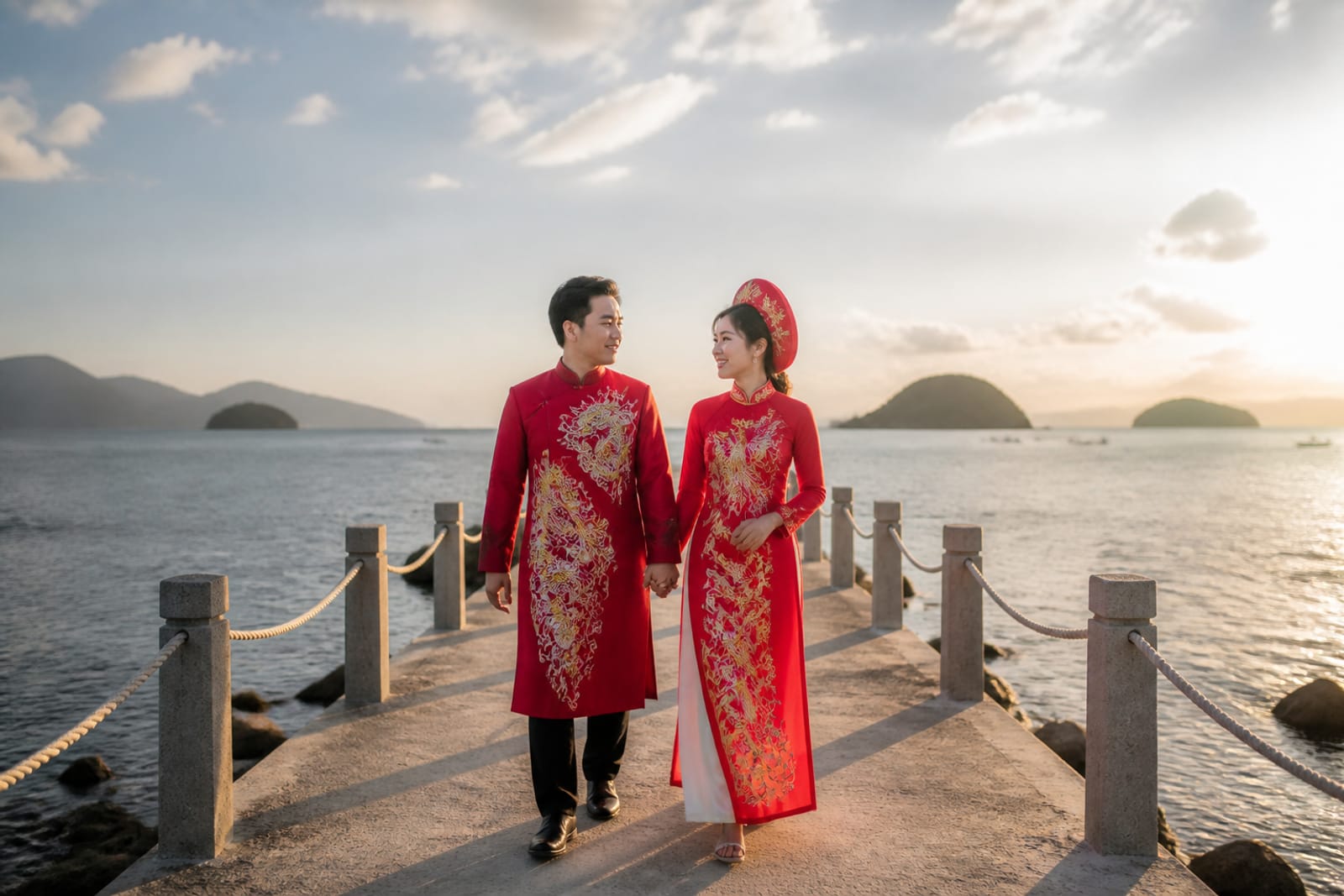
What time of day locks in the best light?
Light quality and direction determine whether your frames feel soft and romantic or harsh and flat. Diep Son's open, flat terrain means direct sun (9 am–4 pm) is unforgiving; morning and late afternoon are the only reliable windows.
Sunrise to 7:30 am delivers the softest, most directional light across any Diep Son corner. East-facing zones (main sandbar, north ridge) glow with apricot-gold side light; shadows are long, textured, and flattering. The sky is cool-toned and graduated (not blown-out white). Tour groups haven't arrived. This window is non-negotiable if you want frames that don't look like a midday snapshot. Logistically, it means a 5 am departure from town and a 6 am shoot start. Plan: hair and makeup done before you leave your hotel.
7:30 am to 9 am is acceptable for west-facing or shaded zones (mangrove channel, cliff cove). Light begins to lose its golden warmth but remains directional. Crowds start filtering in near the main sandbar; corners stay quiet. This is a compromise window—good light, shorter wake-up time, easier logistics.
9:30 am to 4 pm is avoid-unless-essential. Direct overhead sun creates dark eye sockets and neck shadows. The sky is blown-out white, flattening the landscape. Tour groups are dense. If your session lands here, shoot in deep shade (mangrove) or wait for late afternoon (after 4 pm, light turns golden again but is warm and fast-moving—you have ~90 minutes before dusk).
Late afternoon (4 pm–6 pm) on the main sandbar is spectacular if you can time it—the sun is low and western, turning sand and water golden. Crowds thin out. The trade-off: light changes minute-to-minute, and you're racing the sunset. Best reserved for a second-location shoot after your morning session.
What to check before you book: Confirm your photographer's experience with tidal timing (sandbar geometry changes with tide). Ask which corner they'll shoot first and why. Request they arrive 30 min before your shoot start to scout light and position. If they hesitate about 6 am starts or suggest "late morning golden hour," they likely don't know Diep Son's light behavior.
---
How does a directed photoshoot differ from a pose-heavy tour?
Most Diep Son couples sessions book a local tour operator who arranges a boat, guide, and a photographer tagging along. The result: couples posed stiffly against the sandbar backdrop, frames that look like a thousand other Diep Son photos, and limited outfit or hair changes. A directed session is a different offering.
| Approach | Logistics | What you do | Light control | Outfit/makeup | Frames you get |
|---|---|---|---|---|---|
| Tour operator + photographer tag-along | Shared boat; fixed timing; photographer joins a group shoot | Stand and smile at marked spots; limited movement | Photographer shoots what's there; no timing flexibility | Usually one outfit (wedding dress or casual); minimal hair/makeup prep | Generic landmark shots; you look like other couples at the same spot |
| Dedicated local photographer | Private booking; flexible timing; photographer directs your movement | Walk, look at each other, move toward light; photographer suggests poses based on light, not the landmark | Photographer picks timing and corner to match light; can return if light fails | Usually one outfit; hair/makeup arranged beforehand | Better-framed, less crowded shots; still limited directed narrative |
| Directed session (Cáo Studio model or equivalent) | One team (photographer, hair, makeup artist, stylist) books as a unit; private session; multiple-corner itinerary planned | Walk naturally, interact with each other, photographer narrates light and framing ("move toward the rocks so the sun is behind you") | Light drives the itinerary; photographer books specific corners at specific times based on sun angle; can pivot if conditions shift | Two outfits (e.g., ao dai, then casual wear); full hair/makeup at hotel before shoot; changes on-location | Narrative-driven frames—wide opening shots, intimate mediums, detail close-ups; edited short film; cohesive story |
Why direction matters at Diep Son specifically: The sandbar's geometry (curves, tidal flats, water reflections) rewards composition and movement timing. A photographer who says "walk that way, I'll frame you against the wet sand and sky" produces frames where your body language and the landscape tell a story. A photographer who places you on a spot and clicks produces a portrait that could be anywhere. Diep Son's light also shifts fast (especially sunrise); a director notices the 15-minute window when the north ridge is perfectly side-lit and moves the couple there, rather than shooting wherever they happen to be.
---
What season and weather guarantee the best light and access?
Diep Son sits on the south-central coast, where dry season (Feb–Aug) and rainy season (Sep–Jan) determine both visibility and shore access.
Feb–Apr (dry, warm, calm) is the optimal window. The sea is calm; the sandbar is fully accessible. Light is warm and directional. Humidity is moderate (not yet peak summer). Sunrise is clear; the sky has subtle gradation, not haze. Plan an early session; heat after 9 am becomes a factor for makeup and comfort. This is peak tourist season, so booking well in advance (6–8 weeks) is essential to secure your preferred date and photographer.
May–Aug (hot, mostly dry, occasional afternoon rain) works if you book very early light (5:30 am–7:30 am). Morning humidity is high; makeup prep needs extra time and setting spray. Afternoon thunderstorms are brief but can close boat access or create unsafe lighting for a moment. The sandbar remains accessible. Light is harsh by midday but golden-gorgeous at sunrise. Best for: couples willing to wake early and push through heat. Avoid: afternoon shoots in this season unless you're in deep shade (mangrove).
Sep–Dec (rainy season, especially Oct–Nov) is risky. The sandbar may be partially submerged due to high tide and rain runoff. Visibility is poor (haze, cloud cover, occasional heavy rain). Light is flat and gray. Tour boats may stop running. Sea is rough. For a photoshoot, avoid unless you're drawn to moody, overcast aesthetics (which can work, but require a photographer skilled in flat-light color grading). January clears slightly but Tet (late Jan–mid Feb) disrupts travel and services.
What to check before you book: Ask your photographer what the tide schedule is for your date (sandbar geometry changes with tide; some corners only appear at specific tide states). Confirm whether they shoot in rain, and whether you'll be rescheduled if weather is unsafe. Request a weather contingency plan—a secondary location or date option if visibility or access fails on the day.
---
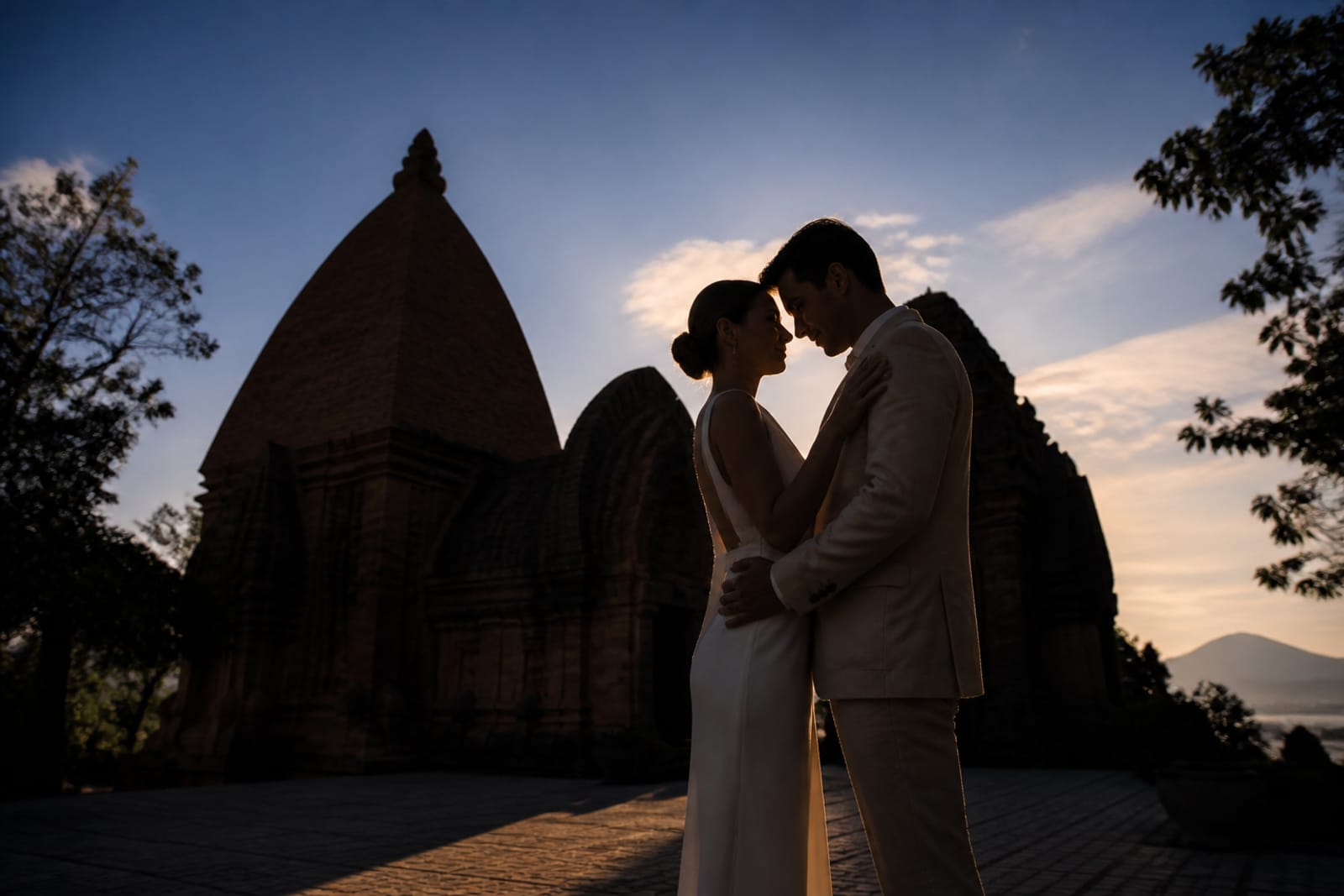
Should you bring an ao dai, or choose a casual dress?
Your outfit choice shapes which corners work and what frames you'll get. Diep Son's sand, salt water, and uneven terrain have practical and aesthetic implications.
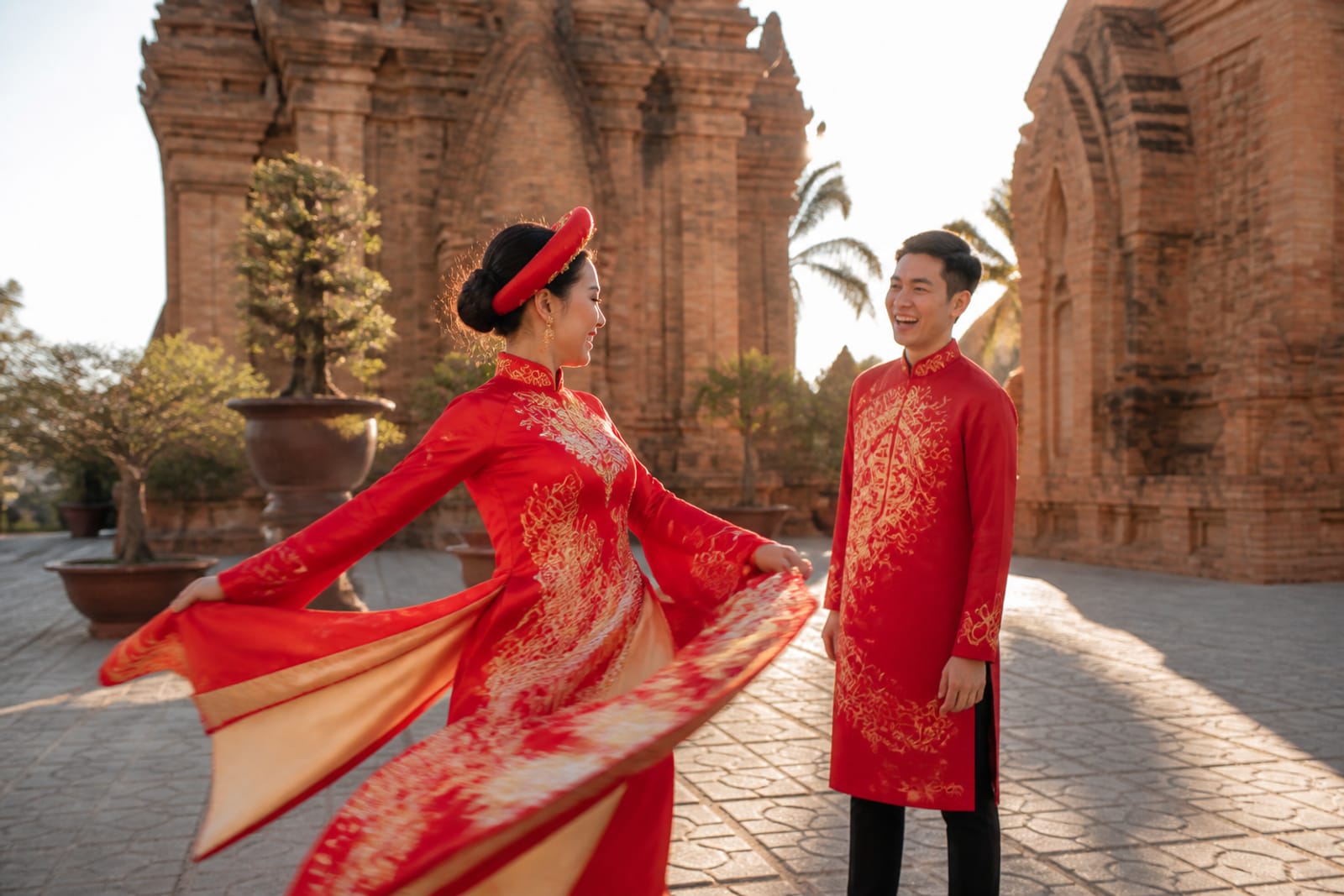
Ao dai (traditional silk two-piece Vietnamese dress) is iconic and photographs beautifully against the sandbar—the flowing áo (tunic) catches light and movement, creating elegant silhouettes. However, it requires care: salt water stains silk, sand gets into the layers, and wet fabric clings unpredictably. If you wear ao dai, plan it for the north ridge or central sandbar (minimal wading), not the mangrove channels or rocky cove where water is deeper or terrain is rough. Hire a makeup artist to come on-location so adjustments happen fast between outfit changes. Ao dai rental and styling are services offered by studios like Cáo Studio (which operates in Hanoi, Ho Chi Minh City, and Hoi An). For Diep Son specifically, coordinate with your local photographer or ask us on WhatsApp about outfit rental options in Phu Yen.
Casual wear (simple linen dress, shorts, white shirt) is practical and photographs well—fabric moves naturally, water and sand are less damaging, and you can wade or climb without risk. Frames feel more contemporary and movement-forward. Casual wear suits all four Diep Son corners equally; you're not restricted by fabric care.
Formal wedding dress (heavy satin, long train, beaded) is not recommended unless you plan a very short, contained session in one spot (e.g., main sandbar at sunrise, 45 min, no wading). The fabric stains, the weight becomes a liability on uneven terrain, and salt water is corrosive.
Mixed approach (best for directed sessions): Start with ao dai on the main sandbar (sunrise light, minimal movement), then change into casual wear for the north ridge or coves (more active framing, deeper water access). This gives you two distinct narratives in one shoot. Hair and makeup changes between outfits; a makeup artist on-location makes this seamless.
What to check before you book: Tell your photographer your outfit choice upfront. Ask whether they'll guide you through terrain challenges (e.g., "keep your hem above the waterline here," "walk on the wet sand for better grip"). If you're renting an ao dai locally, confirm the rental shop knows it will be exposed to salt water and sand, and ask about cleaning upon return.
---
What to check before you book
Photographer experience at Diep Son specifically. Ask to see their portfolio from this location. Look for whether their frames use the corners you prefer (main sandbar vs. ridge vs. mangrove), and whether light and composition look considered or accidental. If they've never shot there, ask how they'll scout and time it—a good photographer will research tide tables and light angle beforehand.
Early-morning logistics and hair/makeup timing. Confirm they can arrange for hair and makeup to be done at your hotel and ready before a 6 am departure. Ask how many outfit changes they can handle on-location (realistic answer: 1–2, not 4). Clarify whether they'll guide you through movement ("walk toward the light," "look at each other, not the camera") or expect you to know how to pose.
Tide and weather contingency. Ask what happens if the sandbar is inaccessible or light fails on your shoot day. Do they offer a free reschedule? Do they have a secondary location in mind? This matters because Diep Son is tide-dependent and rainy season can disrupt plans.
Turnaround and deliverables. How long until you get edited photos? What format do you receive (digital files, prints, video)? If a studio promises photos in 48 hours, confirm this is realistic given travel time and editing load. Ask about the short film many studios now deliver—is it included or an add-on?
Cost factors (not amounts—these vary by season, group size, and package). Understand what affects the price: early light (sunrise shoots cost more due to logistics), number of corners visited, whether hair and makeup are included, number of outfit changes, editing turnaround, and whether a video is part of the package. Ask whether travel time from your hotel is factored in or quoted separately. Booking multiple locations or an outfit rental typically increases cost; a single-corner, single-outfit session is simpler and less expensive.
---
For Diep Son, who should you book?
Cáo Studio (/pre-wedding-photoshoot) operates in Hanoi, Ho Chi Minh City, and Hoi An—not in Phu Yen province where Diep Son is located. However, we can advise you on how to structure a session (outfit coordination, directed framing, timing strategy) and connect you with trusted local photographers in Phu Yen, or discuss hybrid options if you're combining a Diep Son shoot with a pre-wedding session in Ho Chi Minh City or Hoi An.
If you're interested in a directed couples session in our service areas, explore our couple & family photoshoot and pre-wedding & elopement pages. We also offer makeup & hair at your hotel for Hanoi, Ho Chi Minh City, and Hoi An—essential if you're coordinating a multi-day photo trip.
For a Diep Son-specific session, book a local photographer with a strong Diep Son portfolio and experience directing light and movement. Ask them the five questions in the checklist above. Request their availability for your preferred date and early-morning timing.
---
📸 Book on WhatsApp — couple photoshoot | 💄 Makeup & hair at your hotel | 🌸 See the lookbook
---
FAQ
Can I do a pre-wedding session at Diep Son with Cáo Studio?
Cáo Studio operates in Hanoi, Ho Chi Minh City, and Hoi An. Diep Son (Phu Yen) is outside our service area. We recommend booking a local Phu Yen photographer or reaching out on WhatsApp to discuss how we might advise on direction and styling. If you're planning a multi-day pre-wedding shoot combining Ho Chi Minh City or Hoi An with a Diep Son trip, contact us—we can coordinate parts of it.
What time should I arrive at Diep Son to shoot at sunrise?
Plan to arrive at the sandbar by 6 am to catch soft light. This means a 5 am departure from your hotel and 5:30 am hair/makeup completion. Boats and guides typically depart town around 5 am; confirm departure time with your photographer or tour operator the day before.
Will my ao dai get damaged by salt water and sand?
Yes, salt water stains silk and sand gets into fabric layers. If you're wearing ao dai, plan shorter time in deeper water (stick to the main sandbar or north ridge, minimize wading). Consider a casual outfit for underwater or rough-terrain corners. Ask your ao dai rental shop about aftercare—they'll know how to clean salt stains.
How long does a couples photoshoot at Diep Son take?
A full directed session with hair/makeup, two corners, outfit change, and directed frames typically runs 3–4 hours on location. Add travel time from your hotel (30–60 min depending on where you're staying in Phu Yen town). Most photographers deliver edited photos within 2–3 days.
What happens if the sandbar is covered by tide when we arrive?
Tide tables determine sandbar exposure; high tides can submerge it partially or fully. Your photographer should check tide tables for your shoot date beforehand and time the session accordingly (usually early morning at low-to-mid tide). If access is impossible, ask them about a secondary nearby location—some nearby beaches or lagoons offer similar light and isolation. Confirm their weather/tide contingency plan before booking.
Can I wear a formal wedding dress at Diep Son?
It's not recommended. Heavy satin, long trains, and beaded details are damaged by salt water, sand abrasion, and uneven terrain. If you insist, plan a short, contained session in one spot (e.g., main sandbar at sunrise, 45 minutes, no wading). Casual wear or ao dai are better choices for Diep Son's terrain and light.
FAQ
Can I do a pre-wedding session at Diep Son with Cáo Studio?
Cáo Studio operates in Hanoi, Ho Chi Minh City, and Hoi An. Diep Son (Phu Yen) is outside our service area. We recommend booking a local Phu Yen photographer or reaching out on WhatsApp to discuss how we might advise on direction and styling. If you're planning a multi-day pre-wedding shoot combining Ho Chi Minh City or Hoi An with a Diep Son trip, contact us—we can coordinate parts of it.
What time should I arrive at Diep Son to shoot at sunrise?
Plan to arrive at the sandbar by 6 am to catch soft light. This means a 5 am departure from your hotel and 5:30 am hair/makeup completion. Boats and guides typically depart town around 5 am; confirm departure time with your photographer or tour operator the day before.
Will my ao dai get damaged by salt water and sand?
Yes, salt water stains silk and sand gets into fabric layers. If you're wearing ao dai, plan shorter time in deeper water (stick to the main sandbar or north ridge, minimize wading). Consider a casual outfit for underwater or rough-terrain corners. Ask your ao dai rental shop about aftercare—they'll know how to clean salt stains.
How long does a couples photoshoot at Diep Son take?
A full directed session with hair/makeup, two corners, outfit change, and directed frames typically runs 3–4 hours on location. Add travel time from your hotel (30–60 min depending on where you're staying in Phu Yen town). Most photographers deliver edited photos within 2–3 days.
What happens if the sandbar is covered by tide when we arrive?
Tide tables determine sandbar exposure; high tides can submerge it partially or fully. Your photographer should check tide tables for your shoot date beforehand and time the session accordingly (usually early morning at low-to-mid tide). If access is impossible, ask them about a secondary nearby location—some nearby beaches or lagoons offer similar light and isolation. Confirm their weather/tide contingency plan before booking.
Can I wear a formal wedding dress at Diep Son?
It's not recommended. Heavy satin, long trains, and beaded details are damaged by salt water, sand abrasion, and uneven terrain. If you insist, plan a short, contained session in one spot (e.g., main sandbar at sunrise, 45 minutes, no wading). Casual wear or ao dai are better choices for Diep Son's terrain and light.
Ao dai, makeup, hair and a local photographer in Hanoi or Saigon — one WhatsApp message.