/pre-wedding-photoshoot
Hidden Photo Corners Near Duong Lam Ancient Village for Couples
Duong Lam ancient village lies 50 km northwest of Hanoi's city center—a 90-minute drive through rice fields to reach feudal-era brick homes, stone wells, and narrow lanes untouched by modernity. Couples book pre-wedding shoots here for intimate, weathered backdrops that rival studio sets. Five hidden photo corners exist beyond the crowded limestone gate: clay-brick family compounds with moss-covered walls, flooded paddies in June–July, shaded bamboo groves near the village edge, a century-old communal house's shadowed interior, and a tributary stream lined with dense foliage. Light peaks at 8–9 a.m. (soft, directional) and 4–5 p.m. (golden, low-angle); midday (11 a.m.–2 p.m.) flattens skin tones and overexposes bright walls. Ao dai fabric catches on rough textures, so silk linings and sturdy undergarments prevent tears. Cáo Studio – Makeup & Photoshoot arranges Duong Lam sessions with local guides who know current accessibility—several corners flood in monsoon (May–Sep), and paths close after heavy rain. Booking requires WhatsApp coordination 2–4 weeks ahead to confirm light conditions, outfit changes, and whether guide fees are factored into session cost. Avoid Tet (late Jan–mid Feb) when villages close; Oct–Nov offers the clearest light and coolest temperatures. 📸 Book on WhatsApp — pre-wedding photoshoot
Which Duong Lam corner matches your ao dai style?
Five settings each suit different silhouettes and fabrics. Moss-covered clay compounds (western edge, near commune office): deep shadows on textured walls flatter silk ao dai with metallic threads; tight, body-hugging cuts photograph best because walls recede behind you. Flooded paddies (north side, June–July only): wide, reflective water demands looser, flowing silhouettes and bold colors; narrow ao dai risks tangling in water-logged edges, so choose a traditional cut with room at the hem. Bamboo groves (east boundary): dappled light requires high contrast ao dai (red on green, white on shadow); clingy fabrics cling to humid air and leaves, so opt for structured linen-cotton blends. Communal house interior (center): low ceilings and dark wooden beams need pale, luminous ao dai; tight cuts read better in confined space because loose fabric merges with background clutter. Tributary stream (south, seasonal): turbulent water and slippery banks suit adventurous, detachable train ao dai; avoid pure silk on wet rocks—cotton-blend rentals grip better. Book a trial ao dai fit 1 week before your shoot date; Cáo Studio's ao dai rental service lets you test movement and hem length in your chosen corner's actual light.
| Setting | Best For | Light Window | Why It Works |
|---|---|---|---|
| Moss clay compounds | Silk, metallic ao dai; body-hugging cuts | 8–9 a.m., 4–5 p.m. | Texture absorbs harsh noon light; deep shadow flatters contour |
| Flooded paddies | Bold, flowing ao dai; traditional silhouettes | 7–8 a.m., 5–6 p.m. | Water reflection lifts pale fabrics; wide cuts catch breeze |
| Bamboo groves | High-contrast ao dai; structured blends | 9–10 a.m., 3–4 p.m. | Dapple favors bold color; humid air suits stiff fabric |
| Communal house interior | Pale, luminous ao dai; tight cuts | 8–9 a.m. only (east window opens) | Low ceiling shrinks background; bright ao dai pops in gloom |
| Tributary stream | Adventurous, detachable-train ao dai; cotton blends | 6–7 a.m., 4–5 p.m. | Water grip + water-resistant fabric = confidence on slippery rock |
How does season affect photo corners and travel time?
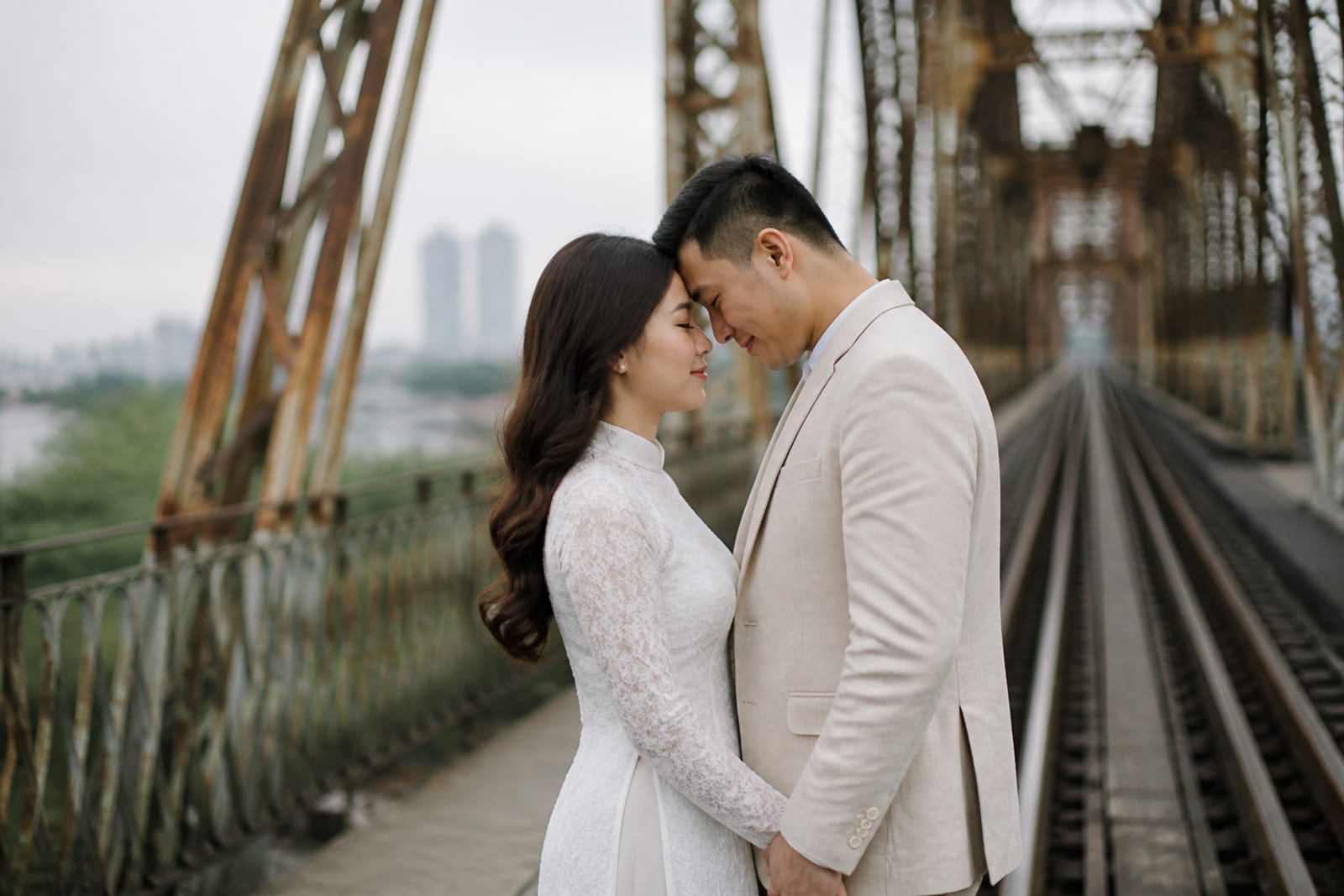
October–November (dry, cool, 15–20°C): moss is vibrant green, walls glow amber in late light, paths are solid. Drive time: 90 minutes from central Hanoi; no muddy detours. Best for couples who hate heat and humidity. December–February (cool, drizzly, 10–15°C): overcast mornings make uniform, soft light; afternoon clouds lift briefly 3–4 p.m. Flooded paddies drain; streams run swift. Drive time: same, but morning drizzle may delay start by 30 minutes. Worst for reflective water shoots; best for moody, intimate frames. March–April (mild, humid, haze frequent): early fog clears by 9 a.m.; afternoon humidity builds. Paddies begin to flood. Drive time: Hanoi traffic thickens Fri–Sun. Risky for consistent light; avoid if you hate re-shoots due to haze. May–September (hot, 32–38°C, heavy rain Mon–Thu): flooded paddies peak June–July; streams swell and close paths by 4 p.m. Midday heat forces 6–7 a.m. or 5–6 p.m. shoots only. Drive time: 2+ hours if roads flood. Only book if you love water reflections and accept reschedule risk. Cáo Studio coordinates real-time weather checks and suggests alternate corners if your chosen date risks flooding or haze. Ask on WhatsApp for current accessibility before locking your shoot date.
Why do couples skip the main gate and pick hidden corners?
The limestone "village entrance gate" and communal house courtyard photograph identically across hundreds of couple shoots posted online—predictability kills originality. Hidden corners offer texture contrast (weathered brick vs. polished ao dai), isolation (no tourists in frame), and micro-climates (shade that flatters skin without studio gear). Moss-covered compounds draw fewer visitors because they're 15 minutes' walk from the parking lot and require a local guide; most couples book 2-hour sessions that barely cover the central plaza. Flooded paddies are off-limits to casual walkers (water-logged rice is a crop, not a park) and only accessible via local farmers' permission—Cáo Studio's guides negotiate access; solo photographers cannot. Bamboo groves feel too "jungle-like" to couples who want recognizable landmarks, so they go unused despite delivering lush, magazine-cover light. Tributary stream corners sit beneath the village map tourists use; no signage directs walkers there. Communal house interiors require keys held by village elders—casual visitors see only the exterior. Hidden corners solve four problems: originality (no look-alike images online), light control (micro-climates suit different ao dai colors), season flexibility (some are dry when main areas flood), and intimate framing (isolation means no photo-bombing). Cost factors (guide fee, travel time, outfit changes) increase slightly because logistics are bespoke, not routine. Cáo Studio's Hanoi base (Cáo Studio Hanoi) sends a guide who scouts 1 week prior to confirm light and accessibility—this scouting is factored into session details confirmed on WhatsApp.
What outfits and makeup work best with Duong Lam's weathered textures?
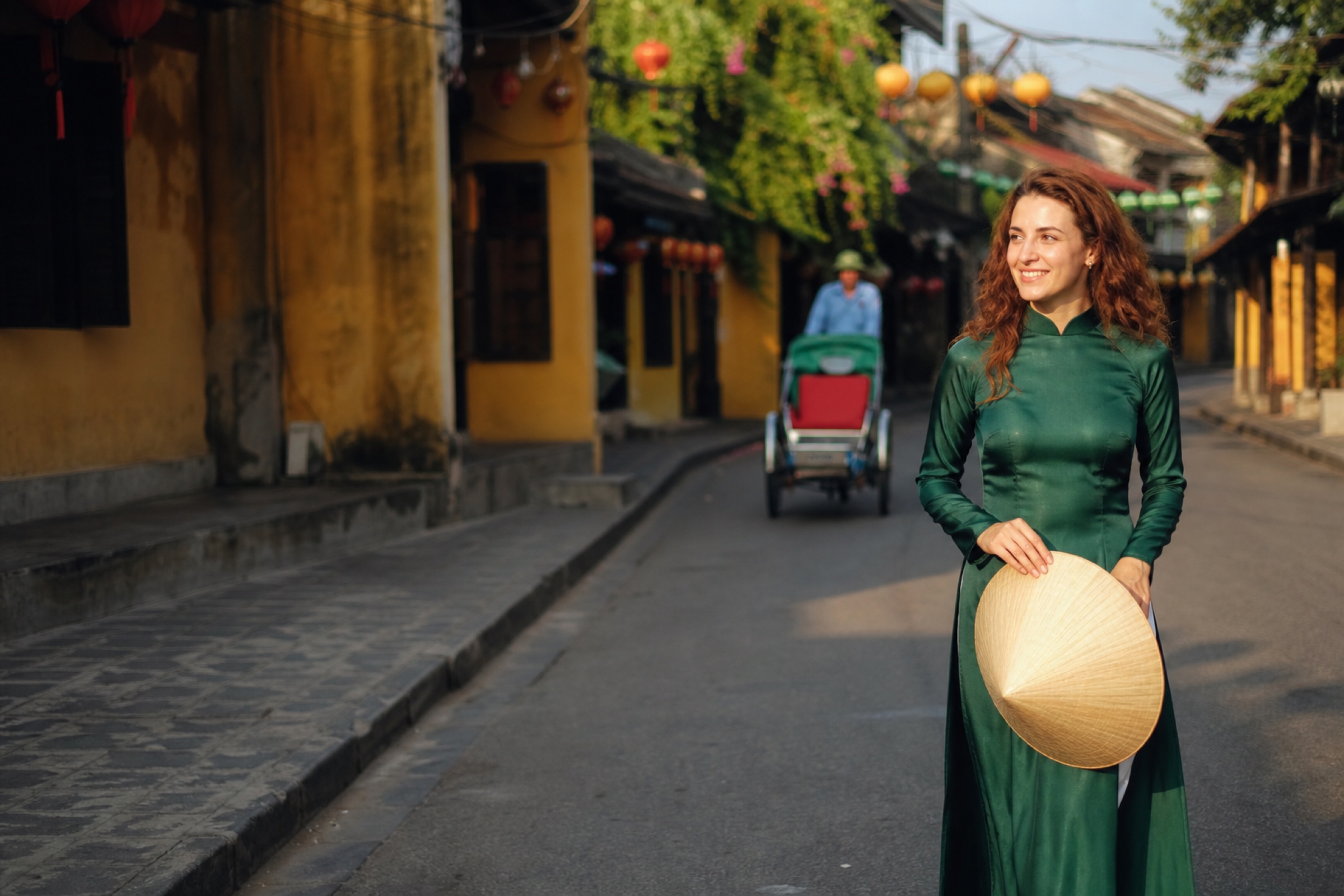
Ao dai is the natural choice, but texture matters more than color. Rough brick walls (most compounds) demand soft, high-contrast makeup: matte foundation (not dewy, which reflects on texture), warm eyeshadow in bronze or terracotta tones that echo clay, and bold brows that frame your face against busy backgrounds. Avoid glittery, reflective makeup—it competes with moss and shadow. Weathered wood interiors (communal house) suit jewel-tone ao dai (emerald, sapphire) with cooler makeup tones: silver eyeshadow, plum lips, cool-toned foundation to prevent looking washed out by darkness. Water-reflected paddies favor minimal makeup (matte base, cream blush) because water reflection amplifies any shine; bold lip color (red, coral) reads clearly at distance across fields. Bamboo and foliage demand long-lasting, waterproof makeup—humidity and shade mean frequent touch-ups; cream products (not powder) resist breakdown in damp air. Layered ao dai with traditional underpants (not modern shapewear) prevents chafing on stone paths and moss; wear thin cotton under-layers that dry quickly if they get wet. Hair should be pinned or braided (loose strands catch on rough walls and branches); loose waves work only at moss compounds (minimal vegetation) and open paddies. Cáo Studio's makeup & hair service includes location-specific consultations—your makeup artist visits Duong Lam's real light 1 day before your shoot to test products and touch-up timing. This ensures your foundation doesn't oxidize in humidity and your eyeshadow survives 4+ hours of shooting across five corners.
How to plan a multi-corner shoot day without wasting light?
A single Duong Lam shoot typically covers 2–3 corners in one 3–4 hour session. Compact itinerary (tight budget or time): moss compound (8–9 a.m., 90 min) → tributary stream (10–11 a.m., 60 min) → drive home. Skips lunch, suits couples who change ao dai once. Extended itinerary (full pre-wedding session): moss compound (7–8 a.m.) → communal house interior (9–10 a.m., requires key access) → lunch & outfit change (11 a.m.–1 p.m., at village restaurant) → flooded paddies or bamboo grove (1:30–4 p.m., golden hour begins 4 p.m.) → tributary stream bonus corner (4–5 p.m.) if light allows. Scheduling works backward from golden hour (4–5 p.m.): harsh midday light forces a lunch break, so plan outfit changes there. Drive time (90 min from Hanoi) means leaving at 5:30 a.m. for an 8 a.m. light start; returning to Hanoi by 6–7 p.m. means shooting stops by 5 p.m. to allow exit time. Cost factors include guide fees (per hour or half-day), vehicle rental (driver + car, often bundled), outfit laundry (mud splashes are real), and meal costs for your team. Cáo Studio coordinates the itinerary based on your chosen ao dai, makeup schedule, and preferred light windows—every minute is mapped to avoid standing idle during harsh noon light. Confirm the exact timeline on WhatsApp before arrival; if weather delays start time, your guide will compress corners to recover golden hour at the end.
What to check before booking your Duong Lam shoot.
Accessibility & permits: Ask Cáo Studio whether your chosen corners require farmer permission (flooded paddies, tributary stream) or elder access (communal house interior). Current weather forecasts; if rain is predicted, confirm whether your date reschedules or pivots to dry corners. Ao dai fit: Do a trial fit with your rental 1 week before. Test walking on uneven stone paths and climbing over rocks; if your hem catches, request a shorter cut or switch to a corner with flat ground. Ask whether your ao dai is water-resistant (for water-adjacent shoots); pure silk stains easily. Makeup durability: If humidity is high (May–Sep), request waterproof, long-wear products and a touch-up schedule every 90 minutes. Discuss with your makeup artist whether foundation is matte or luminous—shade corners demand luminous, but afternoon sun demands matte to prevent shine. Guide credentials: Confirm your guide speaks English (not all village guides do), has shot pre-wedding sessions before (not just tour-guide experience), and carries rain gear and first-aid kit. Ask how many couples they've guided to your chosen corner—experienced guides know which rocks are slippery and which paths are seasonal. Light forecast: Cáo Studio scouts 1 week prior and sends a light-forecast email; review it and confirm whether the proposed itinerary matches your vision. If you prefer golden-hour only, prioritize fewer corners over a rushed full-day. Travel & meals: Clarify whether your shoot package includes a driver (not all do); if not, budget a separate vehicle. Confirm meal logistics—does the village restaurant accommodate large groups? Can your makeup artist eat nearby without missing re-touch windows?
📸 Book on WhatsApp — couple photoshoot
FAQ
Is Duong Lam village an actual historical site, or a tourist village?
Duong Lam is a genuine 13th-century village with inhabited brick homes, working rice paddies, and active farming. Authorities preserve it as a cultural heritage zone—it is not a theme park. This authenticity is why textures and light are so compelling for photography. Hidden corners exist because they overlap private family land; Cáo Studio's guides negotiate access respectfully and ensure you don't intrude during harvest season.
Can we shoot Duong Lam if we're not wearing ao dai?
Yes. Modern couples outfits, wedding dresses, and casual Western clothing all photograph well in Duong Lam's textured settings. Ao dai is traditional and flatters weathered backdrops, but not mandatory. Discuss your outfit choice with Cáo Studio during booking so your guide can recommend corners that suit your fabric, color, and silhouette—a flowing wedding dress suits open paddies; jeans suit interior compounds.
What if it rains on our shoot day?
Rain closes several corners (flooded paddies become impassable, moss gets too slippery, interior light darkens further). Cáo Studio monitors forecasts 3 days prior and offers to reschedule or pivot to dry corners (moss compounds and communal house interior). Drizzle doesn't cancel shoots—soft, overcast light is actually favored by many couples for moody, romantic frames. Discuss reschedule policy on WhatsApp before booking.
Do we need to hire a guide, or can we explore Duong Lam alone?
Solo exploration is legal, but guides unlock hidden corners: they carry keys to the communal house, negotiate farmer access to paddies, and know seasonal closures. Without a guide, you're restricted to the public plaza and main streets. Cáo Studio includes a guide in session bookings; the guide coordinates with village elders and ensures your shoot respects active farming and private residences.
How much does Duong Lam transport cost?
Transport (vehicle + driver) is a separate cost factor negotiated on WhatsApp based on your group size, session duration, and whether you require pickup from central Hanoi or a hotel. Ask Cáo Studio for a transport quote alongside your shoot quote—many couples bundle both into one WhatsApp conversation for simplicity.
Can we visit Duong Lam with Cáo Studio's Saigon or Hoi An branches, or only Hanoi?
Duong Lam is 50 km north of Hanoi only. Cáo Studio's Hanoi branch coordinates all Duong Lam shoots. If you're based in Ho Chi Minh City or Hoi An, ask on WhatsApp whether Cáo Studio can travel to Duong Lam for your session; remote shoots are arranged case-by-case. Alternatively, explore Hoi An photoshoot options or book Hanoi trips that combine Duong Lam with other heritage shoots.
FAQ
Is Duong Lam village an actual historical site, or a tourist village?
Duong Lam is a genuine 13th-century village with inhabited brick homes, working rice paddies, and active farming. Authorities preserve it as a cultural heritage zone—it is not a theme park. This authenticity is why textures and light are so compelling for photography. Hidden corners exist because they overlap private family land; Cáo Studio's guides negotiate access respectfully and ensure you don't intrude during harvest season.
Can we shoot Duong Lam if we're not wearing ao dai?
Yes. Modern couples outfits, wedding dresses, and casual Western clothing all photograph well in Duong Lam's textured settings. Ao dai is traditional and flatters weathered backdrops, but not mandatory. Discuss your outfit choice with Cáo Studio during booking so your guide can recommend corners that suit your fabric, color, and silhouette—a flowing wedding dress suits open paddies; jeans suit interior compounds.
What if it rains on our shoot day?
Rain closes several corners (flooded paddies become impassable, moss gets too slippery, interior light darkens further). Cáo Studio monitors forecasts 3 days prior and offers to reschedule or pivot to dry corners (moss compounds and communal house interior). Drizzle doesn't cancel shoots—soft, overcast light is actually favored by many couples for moody, romantic frames. Discuss reschedule policy on WhatsApp before booking.
Do we need to hire a guide, or can we explore Duong Lam alone?
Solo exploration is legal, but guides unlock hidden corners: they carry keys to the communal house, negotiate farmer access to paddies, and know seasonal closures. Without a guide, you're restricted to the public plaza and main streets. Cáo Studio includes a guide in session bookings; the guide coordinates with village elders and ensures your shoot respects active farming and private residences.
How much does Duong Lam transport cost?
Transport (vehicle + driver) is a separate cost factor negotiated on WhatsApp based on your group size, session duration, and whether you require pickup from central Hanoi or a hotel. Ask Cáo Studio for a transport quote alongside your shoot quote—many couples bundle both into one WhatsApp conversation for simplicity.
Can we visit Duong Lam with Cáo Studio's Saigon or Hoi An branches, or only Hanoi?
Duong Lam is 50 km north of Hanoi only. Cáo Studio's [Hanoi branch](/hanoi) coordinates all Duong Lam shoots. If you're based in Ho Chi Minh City or Hoi An, ask on WhatsApp whether Cáo Studio can travel to Duong Lam for your session; remote shoots are arranged case-by-case. Alternatively, explore [Hoi An photoshoot options](/hoi-an) or book Hanoi trips that combine Duong Lam with other heritage shoots.
Ao dai, makeup, hair and a local photographer in Hanoi or Saigon — one WhatsApp message.