/pre-wedding-photoshoot
Hidden photo corners near Ghenh Rang for couples
Ghenh Rang sits on Quy Nhon's central coast, where the dry season (February–August) delivers the clearest light and calmest water for couple photoshoots. Hidden corners—small coves north of the main overlook, tide pools at dawn, and weathered stone formations inland—offer intimate backdrops without crowds. Timing is everything: arrive by 6:00 am to catch soft side light on rock faces, or shoot mid-afternoon (3:00–4:30 pm) when shadows deepen and the water turns jewel-toned. A couple session at Ghenh Rang typically involves a 2–3 hour shoot across 2–3 locations, with a guide navigating tides and access paths. Cáo Studio does not operate in Quy Nhon—book a local photographer with coastal experience—but this guide helps you brief them on light, outfit fit for rocky terrain, and how to avoid slipping on wet stone or shooting into glare. 📸 Book on WhatsApp — couple photoshoot | 💄 Makeup & hair at your hotel | 🌸 See the lookbook
Ghenh Rang is not a single spot; it's a 2-kilometre stretch of dramatic granite and limestone cliffs where the East Sea crashes into turquoise shallows. Most couples arrive mid-morning when sun is harsh and tour groups cluster at the main overlook. Knowing where light lives, when tides expose coves, and which outfits survive wet stone separates a forgettable tourist photo from frames worth keeping.
Why does Ghenh Rang's light change so dramatically by hour?
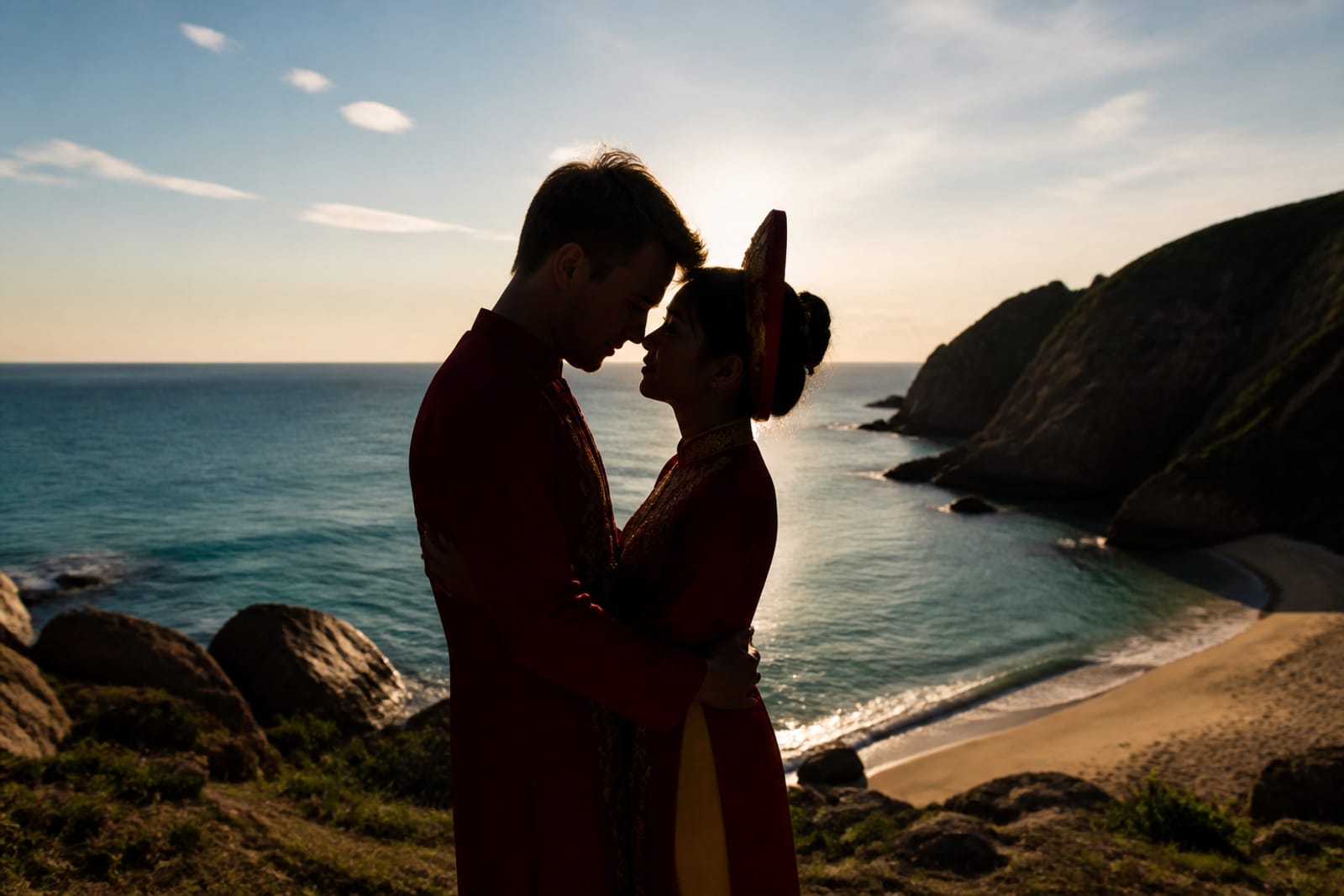
The cove faces east-southeast, so sunrise (5:30–6:30 am) bathes the right-side rock face in warm, low light that sculpts edges without flare. By 9:00 am, the sun climbs and light becomes flat and harsh across the water—difficult for skin tones and reflections. Afternoon light (3:00–5:00 pm) rakes across stone textures from the left and deepens water colour, but the sun sits lower, so you'll need to watch for lens flare if you're framing with water behind the couple. Golden hour (5:00–6:30 pm) is photogenic but arrives when local tour boats return and crowds peak. Choose dawn or mid-afternoon; brief your photographer on the exact hour and which direction to position you.
What hidden corners avoid the postcard-spot crowds?
The main overlook (where the carpark is) fills by 10:00 am. North along the coastal road, unmarked paths lead to smaller coves with fewer visitors—one sits 150 metres north and requires a 10-minute scramble over dry stone; another opens inland between the cliff and a small pagoda, offering shade and enclosed light. South, past the main overlook, tide pools appear at low tide (check tide times locally for your shoot date) and reflect sky like mirrors, creating a natural frame without needing the open sea behind you. The pagoda ground itself (visible from the main overlook) is quieter and offers a cultural backdrop, though permissions vary—ask your guide. Each hidden corner requires different footwear and has a 1–2 hour optimal window; scout with your photographer the day before if possible.
How do outfit choices affect what photos actually work at Ghenh Rang?
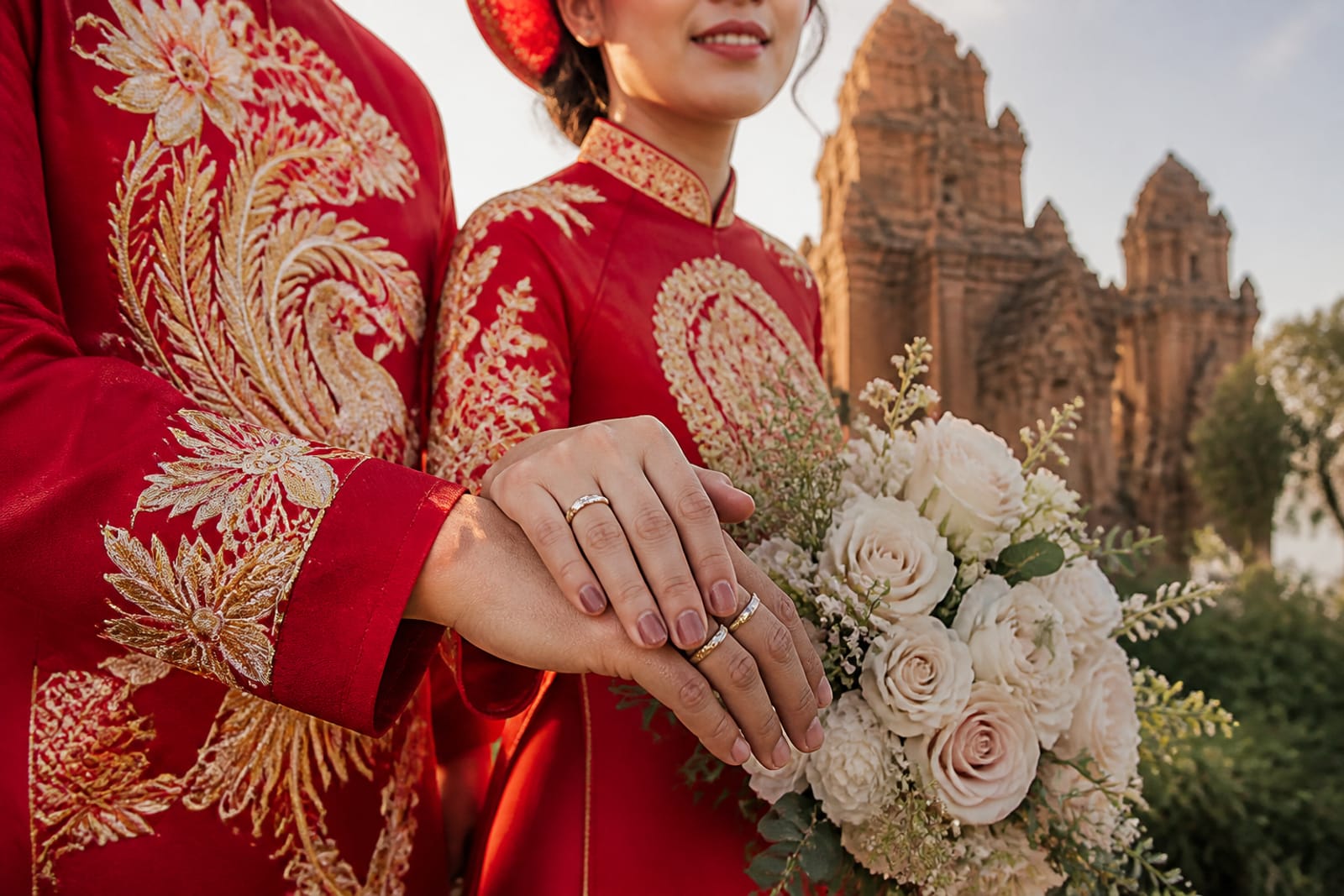
Light, stone texture, and water spray dictate what you wear and how it photographs. A lightweight ao dai in jewel tones (emerald, sapphire, burgundy) reads beautifully against turquoise water and granite, but the hem will drag if you walk on wet rocks—hem it or have the photographer shoot tighter framing. Casual couples in linen or silk benefit from layers: a shawl or loose overshirt breaks up the outfit and moves in wind, which photographs better than static fabric. Bare feet or sandals won't survive sharp stone; wear water shoes and plan to remove them for final frames (dry your feet first—wet skin on stone is a slip risk). Makeup should be waterproof; salt spray and humidity will test it. Avoid white or pale fabrics unless you're okay with them reading washed-out or needing heavy editing. Plan 2–3 outfit changes; each should suit the light and terrain at the specific corner you're shooting.
Which season delivers the best light and safe access at Ghenh Rang?
| Season | Light Quality | Water Clarity | Crowds | Rainfall Risk | Best For |
|---|---|---|---|---|---|
| Feb–Apr | Bright, clear side light; mild contrast | Turquoise, calm | Moderate; peak around Tet | Rare | Emerald and sapphire ao dai; consistent conditions |
| May–Aug | Strong shadows; noon glare; golden hour short | Clear but hot glare; noon harsh | High; tourists + domestic holidays | Rare; dry season | Dawn shoots; evening light; jewel-tone outfits |
| Sep–Dec | Overcast, flat; rare clear light | Murky after rain; tide pools disappear | Low; local | Frequent; Oct–Nov worst (typhoons) | Avoid; floods and access closure risk |
February to August is the dry window; February–April offers the calmest seas and mildest weather, while May–August brings hotter days and higher tourist traffic. Shoot dawn (5:30–6:30 am) in any month within the dry season to avoid crowds and secure soft light. Check the local forecast 3 days before; if rain is forecast, reschedule rather than risk access closure or muddy paths.
What logistics and safety checks matter before you book?
Ghenh Rang has no official public facilities; the carpark is small and fills by mid-morning. Book a photographer familiar with the site—they'll know tide times, safe rock routes, and which coves are accessible on your shoot date. Confirm they carry insurance and have a backup plan if weather closes access. Ask them to arrive 30 minutes early to scout light direction and brief you on footwear and movement (walking slowly across wet stone, using hands if needed). Check entry requirements locally; some coves require a guide or have informal access fees. Bring a dry bag for phones and wallets; salt spray and waves are unpredictable. Plan the shoot for a date within the dry season (Feb–Aug), and avoid weekends and holidays when crowds peak. Have your photographer send you a shot list one week before—it shows they've thought through light timing and outfit placement.
Ghenh Rang is not an everyday beach photo spot; it's a place where geology and tide and light align for a few specific hours on specific days. A couple photoshoot there succeeds because the photographer knows when to arrive, which corner to use at that hour, and how to move you so the frame tells the story rather than documenting a pose in front of rocks. If you're considering pre-wedding photoshoots in Quy Nhon, Ghenh Rang is a compelling option—but pair it with a local photographer who has shot there at least twice and can show you their dawn light work. Cáo Studio operates in Hanoi, Ho Chi Minh City, and Hoi An; for a Quy Nhon couple session, we recommend vetting a local team by their portfolio (ask to see light in similar seasons) and their readiness to shoot on your exact timeline.
What to check before you book a Ghenh Rang photoshoot
- Photographer's Ghenh Rang portfolio: ask for images shot between 5:30–7:00 am and 3:00–5:00 pm; if they only show noon or late-afternoon shots, light strategy is unclear.
- Tide times: confirm they've checked the tide calendar for your shoot date and can explain which corners open at low tide.
- Backup plan: ask what happens if weather closes access; do they reschedule, refund, or substitute a nearby location?
- Outfit prep meeting: they should discuss footwear, hem length, and layering by phone before the session.
- Shot list and timing: request their proposed shot list and arrival time; vague plans ("we'll shoot the rocks") suggest they haven't scouted.
- Accessibility for your age/fitness: if you have mobility concerns, confirm they can adapt the route and shoot from safer angles.
For couples planning a couple photoshoot elsewhere in Vietnam, explore Cáo Studio's Saigon base for pre-wedding work in Ho Chi Minh City or the Mekong, and our Hanoi studio for northern coast sessions. Read our pre-wedding photoshoot guide for advice on timing, outfit rental, and video add-ons.
FAQ
Is Ghenh Rang suitable for a pre-wedding photoshoot?
Yes. The dramatic cliffs and water work for couple imagery, but only during dry season (Feb–Aug) and ideally at dawn or mid-afternoon. The rocky terrain demands careful footwork and an outfit you don't mind getting damp. Hire a local photographer with coastal experience; Cáo Studio does not operate in Quy Nhon.
What should I wear to avoid slipping or looking washed out?
Wear water shoes or sandals you can remove for final frames. Choose jewel-tone ao dai or linen that contrasts with turquoise water. Avoid white or pale fabrics unless you're okay with post-processing. Bring a second outfit (different colour or style) to refresh frames across locations.
When is the absolute best time of day to shoot at Ghenh Rang?
Sunrise (5:30–6:30 am) delivers soft, directional light without crowds or glare. Mid-afternoon (3:00–4:30 pm) offers deeper water tones and shadow texture on stone. Avoid 9:00 am–3:00 pm when sun is overhead and light is flat and harsh.
Do I need a permit or local guide to shoot at Ghenh Rang?
No official permit is required for photography, but check locally a week before your shoot—informal access fees or guide requirements vary seasonally. Your photographer should clarify this when you brief them.
How many outfits should I plan for a Ghenh Rang session?
Plan 2–3 changes across the 2–3 hour session. Different colours and styles refresh the series and let you adapt to light changes between early-morning and late-morning corners. Coordinate with your photographer on locations so outfit changes happen at natural transition points.
Can I do a Ghenh Rang shoot in the rainy season (Sep–Dec)?
Avoid it. Oct–Nov brings typhoons and flooding that close access; water is murky and tide pools disappear. Feb–Aug is reliably dry and the only window for consistent results. If you're visiting outside this window, choose an indoor or studio alternative with your photographer.
FAQ
Is Ghenh Rang suitable for a [pre-wedding photoshoot](/pre-wedding-photoshoot)?
Yes. The dramatic cliffs and water work for couple imagery, but only during dry season (Feb–Aug) and ideally at dawn or mid-afternoon. The rocky terrain demands careful footwork and an outfit you don't mind getting damp. Hire a local photographer with coastal experience; Cáo Studio does not operate in Quy Nhon.
What should I wear to avoid slipping or looking washed out?
Wear water shoes or sandals you can remove for final frames. Choose jewel-tone ao dai or linen that contrasts with turquoise water. Avoid white or pale fabrics unless you're okay with post-processing. Bring a second outfit (different colour or style) to refresh frames across locations.
When is the absolute best time of day to shoot at Ghenh Rang?
Sunrise (5:30–6:30 am) delivers soft, directional light without crowds or glare. Mid-afternoon (3:00–4:30 pm) offers deeper water tones and shadow texture on stone. Avoid 9:00 am–3:00 pm when sun is overhead and light is flat and harsh.
Do I need a permit or local guide to shoot at Ghenh Rang?
No official permit is required for photography, but check locally a week before your shoot—informal access fees or guide requirements vary seasonally. Your photographer should clarify this when you brief them.
How many outfits should I plan for a Ghenh Rang session?
Plan 2–3 changes across the 2–3 hour session. Different colours and styles refresh the series and let you adapt to light changes between early-morning and late-morning corners. Coordinate with your photographer on locations so outfit changes happen at natural transition points.
Can I do a Ghenh Rang shoot in the rainy season (Sep–Dec)?
Avoid it. Oct–Nov brings typhoons and flooding that close access; water is murky and tide pools disappear. Feb–Aug is reliably dry and the only window for consistent results. If you're visiting outside this window, choose an indoor or studio alternative with your photographer.
Ao dai, makeup, hair and a local photographer in Hanoi or Saigon — one WhatsApp message.