/pre-wedding-photoshoot
Hidden photo corners near Hai Van Pass for couples
Hai Van Pass (the mountain pass separating Da Nang from Hue) sits at roughly 500 m elevation with sweeping coastal views, limestone cliffs, and misty valleys that create moody, romantic backdrops. The best light occurs at sunrise (6–7 a.m.) when mist hangs over valleys and golden rays hit clifftops; late afternoon (4–5 p.m.) also works but fades fast at this latitude. The central coast's dry season (February–August) offers clear skies; September–December brings typhoons, rain, and clouds that block sunlight. Hidden corners include the old French colonial overlook area, roadside pull-offs with valley views, and rocky outcrops near the pass summit. Hire a local Da Nang photographer familiar with Hai Van permits and access rules—Cáo Studio – Makeup & Photoshoot does not operate in Da Nang, but can guide you to a vetted local team or book a shoot in Hoi An (90 minutes south, equally dramatic for couples) or Hanoi. Budget 3–5 hours for a shoot; bring light jackets (it's cool at elevation) and check road conditions before booking, as landslides can close the pass mid-season. ---
What makes Hai Van Pass special for couples' photos?
Hai Van Pass straddles two provinces and climates, creating a visual transition zone that gives photos depth and drama. The serpentine road hugs steep cliffs on one side and opens to coastal vistas on the other—shots here feel cinematic without needing a sprawling beach. The cooler air at elevation means you won't sweat through makeup or clothing, which keeps images fresher during long sessions. Fewer tour groups stop at true hidden corners (most cluster near the roadside café), so you'll find quiet moments for intimate framing. Mist that rolls in from the sea at dawn creates a natural soft-focus effect behind your subjects, adding romance without artificial filters. The limestone geology and winding road itself become compositional elements—leading lines and textures that isolation-focused beaches can't match.
📸 Book on WhatsApp — couple & family photoshoot
Which hidden corners have the best light and least foot traffic?
The old French colonial observation area (accessible via a short walk from a marked pull-off on the pass) captures sunrise light hitting the coast below and the Hue-side valley to the north—golden hour here lasts 45 minutes before clouds roll in. The rocky outcrop at kilometer marker 8 (southbound, near the highest point) catches late-afternoon side-light that sculpts faces and silhouettes lovers against the sea. A narrow trail near the pass summit leads to a limestone platform overlooking both the Da Nang lowlands and Hue highlands simultaneously—dramatic but steep and loose; wear sturdy shoes and hire a guide who knows the route. The hairpin bend viewpoint (marked by parked tour buses during midday) empties after 8 a.m., offering dappled light filtered through vegetation and the road's curve as a framing tool. Start scouting these spots the day before your shoot or hire your photographer early to scout; light changes rapidly at elevation, and mist timing is unpredictable.
| Spot | Best for | Light/Season | Why it works |
|---|---|---|---|
| French colonial overlook | Sunrise romance, valley depth | Golden hour Feb–Aug, dawn mist | Faces lit from behind, landscape framed |
| Km 8 rocky outcrop | Silhouettes, dramatic profiles | Late afternoon, clear skies | Side-light sculpts features, sea backdrop |
| Summit limestone platform | Dual-landscape shots (both coasts) | Midday clear, less ideal for skin | Unique geography, leading viewer's eye |
| Hairpin bend viewpoint | Dappled, soft light portraits | Mid-morning year-round | Natural diffusion, fewer crowds post-9 a.m. |
How do you avoid weather and typhoon season when booking?
February through August is the dry season on the central coast; within this window, March–May offers the most stable light and clearest skies (May gets warm but rarely rains until late). June–August remain dry but heat and haze build after 9 a.m., so book early morning slots or accept softer, hazier light. September–December is typhoon season; October–November is worst, with frequent heavy rain, landslides, and flash flooding that can close Hai Van Pass for days without warning. If you're set on autumn dates, book flexibility into your contract—a professional photographer should allow rescheduling if weather blocks access or kills light. Mist is common year-round at dawn but burns off by mid-morning; don't assume mist=bad light; moody, atmospheric shots often prefer it. Check weather forecasts 5 days before, not weeks ahead (tropical weather shifts fast), and have a backup indoor or lower-elevation location (a hotel or resort) if conditions deteriorate.
Should you hire a local Da Nang photographer or book a studio package?
A local Da Nang photographer (vetted through reviews and portfolio matching your style) offers flexibility—they know Hai Van permit rules, access gates, safe parking, and can navigate weather changes on the fly. They typically charge per hour or a session rate; discuss whether pricing includes travel time to the pass (30–40 minutes from the city) and how many outfit changes they'll accommodate. Studio packages like those from Cáo Studio – Makeup & Photoshoot coordinate hair, makeup, wardrobe, and editing in one workflow but are based in Hanoi, Ho Chi Minh City, or Hoi An—if you choose a studio, Hoi An (90 km south of Hai Van, same coastal climate) is closer and equally cinematic for pre-wedding shoots, with the bonus of ancient-town backdrops and the studio's full hair/makeup team on-site. Hiring locally for Hai Van gives you autonomy and local expertise; a studio package gives you cohesion and professional coordination but less flexibility on location. If booking a studio for a Hai Van Pass shoot, confirm they've worked there, whether they'll hire a local assistant for permits, and what happens if weather cancels the day.
What clothing and gear protect image quality in Hai Van's wind and cool air?
The pass is windier and cooler than sea level—expect temperatures 5–8°C lower than Da Nang city. Wear long-sleeved layers beneath your ao dai or wedding dress so you stay warm without sacrificing silhouette; a light cashmere or silk wrap over bare shoulders works for elegance. Avoid loose, billowing fabrics that tangle in wind; fitted ao dais and structured dresses photograph better on cliff edges. Bring a waterproof bag for cameras and phones—mist and unexpected drizzle can damage electronics. If wearing makeup (essential at this elevation where cool air sets it longer), use a waterproof, matte foundation; humidity and wind wash out standard bases faster. Shoes: non-slip soles are mandatory on limestone and loose gravel; heels are impractical and unsafe. Ask your photographer to bring lens cloths and a polarizing filter to cut glare off the sea and reduce haze—this detail separates amateur and professional shots on misty days. Schedule a makeup & hair session the morning of the shoot if possible, or hire a makeup artist to travel with you; touch-ups at elevation in wind are almost impossible.
What to check before you book a Hai Van Pass photoshoot
Photographer's experience: Ask to see a portfolio from Hai Van Pass or similar high-altitude coastal passes. Request specific examples of dawn light, misty conditions, and how they handle fast-changing weather.
Access and permits: Confirm whether your photographer has permits to stop at certain pull-offs or if you'll be limited to roadside shoulders. Some sections require local guide approval; a pro should know this.
Travel time cost factors: Discuss whether photographer fees include round-trip travel from their base (typically Da Nang city, 45–60 minutes each way). Early morning shoots mean pre-dawn departures; confirm they charge extra for this.
Rescheduling flexibility: Written into the contract, a clause allowing free rescheduling if weather closes the pass or kills light. Hai Van closes without notice during typhoons.
Outfit and makeup logistics: If using a studio package (e.g., Cáo Studio's Hoi An branch), confirm they can do hair and makeup at a hotel in Da Nang and travel to Hai Van, or if you meet them elsewhere.
Backup location: A secondary indoor or sheltered spot (hotel, resort, botanical garden near Da Nang) if wind or rain forces you indoors mid-shoot.
Timing expectations: A full Hai Van shoot (including travel, two outfit changes, and light chasing) typically runs 4–6 hours; half-day options (2–3 hours, one outfit) are faster but give less variety. Confirm how many edited images you'll receive and the delivery timeline.
---
Nearby alternatives if Hai Van Pass closes
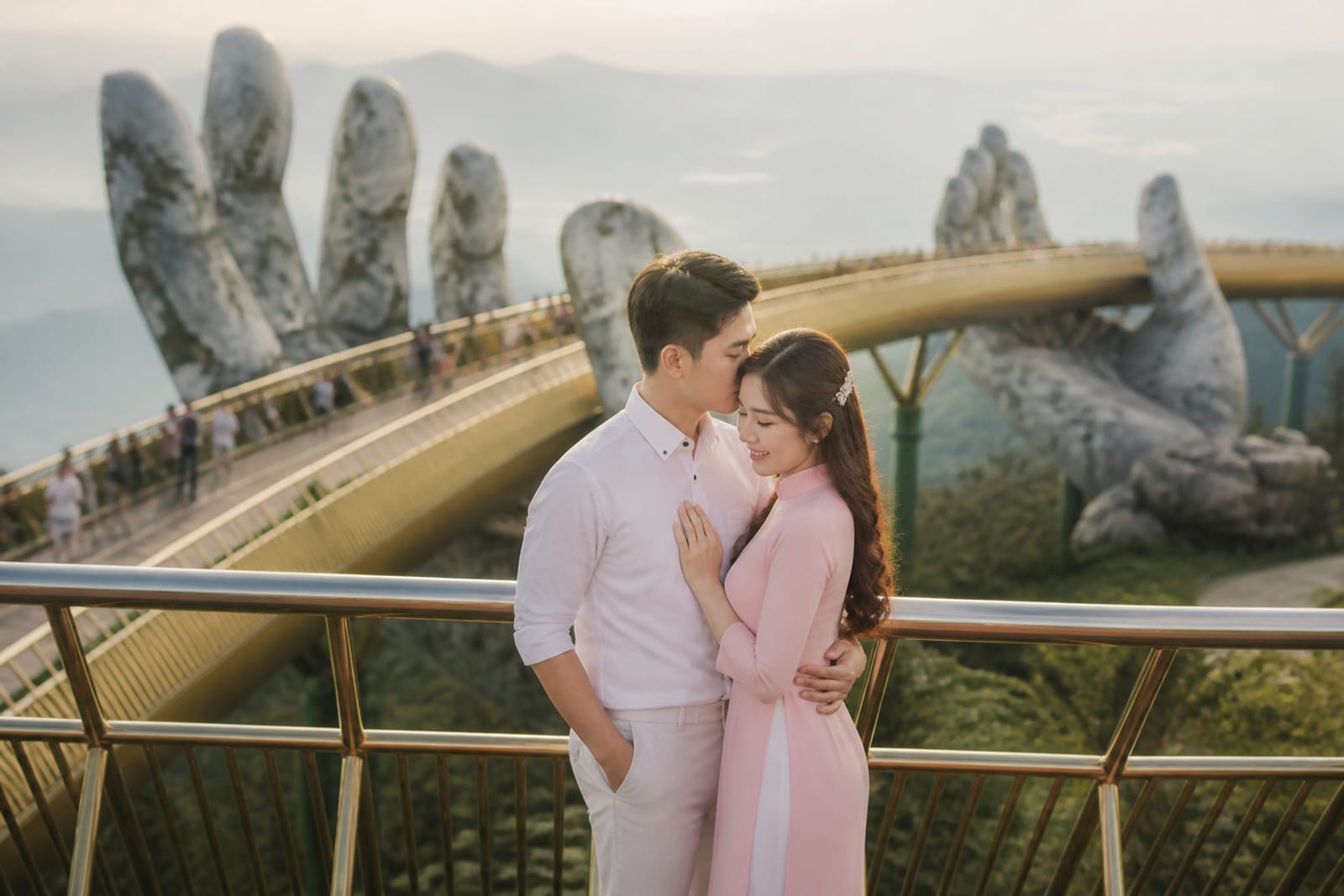
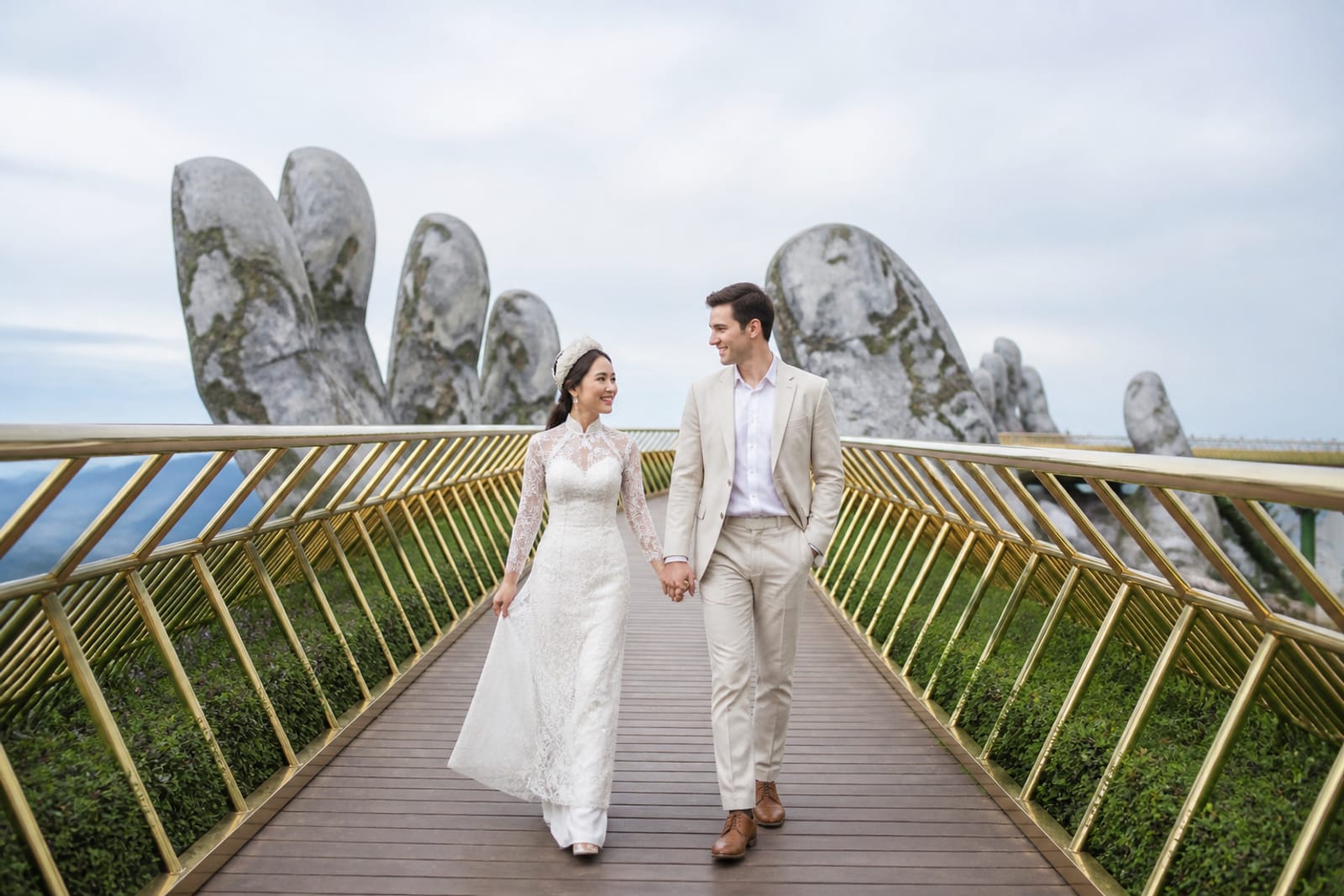
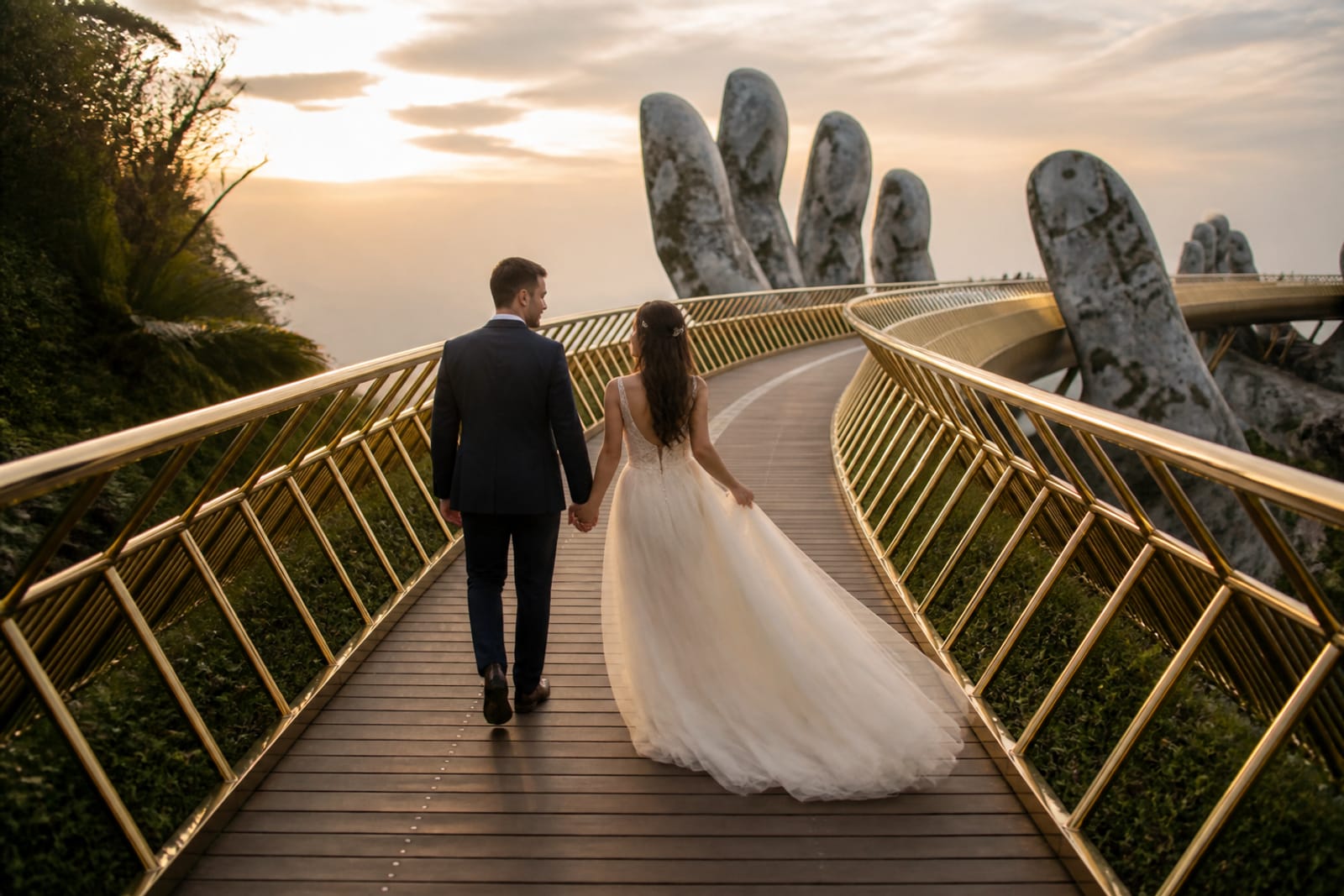
If typhoon warnings or poor forecasts rule out Hai Van, Da Nang has backups within the same central-coast climate. My Khe Beach offers sunrise shots with softer, beachy romance (busier, but consistent light). Marble Mountains (Ngu Hanh Son) sit inland 15 km south, with temple steps, cave interiors, and elevated views over the city and coast—less wind than Hai Van but more crowded. Ba Na Hills (45 minutes west) is cooler, misty-atmospheric, and has the Golden Bridge backdrop, though crowds are heavy. For the most seamless pre-wedding experience—hair, makeup, styling, and photography all coordinated—consider booking a studio shoot in Hoi An instead; Cáo Studio works there by appointment, and the ancient town and nearby My Khe Beach offer equally moody light with zero logistics hassle.
---
FAQ
Is Hai Van Pass safe for a photo shoot?
Yes, if you hire a photographer who knows the road. The pass is a major highway; your team must have reliable transport, know where to legally stop, and watch for traffic. Don't attempt scaling cliffs solo or standing in the road for shots—a professional manages this.
Do I need a permit to shoot on Hai Van Pass?
Most roadside pull-offs don't require permits, but some overlook areas (especially colonial heritage sites) may. Ask your hired photographer in advance—a local Da Nang pro will know current rules. A studio photographer booking the location should confirm access before confirming your date.
What's the best time of day to shoot at Hai Van?
Sunrise (6–7 a.m.) offers golden light and mist; late afternoon (4–5 p.m.) gives warm side-light but fades fast. Midday is harsh and hot. Avoid 8–11 a.m. and 1–4 p.m. when clouds thicken and light flattens—unless moody, overcast tones suit your style.
Should I book a local photographer or a studio package for Hai Van?
A local Da Nang photographer offers flexibility and permit knowledge. A studio package (Hoi An branch, for instance) gives you coordinated hair, makeup, and editing but less on-the-day autonomy. If Hai Van logistics stress you, choose Hoi An—similar scenery, less travel hassle, studio team on-site.
What if weather cancels my shoot?
Confirm a rescheduling clause in your contract before paying. Typhoon season (Sep–Dec, worst Oct–Nov) carries closure risk; book Feb–Aug if possible. A professional photographer should offer free reschedules if weather makes light impossible or closes the pass.
How much does a Hai Van Pass photoshoot cost?
Pricing depends on photographer experience, travel distance, outfit changes, and editing scope. Contact us on WhatsApp +84 338 762 340 for a quote if you'd like Cáo Studio to coordinate a shoot in Hoi An (our closest location to Hai Van) or discuss a Hanoi or Saigon session instead.
FAQ
Is Hai Van Pass safe for a photo shoot?
Yes, if you hire a photographer who knows the road. The pass is a major highway; your team must have reliable transport, know where to legally stop, and watch for traffic. Don't attempt scaling cliffs solo or standing in the road for shots—a professional manages this.
Do I need a permit to shoot on Hai Van Pass?
Most roadside pull-offs don't require permits, but some overlook areas (especially colonial heritage sites) may. Ask your hired photographer in advance—a local Da Nang pro will know current rules. A studio photographer booking the location should confirm access before confirming your date.
What's the best time of day to shoot at Hai Van?
Sunrise (6–7 a.m.) offers golden light and mist; late afternoon (4–5 p.m.) gives warm side-light but fades fast. Midday is harsh and hot. Avoid 8–11 a.m. and 1–4 p.m. when clouds thicken and light flattens—unless moody, overcast tones suit your style.
Should I book a local photographer or a studio package for Hai Van?
A local Da Nang photographer offers flexibility and permit knowledge. A studio package ([Hoi An branch](/hoi-an), for instance) gives you coordinated hair, makeup, and editing but less on-the-day autonomy. If Hai Van logistics stress you, choose [Hoi An](/hoi-an)—similar scenery, less travel hassle, studio team on-site.
What if weather cancels my shoot?
Confirm a rescheduling clause in your contract before paying. Typhoon season (Sep–Dec, worst Oct–Nov) carries closure risk; book Feb–Aug if possible. A professional photographer should offer free reschedules if weather makes light impossible or closes the pass.
How much does a Hai Van Pass photoshoot cost?
Pricing depends on photographer experience, travel distance, outfit changes, and editing scope. Contact us on WhatsApp +84 338 762 340 for a quote if you'd like Cáo Studio to coordinate a shoot in Hoi An (our closest location to Hai Van) or [discuss a Hanoi or Saigon session](/pricing) instead.
Ao dai, makeup, hair and a local photographer in Hanoi or Saigon — one WhatsApp message.