/pre-wedding-photoshoot
Hidden photo corners near Han River Bridge for couples
Han River Bridge (Cầu Hàng) is a working transport span with industrial steel geometry and soft north-light reflection off water—ideal for editorial couple shots from sunrise to mid-morning. Secluded corners cluster along the riverbank below and on narrow streets (Hàng Bông, Ta Hien junction) where foot traffic thins after 7 a.m. Winter (Dec–Feb) brings clear skies and sharp shadows; summer (May–Sep) is hotter and hazy. A pre-wedding photoshoot here typically runs 2–4 hours, moving between 4–6 micro-locations to capture the bridge's geometry, textured brick, and reflections without permit delays. Cáo Studio – Makeup & Photoshoot coordinates timing, location scouting, and outfit transitions for couples choosing this route; costs depend on session length, outfit changes, and travel between spots. Check weather and sunrise time before booking; mid-morning crowds near the bridge approach fast. ---
What makes Han River Bridge corners special for couple photos?
Han River Bridge's structure—layered steel beams, industrial railings, weathered girders—creates natural leading lines and texture that frames couples without needing ornate sets. The water below reflects north light diffusely, softening harsh shadows on faces even in summer. Nearby alley walls (Hàng Bông, Phố Huế junctions) show aged brick, patina, and Vietnamese street life—a contrast to the bridge's geometry that reads well in editorials. The location is 15 minutes walk from Hanoi Old Quarter, so couples can also shoot temple grounds or shophouse facades in the same session. The trade-off: foot traffic increases after 8 a.m., and the bridge itself remains an active road (closed to pedestrians—shooting happens from side paths and embankments only).
Which season and time of day gives the best light?
📸 Book on WhatsApp — pre-wedding photoshoot
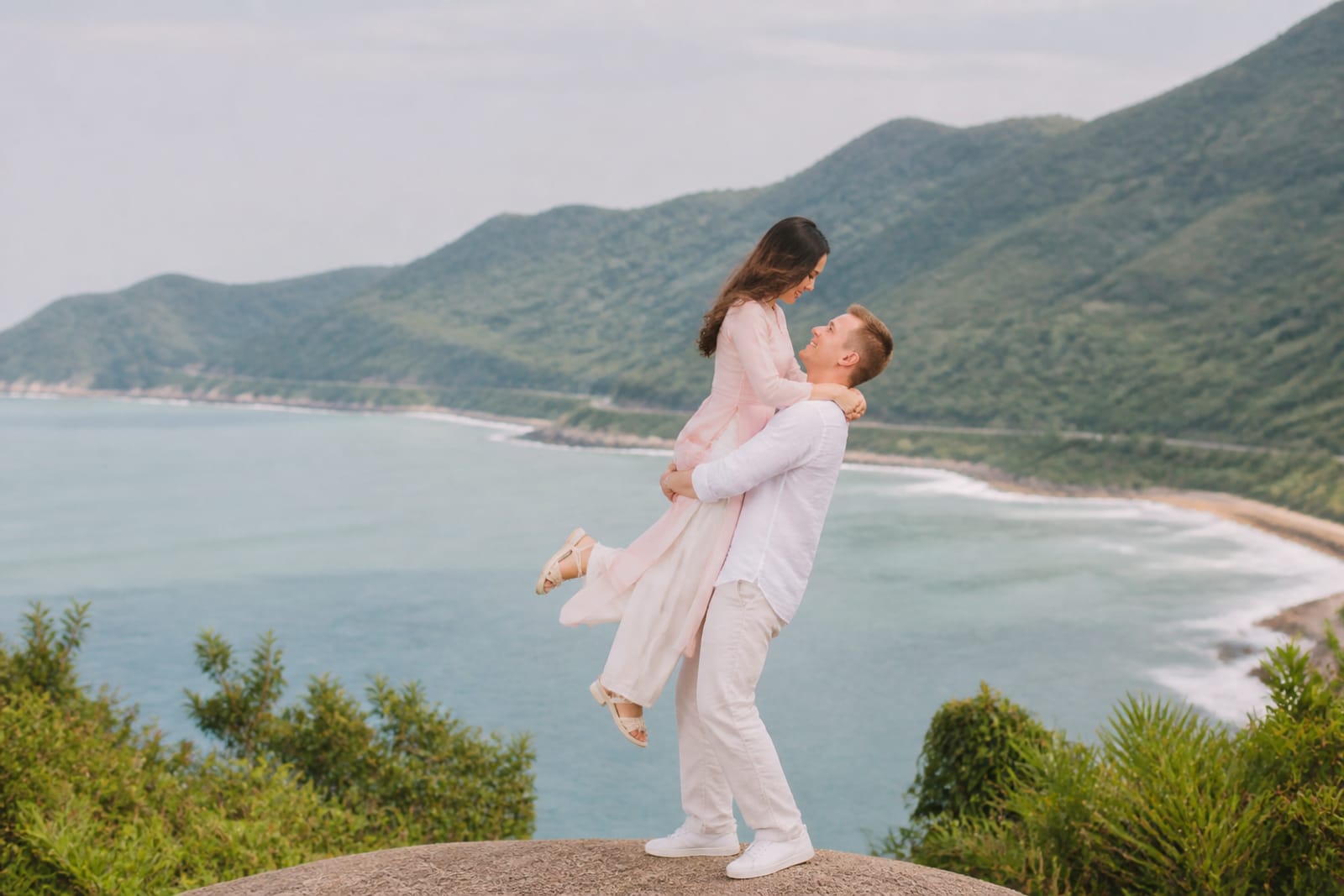
Winter (Dec–Feb) is optimal: clear skies, cool temps, and low sun angle create crisp shadows and warm skin tone at sunrise (6:30–7:30 a.m.). Spring (Mar–Apr) works well but temperatures rise and haze increases by late April. Summer (May–Sep) brings hot, grey mornings—diffuse but flat light—and afternoon downpours; sunrise is earlier (5:30 a.m.) and humidity is high, affecting makeup longevity. Autumn (Sep–Nov) transitions from rainy to clearer; late October through November is secondary-best after winter. Avoid mid-morning (8:30 a.m.–4 p.m.) when pedestrian and motorbike traffic peaks and direct sun creates blown highlights on steel. Shoot 30–90 minutes after sunrise for warm, directional light on the bridge's east face; move to shaded riverbank for softer couple portraits by 7:45 a.m. before crowds arrive.
How do hidden corners near Han River compare to other Hanoi pre-wedding spots?
| Spot | Best For | Light & Crowd | Why It Works |
|---|---|---|---|
| Han River Bridge + alleys | Editorial, urban edge | Golden hour, clears by 7:45 a.m. | Steel geometry, brick texture, water reflections, short walk to multiple micro-locations |
| Tran Quoc Pagoda / West Lake | Soft, traditional | Sunrise to 8 a.m., moderate crowds | Trees, water, temple calm; less dramatic but serene |
| Hoan Kiem Lake Old Quarter | Tourist-accessible, romantic | Sunrise only, very crowded by 7 a.m. | Iconic; limited angle variation; hard to find isolation |
| Ninh Binh limestone outcrops | Drama, nature | Soft all morning, very few tourists | Requires 2-hour travel; best for full-day elopement; quieter |
| Railway tracks (old Hanoi line) | Moody, symmetry | Low sun angle, footfall light | Linear framing; permit & safety concerns; local photographer required |
Han River Bridge's advantage is proximity to Old Quarter, varied micro-locations, and industrial-meets-nature contrast—all within one 2–4 hour shoot without travel time. Couple photoshoots here work for couples seeking editorial or lifestyle over purely romantic. Tran Quoc is better for traditional Vietnamese aesthetics; Ninh Binh suits elopement day-trips.
What outfits and preparation work best for this location?
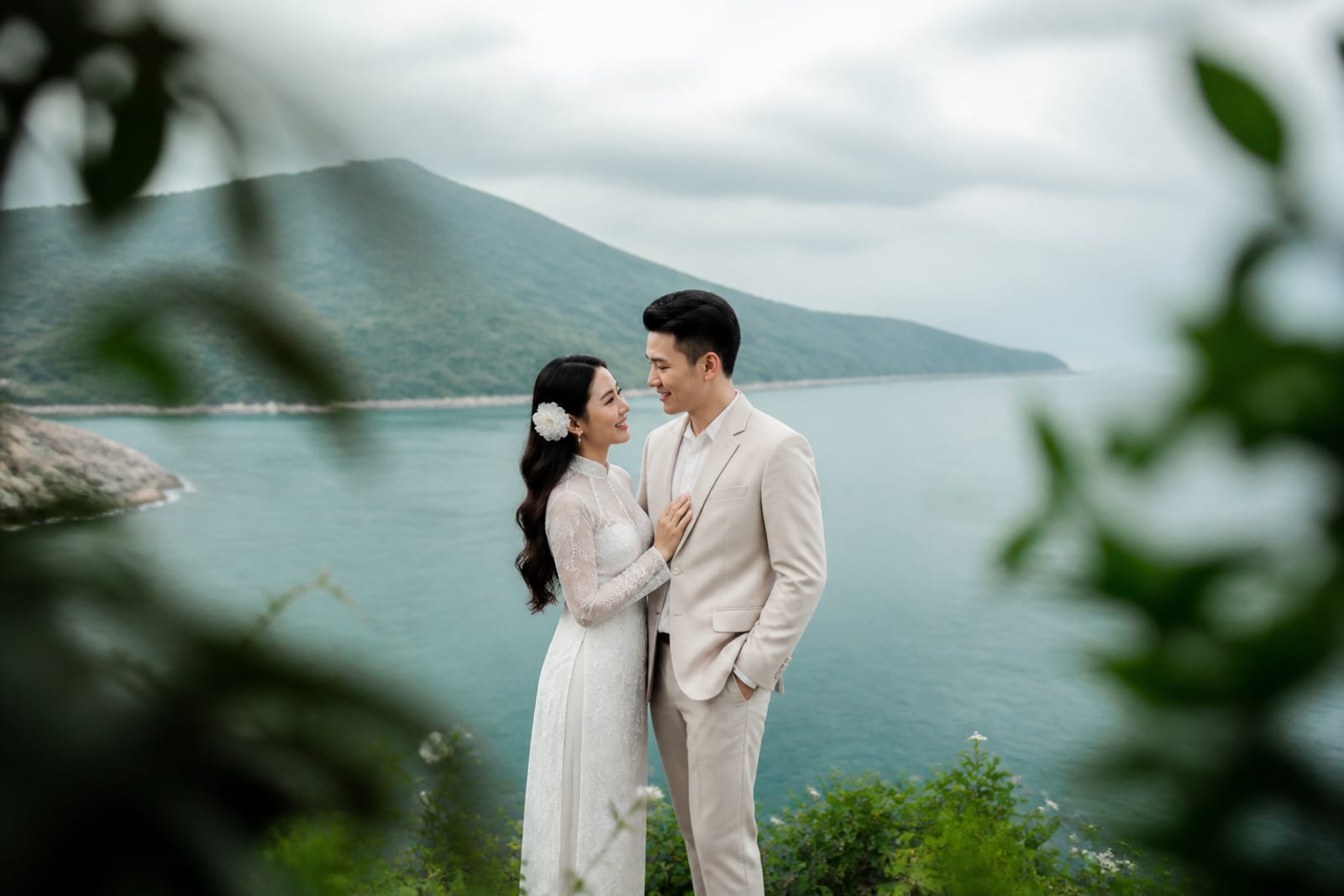
Steel grey, navy, cream, and black read sharply against the bridge's industrial tones. Textures—linen, cotton, tailored cuts—photograph well on aged brick. Avoid bright red or neon (competes with the environment); pastels can wash out in grey winter light. Ao dai worn for 1–2 shots works if styled with neutral tailoring (white or cream); the traditional silhouette contrasts beautifully with modern steel. Jeans, linen trousers, fitted shirts, and structured dresses suit the aesthetic. Shoes: avoid heels on uneven riverbank stones; bring flat leather shoes or clean sneakers. Makeup should be long-wearing (humid air, water spray) and matte (steel reflects shine); makeup & hair at your hotel can be arranged beforehand if your session starts early. Bring a shawl or lightweight layer for wind near water. Plan outfit changes (2–3 looks per shoot) to refresh the frame without relocating far.
How do you avoid crowds and permit issues at Han River Bridge?
Arrive by 6:15 a.m. before motorbike traffic and pedestrians; the bridge is busiest 7:45 a.m.–5 p.m. Shooting happens on side paths, embankments, and adjacent alleys—not on the bridge roadway itself (active traffic). No permit is required for the public riverbank; street photography in Old Quarter alleys is tolerated early morning. Avoid holiday weeks (Tet, late Jan–mid Feb) when crowds and closures spike. Communicate your route in advance with your photographer so they know which embankment access points are safest; some sections have loose stones or water runoff. If you're booking with a Hanoi studio like Cáo Studio, the team scouts access routes and timing to avoid peak traffic and secure stable footing for couples. Never shoot at midday when harsh light and foot traffic converge.
What to check before you book a Han River Bridge couple photoshoot?
- Sunrise time: confirm the exact time for your chosen date (varies Dec–Sep).
- Weather: check 5-day forecast; winter is clear but rare rain halts shoots; summer rain is predictable mid-afternoon.
- Outfit fit: ensure dresses and trousers move freely on uneven embankment paths; test shoes on stone.
- Makeup durability: if shooting in humid summer, request waterproof or sweat-proof touch-ups.
- Session length & locations: confirm how many outfit changes and micro-locations are included (riverbank, alley junctions, bridge side-angle, brick walls).
- Travel & transitions: ask if your photographer includes time moving between spots (typically 10–15 min per transition).
- Edited file delivery: clarify final photo count, editing style, and delivery timeline (varies by studio).
- Backup plan: ask what happens if weather forces rescheduling; reputable studios offer free rebooking within 30 days.
---
For couples set on Han River Bridge's aesthetic, start with your session time (winter sunrise is non-negotiable for light quality) and work backward to outfit prep and makeup timing. If you're based in Hanoi, a pre-wedding photoshoot here integrates well with a 1–2 day itinerary; many couples add a proposal or anniversary shoot at another location for variety. Couples traveling from abroad often combine Han River with a Hoi An photoshoot—ask about multi-destination packages. Check the lookbook for real session examples in Hanoi locations; the FAQ has detailed breakdowns of session logistics and outfit changes.
A note on local photographers: if you're not booking with an established studio, vet any freelance photographer by recent portfolio (check focus, color grading, and light control—not just follower counts). Ensure they know the riverbank layout and have shot couples here before; miscommunication about time or location can cost hours of daylight.
---
FAQ
Can we shoot on Han River Bridge itself, or only the embankment below?
The bridge is an active road—no pedestrian access. Shooting happens on the riverbank below, side paths, and adjacent alleys where you're visible to the bridge and have clear framing of its steel structure. Your photographer will scout exact angles beforehand.
How early do we need to arrive, and can we shoot later if we oversleep?
Arrive by 6:15 a.m. for optimal 30–90 minutes post-sunrise light. If you miss early morning, light becomes flat and crowds peak by 8 a.m.; rescheduling for the next clear dawn is more productive than shooting mid-day here.
Is winter or summer better, and what's the difference in photos?
Winter (Dec–Feb) gives crisp, warm-toned light and clear skies—sharp shadows, vibrant colors, and natural-looking skin tone. Summer is hotter, greyish, and more diffuse; humidity affects makeup durability and the light is flatter. Winter is strongly preferred for this location.
Do we need a permit to photograph on the riverbank?
No permit is required for the public riverbank or adjacent alleys in Old Quarter. Early morning (before 7 a.m.) has minimal foot traffic and zero enforcement; avoid shooting mid-day when police presence near tourist areas increases.
Can we include ao dai in a Han River photoshoot, or does traditional dress not suit industrial settings?
Ao dai contrasts beautifully with steel and brick—use it for 1–2 shots, styled with neutral tailoring (white or cream). The traditional silhouette reads well against modern geometry. Pair it with a second outfit (jeans, linen) for variety.
How many outfit changes fit into a typical session, and does changing take extra time?
2–3 outfit changes fit comfortably into a 2–4 hour session. Transitions between embankment, alley, and bridge side-angle take 10–15 minutes each (walking, finding light, positioning); factor this into your timeline.
What happens if it rains on our scheduled date?
Winter rain is rare but halts shoots (wet stones, poor light). Summer afternoon downpours are predictable. Reputable studios offer free rescheduling within 30 days; confirm this clause before booking.
FAQ
Can we shoot on Han River Bridge itself, or only the embankment below?
The bridge is an active road—no pedestrian access. Shooting happens on the riverbank below, side paths, and adjacent alleys where you're visible to the bridge and have clear framing of its steel structure. Your photographer will scout exact angles beforehand.
How early do we need to arrive, and can we shoot later if we oversleep?
Arrive by 6:15 a.m. for optimal 30–90 minutes post-sunrise light. If you miss early morning, light becomes flat and crowds peak by 8 a.m.; rescheduling for the next clear dawn is more productive than shooting mid-day here.
Is winter or summer better, and what's the difference in photos?
Winter (Dec–Feb) gives crisp, warm-toned light and clear skies—sharp shadows, vibrant colors, and natural-looking skin tone. Summer is hotter, greyish, and more diffuse; humidity affects makeup durability and the light is flatter. Winter is strongly preferred for this location.
Do we need a permit to photograph on the riverbank?
No permit is required for the public riverbank or adjacent alleys in Old Quarter. Early morning (before 7 a.m.) has minimal foot traffic and zero enforcement; avoid shooting mid-day when police presence near tourist areas increases.
Can we include ao dai in a Han River photoshoot, or does traditional dress not suit industrial settings?
Ao dai contrasts beautifully with steel and brick—use it for 1–2 shots, styled with neutral tailoring (white or cream). The traditional silhouette reads well against modern geometry. Pair it with a second outfit (jeans, linen) for variety.
How many outfit changes fit into a typical session, and does changing take extra time?
2–3 outfit changes fit comfortably into a 2–4 hour session. Transitions between embankment, alley, and bridge side-angle take 10–15 minutes each (walking, finding light, positioning); factor this into your timeline.
What happens if it rains on our scheduled date?
Winter rain is rare but halts shoots (wet stones, poor light). Summer afternoon downpours are predictable. Reputable studios offer free rescheduling within 30 days; confirm this clause before booking.
Ao dai, makeup, hair and a local photographer in Hanoi or Saigon — one WhatsApp message.