/pre-wedding-photoshoot
Hidden photo corners near Hoang Su Phi rice terraces for couples
Hoang Su Phi rice terraces are brightest and least crowded in September, when crops ripen gold and morning mist clings to valleys. Hidden corners cluster 15–40 minutes' walk from the main viewpoint: small hamlets where farmers cross the terraces at dawn, secondary valleys with gentler slopes for movement, and shaded lanes where backlighting works through morning haze. Couples who shoot here do so as part of a multi-day North Vietnam trip—the roads are long (Hanoi to Ha Giang province takes 5–6 hours). Cáo Studio does not operate in Ha Giang; you'll need to hire a local photographer who knows the terrain, can wake early, and moves with you through the valleys without disrupting farmers' work. The real shots come from walking, not posing at monuments: have your photographer frame you two crossing terraces, laughing mid-stride, or silhouetted on a ridge at 6 am, before crowds arrive. ---
Where exactly are these hidden corners, and how do you reach them?
The main Hoang Su Phi viewpoint—where tour buses drop visitors—faces the largest terrace expanse and clears slowly during peak hours. Hidden corners branch from the village of Hoang Su Phi town itself: the Tram Tau valley (30 min walk south) offers narrower, tiered steps and fewer day-trippers; the northern hamlet paths (20 min northeast) wind through smaller fields where farmers harvest in late September; and the eastern ridge (40 min, steeper) sits above mist on clear mornings and feels entirely empty by 6:30 am. Each requires a guide or local photographer who knows which paths are walkable year-round and which flood or close in rainy season. Ask your accommodation or hire a guide through a Ha Giang trekking operator—they often know photographers, or can introduce one who's ready to wake before dawn. Do not attempt navigation alone; paths are unmarked and private land intersects the terraces.
What's the best season and time of day for light?
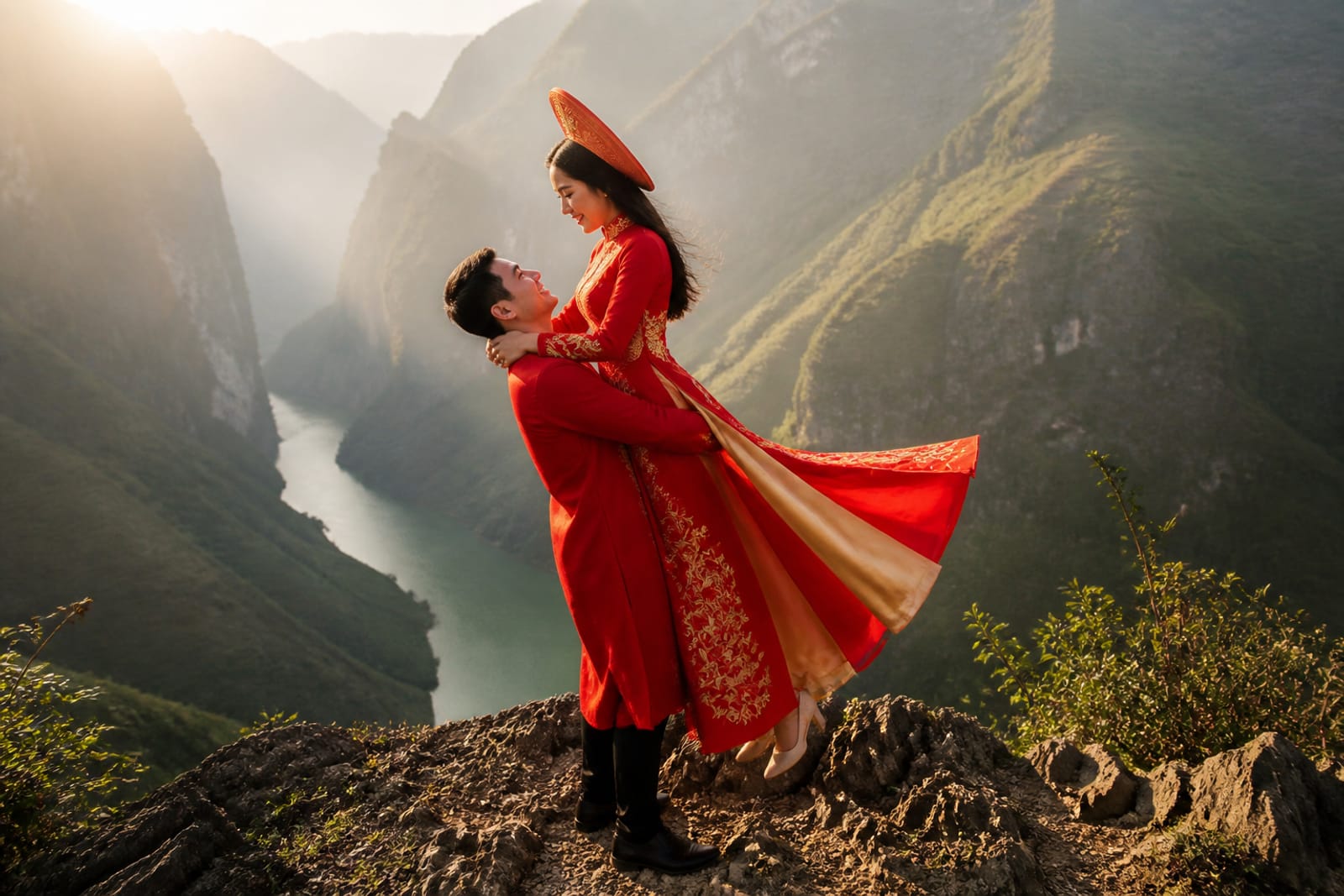
September is the sweet spot: crops ripen into gold, humidity drops slightly after the rainy season (May–Sep), and morning mist lingers in valleys until 6:45 am. October also works but crowds increase and mist becomes patchy. By November, grass dries and colour flattens. December–February is clear but cool (10–15°C at dawn), terraces appear green or bare, and no mist drama. Shoot between 5:45 and 7:15 am for side-lit mist and gold tones; after 8 am, light turns harsh and crowds multiply. If you prefer soft overcast light, aim for early morning after overnight rain—terraces glow muted grey-green and require no harsh shadows to look moody. Avoid midday and late afternoon unless you want stark, flat light.
Which outfit works for walking through terraces without sinking?
Sturdy, closed shoes (trail runners or hiking boots) are non-negotiable; terraces are slippery when wet and trails can be muddy even days after rain. Avoid long, trailing skirts or heavy fabrics that drag and collect mud—fitted or midi-length works. If you want an áo dài, wear it for stationary shots on higher ground (ridges, flat hamlets) or for the final frame as you walk out of frame, not while descending slopes. Neutral or earthy tones blend the landscape better than bright whites (white áo dài pop visually but can overpower a muted September morning). Couples often wear one earthy outfit for movement shots and change into traditional dress for still frames on flat ground—coordinate this with your photographer before the shoot. Bring a lightweight scarf or shawl for mist coverage and wind; layers matter, as 5 am is chilly and 8 am warming is fast.
📸 Book on WhatsApp — ao dai photoshoot
Hiring a local vs. traveling with Cáo Studio: which route makes sense?
| Approach | Best for | Season window | Why it works |
|---|---|---|---|
| Local Ha Giang photographer | couples already multi-day trekking; budget-conscious; fluent Vietnamese | Sep–Oct; Feb–Mar | knows terrain, dawn access, no travel delay; shoots on local time |
| Combine with Hanoi pre-wedding | couples splitting time: Hanoi + Ha Giang multi-day trip; want city and nature frames | Sep–Oct | Cáo Studio handles Hanoi (city, ao dai, temples); hire local for Ha Giang |
| Hire outfit assistant + local photographer separately | couples renting áo dài; want hair/makeup done in Ha Giang town | Sep–Oct | flexible, but coordinating three vendors (rental shop, makeup artist, photographer) adds complexity on morning of shoot |
Cáo Studio operates in Hanoi, Ho Chi Minh City, and Hoi An—not Ha Giang. Ha Giang requires a separate local hire. If you're planning a pre-wedding session split across Vietnam (Hanoi temples, then a nature multi-day), book Cáo Studio for Hanoi (one team, makeup + hair + photographer), then hire independently for Ha Giang. This avoids the coordination tax of managing separate vendors across two regions. Cost factors: local photographers charge daily or half-day rates (ask on WhatsApp or through your guide); distance (Hanoi to Ha Giang) adds transport time; September avoids rainy landslide risk but crowds rise, so early booking matters.
What should couples check before hiring a photographer in Ha Giang?
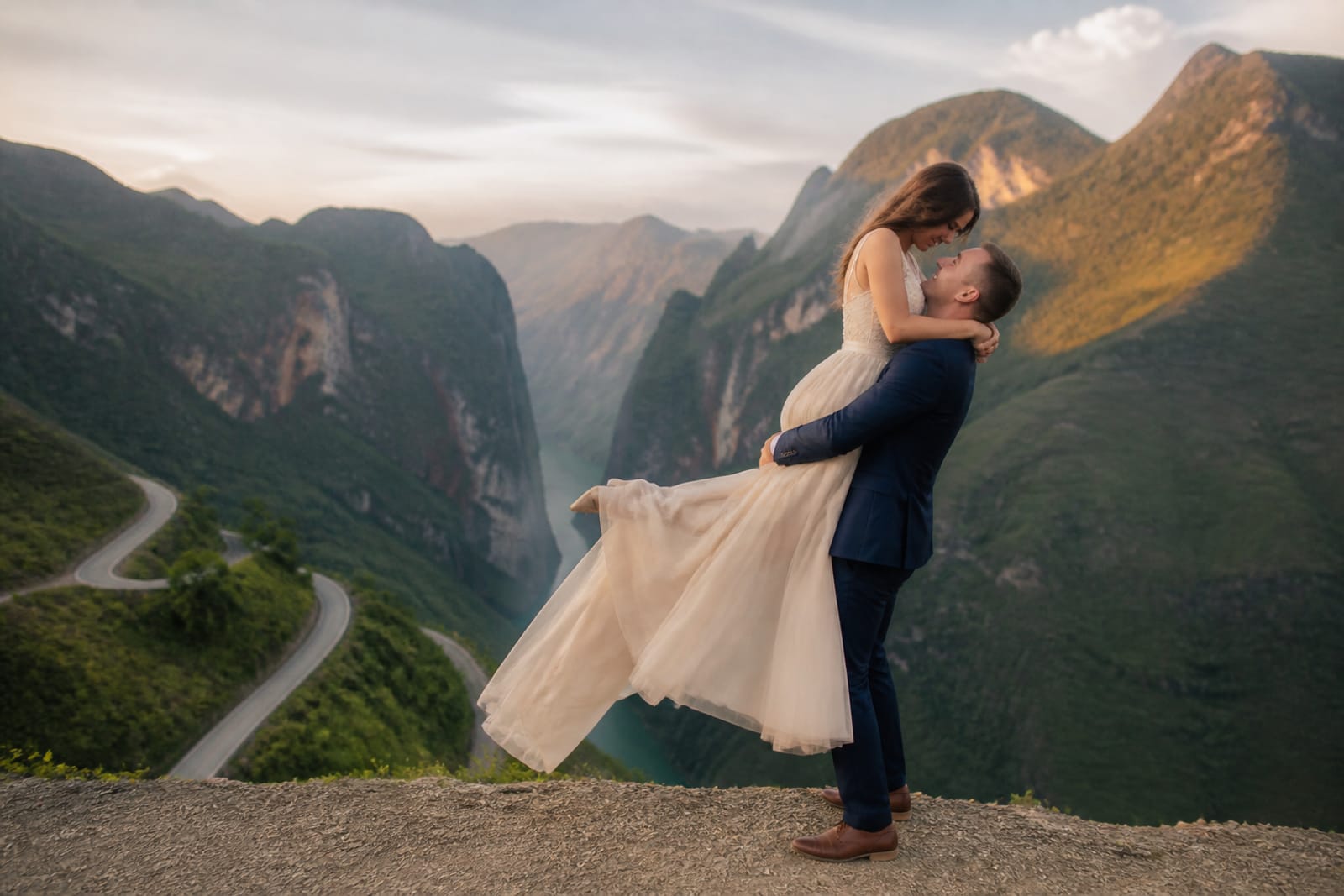
Ask three questions: (1) Does the photographer wake before dawn and know Hoang Su Phi's secondary valleys by name? Ask for recent sunrise portfolio shots from September or October to verify. (2) Will they work for 3–4 hours of walking, or do they expect stationary poses? A good fit prefers movement and can frame you two mid-stride, not stiff monument shots. (3) Do they understand private farmland etiquette—not stepping on crops, asking locals before shooting, respecting harvest work? (4) Turnaround time: how long to edit and deliver files? September light is fast; same-day delivery or next-day edits are realistic. (5) Do they offer short vertical film reels (30–60 sec) alongside stills, which travel better for sharing? Check references through your trek guide or accommodation owner. Vet portfolio work—not studio shoots, but actual terrace sessions in September light.
What timing and logistics should you plan for?
Plan for 4–5 hours on the ground: 45 min transfer from Ha Giang town to Hoang Su Phi, 3 hours shooting (dawn to mid-morning), 30 min return. Arrive the night before at Hoang Su Phi village; book a guesthouse within walking distance of the main viewpoint or hire a guide with a motorbike to drop you at trailheads. Pack water, light snacks, insect repellent, and a small towel. Weather: September mornings are humid; bring a quick-dry shirt to change into mid-shoot if you sweat through the first outfit. If rain threatens, reschedule; wet paths are dangerous and light flattens. Confirm with your photographer the evening before: exact 5:45 am meetup spot, first location (often the northern hamlet), and whether they'll guide you or follow your lead through valleys. Ask how many outfit changes they'll accommodate and where you'll pause to change (some corners have shelter, most don't). Have your guide's phone number and your accommodation's address in Vietnamese written down—navigation backup if paths diverge.
---
What to check before you book
- Portfolio: ask for terrace shots from September–October, not studio or flat-ground portraits.
- Early mornings non-negotiable: only book photographers who commit to 5:45–7:15 am starts; anyone offering later "is fine" doesn't understand light here.
- Terrain familiarity: request they name 2–3 hidden valleys and explain why light works there at dawn (not generic praise).
- Edits turnaround: confirm delivery timeline—same-day is rare but possible for culled selects; 2–3 days is standard.
- Communication: confirm backup WhatsApp or call plan the night before; Ha Giang has patchy signal in some valleys.
- Local etiquette: ask how they handle landowner permission and crop respect; this signals professionalism.
---
If you're building a pre-wedding shoot across Vietnam, Ha Giang works best as an extension to a Hanoi base. Cáo Studio handles your Hanoi session (ao dai, temples, makeup, hair, city frames) on a tight timeline—edited in 48 hours. Then travel north for a separate 3–4 day Ha Giang trek and hire a local photographer for terraces. This two-vendor split feels complicated, but it's sharper than asking one studio to manage both regions and the 5-hour gap. Alternatively, if Ha Giang is your only shoot, plan a dedicated 2–3 day trip, wake early every morning, and revisit the same corners on different days to catch varied light and mist patterns—that's how the best frames happen in terraced valleys.
📸 Book on WhatsApp — ao dai photoshoot
---
FAQ
Can we shoot in Hoang Su Phi during the rainy season (May–Sep)?
September works well; earlier months (May–August) see frequent afternoon downpours, muddy paths, and hazy morning light. October is drier but more crowded. Avoid April–May—heat and humidity peak, light is harsh, and paths are slippery after rain.
Do we need a guide, or can the photographer navigate alone?
You need a guide or local photographer who knows the terrain. Paths branch without signage, cross private fields, and can be unsafe after rain. Hire through your accommodation or a Ha Giang trekking outfit; they can recommend photographers who double as guides.
Should we wear traditional áo dài, or is everyday clothing better?
Both work. Wear trail shoes and fitted pants/skirts for walking shots, then change into áo dài for still frames on flat ground (hamlets, ridge viewpoints). Neutral-toned áo dài suits September's muted palette better than bright white.
What's the difference between shooting with a local photographer vs. hiring one from Hanoi?
Local photographers know Hoang Su Phi's terrain, dawn access, and farmer etiquette; no travel delay. Hanoi-based photographers can coordinate makeup and hair beforehand and offer polished editing, but require 5+ hours' drive to shoot. Cáo Studio operates in Hanoi only—hire local for Ha Giang.
How many edited photos or video should we expect?
Timelines vary by photographer. Ask before booking: how many selects, edit turnaround (1–3 days typical), and whether video is included. Confirm via WhatsApp or direct message—never assume.
Is September too crowded for hidden corners?
Main viewpoints fill mid-morning; secondary valleys stay quiet until 8 am. Shoot 5:45–7 am and you'll have terraces mostly to yourselves. October and November crowds grow; September is better for solitude.
FAQ
Can we shoot in Hoang Su Phi during the rainy season (May–Sep)?
September works well; earlier months (May–August) see frequent afternoon downpours, muddy paths, and hazy morning light. October is drier but more crowded. Avoid April–May—heat and humidity peak, light is harsh, and paths are slippery after rain.
Do we need a guide, or can the photographer navigate alone?
You need a guide or local photographer who knows the terrain. Paths branch without signage, cross private fields, and can be unsafe after rain. Hire through your accommodation or a Ha Giang trekking outfit; they can recommend photographers who double as guides.
Should we wear traditional áo dài, or is everyday clothing better?
Both work. Wear trail shoes and fitted pants/skirts for walking shots, then change into áo dài for still frames on flat ground (hamlets, ridge viewpoints). Neutral-toned áo dài suits September's muted palette better than bright white.
What's the difference between shooting with a local photographer vs. hiring one from Hanoi?
Local photographers know Hoang Su Phi's terrain, dawn access, and farmer etiquette; no travel delay. Hanoi-based photographers can coordinate [makeup and hair](/makeup-and-hair) beforehand and offer polished editing, but require 5+ hours' drive to shoot. [Cáo Studio](/pre-wedding-photoshoot) operates in Hanoi only—hire local for Ha Giang.
How many edited photos or video should we expect?
Timelines vary by photographer. Ask before booking: how many selects, edit turnaround (1–3 days typical), and whether video is included. Confirm via WhatsApp or direct message—never assume.
Is September too crowded for hidden corners?
Main viewpoints fill mid-morning; secondary valleys stay quiet until 8 am. Shoot 5:45–7 am and you'll have terraces mostly to yourselves. October and November crowds grow; September is better for solitude.
Ao dai, makeup, hair and a local photographer in Hanoi or Saigon — one WhatsApp message.