/pre-wedding-photoshoot
Hidden Photo Corners Near Hoi An Yellow Walls for Couples
Hoi An's yellow-wall streets cluster around the central market and river—iconic but crowded from 8 a.m. onward. The quietest photo corners lie one block east and north: narrow alleys with softer morning light (5:30–7:30 a.m.), weathered doors, potted plants, and fewer foot traffic. Sep–Dec brings rain and flooding risk, especially Oct–Nov; Feb–Apr offers dry, mild conditions. Solo exploration works if you want unguided time; Cáo Studio – Makeup & Photoshoot offers pre-wedding shoots in Hoi An by appointment—the team travels and handles timing, makeup, outfit logistics, and editing, eliminating stress about light angles and crowd timing. Cost factors include season, outfit count, and whether you add ao dai rental. Always check the Ancient Town entrance ticket price locally before arrival.
Hoi An's mustard-yellow French colonial shophouses have become a global shorthand for Vietnam romance. Yet most couples photograph the same five spots—lantern rows, the Japanese bridge, the market frontage—resulting in similar poses and harsh midday shadows. The real magic hides in the quieter, adjacent neighbourhoods where light behaves differently, locals still live, and you can breathe.
Where exactly are the hidden yellow corners, and how do you reach them?
The Ancient Town's core yellow buildings cluster in a roughly rectangular zone: Tran Phu Street (the market side), Nguyen Hue Street (the river edge), and the backstreets between them. Most visitors photograph Tran Phu's lantern rows and the Japanese bridge on the Hoai River. The hidden corners lie a 5–10 minute walk north and east: narrow laneways behind Tan Ky House, the residential alleys near Phuong Hung House, and the less-photographed sections of Ly Thuong Kiet Street toward the northern edge. These streets have faded yellow plaster, uneven brick, wooden shutters, and potted arrangements that frame the same emotional tone as the main attractions but without tourist crowds. Light here stays diffused and even until 9 a.m., then angles sharply by 10 a.m., making early mornings essential. Reaching them requires either a paper map (sold at the entrance) or a local guide—solo GPS navigation can miss subtle turns.
📸 Book on WhatsApp — pre-wedding photoshoot
What time of day and season give the best light for yellow-wall couples photos?
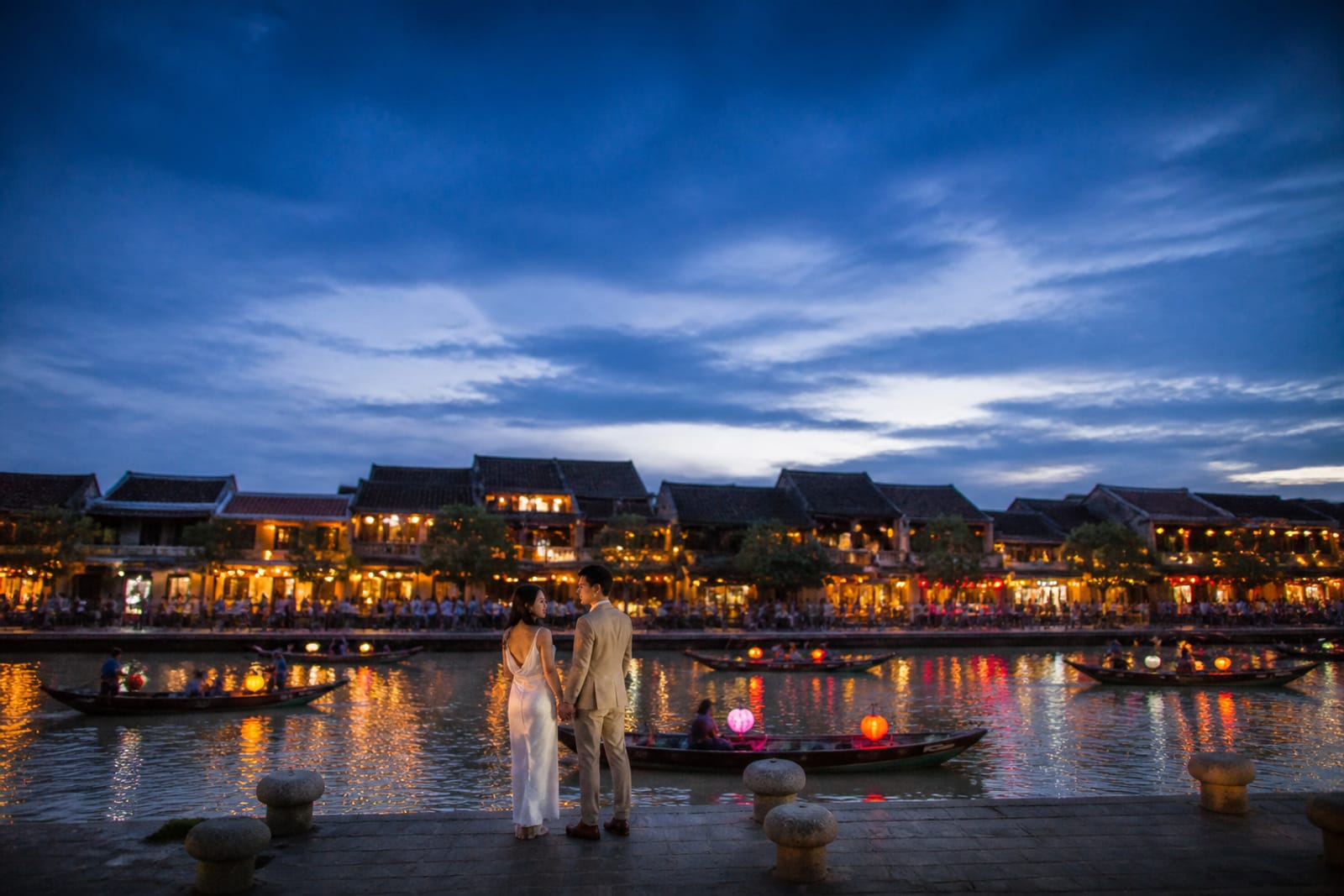
Light behaviour changes month to month in Hoi An. Feb–Apr is the ideal window: dry, mild (20–28°C), mild shadows at sunrise (approximately 5:45 a.m.), and no rain risk. May–Aug remains dry but intensely hot (often 35°C+), forcing you to shoot at dawn or risk harsh, unflattering shadows and sweat stains on clothing. Sep–Dec is the rainy season; Oct–Nov brings typhoons and street flooding in the Ancient Town itself, making it unsafe and logistically difficult. Dec–Jan is cool and often drizzly—mood-appropriate but requiring backup plans.
Within any good-weather month, timing is strict. Sunrise (5:30–6:30 a.m.) offers soft, angled light that catches the yellow plaster's texture and casts deep shadows on alleys, adding intimacy. By 8–9 a.m., crowds arrive and light begins to flatten. Midday (11 a.m.–3 p.m.) creates blown-out highlights and unflattering contrast—avoid completely. Late afternoon (4–5 p.m., during lantern-lighting season) works for candid shots near the market and river, but yellow walls look washed-out in the horizontal, orange light unless you're using silhouettes intentionally.
A professional shoot team arrives pre-dawn to scout, position you, and time outfit changes with light shifts—removing guesswork and the need to wake solo at 5 a.m. in an unfamiliar town. Self-guided couples should plan for 2–3 hours minimum, expect sore feet, and accept that posing yourself while managing a phone camera timer limits spontaneity and sharpness.
Should you hire a photographer, go self-guided, or use a hybrid approach?
| Option | Best for | Light & logistics | Why it works |
|---|---|---|---|
| Self-guided with phone/rental camera | Budget-conscious, flexible, no schedule pressure | Early morning only; you manage crowds, timing, technical settings | Creative control; emotional storytelling; free revisits; risk of missed focus, flat composition, washed-out colours |
| Local freelance guide + your camera | Couples wanting direction but not full crew (hair/makeup) | Same as above; guide knows alleys, quietest times, angle tricks | Cheaper than studio; local knowledge; no professional edit guarantee |
| Cáo Studio pre-wedding shoot (Hoi An by appointment) | Couples wanting stress-free, edited, keepsake images; non-technical backgrounds | Team scouts at dawn; outfit/hair/makeup managed; light angles handled by pro; all timing pre-planned | Zero logistics burden; professional retouching; wardrobe & makeup included (confirm inclusions on WhatsApp); easy to compare with other professional services |
Self-guided exploration suits adventurous couples with camera experience and time flexibility. You'll discover unexpected corners, spend as long as you want, and feel the town authentically. The trade-off: technical issues (exposure, focus, composition), missed light windows if you sleep in, and exhaustion from managing logistics alone.
Hiring a local freelance photographer (ask your hotel or check Instagram tags) costs less than a studio but offers no guarantee of editing quality, outfit management, or professionalism if someone doesn't show. It works for couples who want guidance and professional images but are willing to handle hair/makeup and outfit logistics themselves.
Pre-wedding shoots via Cáo Studio remove all stress: the team arrives in Hoi An by appointment, handles hair and makeup (confirm what's included on WhatsApp), manages timing with light, directs poses, and delivers edited digital files and prints. You show up, get ready, and spend 2–4 hours being photographed while the crew handles everything else. Cost factors include the number of outfits (ao dai rental, Western dress, casual wear), the number of locations, and season (peak Feb–Apr vs. shoulder months). This suits couples who want professional results without coordinating vendors or waking at 4:30 a.m. to scout alone.
What should you wear under and over the yellow walls?
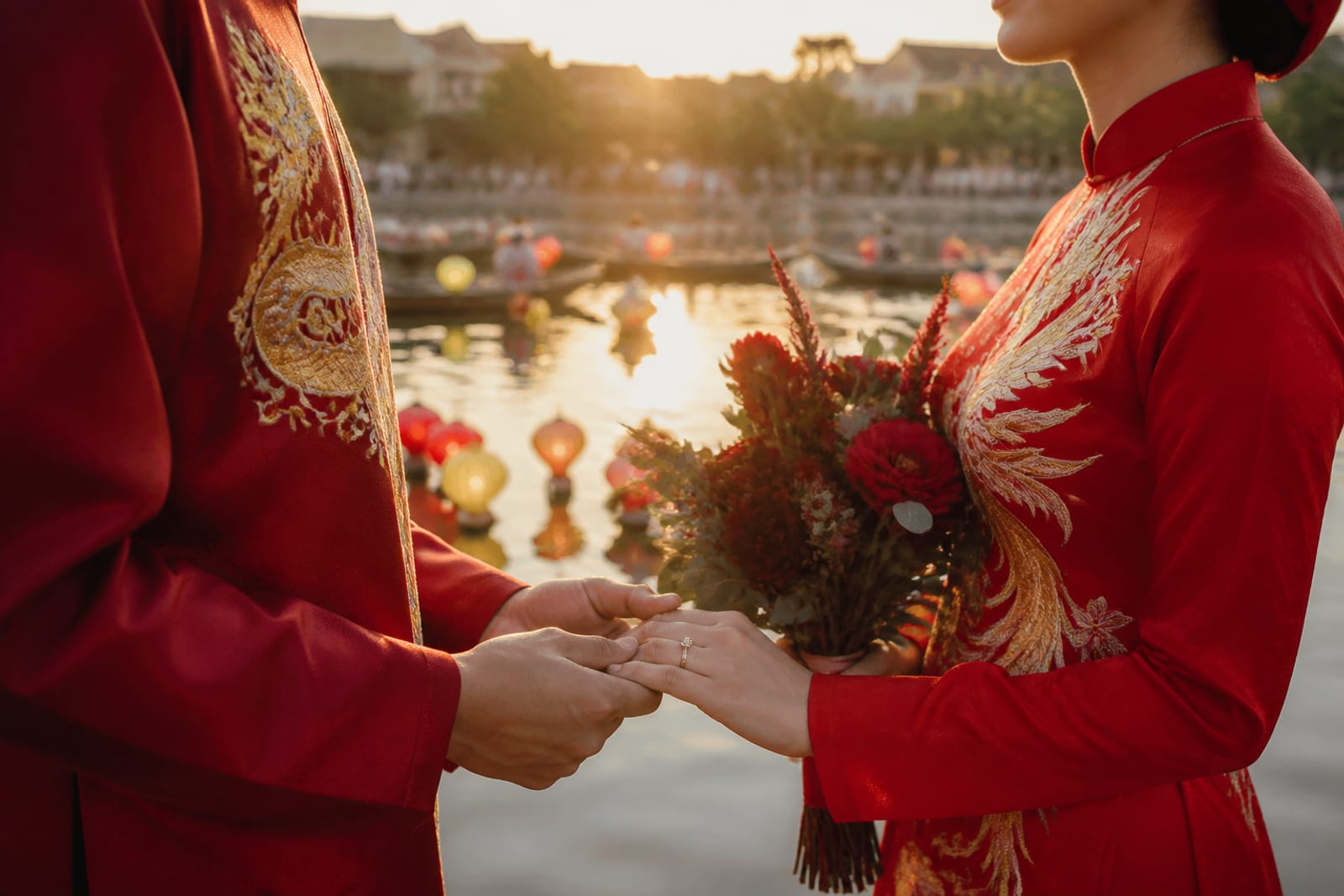
Ao dai (the traditional Vietnamese tunic and pants) is iconic in Hoi An and photographs beautifully against the yellow plaster: jewel tones (emerald, sapphire, burgundy) pop against the pale yellow, while pastels (blush, cream, soft blue) create dreamy, romantic tones. If wearing an ao dai, ask your rental or studio (Cáo Studio offers ao dai rental) about the fit around the shoulders and chest—a too-tight fit creates tension in photos. Wear a simple undergarment (flesh-tone slip or bodysuit) to avoid visible undergarments through the silk.
Western wedding dresses or separates also work, especially in Feb–Apr when temperatures stay mild. A full ballgown skirt becomes impractical on uneven brick and narrow alleys; a fitted or A-line dress, or a lace two-piece, is easier to move in. Avoid white or off-white—it competes with the yellow plaster and washes out in early-morning light. Blush, champagne, or ivory reads richer. Grooms in tailored suits (check suit rental for Vietnamese tailors) photograph well; casual linen or open shirts suit the intimate, less-formal alley aesthetic.
Accessories matter: delicate jewelry catches light nicely in close-ups; a silk shawl or light scarf adds movement and helps regulate temperature during long morning sessions. Shoes should grip uneven brick—avoid heels unless your photographer knows the exact route (a professional team will advise). If self-guided, wear comfortable walking shoes for scouting and change into photo shoes for the final shoot.
How do you avoid crowds and book the best light window?
Crowds peak 8 a.m.–4 p.m. year-round. Sunrise (5:30–6:30 a.m.) is essentially empty—only monks, street sweepers, and photographers. By 7 a.m., tour groups begin gathering near the lantern shops. By 8 a.m., the market gets busy. If going self-guided, set an alarm for 5 a.m., enter the Ancient Town by 5:45 a.m., and shoot until 8 a.m., then retreat for breakfast or a rest before revisiting quieter corners in late afternoon (4–6 p.m.).
Entrance tickets to the Ancient Town are required; check the current price on the official Hoi An website or ask your hotel—tickets typically grant all-day access. The quietest, least-touristed alleys (Phuong Hung House area, Ly Thuong Kiet's northern section) see foot traffic only from locals and a few couples. Visiting Mon–Fri in Feb–Mar (just after Tet holiday, before Easter holidays) further reduces crowds.
Professional shoots bypass this entirely. Cáo Studio coordinates with you to arrive 30–60 minutes before sunrise, shoot during the golden window, and finish before crowds arrive. The team handles permissions (if needed), knows which alleys permit photography, and never wastes light on logistical fumbling. This guarantees the quietest window and the best images without you waking at 4 a.m. stressed.
How do you plan a shoot if you're not staying in Hoi An?
Many couples base themselves in Da Nang (30 km away, approximately 45 minutes by car) or Hanoi (approximately 3 hours by flight), then do a day trip or overnight visit for photos. Logistics tighten: you need to arrange transport, time hair/makeup, and coordinate with a photographer—all while juggling hotels and sightseeing.
Self-guided day-trippers should arrive the evening before (stay near the Ancient Town), wake at 4:30 a.m., shoot at sunrise, rest midday, and shoot again at 4–5 p.m. if energy allows. This requires one hotel night and disciplined planning.
Hiring a professional shoot team (Cáo Studio arranges by WhatsApp appointment) simplifies things. You book a session date and time; the team handles logistics, arrives ready, completes the shoot in a scheduled block, and delivers images within a set timeframe (confirm timing on WhatsApp). You can stay anywhere in Hoi An, Da Nang, or even arrange hair/makeup at your hotel via Cáo Studio's makeup & hair service before heading to the Ancient Town. This turns a potential logistical nightmare into a single, stress-free block of time.
Couples combining Hoi An photos with other pre-wedding locations (rice fields, temples, Hoi An riverside at sunset) benefit from a full-day pre-wedding package rather than solo location hunts. Ask Cáo Studio on WhatsApp about multi-location options and whether the team can travel to nearby spots like Cua Dai beach or rice fields outside town the same day.
What to check before you book any photoshoot option
Logistics & timing:
- Confirm Ancient Town entrance-ticket prices locally (never assume them).
- If booking a photographer, ask whether they include a sunrise permit or access pass (some may require one—check with the Ancient Town authorities).
- Agree on a hard start time (5:45 a.m., for example) and confirm the photographer will meet you then, not "early morning" (vague).
- Confirm how many hours the shoot runs and how many outfit changes are realistic within that window (outfit changes take 10–15 minutes each on location).
Outfit & appearance:
- If renting an ao dai or wedding dress, collect it the day before to avoid last-minute delays.
- Confirm whether hair/makeup are included in the package (professional studios usually offer this; freelancers may not). If not included, book separately.
- Ask about weather backup (if it rains heavily, does the photographer reschedule or refund? Get this in writing).
Images & delivery:
- Clarify how many edited images you receive and in what format (digital files, prints, album). Never assume "all photos"—studios typically deliver a curated set.
- Ask about the editing timeline: when will you see proofs, and when are finals ready?
- If booking prints or albums, confirm they're included or priced separately.
Cost transparency:
- Ask for a written quote that itemizes what's included (location fee, hair/makeup, outfits, number of edited images, delivery format). Never rely on verbal quotes.
- Clarify what costs extra (additional outfits, extra locations, rush delivery, printed albums, framed prints).
- Ask whether the quote is fixed or depends on season or number of outfits—cost factors exist, so understand them upfront.
Comparison & decision: For Hoi An couples, Cáo Studio pre-wedding shoots include professional direction, light management, hair/makeup, and editing—removing coordination burden. They suit couples who want keepsake-quality images without logistical stress. Self-guided exploration suits adventurous couples prioritizing discovery and flexibility over polish. Local freelancers offer a middle ground: cheaper, personalized, but less guaranteed. Choose based on your comfort with early mornings, technical camera settings, and willingness to handle vendors yourself.
📸 Book on WhatsApp — couple & family photoshoot
FAQ
Can I photograph the Hoi An Ancient Town at night with lanterns lit?
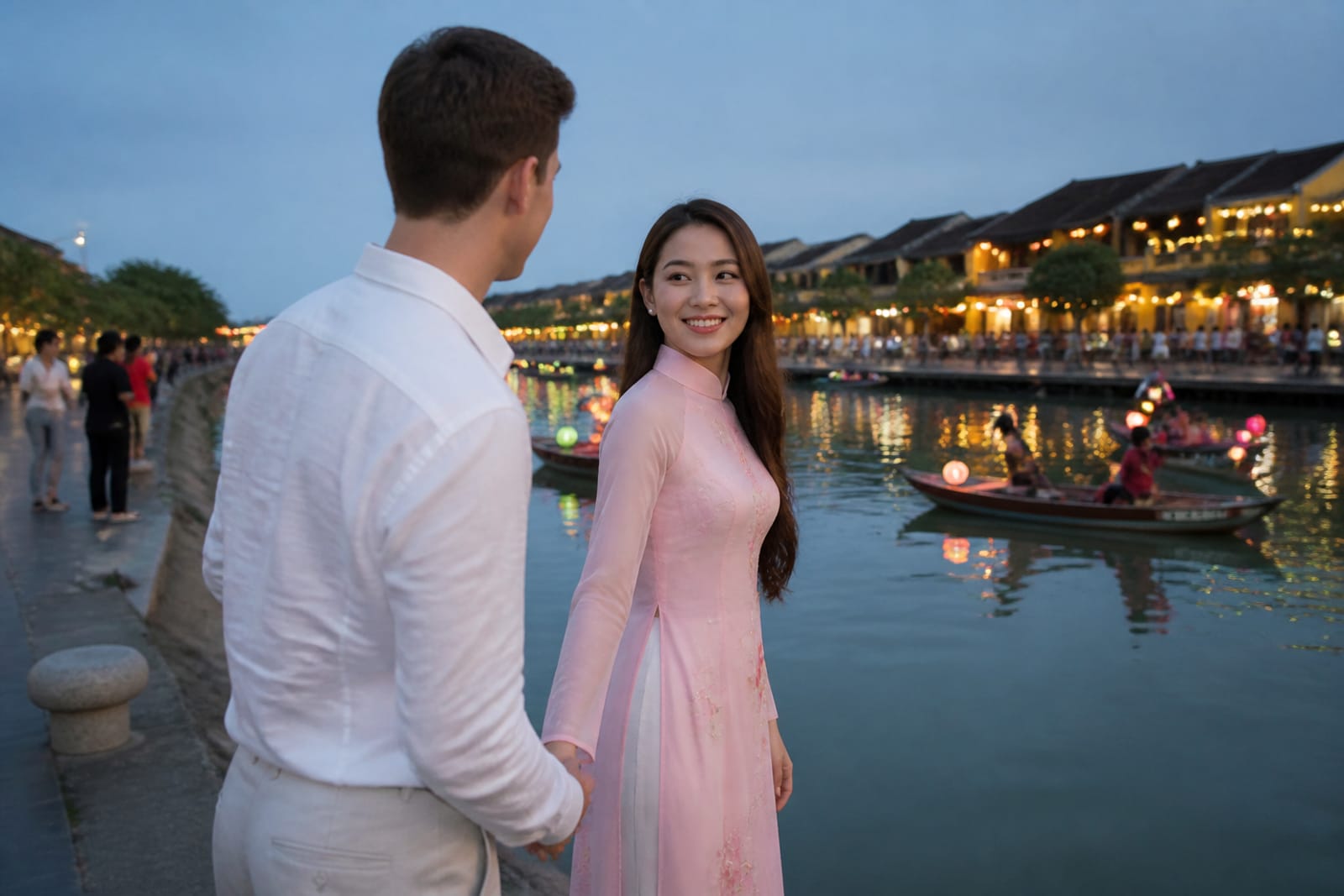
Yes; lanterns light at dusk (approximately 6–6:30 p.m.). The full-moon lantern festival occurs monthly, crowding the town. Night light is warm but dim—book a photographer with low-light experience or use a tripod and slow shutter if self-guided. Professional studios confirm they can shoot night sessions if booked in advance.
Do I need a guide to find the hidden yellow-wall corners, or is a map enough?
A paper map helps but misses turn details. Hiring a local guide (ask your hotel) or booking a professional shoot team eliminates guesswork. Professional photographers know all corners, quietest times, and best angles without you needing to scout.
What happens if it rains during my booked shoot?
Feb–Apr rarely has rain; May–Aug is dry but hot; Sep–Dec carries typhoon risk. Always confirm weather backup with your photographer—rescheduling or refund policies vary. Ask this before booking and get it in writing.
Can I wear a Western wedding dress in Hoi An alleys without looking out of place?
Yes; many couples mix ao dai and Western dress across different locations. Alleys suit both. Avoid high heels unless your photographer advises the exact route. Blush, champagne, or ivory photographs better than pure white against yellow walls and morning light.
How much does an Cáo Studio pre-wedding shoot in Hoi An cost?
Pricing depends on season, number of outfits, and locations included. WhatsApp +84 338 762 340 for a personalized quote—cost factors are discussed directly, not listed online.
Can I combine a Hoi An photo session with other locations like rice fields or beaches?
Yes; ask Cáo Studio on WhatsApp about multi-location pre-wedding packages. The team can arrange shoots across Hoi An, nearby beaches, or rice fields in one day if booked in advance.
What's the best season for Hoi An couple photos, and is it more expensive?
Feb–Apr is ideal (dry, mild, green rice nearby). May–Aug is hot but possible at sunrise. Sep–Dec risks rain and flooding. Peak season (Feb–Apr) books faster; confirm availability early on WhatsApp. Cost factors include season and demand, but exact pricing is quoted individually.
FAQ
Can I photograph the Hoi An Ancient Town at night with lanterns lit?
Yes; lanterns light at dusk (approximately 6–6:30 p.m.). The full-moon lantern festival occurs monthly, crowding the town. Night light is warm but dim—book a photographer with low-light experience or use a tripod and slow shutter if self-guided. Professional studios confirm they can shoot night sessions if booked in advance.
Do I need a guide to find the hidden yellow-wall corners, or is a map enough?
A paper map helps but misses turn details. Hiring a local guide (ask your hotel) or booking a professional shoot team eliminates guesswork. Professional photographers know all corners, quietest times, and best angles without you needing to scout.
What happens if it rains during my booked shoot?
Feb–Apr rarely has rain; May–Aug is dry but hot; Sep–Dec carries typhoon risk. Always confirm weather backup with your photographer—rescheduling or refund policies vary. Ask this before booking and get it in writing.
Can I wear a Western wedding dress in Hoi An alleys without looking out of place?
Yes; many couples mix ao dai and Western dress across different locations. Alleys suit both. Avoid high heels unless your photographer advises the exact route. Blush, champagne, or ivory photographs better than pure white against yellow walls and morning light.
How much does an Cáo Studio pre-wedding shoot in Hoi An cost?
Pricing depends on season, number of outfits, and locations included. WhatsApp +84 338 762 340 for a personalized quote—cost factors are discussed directly, not listed online.
Can I combine a Hoi An photo session with other locations like rice fields or beaches?
Yes; ask Cáo Studio on WhatsApp about multi-location [pre-wedding packages](/pre-wedding-photoshoot). The team can arrange shoots across Hoi An, nearby beaches, or rice fields in one day if booked in advance.
What's the best season for Hoi An couple photos, and is it more expensive?
Feb–Apr is ideal (dry, mild, green rice nearby). May–Aug is hot but possible at sunrise. Sep–Dec risks rain and flooding. Peak season (Feb–Apr) books faster; confirm availability early on WhatsApp. Cost factors include season and demand, but exact pricing is quoted individually.
Ao dai, makeup, hair and a local photographer in Hanoi or Saigon — one WhatsApp message.