/pre-wedding-photoshoot
Hidden photo corners near Japanese Covered Bridge for couples
The Japanese Covered Bridge's quietest photo zones lie within a 5-minute walk along the Thu Bon riverside and through Hoi An's Ancient Town side streets—narrow alleys where morning light filters through colonial shutters and foot traffic stays light until 8 a.m. Couples on pre-wedding shoots choose three main types: the bridge itself (crowded, best at sunrise), riverside paths where trees frame reflections (golden-hour soft light), and tucked-away temple courtyards nearby that offer authentic architecture without crowds. Sessions take 2–4 hours depending on outfit changes and locations covered. Cáo Studio – Makeup & Photoshoot coordinates Hoi An shoots by appointment—the team travels from Hanoi or Saigon, handles timing, location scouting, and styling to maximize light and minimize tourist overlap. Cost factors include travel dates, number of outfits, and whether makeup/hair is booked on-site. Book via WhatsApp to confirm availability and get specific pricing for your dates. ---
Where exactly are the quietest corners near the bridge?
The Japanese Covered Bridge's charm evaporates by 9 a.m., but three zones stay shootable all day. Riverside walk (east side, Thu Bon River): Follow the water 100m north past the bridge—trees create dappled shade, reflections are mirror-clear before 10 a.m., and few tourists venture past the main steps. North Ancient Town alleys: Turn left into narrow streets near Phung Hung House; low shutters, terracotta pots, and silk-shop doorways offer framing without crowds. Cam Pho temple area: Ten-minute walk west—quieter courtyards, wooden architecture, softer morning light. Each has different optimal shoot times; riverside peaks at golden hour (5–6:30 p.m.), alleys work best 5:30–7:30 a.m., temples suit midday when harsh light creates graphic shadows on stone.
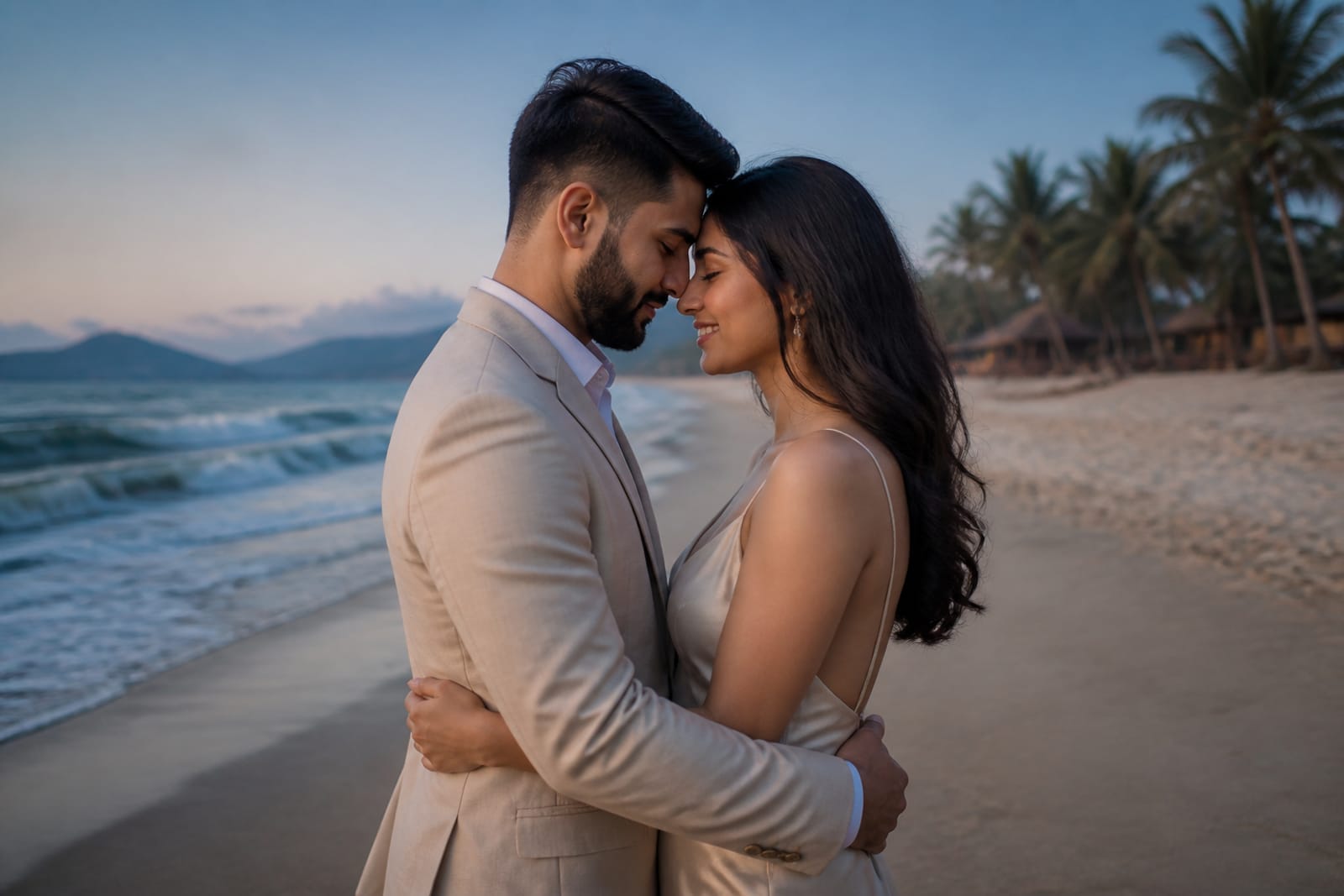
What's the difference between sunrise, midday and sunset shoots?
| Timing | Light quality | Crowds | Best for | Why it works |
|---|---|---|---|---|
| 5:30–7 a.m. | Soft, warm, low-angle | Almost none | Ao dai, intimate couples shots | Long shadows, warm skin tone, empty streets—no editing needed for crowds |
| 8 a.m.–11 a.m. | Bright, directional, no shadow | Light touring groups | Alternative outfits, movement shots | Still manageable people, clear colors, no harsh contrast |
| 12–3 p.m. | Harsh overhead, blown-out sky | Peak tourists | Graphic shadows only, temple details | Avoid; most couples reschedule or stay in shade—difficult for full-body ao dai |
| 4–6:30 p.m. | Golden, diffuse, long shadows | Heavy but leaving | Romantic riverside, final outfit | Warm tones, flattering on faces; riverside less crowded than morning if you're mobile |
| 6:30 p.m.+ | Blue hour, lanterns glow | Lingering tourists | Bridge detail, lantern reflections | Magical but brief (20–30 min); requires fast camera work and backup lighting |
Morning light wins for couple ao dai shots—no retouching needed for skin tone or sky recovery. Sunset suits romantic mood but requires quick shooting and higher skill. Midday demands creativity or postponement.
Should we shoot on the bridge itself or avoid it?
The bridge is photogenic but packed, framing-limited, and technically you're a photo prop to 200 other tourists. Most serious couples use it as a backdrop in wide shots—walk across it as part of movement sequences—rather than posing static. The actual hero shots happen on the adjacent riverside: you're framed against the bridge 50m away, uninterrupted, with Thu Bon water and tree shadows adding depth. One-hour bridge-area sessions often split: 15 min for the iconic shot, 45 min for hidden zones nearby. If the bridge matters to your story, shoot it first (worst light, peak crowds, get it done), then relocate for better light and isolation. Photographers who skip the bridge entirely and focus on alleys and temple courtyards deliver stronger ao dai images because the architecture doesn't compete with your outfit.
How does season affect light and outfit choice?
Hoi An's best photo months are February–April (dry, mild, 22–28°C, soft morning light year-round). May–August stays dry but heats to 35°C+—ao dai feels heavy, skin shines, and golden hour is your only comfort window; couples often shoot sunrise-only (5:30–7 a.m.) to avoid heat. September–December is rainy and typhoon-prone; October–November bring flooding to Ancient Town streets, making riverside paths impassable—avoid entirely. December–January is cool and sometimes drizzly (uncertain light, but atmospheric for moody shots).
Morning light quality barely changes year-round in Hoi An (low sun angle), so the real decision is temperature and weather certainty, not aesthetics. Book Feb–Apr for comfort and predictability, or May–Aug if you commit to early starts. Outfit choice follows: silk and lightweight ao dai for hot months, heavier brocade for winter when the cooler air carries fabric better. A professional team like Cáo Studio – Makeup & Photoshoot's pre-wedding service plans session timing around these factors; ask on WhatsApp what month suits your outfit and comfort.
What to check before you book a Hoi An photoshoot
Location know-how: Does the photographer scout locations beforehand or wing it? Pre-wedding teams should have walked the alleys, know opening times for courtyards, and have backup plans if crowds spike. Ask which zones they'll prioritize—if they can't name specific hidden corners, they'll waste 90 minutes finding shots.
Permit & access: Hoi An Ancient Town requires an entrance ticket (check the official site for current price); some temples ask permission before shoots. A local team handles this; outsiders often get turned away or delayed. Confirm the photographer has town access and relationships with temple keepers.
Ao dai fit & comfort: Most couples rent locally or bring their own. Makeup and hair should happen at your hotel before the 30-minute walk to the Ancient Town—sweating during travel ruins the look. Makeup & hair services are separate from the shoot; confirm whether they're included in your package.
Timeline reality: A genuine hidden-corner session (3–4 locations, 2–3 outfit changes, morning light only) needs 3–4 hours minimum, not 2. Budget extra time for riverside walks and alley navigation—you're not on a main street with clear framing; teams must compose carefully.
Backup light plan: If sunrise is cloudy or you oversleep, how do you reschedule? Professional teams offer re-shoot dates; confirm this before paying.
📸 Book on WhatsApp — ao dai photoshoot
---
Why Hoi An over other Vietnam photo locations?
Hoi An's combination of unrivaled colonial architecture, riverside paths, and pre-dawn quiet (outside Tet) makes it unbeatable for couple ao dai work. Hanoi has busier temples and urban energy; Hanoi shoots suit different moods. Ho Chi Minh City has modern backdrops but less romantic framing. Hoi An's narrow alleys force intimacy into the frame—you can't shoot wide and empty because the town doesn't work that way. For traditional ao dai and authentic Vietnamese aesthetics, it's the standard choice.
---
Hidden corners aren't empty by accident—timing + local knowledge matters
A 5:30 a.m. start sounds brutal but delivers 90 minutes of zero tourists, perfect morning light, and cool air before Hoi An wakes. By 7:30 a.m., tour groups start moving; by 9 a.m., the magic is gone. Professional teams coordinate hotel pickups, location timing, and outfit prep to hit this window—last-minute bookings or inexperienced photographers miss it entirely.
The best hidden corners stay hidden because couples who discover them don't publicize the exact spots (you don't want Instagram crowds). Cáo Studio's team walks Hoi An regularly for pre-wedding and ao dai photoshoots, building location library and timing precision that online location guides can't replicate. Booking a professional isn't just about camera gear; it's about access, timing, and the experience to know which angle works when light shifts 10 minutes later.
---
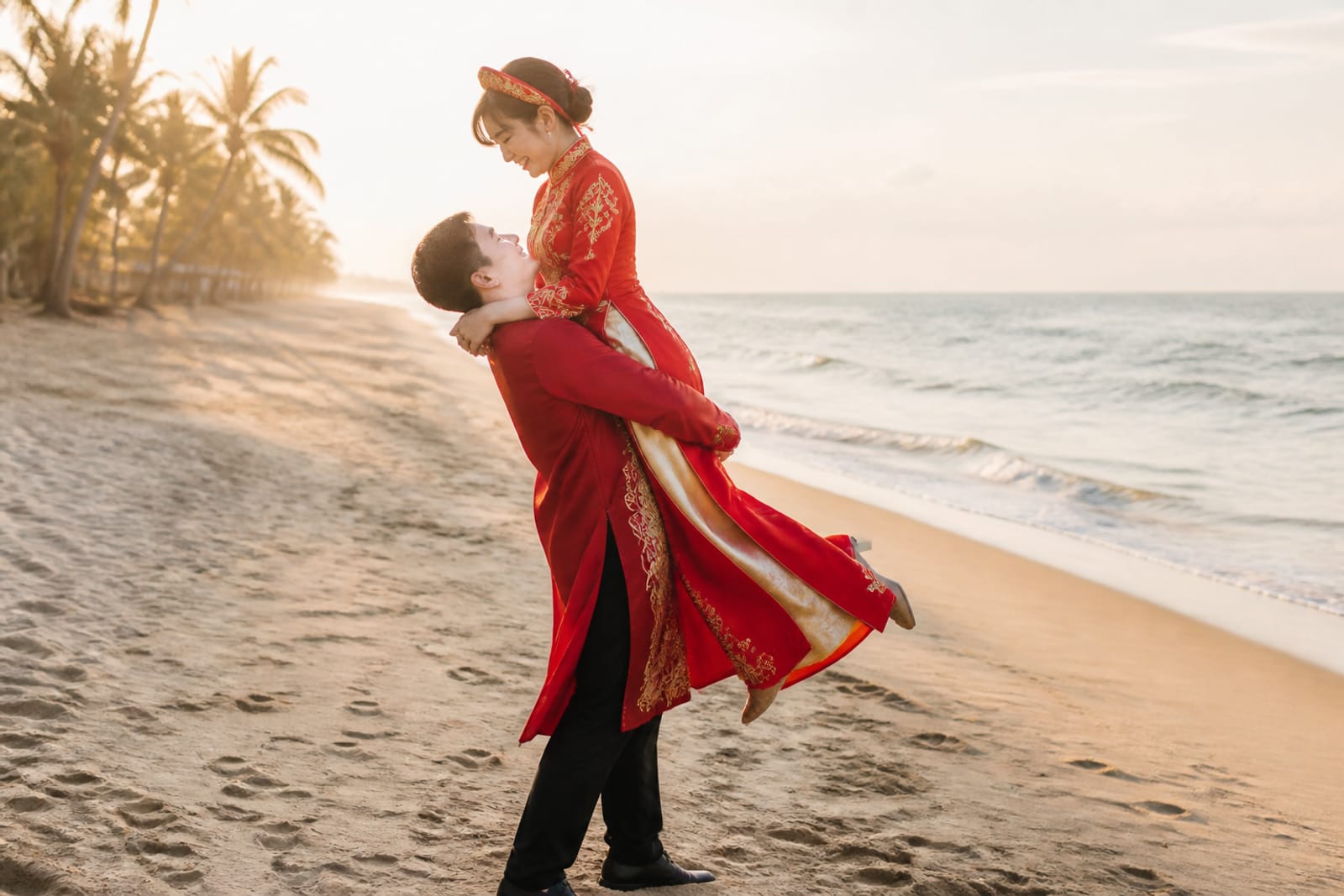
Comparison: DIY vs. professional team for couple shoots
Self-guided (rented camera, hired local guide): You control timing and outfit changes. No makeup/hair prep time, relying on a guide's limited English and generic suggestions. Light knowledge is yours to figure out—many couples waste morning golden hour on the wrong angle. Ao dai rental, entry ticket, guide fee, and camera equipment total multiple separate bookings and logistics. Success depends entirely on your photography skill and luck with crowds.
Professional pre-wedding team (Cáo Studio or similar): Photographer, makeup/hair artist (if booked), location scouting, styling, outfit changes, and timing all coordinated. You show up; they execute. Light, crowds, and hidden corners are pre-planned. Costs are simpler (one quote, one booking); logistics vanish. Output is professional-grade—retouching, album, prints included (details on WhatsApp). Time investment is minimal; results are guaranteed by reputation.
Hybrid (photographer + local guide): Photographer handles light and framing; guide handles logistics and access. Works if the photographer has scouted Hoi An before; risky if combining first-time visitor photographer with guide who doesn't know the shooter's style.
For couple ao dai work in Hoi An, professional teams win because the narrow margin for error (light, timing, outfit fit) is tight. A single miscalculated start time costs you the magic hour.
---
What to verify before you pay for a Hoi An shoot
- Exact start time and location: Not just "7 a.m. Japanese Bridge" but "hotel pickup at 6 a.m., arrive riverside at 6:40 a.m. for first light."
- Outfit plan: How many changes? Where will you change (team brings portable setup or you're in hotel)? Is makeup touch-up included mid-shoot?
- Weather backup: If 5:30 a.m. is cloudy, what's the reschedule policy? Can you move to evening, next day, or another month?
- Deliverables: How many edited images? Delivery timeframe (1 week, 1 month)? Album or digital only? Ask these on WhatsApp before booking.
- Ancient Town access: Confirm the photographer has handled Hoi An shoots before and knows temple protocols.
- Travel dates: Avoid Tet (late Jan–mid Feb) when services close, crowds peak, and timing becomes unpredictable.
---
How pre-wedding and elopement shoots differ in Hoi An
Pre-wedding shoots prioritize romantic storytelling—multiple outfits, locations, makeup changes, and a narrative arc from morning intimacy to golden-hour elegance. Sessions run half-day or full-day with travel time between zones. Elopement shoots compress this into 2–3 hours, fewer locations, often one outfit (ao dai or dress), and focus on a specific moment (renewal, proposal, first-look). Both work in Hoi An's hidden corners; the difference is pacing and expectation-setting. Pre-wedding suits couples planning a wedding later (narrative keepsake); elopement suits those committing then and there (ceremony-focused). Ask which suits your story when booking.
📸 Book on WhatsApp — ao dai photoshoot
---
Beyond Hoi An: should you split locations?
Hanoi and Ho Chi Minh City offer different aesthetics—modern backdrops, busier energy, different architectural frames. Some couples split: ao dai shoot in Hoi An, dress shoot in Saigon, creating variety in the album. This requires two separate bookings and travel coordination; costs rise (travel, two shoot days), but the story is richer. Cáo Studio covers Hanoi, Saigon, and Hoi An—ask on WhatsApp about multi-location packages and logistics.
---
Original decision framework: scoring your location
Priority: Light quality (sunrise consistency, season, backup time)
- Hoi An Feb–Apr: 9/10 (predictable, perfect temperature)
- Hoi An May–Aug: 6/10 (perfect light, brutal heat, sunrise-only viable)
- Hoi An Sep–Dec: 3/10 (rain, flooding, unpredictable)
Priority: Crowd isolation (morning edge, hidden corners, alternate zones)
- Riverside + alleys combo: 8/10 (layered options, staggered crowd times)
- Bridge alone: 2/10 (no isolation, competing framing)
Priority: Ao dai authenticity (architecture, light on fabric, cultural fit)
- Ancient Town alleys: 10/10 (every frame is colonial heritage)
- Modern Hanoi/Saigon: 4/10 (ao dai looks displaced)
Priority: Logistics ease (permits, transport, team familiarity)
- Professional Hoi An team: 9/10 (pre-scouted, permits known, hotel pickups organized)
- Self-guided: 4/10 (multiple hassles, learning curve, timing risk)
Scoring system: If light > logistics for you, Hoi An is non-negotiable. If comfort and ease > authenticity, a professional team in Hanoi or Saigon may suit better. Score your priorities and compare the location options; your answer emerges.
---
Next steps: from idea to booked shoot
- Decide your season (Feb–Apr is safest; check month constraints on WhatsApp).
- Choose your outfit (ao dai rental, wedding dress, couple matching—affects styling and comfort timeline).
- Estimate desired locations (bridge + riverside + alleys = 3–4 hours; adjust timeline accordingly).
- Contact on WhatsApp with dates, outfit details, and location priorities—Cáo Studio – Makeup & Photoshoot will quote availability and cost factors.
- Book makeup/hair separately if you want a professional touch before the shoot—done at your hotel, 1.5 hours before departure to avoid sweat/mess.
- Confirm backup plan (weather reschedule, location changes if crowds spike).
- Arrive early and hydrated—sunrise shoots demand punctuality, and Hoi An's narrow alleys are a physical walk.
---
Why professional teams earn their fee in Hoi An
Hoi An looks effortless in photos because professionals spend months knowing when, where, and how to shoot. A team that's done 50+ Hoi An couple shoots knows:
- Exactly when crowd surge hits each zone (7:45 a.m. on Thu Bon, 8:15 a.m. in alleys).
- Which temple courtyards allow shoots and which don't (relationships matter).
- How ao dai fabric catches light on specific streets (north alleys, 6:15 a.m. = perfect reflection).
- Backup plans for rain, oversleep, or unexpected closures.
- How to edit Hoi An's tricky mixed lighting (colonial gold, water blue, shadow gray) without looking over-processed.
A first-time visitor with great gear cannot replicate this. Book experience, not just camera quality. Pre-wedding shoots at Cáo Studio include this expertise baked in; it's why the pricing reflects more than just time behind the lens.
---
FAQ
Is the Japanese Covered Bridge actually in the photos, or do you shoot only nearby?
Both. The bridge works as a distant backdrop in wide shots (you frame it 50m away, with riverside trees framing the couple). Static poses on the bridge itself are crowded and limited in framing. Professional teams use it as a landmark anchor rather than the sole subject—it appears in 20–30% of a full session.
Can we reschedule if 5:30 a.m. weather is bad?
Yes, but terms depend on the photographer. Professional teams offer a re-shoot date or evening alternative (golden hour is backup). Confirm the weather policy on WhatsApp before booking—don't assume cancellation = refund. Most teams require a second date within the same month or season.
Do we need to rent ao dai in Hoi An, or can we bring our own?
You can bring your own, but Hoi An has excellent rental shops near the Ancient Town—rentals are affordable and you avoid travel damage. Makeup artists at Cáo Studio can adjust the fit during prep. Ask your team whether they have rental partnerships (faster, backup sizes available).
How much time should we budget for the entire day?
Hotel pickup at 6 a.m., 2–3 locations and outfit changes until 10 a.m. (when crowds peak), then done. Full timeline: 4–5 hours including travel, makeup, and breaks. If you add lunch or explore the town after, plan for an 8-hour day. Golden-hour re-shoots (evening) are separate sessions.
Is it better to book a local Hoi An photographer or a team from Hanoi/Saigon?
Local photographers often know the town but may lack styling and makeup expertise. Teams from Cáo Studio (Hanoi/Saigon-based) travel to Hoi An by appointment, bringing full services (photography, makeup, hair, styling) and professional systems. Cost factors are similar, but convenience and output quality often favor established teams. Compare portfolios and ask which team has more Hoi An pre-wedding experience.
Can we do a couple shoot and a family photo session on the same day in Hoi An?
Technically yes, but it's exhausting—different timing (couples: early morning for light; families: midday for comfort), outfit changes, and location logistics. Most couples book a dedicated half-day for their intimate shoot, then add family sessions on separate visits or in another location. Ask Cáo Studio on WhatsApp if combined shoots are viable for your dates.
What if we want to include proposal or vow renewal in the shoot?
That's a proposal & anniversary package—different pacing and planning (photographer may need to hide, timing is built around the moment, not the light cycle). These require detailed pre-planning on WhatsApp; don't book a standard pre-wedding shoot if you're proposing. The team needs to know in advance to set up safely and capture the genuine reaction.
FAQ
Is the Japanese Covered Bridge actually in the photos, or do you shoot only nearby?
Both. The bridge works as a distant backdrop in wide shots (you frame it 50m away, with riverside trees framing the couple). Static poses on the bridge itself are crowded and limited in framing. Professional teams use it as a landmark anchor rather than the sole subject—it appears in 20–30% of a full session.
Can we reschedule if 5:30 a.m. weather is bad?
Yes, but terms depend on the photographer. Professional teams offer a re-shoot date or evening alternative (golden hour is backup). Confirm the weather policy on WhatsApp before booking—don't assume cancellation = refund. Most teams require a second date within the same month or season.
Do we need to rent ao dai in Hoi An, or can we bring our own?
You can bring your own, but Hoi An has excellent rental shops near the Ancient Town—rentals are affordable and you avoid travel damage. Makeup artists at [Cáo Studio](/makeup-and-hair) can adjust the fit during prep. Ask your team whether they have rental partnerships (faster, backup sizes available).
How much time should we budget for the entire day?
Hotel pickup at 6 a.m., 2–3 locations and outfit changes until 10 a.m. (when crowds peak), then done. Full timeline: 4–5 hours including travel, makeup, and breaks. If you add lunch or explore the town after, plan for an 8-hour day. Golden-hour re-shoots (evening) are separate sessions.
Is it better to book a local Hoi An photographer or a team from Hanoi/Saigon?
Local photographers often know the town but may lack styling and makeup expertise. Teams from [Cáo Studio](/pre-wedding-photoshoot) (Hanoi/Saigon-based) travel to Hoi An by appointment, bringing full services (photography, makeup, hair, styling) and professional systems. Cost factors are similar, but convenience and output quality often favor established teams. Compare portfolios and ask which team has more Hoi An pre-wedding experience.
Can we do a couple shoot and a family photo session on the same day in Hoi An?
Technically yes, but it's exhausting—different timing (couples: early morning for light; families: midday for comfort), outfit changes, and location logistics. Most couples book a dedicated half-day for their intimate shoot, then add [family sessions](/family-photoshoot) on separate visits or in another location. Ask Cáo Studio on WhatsApp if combined shoots are viable for your dates.
What if we want to include proposal or vow renewal in the shoot?
That's a [proposal & anniversary package](/proposal-and-anniversary)—different pacing and planning (photographer may need to hide, timing is built around the moment, not the light cycle). These require detailed pre-planning on WhatsApp; don't book a standard pre-wedding shoot if you're proposing. The team needs to know in advance to set up safely and capture the genuine reaction.
Ao dai, makeup, hair and a local photographer in Hanoi or Saigon — one WhatsApp message.