/pre-wedding-photoshoot
Hidden photo corners near Lang Co Beach for couples
Lang Co Beach sits on Vietnam's central coast between Hue and Da Nang, offering sheltered coves and limestone cliffs ideal for intimate couple photography. The beach spans roughly 10 km with secluded rocky outcrops, fishing villages, and weathered driftwood logs that frame couples naturally—no crowded resort strips. Best light arrives 2–3 hours before sunset (roughly 16:30–18:30 year-round); golden hour reflects off wet sand and limestone. February to August brings dry, stable weather; September to December is typhoon season with sudden downpours and rough seas. Most couples spend 3–4 hours on location (travel from Hue or Da Nang plus 90–120 minutes shooting). Cáo Studio – Makeup & Photoshoot operates in Hanoi and Saigon; for Lang Co, you'll need a local Hue-based photographer familiar with tidal changes and village access. Wear lightweight linen for comfort in salt spray; test outfits beforehand to ensure they dry-clean after sand exposure. Check tidal charts before booking—low tide exposes wider sand flats; high tide traps rocky areas. ---
Where exactly are the hidden photo spots, and how do you access them?
Lang Co's best-kept corners cluster in three zones: the northern end near fishing villages (Loc Vinh ward), the central rocky outcrops (mid-beach reef line), and the southern limestone cliffs toward the Hai Van Pass approach road. Northern village spots require early 06:00–08:00 arrival to photograph authentic boat scenes and weathered nets before fishermen depart; access is a 15-minute walk from the main beach entrance. Central reefs demand timing—only passable during low tide (check daily charts online) without slipping on algae-covered rocks; park near kilometre marker 580 on Highway 1 and walk 8–10 minutes. Southern cliffs near the old airfield tunnels offer wind-protected pockets and dramatic backdrops but involve scrambling downslope—wear proper shoes, not sandals. All three require hiring a local guide (ask your photographer or hotel concierge) to unlock family-owned coves and avoid private shrimp-farm areas. The conclusion: plan your zone by tide time and outfit—village shots suit casual wear; reef corners need barefoot or water-safe footwear; cliffs demand sturdy shoes and longer skirts to avoid abrasion.
📸 Book on WhatsApp — couple photoshoot
What seasons and daylight hours give you the cleanest light?
February to August dominates—dry, consistent northeast winds keep the water calm and skies clear or lightly overcast (which softens direct sun beautifully). March to May are peak: temperatures 25–30°C, humidity manageable, and afternoon clouds roll in just as golden hour starts around 16:45. June to August stay dry but hotter (30–35°C) and humidity peaks; arrive early (14:30 start, shoot 16:00–18:30 as cooler air moves in). Avoid September to November entirely—typhoon season brings unpredictable squalls, rough seas that erase the low-tide sand banks, and grey-heavy cloud that ruins backlighting. December is marginal: cooler but wetter and windier. Within any day, golden hour (2 hours before sunset) is non-negotiable: 16:30–18:30 winter, 17:00–19:00 summer. Arrive 30 minutes early to scout composition while light is still high; reposition for every 10-minute light shift as shadows swing across rocks and water. The conclusion: book February to May for consistency, shoot only in golden hour, and allow 20 minutes extra for light testing.
How do costs and logistics compare: village shoots vs. reef corners vs. cliff backdrops?
| Spot Type | Best For | Light Quality | Access Effort | Outfit Concern | Why It Works |
|---|---|---|---|---|---|
| Northern fishing village | Authentic, emotional, low-key | Soft early-morning sidelight; fewer shadows | 15-min walk, no climbing; elderly-friendly | Casual linen, water spray OK | Genuine boats, nets, weathered wood add narrative |
| Central reef rocks | Dramatic, editorial, foreground interest | Sharp golden reflections off wet stone; strong backlighting | Low-tide timing critical; slippery algae | Barefoot or water shoes; long hemline risky | Natural framing, mineral texture, isolation |
| Southern limestone cliffs | Sweeping landscape, grand scale, seclusion | Sidelight from ocean, cliff shadow creates depth | 12–15 min scramble downslope; not pram-safe | Sturdy footwear required; risk to hems and jewelry | Geology, wind-shelter, zero crowds |
Hiring a local photographer for Lang Co costs less than flying in a Hanoi or Saigon team (factor: travel time from city + accommodation for crew) but demands vetting—check their portfolio for tidal-light consistency and village access relationships. If you're based in Hanoi or Ho Chi Minh City and want cohesion with pre-wedding preparation, consider a combined approach: makeup and outfit trials in your city, then a targeted beach session with a local. The conclusion: village shoots are budget-friendly and logistically simple; reefs demand tide research and footwear investment; cliffs require fitness but guarantee exclusivity.
What should you wear, and how does the environment affect outfit choices?
Salt spray, sand adhesion, and tidal water exposure are the enemy of silk, delicate lace, and light-colored fabrics. Test any garment by dampening it and letting it air-dry to check for watermarks or shrinking before the shoot day. For village spots, linen shirts, lightweight cotton, and organic-dyed fabrics photograph warmly and forgive salt staining; layer with a shawl you can remove. Reef corners demand barefoot or water-shoe readiness—avoid long hemlines that drag algae (opt for midi-length or cropped pants) and secure jewelry so it doesn't catch on rocks. Cliff backdrops allow longer skirts (they won't drag water), but wind becomes your adversary: wear fabrics with weight (linen-blend, lightweight denim) and pin or tuck loose layers. Wet sand clings to every surface; allow 10 minutes between location changes to brush off before repositioning. Test color in your exact sunset hour beforehand (warm tones glow; cool blues flatten against water). Avoid white or pale cream unless you plan salt-staining as a textural choice (intentional artistry, not accident). The conclusion: choose natural fibers, secure layers against wind, test wet-sand behavior, and pack a brush and spare shawl.
How do you vet a local photographer and avoid common mistakes?
Ask for references from the previous 3–5 couple sessions (not just individual portraits). Request a portfolio filtered by "February–May outdoor beach" so you see their light mastery in the zone you're booking. Confirm they own a backup camera and have shot tides at least 10 times (tide timing is learnable only through repetition; generic beach photographers often miss the low-tide sand flats). Discuss what happens if weather turns: do they have a rain-date policy, or do you lose payment? Clarify the exact shot count, turnaround time for edits, and whether they provide a shot list or you direct on the day (couple-driven shoots often clash with photographer's preset angles—agree beforehand). Walk through transport: do they meet you on-site, or do you cover their fuel and parking? Ask about drone/aerial permits if you want sky shots—Lang Co's airspace near the old airfield has restrictions. Never book purely on Instagram aesthetics; a skilled photographer will struggle if they haven't scouted your three zone options in actual tide conditions. The conclusion: prioritize tide experience, backup gear, and written terms over portfolio polish alone.
What happens on the shoot day, hour by hour?
Coordinate with your photographer the night before: confirm the tide time (send them the link), agree on a 14:00 meet-point (30 minutes before you need to start positioning), and decide which zone first based on light trajectory. Arrive in comfortable shoes and bring the full outfit in a sealed bag—change onsite 20 minutes before first light. Spend the opening 15 minutes scouting the exact rock, driftwood, or net you'll frame; photographer frames three 5-minute sequences per location to allow light migration. Around 16:45 (Feb–May) or 17:15 (Jun–Aug), reposition to a secondary zone (village or reef depending on your primary choice) for another 45 minutes. Final 30 minutes before sunset is "magic hour"—shoot close-ups, reflections, and silhouettes as light flattens and glows. By 19:00, light dies and shooting ends. Break for 30 minutes: dry off, hydrate, change back to casual wear. If tides allow a second day for detail shots (rings, invitation cards, couple candids), book it separately—one 4-hour session rarely captures all angles. Turnaround: most local photographers deliver edits within 7–10 days; cloud transfers to a shared drive. The conclusion: plan 5.5–6 hours on location, budget two zones, and allow a 10-day post-production window.
---
What to check before you book
- Tide chart: confirm low-tide time matches your golden-hour window (don't assume—check the exact date online).
- Photographer's past tides: ask for 3 portfolio images shot within the same tide window you're booking.
- Village access: request the photographer confirm permission with the hamlet leader 1 week prior (a courtesy that unlocks authentic scenes).
- Weather backup: agree in writing whether a rescheduled rain date is free or you lose the deposit.
- Outfit durability: test any fabric or dye by wetting, drying, and inspecting for watermarks.
- Turnaround timeline: request edits within 10 days and ask how many files you receive (e.g., 80–150 raw + edited finals).
---
Cáo Studio – Makeup & Photoshoot does not operate in Lang Co; our teams work from Hanoi, Ho Chi Minh City, and Hoi An. However, if you're planning a multi-city pre-wedding journey—makeup trials in Hanoi or trials in Saigon, then a coastal shoot—we can coordinate local photographer introductions in the central region. Start your planning with our pre-wedding service overview to align timing and style across locations, then contact us on WhatsApp to connect with vetted Hue-based photographers who know Lang Co's tides and village customs.
📸 Book on WhatsApp — ao dai photoshoot
---
FAQ
Is Lang Co Beach safe for couples to shoot during monsoon season (September–November)?
No. October–November brings typhoons, rough seas that erase tidal sand banks, and unpredictable downpours that halt shooting mid-session. Reschedule to February–August. December is marginal (cooler, wetter, windier). Book only Feb–May for consistency.
How much does hiring a local Lang Co photographer cost compared to flying a Hanoi or Saigon team?
A local photographer's fee is lower (no travel time, accommodation, or fuel surcharges); exact costs depend on shot count, editing turnaround, and whether they provide makeup. Ask your photographer for a quote on WhatsApp—compare per-hour or per-location rates.
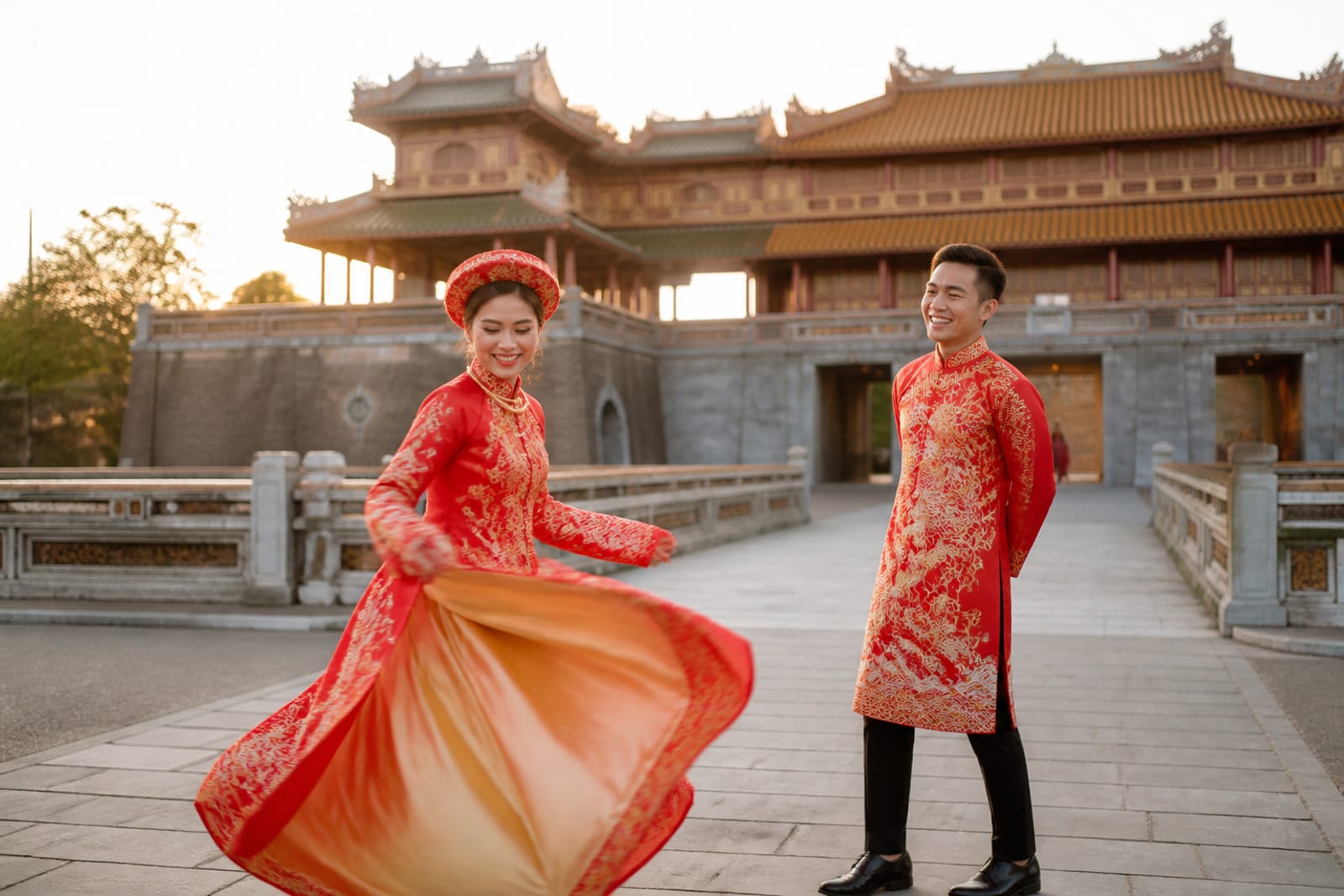
Can I wear an ao dai for a Lang Co Beach photoshoot, or will salt water ruin it?
Ao dai in salt spray requires post-shoot care (rinse, air-dry flat, professional dry-clean if silk). Test durability beforehand. Reserve ao dai for protected reef-shadow or early-morning village shots where splash risk is low. Alternatively, book a casual outfit session and explore ao dai photoshoot as a separate studio session in Hanoi or Saigon.
What's the best time of day to shoot if I want to avoid crowds and harsh shadows?
Golden hour (2 hours before sunset) is ideal: 16:30–18:30 in winter, 17:00–19:00 in summer. Arrive 30 minutes early to scout. Avoid midday (11:00–15:00)—flat light and intense UV exposure. Early morning (06:00–08:00) suits village scenes but is cooler and requires a separate trip.
Do I need a permit or guide to access the hidden rocky corners and cliff areas?
A local guide is essential—access to fishing-village coves requires family permission, and cliffs near the old airfield have informal access rules. Ask your photographer to arrange or hire a guide through your hotel concierge. Budget an extra 1–2 hours for navigation and relationship-building on location.
How many edited photos should I expect from a full Lang Co couple session?
Ask your photographer upfront—most deliver 80–150 files (mix of raw and edited) within 7–10 days, but some offer smaller curated sets (20–40 polished finals). Confirm the exact count and format (cloud link, USB, print-ready JPEGs) before signing a contract.
FAQ
Is Lang Co Beach safe for couples to shoot during monsoon season (September–November)?
No. October–November brings typhoons, rough seas that erase tidal sand banks, and unpredictable downpours that halt shooting mid-session. Reschedule to February–August. December is marginal (cooler, wetter, windier). Book only Feb–May for consistency.
How much does hiring a local Lang Co photographer cost compared to flying a Hanoi or Saigon team?
A local photographer's fee is lower (no travel time, accommodation, or fuel surcharges); exact costs depend on shot count, editing turnaround, and whether they provide makeup. Ask your photographer for a quote on WhatsApp—compare per-hour or per-location rates.
Can I wear an ao dai for a Lang Co Beach photoshoot, or will salt water ruin it?
Ao dai in salt spray requires post-shoot care (rinse, air-dry flat, professional dry-clean if silk). Test durability beforehand. Reserve ao dai for protected reef-shadow or early-morning village shots where splash risk is low. Alternatively, book a casual outfit session and explore [ao dai photoshoot](/ao-dai-photoshoot) as a separate studio session in Hanoi or Saigon.
What's the best time of day to shoot if I want to avoid crowds and harsh shadows?
Golden hour (2 hours before sunset) is ideal: 16:30–18:30 in winter, 17:00–19:00 in summer. Arrive 30 minutes early to scout. Avoid midday (11:00–15:00)—flat light and intense UV exposure. Early morning (06:00–08:00) suits village scenes but is cooler and requires a separate trip.
Do I need a permit or guide to access the hidden rocky corners and cliff areas?
A local guide is essential—access to fishing-village coves requires family permission, and cliffs near the old airfield have informal access rules. Ask your photographer to arrange or hire a guide through your hotel concierge. Budget an extra 1–2 hours for navigation and relationship-building on location.
How many edited photos should I expect from a full Lang Co couple session?
Ask your photographer upfront—most deliver 80–150 files (mix of raw and edited) within 7–10 days, but some offer smaller curated sets (20–40 polished finals). Confirm the exact count and format (cloud link, USB, print-ready JPEGs) before signing a contract.
Ao dai, makeup, hair and a local photographer in Hanoi or Saigon — one WhatsApp message.