/pre-wedding-photoshoot
Hidden photo corners near Langbiang Mountain for couples
Langbiang Mountain (2,169 m) sits above Da Lat, a highland city where cool air, mist and pine forest create moody, romantic light year-round. Hidden photo corners include the eastern ridge viewpoint (misty mornings, 90 min hike from the road), the wildflower meadows near the south peak (best Nov–Jan for da quy sunflowers), the pine forest floor near the cable car base (diffuse light, easy access), and the stone shelter platforms on the western slope (framed valley views, sheltered from wind). Most corners lie a 30–45 min drive from Da Lat town, then 20–60 min on foot. Cáo Studio – Makeup & Photoshoot does not operate in Da Lat; instead, this guide helps you scout locations, understand seasonal light and find a vetted local photographer to shoot your couple session. Plan for cool temperatures (15–18°C even midday), mist-prone mornings (clearest 9–11 a.m.), and afternoon showers in rainy season (May–Nov). Wear layers, waterproof outfits and sturdy hiking boots. Budget time for weather delays and always check trail conditions locally before booking. 📸 Book on WhatsApp — pre-wedding shoots | 💄 Makeup & hair at your hotel ---
What makes Langbiang's hidden corners different from famous Da Lat spots?
Most couples visit Langbiang's main cable-car viewpoint (crowded by 10 a.m., flat morning light). Hidden corners trade foot traffic for mist, forest intimacy and directional light. The eastern ridge catches side-light between 8–10 a.m., sculpting faces and fabric against grey peaks. South-slope wildflower meadows (Nov–Jan) offer natural color without tourist infrastructure. Pine forest floors near the cable base provide even, diffuse light ideal for detail shots—hair, rings, fabric texture—without harsh shadows. Western platforms frame the valley and distant town, adding depth to wide shots. Each corner requires 20–60 min hiking; crowds thin after 11 a.m. This effort deters casual tourists but rewards serious couples who plan for season, light and outfit fit.
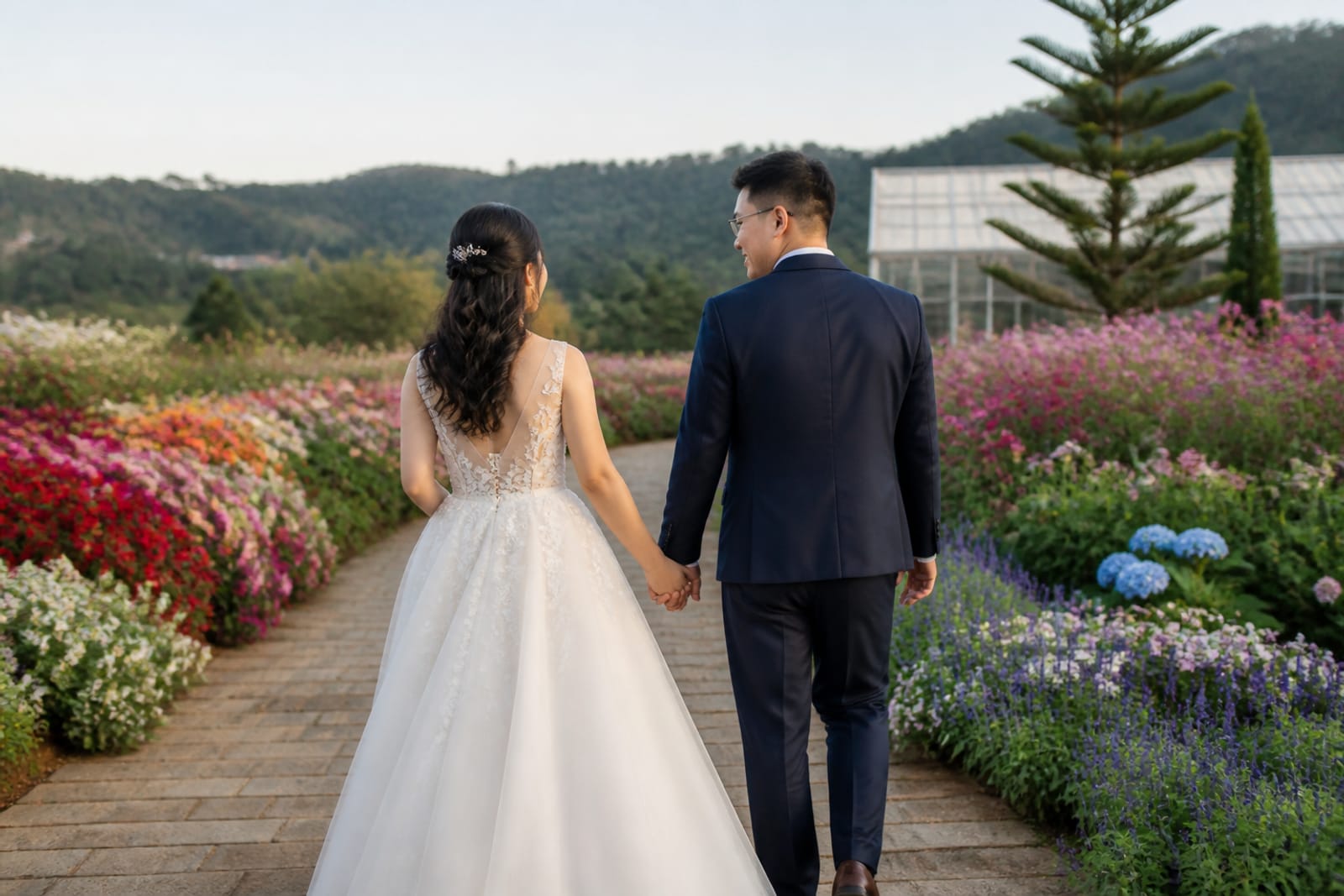
Which season and month gives the best light and outfit options?
| Timeframe | Light quality | Mist/weather | Best outfits | Why it works |
|---|---|---|---|---|
| Dec–Jan | Side-light 8–10 a.m.; mist burns off by 11 a.m. | Morning mist, clear afternoons | Lightweight ao dai, jackets, boots | Cool air suits layered looks; wildflowers peak; sun angle sculpts detail |
| Feb–Mar | Bright, direct; less mist; shadows harden | Dry, occasional wind | Ao dai, lighter jackets, open settings | Clearest days; high visibility on ridges; harder shadow management |
| Apr–May | Diffuse; haze increases; mist lingers to midday | Afternoon clouds build | Lightweight fabrics, jewel tones pop | Forest corners stay cool; wildflower tail-end; afternoon showers risk |
| Jun–Oct | Grey, flat; frequent rain; mist all day | Rainy season; morning showers common | Waterproof outfits, darker colors hide rain | Morning shoots only (pre-9 a.m.); fabric clings when wet; cancel risk high |
| Nov | Side-light 7–10 a.m.; mist clears by 10 a.m. | Dry, cool mornings; windy afternoons | Ao dai, heavier jackets, boots | Peak wildflower season; light sculpts; outfit layers work perfectly |
Conclusion: Dec–Jan and Nov offer the best light-to-outfit ratio. Feb–Mar suits couples who accept harder shadows for guaranteed dry schedules. Avoid rainy season (Jun–Oct) unless you embrace moody, overcast aesthetics and accept weather cancellation risk.
How do you find and vet a local Da Lat photographer for Langbiang shoots?
Ask locally in Da Lat town for photographers who specialize in couple/pre-wedding work on Langbiang—not general tourism guides. Check their portfolio for: (1) mist/forest lighting expertise, (2) couple framing (not just landscape), (3) fabric and ao dai movement (if that's your plan). Request a consultation via WhatsApp; ask how they manage weather, trail safety, outfit logistics and post-production timings. Confirm they've shot the specific corner you want and know current trail conditions. Ask for references from other couples. Discuss cost factors: season (Dec–Feb higher), hiking distance, outfit changes, backup weather dates and final file delivery timings. Never book based on price alone—poor light management and rushed hiking ruin intimate shoots. A local photographer familiar with Langbiang's microclimates will anticipate mist patterns and angle your couple to catch side-light exactly when it peaks.
🌸 See our couple photoshoot approach
What outfit and logistics checklist ensures a safe, photogenic Langbiang shoot?
Before booking:
- Confirm the corner you want is accessible (check local Langbiang guides for recent trail status).
- Choose a month that matches your outfit vision: wildflowers (Nov–Jan), ao dai layering (Dec–Feb), waterproof fabrics (rainy season only if embraced).
- Decide if you'll change outfits mid-shoot or stick to one look (change sites require extra time, weight and rest stops).
- Book your photographer 2–3 weeks ahead; discuss weather backup dates and cancellation terms.
Day-of logistics:
- Start early (6:30–7 a.m. depart Da Lat town) to catch mist and morning light before crowds.
- Wear hiking boots with grip; bring a small backpack with water, snacks, a light rain jacket and a gear bag for outfit changes.
- Ao dai wearers: bring undergarments that don't show wet, anti-chafe balms and a change of shirt for hiking segments.
- If makeup was applied at your hotel, ask the makeup artist for a touch-up kit (face powder, lipstick, setting spray); cool air and humidity will shift it by midday.
- Plan 2–3 rest stops during hiking to manage outfit creasing and catch breath.
- Expect 4–5 hours total (travel, hiking, shooting, descent); start descent by 12 p.m. to avoid afternoon clouds.
After the shoot:
- Ask your photographer when you'll see the first edited files (typically 1–2 weeks for a couple session).
- Confirm the delivery format (digital files, prints, album—based on the agreement you made upfront).
📸 Book on WhatsApp — pre-wedding shoots
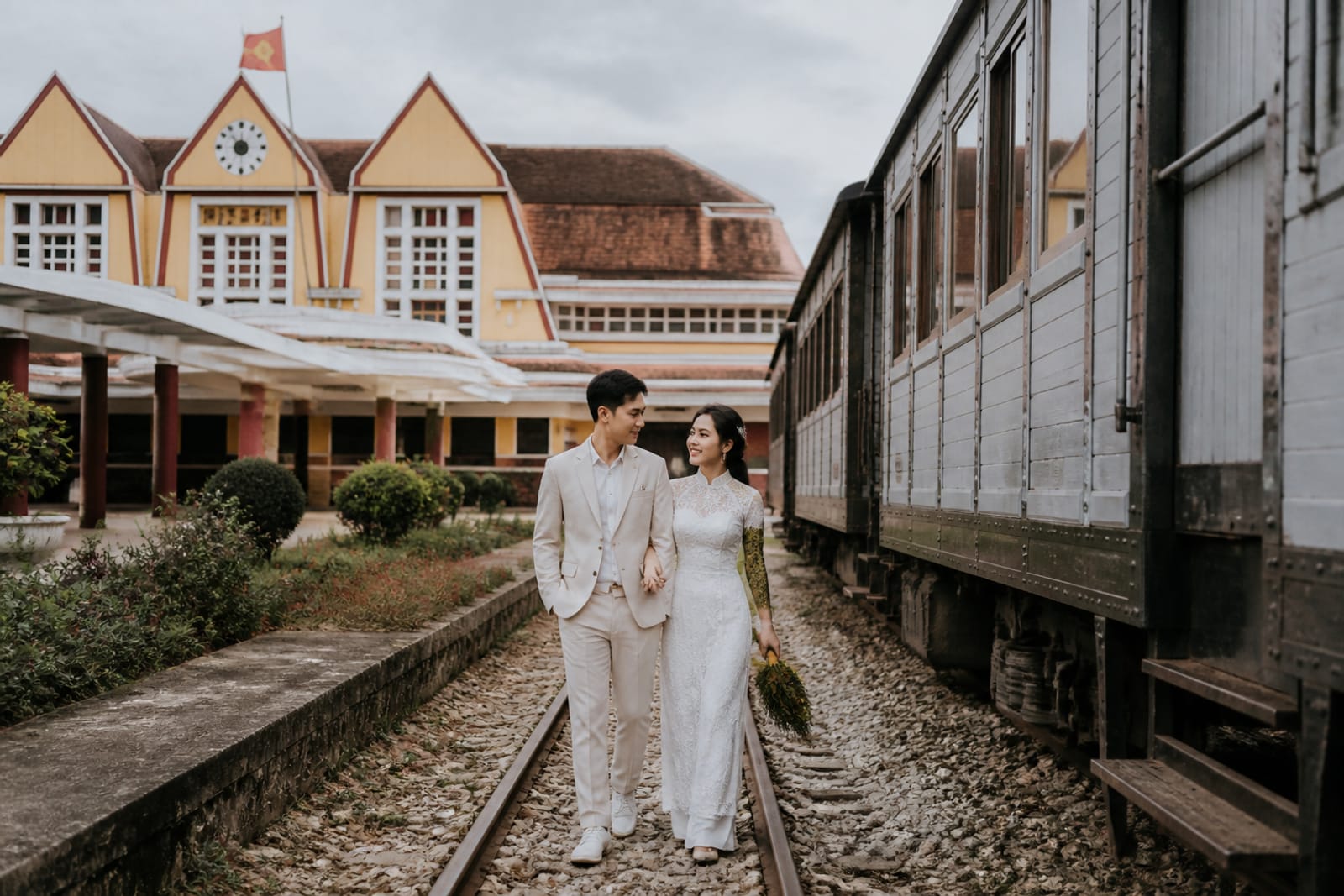
Can you combine Langbiang with other Da Lat photo locations in one session?
Yes, but with strict time trade-offs. A single Langbiang corner (mist/light window, hiking, outfit time) fills 4–5 hours. Adding a second site—e.g., a pine forest corner plus a town landmark—shrinks daylight in each location and risks chasing poor light. Couples who want variety often: (1) shoot Langbiang once, then book a separate Da Lat town session (market, lake, architecture) on another day, or (2) stay three nights and split: Day 1 Langbiang mountain, Day 2 town/lake, Day 3 backup weather day or travel onward. This pacing lets your photographer nail light in each space and lets you rest between hikes. If you insist on one session combining two sites, confirm with your photographer that outfit changes and driving time fit the daylight window—most shoots lose detail and intensity when rushed. A focused Langbiang session (one corner, one outfit or two strategic changes, unhurried light-chasing) delivers stronger images than a scattershot tour.
What's the honest difference between DIY scouting and hiring a professional for Langbiang couple shoots?
DIY scouting (you book a guide, shoot yourselves or with a friend's camera):
- Pro: Low cost factor; full creative control; private moments.
- Con: No professional light management (mist timing, side-angle posing); no one to frame both of you together; outfit logistics unsupported; no safety backup if weather turns or a hiker falters; phone/camera batteries drain fast in cold; post-shoot file sorting and editing fall to you.
Professional photographer (local Da Lat specialist):
- Pro: Expert mist/light prediction and timing; you're both in frame together; outfit and hiking logistics managed; safety awareness; weather contingency built in; files edited and delivered to a standard.
- Con: Cost factor varies by season and distance; less privacy (one extra person on shoot); booking coordination.
Hybrid: Hire a photographer for one flagship Langbiang shoot (Nov–Jan when light and wildflowers peak), then scout and shoot informal corners yourself on another trip. This splits time and cost while building your archive.
---
What to check before you book a Langbiang couple photoshoot
- Photographer's Langbiang portfolio: Do they have at least 3 recent couple shoots on Langbiang? Do images show mist, side-light and fabric movement—not just landscape?
- Season and weather backup: Which months do they recommend? What's their cancellation and re-shoot policy if rain hits?
- Outfit logistics: How do they handle ao dai, multi-outfit changes, waterproofing and dry-bag management?
- Hiking experience: Have they hiked the specific corner before? Can they assess trail safety in current conditions?
- Makeup and hair: If you're having it done beforehand at your hotel (see makeup & hair services), confirm the photographer knows this and has a touch-up kit or knows which local artist can refresh you mid-shoot.
- File delivery and timing: How many edited images will you receive? When? In what format (digital, printed album, cloud link)?
- Cost factors: Ask what changes the quote (season, outfit count, hiking time, rush delivery). Never negotiate based on price alone—poor light management isn't worth savings.
---
How does Langbiang compare to other highland and coastal pre-wedding spots?
If you're choosing between Langbiang and other Vietnam locations, explore our pre-wedding photoshoot guide and couple photoshoot options. Langbiang offers mist, pine forest and wildflowers (Nov–Feb best). If you prefer ao dai shoots in tradition-rich settings, Da Lat's colonial town and gardens are photogenic, or book with Cáo Studio in Hanoi or Saigon for urban backdrops. Coastal couples might prefer Hoi An's ancient streets or Nha Trang's beaches—very different light and outfit fit. See the lookbook for inspiration from all locations.
💄 Get professional makeup & hair at your hotel
---
FAQ
Is Langbiang Mountain safe for couples in November–January?
Yes. Trails are well-marked and busy during this season. Wear sturdy boots, start early to finish before dark, and hike with your photographer or a guide. Check weather locally the night before. Cool air and mist are normal, not dangerous.
Can we wear an ao dai on Langbiang's steep corners?
Ao dai suits gentle meadows and lower forest corners more than high ridges with chains or scrambles. Wear an ao dai for photo sections on flat ground or light slopes, then change into hiking clothes for steep ascents. Your photographer can manage outfit changes at rest stops.
What happens if we book December and mist covers the view all day?
Mist can be photogenic—it softens light and creates intimacy—but if your heart's set on clear valley vistas, reschedule for a second date in the same month. Ask your photographer about their re-shoot policy upfront. Many offer a free re-shoot if visibility is severely poor.
Do we need a permit to shoot on Langbiang Mountain?
No formal permit, but check locally with Langbiang's management (near the cable car base) about photo rules and whether your photographer is registered as a guide. Most established local photographers handle this.
How much does a professional Langbiang couple photoshoot cost?
Cost varies by season, hiking distance, outfit count and photographer experience. Dec–Feb typically costs more than other months. Ask a vetted local photographer for a quote on WhatsApp after discussing your vision—cost factors include outfit changes, file count and delivery timings, not just the shoot itself.
Can we combine Langbiang with another Da Lat location in one day?
Possible but rushed. A full Langbiang corner shoot (hiking + light-chasing + outfit time) takes 4–5 hours of your daylight. Adding another site shrinks time in each and risks poor light. Book Langbiang alone, or split locations across separate days if you're staying 2+ nights in Da Lat.
FAQ
Is Langbiang Mountain safe for couples in November–January?
Yes. Trails are well-marked and busy during this season. Wear sturdy boots, start early to finish before dark, and hike with your photographer or a guide. Check weather locally the night before. Cool air and mist are normal, not dangerous.
Can we wear an ao dai on Langbiang's steep corners?
Ao dai suits gentle meadows and lower forest corners more than high ridges with chains or scrambles. Wear an ao dai for photo sections on flat ground or light slopes, then change into hiking clothes for steep ascents. Your photographer can manage outfit changes at rest stops.
What happens if we book December and mist covers the view all day?
Mist can be photogenic—it softens light and creates intimacy—but if your heart's set on clear valley vistas, reschedule for a second date in the same month. Ask your photographer about their re-shoot policy upfront. Many offer a free re-shoot if visibility is severely poor.
Do we need a permit to shoot on Langbiang Mountain?
No formal permit, but check locally with Langbiang's management (near the cable car base) about photo rules and whether your photographer is registered as a guide. Most established local photographers handle this.
How much does a professional Langbiang couple photoshoot cost?
Cost varies by season, hiking distance, outfit count and photographer experience. Dec–Feb typically costs more than other months. Ask a vetted local photographer for a quote on WhatsApp after discussing your vision—cost factors include outfit changes, file count and delivery timings, not just the shoot itself.
Can we combine Langbiang with another Da Lat location in one day?
Possible but rushed. A full Langbiang corner shoot (hiking + light-chasing + outfit time) takes 4–5 hours of your daylight. Adding another site shrinks time in each and risks poor light. Book Langbiang alone, or split locations across separate days if you're staying 2+ nights in Da Lat.
Ao dai, makeup, hair and a local photographer in Hanoi or Saigon — one WhatsApp message.