/pre-wedding-photoshoot
Hidden photo corners near Mui Ne white sand dunes for couples
The white dunes near Mui Ne reward couples who shoot before 7 a.m., when side light sculpts sand texture without harsh shadows. The best hidden corners lie east of the main tourist zone: the dunes' quiet ridge overlooking the lagoon (walk inland 200 metres from the parking area), and the narrow sand paths between dune ridges where light falls on two faces at once. Avoid midday (light flattens and crowds arrive by 8 a.m.). November to April is the dry window; December to February has the clearest skies but also the most wind—sand sticks to skin and fabric. If you're based in Hanoi or Ho Chi Minh City, Cáo Studio does not operate in Mui Ne; instead, we offer a pre-wedding photoshoot in Hanoi or in Saigon where our one team handles your outfit, hair, makeup and all frames. For a Mui Ne session, hire a local photographer who knows dune access and permits.
Why are the hidden dunes better light than the main tourist parking zone?
The main Mui Ne dune parking area sees sun directly overhead by 7:30 a.m., which flattens faces and creates dark undereye shadows—common in couple photos. The quieter ridges 200–300 metres east stay in side light until 8 a.m. because the higher ridges to the west block the early sun. You get a 40-minute window of directional light that sculpts cheekbones and separates you from the sand. The trade-off: you walk uphill on loose sand, which takes 15 minutes and requires shoes you can shed quickly (sand inside footwear ruins photos). The visitor counts are lowest here because most couples stop at the first ridge they see from the car park.
📸 Book on WhatsApp — couple photoshoot
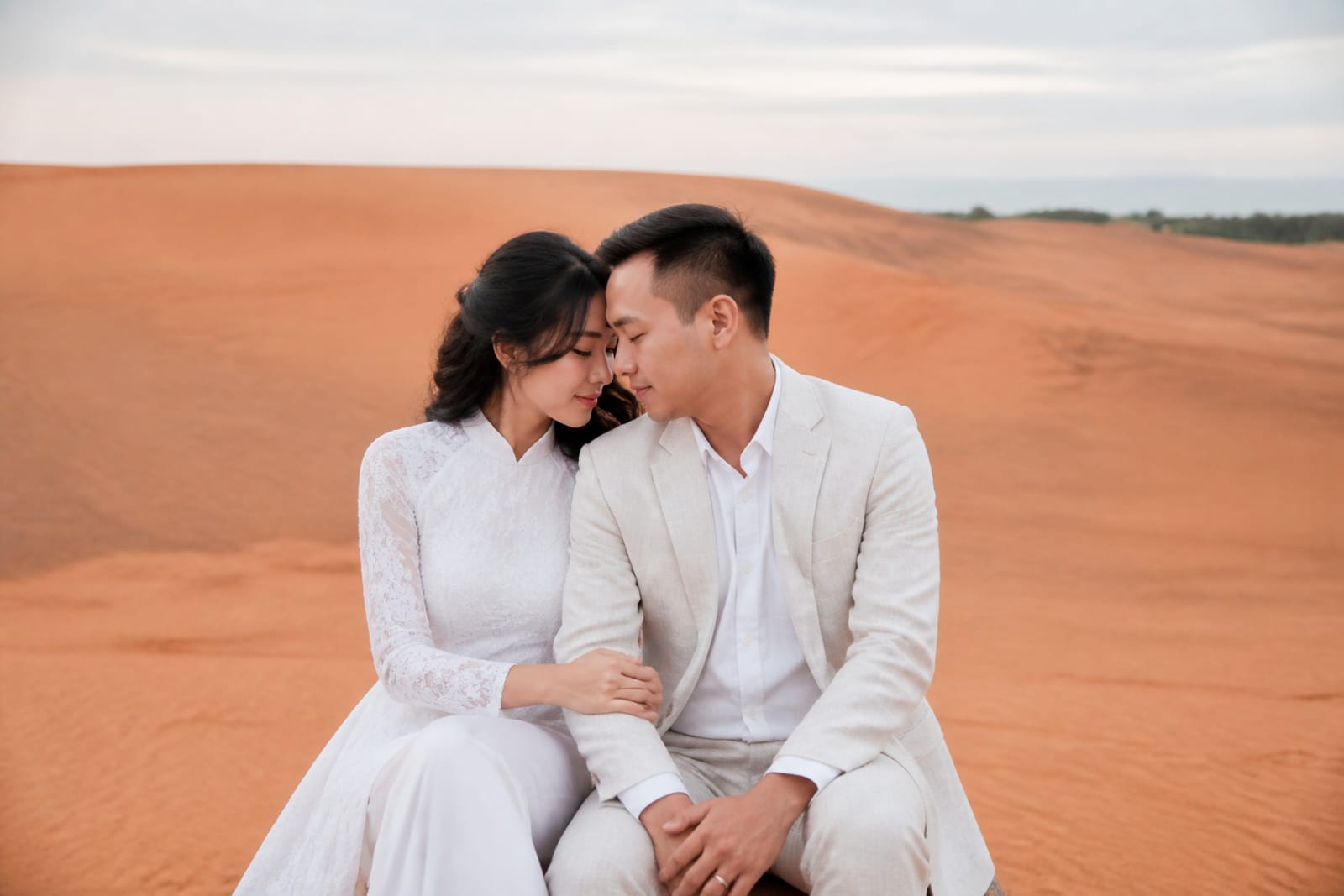
What should a couple wear under an ao dai to stay comfortable in dune heat?
If you're wearing an ao dai on the dunes, the under-dress is cotton or linen, not polyester. Polyester clings when you sweat; cotton breathes and doesn't stick to your skin in close-up frames. Wear a thin, neutral slip beneath the ao dai (white or skin-tone) so sand doesn't show through the fabric if the wind lifts it. For the groom, lightweight linen trousers and a plain or subtle pattern shirt work—avoid heavy fabrics that trap heat and crease visibly by frame 20. Bring a cotton scarf or light wrap for wind gusts; it doubles as a prop for walking shots. Shoes: wear sandals to the dunes, then walk barefoot for frames (sand between toes in photos looks casual and real, not staged). Plan to rinse feet and shoes before the car ride back.
Which season gives you the best light and fewest crowds?
| Season | Best for | Light quality | Why it works |
|---|---|---|---|
| Nov–Dec | Couples who don't mind wind | Clear, bright side light until 8 a.m. | Dry air, low humidity; winds blow sand—secure hair with pins, not loose waves |
| Jan–Feb | Soft light preference, cooler air | Slight haze softens shadows (ideal for close-ups) | Coolest month; fewer tourists mid-week; Tet holiday (late Jan–mid Feb) closes many services—check dates before booking |
| Mar–Apr | Couples seeking warmth | Increasingly direct by 7:30 a.m.; heat rises fast | Still dry; strong winds taper by late April; heat exhaustion risk in noon shoots |
| May–Nov | Not recommended | Afternoon rain likely; humidity flattens light | Wet season; dunes less accessible after rain; midday light is harsh |
The Nov–Feb window is your only real choice. Jan–Feb offers the softest morning light and the least wind on average (though Feb can surprise with gusts). Book mid-week (Tue–Thu) to avoid weekenders. If Tet falls during your trip, confirm that your photographer and any rental services are still open—many close for 3–7 days.
How do you find and vet a local Mui Ne photographer if you're not booking Cáo Studio?
Cáo Studio operates in Hanoi, Ho Chi Minh City (Saigon), and by appointment in Hoi An—not in Mui Ne. If you're traveling to Mui Ne as a couple and want a local photoshoot, here's how to choose:
Check their portfolio first. Look for photos shot in morning side light (not midday overhead sun). Count how many dune frames they show—if fewer than 30% of their portfolio is outdoors in natural light, they may rely on heavy editing. Ask to see unedited RAW files or a before-and-after to gauge their style.
Confirm they handle permits. Mui Ne's dunes require entry permits (check the current fee locally). A photographer familiar with dune access knows which zones need additional clearance and how long a shoot really takes once you factor in walking and light changes.
Ask about their team size. One photographer is faster and more agile on sand than two. Ask if they bring a second camera body (sand damages equipment; backup gear avoids a ruined session). Confirm they have image backup on-site—shoot to two memory cards so sand storms or equipment failure doesn't erase your frames.
Request a timeline in writing. Sunrise shoots require a precise start time. Get a written message (WhatsApp or email) confirming pickup time, location, shoot duration, and delivery time for edited photos. Vague timings lead to missed light.
Meet before the day. If possible, meet the photographer in person or via video call a week before. Discuss your vision (walking frames, close-ups, the feel you want) and confirm they understand your outfit and any cultural touches (e.g., traditional áo dài details to highlight).
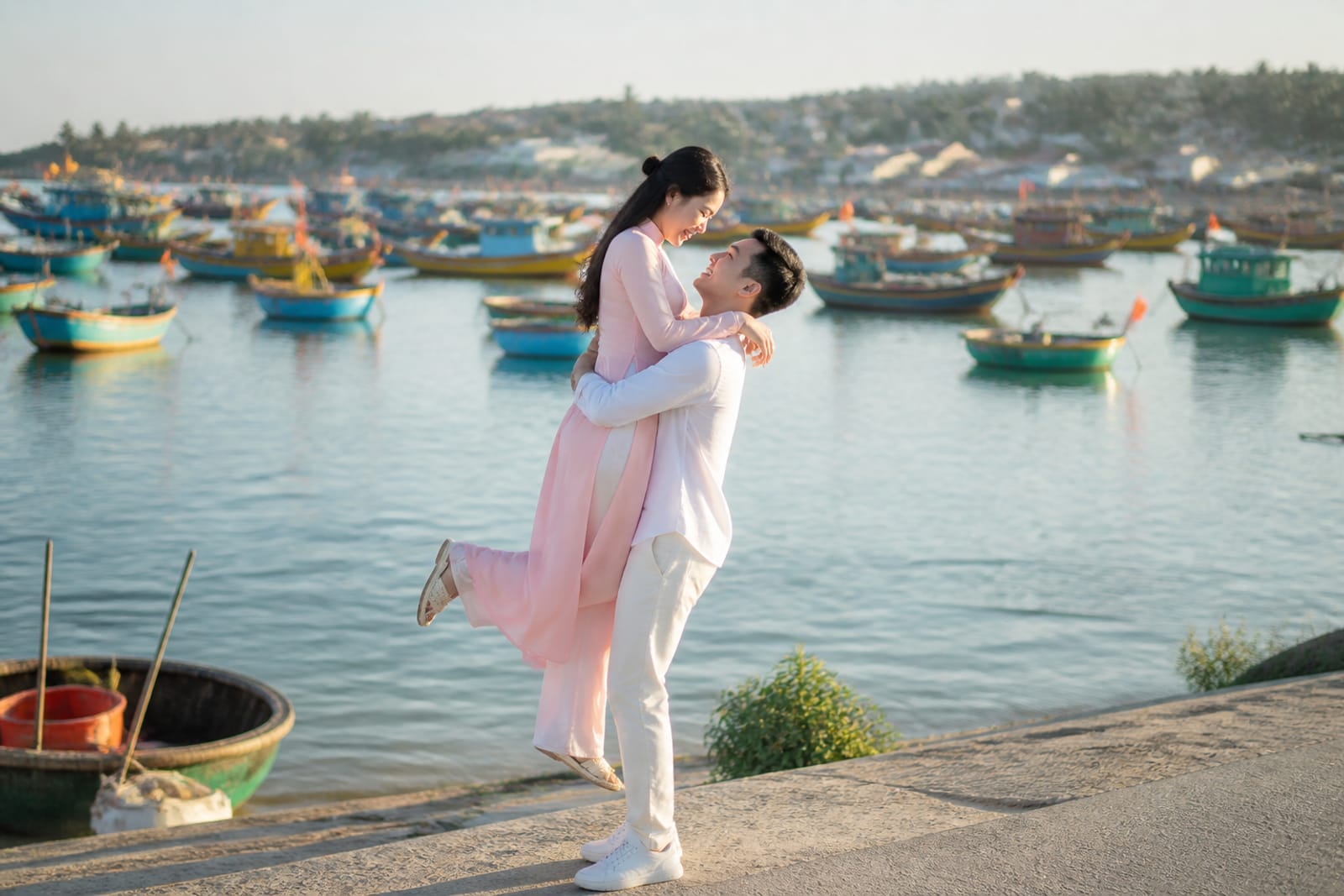
What do couples commonly get wrong when planning a dune shoot?
Starting too late. Most couples aim for 7 a.m. arrival, but the best light window is 5:30–7:15 a.m. By the time you park and walk uphill, you've lost 30 minutes of side light. Plan to leave your hotel by 5 a.m. if you're more than 30 minutes away.
Overpacking outfits. Sand gets into every seam. Two complete outfit changes are enough (áo dài and casual, or formal and relaxed); three means carrying wet sand into the third outfit and burning daylight with changes. One outfit per light window (sunrise, mid-morning) is realistic.
Not scouting the day before. Wind direction and sand texture change daily. If possible, visit the dunes the afternoon before to see where shadows fall and identify the quiet ridges. Show your photographer a photo of the spot so they arrive prepared.
Ignoring wind forecasts. December–February winds peak in morning hours. Check a local weather app (e.g., Windy.com) the night before to see wind speed and direction. Gusts over 25 km/h will blow sand into your face and eyes during frames—not safe for long shoots. Reschedule if winds exceed that threshold.
Forgetting hydration and sun protection. You'll be in direct sun even if the light is flattering. Bring a large water bottle (1.5 litres per person) and apply SPF 50+ sunscreen 30 minutes before sunrise. Reapply after the shoot. Dehydration leads to pale skin in frames and fatigue that shows in your posture.
---
When should you book a pre-wedding shoot in Mui Ne versus choosing a different location?
If you want a one-team experience—photographer, makeup artist, and stylist coordinating a single narrative—Cáo Studio's pre-wedding shoots in Hanoi, Saigon, or Hoi An offer that integrated approach. You get frames across multiple light conditions and locations in one booking, with edited photos and a short film within 48 hours.
Mui Ne works best if:
- You're already vacationing there with 2–3 days free.
- You prioritize dune aesthetics over variety of backdrops.
- You're comfortable hiring and communicating with a local photographer in English or Vietnamese.
- Your budget allows for a local shoot plus travel time.
Mui Ne is harder if:
- You live in Hanoi or Saigon and want a same-day turnaround (travel time = 4–6 hours each way).
- You speak only English and don't have a local friend to vet photographers.
- You need guaranteed makeup and hair styling (local photographers rarely coordinate this).
- You want the same quality of editing across 100+ frames (one-person operations can't match a studio's turnaround).
For a hassle-free pre-wedding photoshoot, book with Cáo Studio in your home city or nearest base. For a Mui Ne dune elopement or couple getaway, a local photographer is practical—just vet them thoroughly.
---
What to check before you book a Mui Ne photographer or consider an alternative
- Light forecast 3 days prior: Check sunrise time, cloud cover, and wind speed on your chosen date. Rebook if forecast shows rain or winds above 25 km/h.
- Photographer response time: Do they reply to WhatsApp within 2 hours? If they're slow before booking, they'll be slow during the shoot.
- Portfolio diversity: At least 40% of their feed should show couple shoots in morning side light with natural posture (walking, looking at each other, not static poses).
- Permit and access: Confirm they handle dune entry fees and know whether your chosen ridge requires additional clearance.
- Outfit planning: Send photos of your áo dài or dress at least 1 week before. Ask if they've shot this fabric/colour before and what light it looks best in.
- Edited sample timeline: Ask for one sample photo edited within 24 hours. This tells you their editing speed and style.
- Backup plan: If weather cancels the shoot, do they reschedule free or charge again? Get this in writing.
---
FAQ
Can we shoot on the main Mui Ne dunes without a guide or permit?
Dune access from the main parking area requires entry payment—check the current fee on-site. You don't need a separate guide if you walk the marked trails, but a local photographer familiar with the best ridges and light angles will save you 1–2 hours of wandering.
What's the real difference between sunrise and late-afternoon light on the dunes?
Sunrise (5:30–7:30 a.m.) gives side light that sculpts faces and sand texture; shadows are soft and directional. Late afternoon (4–5:30 p.m.) creates backlit halos and warm tones but also harsh shadows under cheekbones. Sunrise suits couple frames; late afternoon suits single portraits. Most couples prefer sunrise because you see both faces clearly.
How long does a dune shoot actually take, including walking and outfit changes?
Plan 2.5–3 hours total: 30 minutes travel + 15 minutes walk to the best ridge + 90 minutes shooting (includes one outfit change and light chasing as sun rises) + 15 minutes wind-down and hydration. If you're traveling from Ho Chi Minh City or a coastal resort, add 4–6 hours round-trip travel time.
Should we book Cáo Studio for a Mui Ne shoot or find someone local?
Cáo Studio operates in Hanoi, Saigon, and Hoi An with a full team (photographer, makeup, hair, styling). We don't shoot in Mui Ne. If you're in Saigon and want a pre-wedding session before your Mui Ne trip, book with us there. For a Mui Ne dune shoot, hire a local photographer who knows dune access and light patterns—vet them using the checklist above.
What happens if wind or rain ruins the morning light on shoot day?
A professional photographer will reschedule at no extra cost if light is truly lost to weather. Confirm this clause in writing before booking. Rain closes dune access; wind over 25 km/h makes it unsafe. Check the forecast the night before and reschedule proactively rather than arrive to unusable conditions.
Can we wear a traditional áo dài on the dunes without sand damaging the fabric?
Yes, if you wear cotton or linen under-dress and choose a heavier silk áo dài (not chiffon—it catches sand easily). Avoid train hems; opt for knee-length or midi for easier walking. Rinse sand from the fabric within 2 hours of the shoot in cool water. Ask your photographer to frame wide and medium shots (not close fabric detail) to reduce visible sand particles in frames.
FAQ
Can we shoot on the main Mui Ne dunes without a guide or permit?
Dune access from the main parking area requires entry payment—check the current fee on-site. You don't need a separate guide if you walk the marked trails, but a local photographer familiar with the best ridges and light angles will save you 1–2 hours of wandering.
What's the real difference between sunrise and late-afternoon light on the dunes?
Sunrise (5:30–7:30 a.m.) gives side light that sculpts faces and sand texture; shadows are soft and directional. Late afternoon (4–5:30 p.m.) creates backlit halos and warm tones but also harsh shadows under cheekbones. Sunrise suits couple frames; late afternoon suits single portraits. Most couples prefer sunrise because you see both faces clearly.
How long does a dune shoot actually take, including walking and outfit changes?
Plan 2.5–3 hours total: 30 minutes travel + 15 minutes walk to the best ridge + 90 minutes shooting (includes one outfit change and light chasing as sun rises) + 15 minutes wind-down and hydration. If you're traveling from Ho Chi Minh City or a coastal resort, add 4–6 hours round-trip travel time.
Should we book Cáo Studio for a Mui Ne shoot or find someone local?
Cáo Studio operates in Hanoi, Saigon, and Hoi An with a full team (photographer, makeup, hair, styling). We don't shoot in Mui Ne. If you're in Saigon and want a pre-wedding session before your Mui Ne trip, book with us there. For a Mui Ne dune shoot, hire a local photographer who knows dune access and light patterns—vet them using the checklist above.
What happens if wind or rain ruins the morning light on shoot day?
A professional photographer will reschedule at no extra cost if light is truly lost to weather. Confirm this clause in writing before booking. Rain closes dune access; wind over 25 km/h makes it unsafe. Check the forecast the night before and reschedule proactively rather than arrive to unusable conditions.
Can we wear a traditional áo dài on the dunes without sand damaging the fabric?
Yes, if you wear cotton or linen under-dress and choose a heavier silk áo dài (not chiffon—it catches sand easily). Avoid train hems; opt for knee-length or midi for easier walking. Rinse sand from the fabric within 2 hours of the shoot in cool water. Ask your photographer to frame wide and medium shots (not close fabric detail) to reduce visible sand particles in frames.
Ao dai, makeup, hair and a local photographer in Hanoi or Saigon — one WhatsApp message.