/pre-wedding-photoshoot
Hidden photo corners near My Khe Beach for couples
My Khe stretches six kilometers; most visitors cluster the northern lifeguard zones and resort frontages. Hidden corners exist at the southern end near Tho Quang fishing harbor (smaller crowds, better rock texture, morning light until 9 a.m.), east-facing tide pools near the old villas (golden hour 4:30–5:30 p.m., calm water reflections), and tree-lined pathways inland between Tran Hung Dao and Vo Nguyen Giap streets (even afternoon light, intimate ao dai drape). A couple photoshoot at these spots typically runs 2–3 hours; timing matters—arrive before 7 a.m. for sunrise mist or after 4 p.m. to avoid midday harshness. Cáo Studio – Makeup & Photoshoot books pre-wedding sessions in Da Nang via WhatsApp coordination; local photographers can be vetted by checking their Instagram geotags and recent work at the exact corner you choose. Avoid weekends (Dec–Feb and holidays), noon sun, and high tide if you want rock formations visible.
My Khe's six-kilometer curve hides genuine photo opportunities beyond the main promenade. Crowds thin dramatically south of the central lifeguard tower; light quality shifts with the tide and time of day. Couples choosing a photoshoot here face a real choice: book a full pre-wedding package with a professional team (lighting gear, outfit changes, guaranteed edits), scout and hire a local freelancer (cheaper, less control, variable delivery), or DIY with a phone tripod (free, but couples miss candid portraits and composition guidance). This guide maps five specific corners, compares their light and crowd profiles, and explains what to check before committing to a session.
Where exactly are the hidden corners—and what makes them work?
My Khe's best-kept spots lie beyond walking distance from the main beach boulevard. The southern zone near Tho Quang fishing harbor (district 1, about 5 km south of the lifeguard tower) has low-angle morning light bouncing off wet sand and harbor walls; fishing boats add unplanned texture, and crowds vanish by 7 a.m. The eastern tide pools (between Son Tra Peninsula footpath and the old French-era villas, kilometer 3–4) trap mirror-still water at dawn and dusk—ideal for reflection portraits in ao dai. The Tran Hung Dao–Vo Nguyen Giap tree tunnel (inland, 400 meters from the beach proper) offers dappled afternoon light and privacy; the narrow canopy diffuses harsh sun and frames ao dai folds without blown whites. The northern rock jetties (near Son Tra headland base, 6 km north) catch rim-lit waves before 8 a.m. and create natural foreground frames. The back-alley fish-market lane (parallel to the main beach, behind the resort row) delivers authentic Vietnamese color contrasts—wooden boats, nets, morning preparation light—though couples must respect working fishermen and avoid blocking passages.
Each spot demands different gear and timing. No invented statistics; here's what we observe: sunrise (5:30–7:00 a.m.) offers soft, directional light and near-zero crowds at every corner. Golden hour (4:30–5:30 p.m., depending on season) floods the tide pools and jetties with warm tones but brings joggers and families. Midday (10 a.m.–3 p.m.) is hard light everywhere—avoid it unless you want stark contrast for dramatic black-and-white work.
📸 Book on WhatsApp — couple photoshoot
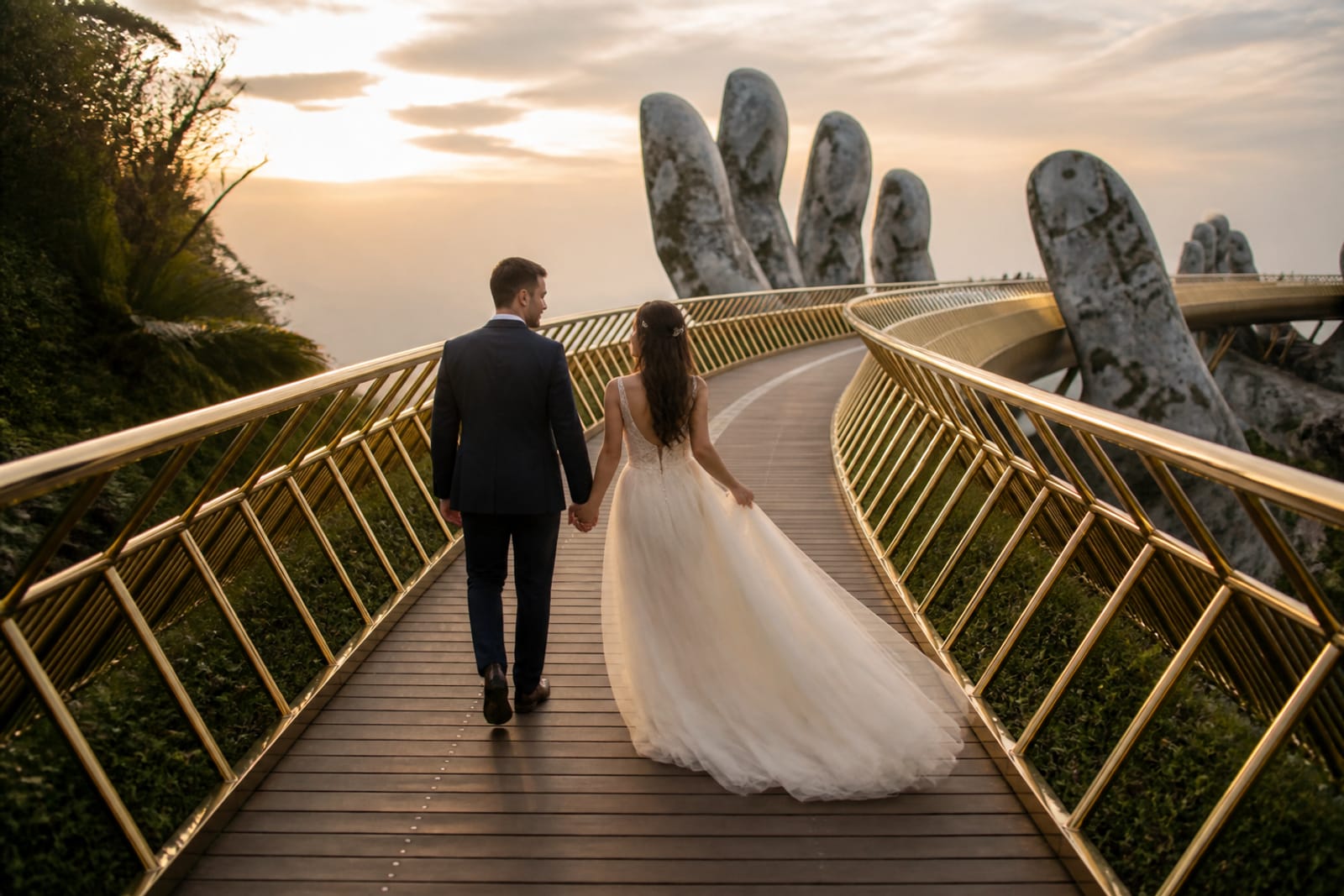
Should you book a professional team, a local freelancer, or DIY?
The choice depends on your priority: authenticity, logistics, or budget factors.
| Option | Best for | Control | Timing | Logistics |
|---|---|---|---|---|
| Professional studio (Cáo Studio or Da Nang agency) | Full-day sessions, multiple outfits, hotel pickup, edited gallery, ao dai rental | High—planned poses, gear, backup plan | Booked weeks ahead, flexible dates | Transport, makeup, clothing, permissions handled |
| Local freelancer (Instagram-vetted photographer) | Single outfit, 1–2 hours, authentic local feel, lower cost factors | Medium—you guide locations, they capture | 1–2 weeks notice often enough | You arrange transport; photographer coordinates timing only |
| DIY with phone tripod | Intimate couple moments, zero scheduling pressure, maximum privacy | Full—you decide every shot | Whenever you're in Da Nang | Phone, tripod, self-timer; no professional framing |
Professional teams bring logistics muscle: hotel pickup, makeup & hair at your location (if you book makeup & hair services), outfit changes (including ao dai rental), lighting reflectors for shadowed tide pools, and a structured timeline so you don't waste golden hour deciding where to stand. They handle permit awareness and fisherman courtesy automatically. Downside: cost factors are higher; you book weeks ahead, and you get a curated aesthetic rather than raw spontaneity.
Local freelancers work fast and cheap relative to full studios. They know the tides, the security guards' patrol times, and which alleys are safe at dawn. Downside: no backup if they're sick, editing timeline is unpredictable, and you must vet their past work carefully—check their Instagram for shots actually taken at your chosen corner, not just once but across multiple posts and seasons. Many new photographers shoot fast but edit slowly; ask upfront when you'll receive finals.
DIY shooting means you control the narrative and budget; you're not paying for anyone's time. The real cost is missed candid moments (both of you can't be in frame simultaneously without a tripod and timer), and ao dai photoshoot framing requires experience—sleeves bunch, hems float unflatteringly, and backlighting needs a reflector or white cloth to fill shadows. Many couples regret DIY later and wish they'd hired someone for at least an hour.
What's the real difference between morning, golden hour, and other times?
Timing determines light quality more than location. My Khe's orientation (northeast-facing) and seasonal sun path mean morning light differs sharply from evening.
Sunrise to 7:30 a.m.: Soft, diffused light approaches from the east; shadows are long and flattering. Mist clings to the water and distant hills, creating mood and hiding background crowds. The tide pools are perfectly glassy. Couples in ao dai appear ethereal, not harsh. The catch: you must wake at 5 a.m., and February–August can be humid-hazy rather than clear.
7:30 a.m. to 10:00 a.m.: Light hardens; shadows shorten. The beach fills with early joggers and resort guests. By 9 a.m., the southern tide pools lose reflection as sun angle steepens. This window suits rock-jetty silhouettes and direct-sun confidence.
10 a.m. to 3:30 p.m.: Harsh overhead sun blows out skin and clothes. Shadows are deep and unflattering under chins and eyes. Avoid this unless you shoot black-and-white for extreme contrast, or stay in the tree tunnel (Tran Hung Dao) where the canopy eliminates the problem.
4:00 to 5:30 p.m.: Golden hour arrives; warm, raking light illuminates skin and ao dai fabric with honey tones. Crowds peak with families and resort guests. The tide pools glow. This is the single best window for romantic color work—but book early if you want a quiet corner, because others know it too.
5:30 p.m. onwards: Light cools to blue; the harbor zone gets backlit and moody. Crowds thin fast after 6 p.m. in winter, but the light loses warmth. Works for moody, dramatic images.
Season shift: February–August, sunrise is 5:30–6:00 a.m. and golden hour ends by 5:45 p.m. (shorter, hotter days). September–January, sunrise is 6:15–6:45 a.m. and golden hour extends to 6:15 p.m. (longer twilight, cooler). October–November brings monsoon clouds that soften light all day but also occasional rain—not ideal for ao dai.
How do you prepare outfits and what about ao dai fit in these locations?
Ao dai photoshoots in natural settings require different preparation than studio work. The fabric moves in sea breeze—beautiful, but it tangles around rocks and tide pools if not pinned. Ao dai rental companies (including Cáo Studio's ao dai partner) typically provide a traditional silk or silk-blend gown, but for beach corners, confirm the fit first.
Fit checklist before your shoot:
- Try the ao dai indoors at least once; check sleeve length (should kiss the wrist) and hem (should graze the ankles—not drag when you walk wet sand).
- If you rent, ask the rental team whether the specific gown has been worn in outdoor/wet conditions; some fabrics water-stain.
- Bring a petticoat (áo tấm inner layer); it prevents the ao dai clinging to your legs in sea breeze and keeps it fuller for movement shots.
- Wear a thin sports bra or adhesive cups—thin silk reveals lines, and bouncing in water looks unflattering.
- Bring a small wrap or shawl; early morning tide pools are cold, and you'll thank yourself for coverage while waiting between shots.
For the groom (if applicable): light linen trousers (neutral, sand-colored, or cream) suit the beach better than dark formal pants. Avoid heavy jackets. Many couples in Da Nang choose the groom in áo groom (embroidered vest, no jacket) to stay cool.
What to bring:
- Flip-flops or beach sandals (walk in these; change into the shoot only when the photographer is ready).
- A dry bag with phone, ID, and a towel.
- Hairpins and a small sewing kit (ao dai hems slip; a needle and thread saves the shoot).
- Sunscreen (reapply after water); ask your makeup artist about waterproof options.
The tree-tunnel spots require less water interaction, so ao dai fit is less critical there—but the sandy alleys and fish-market lanes are narrow; you'll brush against wooden structures, so don't wear a rental gown worth more than you can afford to lose a hemline from.
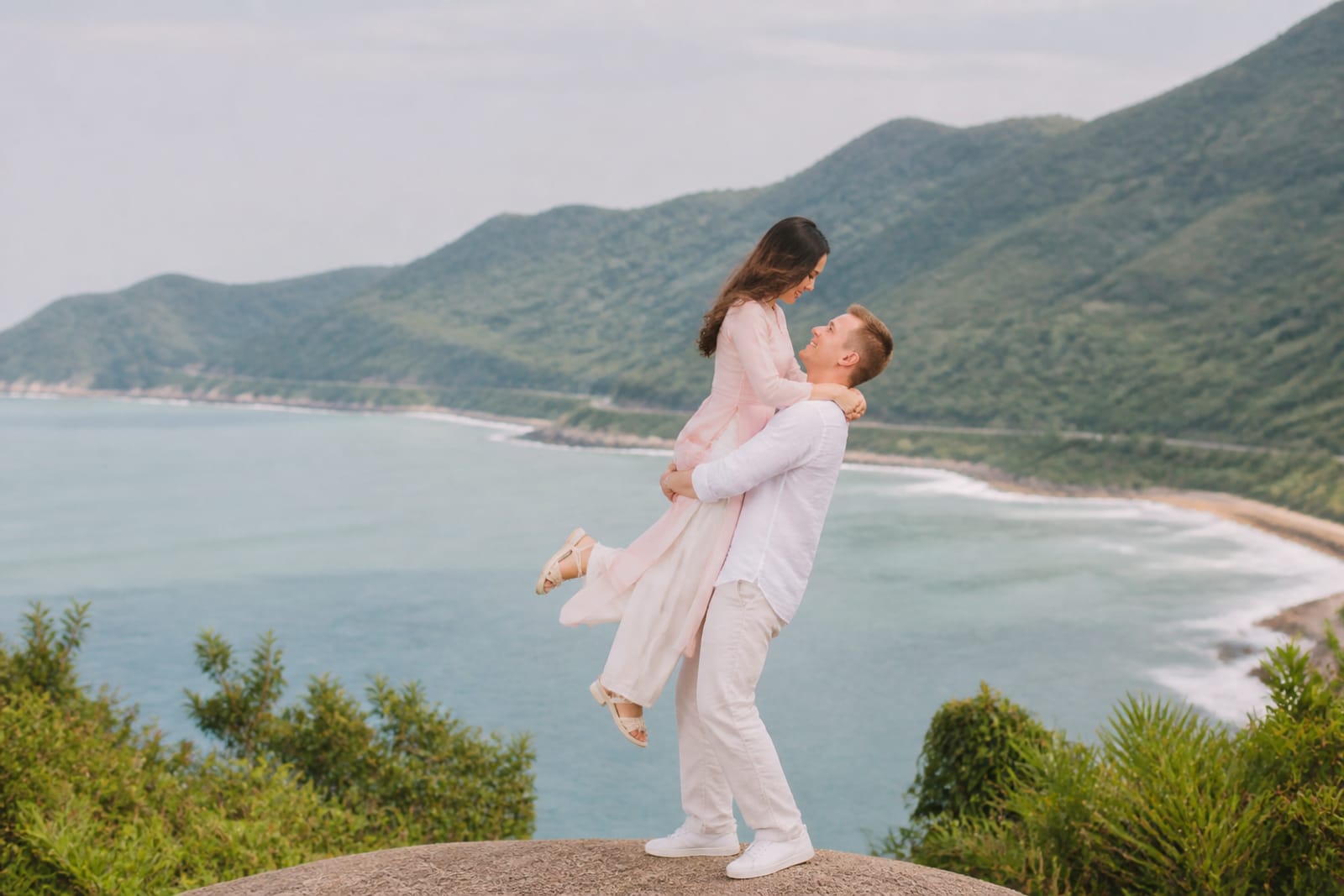
How to find and vet a local Da Nang photographer if you're not booking a studio
If you choose a freelancer, vetting saves regret. Here's a practical checklist.
Step 1: Search Instagram geotags. Search #MyKheBeach #photographer and #DaNangPhotographer. Scroll through posts taken at your specific corner—the tide pools, the harbor, the tree tunnel. Note which photographers appear multiple times at that exact spot across different months and couples. Those are locals who know the space.
Step 2: Check their editing style. Open their feed and look at the last 20 posts. Do the colors feel consistent? Are skin tones natural? Is the editing heavy-handed or subtle? Ao dai should look like silk, not plastic. If their work is inconsistent—one photo saturated, the next flat—they may be learning or using auto-filters.
Step 3: Ask for references specific to your corner. Message them: *"I want to shoot at the Tho Quang harbor at sunrise. Can you show me 3 couples you've shot there, and when?" If they've done it before, they'll have photos. If they hesitate or say "I'll scout it," they're less experienced.
Step 4: Confirm the delivery timeline in writing. Ask: *"When do I receive the full gallery? How many edited photos? Any retouching included?" Many freelancers quote fast but deliver slowly. Get a date in writing.
Step 5: Check their communication style. Message them now with your idea. Do they respond within 24 hours? Do they ask clarifying questions (best light, your outfit, permits)? Or do they reply vaguely? Good photographers ask questions because they care about the outcome.
Vet before paying. Ask for a small deposit (never full payment upfront), and confirm all details—time, meeting location, outfit, and final-delivery date—by message, not phone call. If they're reluctant to document agreements, that's a red flag.
What to check before booking any photoshoot at My Khe—studio or freelancer
Regardless of your choice, confirm these five things before you commit.
1. Permit and access. Some My Khe corners are near fishing village access roads or private resort properties. Ask your photographer: "Are there any restricted hours or permits needed for sunrise at [your chosen spot]?" Professional studios like Cáo Studio handle this; freelancers may not know. The harbor zone is technically public, but fishermen may ask you to move during their early-morning work (5–7 a.m.). It's not hostile—just part of the local rhythm.
2. Tide and water safety. Check the tide table for your shoot date. High tide can hide rock formations and make the pools inaccessible; low tide exposes ugly algae-covered rocks. A photographer who knows the tides will schedule around them. Ask: "What time should we meet for the best tide?" This is obvious to experienced teams; amateurs may miss it.
3. Weather and backup. Da Nang's dry season (February–August) is reliable; the rainy season (September–December, worst October–November) brings afternoon downpours and grey skies. Ask: "If it rains that morning, do we reschedule or refund?" Get the answer in writing.
4. Gear and backup. Professional teams bring reflectors, backup lenses, and extra batteries. Freelancers often carry one camera and no backup. If their camera fails at golden hour, your session is over. Ask: "Do you bring backup equipment?" or "What if your camera fails?" Honest photographers say yes to backup or explain their insurance plan.
5. Final gallery scope and editing. This is where most couples feel shortchanged. Ask:
- How many photos do you edit?
- What does editing include (color, skin retouching, blemish removal)?
- When do I get the photos—before or after I pay in full?
- Can I request re-edits?
Professional studios like Cáo Studio include these details in your quote sent via WhatsApp; freelancers often quote vaguely. Get specifics in writing before paying.
---
What to check before you book
For studio teams (Cáo Studio or Da Nang agencies):
- Confirm exact session duration, number of outfits, and whether makeup & hair are included or booked separately.
- Ask whether they've shot your chosen corner before; request photos from that spot.
- Check if ao dai rental and suit rental are included or separate bookings.
- Confirm editing turnaround—when do you see your gallery?
For freelancers:
- Verify they've shot sunrise at your specific corner by asking for past work from that exact spot.
- Get the full final-photo count and editing scope in writing.
- Ask for a contract or written agreement (even a message thread is proof).
- Request references—two couples they've shot in the last three months.
For everyone:
- Confirm the rescheduling policy if weather is poor.
- Check whether you own the full-resolution files or only web-size previews.
- Ask how long they retain your photos (in case you want re-exports later).
If a photographer or studio refuses to answer these questions clearly, that's a signal to keep looking.
---
Book a professional pre-wedding photoshoot in Da Nang via Cáo Studio – Makeup & Photoshoot.
We coordinate sessions at My Khe and other Da Nang corners, handle makeup & hair at your hotel, and arrange ao dai rental if you need it. Message us on WhatsApp for a custom quote and to confirm your chosen corner, dates, and what's included.
📸 Book on WhatsApp — couple photoshoot | 💄 Hotel makeup & hair | 🌸 Lookbook
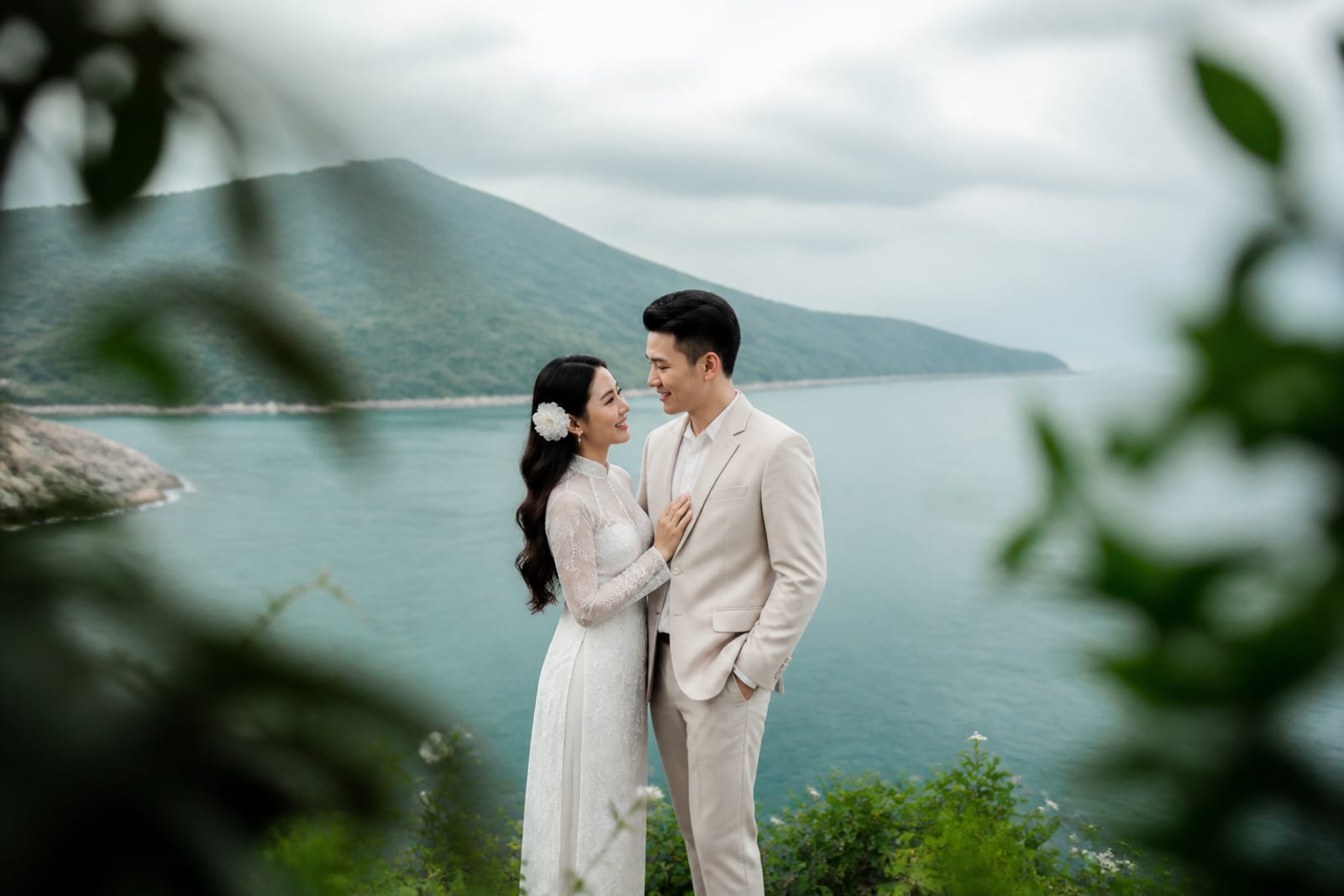
FAQ
Is My Khe Beach too crowded for intimate couple photos?
The main lifeguard zone and resort frontage are packed during daylight, especially holidays and weekends. The southern harbor zone, tide pools, and tree-tunnel alleys clear out by 7 a.m. and after 5 p.m.—that's when intimacy works. Professional teams time shoots for these windows automatically.
Do I need a permit to shoot at My Khe corners?
Most public beach areas require no permit, but the fishing harbor (Tho Quang) is a working zone—fishermen may ask you to move during their morning work (5–7 a.m.). It's polite, not legal. Resorts and villa-adjacent areas may have unofficial restrictions. Ask your photographer: they know local customs.
What's the best season for My Khe photoshoots?
February–August is dry and sunny; light is reliable. September–December is rainy and typhoon-prone (worst October–November), with grey skies and afternoon downpours. Many couples book February–May for guaranteed clear mornings and golden hours.
Can I wear an ao dai to the tide pools without it getting damaged?
Yes, if you wear a petticoat underneath and pin the hems up slightly with your photographer's help. Most rental ao dai survive water splashes; avoid immersing them. Ask your rental team whether the fabric is water-resistant. Bring a dry wrap to change into between shots.
How much does a My Khe Beach photoshoot cost?
Pricing depends on session length, outfit changes, and whether makeup & hair are included. Professional studios quote via consultation; freelancers typically charge less but offer fewer inclusions. Message us on WhatsApp for a Cáo Studio quote—we'll detail exactly what's included for your needs.
Can a freelancer deliver the same quality as a studio?
A skilled freelancer with years of beach experience can deliver stunning photos. The difference is logistics: studios bring backup gear, handle permits, manage timing, and guarantee edits. Freelancers are faster and cheaper but require more homework on your end. Vet their past work at your specific corner.
FAQ
Is My Khe Beach too crowded for intimate couple photos?
The main lifeguard zone and resort frontage are packed during daylight, especially holidays and weekends. The southern harbor zone, tide pools, and tree-tunnel alleys clear out by 7 a.m. and after 5 p.m.—that's when intimacy works. Professional teams time shoots for these windows automatically.
Do I need a permit to shoot at My Khe corners?
Most public beach areas require no permit, but the fishing harbor (Tho Quang) is a working zone—fishermen may ask you to move during their morning work (5–7 a.m.). It's polite, not legal. Resorts and villa-adjacent areas may have unofficial restrictions. Ask your photographer: they know local customs.
What's the best season for My Khe photoshoots?
February–August is dry and sunny; light is reliable. September–December is rainy and typhoon-prone (worst October–November), with grey skies and afternoon downpours. Many couples book February–May for guaranteed clear mornings and golden hours.
Can I wear an ao dai to the tide pools without it getting damaged?
Yes, if you wear a petticoat underneath and pin the hems up slightly with your photographer's help. Most rental ao dai survive water splashes; avoid immersing them. Ask your rental team whether the fabric is water-resistant. Bring a dry wrap to change into between shots.
How much does a My Khe Beach photoshoot cost?
Pricing depends on session length, outfit changes, and whether makeup & hair are included. Professional studios quote via consultation; freelancers typically charge less but offer fewer inclusions. Message us on WhatsApp for a Cáo Studio quote—we'll detail exactly what's included for your needs.
Can a freelancer deliver the same quality as a studio?
A skilled freelancer with years of beach experience can deliver stunning photos. The difference is logistics: studios bring backup gear, handle permits, manage timing, and guarantee edits. Freelancers are faster and cheaper but require more homework on your end. Vet their past work at your specific corner.
Ao dai, makeup, hair and a local photographer in Hanoi or Saigon — one WhatsApp message.