/pre-wedding-photoshoot
Hidden photo corners near Perfume River for couples
The Perfume River winds through Hue's central-coast landscape, offering couples quieter photo spots than mainstream temples or pagodas. Hidden corners include riverbank villages, overgrown stone steps on the east bank, and shaded stone pathways near the water's edge—best shot between 7–9 a.m. or 4–5 p.m. when light is soft and foot traffic is low. The driest, clearest months are February to April; May–August brings intense heat and haze; September to December is flood and typhoon season, often with grey skies and unsafe water levels. Wear ao dai or casual layered clothes (river breezes cool quickly at dawn); avoid heavy fabrics. You can hire a local Hue photographer (vet portfolios on Instagram for riverside work) or travel to Hanoi or Ho Chi Minh City to book Cáo Studio – Makeup & Photoshoot for a pre-wedding shoot there—ask on WhatsApp about Hue coverage and travel-team availability. ---
How do light and season shape Perfume River photos?
The central-coast climate peaks February–April: clear skies, stable water levels, warm but not scorching midday heat. Early morning (6:30–8:30 a.m.) yields gold-tinted, glassy reflections on calm water; late afternoon (4–6 p.m.) produces softer, peachy tones on stone and foliage. May–August brings harsh overhead sun, heat haze distorting distant hills, and midday glare that flattens shadows. September–December is the rainy, typhoon, and flood season—worst October–November—when grey cloud cover dominates, riverbanks become unstable, and shoots often cancel. If you book during shoulder months (late April or early September), expect unpredictable morning mist or afternoon downpours; a skilled photographer carries backup indoor or sheltered-corner options.
📸 Book on WhatsApp — pre-wedding photoshoot | 🌸 See the lookbook
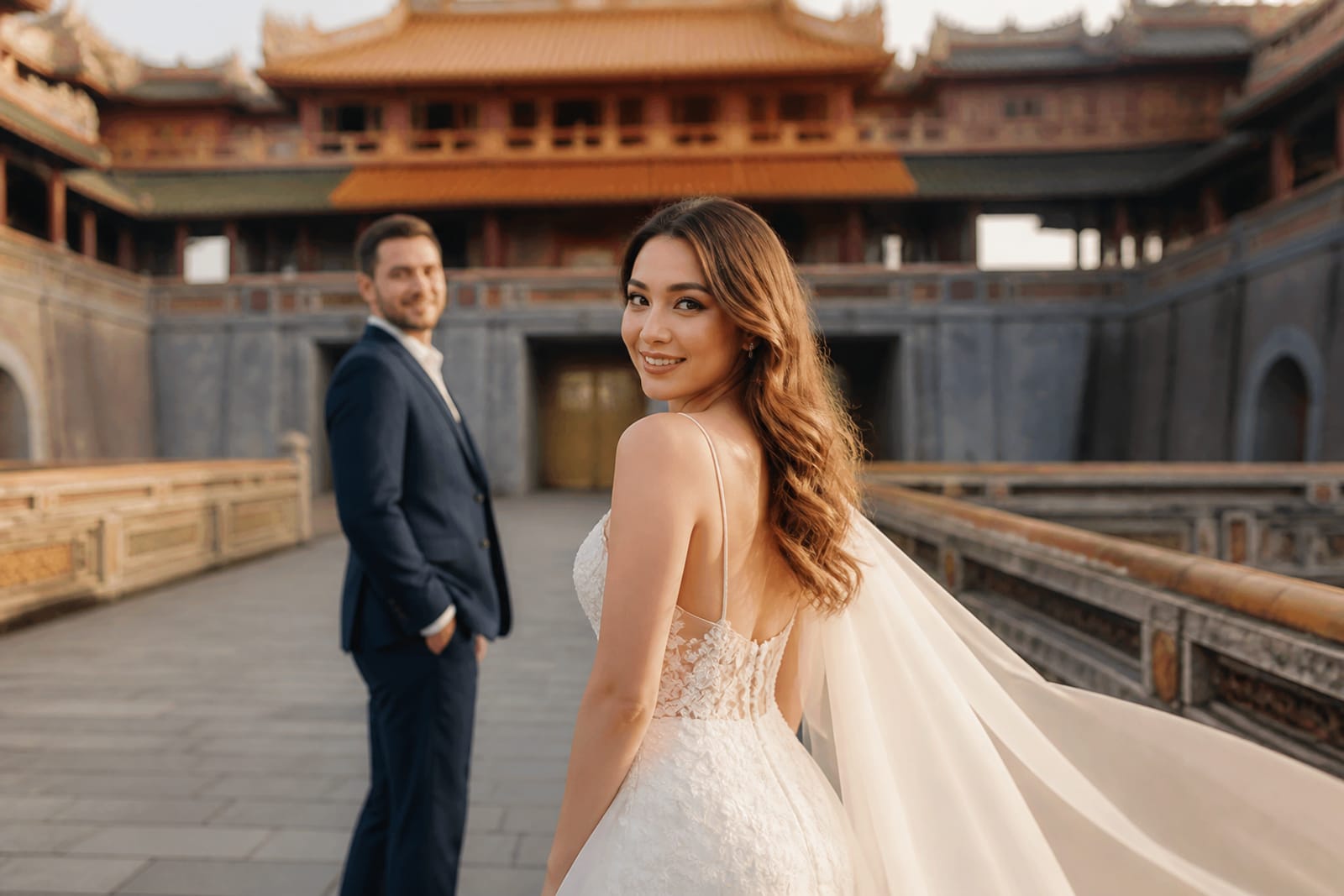
Which Perfume River corners work best for couples?
| Spot | Best for | Light & access | Why it works |
|---|---|---|---|
| East-bank stone steps (near Trang Tien Bridge) | Intimate, layered depth | 7–9 a.m.: soft, directional light; foot traffic low; 10–15 min walk from city center | Steps frame foreground; water and distant west bank create thirds; locals scarce before 9 a.m. |
| Riverside village alleys (south of Imperial City, e.g. An Phu, Huong Chiem) | Authentic, textured backdrop | 5–7 p.m.: golden hour; narrow lanes block harsh sun; village rhythm natural | Weathered stone walls, fishing boats, reflective puddles; photographer must know safe entry via locals |
| Sheltered stone pathway (north bank, near Thien Mu Pagoda base) | Protected from wind, shaded ao dai | 8–10 a.m. or 3–5 p.m.; tree canopy softens light; pagoda entry ticket required for full access | Canopy reduces glare; river visible through gaps; fewer tourists than pagoda itself; ao dai folds stay crisp |
| Water's edge reeds & rocks (quiet northeast bend, past urban core) | Moody, minimalist, artistic | Late afternoon (4:30–6 p.m.); reeds backlit, water darkening; 20+ min drive/taxi | Mist rises at dusk; reflects couple silhouettes; requires wading shoes and sure footing |
East-bank steps and village alleys offer the best mix of light, isolation, and urban-proximity logistics. Pagoda-fringe paths suit ao dai shoots. Reeds require artistic intent, strong photographer eye, and stable footwork.
What should a couple wear under an ao dai for riverside shots?
Ao dai fabric is transparent over the bodice and torso; humidity near water often triggers static cling or fabric sticking to skin. Wear a fitted, thin white or skin-tone slip (knee-length, no seams visible) under the áo dài outer layer. If wearing casual couple clothes instead of ao dai, choose lightweight cotton or linen in neutral tones (cream, grey, sage, navy) to reflect rather than absorb river heat and reduce sweat marks in photos. Avoid pure white (glare on overcast days) or bold patterns (distract from water reflections). Bring a thin scarf or shawl for early-morning wind near the river; remove it before shooting to avoid tangling in ao dai silk. Footwear: wear slip-on shoes or sandals for quick removal if wading; avoid open-toe shoes on slippery stone steps.
How do you book a photographer who knows Hue's hidden riverside corners?
Research local Hue photographers via Instagram hashtags #hueriverphotography, #huephotographer, #perfumeriverbehindthescenes. Check portfolios for images taken on east-bank steps, village alleys, and dawn/dusk light—not just temples and pagodas. Message the photographer directly asking:
- Have you shot riverside couples at [specific corner name]?
- Do you have a scouted list of spots for different seasons/weather?
- What is your backup plan if typhoons or floods arrive mid-shoot?
- Do you include location travel time in your package?
Request a phone or WhatsApp call to confirm their English level if booking remotely. Ask for a reference couple in your language or time zone. Once confirmed, share the date, preferred dawn/dusk window, and ao dai confirmation (so they expect fabric movement and can frame wider). If you prefer a studio team familiar with riverside elopements and pre-wedding work, contact Cáo Studio on WhatsApp +84 338 762 340 to ask about Hue travel availability.
💄 Makeup & hair at your hotel | 🌸 Book on WhatsApp
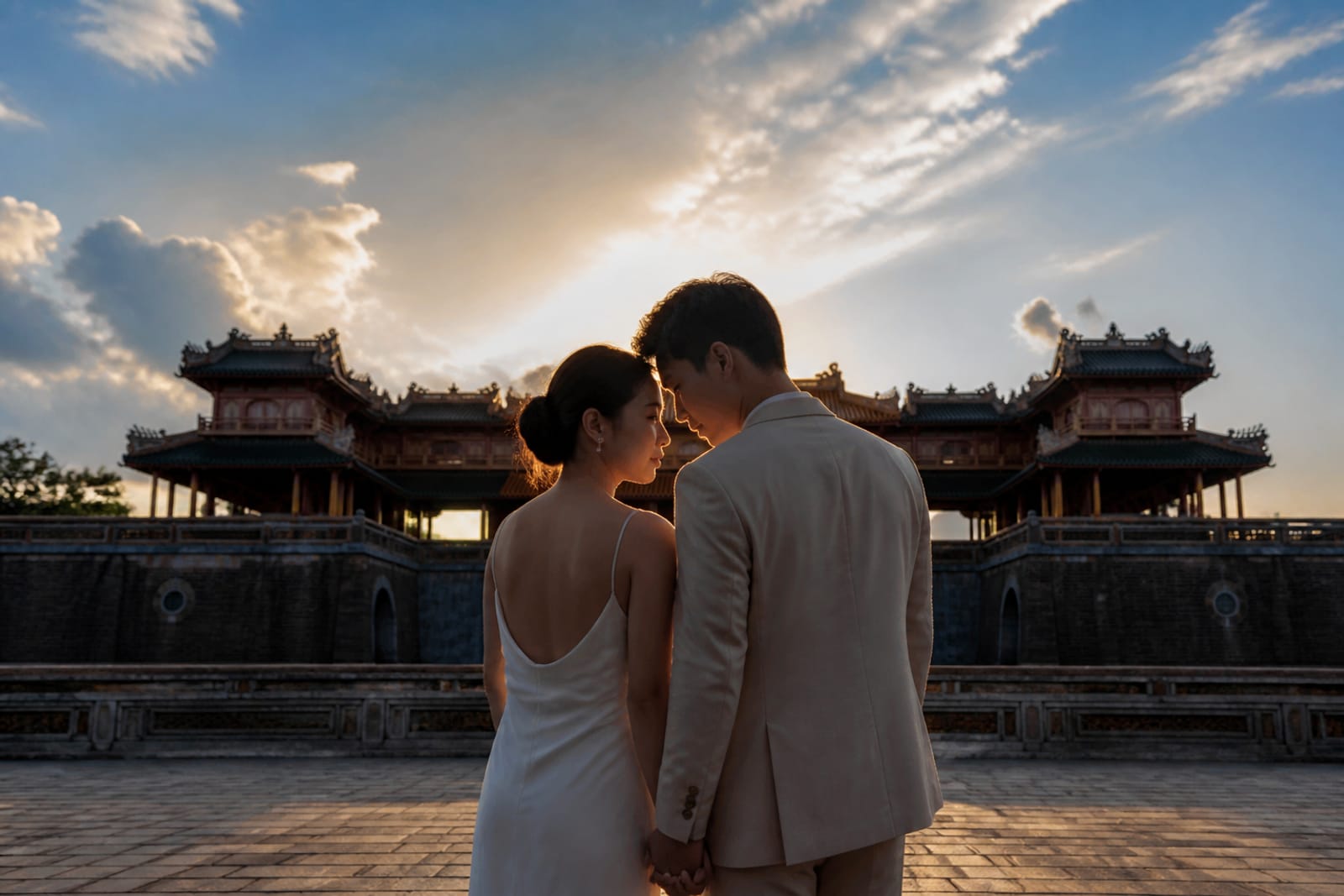
What logistical hurdles should you avoid when shooting near Perfume River?
River access & safety. East-bank steps and village alleys are public, but flooding (Sep–Dec) can render them unsafe; always scout the day before or hire a local guide. Reedy northeast bends have slippery rocks—wear proper shoes, bring a tripod base that anchors in water, and have a safety spotter nearby.
Boat and fisherman interference. Early morning (before 7 a.m.) minimizes boat traffic, but fishing nets still deploy; confirm with locals or your photographer that you're not blocking livelihoods. Some spots require a small courtesy gift or ask for permission directly.
Midday crowd and vendor buildup. Tourist buses from hotels arrive 9–11 a.m. and 2–4 p.m.; avoid these windows. Afternoon tea vendors set up from 3 p.m. onward near bridges—shoot before or move further into village alleys.
Weather unpredictability. The Hue climate is wetter than Da Nang or Quy Nhon; even Feb–Apr can see morning drizzle. Have a tarp, an indoor backup location (hotel interiors, covered market), or a plan to reschedule. June–September heat causes sweat and makeup breakdown; bring blotting papers and a portable fan.
Permit and tripod rules. Tripods are allowed on public paths but may require a small fee near Thien Mu Pagoda (confirm at entry). The Imperial City ticket is required only if you enter the walled grounds; riverside shooting outside the walls is free. Check locally for any new restrictions on commercial photography.
Transport delays. Hue's taxi and Grab services are slower than Hanoi or Ho Chi Minh City; book your ride 30 min before your dawn shoot to avoid missing the golden hour. If your photographer is based outside Hue, confirm hotel pickup time and extra travel costs (a factor, not a quoted price—ask on WhatsApp).
What's the honest comparison: hidden spots vs. temple/pagoda backdrops?
Hidden riverside corners (e.g., east-bank steps, village alleys) excel for intimate, artistic couples who want to avoid crowds and generic Instagram aesthetics. Light is often softer and more directional; ao dai silk reads beautifully in golden hour. Trade-off: access requires local knowledge, footwork is uncertain (slippery stones, uneven paths), and you may need a guide. Suited to couples who prioritize mood and seclusion over convenience.
Temple and pagoda settings (e.g., Thien Mu's courtyards, royal tombs) offer stunning architecture, spiritual framing, and predictable daytime access. Crowds are heavier; light is often flat between 10 a.m.–3 p.m. Costs include entry tickets and often a mandatory guide. Ideal for couples wanting recognized, timeless backdrops and don't mind sharing the space.
Hotel or urban studio backdrop (if raining or if you want complete control) ensures makeup and hair stay pristine, poses are rehearsed, and timing is fixed. Light is artificial or window-dependent. No river or nature, but zero logistical risk. Best if you're shooting ao dai or bridal wear and can't risk water or slipping.
Cáo Studio's approach: If you're booking a pre-wedding photoshoot in Hanoi or Ho Chi Minh City, the team scouts indoor and outdoor options year-round, adapts to weather, and provides makeup & hair on-site or at your hotel. For Hue, ask on WhatsApp whether the team can travel or if they recommend local partners.
📸 Book on WhatsApp — pre-wedding photoshoot | 💄 Makeup & hair at your hotel | 🌸 See the lookbook
---
What to check before you book a riverside photoshoot
- Season & weather window. Confirm the shoot date falls in Feb–Apr (safest) or late Aug–early Sep (risk of afternoon rain). Avoid Oct–Nov. Ask your photographer for a rain-date policy.
- Local photographer portfolio. Request 10+ images shot at your chosen spot, in similar light (dawn/dusk). Avoid portfolios with only studio or pagoda work.
- Ao dai fit & backup outfit. If wearing ao dai, confirm with your photographer that you've had a fitting 1–2 weeks prior. Bring a casual backup (jeans, tunic) if weather turns grey.
- Transport & timing. Book your taxi/Grab 30 min before shoot start. Confirm pickup from hotel and whether extra time/cost is factored if you travel with your photographer.
- Tripod & permits. Ask: Does your photographer carry a sturdy tripod for riverside rocks? Will entry tickets be included in the shoot cost (ask on WhatsApp for clarification)?
- Backup locations. If access is flooded or unsafe, what's the fallback? A nearby café, a covered bridge, an indoor venue?
- Language & communication. If booking a local Hue photographer remotely, confirm they speak your language or can relay instructions via WhatsApp.
---
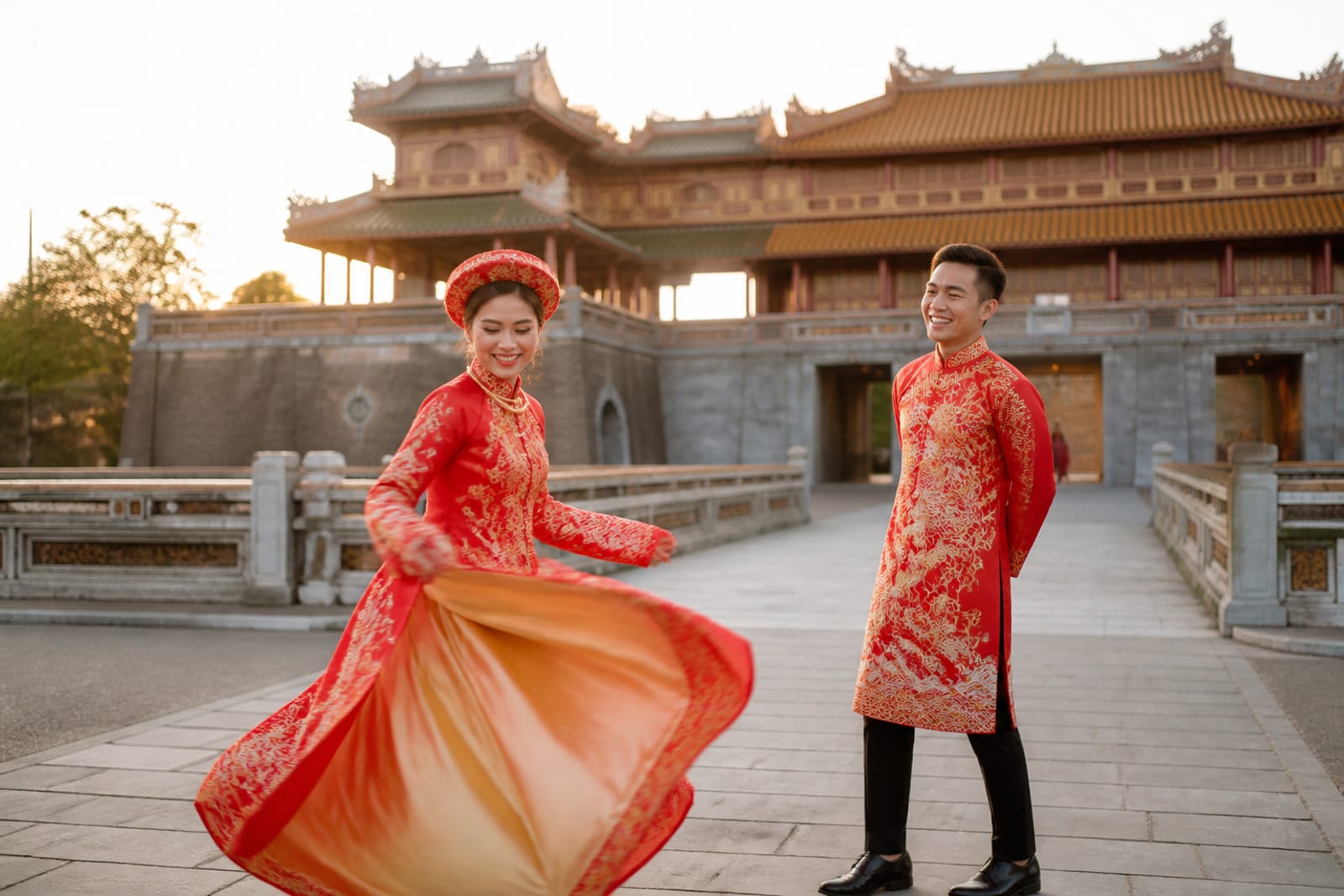
FAQ
Is February to April really the best season for Perfume River couple photos?
Yes. The central-coast climate is driest and clearest Feb–Apr, with calm water and stable morning light. May–August brings intense heat and haze; Sep–Dec is the typhoon and flood season, especially Oct–Nov. If you're booking a pre-wedding shoot in Hue, plan for this window.
Can we shoot in ao dai if there's a chance of rain?
Ao dai silk darkens and clings when wet, and the transparent bodice reveals sweat marks. If the forecast shows afternoon showers (common in May–Sep), choose a sheltered spot like the Thien Mu Pagoda pathway or reschedule. Bring a waterproof shawl for touch-ups between shots.
Do we need a permit to shoot with a professional photographer on the Perfume River banks?
Public riverbank paths don't require a permit, but tripods near the Thien Mu Pagoda or within the Imperial City walls may incur a small fee or require verbal confirmation. Check at the pagoda gate or ask your local photographer. Cáo Studio's team confirms all permits when coordinating Hue travel—ask on WhatsApp.
How much does hiring a local Hue photographer cost versus booking Cáo Studio?
Costs vary by photographer experience, package inclusions, and location. Ask local photographers on WhatsApp or Instagram for their rates. Cáo Studio offers quotes on WhatsApp +84 338 762 340 for Hanoi, Ho Chi Minh City, or potential Hue travel—compare inclusions (makeup, outfits, edited files, album) before deciding.
What time of day has the best light for couple photos on the Perfume River?
6:30–8:30 a.m. (golden hour, soft reflections on water) and 4–6 p.m. (peachy tones on stone and foliage) are ideal. Midday (10 a.m.–3 p.m.) produces harsh shadows and glare. Overcast mornings in Sep–Dec flatten light but reduce glare—confirm with your photographer if the forecast is grey.
What should we pack the day of our riverside shoot?
Slip-on shoes or sandals (for quick removal on slippery steps), blotting papers (for sweat/humidity touch-ups), a thin scarf or shawl (for morning wind), the ao dai slip if wearing ao dai, and a portable phone charger. Bring water and sunscreen (even if it's overcast, UV reflects off the river). Your photographer should carry a tripod, lens protector, and a backup indoor location plan.
FAQ
Is February to April really the best season for Perfume River couple photos?
Yes. The central-coast climate is driest and clearest Feb–Apr, with calm water and stable morning light. May–August brings intense heat and haze; Sep–Dec is the typhoon and flood season, especially Oct–Nov. If you're booking a [pre-wedding shoot](/pre-wedding-photoshoot) in Hue, plan for this window.
Can we shoot in ao dai if there's a chance of rain?
Ao dai silk darkens and clings when wet, and the transparent bodice reveals sweat marks. If the forecast shows afternoon showers (common in May–Sep), choose a sheltered spot like the Thien Mu Pagoda pathway or reschedule. Bring a waterproof shawl for touch-ups between shots.
Do we need a permit to shoot with a professional photographer on the Perfume River banks?
Public riverbank paths don't require a permit, but tripods near the Thien Mu Pagoda or within the Imperial City walls may incur a small fee or require verbal confirmation. Check at the pagoda gate or ask your local photographer. Cáo Studio's team confirms all permits when coordinating Hue travel—ask on WhatsApp.
How much does hiring a local Hue photographer cost versus booking Cáo Studio?
Costs vary by photographer experience, package inclusions, and location. Ask local photographers on WhatsApp or Instagram for their rates. Cáo Studio offers quotes on WhatsApp +84 338 762 340 for Hanoi, Ho Chi Minh City, or potential Hue travel—compare inclusions (makeup, outfits, edited files, album) before deciding.
What time of day has the best light for couple photos on the Perfume River?
6:30–8:30 a.m. (golden hour, soft reflections on water) and 4–6 p.m. (peachy tones on stone and foliage) are ideal. Midday (10 a.m.–3 p.m.) produces harsh shadows and glare. Overcast mornings in Sep–Dec flatten light but reduce glare—confirm with your photographer if the forecast is grey.
What should we pack the day of our riverside shoot?
Slip-on shoes or sandals (for quick removal on slippery steps), blotting papers (for sweat/humidity touch-ups), a thin scarf or shawl (for morning wind), the ao dai slip if wearing ao dai, and a portable phone charger. Bring water and sunscreen (even if it's overcast, UV reflects off the river). Your photographer should carry a tripod, lens protector, and a backup indoor location plan.
Ao dai, makeup, hair and a local photographer in Hanoi or Saigon — one WhatsApp message.