/pre-wedding-photoshoot
Hidden photo corners near Phat Diem Cathedral for couples
Phat Diem Cathedral (Ninh Binh, south of Hanoi) offers five distinct photo zones: the front stone courtyard (golden 6–8 am, crowded by 9 am), the riverside steps on the east bank (soft afternoon light 3–5 pm, worn stone, water reflection), the rear stone staircase (protected from crowds, even light all day, steep 40+ steps), the left-side chapel alcove (dappled shade, intimate, best for close portraits), and the approach lane through farmland (open fields, sunrise glow, long walking distance). Sunrise and late afternoon suit ao dai fabric flow and skin tone. March–May and September–November avoid rainy season and grey winter light. Cáo Studio – Makeup & Photoshoot does not operate in Ninh Binh; hire a local Hanoi-based photographer who travels, or book a pre-wedding session in Hanoi and plan Phat Diem as a self-guided day trip with your own photographer.
Phat Diem Cathedral is a stone church built into a limestone cliff, with water-carved steps, arched doorways, and riverside mood that make it iconic for Vietnamese couples. Yet most published photos show the same front-facing shot. Hidden corners exist—they reward couples willing to arrive early, wear practical shoes, and scout light angles before the main shoot day.
Why does Phat Diem Cathedral work for couple photoshoots?
The cathedral mixes spiritual architecture with natural landscape in a single frame. Stone textures photograph sharply in bright light; the river reflects morning and late-afternoon sun; surrounding rice paddies and karst cliffs provide depth. Its South Vietnamese Baroque style—thick stone walls, arched doors, and hand-laid steps—suits traditional ao dai and Western wedding dress equally. The site feels remote yet accessible by road from Hanoi (2 hours by car), so couples can shoot here without hiring an on-site studio crew. Scale matters: the cathedral is large enough to separate couples from crowds by walking 50–100 metres uphill or downstream.
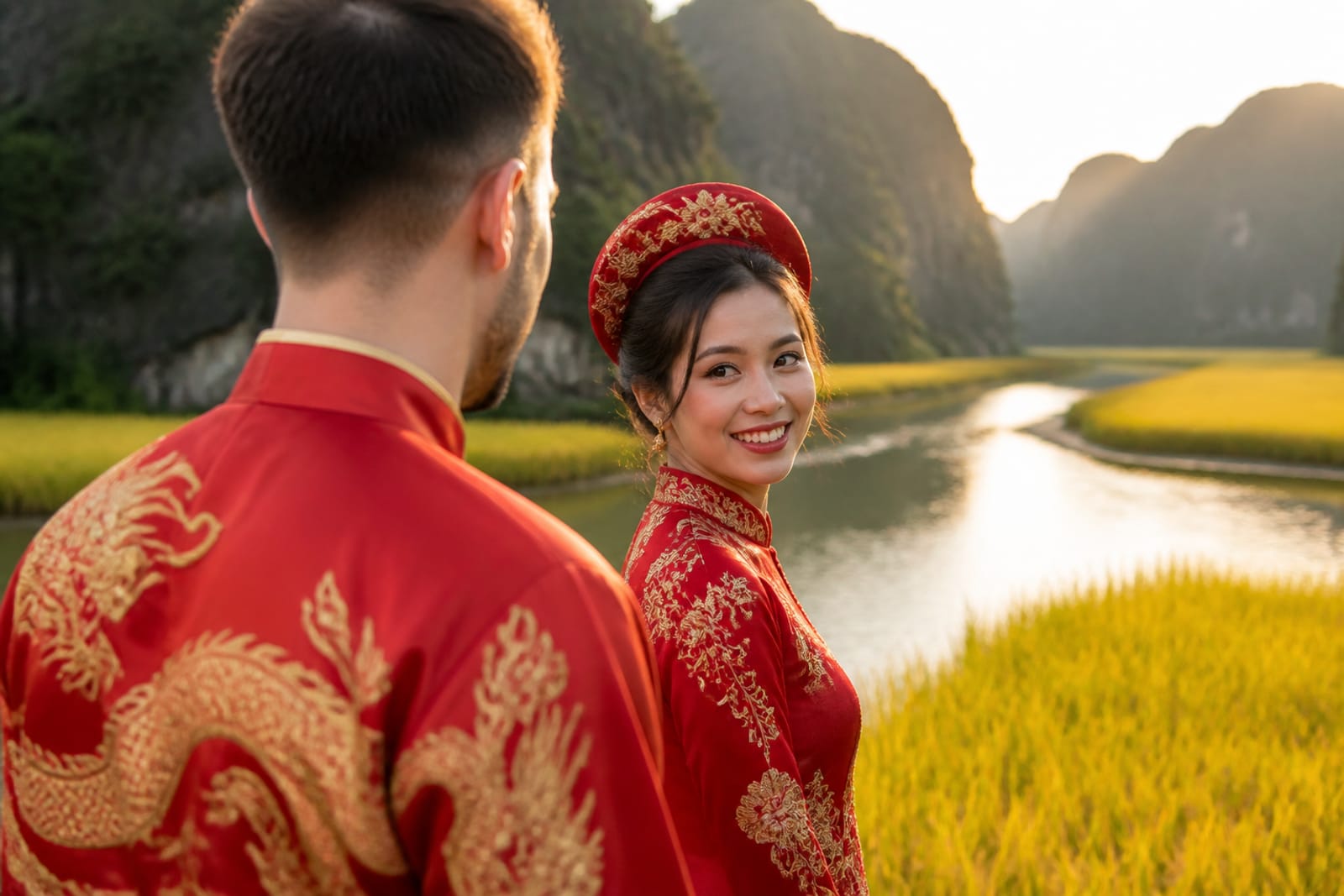
Which hidden corner matches your light and season best?
| Spot | Best light | Best months | Suit fit & footwear | Why it works |
|---|---|---|---|---|
| Front courtyard | 6–8 am, harsh backlighting for silhouettes | Mar–May, Sep–Nov | Flat shoes (smooth stone, no steps) | Golden-hour glow on arches; fill-flash essential for faces |
| Riverside steps | 3–5 pm, warm side-light | Mar–May, Sep–Nov | Sturdy heels or flats (wet moss likely) | Water reflects light onto skin; intimate scale; fewer tourists |
| Rear staircase | 9 am–3 pm (even, protected light) | Feb–Dec (avoid Jan rain/mist) | Slip-on flats or no heels (40+ steps, narrow width) | Seclusion; complex stone geometry; tight framing for details |
| Left-side chapel alcove | 2–4 pm (dappled shade) | Year-round (shade buffers season) | Flat sandals (interior stone, uneven) | Intimate door frame; soft diffused light; privacy for close portraits |
| Farmland approach lane | 5–6:30 am (sunrise), backlighting through haze | Mar–May (rice green or golden) | Flat walking shoes (wet earth after rain) | Golden-hour haze on fields; long lens separation; least crowded |
Each spot demands different timing, outfit prep, and physical fitness. Riverside steps suit couples comfortable wading around moisture; the rear staircase needs compact poses and uphill stamina; the farmland lane requires a 15-minute early arrival and a second photographer for safety. Ao dai fabric drapes best in still, warm air (3–5 pm); Western wedding dresses show detail in sidelight (8–10 am or 2–4 pm), not backlit sunrise.
📸 Book on WhatsApp — pre-wedding photoshoot
How do you plan a self-guided shoot versus hiring a professional team?
Self-guided photoshoot: You hire a single photographer or visit with a partner who shoots; you scout light and composition yourself. Cost is lower (one freelancer, no makeup crew, one car). Logistics: one person holds a reflector while the other shoots; timing is flexible; you navigate stairs and wet stone unsupervised. Risks: missed light windows (30 minutes), poor focus on movement (ao dai twirling, running through farmland), no backup if weather changes or camera fails. Best for: couples who are photography-literate, comfortable with minimal crew, and willing to revisit if one spot disappoints.
Professional pre-wedding team: Cáo Studio – Makeup & Photoshoot and similar studios send a makeup artist, photographer, and assistant. They manage ao dai fit, hair pins, and skin touch-ups between location changes. Light-reading and composition are handled by professionals; poses are guided. Cost is higher; scheduling is fixed; travel time is shared. Risks: crew arrival delays (especially if driving from Hanoi in traffic), fewer retakes per spot (schedule pressure), premium rates for destination shoots. Best for: couples who want polished ao dai styling, directed poses, and gallery-quality edits without managing logistics.
Hybrid: Book makeup & hair at your hotel in Hanoi before dawn, drive to Phat Diem solo with a freelance photographer (search "Ninh Binh photographer" on local travel forums), and shoot 7–11 am when light and makeup are fresh. This cuts costs while preserving professional hair and skin prep.
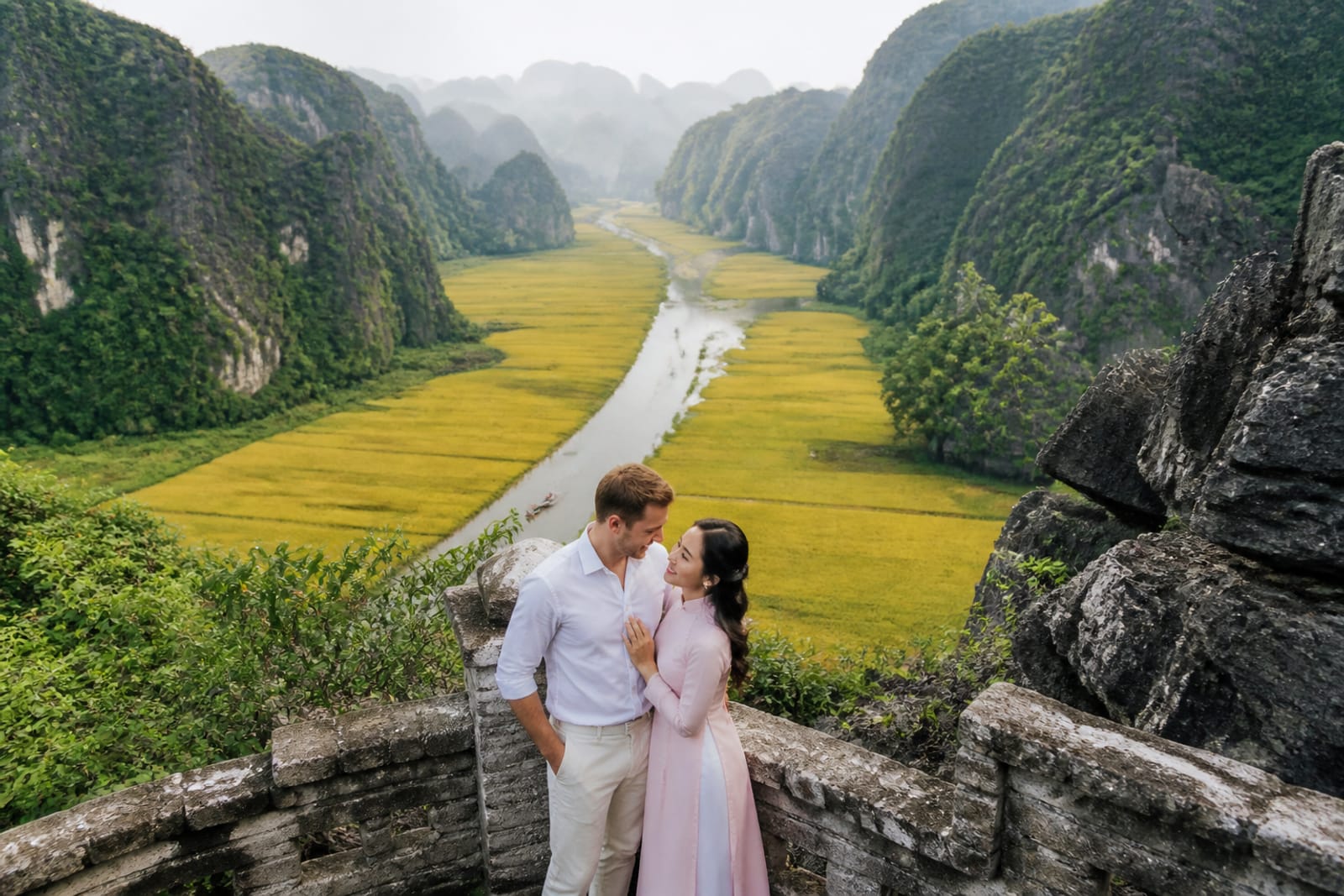
What season and time of day gives you the best light for each zone?
March–May and September–November are optimal: rice paddies are green (early summer) or golden (autumn harvest); humidity is lower; rain is rare. June–August brings heavy heat (35°C+), humidity, and afternoon thunderstorms that scatter tourists but flood lower steps by 4 pm. December–February is cool and grey; mist obscures the cathedral's upper sections before 10 am; light is flat. Avoid the three days before and after Tet (late January–early February) when roads are congested and many services close.
Sunrise (5:30–7:00 am): Warm golden backlighting on the front courtyard and farmland lane; faces need fill-flash or reflector to avoid dark silhouettes; mist often hangs over the river until 7:30 am. Tourist crowds are absent. Ao dai fabric glows; walking shoes essential.
Mid-morning (9:00–11:00 am): Sun is higher and cooler; the front courtyard shows harsh shadows; the rear staircase and chapel alcove receive even, shadowless light ideal for detail shots (stone carvings, embroidery). Tourists begin arriving by 9:30 am.
Afternoon (2:00–5:00 pm): The riverside steps and left-side alcove receive warm sidelight that sculpts faces and fabric. Sun is behind the cathedral, eliminating backlit silhouettes. Crowds peak at 2–3 pm, then thin after 4 pm. Light softens after 4:30 pm but is too weak for handheld shots without a tripod and slow shutter (risk of motion blur in ao dai movement).
Golden hour (6:00–6:45 pm): Warm, low angle light crosses the farmland and rear staircase, but the front courtyard is in shadow. Tourist buses depart; silence returns. Requires fast lens (f/2 or wider) to expose skin tone without overexposing sky. Window closes in 30 minutes.
Plan two hours minimum per location (30 min arrival + light scouting, 60 min shooting, 30 min buffer for pose changes and missed moments). A full day shoot visiting three hidden corners demands a 5:30 am start and a 6 pm finish.
What outfit choices matter most at each hidden corner?
Ao dai: The traditional tunic and silk trousers photograph best in still, warm air and sidelight. Riverside steps and the farmland lane expose fabric to moisture and mud; choose a lighter silk or cotton blend, not glossy polyester (shows sweat and dust). The rear staircase is narrow; a fitted ao dai with a high slit risks catching on stone edges—opt for a looser, knee-length cut or modern palazzo-leg ao dai. Colors matter by light: jewel tones (emerald, sapphire, burgundy) pop in golden-hour sidelight; pale pastels (white, cream, pale pink) glow in even midday light on the shaded rear staircase but appear washed out in harsh 6 am sun. See ao dai rental for seasonal weight and fit options.
Western wedding dress: Heavy satin and tulle absorb heat and mud; linen or silk blends work better. A-line or fit-and-flare silhouettes allow climbing rear stairs; full ball gowns are impractical (50+ metres of fabric over stone). Train length: keep it to 1–1.5 metres if walking farmland; trains snag on moss and water steps. Strapless or off-shoulder necklines show more shoulder skin, which reads warmer in cool early-morning light; long sleeves suit afternoon sidelight and provide sun protection.
Groom outfit: Lightweight linen suits or cotton dress shirts with tailored trousers suit tropical heat and riverside moisture. Avoid heavy wool or velvet. Footwear: flat leather shoes or dress sandals prevent slipping on wet stone and allow faster pose transitions. See suit & groom outfit rental for tailoring options.
Footwear reality check: Front courtyard and chapel alcove need flat, closed-toe shoes (stone is smooth and slippery when wet). Riverside steps and rear staircase require soles with grip (rubber tread, not leather) and ankle support; flat dressy sandals or ballet flats minimize injury risk. Farmland lane allows comfortable walking shoes or flats. Heels above 2 inches are unsafe on wet or uneven stone and slow down pose changes—reserve them for indoor chapel shots only.
Timing and fabric weight: Cold-season shots (Dec–Feb) in grey light suit muted, heavy fabrics (velvet, lace overlays, jewel tones); the cathedral's grey stone reads as luxury, not drab. Warm-season shots (Mar–May, Sep–Nov) in golden light suit flowing, lightweight fabrics (chiffon, silk charmeuse, pastels); fabric movement photographs better in soft, warm light.
What should you check before booking a photographer or team for Phat Diem?
For a freelance or local photographer:
- Ask for a portfolio showing other Phat Diem Cathedral shots; compare light angles and composition to gauge their eye for hidden corners.
- Confirm they own backup equipment (second camera, extra memory card, portable charger); the site has no power or shelter.
- Verify transport: do they drive or rely on taxi? Taxis may not return on schedule; agree on pickup times in advance.
- Request a walk-through scout visit one day before the shoot (cost varies; many charge a small fee or include it in the day rate). This lets them test light and identify the safest poses for wet stone.
- Ask about liability if you slip or damage ao dai on rough stone; most freelancers do not carry insurance.
- Confirm delivery timeline: how many edited images, and when—one week, two weeks? Digital files or prints?
- Discuss backup weather plan: if heavy rain floods the riverside steps, which alternate corner is Plan B?
For a professional team like Cáo Studio:
- Cáo Studio – Makeup & Photoshoot does not operate in Ninh Binh; they are based in Hanoi, Ho Chi Minh City, and Hoi An. Ask on WhatsApp whether they travel to Phat Diem as a destination shoot. Destination rates are higher (travel time, accommodation for crew, car hire).
- If booking travel, confirm exactly what is included: makeup and hair at hotel, transportation, number of locations, outfit changes, and edited file count. Specifics are confirmed on WhatsApp.
- Ask whether the crew has shot Phat Diem Cathedral before and can provide references.
- Clarify: do they provide ao dai rental or assist with your own? Most teams do not carry rental stock for destination shoots.
- Confirm backup weather protocol: if monsoon rain shuts down the site, do you reschedule free, or pay rescheduling fees?
Questions for any photographer:
- Can they shoot in both ao dai and Western dress in one session (outfit changes take 15–20 minutes)?
- Do they offer prints or albums, or files only? See photo prints & frames and wedding photo album for examples of keepsakes.
- What is their refund policy if weather makes all five hidden corners inaccessible?
What to verify on location:
- Arrive 30 minutes early to test camera settings and check light angles yourself; do not rely entirely on the photographer's first impression.
- Wear the exact shoes and ao dai (or similar weight) you will shoot in; try walking the stairs to confirm comfort.
- Note where the sun is and where shadows fall; ask the photographer to explain their three must-have shots at this location before you pose.
- Take a test photo on your phone at each corner to compare backups if the professional images disappoint.
FAQ
Can I shoot Phat Diem Cathedral on my own, or do I need a professional photographer?
Both work. Solo with a friend and tripod saves money and offers full timing control; you miss professional composition and editing. A local freelancer (searched online or recommended by your Hanoi hotel) costs less than a full team and provides expert light-reading. A studio team guarantees polished ao dai styling and edited images but costs more and fixes your schedule. Your comfort level with DIY composition guides the choice.
What is the quietest time to visit Phat Diem Cathedral for photos?
Sunrise (5:30–7:00 am) and late afternoon after 4:30 pm have the fewest tourists. Early morning offers golden backlight on the front courtyard; late afternoon suits the riverside steps and chapel alcove with warm sidelight. Both require a 5 am alarm or flexibility to return after other Ninh Binh activities (boat trips, viewpoints). Midday 12–1 pm is also quiet but light is harsh and colours are washed out.
Do I need a permit or guide to photograph inside Phat Diem Cathedral?
No permit is required for exterior photography on the grounds. Interior photography inside the chapel may require permission from the site staff; ask at the entrance. Many photographers do not shoot interiors to respect the active place of worship. Hiring a guide is optional but helpful—local guides know which corners allow public access and can explain architecture for captions. Guides are typically booked through Ninh Binh tour operators or your hotel concierge; ask the current availability.
How do I get to Phat Diem Cathedral from Hanoi, and what time should I leave?
Phat Diem Cathedral is in Ninh Binh province, about 100 km south of Hanoi. By car or taxi: 2–2.5 hours depending on traffic and road conditions. Leave Hanoi by 4–5 am to arrive by 7 am (sunrise). Public buses run from Hanoi to Ninh Binh town (2–3 hours); from there, hire a motorcycle taxi or local car to the cathedral (20 km, 30 minutes). Return to Hanoi by 7 pm if visiting as a day trip. Hiring a car with driver is safest and allows flexible timing; negotiate the round-trip fare and pickup time in advance.
What hidden corners are dangerous or off-limits for photographers?
The riverside steps can be slippery with algae and moss, especially after rain or at the river's water line; avoid posing directly on wet lower steps. The rear staircase is narrow and steep; narrow high heels or heavy trailing fabric risk tripping. Some areas near the riverside may be restricted if recent flooding occurred; ask site staff upon arrival. The farmland approach lane involves walking through active rice fields; respect crops and stay on pathways. Do not venture beyond marked areas or into caves on the cliff; the site is not a hiking trail, and unfamiliar stone can crumble.
Should I book a pre-wedding shoot at Phat Diem or choose Hanoi-based locations instead?
Phat Diem suits couples wanting spiritual, rural Vietnamese atmosphere and stone architecture; it is singular and photogenic. Hanoi offers pre-wedding photoshoot options with faster logistics (no 2-hour drive), professional makeup studios, and familiar light angles. Many couples shoot both: book a pre-wedding session in Hanoi with Cáo Studio – Makeup & Photoshoot, then hire a freelancer for a Phat Diem day trip to supplement the gallery. A full destination shoot at Phat Diem demands more time and costs more because crew travel is factored in. Choose Phat Diem if the spiritual and rustic mood is central to your vision; choose Hanoi if efficiency and professional infrastructure matter most.
FAQ
Can I shoot Phat Diem Cathedral on my own, or do I need a professional photographer?
Both work. Solo with a friend and tripod saves money and offers full timing control; you miss professional composition and editing. A local freelancer (searched online or recommended by your Hanoi hotel) costs less than a full team and provides expert light-reading. A studio team guarantees polished ao dai styling and edited images but costs more and fixes your schedule. Your comfort level with DIY composition guides the choice.
What is the quietest time to visit Phat Diem Cathedral for photos?
Sunrise (5:30–7:00 am) and late afternoon after 4:30 pm have the fewest tourists. Early morning offers golden backlight on the front courtyard; late afternoon suits the riverside steps and chapel alcove with warm sidelight. Both require a 5 am alarm or flexibility to return after other Ninh Binh activities (boat trips, viewpoints). Midday 12–1 pm is also quiet but light is harsh and colours are washed out.
Do I need a permit or guide to photograph inside Phat Diem Cathedral?
No permit is required for exterior photography on the grounds. Interior photography inside the chapel may require permission from the site staff; ask at the entrance. Many photographers do not shoot interiors to respect the active place of worship. Hiring a guide is optional but helpful—local guides know which corners allow public access and can explain architecture for captions. Guides are typically booked through Ninh Binh tour operators or your hotel concierge; ask the current availability.
How do I get to Phat Diem Cathedral from Hanoi, and what time should I leave?
Phat Diem Cathedral is in Ninh Binh province, about 100 km south of Hanoi. By car or taxi: 2–2.5 hours depending on traffic and road conditions. Leave Hanoi by 4–5 am to arrive by 7 am (sunrise). Public buses run from Hanoi to Ninh Binh town (2–3 hours); from there, hire a motorcycle taxi or local car to the cathedral (20 km, 30 minutes). Return to Hanoi by 7 pm if visiting as a day trip. Hiring a car with driver is safest and allows flexible timing; negotiate the round-trip fare and pickup time in advance.
What hidden corners are dangerous or off-limits for photographers?
The riverside steps can be slippery with algae and moss, especially after rain or at the river's water line; avoid posing directly on wet lower steps. The rear staircase is narrow and steep; narrow high heels or heavy trailing fabric risk tripping. Some areas near the riverside may be restricted if recent flooding occurred; ask site staff upon arrival. The farmland approach lane involves walking through active rice fields; respect crops and stay on pathways. Do not venture beyond marked areas or into caves on the cliff; the site is not a hiking trail, and unfamiliar stone can crumble.
Should I book a pre-wedding shoot at Phat Diem or choose Hanoi-based locations instead?
Phat Diem suits couples wanting spiritual, rural Vietnamese atmosphere and stone architecture; it is singular and photogenic. Hanoi offers [pre-wedding photoshoot](/pre-wedding-photoshoot) options with faster logistics (no 2-hour drive), professional makeup studios, and familiar light angles. Many couples shoot both: book a [pre-wedding session](/pre-wedding-photoshoot) in Hanoi with Cáo Studio – Makeup & Photoshoot, then hire a freelancer for a Phat Diem day trip to supplement the gallery. A full destination shoot at Phat Diem demands more time and costs more because crew travel is factored in. Choose Phat Diem if the spiritual and rustic mood is central to your vision; choose Hanoi if efficiency and professional infrastructure matter most.
Ao dai, makeup, hair and a local photographer in Hanoi or Saigon — one WhatsApp message.