/pre-wedding-photoshoot
Hidden photo corners near Po Nagar Cham Towers for couples
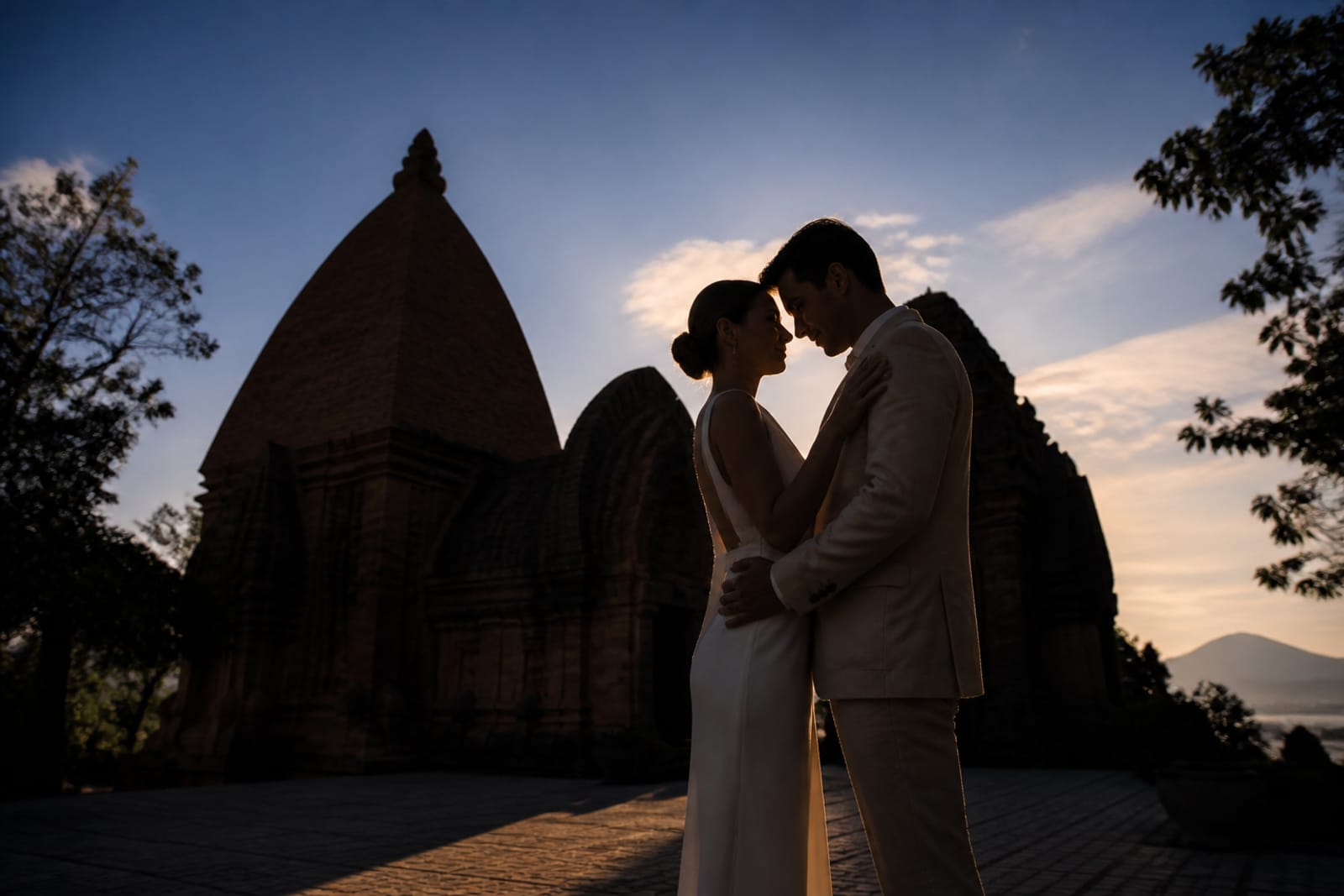
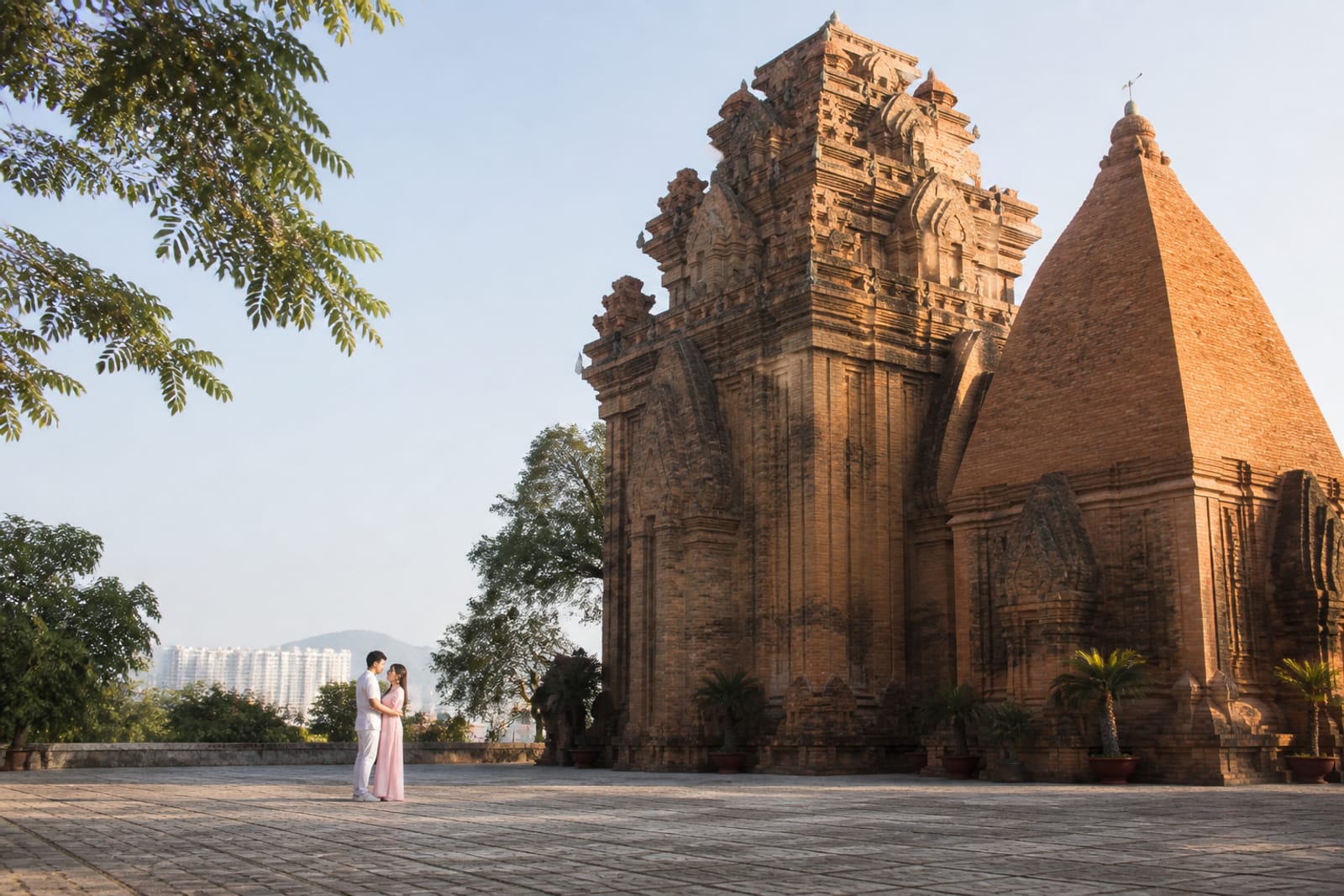
Po Nagar's working temple draws crowds to its main tower steps, but couple sessions thrive in the shade alleys, riverside stone paths and brick archways that flank the complex. The light window runs early morning (6–7:30 am) or late afternoon (4:30–5:30 pm) when the harbour catches side light without harsh shadows. A team that brings a photographer and knows the site—like Cáo Studio—can position you in genuine moments: walking the terrace, framed by temple walls, the bay behind you out of focus. Sessions run 90–120 minutes, shooting wide frames first (both of you moving), then medium shots (turning toward each other) and close details (her hand on his shoulder). The challenge is timing around temple hours and avoiding morning school groups (weekdays after 9 am are quieter). Booking a local photoshoot means no competing tourists in your frames—and the photographer navigates access so you don't waste light asking permission. 📸 Book on WhatsApp — couple photoshoot ---
Why couples choose Po Nagar over central landmarks
Po Nagar feels less staged than the beachfront promenade or downtown squares because it's a working spiritual site, not a tourist photo factory. The terrace overlooking the Cai River gives depth—the bay sits far enough away that it blurs softly, framing you without dominating the frame. No vendor stalls, no coach groups queuing at fixed angles. The brick and stone textures (temple walls, the old staircase) read as intentional backdrop, not accidental clutter. Early morning or late light catches the stone warm, not washed-out. You'll see fewer couples here than at My Khe Beach, which suits two people who want frames that feel like theirs alone, not a highlight-reel repeat.
When does the light actually work here?
Early morning (6–7:30 am): Soft side light from the east hits the terrace at a shallow angle—stone glows warm, shadows are long and directional. The river below catches gold. No haze yet, no crowds. Temperature is coolest. This is the window most photographers plan for; you'll need to arrive by 5:50 am to position before the light peaks and to avoid the first school and temple-visitor groups around 7:45 am.
Late afternoon (4:30–5:30 pm): West light rakes across the temple walls. Harder than morning, more contrast—suits dramatic frames if you're in dark tones. The bay turns blue-grey; shadows are sharp. You have less margin for timing (light drops fast), but fewer people are present.
Midday (10 am–4 pm): Avoid. Overhead sun flattens faces and colour, shadows pool under eyes and buildings. The site is also busiest.
Season matters: Dec–Feb is Nha Trang's dry window, with clear skies and calm light. May–Sep brings humidity haze that softens detail. Oct–Nov risks afternoon rain and rough seas that cancel outdoor shoots. A photographer familiar with Nha Trang weather knows to call the session if conditions degrade 24 hours before.
How do you actually book a photographer for Po Nagar?
Option A: Book Cáo Studio's couple photoshoot during a visit to Hanoi or Ho Chi Minh City. If you're in Nha Trang, ask on WhatsApp (+84 338 762 340) whether the team can travel to the city or recommend a trusted local photographer. Cáo Studio works with vetted local shooters in secondary destinations when they don't operate directly.
Option B: Find a local photographer. Check Instagram for "Nha Trang couple photoshoot" and look for three things:
- Site knowledge: Do their galleries show Po Nagar's specific angles—the river terrace, the side archways, not just the main tower? Generic Nha Trang work (only beach or town square frames) suggests they haven't scouted the site.
- Timing discipline: Do their images have consistent, directional light—golden hour glow, not flat midday? This shows they schedule sessions for the light, not around their convenience.
- Posture and movement: Are couples framed walking, turning, looking at each other—or standing still facing the camera? Cáo Studio's belief is that directed movement (not posed stiffness) reads as genuine.
Ask the photographer three questions before booking:
- "What time do we start, and how long is the session?"
- "Do you scout Po Nagar beforehand, or is this your first time?"
- "Will you direct us to walk and interact, or do you want posed shots?"
Listen for specificity (exact times, named paths, clear direction language). Red flags: vague answers, promises of "100+ photos," enthusiasm about fast turnarounds without mentioning light or location.
Cost factors to compare: travel distance to Nha Trang (a Saigon-based photographer may charge more if they need a flight), the number of outfit changes (one venue, one outfit, is fastest), and whether they include makeup and hair (a single team coordinating all three is simpler than booking separately and hoping timing aligns).
Comparison: Po Nagar vs. other Nha Trang couple spots
| Spot | Best for | Light window | Season | Why it works | Walking effort |
|---|---|---|---|---|---|
| Po Nagar terrace | Intimate, cultural, depth | 6–7:30 am or 4:30–5:30 pm | Dec–Feb | Stone + harbour backdrop; fewer tourists | Moderate: 100m uphill, then flat paths |
| Trang Beaches (My Khe, Nha Trang) | Scenic, open sky | 6–7 am or 5–6 pm | Dec–Apr (calm sea) | Golden light on sand and water; romantic cliché | Low: flat sand |
| Nha Trang Cathedral (stone, gardens) | Architectural, romantic | 7–8 am or 3:30–5 pm | Year-round | Old stone, red-brick charm; gardens offer shade | Low: flat courtyard |
| Tien Sa Port (harbour, boats) | Editorial, industrial-modern | 6–7 am or 5–6 pm | Dec–Feb | Boats, water, urban texture; very few couples here | Low: flat waterfront |
| Dam Market (old quarter) | Textured, street-life | 7–8:30 am (before heat, vendors active) | Year-round | Coloured shutters, lanterns, authentic chaos | High: narrow alleys, crowds, heat |
Po Nagar suits couples who want cultural grounding (a temple, not just a beach) and soft depth (water in the distance, not dominating). The trade-off: you need to wake early and time around temple hours. Central landmarks (cathedral, markets) are more flexible on timing but feel less private.
What to bring and wear for Po Nagar
On your body: Wear what you'll shoot in—don't dress for warmth at dawn. Nha Trang in early morning (Dec–Feb) is cool; a light layer (linen shirt, cardigan) stays visible in frames and keeps you comfortable during the 90-minute walk and still moments. By late afternoon, it's warm; sleeveless or short sleeves work. Avoid bright white (glares in sunrise light) and very dark solid colours (you'll blend into shadows). Cream, soft grey, muted navy, earth tones read well in stone settings.
Footwear: Flat shoes. The temple terrace and paths have uneven stone and slight slopes. Heels photograph beautifully but make movement stiff and balance risky on wet morning stone.
Practical pack: Small backpack (20L), water bottle, a light jacket or shawl to drape between takes (you'll shed it for frames). Bring a phone to silence and pocket. No umbrellas during the shoot (they block light and your face); if rain is forecast, confirm with the photographer 24 hours ahead whether the session moves or cancels.
Hair and makeup: If booked as part of a couple photoshoot, Cáo Studio provides makeup and hair coordination. If booking independently, decide whether to hire a makeup artist to meet you on-site or do your own. Morning sessions often mean early makeup (by 5 am if you start shooting at 6 am)—book makeup or wake early to prepare. Waterproof makeup suits the temple's misting humidity and any water-side reflections.
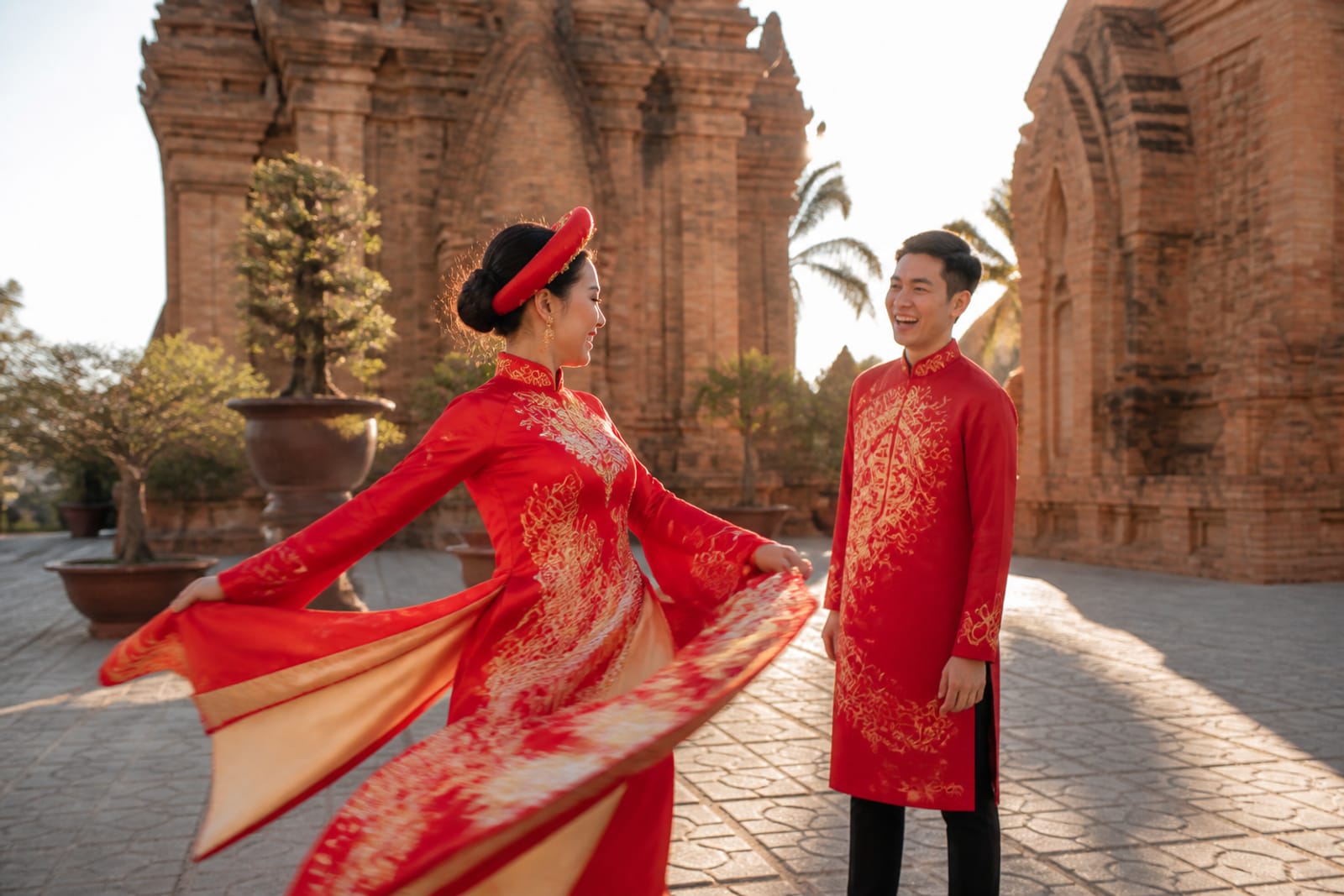
Ao dai option: Po Nagar's cultural setting suits an ao dai photoshoot. The traditional dress reads especially well against temple stone. Coordinate with your photographer whether they've dressed couples in ao dai there before—fit, movement on stairs, and fabric drape matter.
What to check before you book a local photographer
1. Site walk or prior shoot Ask: "Have you shot couples at Po Nagar before?" If yes, ask to see 3–5 galleries from this exact site. If no, ask whether they'll scout it with you 1–2 days before the session (adds a small cost, saves light-day surprises). A photographer seeing the terrace for the first time on shoot day will waste your early-light window figuring out angles.
2. Light discipline Look at their past work: Are all their couple sessions shot in golden hour (early morning or late afternoon), or do some look midday-flat? Consistent golden-hour work means they plan around light, not convenience. If their portfolio has good midday frames, they're either skilled in difficult light (a plus) or they're post-processing heavily (ask what editing includes).
3. Contract and cancellation Vietnam's weather can shift fast. Confirm:
- What happens if it rains 24 hours before? (Reschedule free, or forfeit?)
- How many edited photos do you receive, and when?
- What's included—photographer only, or makeup and hair too?
4. Direction and movement style If you want frames of you two walking and looking at each other (not posed staring at the camera), say so explicitly in the inquiry. Ask for 5 recent examples. If their gallery is all front-facing, static poses, they may not be the fit.
5. Turnaround and editing Cáo Studio's standard is edited photos ready within 48 hours. If you see a local photographer promising same-day delivery or "100+ photos in 3 days," clarify what "edited" means. Touch-ups only, or full colour and tone adjustment?
6. Communication channel Confirm WhatsApp, phone, or email for updates. Language: if you don't speak Vietnamese, confirm the photographer speaks conversational English (no translator needed mid-shoot). You need to give direction quickly if light or crowds shift.
---
FAQ
Is Po Nagar open early (6 am) for photographers?
The temple grounds are accessible from dawn for prayer and merit-making. Tourists can enter once official gates open, typically by 6:30 am. Confirm current hours with the site or your photographer before booking—temple hours vary by season and ceremony.
Can we shoot inside the main tower or just the terrace?
The terrace and outer gardens are open for photography. The inner sanctum is active worship space—check local etiquette with your photographer. Best frames are on the exterior terrace anyway (light, depth, isolation).
What if it rains the morning of our session?
Early-morning mist is normal Dec–Feb and photographs beautifully (soft, diffused light). Real rain (downpour, poor visibility) usually means rescheduling. Confirm your photographer's rain policy in writing before booking.
Should we hire a local guide in addition to the photographer?
No. A good photographer knows Po Nagar's access, etiquette and history. A separate guide adds cost and confusion (three people coordinating is slower than one team). Cáo Studio's model is one team handling all—photographer, direction and logistics.
How many outfits can we change into during a Po Nagar session?
One outfit works best for a 90–120 minute session if you're moving between sites on the terrace. A second outfit (e.g., casual clothes, then ao dai) adds 30 minutes and may sacrifice light if you change mid-session. Confirm with your photographer what's realistic given your light window and walking distance.
Do we need a permit or insurance to photograph at Po Nagar?
Casual photography for personal use doesn't require permits. Commercial or large-scale production (video crew, drone, hired models) may need local approval—ask your photographer. Travel insurance for you both is always wise; confirm it covers activities like couple photoshoots.
FAQ
Is Po Nagar open early (6 am) for photographers?
The temple grounds are accessible from dawn for prayer and merit-making. Tourists can enter once official gates open, typically by 6:30 am. Confirm current hours with the site or your photographer before booking—temple hours vary by season and ceremony.
Can we shoot inside the main tower or just the terrace?
The terrace and outer gardens are open for photography. The inner sanctum is active worship space—check local etiquette with your photographer. Best frames are on the exterior terrace anyway (light, depth, isolation).
What if it rains the morning of our session?
Early-morning mist is normal Dec–Feb and photographs beautifully (soft, diffused light). Real rain (downpour, poor visibility) usually means rescheduling. Confirm your photographer's rain policy in writing before booking.
Should we hire a local guide in addition to the photographer?
No. A good photographer knows Po Nagar's access, etiquette and history. A separate guide adds cost and confusion (three people coordinating is slower than one team). Cáo Studio's model is one team handling all—photographer, direction and logistics.
How many outfits can we change into during a Po Nagar session?
One outfit works best for a 90–120 minute session if you're moving between sites on the terrace. A second outfit (e.g., casual clothes, then ao dai) adds 30 minutes and may sacrifice light if you change mid-session. Confirm with your photographer what's realistic given your light window and walking distance.
Do we need a permit or insurance to photograph at Po Nagar?
Casual photography for personal use doesn't require permits. Commercial or large-scale production (video crew, drone, hired models) may need local approval—ask your photographer. Travel insurance for you both is always wise; confirm it covers activities like couple photoshoots.
Ao dai, makeup, hair and a local photographer in Hanoi or Saigon — one WhatsApp message.