/pre-wedding-photoshoot
Hidden photo corners near Pu Luong rice terraces for couples
Pu Luong's hidden photo corners lie in the valleys between Pu Luong National Park's main viewpoints—less-visited hamlet trails, morning mist pockets over golden rice (late May–June, Sep–Oct), and secondary waterfall pools where side light rakes across terraces without crowds. The best sessions run 4–6 hours, starting before 6 am to capture soft, directional light on the eastern slopes; by midday, harsh overhead sun washes detail. Unlike Hanoi or Hoi An, Pu Luong has no single photoshoot studio—you must hire a local landscape or wedding photographer who knows rice-planting cycles, village access, and weather patterns. Cáo Studio operates in Hanoi and Ho Chi Minh City; for a Pu Luong session, ask us on WhatsApp for a referral to a vetted local photographer, or plan your shoot independently and use our Hanoi base to rent an ao dai or pre-book makeup before you travel. 📸 Book on WhatsApp — ao dai photoshoot | 💄 Makeup & hair at your hotel | 🌸 See the lookbook ---
Which Pu Luong spots work best for couple photos at different times?
Light, crowds and rice maturity shift hourly at Pu Luong. Early morning (5–7 am) on the eastern terraces near Pu Luong village produces soft side light with mist still clinging to valleys—golden rice catches warm reflection. By 9 am, the sun rises higher, flattening colour; midday light is harsh. Late afternoon (4–5 pm) works only if you shoot westward into side light, and clouds often roll in after 5 pm during wet season. The hamlets above Khao Sam Roi Yot trail offer less foot traffic; waterfall pools near Tram Ton Pass have directional light from 6–7 am. Avoid shooting directly into the sun at midday—contrast drowns detail and blows highlights. For golden rice (late May–June, Sep–Oct), morning light reveals texture; grey skies in winter (Nov–Feb) flatten the landscape. Shoot 6–8 weeks after planting begins (late March for summer crop, late July for autumn crop) for the best terrace definition and colour.
| Spot | Best light window | Season | Why it works |
|---|---|---|---|
| Pu Luong village east slopes | 5–7 am, side light | May–Oct (rice present) | Mist, warm reflection on grain, fewer walkers |
| Khao Sam Roi Yot lower trail | 6–8 am, dappled | Year-round | Forested sections soften harsh light, intimate framing |
| Tram Ton Pass viewpoint | 4–5 pm (westward) | May–Oct | Golden hour grazes terraces; avoid noon glare |
| Secondary waterfall pools | Early morning | Year-round (water flow high Jun–Sep) | Side light, intimate scale, no tour groups |
| Village paths (above main road) | 6–7 am | May–Oct | Local access, terraces frame walkers, low foot traffic |
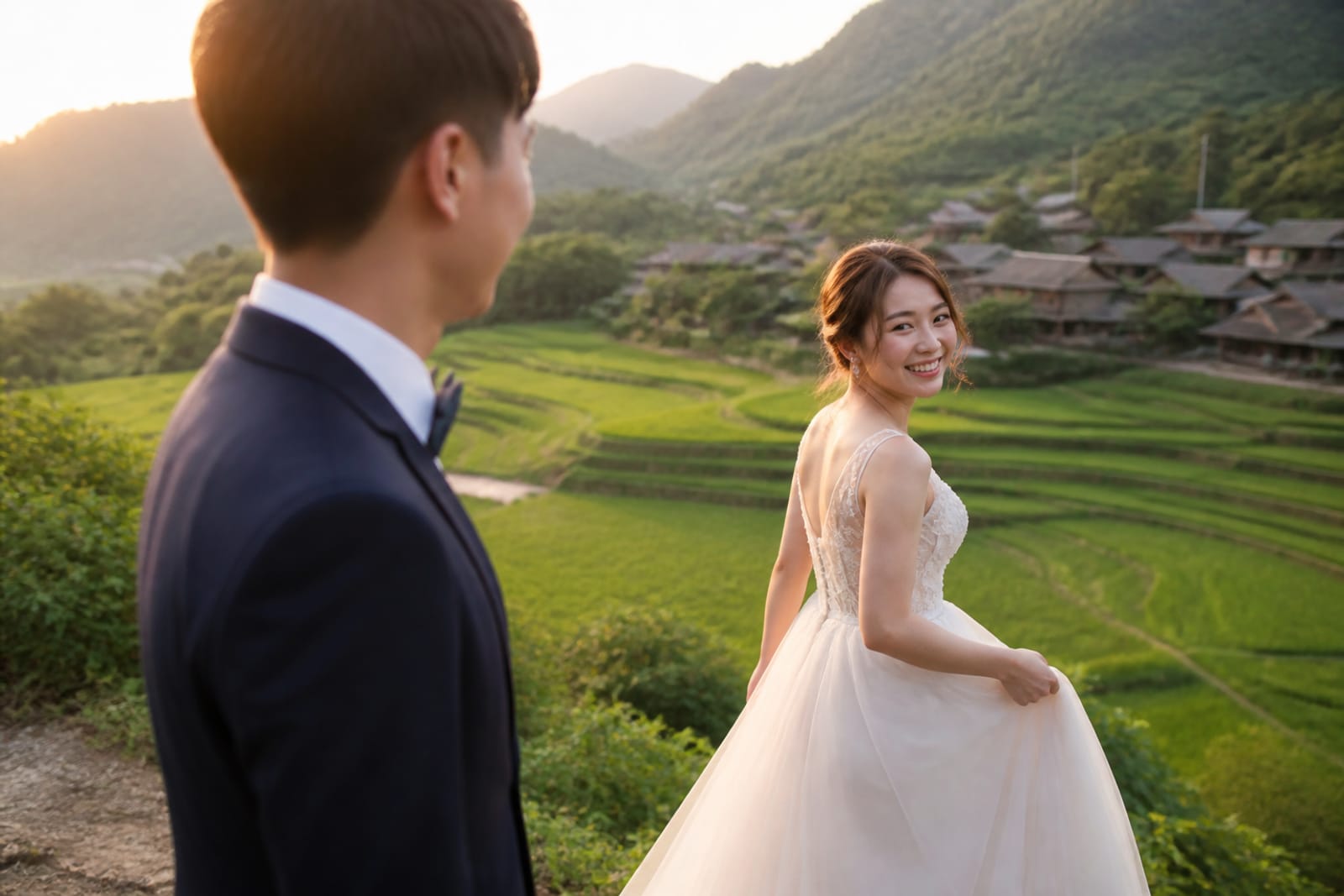
How do you find and vet a local Pu Luong photographer?
Pu Luong has no established photoshoot studio like Hanoi or Ho Chi Minh City. Instead, search for landscape or wedding photographers based in Thanh Hoa province (Pu Luong's nearest city) or Hanoi who have shot Pu Luong before. Check their portfolio for rice-terrace light quality: sharp detail in the grain, natural colour (not oversaturated), and real shadows—not flat, filtered images. Ask the photographer three things: (1) When did you last shoot Pu Luong, and do you have permission from village heads to guide couples on private paths? (2) What do you do if clouds roll in during the session—do you pivot to forested areas or reschedule? (3) Can you show examples of how you light a couple against backlit rice or mist? A photographer who knows the terrain works faster, handles weather pivots, and understands which hamlet gates are open. Vet their turnaround time (edited files in how many days?) and whether they offer makeup or styling—most don't, so plan this separately. Always confirm their experience with couples (not just landscapes) before booking.
What should a couple wear to blend with Pu Luong's landscape?
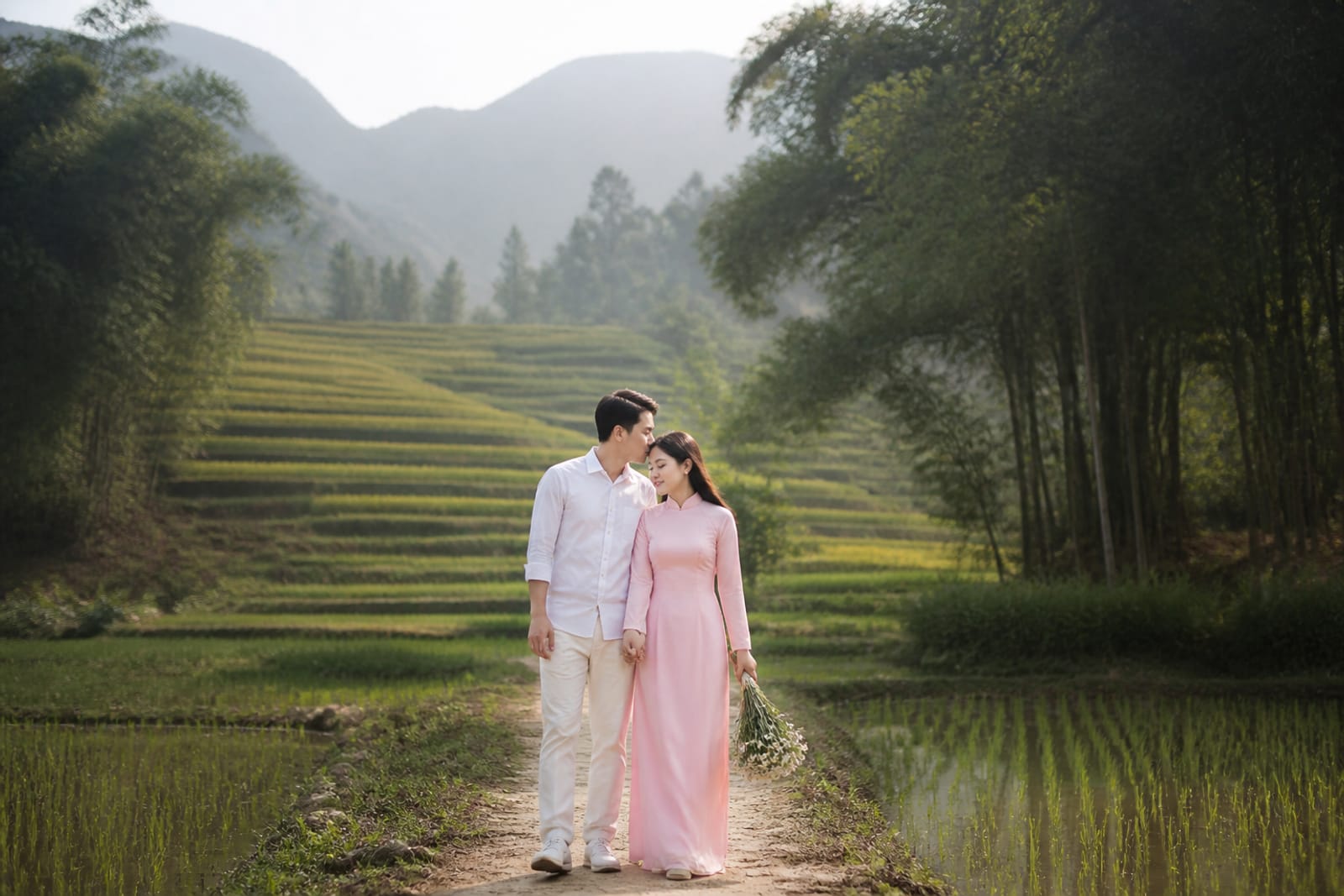
Pu Luong's aesthetic rewards muted, natural tones because rice and forest dominate the frame. Avoid bright white, electric blue or neon—these pull the eye away from the landscape and create harsh contrast in morning light. Instead, wear soft neutrals (sage, taupe, dusty rose, cream, warm grey) or deep jewel tones (forest green, burgundy, navy) that echo the terraces or foliage. Linen and cotton breathe in Pu Luong's humid climate and move naturally in wind. For couples, coordinate colours (one in earth tone, the other in a complementary shade) rather than matching exactly; this keeps the frame dynamic. An ao dai in cream, soft green or blush works beautifully against golden rice and is iconic in rural Vietnam—ask a Hanoi ao dai rental vendor about lightweight versions for hiking. Practical: wear closed shoes with grip (trails are muddy after rain, even in dry season), and bring a spare light layer for mist at 5 am. Avoid large logos, shiny metals or reflective sunglasses—they distract from the couple and complicate editing. Pack an extra outfit if the photographer offers it; a change halfway through introduces visual rhythm to the edit.
When are the golden rice and misty conditions photographers want?
Golden rice appears roughly 6–8 weeks after planting, concentrated in two windows: late May–June (summer crop, planted March–April) and September–October (autumn crop, planted July–August). The exact date depends on when local farmers plant that year—check with your photographer or a local guide in Thanh Hoa. Mist is heaviest November–February (cool season), when valleys trap moisture overnight and clear by 8–9 am. May–October brings afternoon cloud cover and occasional rain, which softens light but also shortens the usable morning window. March–April (pre-monsoon) can offer clear, crisp light but the rice is young and pale; November–January rice is harvested, leaving muddy terraces. For the combination of mist and golden rice, aim for late September–early October—the autumn crop matures as cool season begins, creating both atmospheric moisture and colour. Avoid October's tail end and November's early weeks; tropical cyclones bring heavy rain and flood risk. Check the monsoon forecast with your photographer before finalizing dates—a rescheduled shoot beats a cancelled one.
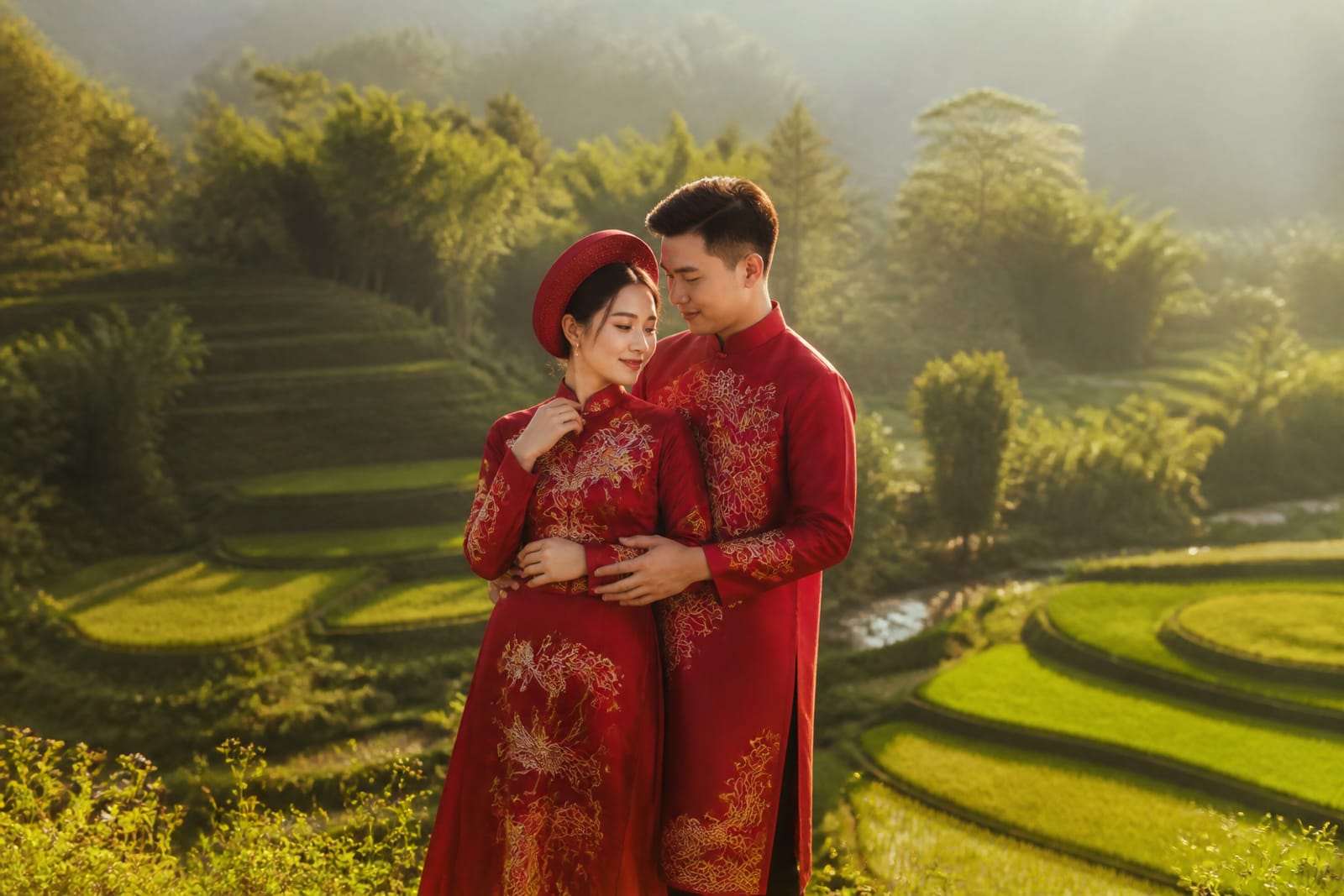
What's the difference between hiring a Pu Luong local photographer and planning a shoot via Hanoi?
Hiring a Pu Luong-based photographer means they know the terrain, village permissions, and light patterns from repeated shoots—they can navigate offroad paths, anticipate clouds, and recover if weather turns sour. They charge less than a Hanoi studio traveling out (travel time, fuel, lodging eat into budgets). Their downsides: limited editing speed (file delivery may take weeks if they juggle multiple clients), no makeup or styling team on site, and inconsistent English communication. A Hanoi-based studio (like Cáo Studio, which operates in Hanoi and Ho Chi Minh City) can coordinate your entire trip—ao dai rental, makeup and hair services, travel logistics—but charges more and requires you to travel to them beforehand or coordinate hair and makeup locally. The best middle ground: hire a vetted local Pu Luong photographer for the shoot itself, arrange ao dai rental and makeup through a Hanoi vendor before you arrive, and manage the shoot date independently. If you want an all-in-one team (photographer, stylist, makeup artist) who handles everything, book a pre-wedding photoshoot in Hanoi first, then hire a local for the Pu Luong extension. Choose based on whether you value coordination (book a studio) or local expertise and budget (hire locally).
How do weather and season affect shoot outcomes at Pu Luong?
Pu Luong's location in Vietnam's north-central region means cool, misty winters (December–February) and hot, humid summers (May–September) with afternoon thunderstorms. Cool-season shoots (Nov–Feb) offer stable light and natural mist but require layers; farmers harvest during this time, so fewer golden terraces are visible. Summer monsoon (May–Sep) brings afternoon downpours that shorten morning shooting windows to 4–5 hours and soften light through cloud cover—no harsh midday shadows, but less dramatic colour. Spring (March–April) and autumn (September–October) are the sweet spot: warm, lower humidity, stable mornings, and rice in its prime. Rain affects foot traffic; wet trails slow movement and increase slip risk, so wear grip shoes and allow extra time for safe walking. Mist usually burns off by 8–9 am in cool season; morning shoots (5–7 am) capture it best. Afternoon typhoon risk peaks October–November; confirm the forecast 2 weeks before your shoot. A flexible photographer pivots to forested areas or reschedules if heavy rain arrives—never shoot in thunderstorms or on slippery, flooded terrain.
---
What to check before you book a Pu Luong photoshoot
- Photographer's Pu Luong portfolio: at least 5 couple or group shoots on rice terraces, with sharp detail, natural colour, and visible directional light.
- Permission and access: does the photographer have relationships with village heads and guides? Can they guarantee access to private paths without trespassing?
- Turnaround time for edits: how many days until you receive edited files? (Local photographers may take 2–4 weeks; studios typically promise faster.)
- Backup plan: what happens if rain or cloud cover disrupts the morning? Do they reschedule, pivot locations, or offer a partial refund?
- Styling and makeup: does the photographer provide these, or do you hire separately? Confirm before booking.
- Costs and inclusions: ask about session length, number of edited photos, file format (RAW, JPEG, high-res), and usage rights.
- Communication method: confirm language (English, Vietnamese) and response time (WhatsApp, email, phone).
- Season choice: decide between golden rice (May–Jun, Sep–Oct) or mist (Nov–Feb), and confirm planting dates with your photographer.
---
FAQ
Can Cáo Studio shoot my Pu Luong photoshoot?
Cáo Studio operates in Hanoi, Ho Chi Minh City and Hoi An. We don't have a Pu Luong base. Ask us on WhatsApp for a referral to a vetted local photographer, or book an ao dai photoshoot or makeup and hair with us in Hanoi before your Pu Luong trip.
What's the best time of year to shoot Pu Luong rice terraces?
Golden rice (6–8 weeks after planting) appears late May–June and September–October. Mist is heaviest November–February. September–October offers both. Avoid October's tail and November's early weeks due to cyclone risk.
How early do we need to start a couple photoshoot at Pu Luong?
Start by 5–6 am to capture soft side light and mist before the sun climbs. Usable light ends by 8–9 am. Late afternoon (4–5 pm) works westward, but clouds often arrive by 5 pm.
Should we hire a local Pu Luong photographer or travel with a Hanoi studio?
Local photographers know terrain and charge less but may be slow with edits. Hanoi studios offer full coordination (styling, makeup, editing) but cost more and require advance planning. Choose based on whether you value local expertise or all-in-one service.
What should we wear to a Pu Luong couple photoshoot?
Wear muted, natural tones (sage, taupe, cream, burgundy) that blend with rice and forest. Linen and cotton move naturally. An ao dai works beautifully. Avoid bright white, neon or reflective surfaces. Wear closed, griped shoes for muddy trails.
What happens if it rains during our Pu Luong shoot?
A good photographer pivots to forested areas with softer light or reschedules. Never shoot in thunderstorms or on slippery, flooded terrain. Confirm the weather forecast 2 weeks before and agree on a backup plan with your photographer.
FAQ
Can Cáo Studio shoot my Pu Luong photoshoot?
Cáo Studio operates in Hanoi, Ho Chi Minh City and Hoi An. We don't have a Pu Luong base. Ask us on WhatsApp for a referral to a vetted local photographer, or book an [ao dai photoshoot](/ao-dai-photoshoot) or [makeup and hair](/makeup-and-hair) with us in Hanoi before your Pu Luong trip.
What's the best time of year to shoot Pu Luong rice terraces?
Golden rice (6–8 weeks after planting) appears late May–June and September–October. Mist is heaviest November–February. September–October offers both. Avoid October's tail and November's early weeks due to cyclone risk.
How early do we need to start a couple photoshoot at Pu Luong?
Start by 5–6 am to capture soft side light and mist before the sun climbs. Usable light ends by 8–9 am. Late afternoon (4–5 pm) works westward, but clouds often arrive by 5 pm.
Should we hire a local Pu Luong photographer or travel with a Hanoi studio?
Local photographers know terrain and charge less but may be slow with edits. Hanoi studios offer full coordination (styling, makeup, editing) but cost more and require advance planning. Choose based on whether you value local expertise or all-in-one service.
What should we wear to a Pu Luong couple photoshoot?
Wear muted, natural tones (sage, taupe, cream, burgundy) that blend with rice and forest. Linen and cotton move naturally. An ao dai works beautifully. Avoid bright white, neon or reflective surfaces. Wear closed, griped shoes for muddy trails.
What happens if it rains during our Pu Luong shoot?
A good photographer pivots to forested areas with softer light or reschedules. Never shoot in thunderstorms or on slippery, flooded terrain. Confirm the weather forecast 2 weeks before and agree on a backup plan with your photographer.
Ao dai, makeup, hair and a local photographer in Hanoi or Saigon — one WhatsApp message.