/pre-wedding-photoshoot
Hidden photo corners near Ta Phin village for couples
Ta Phin village sits 12 km southwest of Sapa town, where terraced rice fields meet red-tiled Dao houses in a narrow valley. Best light occurs early morning (6–7 am) when mist clings to slopes and side-light softens ridges; avoid midday (10 am–3 pm, harsh shadows, tour crowds). Couples shoot best Feb–May (clear skies, cooler) or mid-Sep to early Oct (golden harvest). Wear layers (temperature drops fast above 1000 m); ao dai works if you bring a warm layer or shoot indoors at a homestay. The village has no marked paths—hire a local guide or book a directed couple session with a photographer who knows light and framing. Cáo Studio does not operate in Sapa; work with a vetted local team (ask us on WhatsApp for referrals). Plan 3–4 hours on-site, bring tripod or ask your photographer for wide-frame setups, and respect homestay residents (ask permission before shooting interiors). ---
Where exactly are the best photo corners, and how do you find them without a guide?
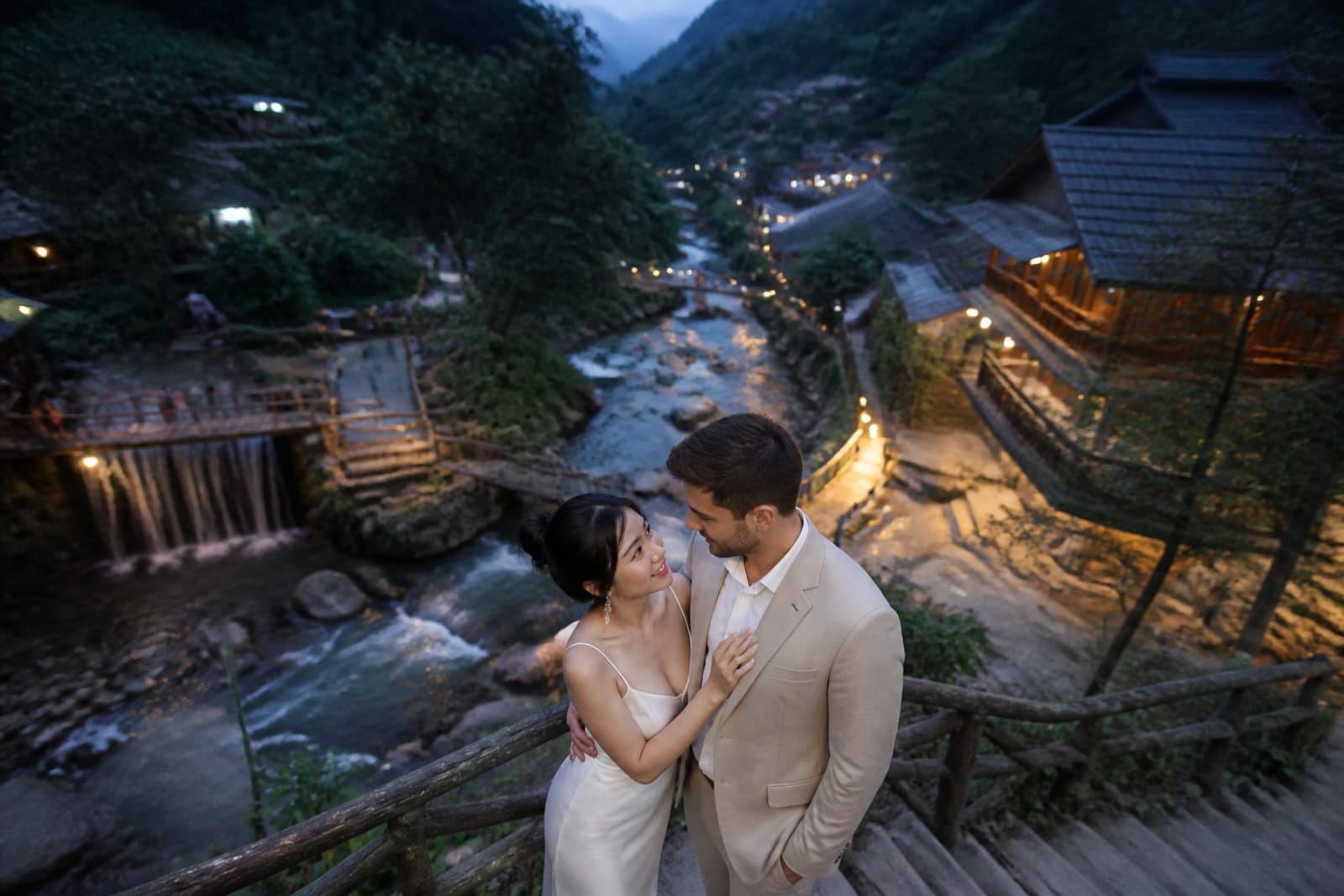
Ta Phin's most photographed corners cluster along three zones: the terraced slopes northwest of the main road (steep, require scrambling, best at 6–7 am when side-light rakes the rice), the red Dao homestays hugging the roadside (easier access, crowded by 8 am, work best for detail and texture), and the stream valley near the village center (sheltered, misty until late morning, ideal if you want trees and water in frame). Without a guide, finding these unpaved offshoots is trial-and-error; you'll waste light and risk getting lost on narrow tracks. A local guide or photographer who has scouted the light season by season knows which corner holds the right angle at what time—the difference between a frame and a failed shot.
---
Which season delivers the light couples actually want?
| Season | Best for | Light quality | Why it works |
|---|---|---|---|
| Feb–May | clear skies, cool | soft morning side-light; no rain | Terraces fresh-green; mist burns off by 7:30 am; ideal for ao dai |
| Jun–Aug | lush green, water | humid but dramatic; frequent rain | Rice is full-height; afternoon storms create mood; gear risk from downpours |
| Mid-Sep to early Oct | golden harvest, warmth | warm side-light, low angle | Terraces at peak color; mist clears later (7–8 am); best for saturated frames |
| Nov–Jan | cool, clarity | bright but thin; long shadows | Terraces bare or replanted; mist heavier; frost risk; Tet crowds start late Dec |
Why season matters for your shot: Feb–May and mid-Sep to early Oct are the only windows where mist + light + color align. Feb–May favors green and cool tones (wear long sleeves, ao dai layer). Mid-Sep to early Oct gives warm, rich color but requires early mornings to beat the heat and tour buses.
📸 Book on WhatsApp — couple photoshoot
---
Should you hire a local guide, a photographer, or shoot solo?
Solo with a tripod: You control the frame, pay nothing, but lose light-scouting expertise. Mist clears fast; by 7:30 am, the magic is gone. Works if you've scouted beforehand or are revisiting a known spot.
Local guide (homestay or village connection): Costs a few hours' labor; knows which corner has mist at what time; limited framing advice. Best if you've hired a photographer in Hanoi or Saigon and want on-site logistical help.
Professional photographer (Hanoi or Sapa base): Brings light expertise, directed posing (walk, look at each other, do something natural—not stiff monument poses), and edited frames within 48 hours. Cost is higher but you walk away with frames you'll keep for life, not just memories of a pretty place. Cáo Studio teams direct couple sessions in Hanoi and Saigon; Ta Phin requires travel coordination—ask on WhatsApp if we're scouting Sapa dates.
Recommended choice for couples: hire a photographer who will direct you, not just document you standing still. Light, outfit, and framing matter more than the location alone.
---
What should couples wear, and does ao dai work in Ta Phin?
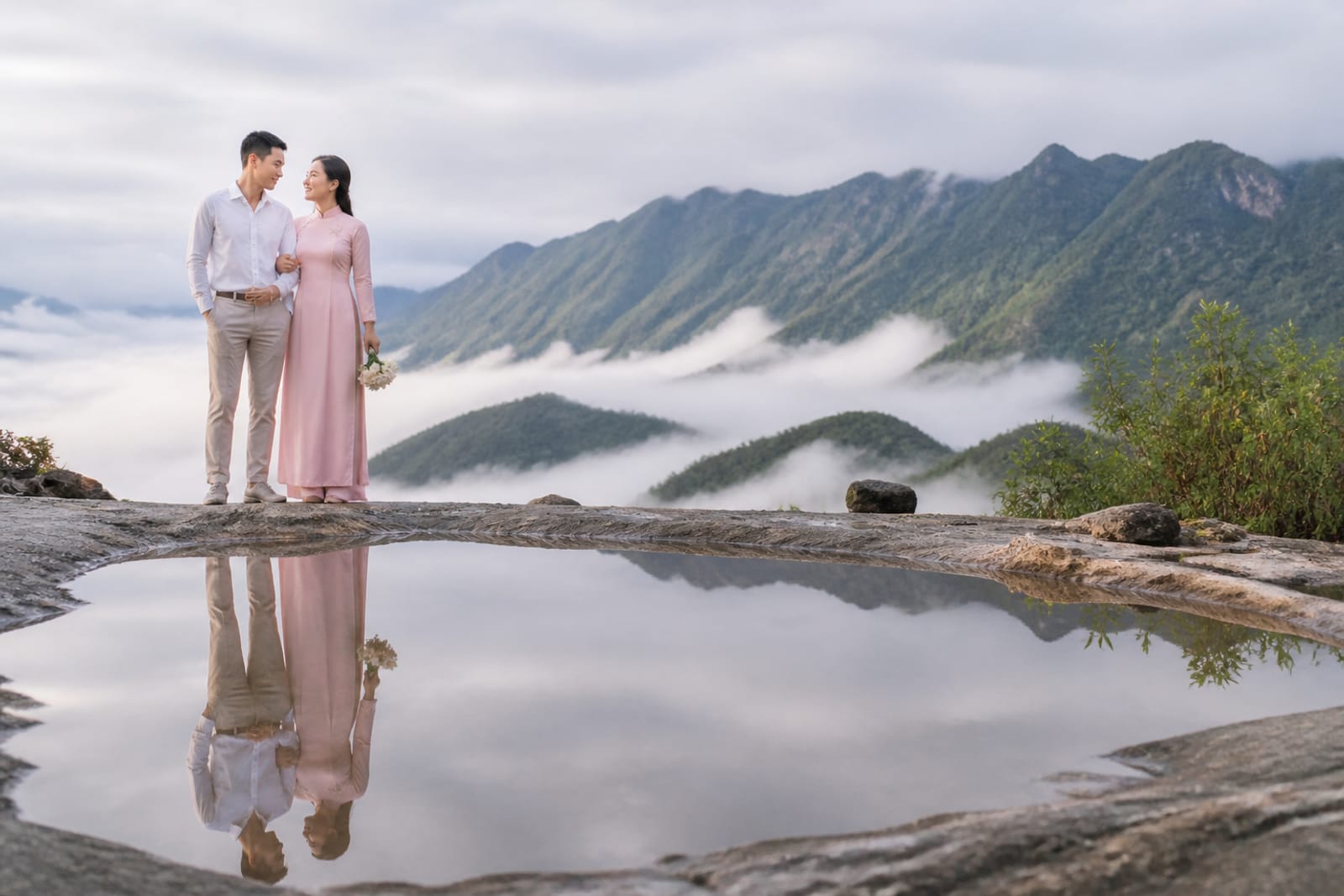
Ao dai works beautifully in Ta Phin if you plan your layers. The village sits at ~1600 m; morning temperature can be 8–15°C even in May, and wind hits exposed fabric.
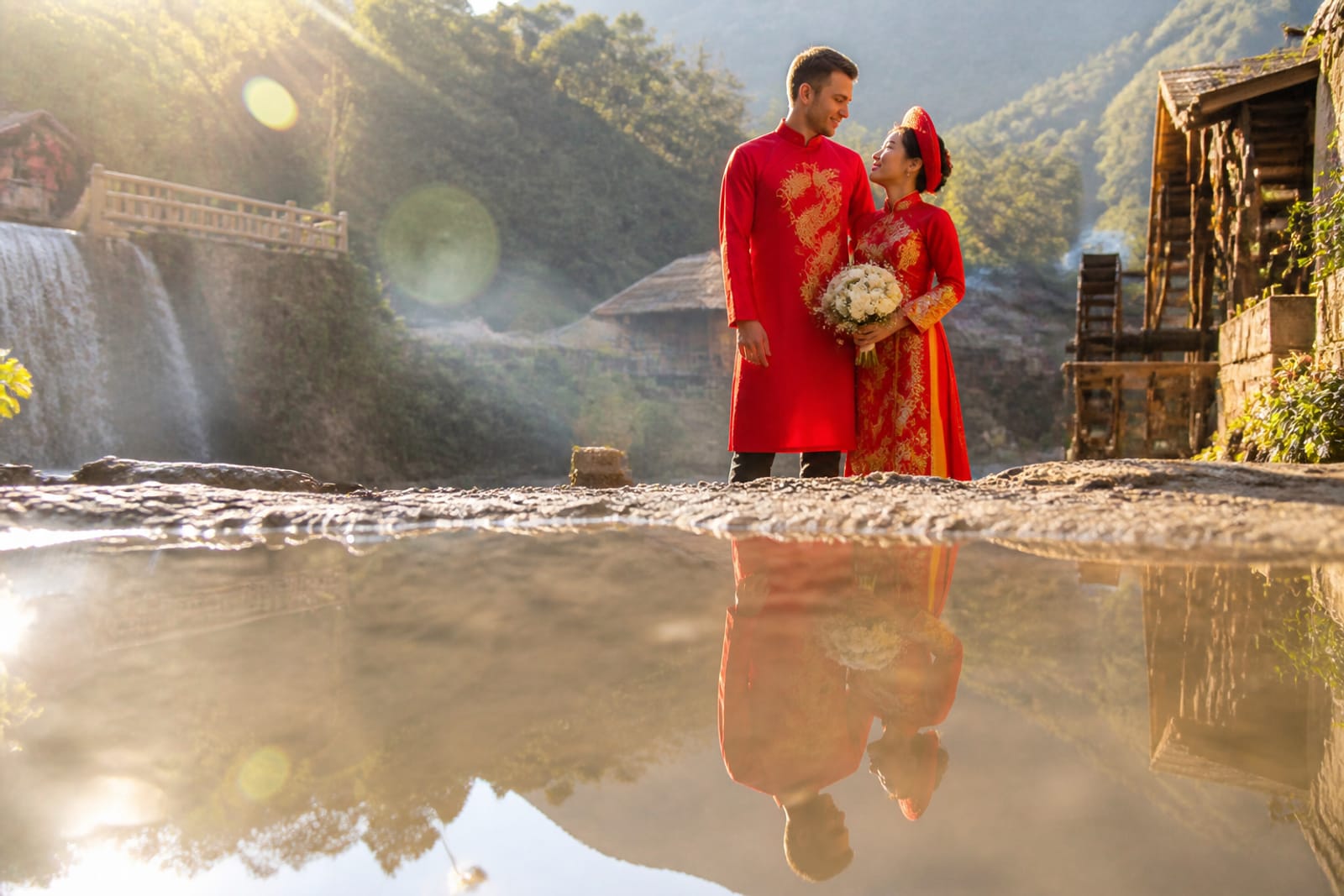
If wearing ao dai: bring a warm cardigan, light wool wrap, or linen overshirt in a neutral tone (cream, grey, tan). Shoot the ao dai solo at a sheltered homestay interior or in the first light, then layer for outdoor terraces. Avoid thin fabrics and bright colors that clash with rice and mist.
Alternative outfits: neutral trousers/shirt (tan, cream, grey) with a simple sweater; vintage-wash denim and a linen top; linen dress with a warm layer. Avoid high contrast (red, black) and heavy prints; they fight the landscape.
Footwear: sturdy boots or hiking shoes (terrain is muddy, uneven). Avoid sandals or formal heels.
What to bring: layers in your bag, a shawl or light jacket, sunscreen (mist clears and UV is strong), and a cloth to wipe condensation from camera lenses if humidity spikes.
💄 Makeup & hair at your hotel — if you're based in Sapa town, we can coordinate a freelance artist to prep you before the shoot.
---
How do you actually book a directed couple shoot if Cáo Studio is based in Hanoi and Saigon?
Cáo Studio operates in Hanoi, Ho Chi Minh City, and Hoi An—not Sapa or Ta Phin directly. If you're traveling to Sapa for a couple shoot, you have three routes:
- Book Cáo Studio in Hanoi before your trip: We can connect you with a vetted local Sapa photographer; we direct the vision (light, outfit, framing philosophy) and you shoot with a local team who knows the terrain and morning mist. WhatsApp us your travel dates and outfit idea.
- Hire a local Sapa photographer independently: Ask your homestay or guide for referrals; look for portfolios with natural light and couples in motion (not posed). Check their experience with ao dai or vintage outfits, and confirm turnaround time for edits.
- Shoot in Hanoi instead: Book a pre-wedding or couple session in Hanoi at Old Quarter, Huc Bridge, or French Quarter—same director approach, guaranteed team, no travel coordination hassle.
Before you commit: ask any photographer (local or Cáo referral) about their process—do they direct you to walk and interact, or ask you to stand for posed shots? Do they shoot wide-medium-detail (landscape-to-emotion), or just close-ups? Do they deliver edited frames in 48 hours? These answers reveal whether they're a director or a documenter.
🌸 See the lookbook — real couples, real light, real direction.
---
What can go wrong in Ta Phin, and how do you avoid it?
Problem: Mist burns off by 7:30 am; you miss the magic light. Avoid it: Start shooting by 6 am. Meet your photographer/guide at 5:30 am in the village. No negotiation on timing.
Problem: Tour buses arrive 8–9 am; corners get crowded. Avoid it: Shoot before 8 am, or book a weekday (not Sat–Sun). Ask your guide which corner the tours hit—aim for the other slope.
Problem: Muddy paths after rain; outfits and gear get dirty. Avoid it: Check weather 48 hours ahead. If rain is forecast, reschedule or shoot only at homestay interiors (red Dao houses are photogenic and dry). Wear boots, not shoes. Bring a waterproof bag for camera.
Problem: Homestay owners get upset if you shoot interiors without permission. Avoid it: Always ask first. Offer to share one edited frame with them. Respect prayer times and meal hours.
Problem: Steep terrain exhausts you before good light. Avoid it: Hire a guide to carry tripod/gear. Wear comfortable boots and start hydrated. Plan 3–4 hours total, not 1.
Problem: You shoot alone, miss the framing that tells a story. Avoid it: Hire a director, not a self-timer or random tourist photographer. A director guides you to walk, look at each other, smile—frames emerge naturally.
---
What to check before you book
- Photographer's portfolio: Do their couple shots show interaction (walking, laughing, looking at each other) or stiff poses? Can you feel the light and location in each frame?
- Light knowledge: Ask when they scout and why they choose that time. If they say "anytime is fine," move on.
- Outfit experience: Have they worked with ao dai, vintage, or neutral outfits? Do they know layering for cold mornings?
- Turnaround time: Confirm how many edited frames you get and when. 48 hours is professional; 2 weeks is too slow for a trip.
- Bad-weather plan: What happens if it rains or mist lingers all day? Do they reschedule or shoot anyway?
- Local knowledge: Have they scouted Ta Phin or similar Sapa locations? Or are they guessing?
- Direction style: Do they ask you to pose, or do they direct you to move, interact, and do something? The second creates better frames.
📸 Book on WhatsApp — pre-wedding photoshoot for Hanoi, Saigon, or Hoi An; ask us for Sapa referrals.
---
Compare Cáo Studio vs. local Sapa options
| Factor | Cáo Studio (Hanoi/Saigon coordination) | Local Sapa photographer |
|---|---|---|
| Direction & story | Trained director; ensure natural frames | Varies; may favor posed shots |
| Turnaround | 48 hours edited + short film | Depends; often 2+ weeks |
| Outfit & hair | Coordinate makeup/hair in Hanoi if needed | You arrange separately |
| Cost factor | Higher (team + travel coordination) | Lower (local rate) |
| Light expertise | Scouted by Cáo philosophy + local referral | Depends on photographer's experience |
| Hassle | Book once; we manage the rest | You vet and communicate directly |
| Best for | Couples who value direction + guaranteed quality | Budget-conscious couples with flexible expectations |
---
FAQ
Can we shoot ao dai in Ta Phin in December?
Yes, but only at homestay interiors or midday (avoid early morning cold). Dec is clear but cool (5–10°C at dawn); ao dai alone won't keep you warm. Wear a thick cardigan underneath and shoot indoors where light is soft.
Do we need to pay the homestays to use them as a backdrop?
Always ask permission first. Some homestays allow free background shooting if you're respectful; others request a small donation or expect you to buy lunch. Confirm with your guide or photographer before arrival.
What if we visit in June and it rains all morning?
Reschedule or shoot only at homestay interiors, which have moody side-light from windows. Afternoon rain typically clears for 1–2 hours—your photographer should know if that window aligns with good light.
Can we do a couple shoot and an ao dai shoot in the same Ta Phin trip?
Yes. Plan 6+ hours total: early morning couple frames on terraces (6–8 am), return to homestay for ao dai change and indoor frames (8–10 am), rest during midday, then optional sunset detail shots (5–6 pm if weather holds). Requires a professional photographer who can manage outfits and light transitions.
Is Ta Phin safer and less touristy than Sapa town?
Ta Phin is quieter and more intimate, but it's not secret—tour buses visit daily by 8–9 am. Early morning (before 7:30 am) is genuinely uncrowded. Go at dawn if solitude matters to you. Sapa town offers easier logistics but more crowds; Ta Phin requires commitment to early light.
Should we hire a guide from our homestay or book a photographer from outside?
A homestay guide knows terrain and morning routines; a photographer knows light and framing. Best: combine both. Hire the guide for logistics and safety, and book a photographer (local or referral from Cáo) for direction and editing. If budget allows only one, choose the photographer.
FAQ
Can we shoot ao dai in Ta Phin in December?
Yes, but only at homestay interiors or midday (avoid early morning cold). Dec is clear but cool (5–10°C at dawn); ao dai alone won't keep you warm. Wear a thick cardigan underneath and shoot indoors where light is soft.
Do we need to pay the homestays to use them as a backdrop?
Always ask permission first. Some homestays allow free background shooting if you're respectful; others request a small donation or expect you to buy lunch. Confirm with your guide or photographer before arrival.
What if we visit in June and it rains all morning?
Reschedule or shoot only at homestay interiors, which have moody side-light from windows. Afternoon rain typically clears for 1–2 hours—your photographer should know if that window aligns with good light.
Can we do a couple shoot and an ao dai shoot in the same Ta Phin trip?
Yes. Plan 6+ hours total: early morning couple frames on terraces (6–8 am), return to homestay for ao dai change and indoor frames (8–10 am), rest during midday, then optional sunset detail shots (5–6 pm if weather holds). Requires a professional photographer who can manage outfits and light transitions.
Is Ta Phin safer and less touristy than Sapa town?
Ta Phin is quieter and more intimate, but it's not secret—tour buses visit daily by 8–9 am. Early morning (before 7:30 am) is genuinely uncrowded. Go at dawn if solitude matters to you. Sapa town offers easier logistics but more crowds; Ta Phin requires commitment to early light.
Should we hire a guide from our homestay or book a photographer from outside?
A homestay guide knows terrain and morning routines; a photographer knows light and framing. Best: combine both. Hire the guide for logistics and safety, and book a photographer (local or referral from Cáo) for direction and editing. If budget allows only one, choose the photographer.
Ao dai, makeup, hair and a local photographer in Hanoi or Saigon — one WhatsApp message.