/pre-wedding-photoshoot
Hidden photo corners near Ta Van village for couples
Ta Van village sits in Sapa's northwest valley and holds photogenic corners—water-filled paddies (May), golden harvest terraces (mid-Sep to early Oct), dense bamboo groves, and the Ta Van River. Light is softest dawn (6–7 am) and late afternoon (4–5 pm); midday is harsh and flat. Most spots require a local guide (steep paths, easy to lose light or footing); a half-day session with a guide, photographer and basic styling typically runs 3–4 hours. Cáo Studio does not operate in Sapa—book a Hanoi base team to travel, or hire a Sapa photographer and check their portfolio for natural framing and couple direction (avoid stiff poses). Season matters most: March–May and September–November have the clearest light; December–February is cold, foggy and grey; June–August is lush but wet and cloudy. Factor in transportation time from Sapa town (30–45 min by motorbike or car) and mud after rain.
Ta Van is a quiet valley 12 km southwest of Sapa town, populated by the H'Mong people and ringed by rice paddies, streams and steep forested hillsides. It's quieter than Sapa's central attractions and rewards couples looking for frames that feel lived-in rather than framed for tourists. But reaching the best light and safely navigating terrain demands planning. Here's what couples actually choose when they scout Ta Van.
Which Ta Van spots suit a couple photoshoot—and why?
Ta Van's hidden corners break into five distinct zones: water-filled rice paddies (best May–June and September), golden-harvest paddies (mid-Sep to early Oct), bamboo forests on the western slope, the Ta Van River bends with smooth stones, and family homestays with flower gardens. Each has different light paths, walking effort and seasonal readiness.
| Spot | Best for | Light window | Season | Why it works |
|---|---|---|---|---|
| Rice paddies (flooded) | reflection, water colour | 6–7 am, 4–5 pm | May–Jun | Mirror effect doubles sky; soft side light flatters skin |
| Rice paddies (golden harvest) | warm tones, terrace layers | 4–5 pm | mid-Sep to early Oct | Low angle light models terrace contours; rich colour |
| Bamboo forest (western slope) | shade, soft diffusion, intimacy | 7–8 am, 3–4 pm | year-round, best Mar–May, Sep–Nov | Canopy filters harsh UV; natural framing; couple can walk deeper |
| Ta Van River (smooth bends) | water, stone, walking frames | 6:30–7:30 am | Mar–May, Sep–Nov (dry rocks) | Current and banks create movement; walking toward/away camera avoids stiff poses |
| Homestay gardens (flowers) | cultural anchor, colour | 7–8 am | Mar–May (wildflowers), Sep–Nov | Quick 1-hour session option; homestay owner often smiles in background |
📸 Book on WhatsApp — ao dai photoshoot
Golden harvest is Ta Van's most celebrated window but lasts only 2–3 weeks. Water-filled paddies reflect sky brilliantly but are wet underfoot. Bamboo requires zero weather wait but asks couples to trust the photographer's framing—easier if they've seen a lookbook first.
How does light move through Ta Van in a single morning session?
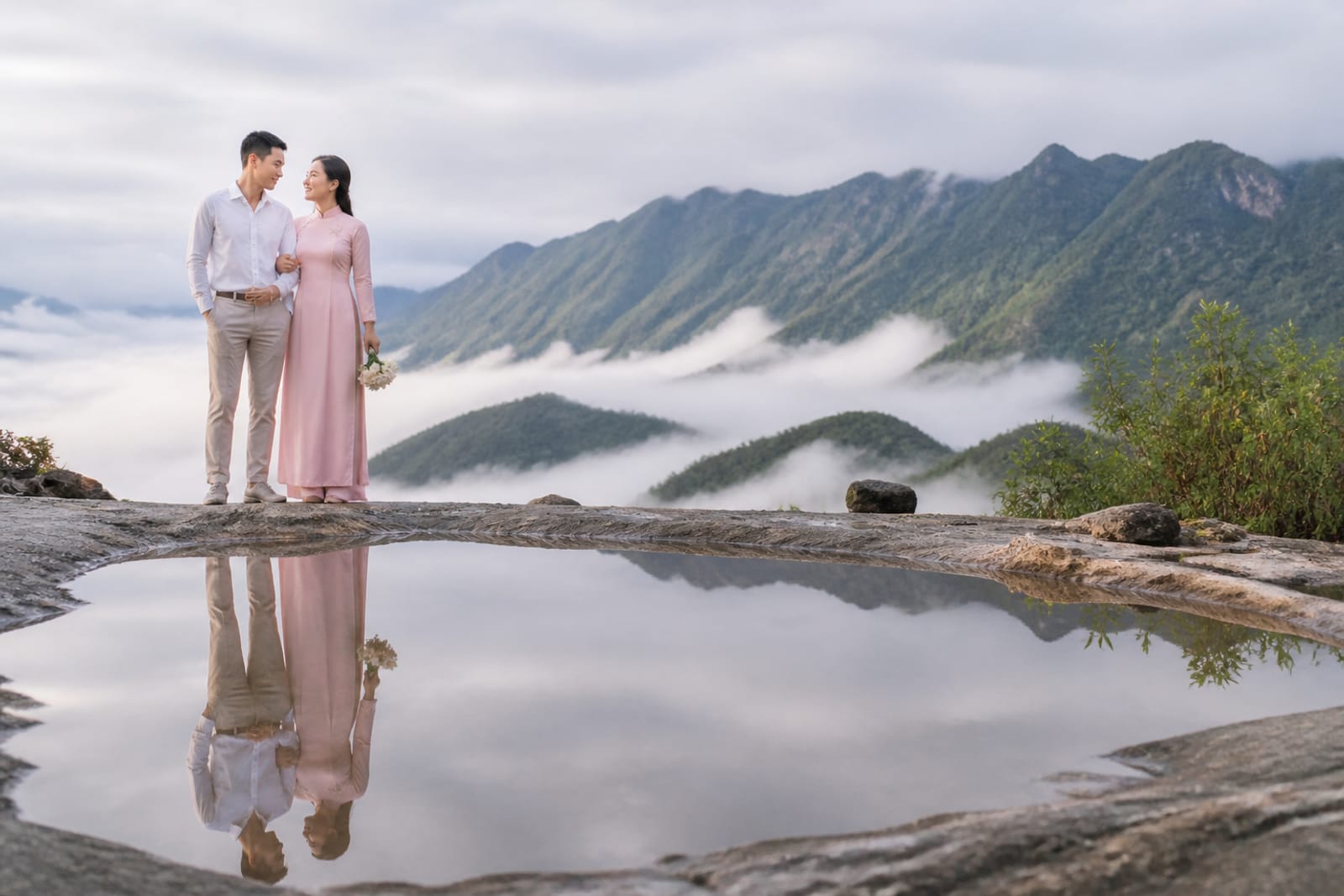
Photographers in Ta Van work dawn-to-9 am or 3–5 pm because midday sun is direct, flat and turns skin pale or orange. A 6 am arrival means a 30–45 min drive from Sapa town—doable if you leave your hotel by 5:15 am. First light (6–6:20 am) is soft and cool, ideal for flooded paddies and river shots. By 7 am, sun edges above the eastern ridge and begins to model the terrace slopes; this is the window for harvest paddies and couple walking shots where you're backlit or side-lit. By 8 am, light hardens and starts to blow out sky. Cloud cover changes everything: overcast softens shadows but kills the water's reflective sparkle and turns gold paddies bronze. Afternoon (4–5 pm) reverses the geometry—sun comes from the west, gilding the western-facing bamboo forest and catching the river from behind.
Bring layers. Temperatures at 6 am in November can be 8–12°C; by 9 am it's 16°C. Couple should wear colors that hold in soft light (jewel tones, pastels, deep reds work; neons and whites flatten). Ao dai works beautifully in dawn light because silk catches and holds the glow; check rental availability in Hanoi or Sapa with ao dai rental before you book the shoot.
What's the difference between hiring a Sapa-based photographer and traveling a team from Hanoi?
Sapa-based teams know the terrain, can move fast on muddy trails and cost less in transport. But you won't know their style before the session unless they have a strong lookbook—check if their couple frames show natural direction (walking, looking at each other, pausing mid-step) or stiff poses in front of monuments.
Hanoi-based teams (like Cáo Studio's Hanoi base) can travel to Ta Van and bring a complete package—photographer, stylist, makeup artist, same-day or next-day edits—in one booking. The trade-off is a higher day rate to cover travel time (Hanoi to Sapa is 5+ hours by car; most teams build this into their quote). They excel if you want cohesion: outfit choice, hair texture and makeup coordinated with light, not scrambled on-site. If you book a Hanoi team, confirm they've shot Ta Van before (ask for a short film or 5–10 frames); if they haven't, they'll need a local guide anyway, which adds cost.
Hybrid option: book a Hanoi team for a session in Hoi An—easier access, better infrastructure, many teams based there—or stay in Sapa for 2–3 days and hire local + send a mood board by WhatsApp. Most teams can color-correct and edit abroad, so distance doesn't break the turnaround.
When should you book a Ta Van shoot—month by month?
| Month | Light | Terraces | Weather | Crowds | Go? |
|---|---|---|---|---|---|
| Jan–Feb | Grey, low angle | Dry, brown | Cold, fog | Very few tourists | Limited (short daylight, cold) |
| Mar–May | Excellent, warm | Green or flooded | Clear, warm | Low | ✓ Best window |
| Jun–Aug | Good at dawn, humid by 9 am | Lush green | Wet, afternoon showers | Moderate | Yes, start early |
| Sep–Nov (early) | Excellent, golden afternoon | Golden harvest (Sep 15–Oct 5) | Clear, warm | Low–moderate | ✓ Best window |
| Oct–Nov (late) | Good, lower angle | Dry, brown | Clear but cool | Increasing | Yes but fading |
| Dec | Cool, grey increasing | Dry, brown | Fog, cold | Few | Limited |
March–May and September–early-November are the twin peaks. Spring offers lush green and warm light; autumn adds the golden harvest window (15–20 days, mid-September to early October) that ranks among Vietnam's most photogenic moments. Book 3–4 weeks ahead during these windows if you're flying in; flexible couples can shoot June–August (expect 40–60% chance of morning cloud) or January–February (expect fog and colder hands, but almost zero tourists and crystal-clear light on rare clear days).
Rain falls hardest May–June and October (post-harvest). After rain, paddies deepen in color but paths become slippery mud—guides are essential. Always ask your photographer or guide: "Did it rain in Ta Van last night?" before committing to an early start.
What do you need to arrange before the shoot—besides the photographer?
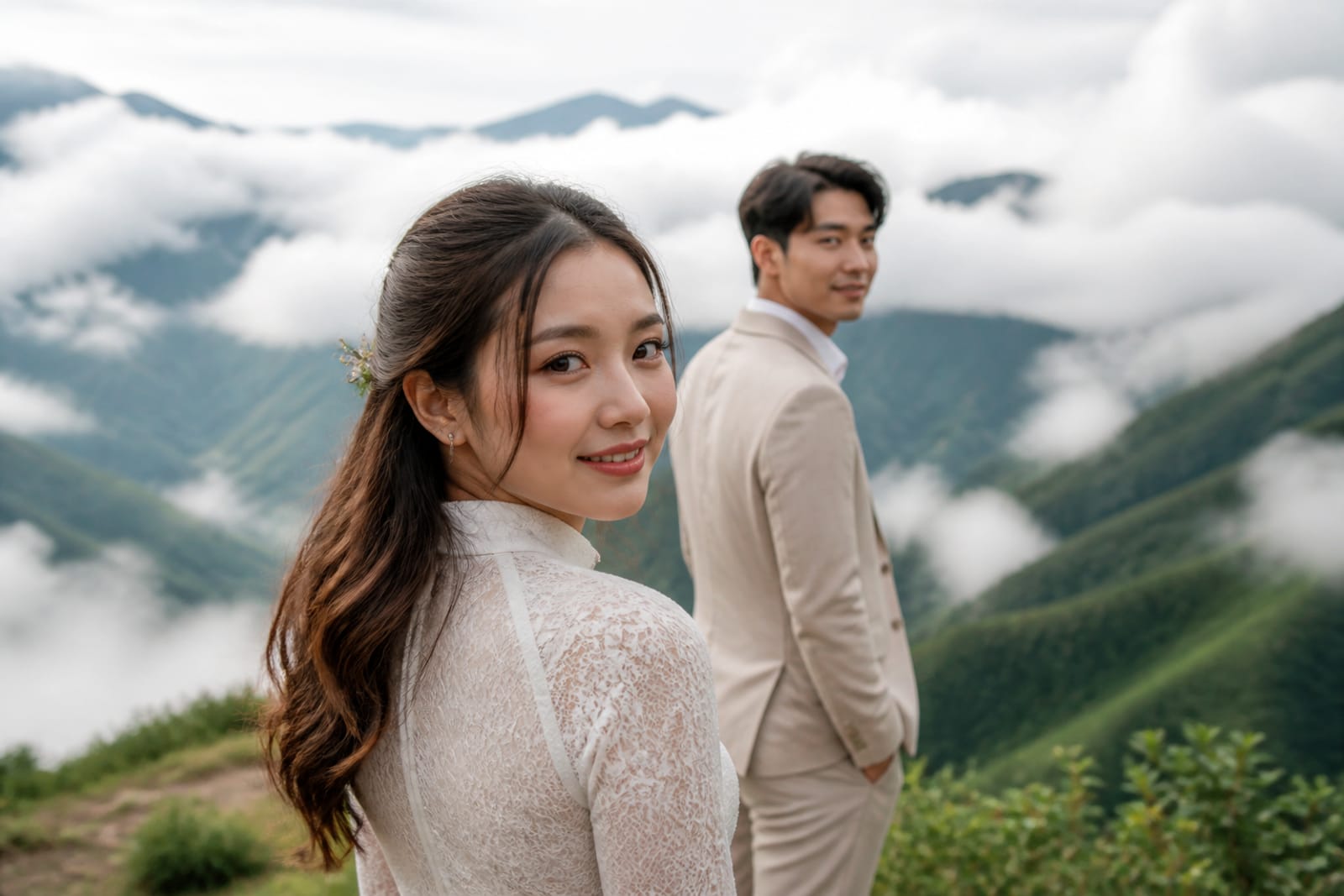
A local H'Mong guide (usually arranged by your hotel or the photographer) is non-negotiable if you're not an experienced hiker. Guides know which paddies are safe to walk, where water runs cold, which homestays welcome photo sessions and which paths flood. They typically cost 300–500k VND for a half-day (confirm with your hotel). Wear hiking shoes with grip; couple should avoid long skirts that catch mud (ao dai works if you pin the hem or change into pants after sunrise shots).
Book the homestay (if you're doing a garden shot) the day before—ask your hotel to WhatsApp the owner. Bring a small gift: chocolate, coffee or postcards from your country. Many homestays offer tea or rice wine; polite acceptance builds goodwill and often softens the owner's expression in frames.
Tell the photographer your outfit color 5 days ahead so they can scout light-fabric interplay. If wearing ao dai, confirm whether you'll walk in it or change mid-session. Expect to carry a small bag with layers, water and a phone charger (backup for the photographer's battery).
What questions should you ask before booking a Ta Van photoshoot?
Light and timing: "Have you shot Ta Van in [your month]? Can you show me 3–5 frames in that light?" (Not all photographers work well at dawn; some freeze their art at harsh midday light.)
Couple direction: "How do you guide couples to move and interact? Do you pose people standing still, or do we walk, pause, laugh?" (Watch their lookbook. Stiff poses feel like tourist photos; natural walking frames feel like memory.)
Backup if weather fails: "If it's foggy or raining on the shoot day, what's the reschedule policy?" (Reputable teams offer a free second date within 3 months; confirm whether you pay for the guide twice.)
Guide and access: "Do you arrange the guide, or do I hire one? Who negotiates homestay access?" (Some photographers arrive and scramble; good ones coordinate 48 hours ahead.)
Edits and turnaround: "How many photos will be edited, and when do I receive them?" (Ask exactly; avoid vague "within a week" promises. Confirm whether edits include color correction or just cropping and basic filter.)
Cost factors: (Never ask for a price in messages; instead ask: "Does your rate change with travel from Hanoi?" or "Does the guide fee include the homestay tea?") This lets you understand what drives the quote without awkward haggling.
Book via WhatsApp (+84 338 762 340) and share a mood board—even 3–4 Pinterest pins help photographers align their vision with yours. A reference photo of the couple laughing (not posing) cuts 30 minutes off the session's warm-up time.
Why is Ta Van harder to shoot than central Sapa—and when to hire a team instead?
Central Sapa town has paved streets, stone stairs and reliable Wi-Fi; photographers can shoot, return by noon and edit the same day. Ta Van requires a motorbike or car, a guide, high-altitude patience (2–3 hours hiking is normal for 5–6 frames), and slower internet. Most international couples lack the gear and body-comfort for muddy trails alone. This is why many choose to book a full pre-wedding photoshoot with a team rather than a standalone Ta Van session: the team brings logistics, warmth and direction, not just a camera.
Couples who book via Cáo Studio's Hanoi base and ask to travel to Ta Van should expect the team to include a professional guide, a stylist to refresh makeup after hiking, and the photographer's experience reading Ta Van's specific light patterns. That costs more upfront than hiring a local freelancer—but you get one cohesive session, not three vendors figuring out timing on WhatsApp at 5:30 am.
If your couple has limited time (visiting Sapa for 1–2 days on a larger Vietnam trip), book a half-day Ta Van shoot in the golden window (spring or autumn) rather than trying to DIY it. The team will move faster, read the light better and leave you with frames you'll actually print.
FAQ
Can we shoot Ta Van with a rental ao dai from Hanoi, or do we need to source one locally in Sapa?
Hanoi rental shops can ship to Sapa or you can rent locally (check with your hotel). Silk ao dai works beautifully in dawn light but can tear on thorny branches—brief the wearer on trail safety. Most teams can fetch a backup outfit if the first gets muddy; confirm before booking.
What's the actual walking distance in a typical 3-hour Ta Van session?
5–8 km depending on the route. Photographers choose spots within 30–45 min of the starting point; paddies are often accessed via terraced steps (steep, slow-going). Couple should wear broken-in hiking shoes and expect 2–3 rest stops for photos. Not technical climbing, but steady and muddy.
If we hire a Hanoi photographer to travel to Ta Van, do we save money by booking other services (makeup, ao dai) with them too?
Possibly. Teams that handle complete bookings (photography + makeup + outfit + styling) sometimes bundle travel cost savings. Always ask: "If I book makeup and ao dai rental together, does the travel rate stay the same?" Confirm via WhatsApp to see the breakdown.
Is Ta Van better than other Sapa photo spots like Silver Waterfall or Tram Ton Pass?
Different. Tram Ton Pass has higher elevation and sharper vistas; Ta Van is intimate and cultural. Silver Waterfall is dramatic but very touristy by 10 am. Ta Van suits couples seeking quiet, natural frames; other spots suit different moods. Choose based on your couple's energy: adventurous and talkative, or introspective and slow?
How do we know if a photographer's Ta Van portfolio is real or just edited to look better than the actual light?
Ask for an unedited preview or a short film (video reveals true light, not filter). Ask: "Can you send a 30-second reel of a couple walking through the paddies?" Video can't lie about color and shadow the way stills can. Also check the photographer's lookbook on their main site; consistent quality across many sessions is a good sign.
What's included when we book a Ta Van shoot—and what's extra (guide, breakfast, ao dai rental)?
Exact inclusions depend on the photographer's package. Confirm on WhatsApp: "Does the rate include the local guide, or do I hire one separately?" and "Is ao dai rental included, or do I source it?" Most teams quote a day rate for photography + direction; guide, outfit and makeup are often add-ons. Clarify before you commit.
FAQ
Can we shoot Ta Van with a rental ao dai from Hanoi, or do we need to source one locally in Sapa?
Hanoi rental shops can ship to Sapa or you can rent locally (check with your hotel). Silk ao dai works beautifully in dawn light but can tear on thorny branches—brief the wearer on trail safety. Most teams can fetch a backup outfit if the first gets muddy; confirm before booking.
What's the actual walking distance in a typical 3-hour Ta Van session?
5–8 km depending on the route. Photographers choose spots within 30–45 min of the starting point; paddies are often accessed via terraced steps (steep, slow-going). Couple should wear broken-in hiking shoes and expect 2–3 rest stops for photos. Not technical climbing, but steady and muddy.
If we hire a Hanoi photographer to travel to Ta Van, do we save money by booking other services (makeup, ao dai) with them too?
Possibly. Teams that handle complete bookings (photography + makeup + outfit + styling) sometimes bundle travel cost savings. Always ask: "If I book makeup and ao dai rental together, does the travel rate stay the same?" Confirm via WhatsApp to see the breakdown.
Is Ta Van better than other Sapa photo spots like Silver Waterfall or Tram Ton Pass?
Different. Tram Ton Pass has higher elevation and sharper vistas; Ta Van is intimate and cultural. Silver Waterfall is dramatic but very touristy by 10 am. Ta Van suits couples seeking quiet, natural frames; other spots suit different moods. Choose based on your couple's energy: adventurous and talkative, or introspective and slow?
How do we know if a photographer's Ta Van portfolio is real or just edited to look better than the actual light?
Ask for an unedited preview or a short film (video reveals true light, not filter). Ask: "Can you send a 30-second reel of a couple walking through the paddies?" Video can't lie about color and shadow the way stills can. Also check the photographer's lookbook on their main site; consistent quality across many sessions is a good sign.
What's included when we book a Ta Van shoot—and what's extra (guide, breakfast, ao dai rental)?
Exact inclusions depend on the photographer's package. Confirm on WhatsApp: "Does the rate include the local guide, or do I hire one separately?" and "Is ao dai rental included, or do I source it?" Most teams quote a day rate for photography + direction; guide, outfit and makeup are often add-ons. Clarify before you commit.
Ao dai, makeup, hair and a local photographer in Hanoi or Saigon — one WhatsApp message.