/pre-wedding-photoshoot
Hidden photo corners near Tam Coc for couples
Tam Coc's hidden photo corners—tucked into rice fields, limestone foot trails, and temple grounds—suit couples seeking natural light and authentic Vietnamese scenery without crowds. March to May and September to November offer the clearest skies and coolest temperatures; avoid the December-to-February grey winter and the June-to-August heat and storms. These corners require a local guide or photographer familiar with boat access, farmland permissions, and light timing; Cáo Studio – Makeup & Photoshoot does not operate in Ninh Binh, but we coordinate makeup and pre-wedding shoots in Hanoi, Ho Chi Minh City, and Hoi An. For Tam Coc, book a Ninh Binh-based photographer in advance, plan outfits for limestone dust and wet paths, and confirm all access with your guide the morning of your shoot. 📸 Book on WhatsApp — pre-wedding shoot in Hanoi ---
Which Tam Coc corners give the best natural light for couples?
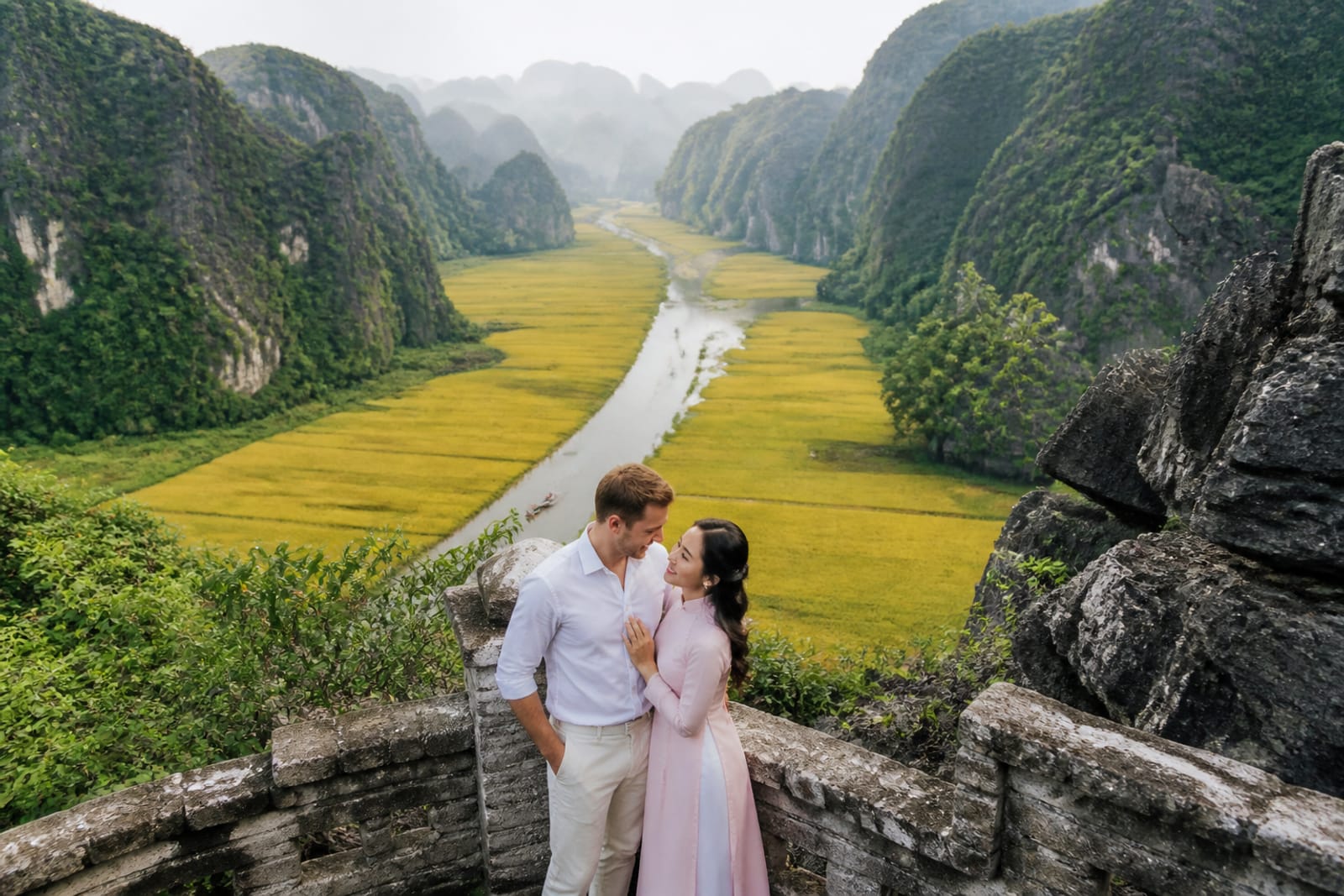
The Hang Mua side trails—limestone pathways leading away from the main viewpoint—catch warm morning light (6:00–8:30 AM) that skims across rice fields and stone formations. Late afternoon (4:00–6:00 PM) illuminates the western cliffs with golden backlight, ideal for silhouette and outline shots. Boat landing zones near Tam Coc village receive softer, diffused light between 9:00 AM and 3:00 PM, especially valuable on hazy days. Away from water, walking paths between paddies offer overhead sun in midday (11:00 AM–1:00 PM) if you position subjects in shadows cast by limestone outcrops. Ground-level rice-field photography—standing in shallow water or on muddy banks—requires overcast mornings or late afternoon to avoid harsh shadows on faces. Test light timing with your local photographer the day before, if possible.
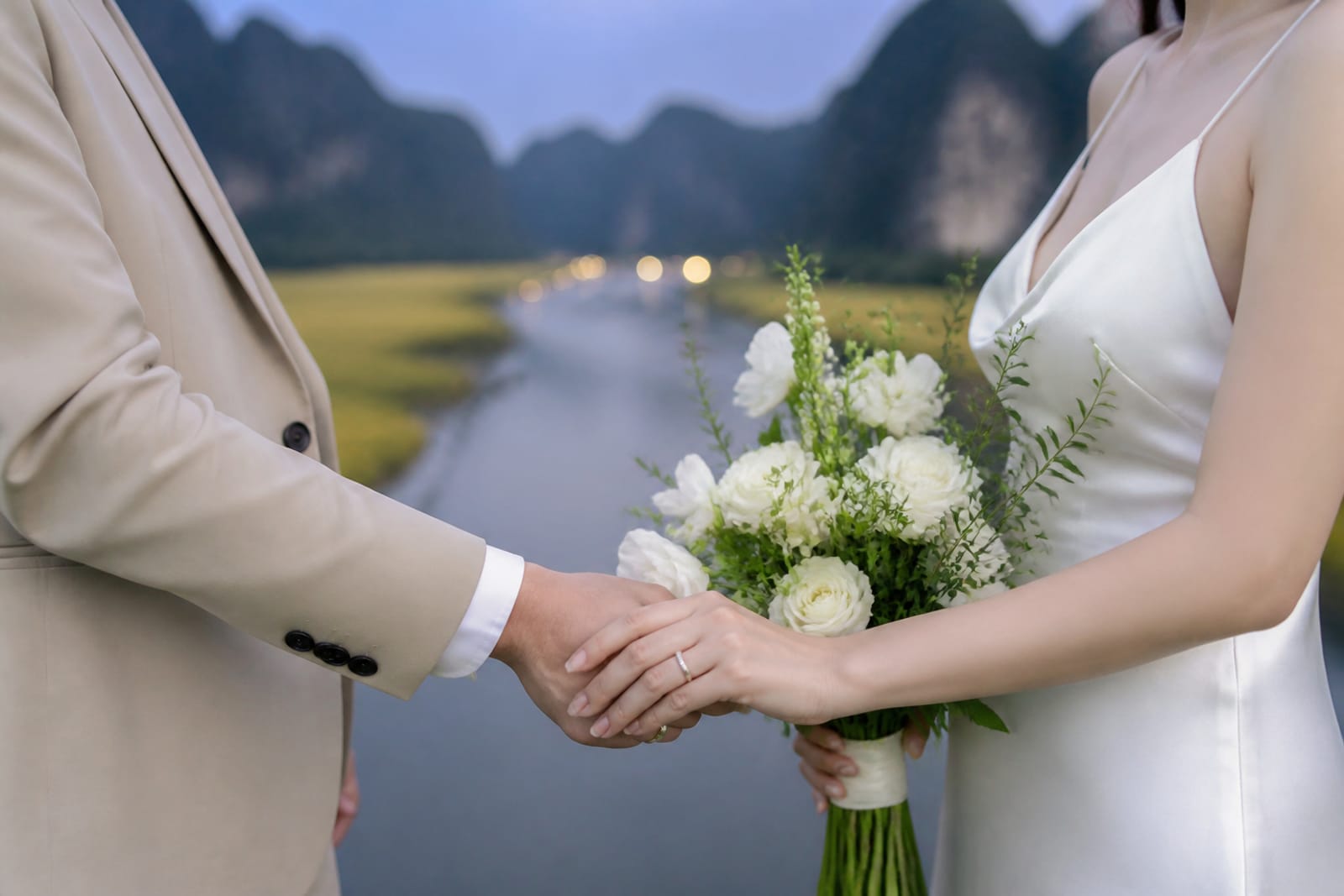
Should you shoot during rice-planting or harvest season?
| Timing | Rice Stage | Light Quality | Outfit Fit | Why It Works |
|---|---|---|---|---|
| Late May–early June | Green shoots, flooded paddies | Soft, water-reflected | Avoid long hemlines; plan footwear for wet ground | Lush color, minimal walking |
| July–August | Full green, thick water | Hazy, humid, storms likely | High hems, waterproof shoes; makeup runs | Dramatic but unpredictable |
| Sep–early Oct | Late-stage green, drying | Clear, warm, golden hour strong | Standard outfits work; easier paths | Best light + lower flood risk |
| Mid-Oct–Nov | Golden-brown harvest | Sharp, warm backlight | Light fabrics, loose sleeves; dust | Dramatic color; paths clearing |
| Dec–Feb | Bare fields, cool grey | Flat, cool-toned; occasional sun | Layers, long sleeves | Minimal greenery; cold wind |
💄 Makeup & hair at your hotel | 🌸 See the lookbook
Rice fields are wettest and muddiest from May through early July; if your ao dai or wedding dress has a long train, plan for temporary hemming or a second practical outfit. Harvest season (October–November) creates dramatic golden backdrops but generates dust that settles on clothes and skin—bring wet wipes and plan extra makeup touch-ups. For couples wearing traditional ao dai, late September to November minimizes water damage and maximizes color saturation in the final images.
How do you arrange local access and permissions?
Tam Coc's rice paddies, boat routes, and temples are managed by local operators and village councils; you cannot simply walk into fields without a guide or photographer who has established relationships. Book a Ninh Binh photographer (search for "Ninh Binh pre-wedding photographer" or "Tam Coc couple photoshoot") at least two weeks in advance and confirm they have permits or arrangements with farmers for field access. Many photographers work with boat operators who control landing zones and know private pathways; this partnership is crucial and cannot be replicated by outsiders.
Temple grounds—such as Hang Mua temple at the viewpoint summit—have opening hours (typically 7:00 AM–6:00 PM) and dress codes (knees and shoulders covered); confirm with your photographer whether they have pre-arranged access for early-morning or sunset sessions. Farmers may charge a small fee (agreed with your guide) if you shoot in active paddies; never assume free access. Check the official Ninh Binh tourism site or contact the local district office if your photographer cannot clarify land-use permissions.
What outfits work on muddy paths and limestone terrain?
Leather-soled wedding shoes slip on wet stone and mud; choose flat sandals, rubber-soled heels, or waterproof hiking boots for any ground-level Tam Coc shoot. If wearing an ao dai, have your photographer or stylist hem or pin the back panel so it doesn't drag through mud; many photographers carry clips and safety pins for field adjustments. Long, flowing Western wedding dresses collect dirt and moisture—if you're set on a traditional gown, ask your photographer if a backup outfit (light pants, blouse, or short dress) makes sense for the field portions.
Limestone dust is abrasive and sticky; wear neutral, washable colors (ivory, cream, soft grey) rather than bold hues that show dirt. Sleeveless or sheer-sleeve outfits expose skin to sun and dust; consider a lightweight shawl or bolero. Bring a spare pair of socks and shoes for before-and-after shots, and plan extra time for outfit changes if you're moving between boat, field, and temple settings. Test all outfits on muddy ground at home if possible; a Hanoi studio like Cáo Studio can advise on outfit logistics for destination shoots, though we do not operate in Ninh Binh.
📸 Book on WhatsApp — pre-wedding shoot
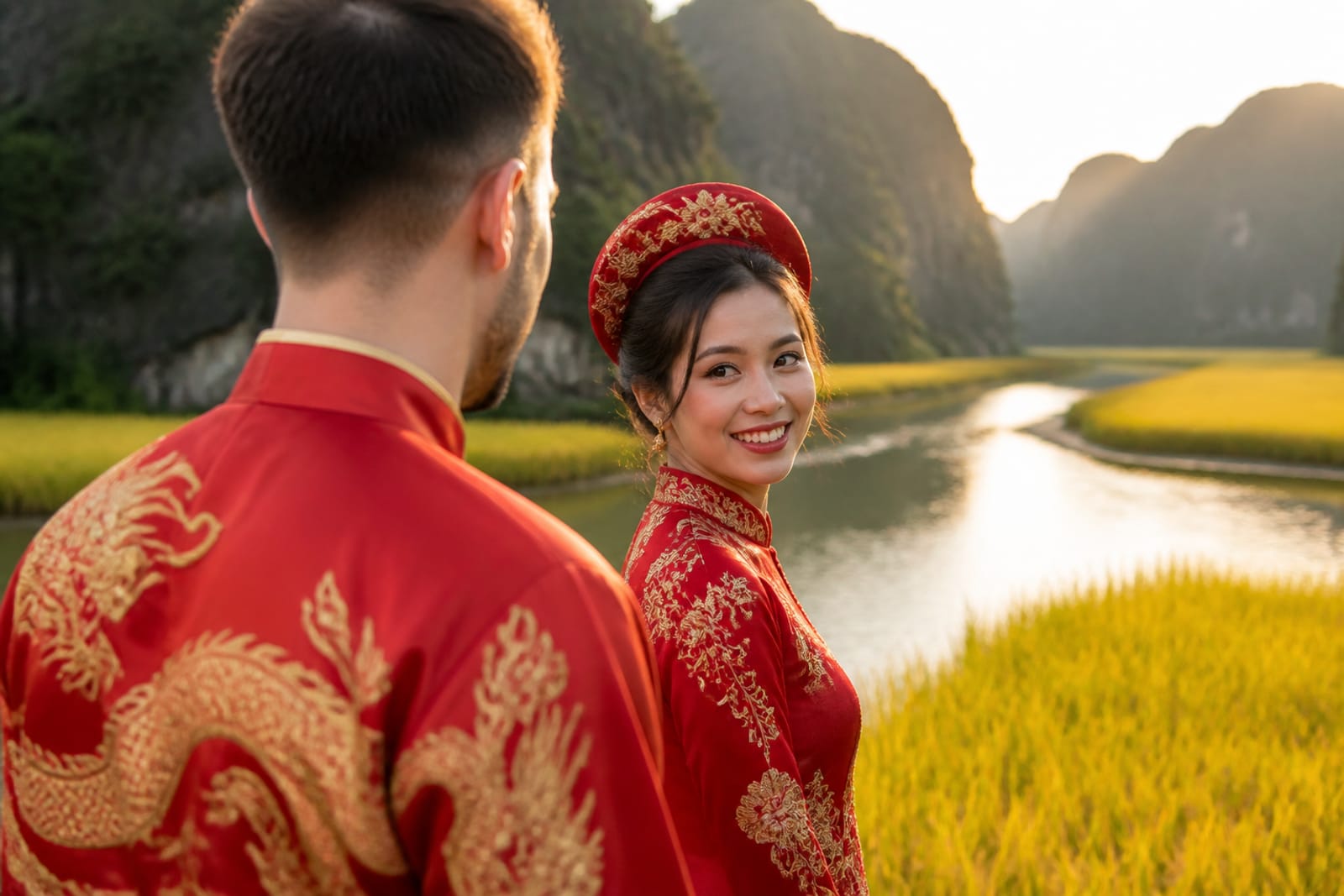
What time of year avoids crowds and storms?
March to May is mild, dry, and sees fewer crowds than Tet (late January–mid February, when many services close). Expect some tourist groups at Hang Mua viewpoint around 10:00 AM–2:00 PM; book your photographer for dawn (6:00–8:30 AM) or late afternoon (4:00–5:30 PM) sessions to avoid these hours. September to early October is warm, clear, and dries out after summer rains; typhoon season (October–November, worst in November) brings afternoon storms, so plan morning shoots and have a contingency date. Avoid June to August—humidity, afternoon downpours, and haze degrade light quality and make makeup and hair retention difficult. December to February is cool and safe but grey and overcast, reducing the golden light that makes limestone glow.
How to vet and book a Ninh Binh photographer for Tam Coc?
Search for Ninh Binh-based photographers on local Instagram accounts, Google Maps reviews, or ask your hotel concierge for referrals. Ask candidates directly: Have you shot at Hang Mua, the village fields, and boat zones? Do you have permissions or relationships with boat operators and farmers? Can you guarantee specific light times (dawn, sunset) and suggest backup dates if weather fails? Request a portfolio showing actual Tam Coc corners (not just promotional shots), and check for sharp focus, natural color, and authentic scenes—not heavily filtered or composited images.
Confirm the photographer's fee structure and whether makeup and hair are included (most Ninh Binh photographers do not offer on-site makeup—ask if they collaborate with local makeup artists or if you need to hire separately). Agree on the shoot duration, number of locations, edited photo count, and delivery timeline in writing (email or WhatsApp). Pay a deposit to secure your date, and clarify cancellation and rescheduling terms. If you're based in Hanoi or Ho Chi Minh City, Cáo Studio can arrange your makeup and styling before you travel to Ninh Binh, and we can consult on outfit choices and timing—contact us on WhatsApp for a pre-destination planning call.
---
What to check before you book
- Photographer experience: Ask for at least five Tam Coc portfolio examples, with dates and seasons.
- Permissions and access: Confirm written agreement that the photographer handles all field, boat, and temple permissions.
- Backup plan: Agree on rescheduling terms if weather cancels the shoot (typical: one free reschedule within 30 days).
- Makeup and hair: Confirm whether the photographer includes or partners with a makeup artist; if not, budget and book separately.
- Outfit advice: Request a pre-shoot consultation (video call or WhatsApp) to vet outfits, shoes, and weather considerations.
- Delivery and files: Confirm the number of edited photos, digital delivery format, and timeline (e.g., 3–4 weeks after shoot).
- Equipment and backup: Ask whether the photographer carries backup cameras and lenses—limestone and water create harsh environments.
---
---
FAQ
Can Cáo Studio – Makeup & Photoshoot shoot my pre-wedding at Tam Coc?
No, we operate in Hanoi, Ho Chi Minh City, and Hoi An only. We can arrange your makeup and styling before you travel, and advise on outfits and timing via WhatsApp. We recommend booking a local Ninh Binh photographer and contacting us for pre-destination planning.
What's the best month to shoot at Tam Coc for natural light?
September to early October offers the clearest skies, warmest golden light, and lowest typhoon risk. March to May is also excellent but cooler. Avoid June–August (haze, storms) and December–February (grey, overcast).
How much do Tam Coc photographers charge?
Fees vary by photographer, duration, and locations; expect costs to depend on travel time from Hanoi, number of outfit changes, and whether makeup is included. Ask for a quote directly from your chosen photographer on WhatsApp or email.
Do I need special shoes for muddy rice fields?
Yes. Waterproof hiking boots or rubber-soled flats are safer than leather heels or bridal shoes. Bring a spare pair for outfit changes, and plan extra time for cleaning between shots.
What happens if it rains on my Tam Coc shoot day?
Most photographers include one free rescheduling date within 30 days for weather cancellation. Confirm this in your booking agreement. Afternoon downpours are common in October–November; book morning sessions to reduce rain risk.
Can I wear a full Western wedding dress in Tam Coc rice fields?
It's risky—long skirts drag through mud and collect water. Consider a practical backup outfit (light pants or short dress) for field shots, and reserve your gown for cleaner temple and boat areas.
FAQ
Can Cáo Studio – Makeup & Photoshoot shoot my pre-wedding at Tam Coc?
No, we operate in Hanoi, Ho Chi Minh City, and Hoi An only. We can arrange your makeup and styling before you travel, and advise on outfits and timing via WhatsApp. We recommend booking a local Ninh Binh photographer and contacting us for pre-destination planning.
What's the best month to shoot at Tam Coc for natural light?
September to early October offers the clearest skies, warmest golden light, and lowest typhoon risk. March to May is also excellent but cooler. Avoid June–August (haze, storms) and December–February (grey, overcast).
How much do Tam Coc photographers charge?
Fees vary by photographer, duration, and locations; expect costs to depend on travel time from Hanoi, number of outfit changes, and whether makeup is included. Ask for a quote directly from your chosen photographer on WhatsApp or email.
Do I need special shoes for muddy rice fields?
Yes. Waterproof hiking boots or rubber-soled flats are safer than leather heels or bridal shoes. Bring a spare pair for outfit changes, and plan extra time for cleaning between shots.
What happens if it rains on my Tam Coc shoot day?
Most photographers include one free rescheduling date within 30 days for weather cancellation. Confirm this in your booking agreement. Afternoon downpours are common in October–November; book morning sessions to reduce rain risk.
Can I wear a full Western wedding dress in Tam Coc rice fields?
It's risky—long skirts drag through mud and collect water. Consider a practical backup outfit (light pants or short dress) for field shots, and reserve your gown for cleaner temple and boat areas.
Ao dai, makeup, hair and a local photographer in Hanoi or Saigon — one WhatsApp message.