/pre-wedding-photoshoot
Hidden photo corners near Tra Su cajuput forest for couples
Tra Su cajuput forest sits in Ca Mau province, southern Vietnam, about three hours south of Ho Chi Minh City. The submerged forest floor, still-water channels and dense tree canopy create diffused, overcast-like light that flatters skin and fabric without harsh shadows—ideal for couple frames in ao dai or formal wear. Best light runs 6:30–7:30 am (before tour groups) and 4:45–5:45 pm (golden hour reflection on water). Cáo Studio does not operate in Ca Mau; you'll either hire a local photographer or book us for a pre-wedding shoot in Saigon and arrange Ca Mau as a self-directed day trip. Season matters: Dec–Apr brings dry water, clear reflections and cooler air; May–Nov floods the reserve and brings afternoon rain. Before booking any photographer, confirm they've shot Tra Su in your chosen season, own a boat license (required to navigate channels) and have insurance. ---
Where exactly should we shoot within Tra Su?
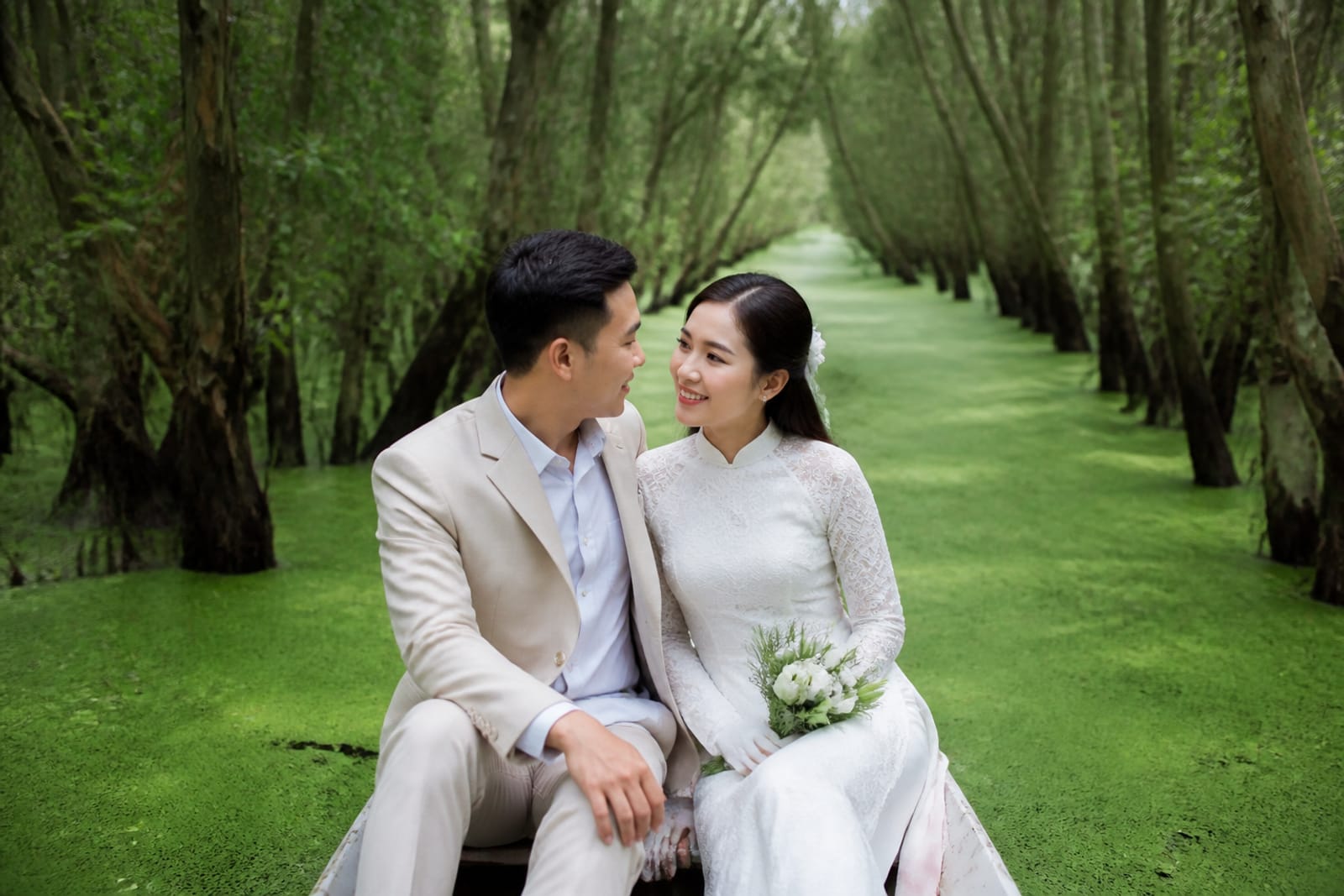
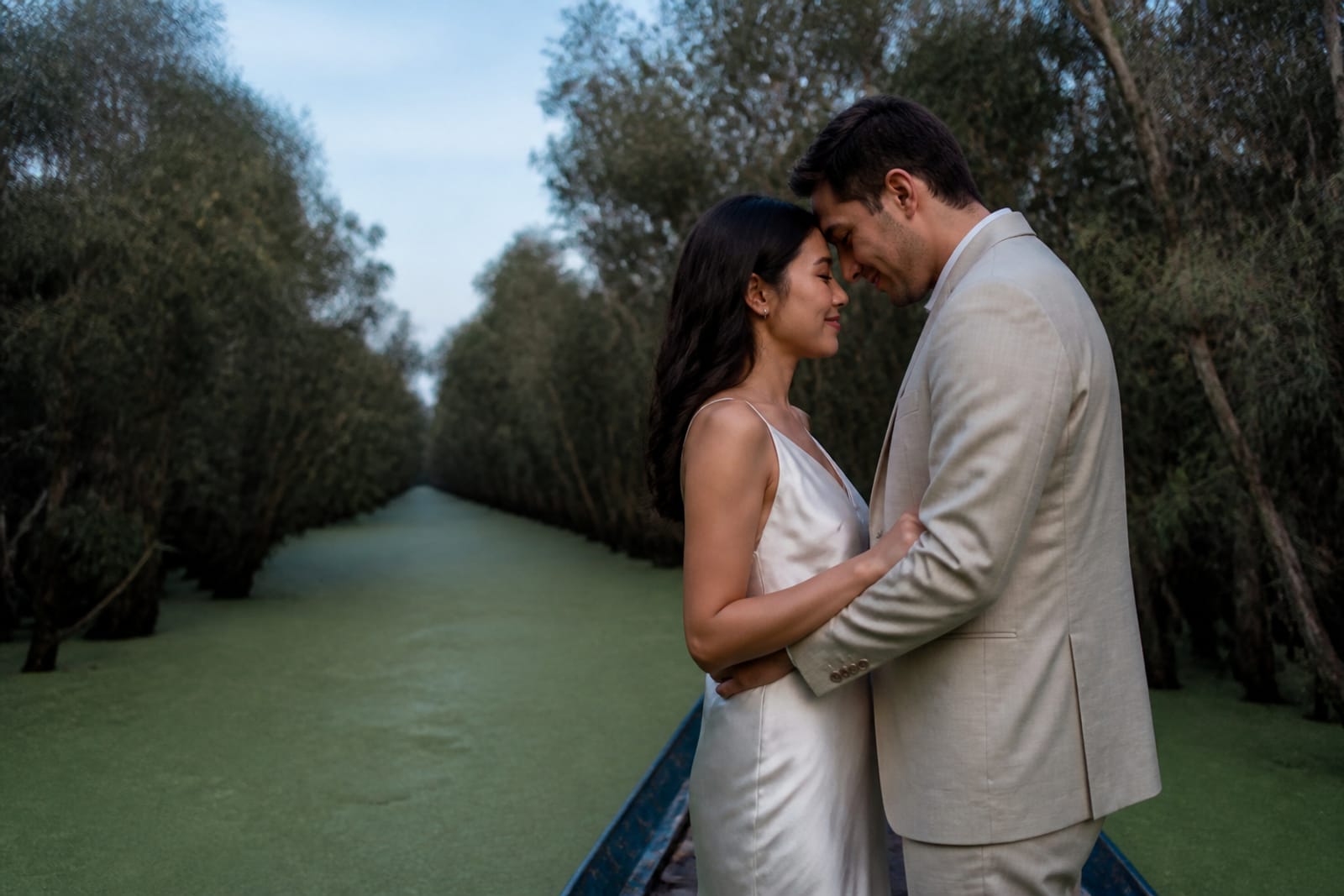
Tra Su spans roughly 2,000 hectares. The main entry is at the visitor center near the canal mouth; most tours follow marked waterways east into the forest. For couple photoshoots, avoid the main boardwalk—it's crowded by 8 am. Instead, ask your boat operator to stop at secondary channels branching north and south: narrow water lanes with overhead canopy create natural framing and isolation. The "back forest" (northwest sector) has shallow, mirror-still water and older, wider-spaced trees—better for full-body movement shots. Sunset frames work best near the forest edge where water meets open sky, catching amber light on wet tree trunks. Always scout with your photographer or boat guide before setting outfits and timing.
What light times actually work for couple frames?
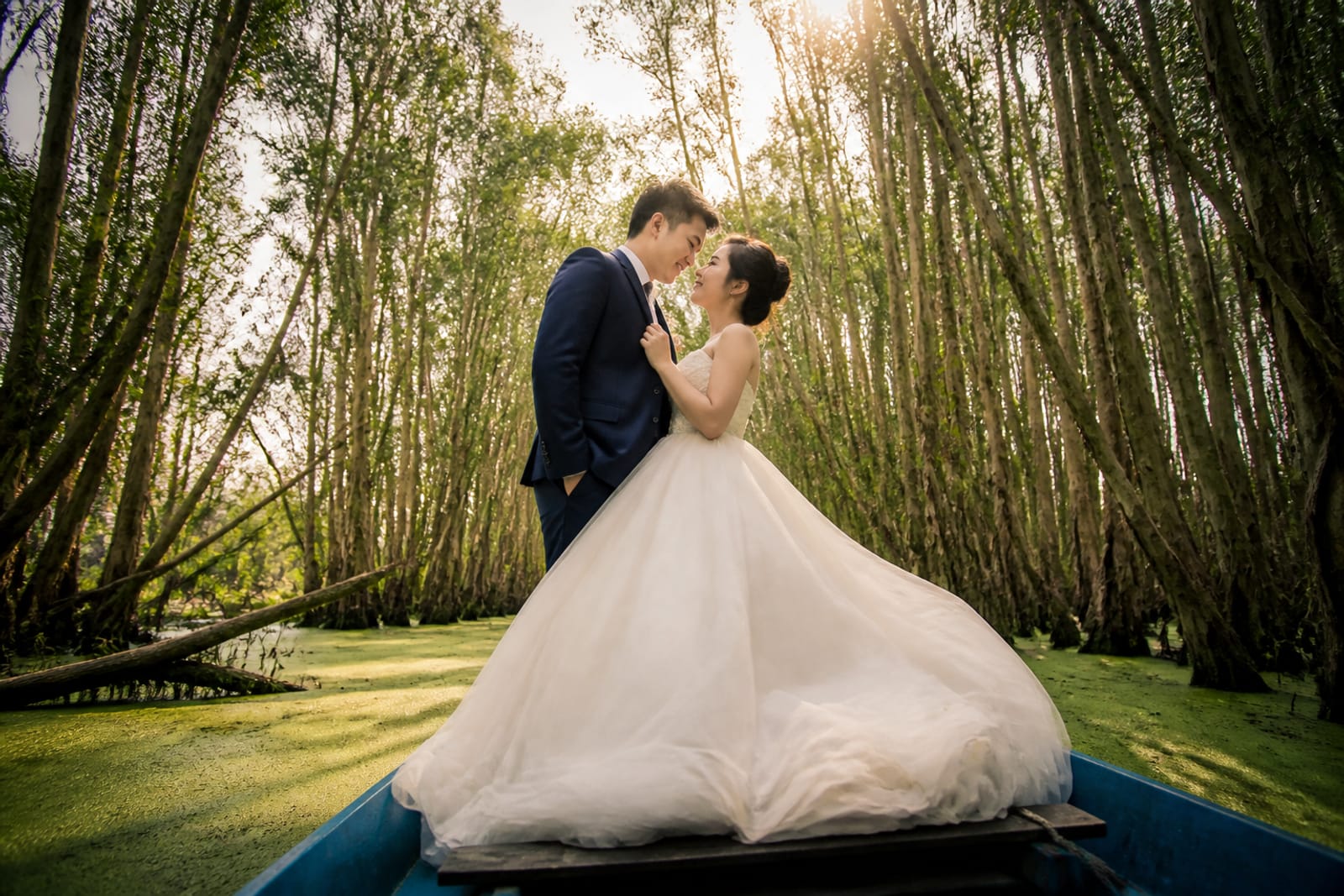
Early morning (6:30–7:30 am) delivers soft, diffused light and empty channels; boat operators confirm they can reach the forest before the first tour group (typically 8 am). The water acts as a giant reflector, lifting shadows under chins and eye sockets—critical for ao dai shots where fabric detail matters. Golden hour (4:45–5:45 pm) flips the mood: amber-toned reflections on water, backlighting on fabric and hair, and long shadows that add drama to walking frames. Midday (10 am–3 pm) flattens color; the overhead canopy scatters light evenly, which reads as "safe" but loses dimension. Avoid overcast mornings after rain—reflections disappear and the water turns grey-green. A photographer familiar with Tra Su will know which hour suits your outfit and mood; if you're self-directing, shoot tests at both windows and compare on your phone before committing to one.
📸 Book on WhatsApp — pre-wedding photoshoot | 🌸 See the lookbook
Dry season vs. wet season—which is better for couple shoots?
| Season | Water level | Light quality | Crowds | Best for | Challenge |
|---|---|---|---|---|---|
| Dec–Apr (dry) | Shallow, reflective | Clear, rich color | Morning only | Ao dai, formal wear, movement | Water may drop below shooting depth mid-season |
| May–Nov (wet) | High, submerged trunks | Hazy, diffused | Fewer tourists | Moody, intimate frames | Afternoon rain, limited visibility, flooded walkways |
Dry season (Dec–Apr) suits couples seeking color and definition: fabric detail pops, reflections are crisp, and the photographer can frame wider without losing the background. Water levels vary within this window—check with local operators in your exact month before booking. Wet season (May–Nov) appeals to couples wanting mist, solitude and a "lost in the forest" mood; the higher water and softer light suit monochrome or muted-tone edits. However, afternoon downpours shut down shoots by 3 pm, and narrow channels become impassable. Base your season choice on outfit (bright ao dai = dry season; muted tones = wet season) and mood (intimate vs. vibrant), not convenience.
Do we hire a local photographer or book a studio team?
Local photographer (self-coordinate): You source a Ca Mau–based photographer through reviews on local Facebook groups or ask your hotel for recommendations. Costs vary (discuss via WhatsApp or direct message); timeline is flexible. Risks: no guarantee of experience with Tra Su's specific light, no backup if the photographer cancels, and no post-shoot team (hair/makeup touch-ups, outfit changes, video editing). Works if you want a low-key morning shoot and don't mind managing logistics.
Studio team (Cáo Studio or similar): Book Cáo Studio for a pre-wedding shoot in Ho Chi Minh City or Hoi An; the studio cannot send a team to Ca Mau, but you can arrange a private day trip and hire a local guide. The studio's team handles makeup & hair at your hotel the day before, providing one consistent aesthetic across your shoot. You get directed framing (the photographer guides you to move, interact, walk—not pose), edited photos in 48 hours, and a short vertical film. Trade-off: higher investment, but one booking covers outfit, hair, makeup and camera.
💄 Makeup & hair at your hotel | See pricing details
What outfit and prep decisions matter most?
Ao dai in jewel tones (deep emerald, burgundy, navy) holds color in Tra Su's diffused light; pastels wash out unless shot in golden hour. If wearing formal Western wear, choose structured fabrics (crepe, silk) that photograph crisply when wet or reflected. Avoid heavy makeup—the humidity and boat spray will smudge; waterproof bases and cream products hold better. Bring a lightweight scarf or shawl for wind and sun protection; it also adds movement to frames (walking shots with fabric trailing work well). Plan two outfit changes if possible: one for morning light (ao dai or dress), one for golden hour (tonal shift or formal contrast). Confirm with your photographer whether they'll shoot both or focus on one; this affects timing and boat scheduling.
Footwear is critical: wear slip-on sandals or water shoes you don't mind wetting—the boat has a metal deck and channels have slippery edges. Have a crew member (partner, family, guide) carry a dry towel and a change of shoes for between-shoot breaks. Wet fabric reads differently on camera (more texture, cling, definition); if you want it dry, change after the morning session.
What to check before you book
- Photographer's Tra Su portfolio: Ask to see frames shot in your target season, in early morning and golden-hour light. If they have none, ask how many times they've worked there and whether they scout beforehand.
- Boat and guide license: Confirm your photographer and/or boat operator hold required permits to navigate Tra Su's protected channels. A licensed boat comes with insurance and better knowledge of safe routes.
- Weather backup: What happens if it rains the morning of your shoot? Can you reschedule same-day to golden hour, or move to a different date? Discuss cancellation policy before paying.
- Outfit drying and storage: Ask whether the photographer/boat operator can store wet clothes and provide a private space to change between shots. Cramped boat cabins without ventilation will ruin makeup and hair.
- Turnaround time: If hiring locally, clarify when you'll receive edited photos and in what format (digital files, prints, video). If booking a studio, confirm inclusions (number of edited images, video length, album or print options) on WhatsApp.
- Transportation from Ho Chi Minh City: Arrange a private car or tour operator in advance. Tra Su is a 3+ hour drive; factor in traffic, fuel cost and driver time. Your photographer may offer transport; ask whether it's bundled or separate.
---
Can we combine Tra Su with other Ca Mau or Mekong Delta locations?
Yes. Tra Su works well as part of a multi-day Delta itinerary. Combine it with dawn floating markets (busiest at 5–6 am, 1+ hour away), mangrove paddling in Nam Can, or salt ponds near U Minh Ha for contrast. Each location has different light and mood; a photographer experienced in the Delta can plan a two-day shoot that moves between locations. However, this requires a full-time local guide and boat, which raises logistics and cost (discuss factors on WhatsApp). If you're booking Cáo Studio for a pre-wedding session, the studio operates in Ho Chi Minh City and Hoi An only; Ca Mau day trips are self-arranged.
📸 Book on WhatsApp — pre-wedding photoshoot
---
How does weather affect the shoot window?
November to December marks the tail end of wet season and the start of dry season; water levels drop rapidly and afternoon rains become sporadic. January to March is peak dry season—clear water, minimal rain, but some channels may be too shallow for boats mid-February onward. April brings rising temperatures and first hints of humidity. May to October is wet season: morning light is reliable, afternoon downpours arrive by 2–3 pm (plan shoots to end by 1 pm), and water levels flood narrow channels, limiting boat movement.
Confirm the water calendar with your boat operator 1–2 weeks before the shoot. In early/mid-dry season, water may drop unexpectedly after a very dry spell, stranding boats. In wet season, rain intensity varies year to year—check the local forecast 3 days out and have a golden-hour pivot ready.
---
Why doesn't Cáo Studio shoot in Tra Su?
Tra Su is a protected nature reserve in Ca Mau province, far from Cáo Studio's bases in Hanoi and Ho Chi Minh City. Transporting a full team (photographer, makeup artist, hair stylist, lighting/grip crew) for a single day shoot is logistically complex and breaks the studio's core offer: one unified team shooting one message in one afternoon, with edits ready in 48 hours. Instead, Cáo Studio runs pre-wedding shoots in Saigon and Hoi An, where the team can operate consistently and deliver on timeline. If you're set on Tra Su, hire a local Ca Mau photographer and book Cáo Studio's makeup & hair service at your hotel in Ho Chi Minh City the day before, ensuring your look is polished before travel.
---
FAQ
What's the best time of day to shoot at Tra Su for couple frames?
Early morning (6:30–7:30 am) offers soft, empty light and reflective water; golden hour (4:45–5:45 pm) adds amber tones and drama. Avoid midday (10 am–3 pm)—light flattens and crowds peak. Afternoon rain (May–Oct) can cancel evening shoots, so confirm weather 3 days ahead.
Do we need a special permit to shoot couple photos at Tra Su?
No permit for photography, but your boat operator and photographer must hold a license to navigate protected channels. Always confirm this before booking. The reserve charges entry tickets—check current prices on the official Tra Su website.
Can we shoot in ao dai at Tra Su, and will it stay dry?
Yes, ao dai is ideal—jewel tones hold color in diffused light. Expect the hem and feet to get wet from boat spray and shallow channels. Wear water shoes, bring a towel, and plan to dry and change between morning and golden-hour sessions.
How far is Tra Su from Ho Chi Minh City, and how should we get there?
Roughly 3 hours south by car. Arrange a private car or tour operator in advance; your photographer may offer transport. Factor in 6+ hours total for drive, shoot, and return. Public buses run to Ca Mau city, but hiring a private driver is safer for a photo timeline.
If we book Cáo Studio, can the team travel to Tra Su for the shoot?
No. Cáo Studio operates in Ho Chi Minh City and Hoi An only. You can book makeup & hair in Saigon the day before, then arrange a Tra Su day trip independently. Alternatively, book a pre-wedding shoot closer to the city and hire a local Ca Mau photographer for Tra Su as a separate session.
What happens if it rains on the morning of our Tra Su shoot?
Discuss a rain backup (same-day golden hour, or rescheduled date) with your photographer before booking. Local photographers know Tra Su's microclimate and can often pivot to a different channel or time. Confirm cancellation and rescheduling terms in writing.
FAQ
What's the best time of day to shoot at Tra Su for couple frames?
Early morning (6:30–7:30 am) offers soft, empty light and reflective water; golden hour (4:45–5:45 pm) adds amber tones and drama. Avoid midday (10 am–3 pm)—light flattens and crowds peak. Afternoon rain (May–Oct) can cancel evening shoots, so confirm weather 3 days ahead.
Do we need a special permit to shoot couple photos at Tra Su?
No permit for photography, but your boat operator and photographer must hold a license to navigate protected channels. Always confirm this before booking. The reserve charges entry tickets—check current prices on the official Tra Su website.
Can we shoot in ao dai at Tra Su, and will it stay dry?
Yes, ao dai is ideal—jewel tones hold color in diffused light. Expect the hem and feet to get wet from boat spray and shallow channels. Wear water shoes, bring a towel, and plan to dry and change between morning and golden-hour sessions.
How far is Tra Su from Ho Chi Minh City, and how should we get there?
Roughly 3 hours south by car. Arrange a private car or tour operator in advance; your photographer may offer transport. Factor in 6+ hours total for drive, shoot, and return. Public buses run to Ca Mau city, but hiring a private driver is safer for a photo timeline.
If we book Cáo Studio, can the team travel to Tra Su for the shoot?
No. Cáo Studio operates in [Ho Chi Minh City](/saigon) and [Hoi An](/hoi-an) only. You can book [makeup & hair](/makeup-and-hair) in Saigon the day before, then arrange a Tra Su day trip independently. Alternatively, book a [pre-wedding shoot](/pre-wedding-photoshoot) closer to the city and hire a local Ca Mau photographer for Tra Su as a separate session.
What happens if it rains on the morning of our Tra Su shoot?
Discuss a rain backup (same-day golden hour, or rescheduled date) with your photographer before booking. Local photographers know Tra Su's microclimate and can often pivot to a different channel or time. Confirm cancellation and rescheduling terms in writing.
Ao dai, makeup, hair and a local photographer in Hanoi or Saigon — one WhatsApp message.