/pre-wedding-photoshoot
Hidden photo corners near Trang An for couples
Trang An offers three hidden zones: the Ta Cung cave approach (soft morning side-light, 6–7 am, before boats launch), the Hang Múa ridge base (late-afternoon golden hour on the north face, 4–5 pm, fewer climbers), and the Mua village paths inland (overcast days suit diffused light, constant shade—no harsh shadows). Each requires a local boat operator and photographer familiar with the terrain; Cáo Studio doesn't operate in Ninh Binh, but shoots pre-wedding sessions in Hanoi and can advise on timing and outfit choices for Trang An's limestone maze. Plan 3–4 hours; wear grip-sole shoes and neutral layers (limestone reflects heat). Avoid Tet (late Jan–Feb) and rainy season (Jun–Aug).
Trang An's beauty lies in its hidden corners—not the crowded boat queues. Couples seeking frames that feel untouched need to know where light falls at which hour, which paths stay quiet, and how to partner with a photographer who knows the site's daily rhythm.
Cáo Studio doesn't operate in Ninh Binh, but our Hanoi team regularly advises travelers on light, season, and outfit strategy for shoots elsewhere. Below, we map the spots, timing, and decision framework for a Trang An couple photoshoot—then show how to find and vet a local photographer.
Which corner suits your light and timeline?
Trang An has three distinct zones, each with different light behavior and accessibility:
| Zone | Best Time | Light Quality | Walking Effort | Why It Works |
|---|---|---|---|---|
| Ta Cung cave mouth + dock approach | 6–7 am | Soft side-light, no glare, golden hour brief | Flat paths, 10–15 min walk | Morning mist clears; few boats; reflections on water |
| Hang Múa ridge base (north-facing cliff) | 4–5 pm | Golden raking light on stone, no harsh shadows | Moderate; 20–30 min from car | Afternoon light sculpts the limestone; crowds thin by 4 pm |
| Mua village inland paths (rice paddies, stone gates) | Overcast all day, or early morning after clouds lift | Even, diffused light; no hot spots on skin | Gentle; 15–20 min walk | Eliminates squinting; stone structures read clearly; fewer tourists |
Hang Múa's viewpoint itself has about 500 stone steps—unsuitable for photoshoots in formal wear. The base of the ridge, where the limestone face rises behind paddy fields, offers the light without the climb.
📸 See how we direct light in Hanoi | 💄 Hair & makeup for any venue
Why Ta Cung works better than the main dock?
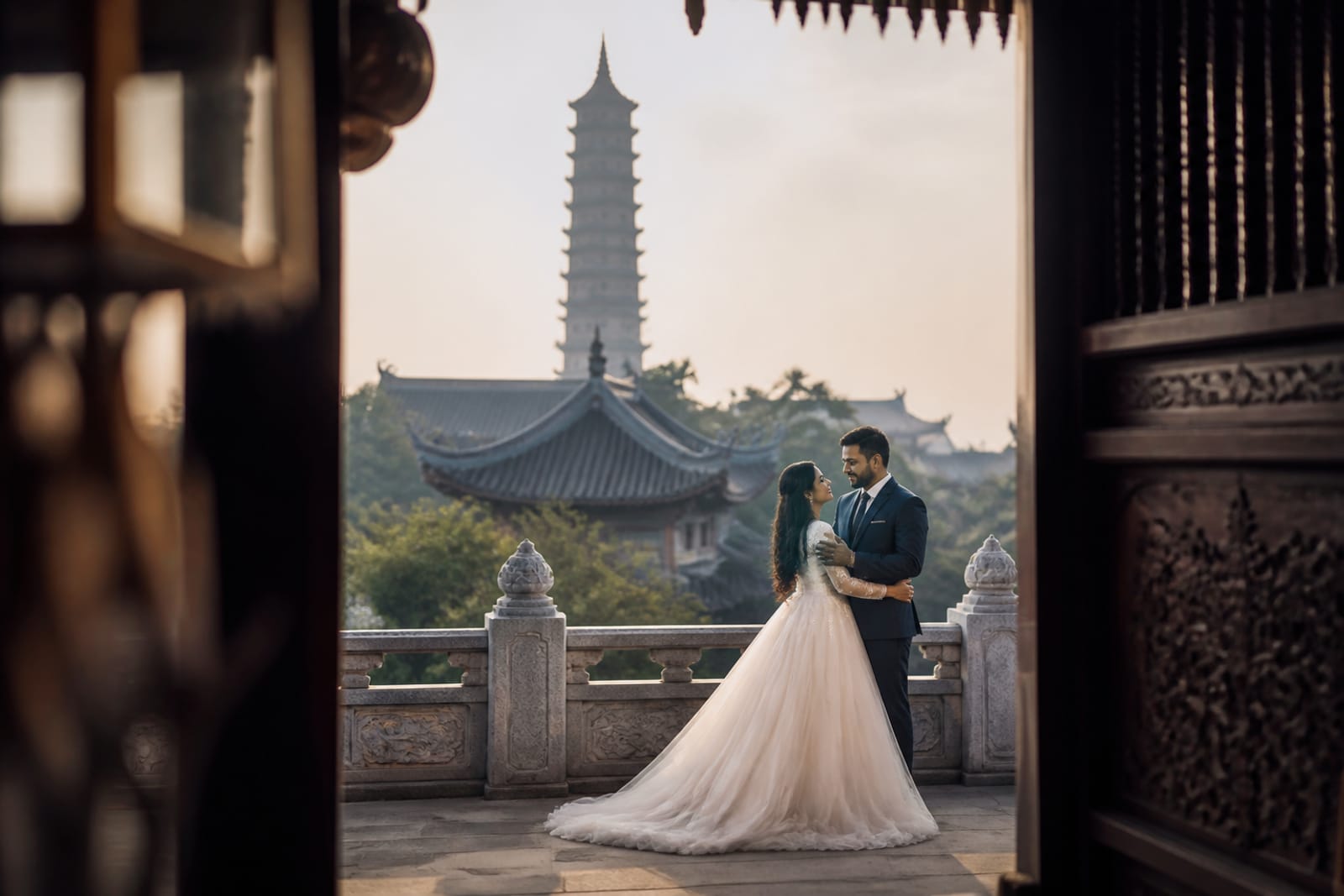
The boat queues at Trang An's main entrance form by 7 am, and early light—the golden 30 minutes after sunrise—is already diffuse by the time photographers clear the throng. Ta Cung (the "south cave") is reachable by a side path; boats still launch, but foot traffic stays minimal until 8 am. Morning mist lingers on the water, and limestone cliffs throw soft shadows across the paddies. The light is horizontal, flattering, and unchanged for 45 minutes—enough time for outfit changes or repositioning. Avoid 9 am onward; sun climbs vertical and washes out skin tone. Pack a robe or cardigan; 6–7 am riverside air is cool, and wet stone reflects wind.
How does afternoon light on Hang Múa's base differ?
Late afternoon (4–5 pm) sun approaches from the west and grazes the north-facing limestone cliff at a shallow angle. This raking light sculpts every crevice and creates depth without harsh shadows on faces. The cliff acts as a reflector, bouncing warm light back onto subjects. Rice fields on the approach turn golden-green, and the angle of light into paddies creates separation—your figures stand out from the landscape. However, this window closes by 5:30 pm; the sun drops behind the ridge, and light becomes orange and directional. Couples must be in position by 4 pm. Wear earth tones or jewel tones that hold color in warm light; pale colors may overexpose.
What outfit and season choices prevent regret?
Trang An limestone is porous and unforgiving: loose hems catch on jagged edges, thin soles slip on wet stone. Wear slip-on shoes with grip (not heels—they're unsafe and leave marks that spoil frames). Long skirts work only if they're structured; flowing fabric tangles. Ao dai photoshoots suit Trang An's grandeur, but the hem must be hemmed short enough to clear ankles when walking, and the photographer must have tripod and rig time—a logistical cost factor.
Season matters immensely:
- Feb–May (dry, cool): best light; clouds are occasional, not daily. Outfit show-throughs risk is minimal (humidity below 70 %). Ideal.
- Sep–Nov (dry again, but erratic): October is peak rainy season; floods affect boat access—confirm with local guides before booking.
- Jun–Aug: hot, afternoon thunderstorms, midday light is harsh. Overcast days work, but unpredictable.
- Dec–Jan: cool mornings, grey skies; light is soft but flat—requires a skilled photographer to add depth.
- Tet (late Jan–mid Feb): many services close; paths are crowded.
How to find and vet a local photographer for Trang An?
Cáo Studio doesn't shoot in Ninh Binh, so you'll need to source a local photographer. Here's a practical vetting framework:
1. Ask the boat operator. Every Trang An boat operator knows photographers who've shot their passengers. Ask which photographer knows Ta Cung and Hang Múa base—not just the main dock. Request a name, then ask the photographer for work shot at those specific spots in Feb–May and Sep–Nov (those seasons have the best light; verify the photographer has experience with your actual season).
2. Check portfolio light. Look for images where faces are evenly lit (no squinting, no harsh shadows under eyes), and where limestone shows texture and color—not blown-out white. This tells you the photographer understands reflection and angle.
3. Confirm outfit preparation. Ask: "Do you provide a robe for between-outfit waits?" "Do you know which paths are safest for ao dai?" "How many outfit changes fit in your session?" A photographer unfamiliar with Trang An's terrain often undershoots or overshoots time, delaying edits.
4. Agree on timing and light hour in writing. Specify: "Ta Cung, 6:15–7:30 am, 25 frames, then village path 4–5 pm, 35 frames." Vague bookings ("morning and afternoon") lead to missed light.
5. Ask about edits and delivery. Establish: how many edited frames, file format, delivery time (typically 2–3 weeks in Vietnam, not 48 hours). Budget more time than a Cáo Studio pre-wedding shoot, which delivers in 48 hours.
6. Verify transport and boat costs. A Ninh Binh photographer may not include boat fees or transport from your hotel—ask what's included so you can plan total cost factors (time, distance, outfits, permits, boat operators).
Comparing: local Trang An photographer vs. Hanoi-based team?
| Factor | Local Ninh Binh Photographer | Hanoi-based (Cáo Studio) |
|---|---|---|
| Light knowledge of Trang An | Deep (daily site familiarity) | Researched, but not daily |
| Hair, makeup, outfit coordination | You arrange separately | One team (hair, makeup, styling, photographer) |
| Turnaround time | 2–4 weeks typical | 48 hours (if in Hanoi; Trang An requires travel) |
| Cost factors | Site-specific (local rates lower; boat/transport bundled) | Travel to Ninh Binh adds logistics; Hanoi session cheaper |
| Styling risk | You oversee all choices | Professional wardrobe and hair direction included |
If you're already in Hanoi or planning a Hanoi shoot, Cáo Studio's pre-wedding team can advise on Trang An timing and outfit strategy—then shoot you in Hanoi with full coordination. If you're only visiting Ninh Binh, a local photographer is practical; you'll sacrifice the one-team guarantee but gain site familiarity.
🌸 See our couple shoots in Hanoi | 💄 Book makeup & hair with your photoshoot
What to check before you book a Trang An photographer?
- Portfolio light, not just composition. Does skin look natural? Does limestone show detail? Bad light = bad frames, no matter the pose.
- Specific location knowledge. Ask: "Which paths are safest for the outfit we'll wear?" A photographer unfamiliar with Trang An terrain can't protect your dress or edit timeline.
- Outfit changes logistics. How many changes fit in the session? Where do you change? Is there a robe or shelter? This avoids rushed, cold transitions.
- Written agreement on timing and light hour. "6:15 am Ta Cung" beats "early morning." Written specificity prevents mismatched expectations.
- Edits and files. How many edited frames? When do you receive them? File format (JPEG, RAW, video)? Delivery time is a cost factor—longer waits may be acceptable if the photographer includes a short film or album.
- Cancellation policy. What if weather closes boats or Tet dates conflict? Confirm refund or reschedule terms.
- Permits or restrictions. Some zones require local permissions; ask the photographer to confirm access before the session day.
Why outfit and shoe choice matters as much as light?
Trang An limestone is sharp and unforgiving. Thin soles slip on wet stone (boats spray mist onto paths); loose hems catch and tear. A photographer who doesn't account for terrain often causes damage during the shoot—then rushes edits to compensate. Plan:
- Shoes: slip-on with grip (water shoes, sneakers with thick soles, or leather-soled loafers). Test them on wet stone beforehand.
- Hems: ao dai must be hemmed to clear ankles when walking; skirts should be structured or slightly cropped (knee-length or shorter). Flowing maxi skirts tangle on uneven paths.
- Layers: 6 am is cool (60–65°F); bring a robe or cardigan to wear between outfit changes. Wet stone reflects cold.
- Color: earth tones, jewel tones, or pastels. Avoid pure white (overexposes in morning light) and very dark colors (disappear into shadow on stone).
Cáo Studio's makeup & hair service can be booked in your Hanoi hotel before travel; a professional makeup artist knows how to set color so edits match across different light conditions—worth considering if you're planning a Hanoi shoot as well.
📸 Book a Hanoi pre-wedding shoot | 💄 Hotel hair & makeup coordination | 🌸 See our lookbook
---
FAQ
Does Cáo Studio shoot photoshoots at Trang An?
No. Cáo Studio operates in Hanoi, Ho Chi Minh City, and Hoi An. We advise travelers on light and season for Trang An, but you'll need a local Ninh Binh photographer. We're happy to discuss outfit and light strategy on WhatsApp.
What's the best month for a Trang An couple photoshoot?
Feb–May is ideal: dry, cool mornings, soft light, few clouds. Sep–Nov is dry again but erratic; Oct sees peak rain. Jun–Aug is hot, with afternoon storms. Avoid Tet (late Jan–mid Feb) when services close and crowds peak.
Can I wear an ao dai at Trang An?
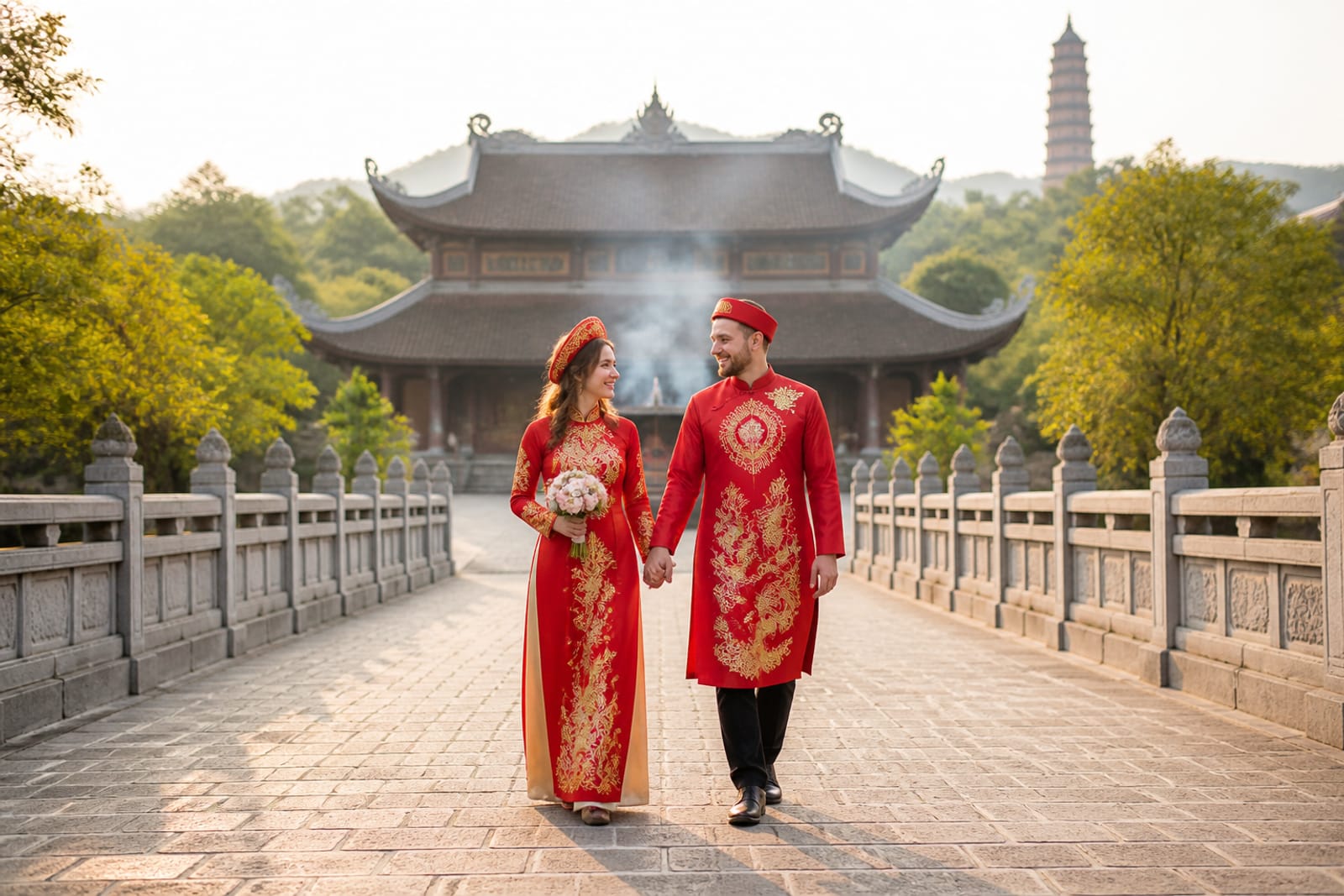
Yes, if hemmed short enough to clear ankles. Limestone is sharp and catches loose fabric. Work with a local photographer familiar with ao dai terrain; ask them to confirm paths are safe for the hem length before the session day.
How many hours should I book for a Trang An photoshoot?
Plan 3–4 hours if shooting Ta Cung (6–7 am) and Hang Múa base (4–5 pm). Light hours are brief; the photographer needs buffer time for outfit changes and travel between zones. Ask the photographer what time to arrive and confirm boat availability.
Should I book a local photographer or travel photographer for Trang An?
A local Ninh Binh photographer has daily site knowledge and lower rates; turnaround is 2–4 weeks. A Hanoi-based team (like Cáo Studio) offers faster edits and full styling but requires travel logistics. Choose based on priority: speed and style coordination (Hanoi), or local familiarity and cost (Ninh Binh).
What outfit colors work best in Trang An's limestone landscape?
Earth tones (olive, rust, gold), jewel tones (emerald, sapphire, burgundy), and soft pastels (blush, sage). Avoid pure white (overexposes in morning light) and very dark colors (merge with shadows on stone). Test your outfit's color against photos shot in Feb–May light before committing.
FAQ
Does Cáo Studio shoot photoshoots at Trang An?
No. Cáo Studio operates in [Hanoi](/hanoi), [Ho Chi Minh City](/saigon), and [Hoi An](/hoi-an). We advise travelers on light and season for Trang An, but you'll need a local Ninh Binh photographer. We're happy to discuss outfit and light strategy on WhatsApp.
What's the best month for a Trang An couple photoshoot?
Feb–May is ideal: dry, cool mornings, soft light, few clouds. Sep–Nov is dry again but erratic; Oct sees peak rain. Jun–Aug is hot, with afternoon storms. Avoid Tet (late Jan–mid Feb) when services close and crowds peak.
Can I wear an ao dai at Trang An?
Yes, if hemmed short enough to clear ankles. Limestone is sharp and catches loose fabric. Work with a local photographer familiar with ao dai terrain; ask them to confirm paths are safe for the hem length before the session day.
How many hours should I book for a Trang An photoshoot?
Plan 3–4 hours if shooting Ta Cung (6–7 am) and Hang Múa base (4–5 pm). Light hours are brief; the photographer needs buffer time for outfit changes and travel between zones. Ask the photographer what time to arrive and confirm boat availability.
Should I book a local photographer or travel photographer for Trang An?
A local Ninh Binh photographer has daily site knowledge and lower rates; turnaround is 2–4 weeks. A Hanoi-based team (like Cáo Studio) offers faster edits and full styling but requires travel logistics. Choose based on priority: speed and style coordination (Hanoi), or local familiarity and cost (Ninh Binh).
What outfit colors work best in Trang An's limestone landscape?
Earth tones (olive, rust, gold), jewel tones (emerald, sapphire, burgundy), and soft pastels (blush, sage). Avoid pure white (overexposes in morning light) and very dark colors (merge with shadows on stone). Test your outfit's color against photos shot in Feb–May light before committing.
Ao dai, makeup, hair and a local photographer in Hanoi or Saigon — one WhatsApp message.