/pre-wedding-photoshoot
Hidden Photo Corners Near Tú Độc Tomb for Couples
Tú Độc Tomb (Hue's most visited royal site) hides several photo-worthy corners beyond the main courtyard: a lotus pond on the eastern side catches soft morning light; a narrow pavilion-flanked walkway north of the central altar suits backlit couple shots; and shaded garden alcoves work well during midday heat. Sessions run 1–2 hours; entry tickets are required—check the current price on the official site. The tomb restricts tripods and professional equipment at the gate, so confirm your photographer's setup in advance. Best light: February to April (cool, clear). Avoid October–November (heavy rain, flooding). Cáo Studio – Makeup & Photoshoot operates pre-wedding and couple shoots in Hanoi and Hoi An; Hue is outside our service area, so you'll need a local Hue photographer. Plan with a guide who knows site restrictions. ---
Where are the best-kept photo corners at Tú Độc Tomb?
The lotus pond (east side, near the outer wall) sits in a natural alcove framed by old stonework and water reflections—ideal for soft, ambient light in early morning. A colonnade walkway north of the main altar, shadowed by stone archways, suits backlit silhouettes and intimate close-ups. Behind the central mausoleum lies a narrow garden with carved stone benches and flowering shrubs; it's quiet because most visitors stay in the main courtyard. The western pavilion, often empty mid-morning, offers arched framing and a view back toward the altar. Each corner demands different lens angles and timing; scouting with your photographer before the shoot saves hours on the day.
What season and time of day gives the cleanest light?
February to April is Hue's sweet spot: cool (15–23°C), low humidity, clear skies—golden hour works without haze. May–August brings intense midday heat (35°C+); avoid noon, use deep shade or shoot after 5 p.m. September–December is the region's heavy rain and typhoon season (worst October–November); sudden downpours flood low-lying paths and ruin light predictability. Sunrise (6–7 a.m.) lights the eastern pond and walkway; late afternoon (4–6 p.m.) backlights the western pavilion. Midday (11 a.m.–2 p.m.) works only in tree-shadowed alcoves. Book your session between February and April, and target morning or late-afternoon windows to avoid harsh overhead sun.
📸 Book on WhatsApp — pre-wedding photoshoot | 💄 Makeup & hair at your hotel
How do ao dai and Western wedding dress fit into tight tomb spaces?
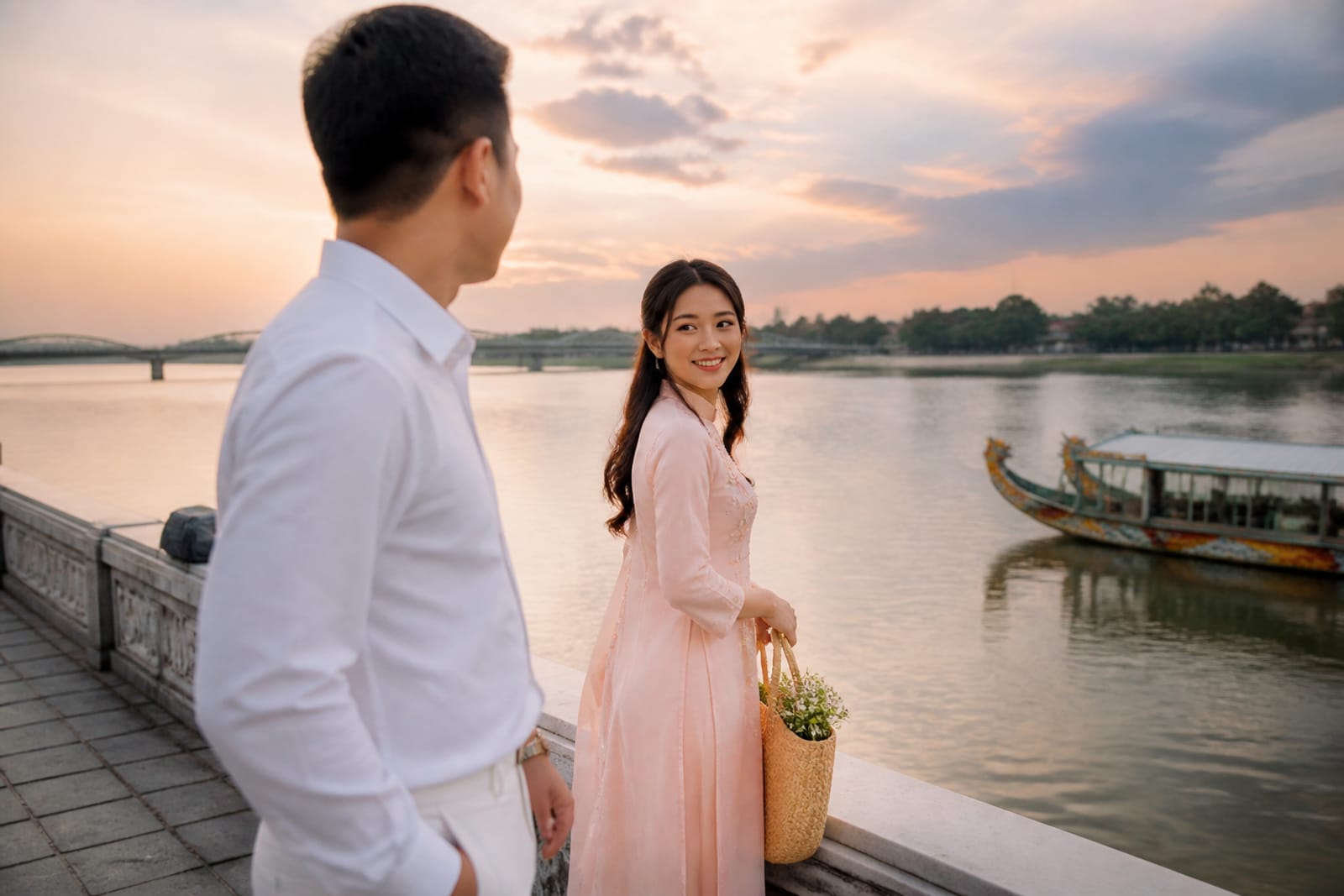
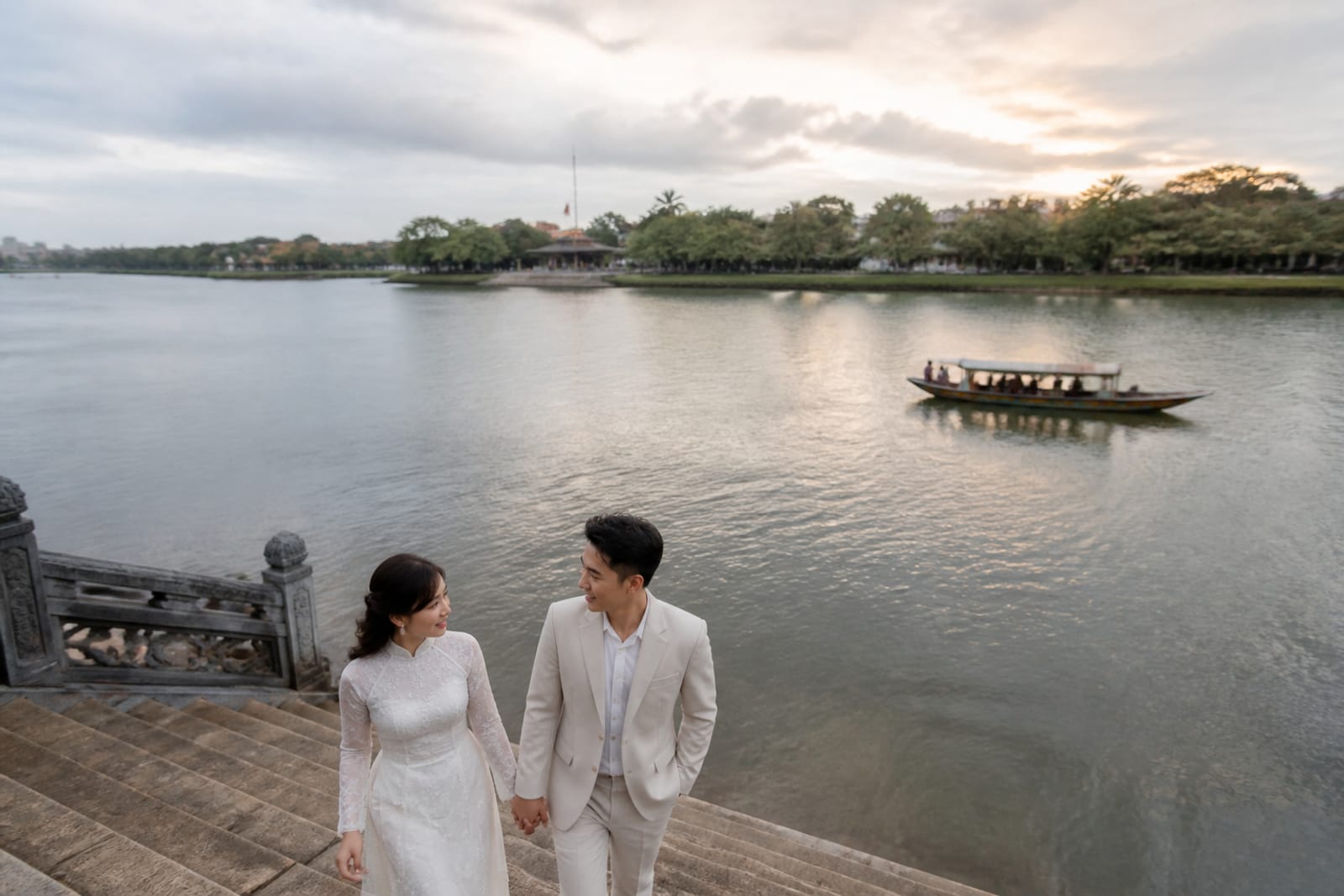
Ao dài (traditional fitted tunic) moves fluidly through narrow pavilions and stone staircases; its flowing silk trains photograph beautifully against weathered walls without snagging. Western ball gowns or mermaid dresses catch on archway edges and require careful positioning—they photograph well in open courtyard areas but turn into logistics nightmares in tight alcoves or beside water. Mix-and-match (ao dài for intricate corners, wedding dress for the main altar backdrop) lets you maximize both outfits. Heavy fabrics (satin, brocade) show dust and splash easily near the lotus pond; lightweight silk or linen suits the garden's damp air. Plan outfit changes at a nearby hotel or guide's office; carrying full skirts through gravel and stone steps is impractical. Confirm footwear grip on wet stone surfaces, especially after rain.
| Outfit Type | Best Tomb Location | Light Window | Why It Works | Challenges |
|---|---|---|---|---|
| Ao dài (silk) | Pavilion walkway, garden alcoves | Early morning, late afternoon | Drapes elegantly in stone frames; no snagging on tight stairs | Requires steam press on humid days |
| Western gown (mermaid) | Main courtyard, eastern pond edge | Late afternoon, backlit | Clean silhouette against water and altar backdrop | Hem catches on gravel; difficult in narrow passages |
| Mix (ao dài + gown) | Alcove for ao dài, courtyard for gown | Two sessions, 2–3 hours total | Maximizes both garments' strengths | Requires outfit change, extra time, accessible space |
| Casual couple (linen, simple dress) | Shaded garden, colonnade | Midday shade, diffused light | Comfortable, moves freely; suits natural, candid shots | Less formal; reads differently in final gallery |
Who should you book: local Hue photographer or traveling team?
Local Hue photographer knows site restrictions (tripod bans, permit requirements), speaks to guards, scouts seasons and weather patterns, and charges less. Search for "many photographers Huế" or ask your hotel—vet portfolios for tomb experience, check if they've worked the specific alcoves you want, and confirm their equipment passes the gate. Turnaround is quick (files in 1–2 weeks); communication may need translation apps. Traveling pre-wedding team (e.g., from Hanoi or Ho Chi Minh City) brings consistent studio-quality editing, professional makeup and styling, and a familiar workflow—but requires air travel, accommodation and higher fees. They're ideal if you want unified aesthetic across multiple Vietnam locations (Hoi An, Ha Long, Hanoi). Hoi An-based team (like Cáo Studio – Makeup & Photoshoot, which shoots in Hoi An and travels by appointment) can reach Hue but costs more than local hire. Ask on WhatsApp for Hue availability and compare logistics: time on-site, editing timeline, revision rounds and file delivery format.
🌸 See the lookbook | 📍 Cáo Studio Hoi An
What should you check before booking a Hue photographer?
1. Tripod and equipment clearance. Confirm with the photographer that their gear (tripods, reflectors, stabilizers) meets the tomb's restrictions. Some visitors are turned away at the gate because gear is flagged as "professional." Call the tomb ticket office directly to ask current rules.
2. Permit and guide requirements. A few sacred inner areas require a permit or special guide; clarify whether your photographer can access them and whether you need to hire a tomb guide separately (this adds to cost and logistics).
3. Season and weather backup. If you're shooting Sep–Dec, ask the photographer for a rain contingency plan. Do they have indoor studio space? Will they reschedule for free if flooding closes paths?
4. File delivery and editing turnaround. Confirm how many edited images you receive, when they're ready, and whether you get raw files or only JPEGs. A reputable photographer delivers within 2–3 weeks.
5. Outfit changes and space. Ask if there's a private room or nearby location to change between outfits. Carrying luggage through the tomb is awkward; some photographers partner with local hotels that offer changing facilities.
6. Makeup and hair. If you're coming from another city, can the photographer recommend or arrange makeup and hair? Cáo Studio's hotel makeup and hair service operates in Hanoi and Ho Chi Minh City—Hue is outside our area, so a local stylist is your best option.
---
Honest limitations and what to avoid
Rain unpredictability. October–November sees flash floods that close sections of the tomb without warning. Don't lock in a shoot date in this window unless you have flexible rescheduling written in your contract.
Crowds and photo bombers. The main courtyard can have 50–100 visitors at peak hours (9–11 a.m., 2–4 p.m.). Hiring a guide or visiting very early (6–7 a.m., before ticket office opens officially) helps; ask your photographer about timing strategies.
Stone surface grip. The walkways are aged stone, slippery when damp or algae-covered. Wear footwear with real traction; silk-soled heels will skid. This limits the angle options for certain shots.
Editing expectations. Many local Hue photographers offer natural, minimal editing. If you want highly retouched skin or fantasy color grading, confirm this in your consultation—what you see in their portfolio is what you'll receive.
File ownership. Some photographers retain copyright and license images for editorial use. If you want exclusive rights or permission to repost commercially, agree this in writing beforehand.
---
Next steps: Planning your Tú Độc Tomb shoot
- Decide your timeline. Book February–April for the best light and weather stability.
- Scout a local photographer or traveling team. Request a 15-minute consultation call; ask about their tomb experience and equipment clearance.
- Confirm outfit fit and logistics. Decide on ao dài, wedding dress or both; arrange makeup and hair locally or with a traveling team if you're flying in.
- Reserve the tomb entry ticket and any guide or permit. Do this 1–2 weeks in advance if you're visiting during peak season.
- Plan a backup date. If shooting Sep–Dec, agree on a reschedule clause with your photographer.
If you're organizing a pre-wedding shoot across multiple Vietnam locations (Hanoi, Hoi An, Hue), Cáo Studio – Makeup & Photoshoot handles Hanoi and Hoi An with consistent styling and editing. Ask on WhatsApp about availability and how a Hanoi or Hoi An team could coordinate Hue logistics. For a Hue-only shoot, a local photographer is your most practical choice.
🌸 See the lookbook | 📸 Book pre-wedding photoshoot | 💄 Makeup & hair service
---
FAQ
Do I need a permit to do a professional photoshoot at Tú Độc Tomb?
Tripods and professional equipment are restricted at the gate; personal cameras are allowed. Contact the tomb ticket office or hire a local guide to confirm current permit rules—restrictions vary seasonally. Your photographer should confirm clearance beforehand.
What's the difference between hiring a local Hue photographer and a team traveling from Hanoi or Ho Chi Minh City?
Local photographers know site restrictions, charge less and deliver faster; traveling teams offer consistent studio-quality editing and makeup services but cost more and require extra logistics. Choose based on your priority: budget and speed (local) or unified aesthetic across multiple locations (traveling).
Can I wear a Western wedding dress in the tomb's narrow pavilions?
Mermaid or ball gowns can catch on stone archways and gravel—they work in the open courtyard but struggle in tight alcoves. An ao dài (traditional tunic) moves freely through narrow spaces. Consider shooting both outfits in different locations, or stick to one based on the corners you want.
What's the best time of day to shoot at Tú Độc Tomb?
Early morning (6–7 a.m., eastern light on the pond) and late afternoon (4–6 p.m., western pavilion backlighting) offer soft light. February–April is peak season for clear skies and cool temperature. Avoid midday (11 a.m.–2 p.m.) unless you shoot in deep shade.
How long does a typical couple photoshoot at the tomb take?
One outfit takes 1–1.5 hours including scouting and multiple locations. Two outfits (ao dài + wedding dress) needs 2–3 hours. Factor in travel time between the tomb and a hotel or changing space nearby.
What should I ask a photographer before booking a Hue session?
Confirm their equipment passes the gate, ask for a rain rescheduling clause if booking Sep–Dec, request their editing timeline and file format, clarify outfit-change logistics, and check whether they can arrange local makeup and hair or recommend a stylist.
FAQ
Do I need a permit to do a professional photoshoot at Tú Độc Tomb?
Tripods and professional equipment are restricted at the gate; personal cameras are allowed. Contact the tomb ticket office or hire a local guide to confirm current permit rules—restrictions vary seasonally. Your photographer should confirm clearance beforehand.
What's the difference between hiring a local Hue photographer and a team traveling from Hanoi or Ho Chi Minh City?
Local photographers know site restrictions, charge less and deliver faster; traveling teams offer consistent studio-quality editing and makeup services but cost more and require extra logistics. Choose based on your priority: budget and speed (local) or unified aesthetic across multiple locations (traveling).
Can I wear a Western wedding dress in the tomb's narrow pavilions?
Mermaid or ball gowns can catch on stone archways and gravel—they work in the open courtyard but struggle in tight alcoves. An ao dài (traditional tunic) moves freely through narrow spaces. Consider shooting both outfits in different locations, or stick to one based on the corners you want.
What's the best time of day to shoot at Tú Độc Tomb?
Early morning (6–7 a.m., eastern light on the pond) and late afternoon (4–6 p.m., western pavilion backlighting) offer soft light. February–April is peak season for clear skies and cool temperature. Avoid midday (11 a.m.–2 p.m.) unless you shoot in deep shade.
How long does a typical couple photoshoot at the tomb take?
One outfit takes 1–1.5 hours including scouting and multiple locations. Two outfits (ao dài + wedding dress) needs 2–3 hours. Factor in travel time between the tomb and a hotel or changing space nearby.
What should I ask a photographer before booking a Hue session?
Confirm their equipment passes the gate, ask for a rain rescheduling clause if booking Sep–Dec, request their editing timeline and file format, clarify outfit-change logistics, and check whether they can arrange local makeup and hair or recommend a stylist.
Ao dai, makeup, hair and a local photographer in Hanoi or Saigon — one WhatsApp message.