/pre-wedding-photoshoot
Ho Chi Minh City or Sapa for pre-wedding photos
Choose Ho Chi Minh City (Saigon) for year-round availability, golden-hour urban backdrops, and the studio's base location—shoots happen same-week with onsite makeup and hair. Pick Sapa if you want mountain mist, terraced rice paddies, and cool-weather comfort; travel time is 1–2 days each way, the dry season is tight (Oct–Nov, Dec–Jan only), and you'll need a local guide plus a long photoshoot window to justify the distance. Cáo Studio – Makeup & Photoshoot operates in both cities; Saigon sessions run year-round with controlled indoor prep, while Sapa requires custom planning and WhatsApp coordination. Sapa suits couples who accept weather uncertainty and multi-day travel; Saigon works for tight schedules, summer heat tolerance, and studio-backed logistics. --- Most couples ask this question too late. By the time they compare the two, they've already booked flights or locked a wedding date. This guide walks through the real trade-offs—light quality, season, outfit fit, and what breaks down on the ground.
Can you actually shoot pre-wedding photos in Sapa's weather?
Yes, but only in a narrow window. Sapa sits at 1,600 m elevation in the far north; it's cold and grey Oct–Feb, with morning mist burning off by late morning on clear days. March–May brings rain and cloud cover. June–September is wet and unpredictable. October through January is the safest bet—crisp, dry mornings with terraced rice paddies golden under soft light. The trade-off: you arrive 1–2 days early, the shoot may shift by one day if fog lingers, and you're paying for flights, a mountain guide, and longer production time. If your wedding is in summer, Sapa is unreliable; if it's October–January, Sapa light is extraordinary—but you're betting on the forecast.
---
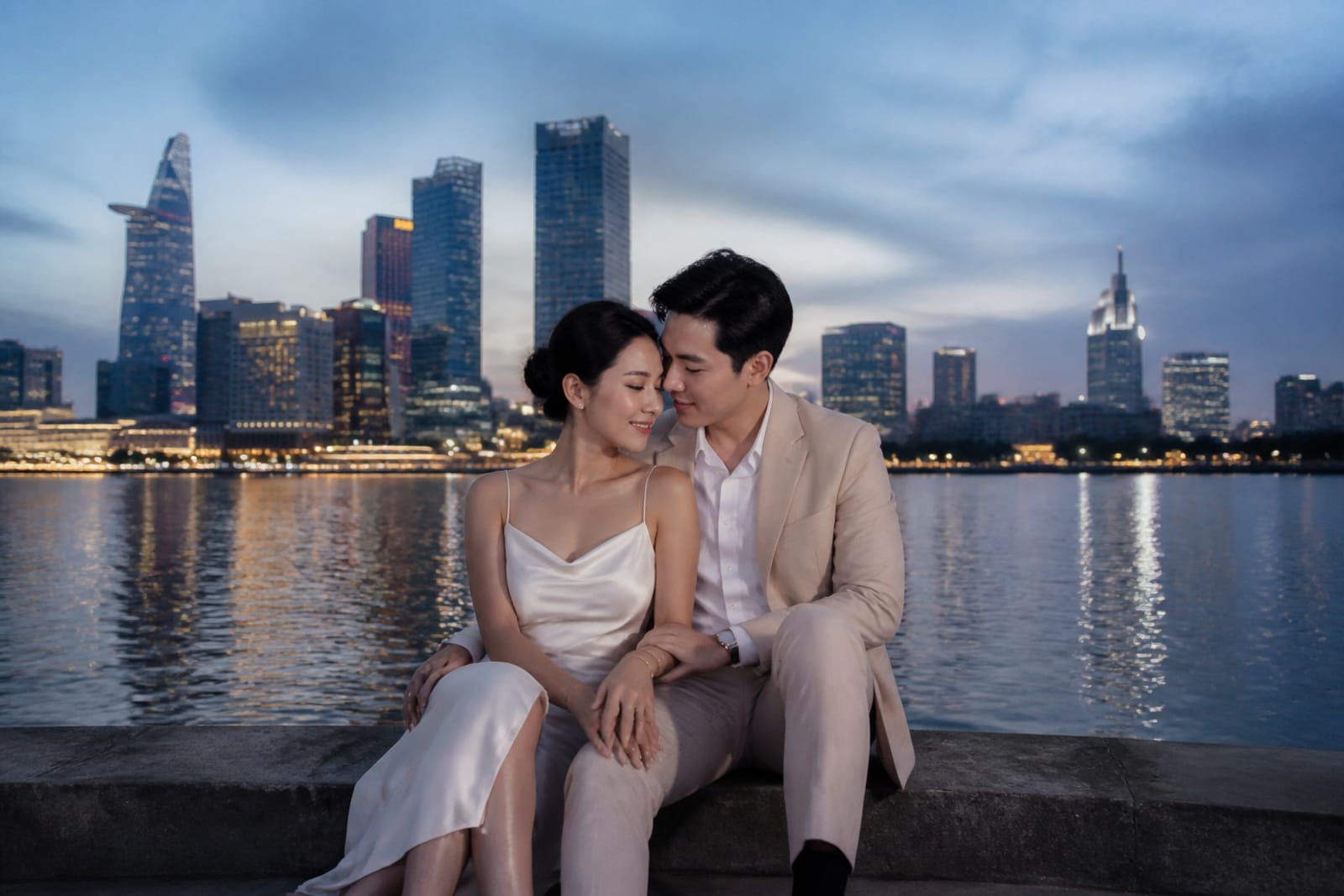
Why does Ho Chi Minh City work year-round for pre-wedding shoots?
Saigon's climate is predictable and your schedule doesn't slip. The city is hot (25–35°C) all year; the dry season (Dec–Apr) is most comfortable, and the wet season (May–Nov) brings short afternoon downpours—so you shoot at dawn or golden hour, indoors for makeup and hair, then hit street locations before the rain. Cáo Studio – Makeup & Photoshoot runs three branches in Saigon; your prep happens onsite with air conditioning, lighting rigs, and backup indoor backdrops. You land, check in at your hotel, and a session books for the next day or same morning. No travel delays, no waiting for mist to lift. The catch: midday and noon light is harsh, so you're locked into early morning (5:30–8:00 a.m.) or golden hour (5:00–6:30 p.m.); outfit choices depend on heat—ao dai in silk breathes better, and formal Western dress risks sweat under lighting. For couples on a tight schedule or traveling in summer, Saigon removes weather as a variable.
---
How do outfit choices differ between Sapa and Saigon?
| Aspect | Sapa | Saigon | Why It Matters |
|---|---|---|---|
| Temperature | 10–15°C, layers needed | 25–35°C, heat and sweat | Sapa: ao dai over long-sleeve layers; Saigon: silk, breathable fabrics, minimal layers |
| Wind & Mist | Strong, hair/veil movement | Still air, predictable | Sapa: dramatic hair movement, loose fabrics; Saigon: control and precision |
| Sweat & Makeup | Waterproof makeup lasts longer | Humidity kills powder; touch-ups every 30 min | Saigon shoots early; makeup artist on standby with powder and setting spray |
| Ao Dai Fit | Crisp in cool air, colors pop | Fabric clings in humidity; white shows sweat marks | Sapa: white, pastels work; Saigon: darker tones, structured fabrics hide humidity |
| Western Formal Wear | Blazers and layers look intentional | Suit jacket becomes a torture device; shirt soaks through in 15 min | Sapa: full suit; Saigon: vest or open shirt, no jacket |
Cold weather in Sapa means you can wear layered, textured looks without overheating. Saigon's heat forces a choice: ao dai (which breathes) or Western dress without the jacket (which looks less formal but stays dry). Many couples in Saigon skip the blazer entirely and shoot the groom in vest and open collar.
---
What does a multi-day Sapa shoot logistically involve?
Plan three to four days on the ground: Day 1 is travel (flight Saigon → Hanoi, 2–3 hours; taxi/bus Hanoi → Sapa, 5–6 hours), arrival and scout. Day 2 is the main shoot at dawn or mid-morning, covering rice paddies, village paths, and a mountain viewpoint; afternoon is a secondary location or rest. Day 3 is backup weather or a second outfit session. Day 4 is the return journey. You'll need a local guide (essential for permits, safe paths, and weather calls—hired on WhatsApp before you go), a makeup artist (either one of yours or booked locally), and a photographer experienced in mountain logistics. The studio can advise on WhatsApp, but Cáo Studio – Makeup & Photoshoot's home base is Hanoi and Saigon; Sapa is a custom expedition, not a scheduled package. Cost factors: flights, guides, extended production hours, and weather delays (rebooked for a day later if fog doesn't lift). For couples committed to mountain aesthetics, the investment often feels worth it. For those who want a guarantee, Saigon is simpler.
---
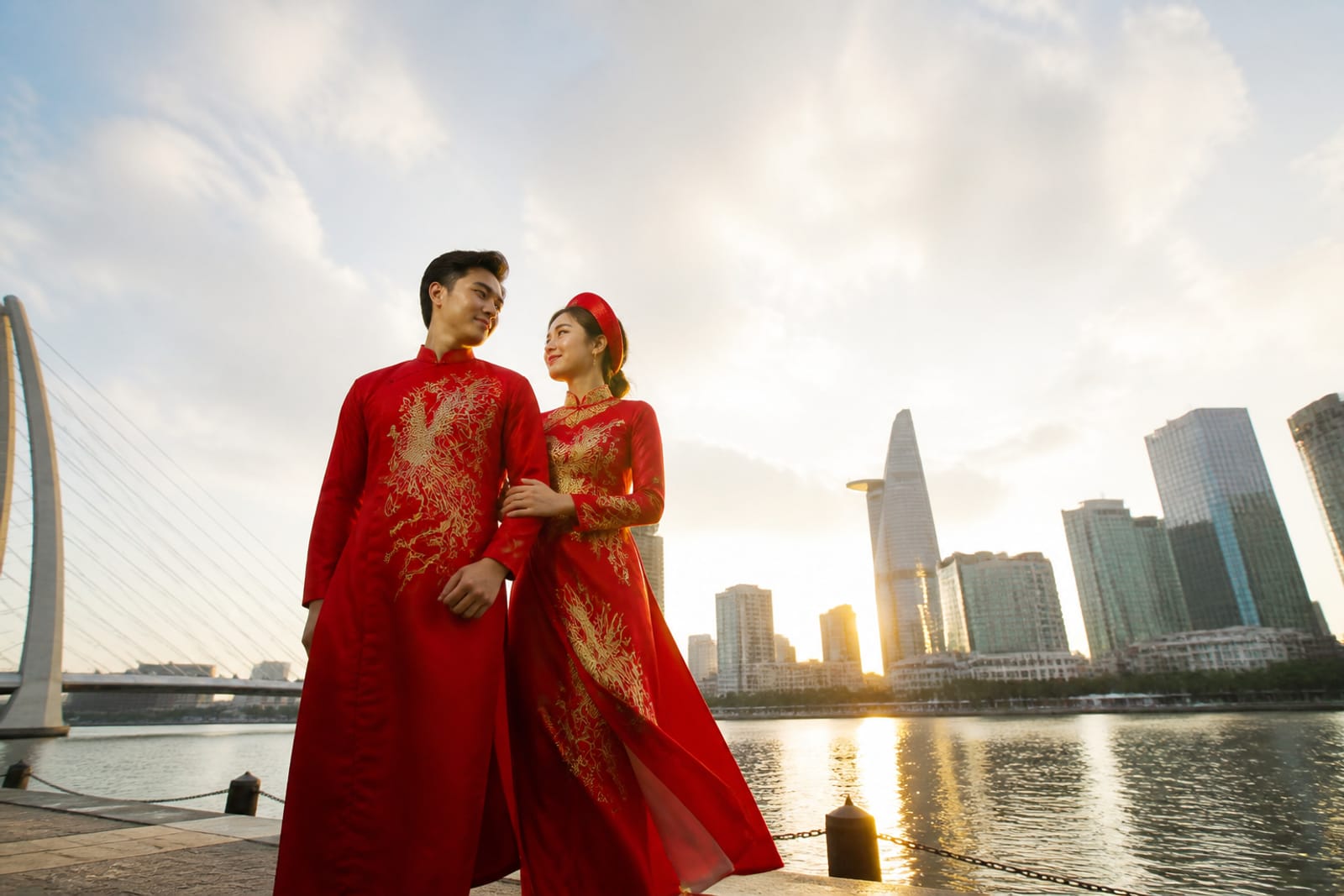
When should you book each destination to avoid season traps?
Saigon: Book 3–4 weeks ahead for any month. December–April is best (sunny, cool mornings, low rain risk); May–November works if you shoot early. Avoid Tet (late Jan–mid Feb) when the city shuts down.
Sapa: Book 2–3 months ahead for October–January only. The four-month window fills fast because it's the only safe season. If your wedding is April–September, Sapa is a gamble—you're paying for a shoot that might be rained out or fogged in, with no good reschedule date. Check the mountain forecast one week before; if heavy cloud or rain is forecast, ask the guide if a date shift is possible before you fly.
This is the biggest difference: Saigon offers flexibility and year-round slots. Sapa demands advance planning and weather acceptance. Couples who wait until three weeks before their event have no choice but Saigon.
---
How do you decide between them if you love both aesthetics?
Use this decision framework:
- Is your wedding date fixed? If yes, check Sapa's season (Oct–Jan only). If no, move your date into Sapa's window for mountain photos. If your date is May–September, Saigon is safer.
- How much travel time can you spare? Saigon: 2 days (flight + one night). Sapa: 4–5 days (flights, long transfer, acclimatization, shoot day, return). If you're arriving 2 days before the wedding, Saigon only.
- What's your aesthetic priority? Urban sophistication, hotel landmarks, street life, modern architecture → Saigon. Mountain mist, terraced fields, village culture, dramatic elevation change → Sapa.
- Outfit plan: Can you wear layers and heavy fabrics? Sapa. Prefer minimal, breathable looks? Saigon.
- Budget flexibility: Saigon costs less (shorter production, no guide fees, no multi-day travel). Sapa costs more (but the visual result is rare and irreplaceable).
Many couples do both: a quick Saigon session 2–3 weeks before the wedding for reliability, and Sapa 6–8 weeks earlier as a "styled adventure" when weather is less urgent.
---
What to check before you commit
- Visa and flight schedules: Book flights before you lock your shoot date; flights to Hanoi (for Sapa) may add 1–2 days to your timeline.
- Mountain guide and hotel: Contact Cáo Studio on WhatsApp for Sapa recommendations; the team works with trusted local guides.
- Weather window: Check a historical climate database (e.g., weather.com, month-by-month for your chosen month in Sapa) for average rain and fog days. October–November is driest; January can still be misty.
- Makeup and hair logistics: Saigon has studio makeup included in bookings; Sapa requires a makeup artist shipped with you or hired locally. Ask on WhatsApp.
- Ao dai fit and tailoring: If you're renting or bringing an ao dai, test it in the climate before the shoot. Humidity causes cotton to cling; silk holds shape better in Saigon heat.
- Backup dates: Confirm that a reschedule is possible if weather fails. Saigon has slots almost every week; Sapa's narrow season means a delay might push you into Nov or Dec.
---
Honest look: which one do most couples actually choose?
Most choose Saigon because it fits their calendar and stress level. The mountain aesthetic is stunning, but it demands trust in weather and extra travel. Saigon delivers control: you arrive, you shoot the next morning, sunrise hits the Bitexco Financial Tower or a hidden alley with soft gold light, your makeup is fresh, and you're editing photos by afternoon. It's not exotic, but it's guaranteed. Sapa is chosen by couples who either live in northern Vietnam (so travel is short), have flexible dates, or are willing to spend extra time and money for landscape that no city can match.
For pre-wedding photoshoots, Cáo Studio – Makeup & Photoshoot operates full-time in both cities. Saigon bookings are faster; Sapa requires WhatsApp discussion with the team to confirm feasibility and dates.
---
📸 Book your Saigon pre-wedding session | 💄 Makeup & hair at your hotel | 🌸 See the lookbook
---
Couples also shoot ao dai photoshoots in both cities—Sapa's mist pairs beautifully with traditional Vietnamese dress, while Saigon's streets offer modern ao dai framing. Couple photoshoots and family sessions follow the same decision logic: weather, schedule, outfit fit. For a complete vision, check the studio pricing and packages page and the FAQ for detailed timings and what's included.
📸 Book on WhatsApp — pre-wedding shoot
---
FAQ
Can we do a pre-wedding shoot in Sapa during the rainy season (June–September)?
Technically yes, but expect grey light, frequent cloud cover, and real rain risk. The mist aesthetic looks moody, not romantic. Most photographers and couples avoid June–September in Sapa unless they embrace the overcast, stormy look. Dry season (Oct–Jan) is standard for a reason.
Is Saigon too hot for formal Western wear in pre-wedding photos?
Yes, if you mean a full suit with jacket. Grooms in Saigon often skip the blazer, shoot in vest, open-collar shirt, or suspenders. It looks intentional and stays dry. Full suits work in early morning (5:30–7:00 a.m.) only. Ao dai breathes better and handles heat without sweat marks.
How far in advance should we book Sapa if our wedding is in November?
Book 2–3 months ahead (by early September). Sapa's dry season (Oct–Jan) fills quickly because it's the only reliable window. Tour operators, guides, and photographers book up. Waiting until late September risks guide availability and poor timing for light scouting.
If we book Saigon, can we add a Sapa shoot later?
Yes. Many couples do a Saigon shoot 3–4 weeks before the wedding for certainty, then a Sapa session 6–8 weeks earlier when they're less time-pressured. Contact Cáo Studio on WhatsApp to coordinate both; the team can advise timing and logistics for back-to-back city shoots.
Do we need permits or guides for street photography in Sapa or Saigon?
Saigon street shooting needs no formal permit; respect local customs and avoid photographing sensitive government buildings. Sapa shooting in village areas requires a local guide (both for safety and cultural respect). Cáo Studio can recommend guides on WhatsApp. Hike permits are not required for standard tourist paths like the rice terraces and village routes.
FAQ
Can we do a pre-wedding shoot in Sapa during the rainy season (June–September)?
Technically yes, but expect grey light, frequent cloud cover, and real rain risk. The mist aesthetic looks moody, not romantic. Most photographers and couples avoid June–September in Sapa unless they embrace the overcast, stormy look. Dry season (Oct–Jan) is standard for a reason.
Is Saigon too hot for formal Western wear in pre-wedding photos?
Yes, if you mean a full suit with jacket. Grooms in Saigon often skip the blazer, shoot in vest, open-collar shirt, or suspenders. It looks intentional and stays dry. Full suits work in early morning (5:30–7:00 a.m.) only. Ao dai breathes better and handles heat without sweat marks.
How far in advance should we book Sapa if our wedding is in November?
Book 2–3 months ahead (by early September). Sapa's dry season (Oct–Jan) fills quickly because it's the only reliable window. Tour operators, guides, and photographers book up. Waiting until late September risks guide availability and poor timing for light scouting.
If we book Saigon, can we add a Sapa shoot later?
Yes. Many couples do a Saigon shoot 3–4 weeks before the wedding for certainty, then a Sapa session 6–8 weeks earlier when they're less time-pressured. Contact Cáo Studio on WhatsApp to coordinate both; the team can advise timing and logistics for back-to-back city shoots.
Do we need permits or guides for street photography in Sapa or Saigon?
Saigon street shooting needs no formal permit; respect local customs and avoid photographing sensitive government buildings. Sapa shooting in village areas requires a local guide (both for safety and cultural respect). Cáo Studio can recommend guides on WhatsApp. Hike permits are not required for standard tourist paths like the rice terraces and village routes.
Ao dai, makeup, hair and a local photographer in Hanoi or Saigon — one WhatsApp message.