/pre-wedding-photoshoot
Hoan Kiem Lake pre-wedding photos: pros, cons & alternatives
Hoan Kiem Lake and The Huc Bridge offer recognizable backdrops but work best in early light (5–7 a.m.) before foot traffic arrives; after 8 a.m. the water loses reflection and crowds gather. The bridge itself is narrow and slippery when wet, making gear positioning risky; couples often wait 15–30 minutes for clear shots. Cáo Studio – Makeup & Photoshoot books lake shoots in autumn (Oct–Nov) when light is softest and air is cool, but recommends checking with your photographer on shoot timing and contingency spots—rain or weekend congestion can derail a mid-day session. Quieter alternatives (Phan Dinh Phung street, West Lake's edges, or temple grounds with permits) often yield richer, less-rushed imagery.
Hoan Kiem Lake is Hanoi's most photographed landmark, but its popularity brings crowds, reflections that vanish by mid-morning, and weekend foot traffic that complicates positioning. After 8 a.m., the water loses reflection and couples often wait 15–30 minutes for clear shots. The Huc Bridge is narrow and slippery when wet, making safe gear positioning difficult. Cáo Studio – Makeup & Photoshoot books lake shoots in autumn (Oct–Nov) when light is softest and air is cool, but recommends checking shoot timing and contingency spots—rain or weekend congestion can derail a mid-day session. Quieter alternatives (Phan Dinh Phung street, West Lake, or temple grounds with permits) often yield richer, less-rushed imagery.
Why does light at Hoan Kiem change so fast?
Water reflection depends on sun angle. At dawn (5–7 a.m. in autumn), the sun is low and the lake becomes a mirror; by 9 a.m., the angle is steep and reflection flattens to glare. Between 10 a.m. and 4 p.m., the water reads as dull or blown-out in photos. Winter (Dec–Feb) offers longer soft-light windows because the sun rises later and stays lower throughout the day, but the air is often grey and drizzly, requiring fast film speeds and warm tones in post-work. A shoot that works in Oct–Nov light may need 2–3 stops more exposure and stronger contrast in summer. Plan your session time with your photographer before booking; early light is non-negotiable if reflection matters to your vision.
📸 Book on WhatsApp — pre-wedding photoshoot
When is Hoan Kiem Lake safe and clear for a shoot?
Weekdays (Mon–Thu) before 8 a.m. are quietest; weekend evenings (Fri–Sun, after 6 p.m.) are crowded with joggers, families and couples, making solo positioning nearly impossible. Tet (late Jan–mid Feb) closes the temple and draws masses to the lake for Lunar New Year visits. Summer (May–Sep) brings sudden heavy downpours (often 2–3 p.m.) that flood the paths, and the heat creates humidity haze that dulls fine detail in photos. Autumn (Oct–Nov) is ideal: dry, mild air, fewer tourists than spring, and soft golden-hour light that flatters skin tone. Winter (Dec–Feb) is cool (10–20°C) but often overcast and drizzly; you'll need a makeup artist who works fast and waterproofs effectively. Check local weather 3–5 days before your booked date and have a backup plan (an indoor venue or a covered temple courtyard with permits).
How does The Huc Bridge compare to other Hoan Kiem spots?
| Spot | Best for | Light window | Logistics | Wear |
|---|---|---|---|---|
| The Huc Bridge | classic frame, red & water | 5–7 a.m. only | narrow, wet, no editing space | non-slip shoes essential |
| Lake path (north side) | movement, walking shots | 5–8 a.m., golden hour 4–5 p.m. | wide, flat, trees give shade | any |
| Turtle Tower view (south) | distant, serene | 7–9 a.m., late afternoon | crowded by 9 a.m., temple entry fee varies | casual |
| West Lake edges | fewer people, reflections | 6–8 a.m. | longer walking, quieter | trainers |
The bridge itself is iconic but a bottleneck: it's narrow (two people side-by-side), stone is slippery when wet (common after rain or morning dew), and a photographer on the bridge blocks pedestrians, inviting complaints or requests to move. North lake paths offer wider space and more dynamic walking shots but lose soft light by 8 a.m. West Lake is less touristed and has pockets of genuine quiet, but you must scout beforehand—some spots require a boat trip or a 10–minute walk from parking. Temple grounds (Ngoc Son, inside the lake) offer a unique backdrop but entry is required and photography may need permission; check with your booking coordinator on permits.
What gear or outfit problems crop up at the lake?
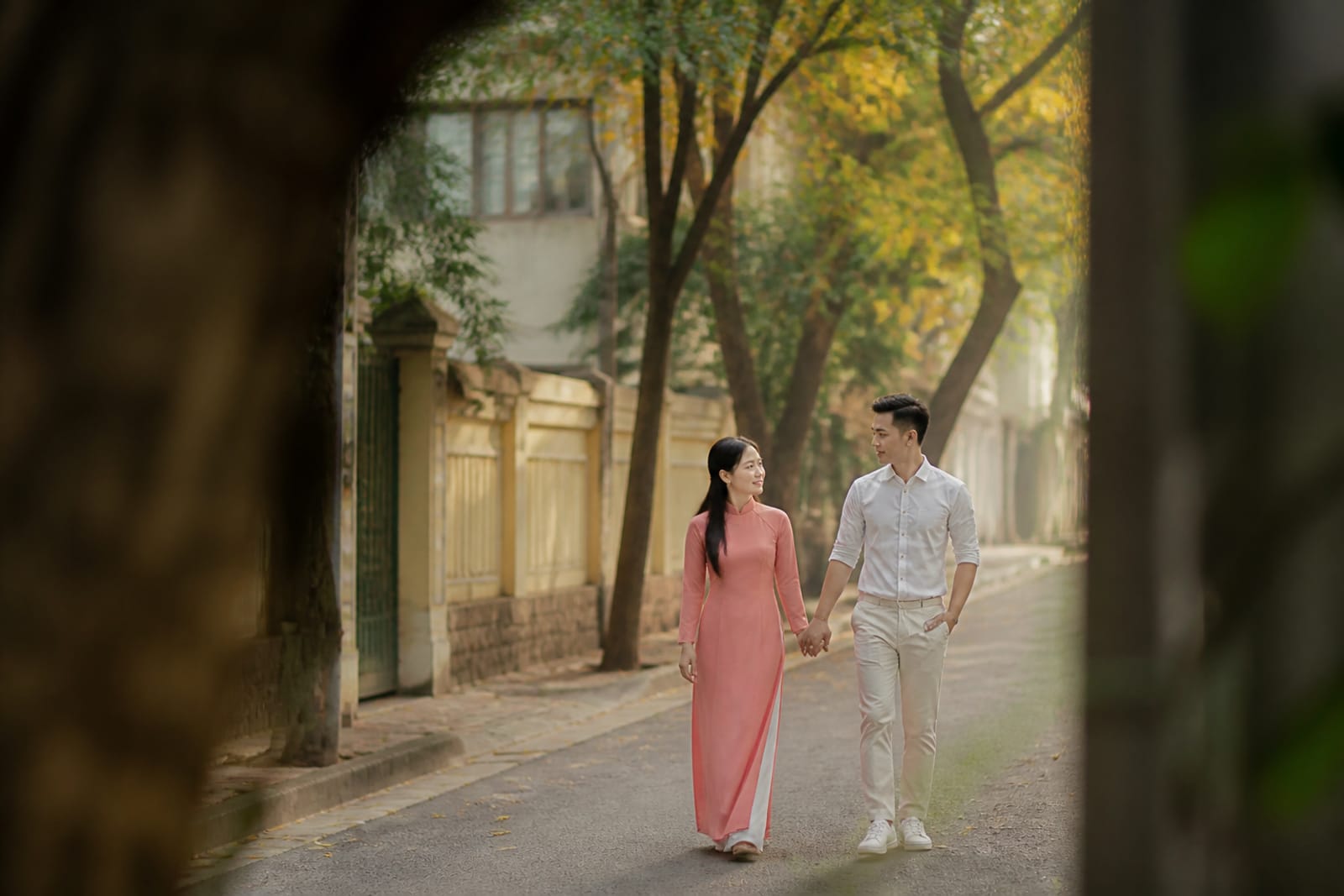
Water spray and humidity corrode camera gear fast; a second body and lens cloth are essential. Ao dai and heavier fabrics absorb moisture, so a steam-proof garment bag and a fast makeup artist (one who can refresh makeup between outfit changes) matter. Narrow paths and stone steps mean non-slip footwear for the photographer—trainers, not leather-sole shoes. Reflections create uneven light (bright water below, darker sky above), which forces compromise on exposure; a polarizing filter or ND filter helps, but takes time to fit and adjust. Grooms in suits overheat fast in May–Sep; plan a 10-minute rest in shade every 15 minutes, and bring electrolyte water. Hair and makeup designed for a cool, dry studio will wilt in humidity—work with a makeup artist who has tested ao dai and movement in Hanoi's real conditions, not a studio mock-up.
What are the best alternatives if Hoan Kiem doesn't fit your vision?
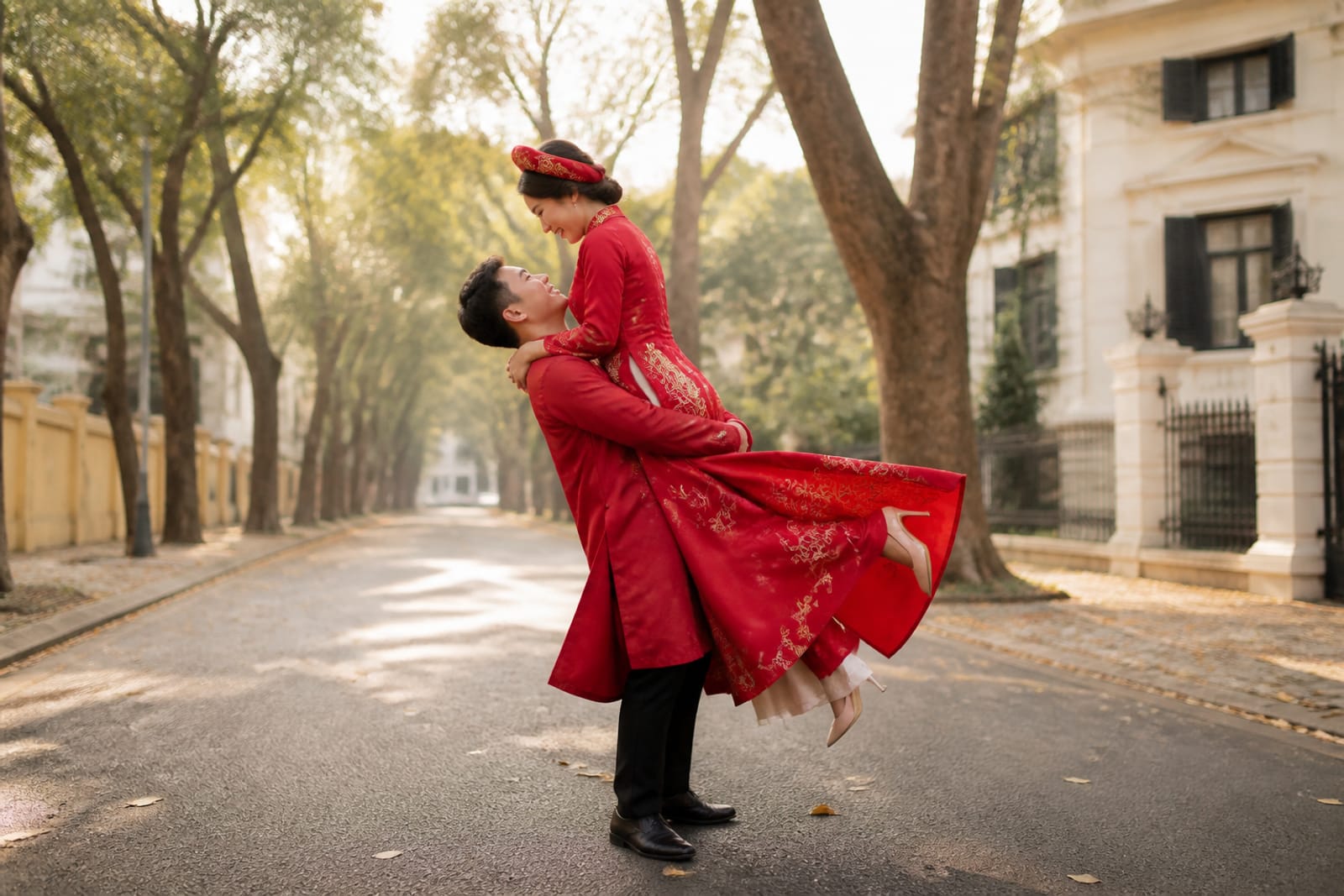
Phan Dinh Phung Street (Hoan Kiem District): tree-lined residential avenue with dappled autumn light (Oct–Nov), soft and romantic. Quieter than the lake, permits are low-key, and the light is naturally flattering. Downside: narrow sidewalks and parked motorbikes; scout with your photographer first.
Tran Quoc Pagoda (West Lake): ancient temple with lake views, lush grounds, and authentic Vietnamese backdrop. Requires temple permission (usually granted for modest photos; ask your photographer to arrange). Light is best 6–8 a.m. or 4–6 p.m. before crowds. Slower process (walk to viewpoint, navigate steps) but far fewer tourists than central lake.
St. Joseph Cathedral (Hoan Kiem): Gothic architecture, quiet courtyard, good morning light 6–8 a.m. Entry is free but photography permissions vary; confirm with clergy when you scout.
Yellow Flower Village or suburban gardens: quieter, custom backdrops (flowers, wooden gates, water features), better for creative direction. Requires travel time (20–30 minutes from central Hanoi) but worth it if you want solitude and control over framing.
For Hoi An pre-wedding shoots, the Ancient Town offers entirely different options: lantern-lit streets at dusk, river reflections, and less congestion in early morning. Cáo Studio's Hoi An service (by appointment, team travels) can advise on timing and outfit fit for the town's narrow alleyways and photogenic French colonial architecture.
What to check before you book
- Confirm shoot time with your photographer. Insist on early-light slots (5–7 a.m.) if reflection and soft light matter. Noon or afternoon shoots at Hoan Kiem rarely justify the crowds.
- Scout the bridge or path yourself. Visit at the time you plan to shoot (e.g., 6 a.m. on a Tuesday) to see real light, foot traffic, and security presence. Take a phone photo of the spot you want; show it to your coordinator.
- Check weather 3–5 days before. Rain closes paths; heavy downpours flood steps. Have a backup indoor venue (hotel lobby, covered temple courtyard) ready, not a last-minute improvisation.
- Agree on outfit changes and rest time. If you want two or three outfit changes, build in 10–15 minutes per change for makeup refresh, especially in summer or if humidity is high.
- Hire a makeup artist experienced with Hanoi conditions. Studio makeup often doesn't survive outdoor humidity and movement. Cáo Studio's on-location makeup service works in real weather—not simulations.
- Ask if a backup location is included. If your booked spot is inaccessible (flooded, closed, or too crowded), will your photographer pivot to a nearby alternative, or charge a re-booking fee?
For pre-wedding shoots with Cáo Studio, inquire on WhatsApp about lake-specific timing, outfit fit for outdoor conditions, and contingency spots tailored to your wedding date and vision.
---
FAQ
Can we shoot at Hoan Kiem Lake without a permit?
No formal permit exists for couples, but temple entry (Ngoc Son) requires a small fee; street photography is informal. Ask your photographer to check access status—it can change. Confirm with Cáo Studio on WhatsApp before booking.
What's the best time of year to shoot at Hoan Kiem Lake?
Autumn (Oct–Nov) is ideal: dry, mild, soft golden light, and fewer tourists than spring. Winter (Dec–Feb) is cool but often grey and drizzly. May–Sep brings heat, humidity, sudden rain, and haze. Avoid Tet (late Jan–mid Feb); the lake is crowded and temples close.
How long does a typical Hoan Kiem Lake shoot take?
1–2 hours for one location, accounting for light changes, outfit transitions, and crowd delays. If you want multiple spots (bridge, path, temple), add 30–60 minutes of travel and repositioning. Discuss total duration with your photographer when you book.
Do we need to hire a makeup artist separately for an outdoor shoot?
Studio makeup often wilts in humidity and movement; an outdoor-trained artist is strongly advised. Cáo Studio's makeup & hair service is tailored for Hanoi's real conditions and keeps you camera-ready across outfit changes and light shifts.
What should we wear under an ao dai for a pre-wedding shoot?
Nude or white slip shorts (mid-thigh length) and a fitted, sweat-wicking undershirt prevent transparency and chafing. Avoid bulky undergarments; they show through the fitted bodice. Test your outfit with your photographer during a preview or ask Cáo Studio for fitting advice on WhatsApp.
Can we shoot at Hoan Kiem if it rains?
Light rain is often manageable (moody reflections, wet stone adds texture), but heavy downpours flood paths and reduce visibility. Have a backup indoor or covered venue agreed in advance. Confirm rain protocols with your photographer when you book; some adjust timing, others pivot to a fallback location.
FAQ
Can we shoot at Hoan Kiem Lake without a permit?
No formal permit exists for couples, but temple entry (Ngoc Son) requires a small fee; street photography is informal. Ask your photographer to check access status—it can change. Confirm with Cáo Studio on WhatsApp before booking.
What's the best time of year to shoot at Hoan Kiem Lake?
Autumn (Oct–Nov) is ideal: dry, mild, soft golden light, and fewer tourists than spring. Winter (Dec–Feb) is cool but often grey and drizzly. May–Sep brings heat, humidity, sudden rain, and haze. Avoid Tet (late Jan–mid Feb); the lake is crowded and temples close.
How long does a typical Hoan Kiem Lake shoot take?
1–2 hours for one location, accounting for light changes, outfit transitions, and crowd delays. If you want multiple spots (bridge, path, temple), add 30–60 minutes of travel and repositioning. Discuss total duration with your photographer when you book.
Do we need to hire a makeup artist separately for an outdoor shoot?
Studio makeup often wilts in humidity and movement; an outdoor-trained artist is strongly advised. [Cáo Studio's makeup & hair service](/makeup-and-hair) is tailored for Hanoi's real conditions and keeps you camera-ready across outfit changes and light shifts.
What should we wear under an ao dai for a pre-wedding shoot?
Nude or white slip shorts (mid-thigh length) and a fitted, sweat-wicking undershirt prevent transparency and chafing. Avoid bulky undergarments; they show through the fitted bodice. Test your outfit with your photographer during a preview or ask Cáo Studio for fitting advice on WhatsApp.
Can we shoot at Hoan Kiem if it rains?
Light rain is often manageable (moody reflections, wet stone adds texture), but heavy downpours flood paths and reduce visibility. Have a backup indoor or covered venue agreed in advance. Confirm rain protocols with your photographer when you book; some adjust timing, others pivot to a fallback location.
Ao dai, makeup, hair and a local photographer in Hanoi or Saigon — one WhatsApp message.